


Brass Weather Station
Brass weather station instruments combine barometers, thermometers and hygrometers in brass cases, offering a practical way to monitor atmospheric pressure and domestic climate.

Brass Weather Station
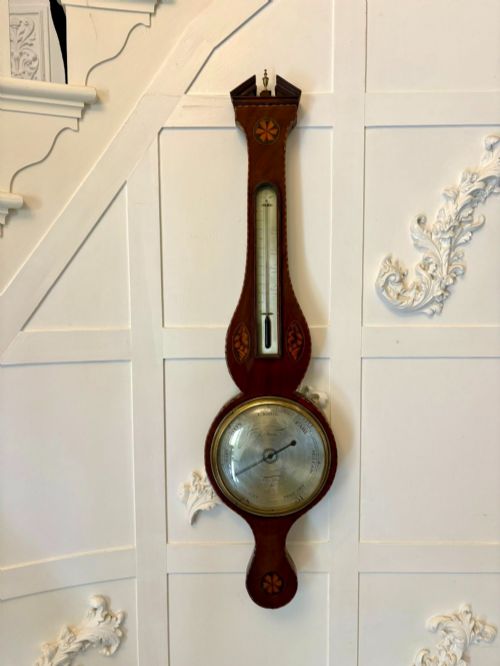
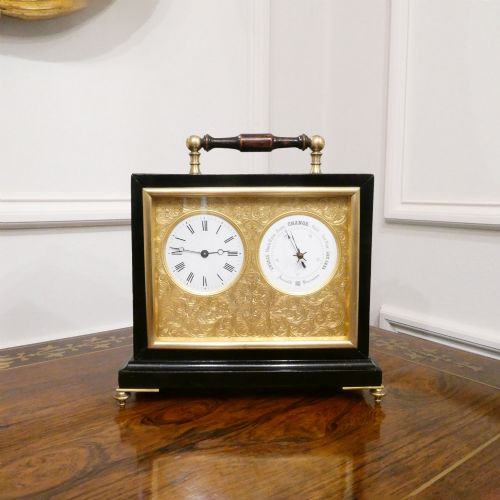
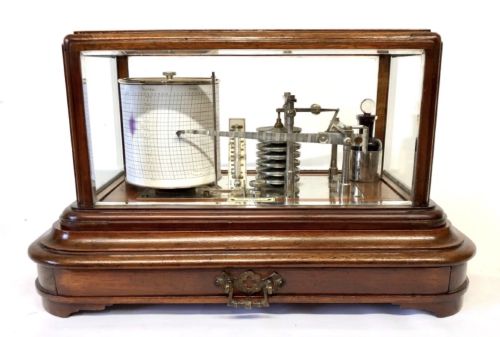
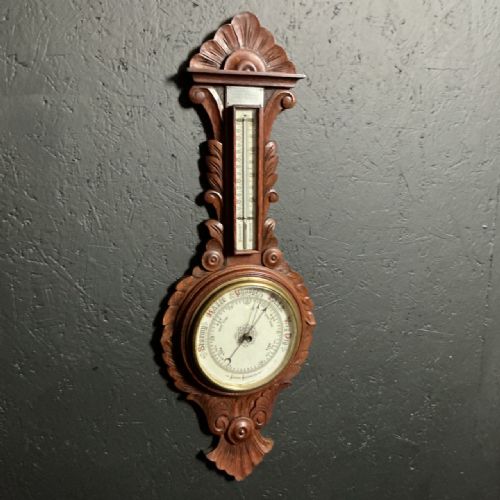
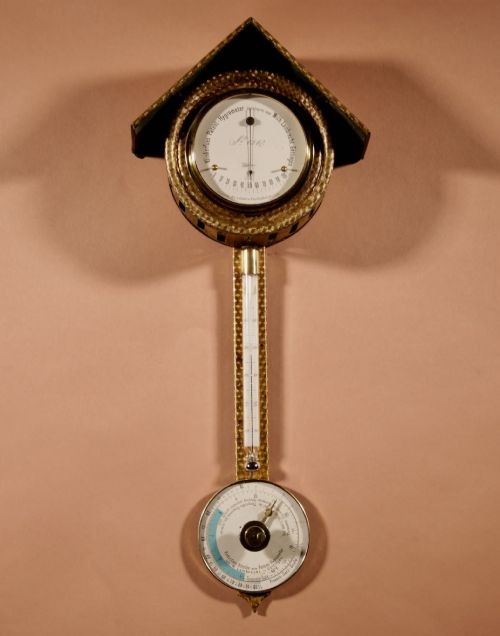
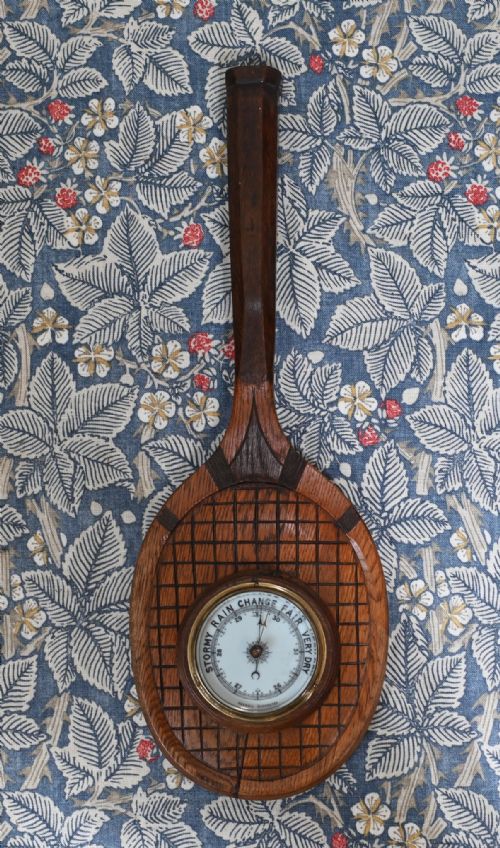
A brass weather station brings together multiple meteorological instruments housed within a single domestic apparatus, frequently combining a barometer with a thermometer or hygrometer. When you search for a brass weather station, you encounter diverse forms ranging from wall-mounted carved wooden plaques to freestanding desk compendiums and complex mechanical barographs.
The pieces appearing on this page span the Victorian, Edwardian and early twentieth-century periods, alongside Georgian and nineteenth-century examples. Wall barometers, mantel clocks combined with barometers, and oak or mahogany cased instruments dominate the selection.
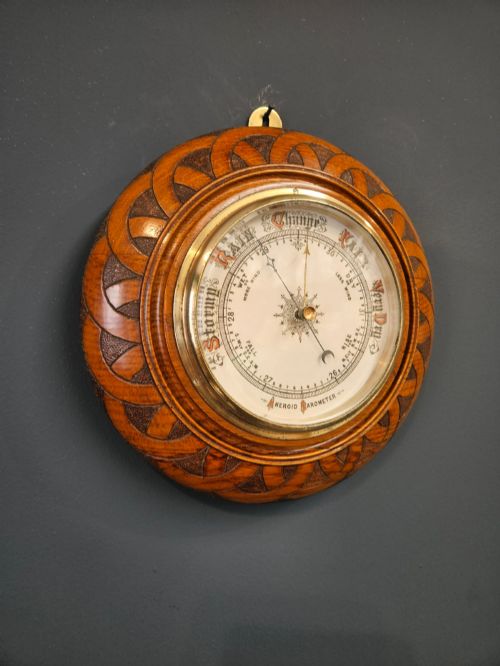
Makers such as Negretti & Zambra and Short & Mason feature among the scientific instrument makers represented in the evidence. Simpler domestic aneroid barometers in circular oak or beechwood frames also appear regularly alongside specialised weather instruments.
Materials and construction methods
Mechanical construction relied upon sensitive aneroid metal capsules or mercury columns to register atmospheric pressure shifts, linked via delicate levers to visible indicator needles. Timber cases required precise cabinet-making, from the shell-inlaid veneers of banjo barometers to the heavily carved foliate motifs of Black Forest walnut pieces.
The listings feature weather instruments housed in oak, mahogany, walnut, beechwood and brass, spanning the eighteenth to the twentieth centuries.
Judging the quality of these instruments
Quality rests upon the precision of the internal mechanical movement and the reputation of the maker supplying the dial or barograph drum. Signed instruments by established scientific makers demonstrate superior finishing in their engraved silvered dials and responsive linkage arms.
The standard of cabinet-making dictates overall appeal, distinguishing mass-produced utilitarian wall mountings from heavily carved golden walnut cases or inlaid mahogany housings. Well-proportioned woodwork, crisp dial letterings and intact, high-grade glass panels elevate an instrument above standard domestic iterations.
GAUPP & CO HONGKONG & SINGAPORE·Wilh. Lambrecht Göttingen Germany·Elliott Brothers London·Negretti & Zambra London·R Fuess·Jenkins Of Old Swindon·Short & Mason Limited·Antoine Redier·Blake & Son·Dollond London·James Pitkin London·Vecchio & Co·Gilbert London·S&B Solomons of London·Dobbie son and Hutton London·Imhof
The Brass Weather Station Glossary
- Aneroid barometer
- An instrument measuring atmospheric pressure without liquid, using an expanding and contracting metal capsule linked to a dial needle. This mechanical system allowed barometers to be housed in compact wall or desk cases.
- Barograph
- A self-recording meteorological instrument that plots barometric pressure onto a paper chart fitted to a rotating drum. Clockwork mechanisms drive the rotation over a weekly or daily cycle.
- Hygrometer
- A device used to measure the humidity levels in the air, frequently utilising human hair as a sensitive expansion element. These appear in specialised scientific weather stations and patent designs.
- Thermometer
- An instrument for measuring temperature, utilising mercury or spirit columns against marked scales. Porcelain and silvered metal formed common backing plates for these displays.
- Desk compendium
- A multi-instrument desk accessory grouping clocks, barometers and thermometers into a single portable housing. These items often utilised brass frameworks and swivel mountings.
Brass Weather Station: Frequently Asked Questions
What does a barograph do?
A barograph records continuous atmospheric pressure changes onto a rotating paper chart secured to a drum. Clockwork drives the cylinder while an aneroid mechanism moves the recording arm.
These instruments provided households and observers with a visual history of weather trends over the course of a week. They remain prized for their intricate brass mechanisms visible beneath glass covers.
How do aneroid and mercury barometers differ?
Mercury barometers rely on a column of liquid metal balancing against atmospheric pressure within a sealed glass tube. They represent traditional scientific measurement methods dating back centuries.
Aneroid barometers replace liquid with a sealed flexible metal capsule that expands or contracts with pressure shifts. This design enabled makers to produce portable wall barometers and compact desk instruments.
Where were weather stations placed in Victorian homes?
Wall barometers and weather stations typically hung in hallways, libraries or studies where residents checked conditions before heading outdoors. Their decorative timber cases matched domestic furniture styles of the period.
Desk compendiums sat upon writing tables or mantelpieces alongside clocks and inkstands. These smaller multi-instrument pieces served both decorative and practical daily functions.
How do I identify a Black Forest barometer?
Black Forest barometers feature deeply carved wooden cases decorated with naturalistic motifs such as foliage, vines and game animals. Walnut and oak served as the primary timbers for these expressive designs.
Originating from the Black Forest region in Germany during the late nineteenth century, their craftsmanship emphasises sculptural woodwork surrounding standard aneroid dials.