


Barograph Chart Drawer
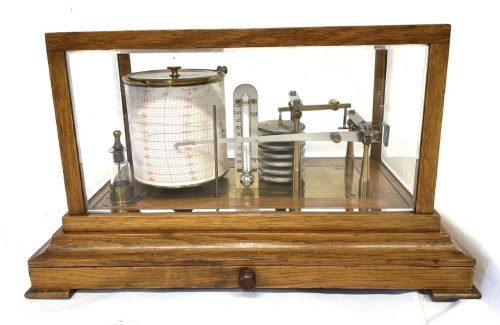
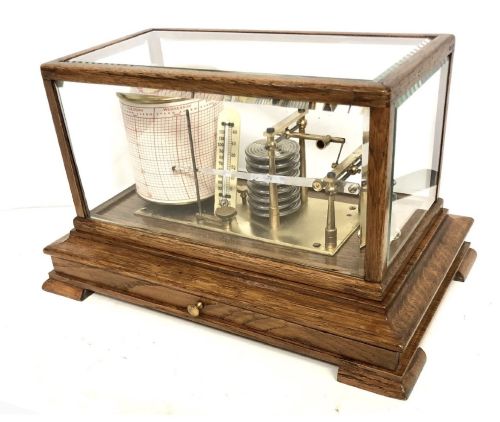
A barograph chart drawer houses the weekly recording papers beneath a brass-and-glass weather gauge, combining utility with fine cabinet work.

Barograph Chart Drawer
When you search for a barograph chart drawer, you find scientific instruments enclosed in wooden cases designed to record atmospheric pressure over seven days. These instruments incorporate a base compartment specifically built to store spare paper charts, ink bottles, and pens.
You are most likely to meet Victorian and Edwardian examples on this page, housed in oak or mahogany five-glass cases. Many of these pieces feature thermometers mounted alongside the main barometer drum and the integrated drawer below.
How they were made
Makers integrated the chart drawer directly into the wooden plinth beneath the recording mechanism, aligning the pull smoothly with the base moulding. Paper serves as the medium for the recording grid, marked by ink from a delicate arm linked to the barometric capsules.
Finding a forgotten paper chart inside the drawer with a Victorian weather note scribbled in pencil.
What varies in quality
The distinction between standard production and superior craftsmanship rests in the timber selection and the precision of the case joints. Finely figured mahogany or quarter-sawn oak combined with thick bevelled glass elevates a piece above utility-grade workshop output.
Signed movements by known makers and retailers impart greater merit to the instrument. The seamless integration of the chart drawer without disturbing the proportions of the case demonstrates the skill of the original cabinet maker.
Short & Mason·Casella London·Harrods of London·Negretti & Zambra
The Barograph Chart Drawer Glossary
- Barograph
- A self-recording barometer that traces atmospheric pressure on a rotating paper drum. It uses evacuated metal boxes that expand and contract with air pressure changes.
- Aneroid
- Operating without liquid. This describes barometers and barographs that rely on flexible metal chambers rather than columns of mercury.
- Bevelled glass
- Glass panes with edges cut at an angle and polished. This treatment adds depth and refracts light across the brass mechanism within the case.
- Chart drawer
- The shallow compartment positioned beneath the recording apparatus. It provides secure storage for the weekly ruled paper sheets.
Barograph Chart Drawer: Frequently Asked Questions
What is a barograph chart drawer?
A barograph chart drawer is the built-in storage compartment located in the wooden base of a recording barometer. It holds the supply of weekly paper charts and replacement ink needed for the instrument.
These drawers form an integral part of the wooden plinth, sliding smoothly beneath the brass mechanism and glass cover.
How did people use barographs?
Users placed the instrument in a stable location within a home or office to monitor continuous changes in atmospheric pressure. A clockwork drum rotated a paper chart once every seven days while an inked arm recorded the pressure curve.
Operators opened the chart drawer weekly to wind the clockwork movement, replace the paper sheet, and replenish the recording ink.
How do I date a barograph case?
Dating relies upon the timber, joinery style, and glass configuration of the outer case. Victorian and Edwardian examples typically feature heavy oak or mahogany frames with five glass panels and brass carrying handles.
Inscribed maker signatures on the metal bedplate or retailer plaques on the dial provide further chronological reference points.
Are all chart drawers fitted with locks?
Many chart drawers include small brass key escutcheons, though keys are frequently lost over time. The lock secured the spare paper charts and sensitive calibration tools away from casual hands.
Not every model incorporates a locking mechanism, as simpler utility versions relied on a flush wooden pull or small brass knob.