


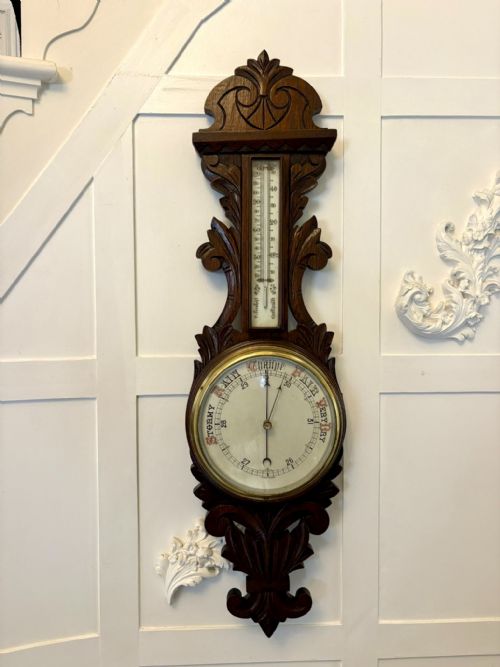

Oak Weather Instrument
An oak weather instrument brings the practical science of the nineteenth and early twentieth centuries into a room with solid timber and silvered dials.
Oak Weather Instrument
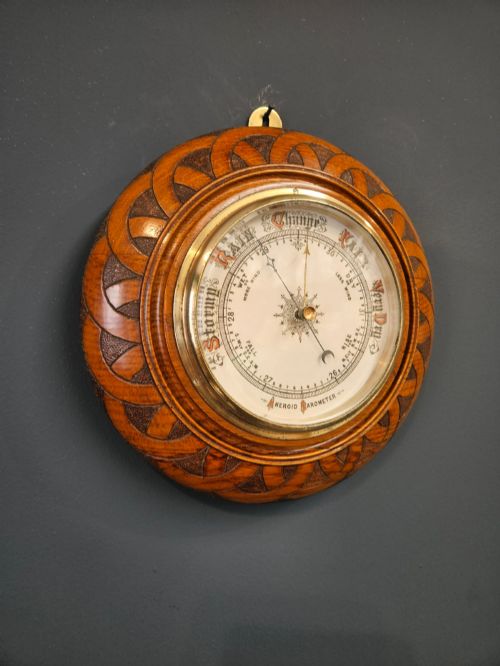
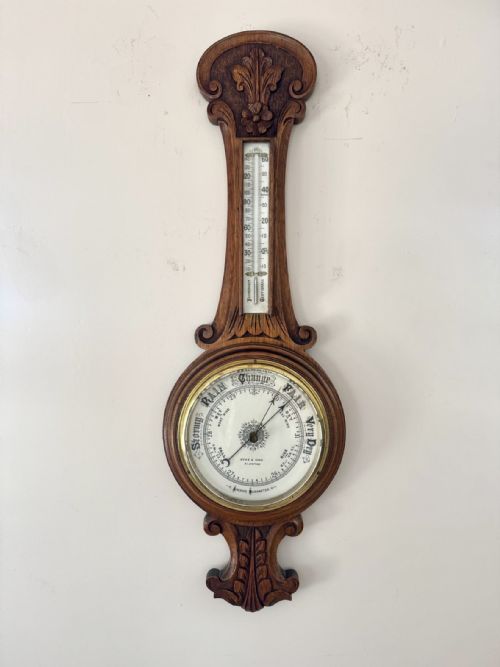
When you search for an oak weather instrument, you encounter domestic scientific objects housed in timber casings spanning the Victorian, Edwardian, and early twentieth-century periods. These domestic scientific tools range from wall-hanging aneroid and stick barometers to desk-bound barographs equipped with chart drawers and thermometers.
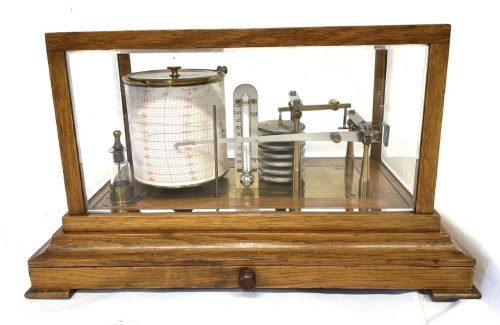
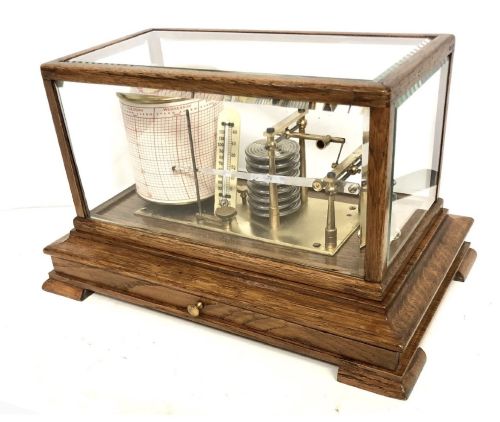
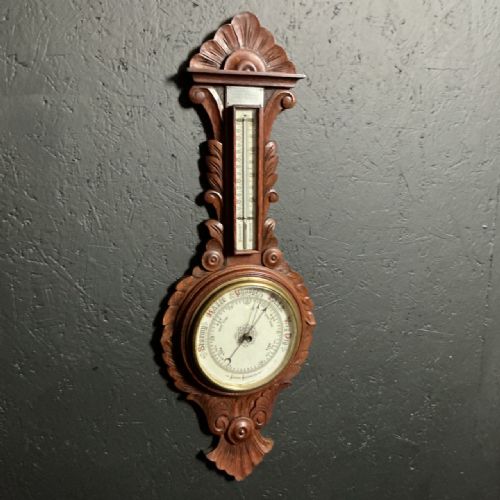
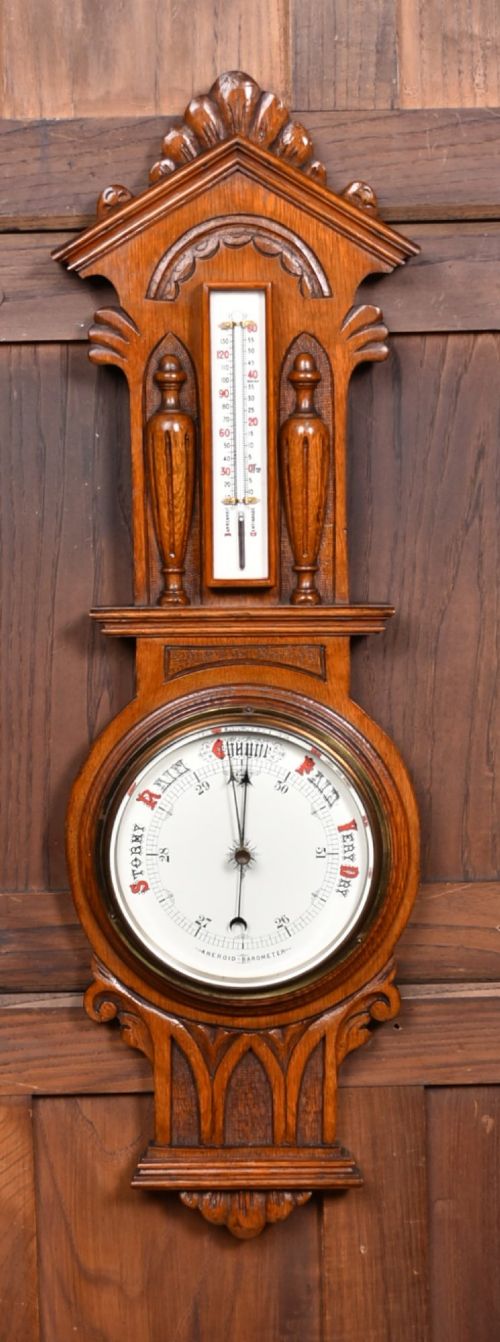
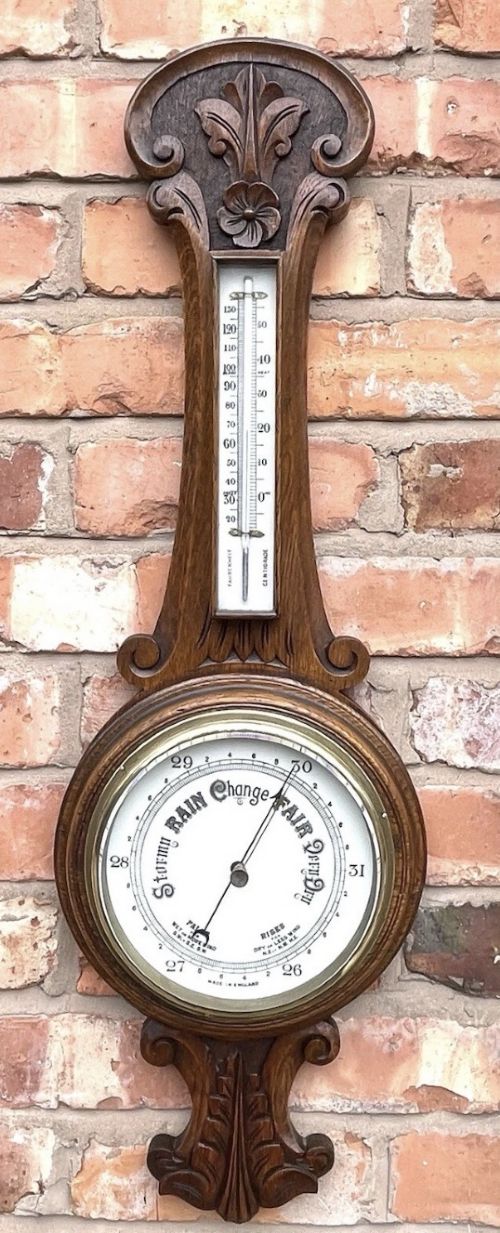
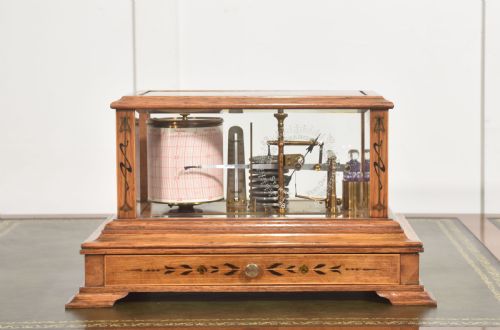
The most common examples on this page are carved oak banjo barometers and heavy five-glass barographs from the late nineteenth century and the Edwardian era. Makers housed these mechanisms in everything from simple turned frames to elaborate Black Forest carved wood cases adorned with birds or geometric designs.
How they were made
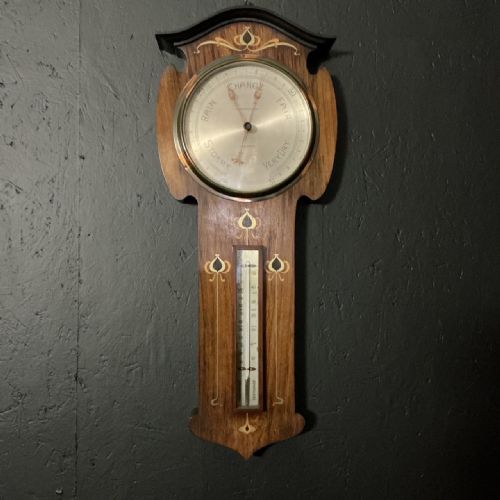
Craftsmen built the housings using solid oak and occasionally walnut, employing deep hand-carving, geometric turning, and Art Nouveau inlay work to decorate the exterior. They fitted these timber frames with bevelled glass panels, ceramic dials, and engraved silvered brass scales to display atmospheric pressure and temperature.
Internal mechanical assemblies combined sensitive aneroid capsules, mercury columns, or clockwork drums for barographs, paired with paper charts for recording pressure over time. Workshops integrated thermometers and spirit levels directly into the carved wooden backboards.
Listings feature oak weather instruments from the Victorian and Edwardian periods, constructed using brass, glass, ceramic, and carved wood.
What varies in quality
The distinction between ordinary and exceptional pieces lies in the crispness of the timber carving and the prominence of the maker. Work from established instrument makers exhibits finer dial engraving and more robust internal linkages than anonymous shop-produced items.
Quality also rests on the preservation of original components, such as intact bevelled glass, legible silvered brass dials, and working chart drawers complete with their original recording mechanisms.
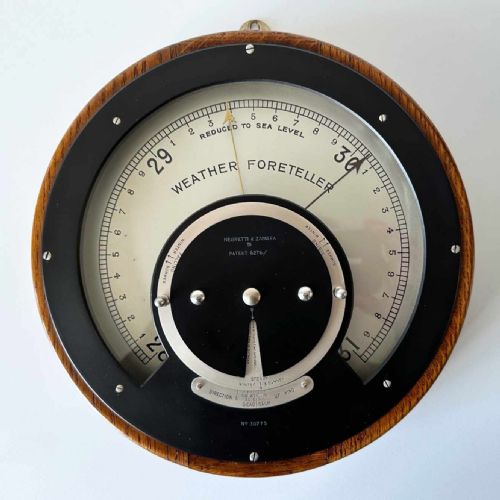
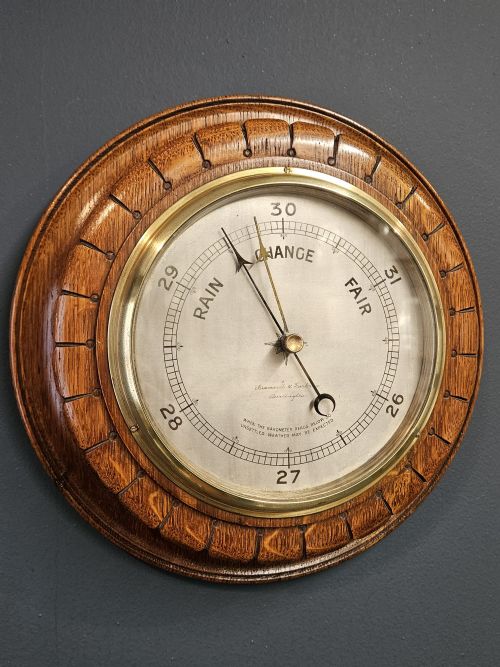
Hyde & Sons Sleaford·Negretti & Zambra·Bramwell & Harbron of Darlington·Short & Mason·Baines Harrogate·W Watson & Sons·J Hughes London
The Oak Weather Instrument Glossary
- Aneroid barometer
- An instrument that measures atmospheric pressure by the expansion and contraction of a flexible metal capsule, omitting the need for liquid mercury. It typically takes the form of a round or banjo-shaped wall instrument.
- Barograph
- A recording barometer that draws a continuous line of atmospheric pressure onto a rotating paper chart secured to a clockwork drum. These are usually housed in five-glass oak cases.
- Stick barometer
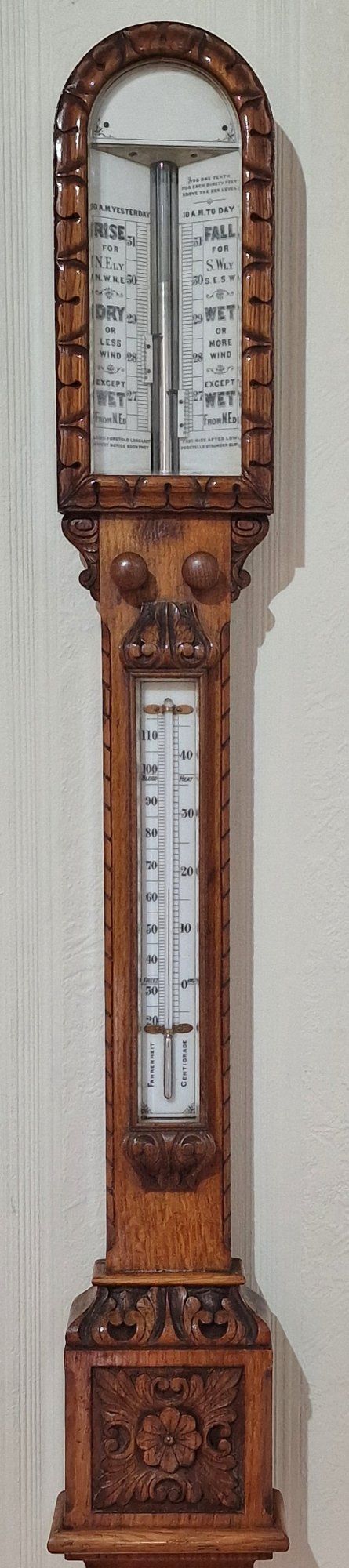
- A tall, vertical barometer containing a mercury-filled glass tube that measures barometric pressure against a visible scale. These often feature enclosed cisterns and thermometer attachments.
- Silvered dial
- A brass or metal dial treated to achieve a frosted silver finish upon which graduations and maker details are engraved. This finish provides clear contrast against the dark wood background.
Oak Weather Instrument: Frequently Asked Questions
How do aneroid and stick barometers differ?
Aneroid barometers utilise a sealed metal capsule to measure air pressure and display the reading on a circular dial. Stick barometers rely on a column of mercury in a vertical glass tube.
Stick models represent an earlier traditional scientific approach, while aneroid versions offer more varied domestic case designs in carved oak.
What is a barograph used for?
A barograph records continuous changes in atmospheric pressure onto a paper chart over the course of a week. A clockwork drum rotates the paper while an arm linked to aneroid capsules traces the line.
These self-recording instruments sat on desks or shelves inside oak and glass enclosures.
How do I date an oak weather instrument?
Dating relies on stylistic clues in the oak case and the formatting of the maker's signature on the dial. Victorian pieces often feature heavy Gothic Revival or geometric carving.
Edwardian and later examples show smoother lines, lighter oak tones, or distinct Art Nouveau inlay patterns.
Where were these instruments placed?
Wall barometers hung in hallways, studies, and entranceways where household members checked conditions before stepping outside. Larger barographs and weather stations occupied prominent surfaces in libraries and offices.
Their substantial wooden frames made them both functional tools and permanent pieces of furniture.