





Mercury Tube Barometer
These mercury tube barometer pieces offer the genuine tactile weight of Georgian, Regency, and Victorian weather observation.
Mercury Tube Barometer
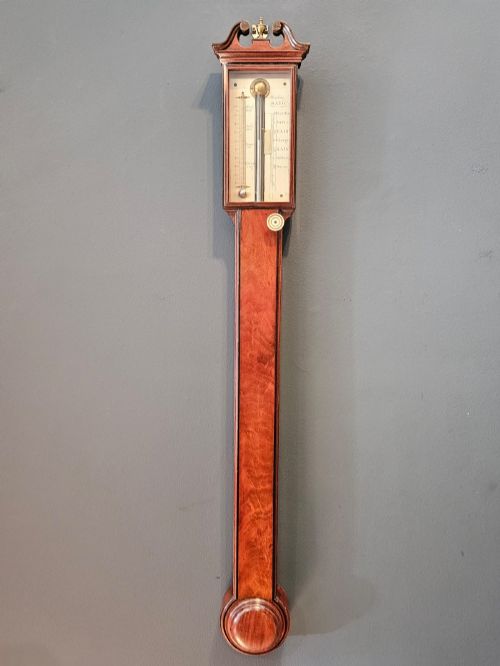
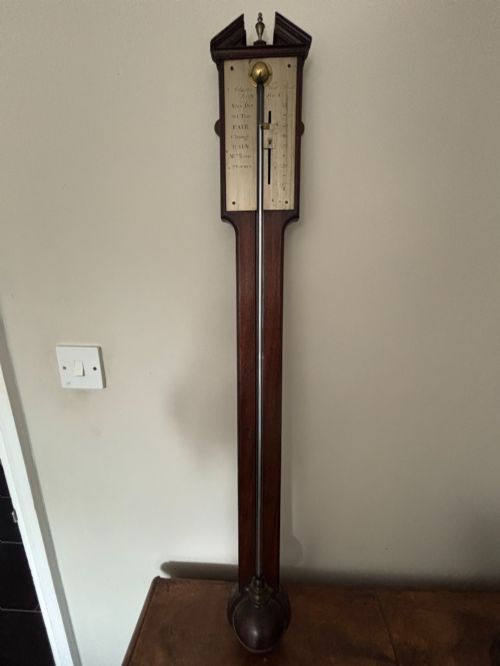
A mercury tube barometer takes the form of a vertical wooden trunk, predominantly fashioned from mahogany, containing the glass column that responds to atmospheric pressure. When collectors search for a mercury tube barometer, they encounter stick forms designed to hang in hallways or libraries to track meteorological shifts.
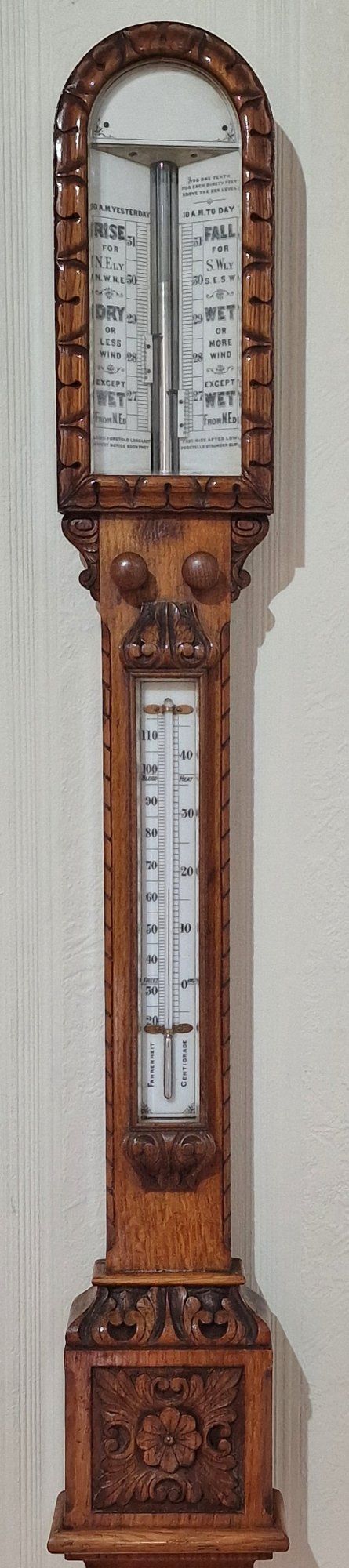
The versions most commonly met on this page span the Georgian, Regency, and Victorian eras, alongside specific nineteenth-century Continental examples. These instruments range from simple domestic indicators to elaborate weather stations incorporating carved oak and specialised scales.
How they were made
Cabinetmakers constructed the primary cases using dense hardwoods such as mahogany, rosewood, and occasionally carved oak or ebonised timber. These wooden trunks house the sensitive glass tubes filled with mercury, paired with silvered metal or silvered brass dials that bear the engraved graduations.
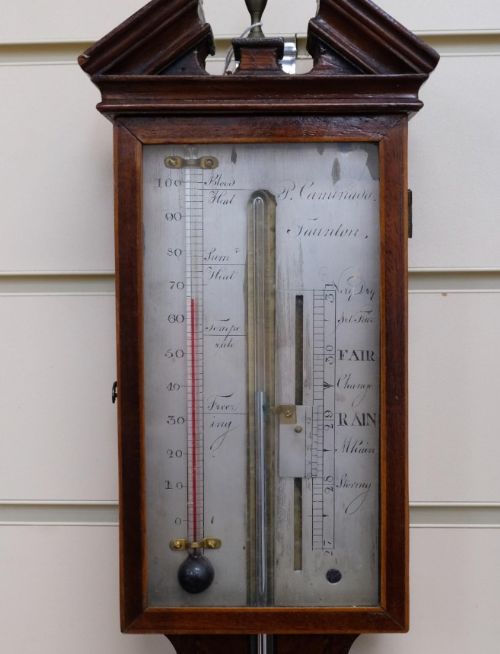
Maker signatures and scale details were frequently etched onto bone, silvered brass, or ceramic plates fitted securely into the upper register of the wooden housing. Brass fittings, including cistern covers and hanging rings, complete the structural assembly.
Early makers occasionally travelled from Italy to set up barometer workshops in provincial British towns.
What varies in quality
The refinement of the cabinetwork and the distinction of the maker separate the standard domestic instrument from the exceptional piece. Signed examples originating from notable London and provincial makers command greater attention through the crispness of their casework and the clarity of their silvered scales.
The integrity of the original glass tube and the survival of secondary materials like bone vernier knobs and brass cistern covers dictate the overall standard of the object. Regional variations, such as Italian names working in British towns or Continental workshop practices, introduce diverse stylistic nuances.
P. Caminada·George Adams London·Negretti & Zambra·S&B Solomons·James Gatty·Ciresa of Milan·J Hicks·Charles Aiano·Tarone Gally & Co.·Corti of Exeter
The Mercury Tube Barometer Glossary
- Stick barometer
- A vertical wall-mounted instrument featuring an exposed or partially glazed glass tube for measuring atmospheric pressure. It represents the primary form found across Georgian and Victorian examples.
- Silvered brass
- A metal alloy treated to produce a bright, reflective surface that takes fine engraved calibrations. This material forms the legible scale plate behind the glass indicator tube.
- Cistern
- The lower reservoir containing the base of the mercury column, often protected by an ornamental wooden or brass cover. Its design varies from simple enclosed boxes to exposed artisanal bowls.
- Vernier
- A small sliding scale attached to the barometer face that permits precise reading fractions of the barometric pressure. It is operated by a small bone or metal adjustment knob.
Mercury Tube Barometer: Frequently Asked Questions
How do I hang a mercury tube barometer safely?
These instruments require secure wall mounting using strong fixings suited to the weight of the dense mahogany or oak case. Hang the barometer upright away from direct heat sources and drafts to protect the delicate internal glass and mercury column.
Ensure the hanging ring or bracket at the top engages firmly with a screw fixed directly into a wall stud or appropriate masonry plug. Level the trunk carefully so the column rests properly within its housing.
Can these barometers still measure weather accurately?
Many historical stick barometers remain responsive to atmospheric changes if the glass tube and mercury column remain intact. They offer a tangible connection to traditional domestic meteorology.
Changes in air pressure drive the mercury level up or down the silvered scale just as they did centuries ago. Minor variations may occur, but the functional mechanism often persists.
How do I tell a Georgian barometer from a Victorian one?
Georgian and Regency instruments generally favour clean, restrained mahogany lines with simple architectural pediments. Victorian models frequently introduce heavier carved oak frames, broader proportions, and more complex weather station configurations.
Examining the style of the script on the silvered brass dial and the construction methods of the wooden case helps clarify the period of manufacture.