

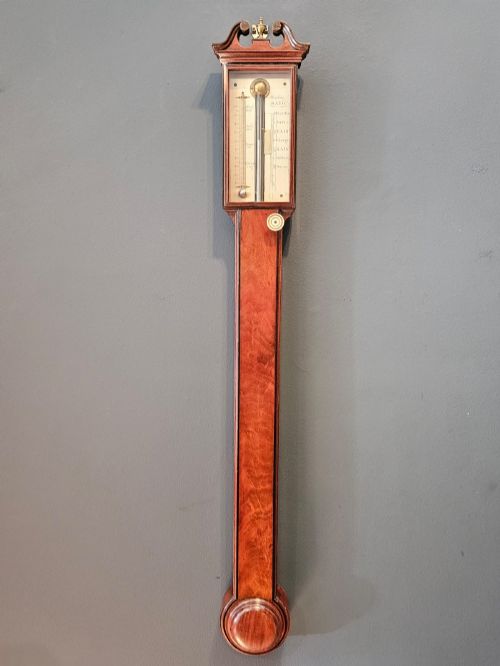
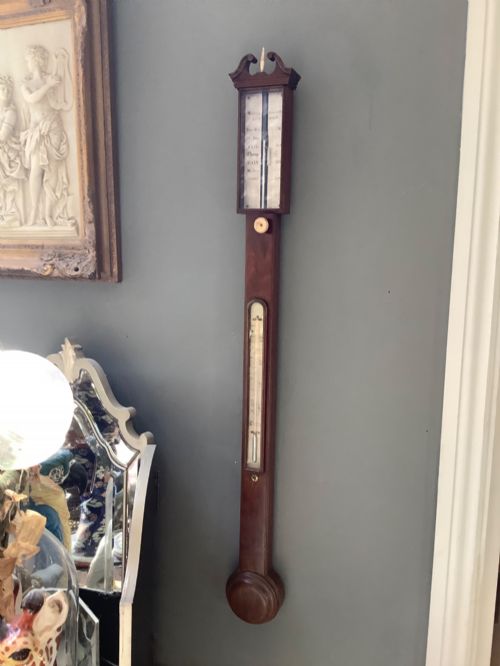

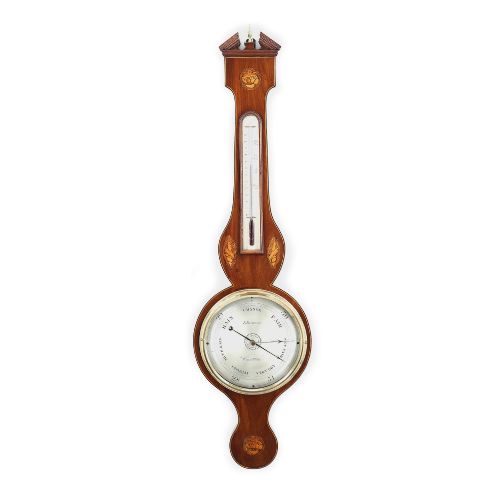
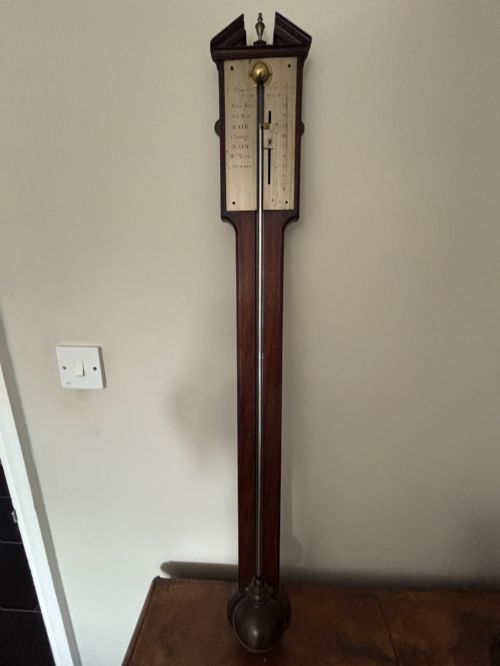
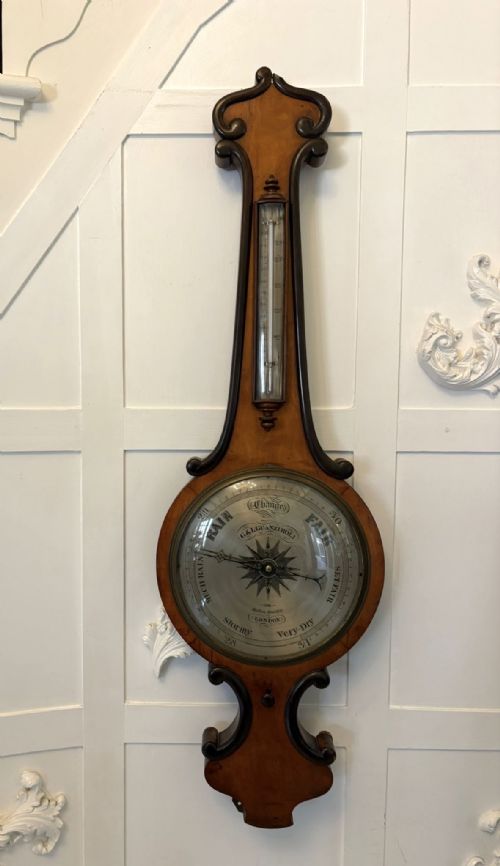


Georgian Mercury Barometer
A georgian mercury barometer measures atmospheric pressure using liquid metal housed in timber frames.

Georgian Mercury Barometer
A georgian mercury barometer is a precision instrument designed to measure atmospheric pressure for weather observation, typically built during the eighteenth and nineteenth centuries.
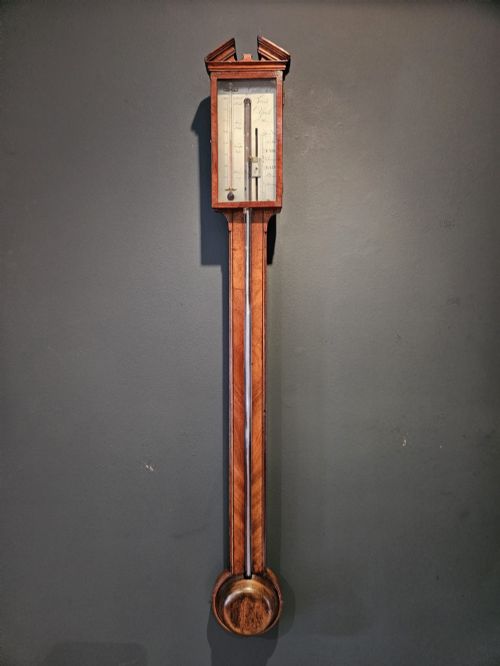
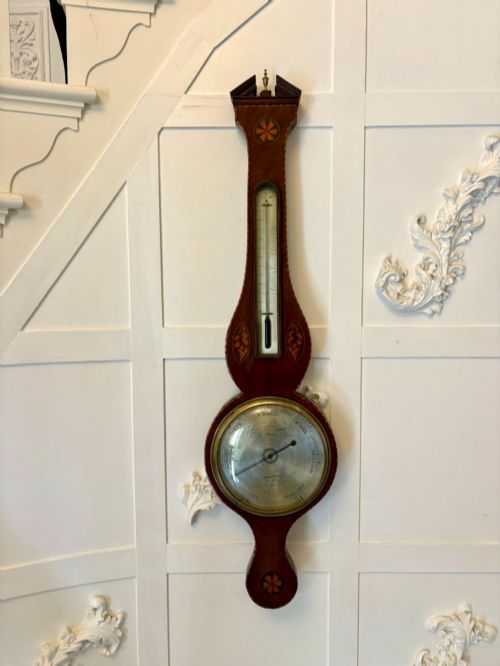
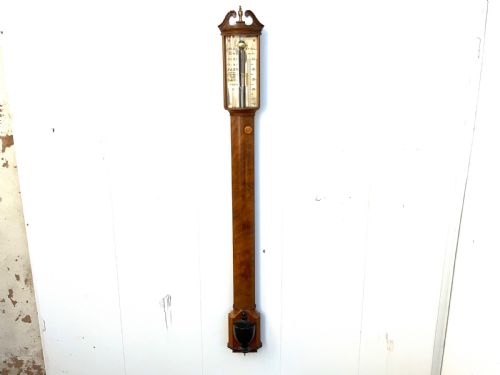
The versions most commonly met on this page include tall, slender stick barometers and wider wheel barometers housed in cases of mahogany, rosewood or walnut.
Makers from London and provincial towns across Britain and Ireland signed these timber instruments, incorporating thermometers and spirit levels into the design.
How They Were Made
Cabinetmakers constructed the main body using dense timbers such as mahogany, rosewood and walnut, often applying boxwood stringing, shell marquetry and mother-of-pearl inlay.
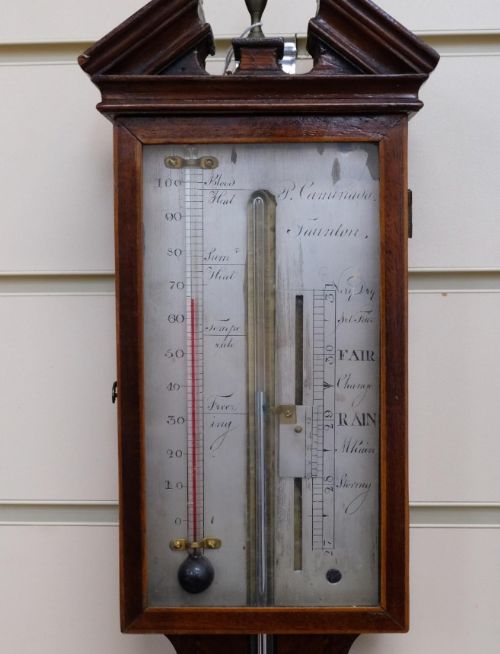
Glass tubes filled with liquid mercury connect to exposed brass or silvered metal dials and scales where atmospheric pressure is read.
Makers integrated bone adjustment keys, turned cistern covers and engraved brass plates into the timber housings.
Georgian Mercury Barometer Retail Price Guide 2026
Typical asking prices for georgian mercury barometer among the pieces listed under this phrase on Sellingantiques today, from the lower quarter to the upper quarter. They describe what is for sale here now, not the wider market.
Listings feature mahogany, rosewood and walnut barometers incorporating glass, brass and bone.
What Varies in Quality
Quality depends upon the crispness of the brass engraving on the dial and the fineness of the cabinetwork in the timber case.
The legibility of the silvered metal plates and the retention of original mercury tubes distinguish standard provincial work from signed metropolitan production.
P. Caminada·George Adams·B. Besozzi·G & L Guanziroli·Dollond of London·Ganthony of London·JB Bergna·Prada of High Wycombe·Molton of Norwich·Luisetti of London·Fagioli·Bate of London·Jenkins Of Old Swindon·Ronchetti Of Holborn·L Casatelli·Roncoroni·H Marks·Sandrino of Liverpool·Hayward of Ashford·Vecchio & Co·Gilbert London·Colombo·G Kalabergo·J Verga·Trulidi
The Georgian Mercury Barometer Glossary
- Banjo barometer
- A wheel barometer housed in a distinctive curved timber case resembling a stringed instrument. These often feature dampness indicators and spirit levels below the main dial.
- Stick barometer
- A tall, narrow instrument where the enclosed mercury tube remains largely exposed against the wooden backplate. This form provides direct readings of barometric height.
- Wheel barometer
- An instrument that translates the movement of mercury in a siphon tube via a pulley and float to turn a pointer around a circular dial. Most examples include a visible thermometer above the main face.
- Silvered brass
- A metal dial plate treated with a mixture of silver powder, salt and tartar to produce a bright, legible surface for engraved numbers. The technique creates a matte finish that reduces glare.
- Cistern
- The enclosed reservoir at the base of the instrument that holds the lower portion of the mercury column. In stick barometers, these are frequently protected by turned wooden covers.
Georgian Mercury Barometer: Frequently Asked Questions
How do these barometers work?
A sealed glass tube filled with mercury responds directly to changes in atmospheric pressure, causing the column to rise or fall.
In wheel instruments, a float resting on the mercury connects to a pulley that turns a pointer around a graduated dial.
Where were these instruments made?
Makers worked in workshops across London as well as provincial towns and cities throughout England, Scotland and Ireland.
Many practitioners originated from Italian immigrant families who settled in British urban centres to practice instrument making.
How do I hang a wall barometer?
These instruments require secure mounting from a heavy brass ring or bracket attached firmly to the upper backplate.
Because the internal mercury tube is sensitive to alignment, the case must hang plumb against a stable wall surface.
How do I identify the period?
Stylistic details in the timber case, such as shell inlay, pediment shapes and dial designs, point to specific decades.
Signatures engraved on the metal dial plates often allow direct identification of the maker and their working dates.