


Brown Oak Barometer
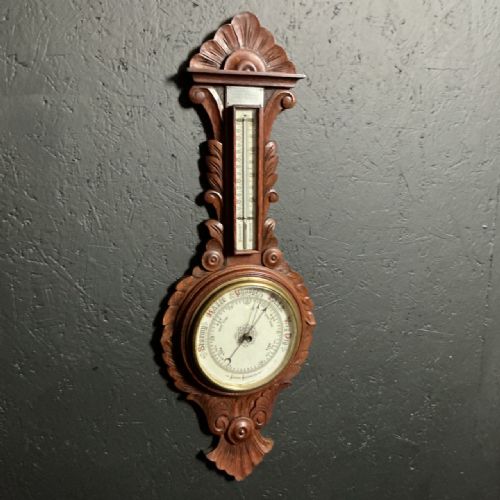
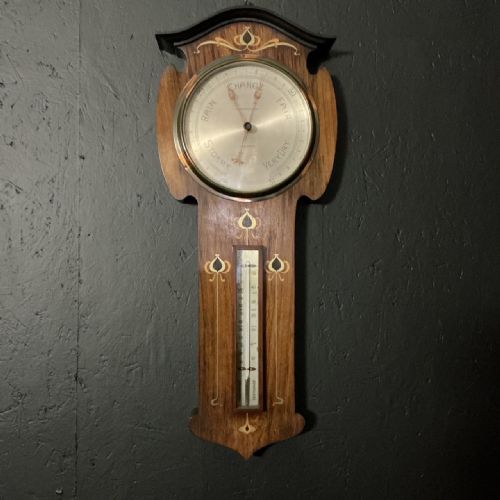
These brown oak barometers are solid timber weather instruments built to last, offering both practical meteorological records and striking Victorian wall presence.
What these brown oak barometers are
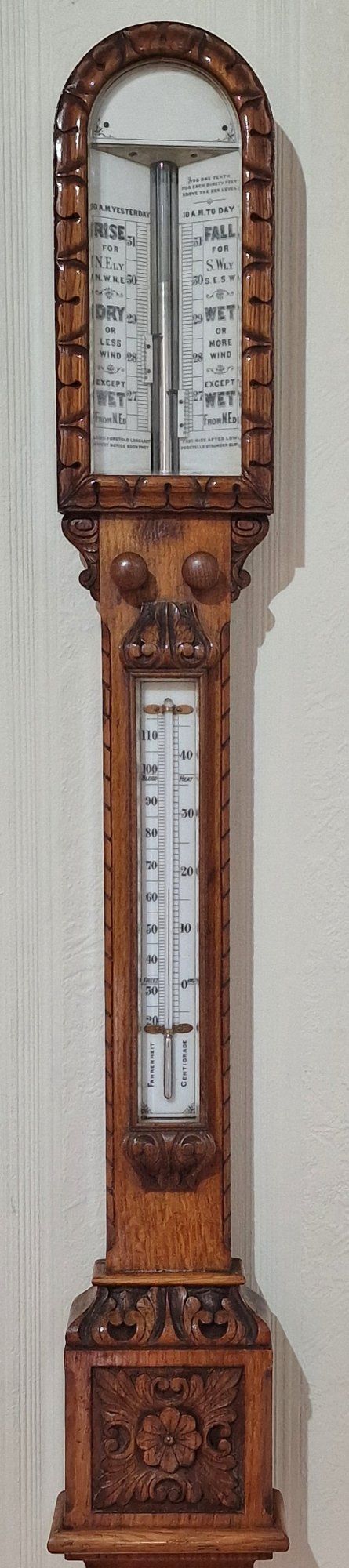
A brown oak barometer brings rich timber grain and period utility to a wall, showing the atmospheric pressure shifts that guide daily weather. When searching for a brown oak barometer, collectors encounter solid timber cases housing sensitive recording mechanisms behind glass panels.
The selections span Victorian geometric designs, carved Black Forest models, Admiral Fitzroy storm barometers, and mechanical barographs housed in glazed oak boxes. These instruments originate from the nineteenth and early twentieth centuries, reflecting the era's fascination with domestic meteorology.
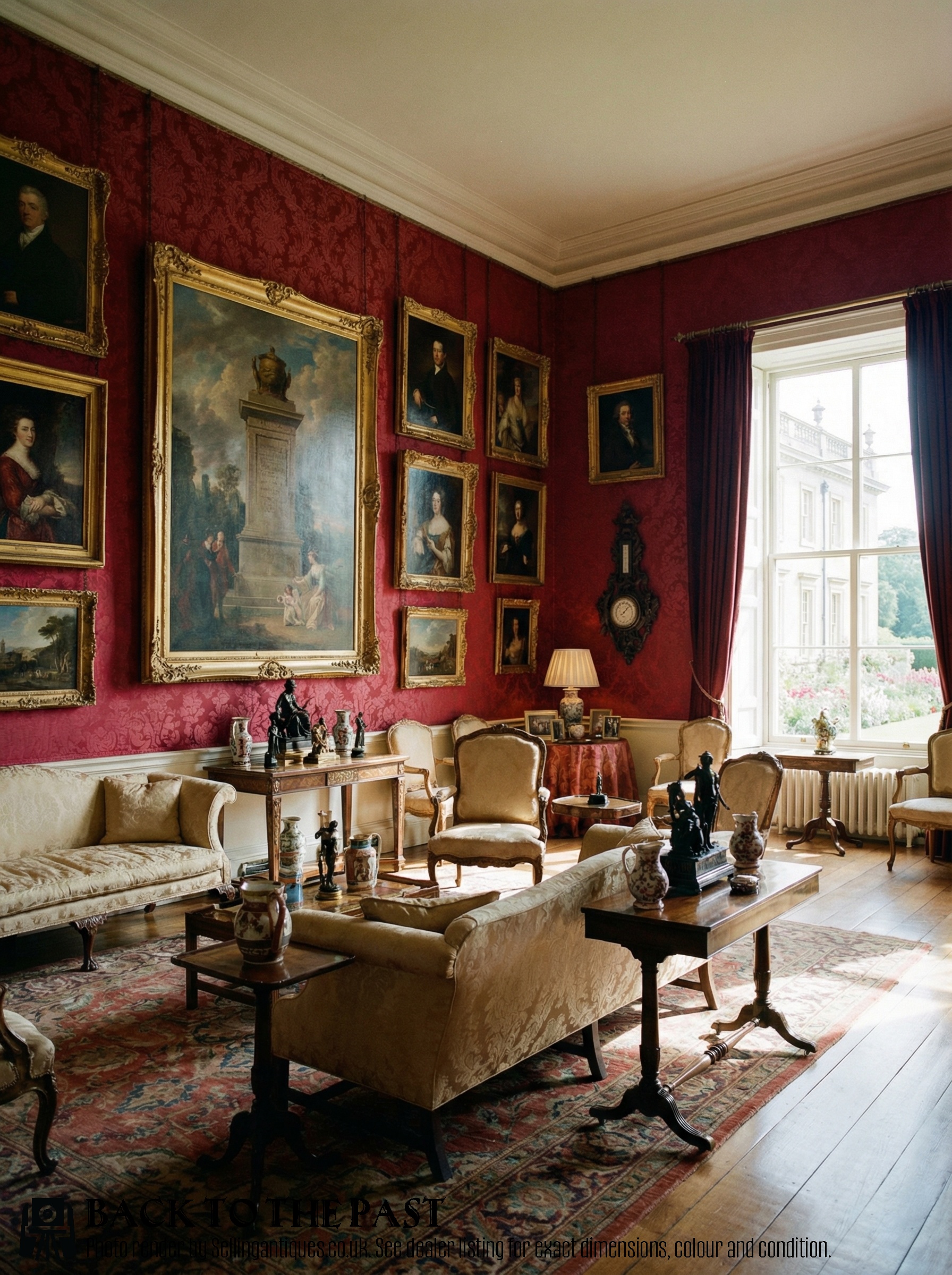
Wall hanging configurations dominate the pieces seen here, designed to be mounted securely in hallways, studies, or libraries. Each specimen displays the distinctive darker tones and figuring characteristic of mature oak timber used by period makers.
How they were made
Cabinet makers selected dense oak timber, shaping the cases through hand carving, geometric panelling, or Black Forest styling. The wood received careful finishing to accentuate the natural brown grain without obscuring the organic texture.
Makers integrated brass bezels, hinges, and dials alongside protective glass panels to house the paper charts and mercury or aneroid movements. Metal components were cast, turned, and polished to contrast against the dark timber surrounds.
Retail Price Guide 2026
Typical UK retail prices for brown oak barometer, calculated from the Sellingantiques database of over a million retail prices indexed since 2003. This retail price guide relies exclusively on Sellingantiques data; no external sources or auction records are used, so the figures do not describe the wider market.
Some barometers include weather forecasts printed directly on paper dials, offering confident predictions regardless of actual conditions.
What varies in quality
The distinction between standard examples and superior pieces rests on the depth of the carving and the complexity of the timber case design. Geometric casing and intricate Black Forest carving require high levels of joinery skill, elevating the visual weight of the instrument.
Signatures from noted makers and scientific instrument firms elevate certain pieces above anonymous workshop productions. The clarity of the paper dials, the precision of the brass fittings, and the preservation of the original glass further separate exceptional survivals from simpler domestic barometers.
Short And Mason·J Hicks Of London
The Brown Oak Barometer Glossary
- Barograph
- A self-recording aneroid barometer that charts atmospheric pressure onto a rotating paper drum over a week. This mechanical device provides a continuous visual history of weather changes.
- Admiral Fitzroy barometers
- Specialised weather-glass instruments developed to warn mariners and households of impending storms through chemical reactions in liquid solutions alongside traditional barometric dials. They often feature detailed instructions printed on paper scales.
- Android barometer
- A mechanical pressure-sensing instrument utilising a flexible metal box that expands or contracts with barometric shifts. It replaced traditional liquid mercury columns in many domestic wall instruments.
- Bezel
- The metal ring that holds the protective glass face in position over the barometer dial. It is typically manufactured from polished brass.
- Black Forest style
- A carving tradition originating in central Europe known for deeply sculpted natural motifs, foliage, and animals applied to wooden items. These cases display high relief work on solid timber.
Frequently Asked Questions
How do I mount a wall barometer?
Secure the hanging bracket directly into a wall stud or use heavy-duty wall anchors suitable for the weight of solid oak timber.
Ensure the instrument hangs completely vertical so the internal mechanics operate without friction or misalignment.
Do these barometers still show weather?
Many mechanical movements remain functional and respond accurately to local atmospheric pressure changes after proper calibration.
Compare readings with a trusted local meteorological source before adjusting the internal linkage screw.
How do I care for the oak case?
Dust the timber regularly with a dry, soft cloth and keep the instrument away from direct sunlight and heat sources.
Apply a microcrystalline wax occasionally to nourish the brown oak grain without building up heavy residues.
How do I identify a Victorian piece?
Examine the construction methods, such as hand-cut joinery, older brass fixings, and traditional paper dial typography.
Stylistic cues like geometric mouldings or deep relief carving point directly to nineteenth-century workshop practices.