
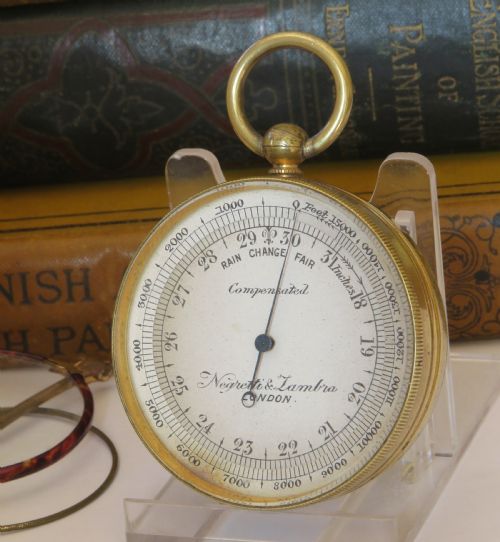
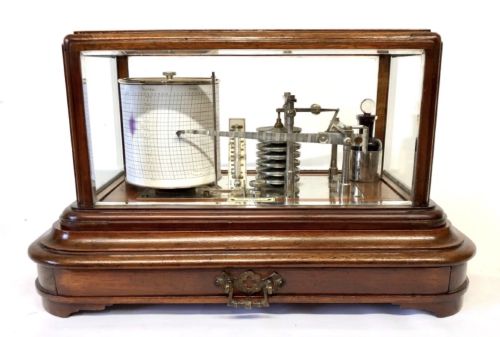
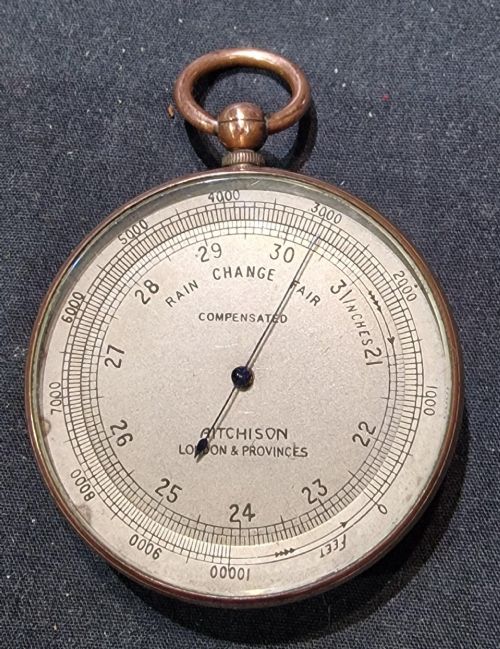


Maritime Aneroid Barometer
A maritime aneroid barometer is a dependable instrument for charting weather changes, housed in robust timber and brass.
What They Are
A maritime aneroid barometer brings reliable barometric reading into homes and cabins without requiring a traditional liquid column. These instruments measure atmospheric pressure mechanically through a sealed metal capsule that expands or contracts.
The versions met on this page span the Victorian period, originating from around eighteen sixty to nineteen hundred. Examples include circular beechwood casings alongside substantial designs in oak and mahogany.
Some pieces feature large twelve inch dials signed by makers in London and Gosport. Others present as simpler circular wall instruments suited to everyday domestic spaces.
How They Were Made
Casings utilise solid hardwoods such as oak, mahogany, and beechwood, turned or joined to house the sensitive inner mechanism. These timbers are polished or finished to protect against moisture.
Brass is employed for bezels, fittings, and hanging rings, framing the glazed face that shields the paper or metal dial. Heavy glass protects the painted indicator needles and printed graduations.
Retail Price Guide 2026
Typical UK retail prices for maritime aneroid barometer, calculated from the Sellingantiques database of over a million retail prices indexed since 2003. This retail price guide relies exclusively on Sellingantiques data; no external sources or auction records are used, so the figures do not describe the wider market.
Some nineteenth century captains trusted these brass-rimmed dials more than their first mates.
What Varies in Quality
Quality rests in the precision of the signed dial and the crispness of the timber turning or joinery. Maker signatures from London workshops elevate an instrument beyond anonymous domestic items.
The weight and finish of the brass bezel alongside the clarity of the protective glass distinguish superior examples. Substantial oak and mahogany housings show greater care in cabinet work than simple beechwood variants.
Blake and Son·M Pillischer
The Maritime Aneroid Barometer Glossary
- Aneroid barometer
- A device that measures air pressure using a flexible metal capsule rather than liquid mercury. It offers a compact and stable reading for domestic or sea use.
- Dial
- The face of the instrument where pressure changes are indicated by a needle moving across printed scales. Victorian versions often display weather forecasts alongside millibar or inch markings.
- Bezel
- The metal ring that holds the glass cover in place over the dial. Brass is the traditional choice for maritime instruments to resist corrosion.
- Victorian
- The period spanning the reign of Queen Victoria from eighteen thirty seven to nineteen zero one. Pieces from this era often display robust hardwood construction and clear maker signatures.
Frequently Asked Questions
How does an aneroid barometer work?
An aneroid barometer uses a small, flexible metal box called an capsule that expands or contracts as atmospheric pressure changes. Connected levers translate this movement directly to the dial needle.
This mechanical design removes the need for liquid mercury, making the instrument safer and easier to mount on walls or ship bulkheads.
Where should I hang a barometer?
Hang your barometer on an interior wall away from direct sunlight, radiators, and heavy draughts. Stable ambient temperatures ensure the internal metal capsule responds accurately to true barometric shifts.
Traditional maritime instruments look well in studies, hallways, or living rooms where timber frames complement existing decor.
How do I date these barometers?
Dating relies on the style of the timber casing, the typography of the dial, and any engraved maker signatures. Victorian pieces often feature characteristic lettering and dense hardwoods like oak and mahogany.
Recorded dates on this page span from eighteen sixty to nineteen hundred, marking the height of British instrument making.
Can I calibrate my barometer?
Most barometers include a small adjustment screw accessible from the back or through the dial face. You can match the reading to your local meteorological office measurement.
Regular calibration keeps the pointer accurate for tracking approaching weather changes in your area.