
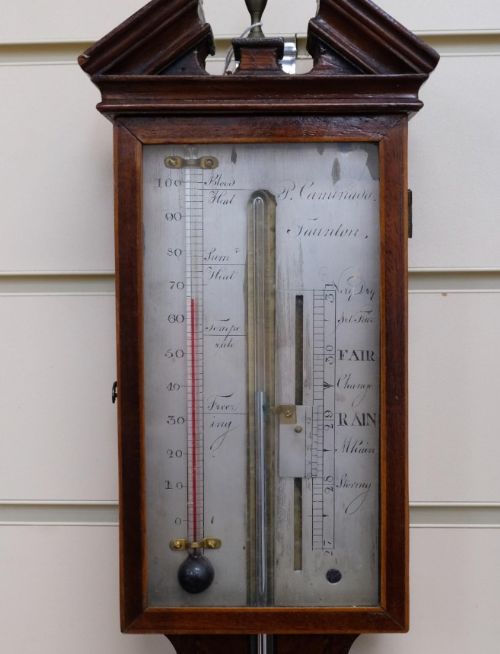

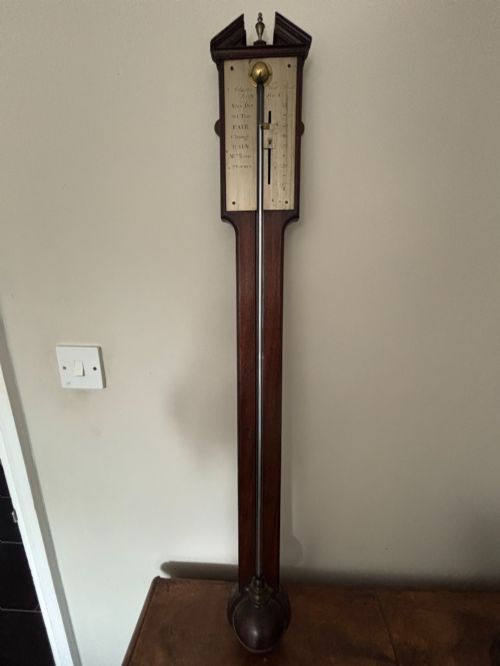
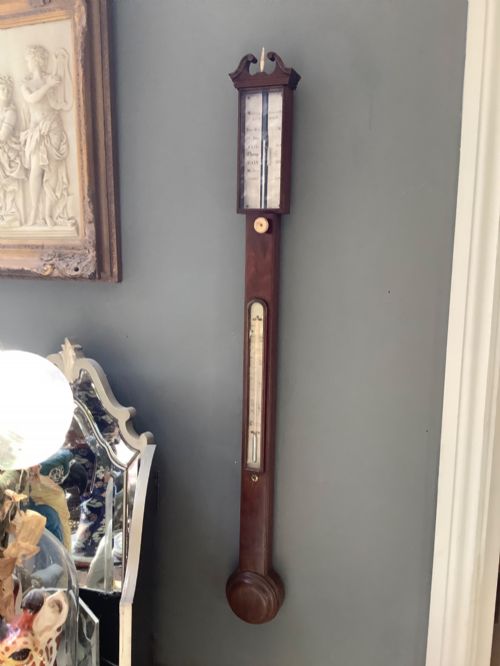
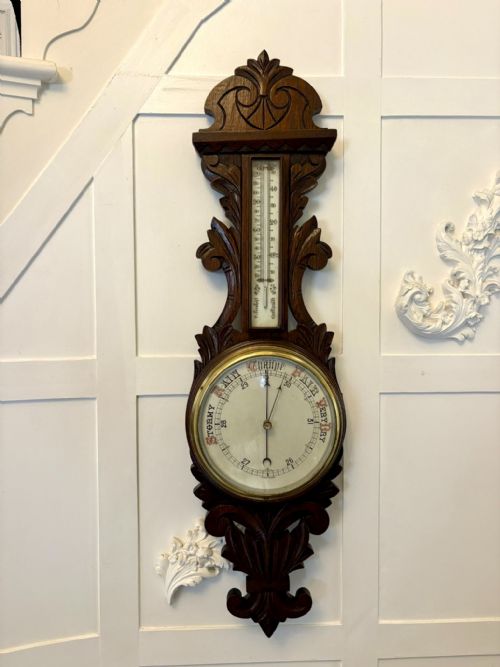


Dark Wood Weather Glass
Dark wood weather glass pieces measure atmospheric pressure through centuries of polished mahogany, rich rosewood, and carved oak.
Dark Wood Weather Glass
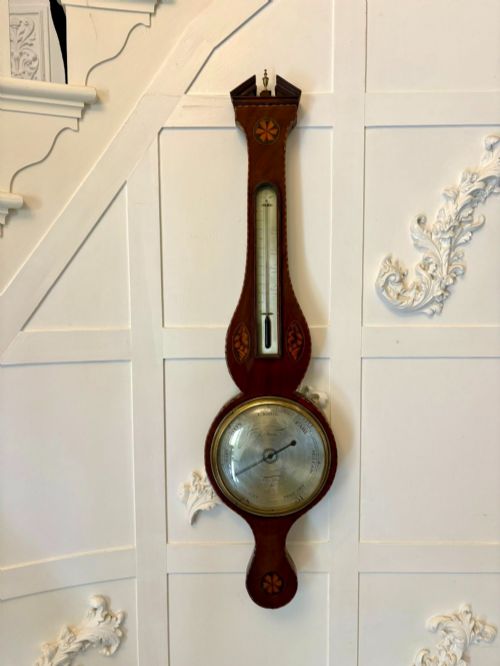
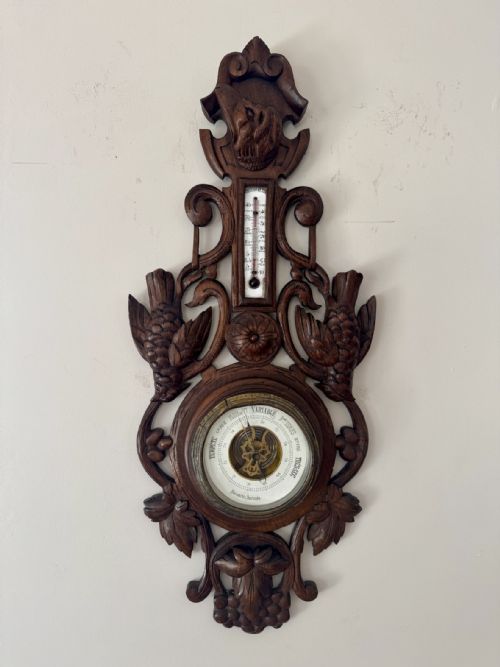
A dark wood weather glass brings domestic meteorological recording into the room through traditional barometer forms spanning Georgian, Victorian, and Edwardian periods. Buyers encounter stick barometers, wheel or banjo barometers, and carved wall pieces originating from British workshops and continental centres like the Black Forest.
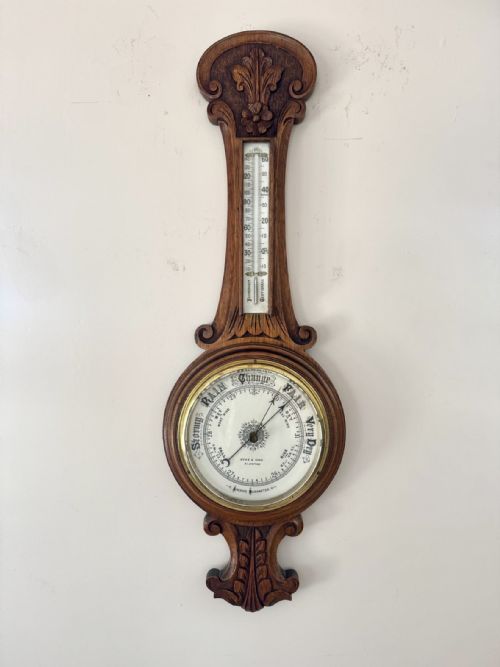
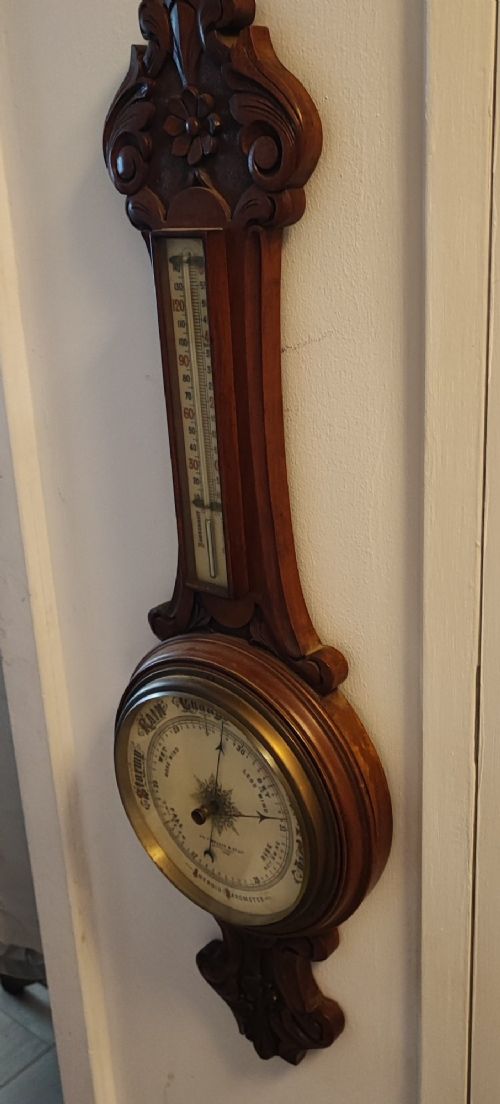
The selection ranges from upright mercurial stick barometers housed in figured mahogany or rosewood to elaborate carved oak and walnut banjo instruments featuring thermometer dials and mother-of-pearl inlay. Wall-hung aneroid and mercury systems dominate the selection, offering both functional barometric reading and decorative cabinetwork.
Woods and barometric mechanics
Maker construction relies heavily on dense tropical hardwoods including mahogany, rosewood, and walnut, alongside domestic oak, shaped into slender trunk cases or wide banjo bodies. These timber housings are frequently enriched with shell marquetry, boxwood stringing, or mother-of-pearl inlay.
Internal instrumentation combines brass scales, bone or ceramic dial plates, and delicate glass tubes filled with mercury or connected to aneroid vacuum chambers. Cabinets often incorporate spirit thermometers and exposed skeletal movements beneath protective glass bezels.
Dark Wood Weather Glass Retail Price Guide 2026
Typical asking prices for dark wood weather glass among the pieces listed under this phrase on Sellingantiques today, from the lower quarter to the upper quarter. They describe what is for sale here now, not the wider market.
Site listings feature nineteenth-century weather instruments executed in mahogany, rosewood, oak, and walnut.
Distinctions in construction and cabinetry
Quality rests in the precision of the cabinetmaker's joinery, the choice of figured timber veneers, and the legibility of the engraved brass or ceramic scale plates. Superior examples display crisp hand-carved ornamentation, such as the deep foliage of Black Forest frames or fine floral marquetry.
The distinction between standard workshop production and master instrument maker output appears in signed silvered dials and complex mechanical configurations like long-range tubes. Original untouched surfaces and intact glass components elevate an instrument above later replacements.
Negretti & Zambra·Hyde & Sons Sleaford·James Pitkin London
The Dark Wood Weather Glass Glossary
- Banjo barometer
- A large wall barometer shaped like a banjo, featuring a circular dial at the top and a long trunk containing the weather glass. These instruments often include built-in thermometers and hygrometers.
- Stick barometer
- A tall, slender wall instrument enclosing a vertical mercury tube against a calibrated scale. This form provides direct barometric readings without multiplying gears.
- Aneroid barometer
- A barometer that measures atmospheric pressure through the expansion and contraction of a sealed metal capsule rather than liquid mercury. It allows for compact dial layouts and varied case designs.
- Marquetry
- Decorative woodwork where thin pieces of various timbers and shell are fitted together to form pictorial patterns on furniture and barometer cases. This technique defines high-style Neo-Classical pieces.
Dark Wood Weather Glass: Frequently Asked Questions
How do I read a stick barometer?
Observe the height of the mercury column against the engraved brass scale to track rising or falling atmospheric pressure.
Vernier scales allow precise reading down to fractions of an inch or millibar.
Where should I hang a wall barometer?
Mount the instrument on an interior wall away from direct sunlight, central heating radiators, and drafts.
Stable ambient temperatures prevent inaccurate mechanical expansion in aneroid movements and protect antique timber cases.
Are mercury barometers safe to keep?
Enclosed glass cisterns safely contain the liquid metal during normal domestic display and atmospheric monitoring.
Avoid tilting or inverting the instrument during handling to prevent air from entering the delicate glass tube.
How do I identify a Georgian barometer?
Examine the case for simple architectural proportions, architectural pediments, and understated mahogany or rosewood veneers.
Earlier instruments often feature exposed cistern covers and handwritten maker signatures on the interior paper scales.