



English Mercury Barometer
An English mercury barometer is a domestic weather gauge that measures atmospheric pressure, prized for its combination of fine cabinetmaking and scientific utility.
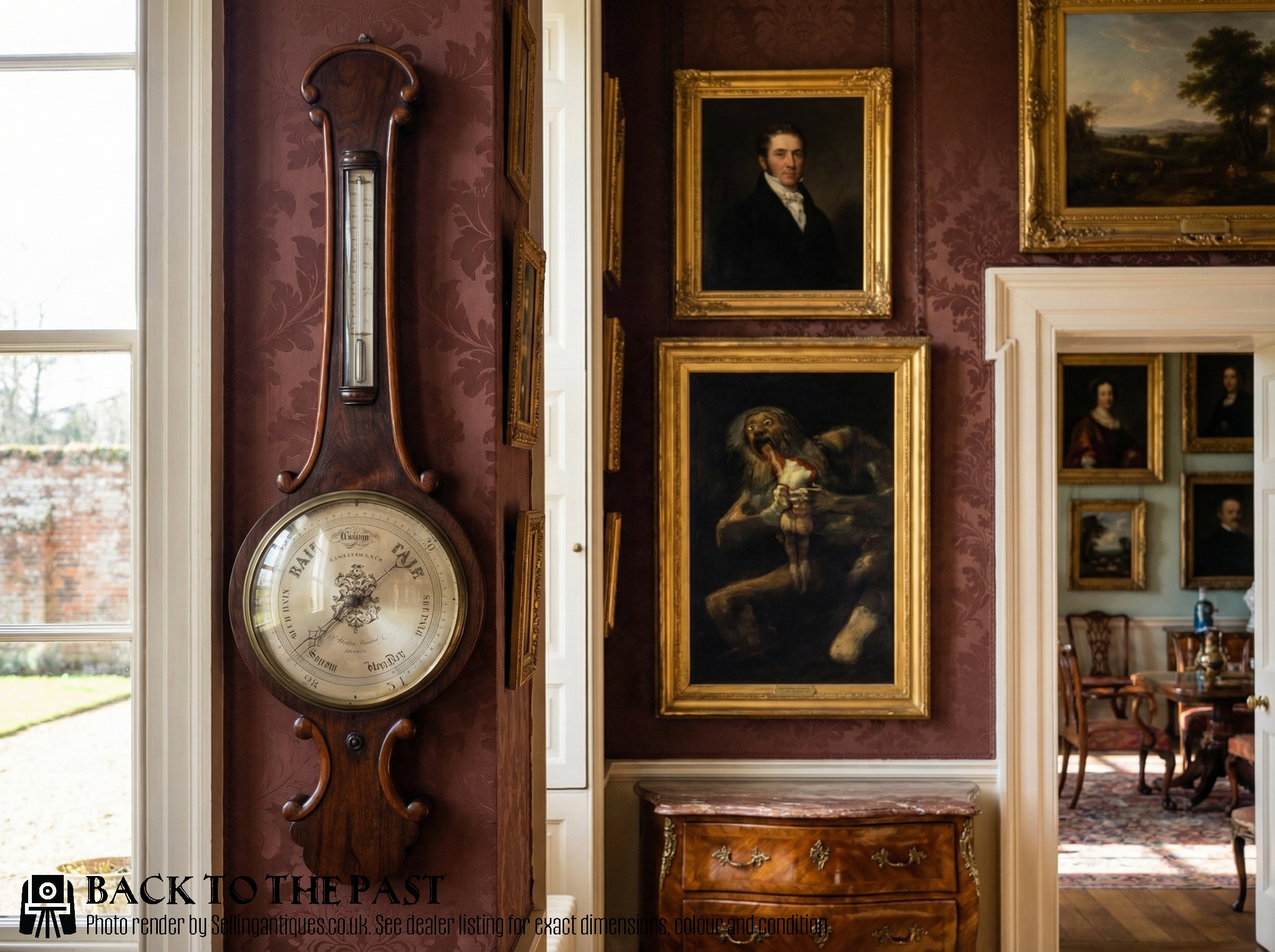
English Mercury Barometer
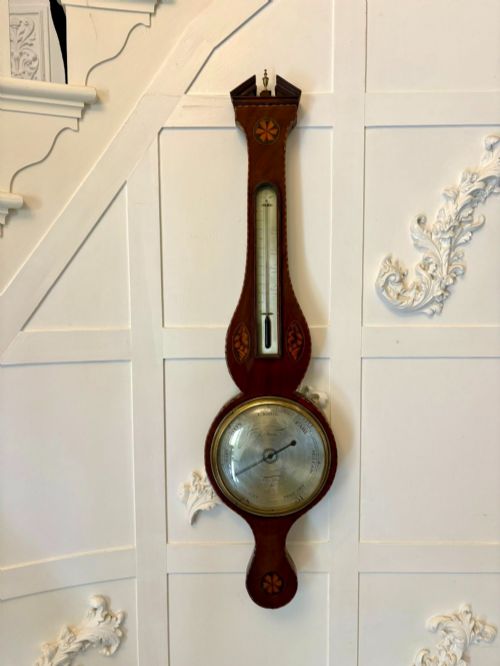
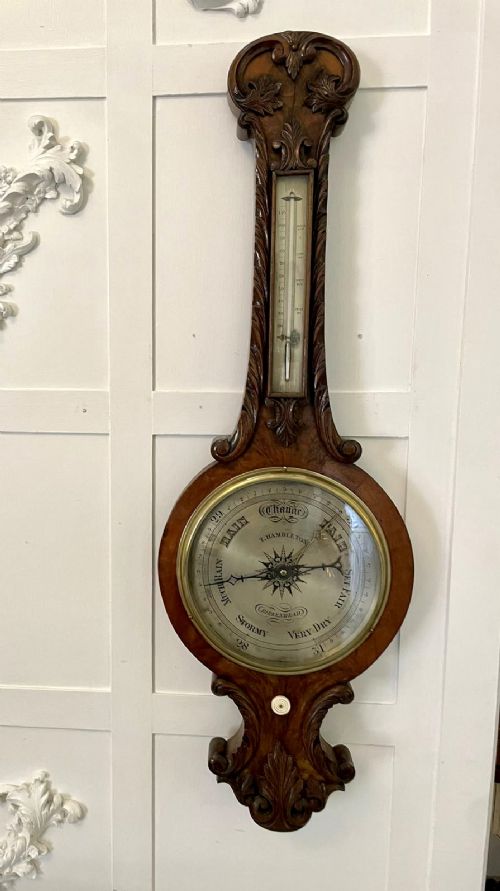
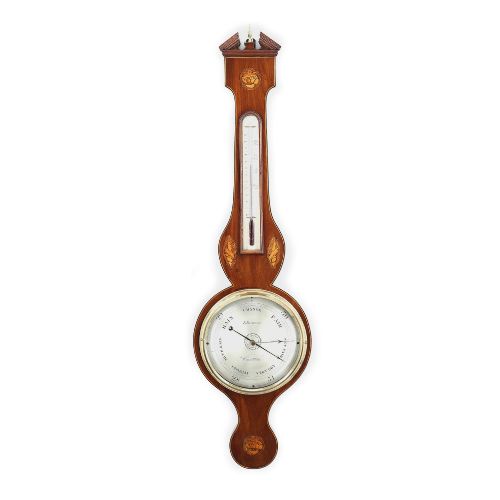
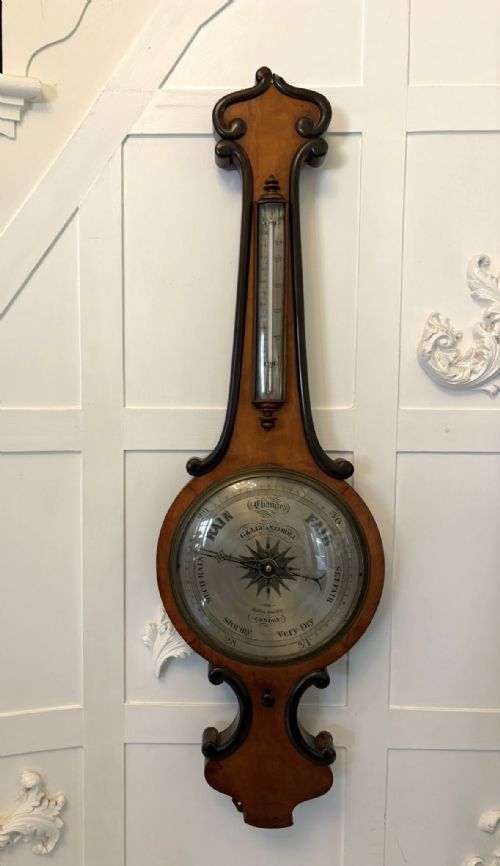
When you search for an english mercury barometer, you encounter instruments housed in wooden wall-hanging cases that span the eighteenth and nineteenth centuries. The selection encompasses both wheel barometers, featuring large round dials, and slender stick barometers.
Mahogany and walnut form the primary timber choices for these enclosures, frequently detailed with bone dials and brass fittings. Makers constructed these pieces across Georgian, Regency and Victorian periods, reflecting shifting domestic tastes.
The version you meet most often on this page is the nineteenth century wheel barometer housed in a mahogany case. These wall barometers combine mercury columns with spirit thermometers and hygrometers in a single display.
Materials and construction
Cabinetmakers shaped dense hardwoods including mahogany, walnut and rosewood into tall stems and rounded heads to protect the fragile glass tubes within. Boxwood inlays and silvered metal register plates supplied contrast to the dark wood grains.
Instrument makers sealed liquid mercury inside blown glass tubes mounted against wooden backboards to respond to barometric pressure shifts. Graduated scales etched onto silvered brass or metal plates allowed users to read weather changes directly.
Judging quality and execution
The refinement of the cabinetwork separates standard production pieces from exceptional examples. Finer barometers display careful wood selection, precise shell or line inlays, and carved architectural details such as onion tops or broken pediments.
The legibility and engraving quality of the silvered metal dial indicate the maker's standing. Crisp script, decorative floral engraving and signed maker plates distinguish superior scientific instruments from utilitarian ones.
B. Besozzi of Weymouth·G & L Guanziroli London·Prada of High Wycombe·Molton of Norwich·Luisetti of London·J Hughes London·W.E. Pain of Cambridge·Negretti & Zambra, London·Sandrino of Liverpool·Hayward of Ashford·Gilbert London·Bianchi Ipswich·James Gatty London·Charles Aiano London·Gowland London·Joseph Somalvico & Co·A Pinchetti & Co London·Dominic Gatty·Russell of Liverpool·L Malacrida London·George Dollond of London
The English Mercury Barometer Glossary
- Wheel barometer
- A weather glass utilising a float on the mercury column connected to a pulley and pointer, displaying atmospheric pressure on a circular dial. This form dominated nineteenth century domestic interiors.
- Stick barometer
- A vertical instrument housing an exposed or glass-enclosed mercury tube against a narrow wooden backboard, offering direct reading of the barometric column height.
- Marine barometer
- A specialised stick barometer suspended on gimbals to maintain a vertical position aboard ship despite the rolling of the vessel.
- Silvered metal
- Brass treated with a silver compound to produce a pale, reflective surface for engraved measurement scales and maker signatures.
- Shell inlay
- Decorative marquetry using contrasting lighter woods, often boxwood, cut into the symmetrical shape of a fan or shell upon the mahogany case.
English Mercury Barometer: Frequently Asked Questions
How do I read an english mercury barometer?
You read the instrument by observing the height of the mercury column within the glass tube or by noting the position of the pointer on a circular dial. Rising levels indicate fair weather while falling levels suggest approaching rain or storm.
Most wheel models include an auxiliary spirit thermometer and a manual pointer set by hand to track changes against the current reading.
Where should I hang a wall barometer?
Hang your barometer on an interior wall away from direct sunlight, central heating radiators and draughty doorways. Stable ambient temperatures ensure the mercury responds accurately to atmospheric pressure rather than localized heat.
Secure the instrument firmly to a wall plug or stud using the hanging bracket provided on the back of the wooden case.
How do I date a mahogany wheel barometer?
Dating relies on stylistic details of the wooden case, the shape of the pediment at the top, and the complexity of any inlay work. Earlier Georgian pieces tend toward simpler architectural lines while Victorian examples often feature heavier carved walnut or rosewood.
Maker signatures engraved on the silvered dial plate also allow comparison against known operational dates for individual workshops.
What is the difference between stick and wheel barometers?
Stick barometers display the actual height of the mercury column directly against a vertical scale, offering greater scientific precision. They are housed in narrow, linear wooden trunks.
Wheel barometers translate the movement of the mercury into rotational motion via a concealed pulley, presenting the weather indications on an easy-to-read circular dial.