


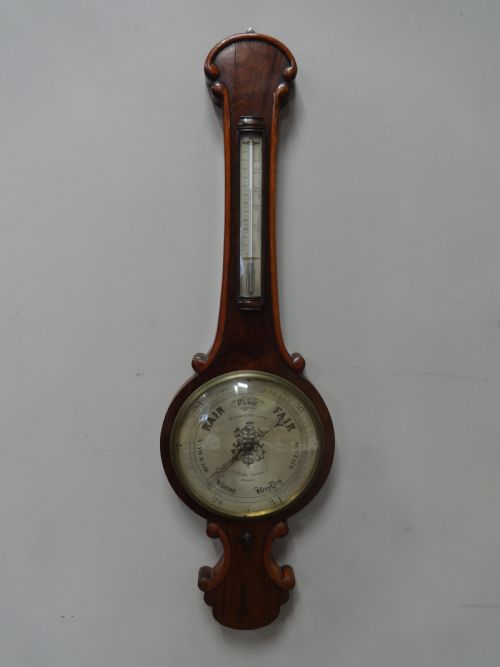


Dark Rosewood Barometer
A dark rosewood barometer brings rich timber grain and precision weather-reading into a room, offering both practical function and period elegance.
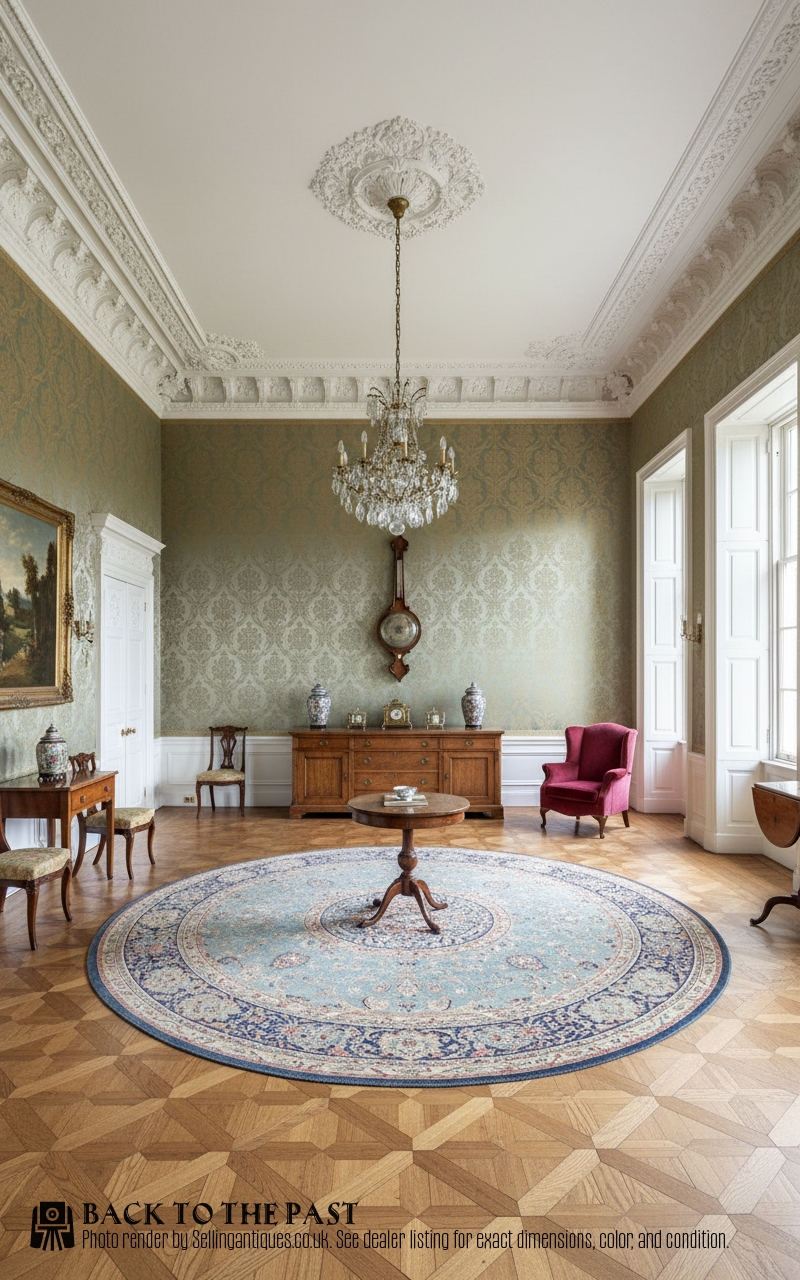
Dark Rosewood Barometer
A dark rosewood barometer sits among domestic instruments from the nineteenth century, including wheel, banjo, mercurial, aneroid, and stick variants. These pieces combine scientific utility with cabinet-making craft, designed to measure atmospheric pressure in domestic settings.
Victorian examples dominate the selection, alongside items spanning the Georgian, Regency, and nineteenth-century periods. The common thread is the dense, dark rosewood timber housing, frequently enriched with contrasting inlay.
Common formats include banjo barometers featuring a prominent round dial above a long trunk, as well as stick barometers and wheel barometers equipped with thermometers. Makers housed these mechanisms in cases embellished with mother-of-pearl, boxwood inlay, and brass fittings.
How they were made
Cabinet-makers constructed the cases from solid rosewood or rosewood veneers applied to secondary timbers, selecting the dense grain for its deep colour and durability. They incorporated glass plates to protect the delicate dials and mercury columns from damage.
Artisans decorated the dark timber surfaces using boxwood inlay and mother-of-pearl to create floral and geometric motifs. Silvered metal dials provided clear, legible graduations for reading barometric pressure and temperature.
Listings span the nineteenth century, encompassing Victorian, Georgian, and Regency styles built from rosewood, glass, brass, and mother-of-pearl.
What varies in quality
Quality rests in the crispness of the cabinet-making and the complexity of the internal barometer mechanism, whether mercury-filled or aneroid. Superior examples display precise boxwood stringing, detailed mother-of-pearl inlay, and well-executed brass bezels.
The sophistication of the dial layout and the presence of auxiliary instruments like thermometers differentiate standard domestic pieces from finer workshop productions. The depth of finish on the rosewood timber further separates simpler items from superior specimens.
Fagioli of Clerkenwell London·Joseph Somalvico & Co·Corti of Exeter
The Dark Rosewood Barometer Glossary
- Banjo barometer
- A household instrument shaped somewhat like a banjo, featuring a circular dial at the top and a long trunk below. This form became popular during the nineteenth century for domestic interior display.
- Aneroid barometer
- A barometer that measures pressure without liquid, utilising a flexible metal box that expands or contracts with changing atmospheric pressure. This mechanism offered a safer, more robust alternative to mercury columns.
- Mercurial barometer
- An instrument that indicates weather changes by the rise and fall of a column of mercury within a sealed glass tube. These traditional instruments require careful handling during transport.
- Wheel barometer
- A type of barometer where a float on the mercury column connects to a pulley and pointer, turning a circular dial to show pressure changes. They frequently incorporate spirit thermometers on the main body.
- Stick barometer
- A tall, narrow instrument that houses the mercury tube directly behind the scale without a large dial. These provide direct, highly sensitive readings of barometric pressure.
Dark Rosewood Barometer: Frequently Asked Questions
How do I read a mercurial barometer?
Observe the level of the mercury column against the engraved scale to note the current atmospheric pressure. Tapping the instrument gently helps settle the mercury before taking a reading.
Compare the position of the pointer or mercury level to the weather descriptions on the dial to anticipate meteorological shifts.
Where should I hang a rosewood barometer?
Mount the instrument on an interior wall away from direct sunlight, central heating vents, and damp areas. Stable indoor temperatures prevent timber movement and protect the mechanical components.
Ensure the wall provides a secure fixing point to support the weight of the dense rosewood case and glass dial.
How do I tell a Georgian barometer from a Victorian one?
Georgian instruments often display simpler, restrained mahogany or rosewood cases with understated brass fittings. Their dial designs tend toward classical lettering and straightforward peripheral scales.
Victorian variants frequently embrace denser mother-of-pearl inlay, elaborate boxwood stringing, and larger hygrometer or thermometer attachments on the main trunk.
What is the difference between banjo and stick barometers?
Banjo barometers feature a prominent circular dial at the top paired with a widened lower trunk, making them decorative wall furniture. Stick barometers present a narrow, vertical profile that displays the mercury tube directly.
Both types serve the same meteorological function, but banjo styles prioritize domestic display alongside pressure tracking.