


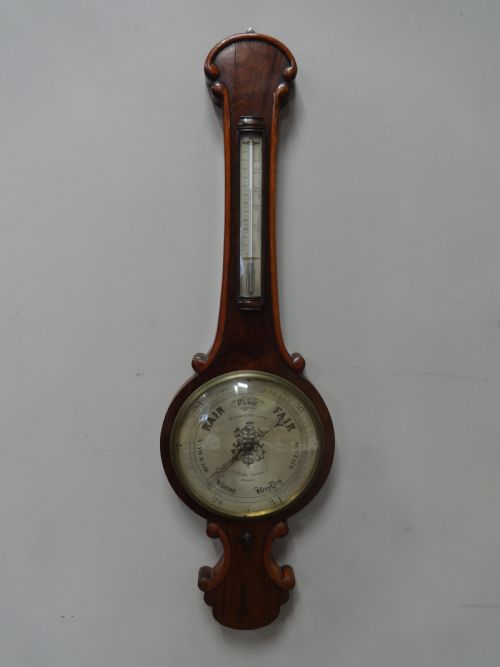

Victorian Rosewood Wall Barometer
These Victorian rosewood wall barometers bring reliable weather forecasting and rich timber grain into a room.
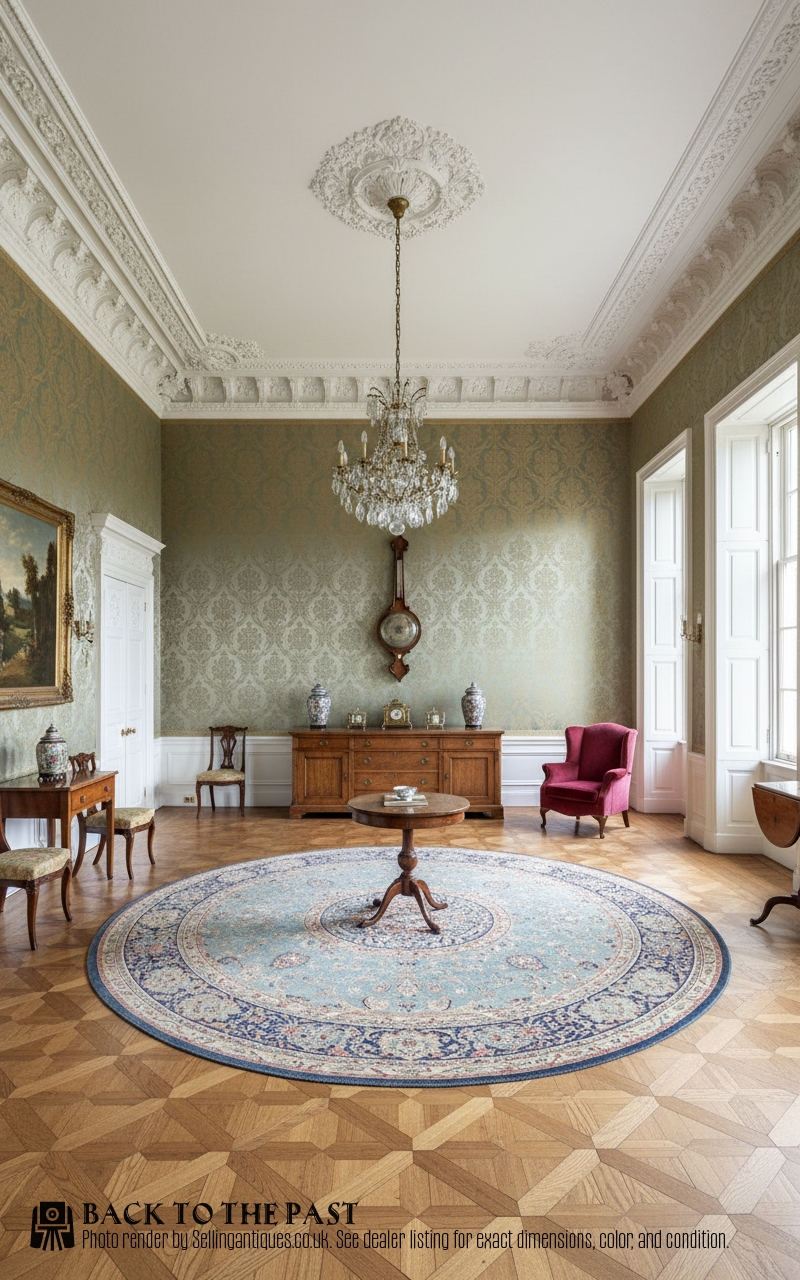
Victorian Rosewood Wall Barometer
When you search for a Victorian rosewood wall barometer, you encounter instruments designed to measure atmospheric pressure while serving as striking interior furnishings. The examples meeting you on this page span the nineteenth century, including specific decades like eighteen-fifty, eighteen-sixty, and eighteen-seventy, alongside pieces simply catalogued as Victorian or nineteenth century.
The forms vary across these listings, taking the shape of stick barometers, marine stick barometers, and wheel or banjo barometers. Certain pieces incorporate thermometers alongside the main dial, whilst others represent specific makers or distinctive regional styles such as the Fagioli of Clerkenwell London mercurial barometer.
The aesthetic leans heavily on the deep, warm tones of rosewood, frequently accented with contrasting inlay work. These domestic scientific instruments demonstrate how period households combined practical utility with ornamental display in hallway and parlour spaces.
Materials and Construction
The primary structural material across the selection is rosewood, chosen for its dense grain and rich colour. Makers enhanced these wooden cases using boxwood inlay and mother of pearl detailing to create geometric patterns and floral motifs.
Functional elements rely on glass to protect the dial face, alongside silvered metal for the engraved scales and indicators. Mercury or aneroid mechanisms provide the internal science, housed within carved or veneered timber bodies secured to the wall by brass fittings and bone adjustments.
Listings feature nineteenth century rosewood barometers incorporating glass, brass, mother-of-pearl, silvered metal, boxwood inlay, and bone.
Distinctions in Quality
Quality in these barometers separates along the complexity of the cabinet work and the fidelity of the interior movement. Simpler wheel barometers contrast with sophisticated marine stick instruments and pieces bearing the signature of established makers.
The intricacy of the inlay work, particularly extensive mother of pearl or fine boxwood stringing, marks out the superior examples. Furthermore, the crispness of the silvered scale engraving and the preservation of the original mercury or aneroid mechanism dictate the standing of an individual piece.
Jenkins Of Old Swindon·Joseph Somalvico And Co·W N Telford Chester
The Victorian Rosewood Wall Barometer Glossary
- Aneroid barometer
- An instrument that measures atmospheric pressure using a flexible metal box rather than liquid mercury. It expands and contracts with pressure changes, moving a pointer across a dial.
- Wheel barometer
- A wall instrument featuring a circular dial, frequently known as a banjo barometer due to its silhouette. A weight and pulley system connects the internal tube to the visible pointer.
- Stick barometer
- A tall, narrow instrument containing a vertical tube of mercury. This form provides a direct reading of barometric height without mechanical amplification.
- Silvered metal
- A brass or copper dial plate treated to achieve a bright, reflective silver finish. The graduations and numbers are then engraved and filled with dark wax for legibility.
Victorian Rosewood Wall Barometer: Frequently Asked Questions
What is a Victorian rosewood wall barometer?
It is a nineteenth-century scientific instrument housed in a dark rosewood case, designed to hang on a wall and indicate atmospheric pressure changes.
These pieces combine functional weather forecasting with decorative cabinetry, often featuring dials, thermometers, and inlaid mother-of-pearl decoration.
How do stick and wheel barometers differ?
Stick barometers display the mercury column directly within a tall, narrow wooden trunk for precise height observation. Wheel barometers use a system of weights and pulleys to translate vertical mercury movement into a circular dial reading.
Both types utilise rosewood cases, but the wheel or banjo variant offers a broader face for domestic display.
How do I hang a wall barometer safely?
These instruments require secure wall fixings capable of supporting the combined weight of the dense rosewood timber, glass, and internal metal components. Hanging them away from direct heat sources and draughts helps protect the wooden case and internal mechanisms.
Ensuring the barometer hangs plumb and level is essential for the accurate movement of the internal parts.
Are these barometers still accurate?
Many period barometers retain their functional mechanisms and respond to contemporary barometric shifts. Calibrating the instrument correctly allows it to track local weather patterns much as it did in the nineteenth century.
Proper maintenance of the glass, dial, and internal tube preserves both the decorative and the practical utility of the piece.