

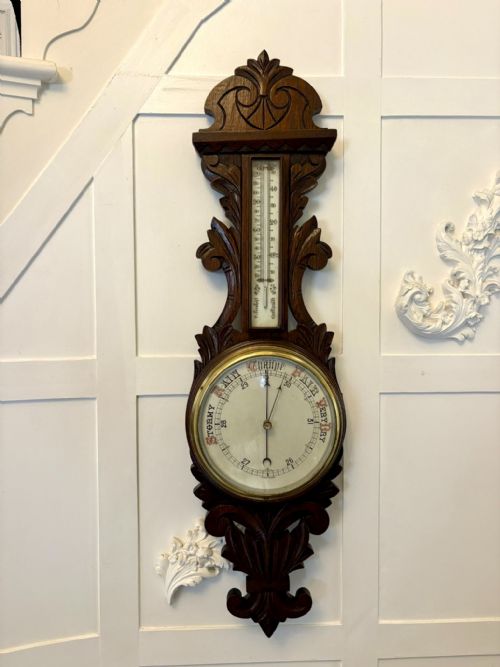


Traditional Oak Barometer
These traditional oak barometers combine reliable weather-reading mechanics with solid cabinetmaking, offering both practical utility and period character.
Traditional Oak Barometer
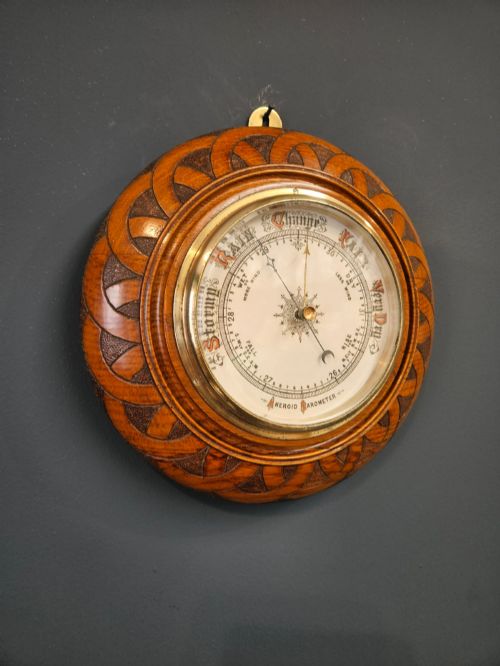
A traditional oak barometer is a weather-measuring instrument housed within a sturdy timber case, taking forms such as wall-hanging banjo styles, compact domestic units, and horizontal barographs. These pieces span periods from the Victorian era through the Edwardian years up to the nineteen-twenties, reflecting the domestic interior tastes of those decades.
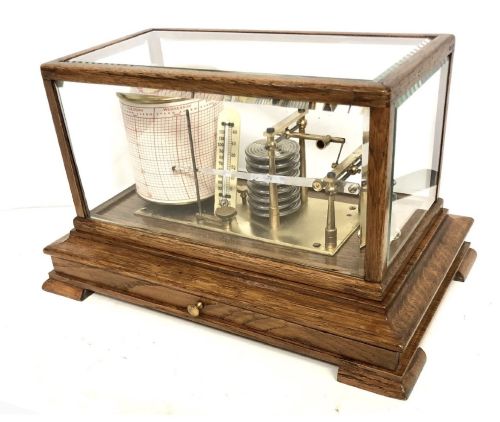
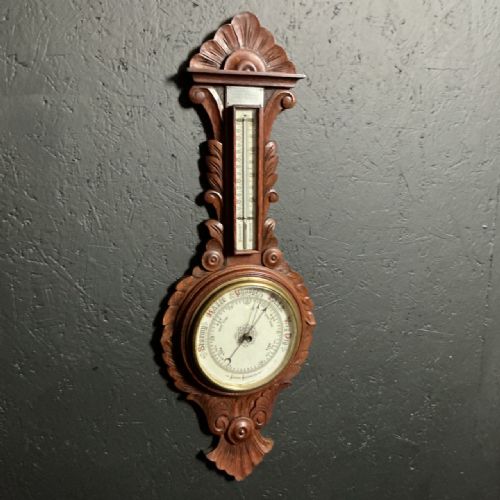
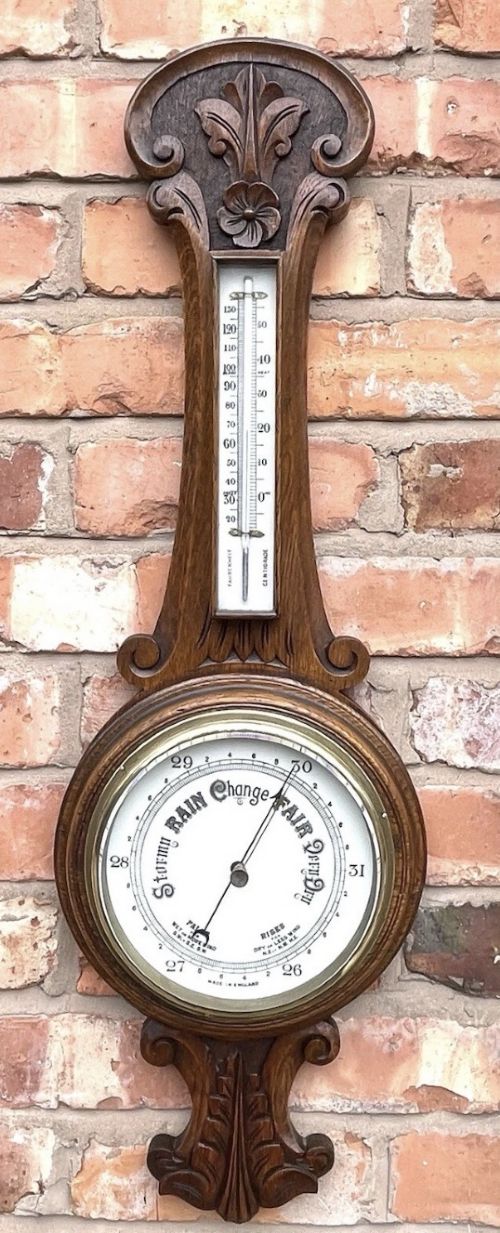
The most common examples encountered on this page are carved oak banjo barometers, frequently featuring integrated thermometers and bevelled glass dials. Alongside these, buyers find scientific instruments like barographs with chart drawers, as well as combination pieces that incorporate wall clocks.
How they were made
Cases are constructed from oak, sometimes turned or intricately carved, occasionally accompanied by walnut accents or black forest styling. Metal components such as brass bezels frame the glass dials, while paper charts record pressure fluctuations inside mechanical barographs.
Makers utilised aneroid movements or mercurial columns to track atmospheric changes, mounting these mechanisms securely behind protective glass faces. Cabinets often incorporated small drawers for spare paper charts or held mercury tubes alongside Fahrenheit and Celsius thermometers.
Listings span the Victorian and Edwardian eras up to nineteen-twenty, combining oak, brass, glass, and paper.
What varies in quality
Quality rests in the depth and crispness of the timber carving, the choice of solid oak over lesser woods, and the presence of makers' signatures on the dial. Pieces produced by established instrument makers exhibit finer calibration and more robust casework.
The sophistication of the internal mechanism also sets items apart, ranging from simple aneroid dials to complex barographs with multi-day recording drums and dedicated thermometer attachments.
Negretti & Zambra·Maple & Co·Admiral Fitzroy
The Traditional Oak Barometer Glossary
- Barometer
- An instrument measuring atmospheric pressure to forecast weather changes. Most examples here use mechanical aneroid movements rather than traditional liquid mercury.
- Aneroid
- Operating without liquid, using a flexible metal box that expands or contracts with air pressure changes. This movement drives the pointer seen on the dial face.
- Barograph
- A self-recording barometer that draws continuous pressure readings onto a paper chart fitted to a rotating drum. These often sit inside glazed oak cases with chart drawers.
- Banjo barometer
- A wall-hanging instrument shaped somewhat like a banjo, featuring a circular dial at the base and a long stem carrying a thermometer above. It represents the dominant silhouette found in oak weather instruments.
Traditional Oak Barometer: Frequently Asked Questions
How do I read an aneroid barometer?
Read the main pointer to see the current atmospheric pressure indicated on the dial face. Many instruments include a manually adjustable second needle that you set directly over the main pointer to track whether pressure rises or falls.
Changes relative to that marker reveal upcoming weather shifts, with rising pressure pointing to fair conditions and falling pressure indicating rain.
Where should I hang a wall barometer?
Hang your instrument on an interior wall away from direct sunlight, radiators, and draughty doors. Sudden temperature swings affect the metal mechanisms inside and alter the accuracy of the reading.
A stable indoor environment keeps the timber case from warping and ensures the mechanical linkages respond correctly to atmospheric shifts.
Do these barometers still work accurately?
Many surviving examples remain functional and respond correctly to changes in local air pressure. Because mechanical parts age over decades, occasional professional recalibration using a local reference point may be necessary.
Even when historical instruments require minor adjustments for absolute precision, they continue to function as reliable weather indicators.
How do I tell Victorian barometers from Edwardian ones?
Victorian oak barometers frequently display heavier, more elaborate relief carving and darker finishes, reflecting the decorative preferences of the nineteenth century. Edwardian pieces tend towards simpler, cleaner lines with lighter oak tones.
Examining the casework style and any inscribed maker details usually clarifies the specific period of manufacture.