
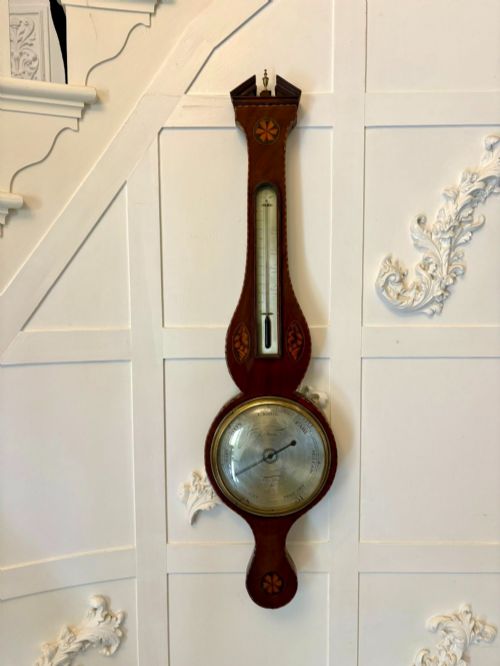
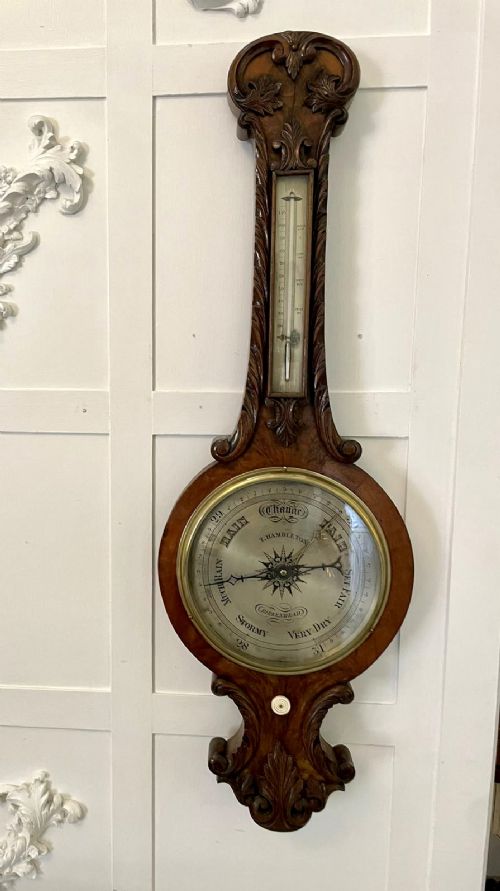
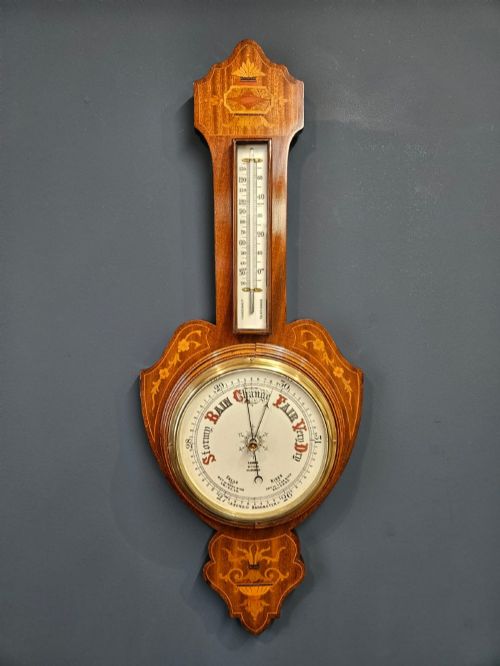
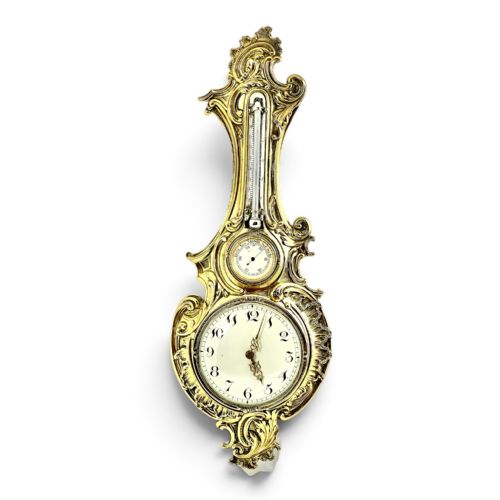
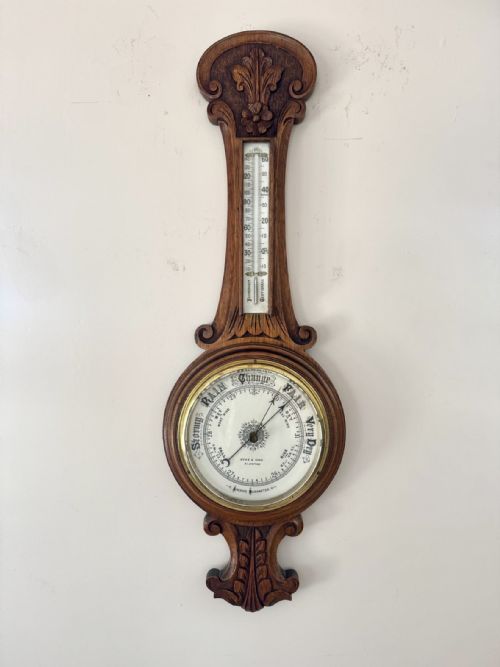
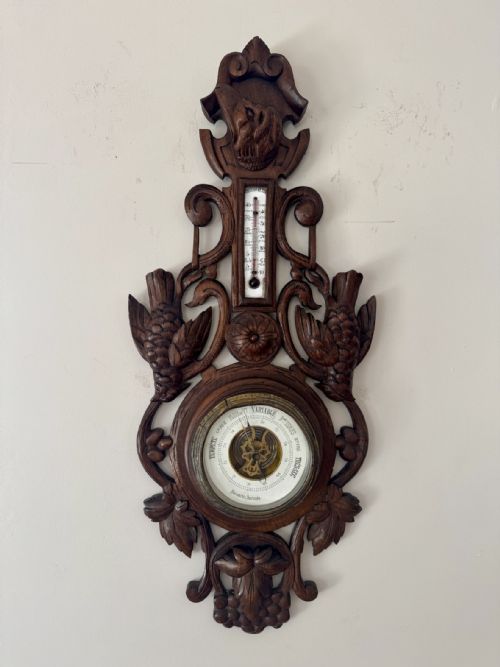
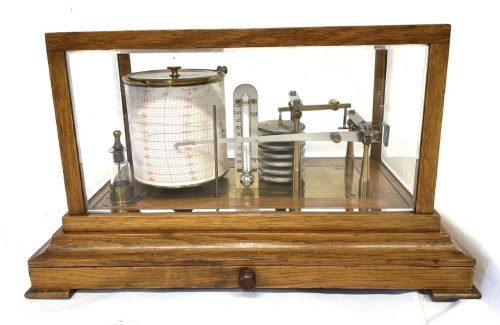
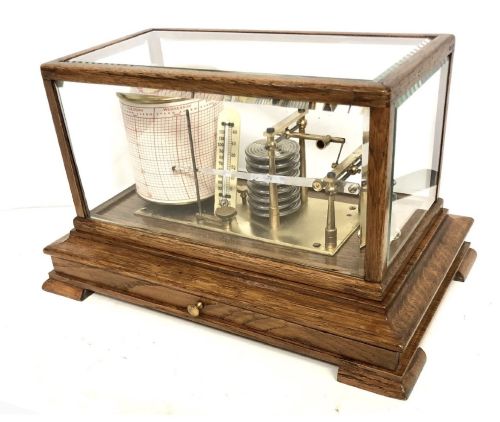
Antique Barometer with Thermometer
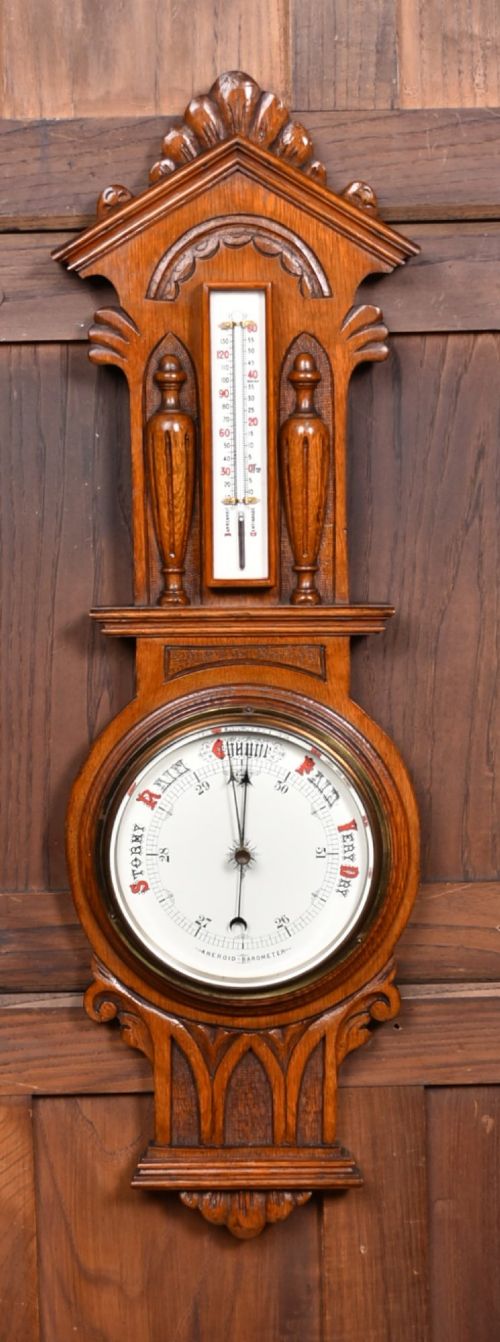
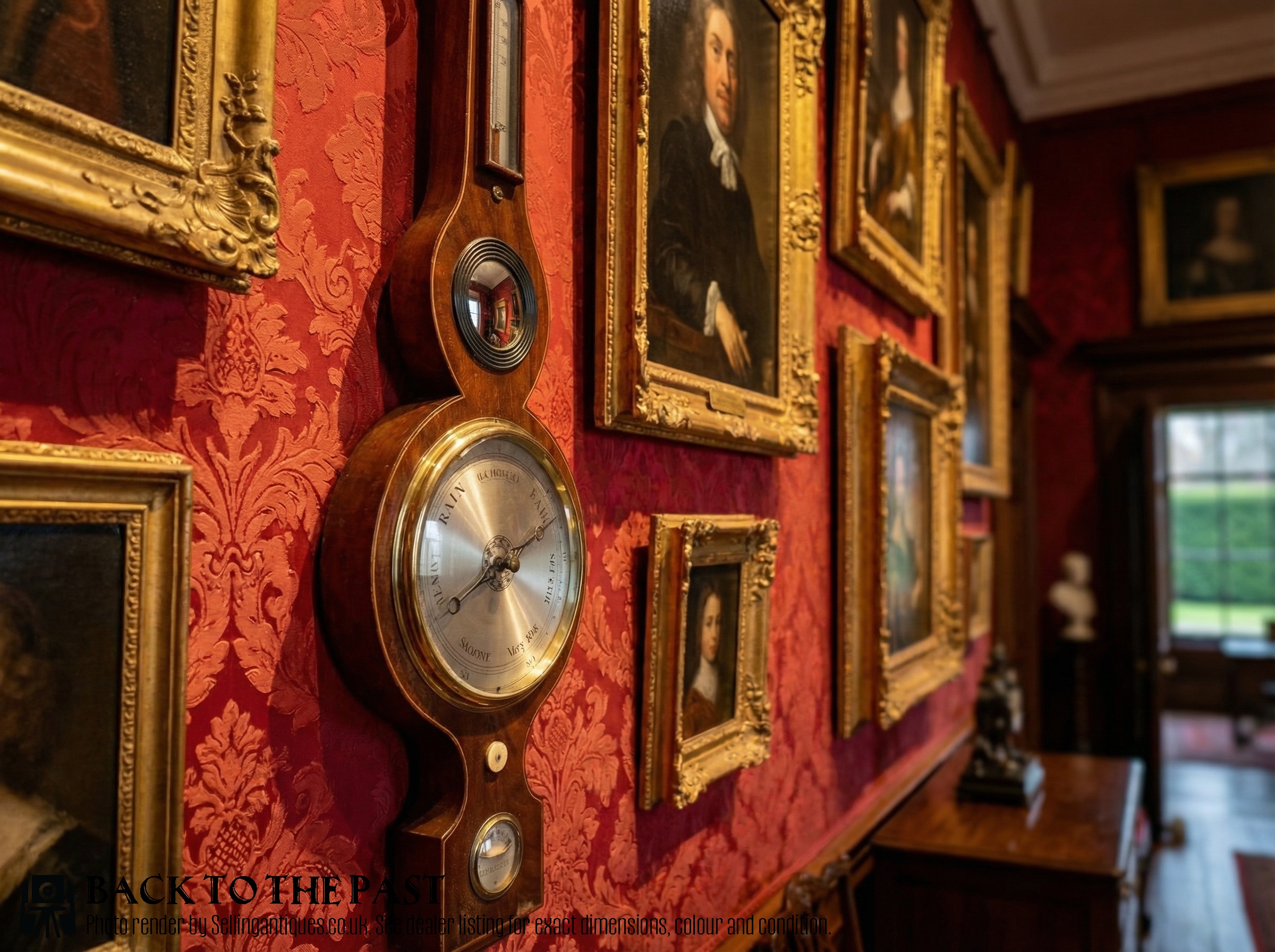
An antique barometer with thermometer measures atmospheric pressure and temperature while grounding a room in nineteenth or twentieth century craftsmanship.
What these pieces are
When you search for an antique barometer with thermometer, you encounter instruments designed to gauge weather changes alongside temperature readings. These pieces span the nineteenth and twentieth centuries, incorporating Victorian and Edwardian periods as well as earlier Georgian examples.
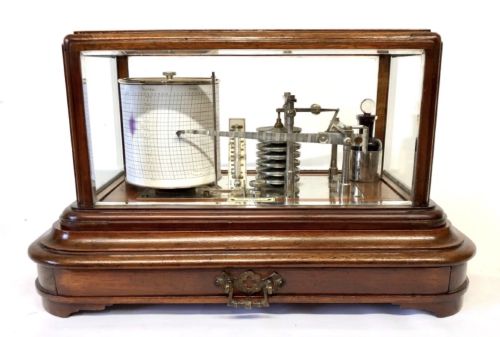
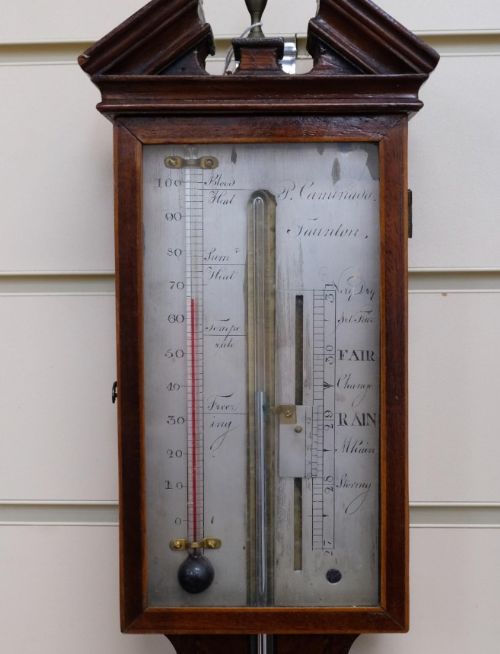
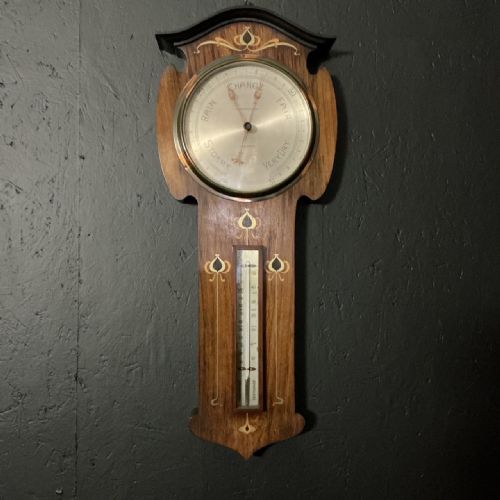
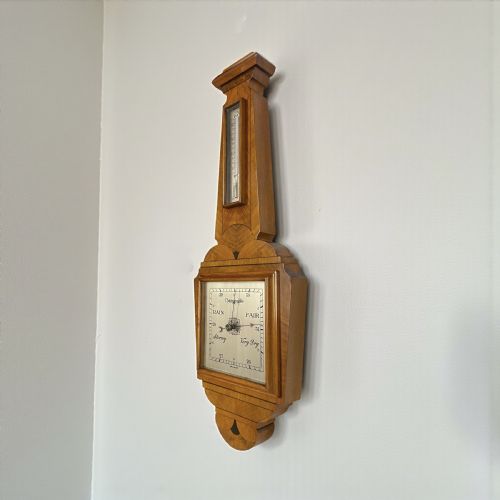
The forms on this page include stick barometers, wheel barometers, aneroid barometers, and marine barometers, alongside combined wall clocks and mantel clocks. Oak, mahogany, and walnut dominate the timber choices, often detailed with mother of pearl inlay or silvered brass dials.
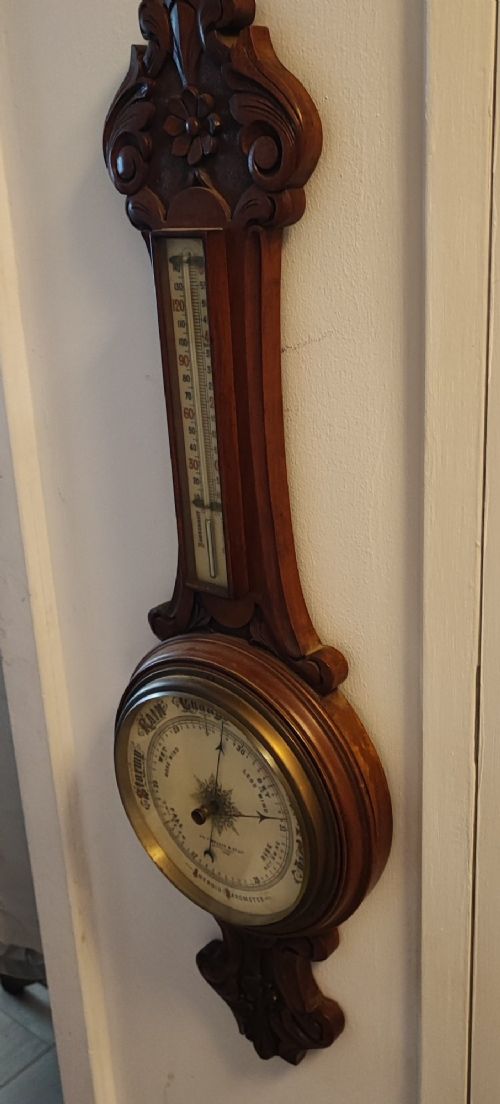
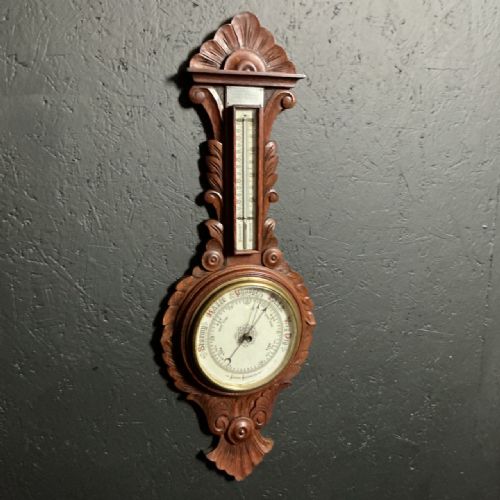
You are most likely to meet Victorian and Edwardian examples housed in polished oak or rich mahogany cases. Many incorporate crescent thermometers alongside the main dial, serving a domestic or maritime function.

How they were made
Cabinetmakers constructed the cases using solid and veneered timbers such as mahogany, oak, walnut, and satinwood. Woodworking techniques involved precise joinery, turning, and occasional mother of pearl inlay to decorate the surrounds.
Instrument makers fitted glass tubes, brass bezels, and silvered brass dials to record atmospheric shifts. Aneroid mechanisms and mercury columns required careful calibration, paired with exposed or recessed thermometers.
Retail Price Guide 2026
Typical UK retail prices for barometer with thermometer, calculated from the Sellingantiques database of over a million retail prices indexed since 2003. This retail price guide relies exclusively on Sellingantiques data; no external sources or auction records are used, so the figures do not describe the wider market.
Periods represented span from the seventeenth century through to the Edwardian era and the year nineteen hundred.
What varies in quality
The distinction between standard examples and superior pieces rests on the precision of the case construction and the clarity of the engraved dial. High quality instruments feature crisp silvered brass plates and refined timber grains selected by skilled makers.
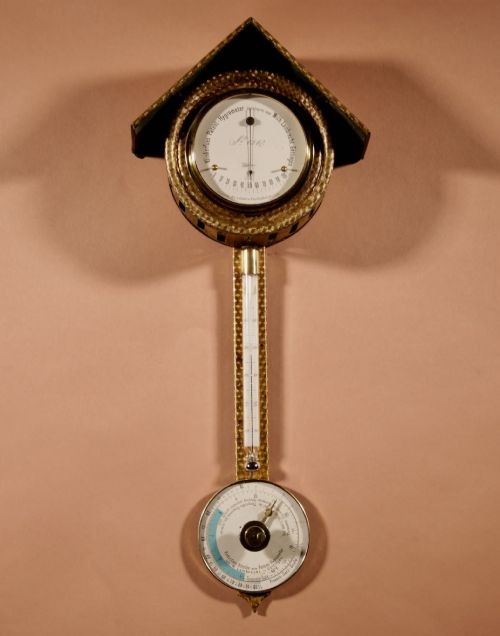
Signed dials by known regional makers elevate a piece above unmarked workshop output. The complexity of the combination pieces, such as wall clocks incorporating working barometers and thermometers, also alters the character of the item.
J Groce, York·J C Moretti of King's Lynn
The Antique Barometer with Thermometer Glossary
- Aneroid barometer
- An instrument that measures atmospheric pressure using a flexible metal box rather than liquid mercury. It expands and contracts with pressure changes, moving a pointer across a dial.
- Stick barometer
- A tall, narrow wall instrument that houses a vertical tube of mercury to measure air pressure. This traditional form offers a direct and classic reading of barometric shifts.
- Wheel barometer
- A dial barometer that uses a float and pulley system to translate mercury movement into circular motion. The indicator needle sweeps across a large, often decorated face.
- Silvered brass
- A metallic dial surface treated with a silver compound to produce a bright, readable finish. Engraved lettering stands out clearly against this pale background.
Frequently Asked Questions
How do I read an antique barometer?
Observe the position of the pointer relative to weather descriptions like rain, change, or fair on the dial. Tapping the glass gently helps settle the mechanism to show the true reading.
Compare this against a secondary needle if fitted, which records the previous reading before you adjusted it.
Where should I hang a wall barometer?
Mount the instrument on an interior wall away from direct sunlight, radiators, or heavy drafts. Stable room temperatures ensure the wooden case and internal metal parts remain accurate.
Ensure the fixing is secure because solid oak and mahogany models carry considerable weight.
Did these pieces go to sea?
Marine barometers and ship's barometers were constructed specifically for use on vessels. They featured gimbal mountings or secured wooden cases to absorb the motion of the waves.
Domestic wall barometers remained ashore in hallways and libraries to inform households of impending weather.
How do I tell Victorian from Edwardian pieces?
Victorian examples often display heavier carved oak or rich mahogany frames with ornate detailing. Edwardian pieces tend toward lighter satinwood or simpler polished wood designs.
The style of the engraved lettering and the shape of the thermometer casing also point toward the manufacturing decade.