





Desk Weather Instrument
A desk weather instrument is a practical scientific device for measuring atmospheric changes, prized by collectors for precision brass mechanics and handsome timber cases.
Desk Weather Instrument
A desk weather instrument brings the precision of nineteenth and early twentieth century meteorology into a study or library. These pieces range from standard barographs and desk barometers to specialised apparatus such as anemometers and recording rain gauges.
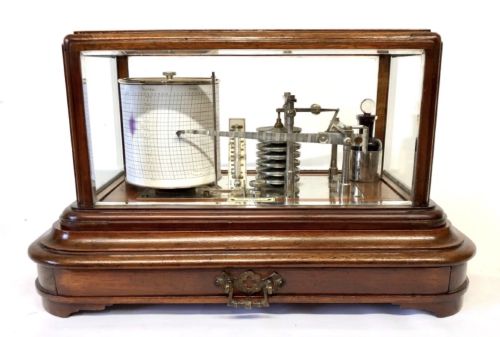
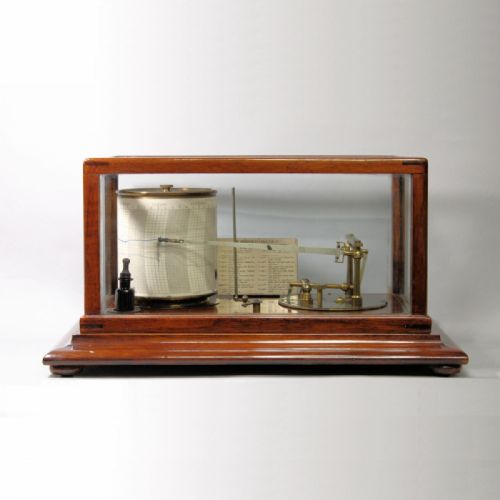
The versions most commonly met on this page are mahogany or oak cased barographs dating from the Victorian and Edwardian eras. Makers housing these recording mechanisms in five-glass wooden enclosures created objects that function as both scientific tools and architectural desk furniture.
Compasses, thermometers and compendiums also appear among the offerings, spanning French and English workshops from the mid-nineteenth century onward. Each object records atmospheric fluctuations through mechanical dials, charts, or mercury columns.
Materials and Construction
Workshops constructed these instruments using solid timber frames of mahogany, oak, walnut, or ebonised wood to house delicate brass mechanisms. Glass panels protect the internal levers, drums, and aneroid cells while allowing a clear view of the recording process.
Makers integrated engraved paper charts, steel springs, and silvered metal dials to capture barometric pressure, wind speed, or temperature variations. Fine cabinetmaking traditions govern the wooden enclosures, featuring inlaid details, drawer storage, and bevelled glass.
Victorian meteorologists relied on ticking drums and ink pens to prove whether a rainy afternoon was truly brewing.
Judging Quality
Quality rests in the precision of the mechanical movement and the standard of the cabinetwork enclosing it. Signed instruments by notable makers command attention through finer calibration and superior finishing on brass levers and ink arms.
The housing distinguishes standard output from exceptional pieces, particularly where heavy gauge brass fittings, bevelled glass panels, and dense figured mahogany or oak are employed. Original paper recording drums and intact mercury columns further elevate the standing of an instrument.
Short And Mason·Negretti And Zambra·J Hicks Of London·Richard Freres·W Watson And Sons·Jules Richard Of Paris
The Desk Weather Instrument Glossary
- Barograph
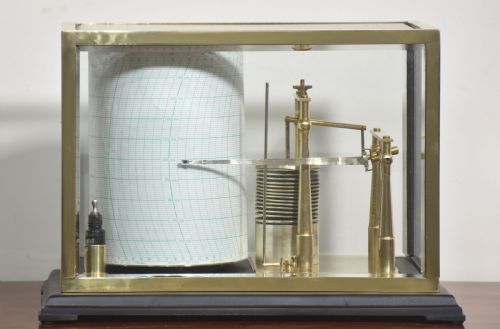
- A self-recording aneroid barometer that traces pressure variations onto a rotating paper chart driven by a clockwork drum. This mechanical apparatus translates atmospheric shifts into a continuous ink line.
- Aneroid Barometer
- A barometer that measures air pressure without liquid, using a flexible metal box that expands or contracts as pressure changes. The movement transfers through levers to a visible dial face.
- Anemometer
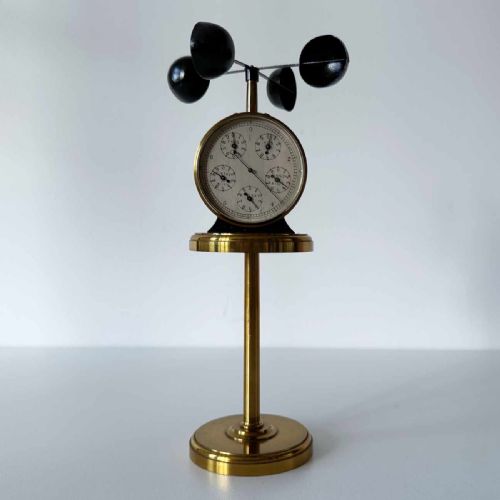
- An instrument designed to measure and record wind speed and direction. These mechanical gauges utilise rotating cups or vanes connected to recording dials.
- Hypsometer
- A scientific device used to calculate altitude by measuring the boiling point of a liquid under varying atmospheric pressures. It combines thermometry with barometric principles.
- Compendium
- A desk accessory combining multiple instruments, such as a barometer, thermometer, and compass, within a single housing. These multifunctional objects served nineteenth-century studies.
Desk Weather Instrument: Frequently Asked Questions
How do I wind a barograph?
Most barographs operate on an eight-day spring-driven clockwork mechanism housed inside the rotating brass drum. You gently wind the drum spring using a dedicated key, taking care not to over-wind the movement.
Ensure you replace the paper chart and ink the pen nib regularly to maintain continuous recordings without damaging the delicate arm mechanism.
Where should I place a desk weather instrument?
Position your instrument on a stable desk, table, or sideboard away from direct sunlight, central heating vents, and exterior draughts. Sudden temperature shifts can affect the mechanical response of aneroid cells and liquid columns.
Choose a room with consistent ambient conditions so the instrument records genuine atmospheric pressure changes rather than indoor microclimates.
How do I read a mechanical barograph?
The rotating drum completes one full rotation over seven days, carrying a paper chart marked with pressure graduations and days of the week. The ink pen rises as high pressure approaches and falls as weather systems bring low pressure.
By observing the slope of the ink trace, you can determine whether pressure is rising steadily or dropping rapidly to forecast local weather shifts.
How do I identify the date of an instrument?
Makers often engraved their signatures, patent details, or serial numbers directly onto the brass dial plates, backplates, or clockwork drums. Stylistic clues in the woodwork, such as Edwardian inlaid mahogany or heavy Victorian brass casting, also suggest the period.
Comparing the paper charts, typography, and case construction against known workshop records helps narrow down the decade of manufacture.