


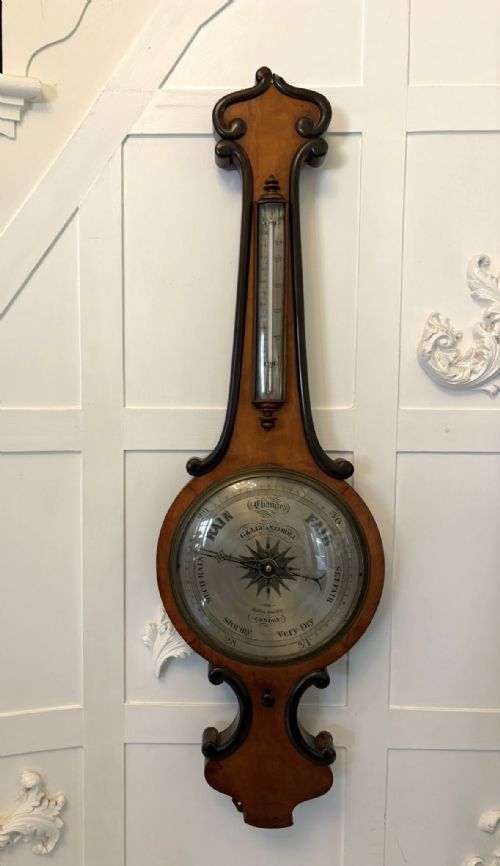


Victorian Scientific Barometer
These Victorian scientific barometers measure atmospheric pressure with precision engineering, offering brass dials, mercury tubes and mahogany cases that anchor a room.
Victorian Scientific Barometer
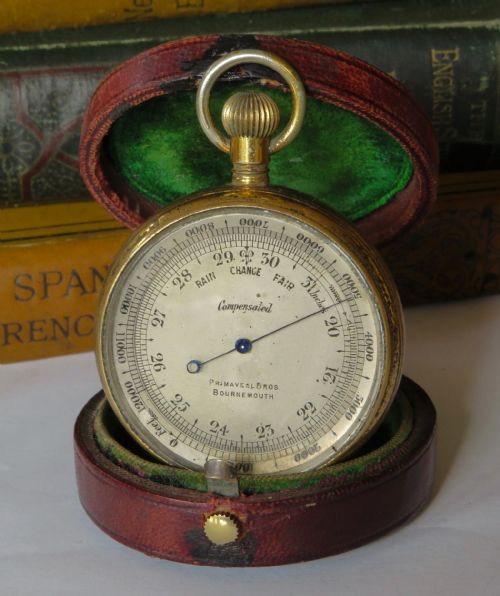
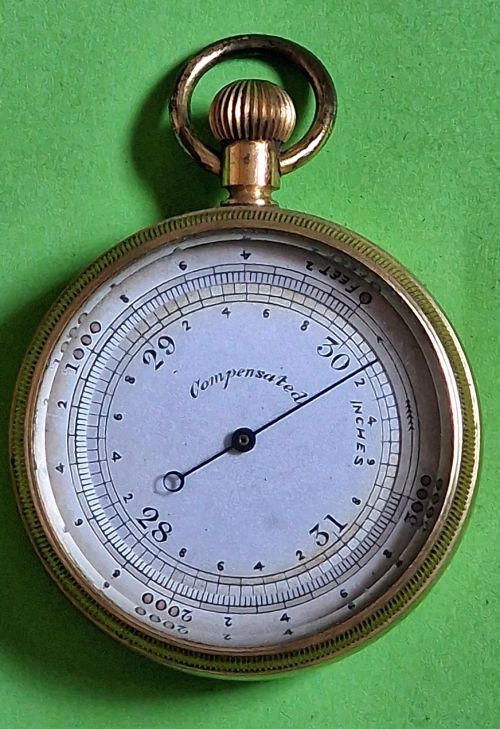
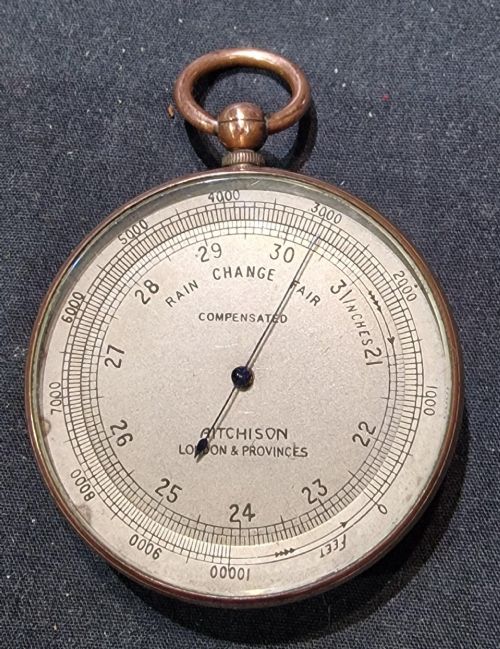
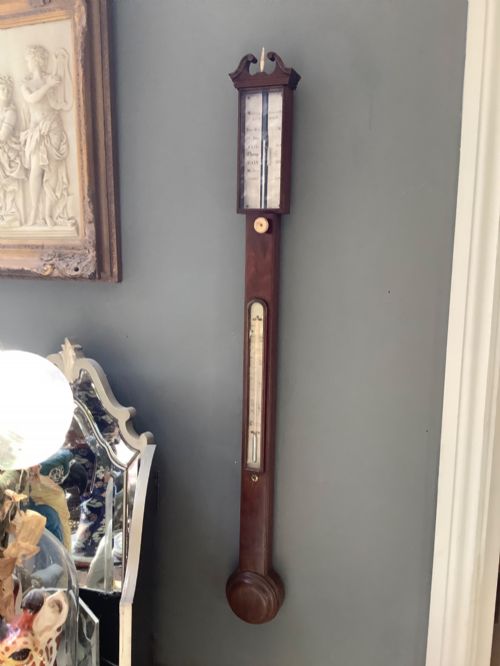
A victorian scientific barometer takes several distinct forms, ranging from wall-mounted stick instruments and wheel barometers to compact pocket devices and mechanical barographs. The selections available here demonstrate how nineteenth-century makers combined practicality with domestic elegance, housing sensitive mechanisms in robust timber enclosures.
Most pieces date from the Victorian era and the surrounding decades, utilising traditional configurations such as the marine barometer, the banjo barometer, and the self-recording barograph. Buyers encounter robust oak, rich mahogany, and patterned rosewood housings fitted with bevelled glass and calibrated metal scales.
Gradations of quality
Quality rests upon the precision of the mechanical movement, the clarity of the engraved dial, and the integrity of the cabinet work. Instruments signed by notable scientific makers demonstrate superior dial calibration and finer metalwork execution.
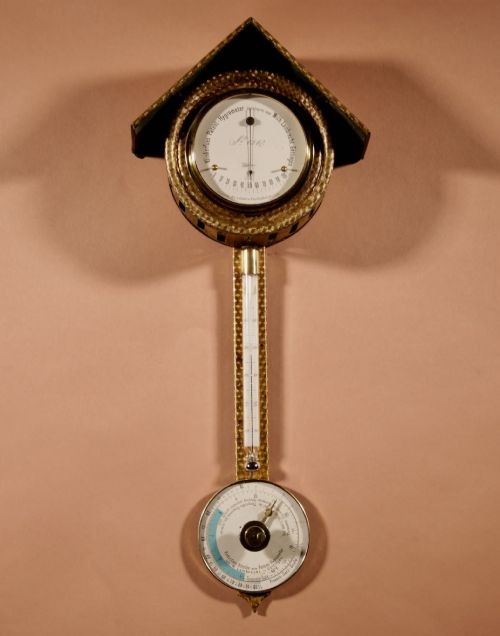
The condition of the timber case, the preservation of original mercury tubes or functional aneroid capsules, and the presence of auxiliary instruments like thermometers or chart drawers distinguish the finest examples from standard domestic models.
Current selections feature instruments utilising brass, glass, mahogany, oak, rosewood, steel, bone, and metal across Victorian, Edwardian, and Georgian periods.
Negretti and Zambra·Short and Mason·Wilh Lambrecht·Alexander Wright·G and L Guanziroli
The Victorian Scientific Barometer Glossary
- Aneroid barometer
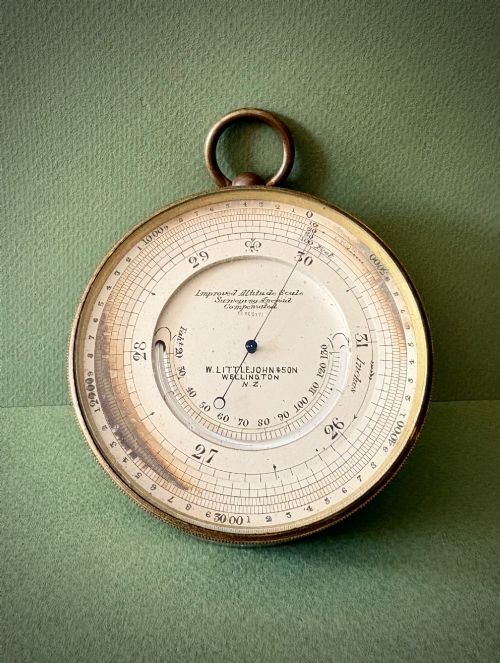
- A portable instrument that measures air pressure using a flexible metal capsule rather than liquid mercury. It expands and contracts with atmospheric changes, moving a pointer across a graduated dial.
- Stick barometer
- A tall, vertical instrument containing a glass tube filled with mercury. It allows direct reading of barometric height against a scale marked in inches and centimetres.
- Barograph
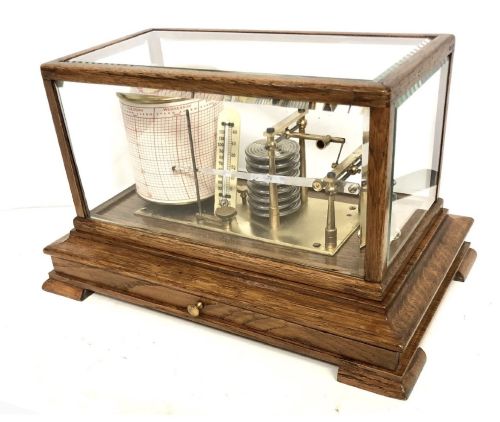
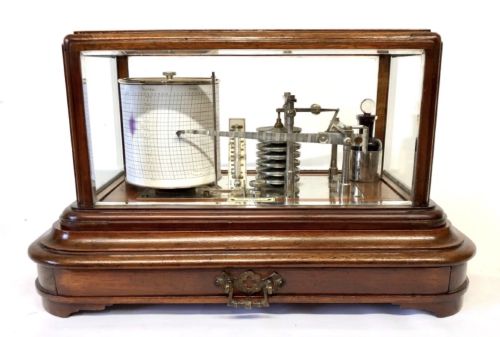
- A mechanical instrument that records barometric pressure continuously onto a paper chart fitted to a rotating drum. These self-contained units often include a clockwork mechanism and an integral thermometer.
- Hygrometer
- A device used to measure the humidity level in the air. Specialised examples utilise hair tension mechanisms to gauge atmospheric moisture.
- Altimeter
- A specialised aneroid barometer calibrated to indicate altitude above sea level based on atmospheric pressure. Pocket versions served travellers and military observers.
Victorian Scientific Barometer: Frequently Asked Questions
How do I operate a mercury stick barometer?
Hang the instrument securely on an interior wall away from direct heat sources and draughts. Read the vernier scale against the top of the mercury column to record the current atmospheric pressure.
Before moving the instrument to a new location, tilt it gently to allow the mercury to fill the glass tube completely, preventing air bubbles from breaking the column.
What is the difference between a barometer and a barograph?
A standard barometer provides a single reading of current atmospheric pressure through a pointer moving across a dial or mercury column. It shows the immediate meteorological conditions.
A barograph records pressure continuously over a week by drawing a line on a rotating paper chart with an inked nib, illustrating pressure trends over time.
Are pocket barometers accurate for travel?
Pocket barometers were originally designed for travellers, surveyors, and mountaineers to gauge altitude and impending weather changes. They function as sensitive mechanical instruments.
While many retain high precision, age and rough transport can affect their calibration. They require professional adjustment against a known standard.
How do I care for the wood case?
Maintain the timber housing by keeping it out of direct sunlight and away from rapid temperature shifts that cause wood to crack. Apply a mild furniture wax occasionally to preserve the finish.
Avoid using liquid polishes or chemical cleaners near the metal bezel and glass face, as residues can damage delicate engravings and lacquered brass surfaces.