


Vintage Barograph Recorder
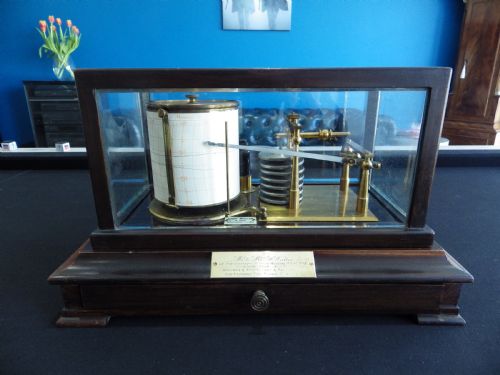
A vintage barograph recorder records atmospheric pressure continuously on paper charts, combining precision engineering with handsome cabinet work.
Vintage Barograph Recorder
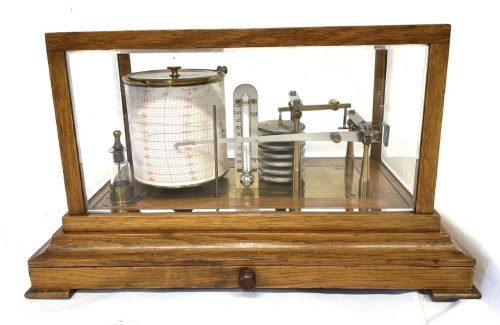
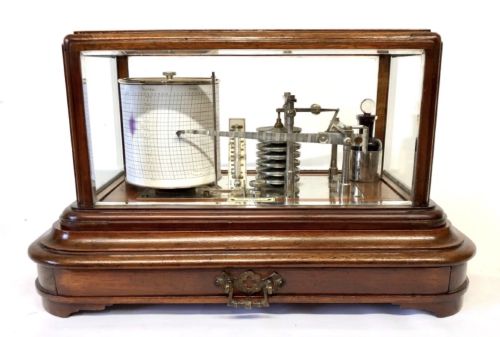
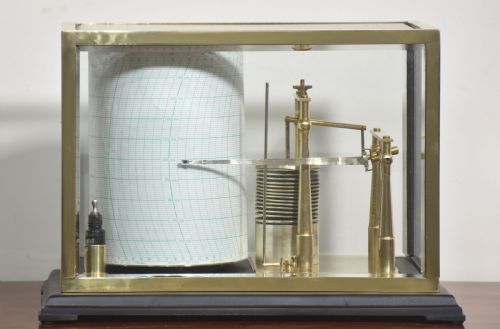
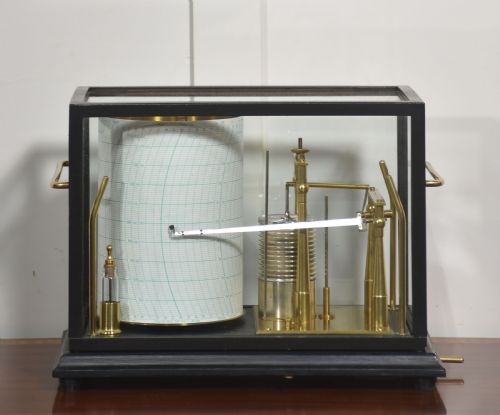
When you search for a vintage barograph recorder, you encounter scientific instruments housed in wooden desktop cases, most frequently meeting examples from the Victorian, Edwardian, and interwar periods. These instruments combine a mechanical barometer mechanism with a rotating drum that traces pressure changes over a week using ink and paper charts. The majority of these pieces feature glazed five-glass covers that reveal the brass arms and stacked aneroid metal bellows inside.
Cabinet work varies across the selection, with oak and mahogany appearing most often alongside fitted chart drawers set into the base. Some pieces incorporate additional meteorological instruments such as thermometers or supplementary barometer dials mounted directly inside the timber case. Examples span several decades of early twentieth-century production, reflecting both scientific utility and domestic display in studies and libraries.
How they were made
Makers constructed the visible cases using hardwoods like mahogany, oak, and walnut, frequently fitted with bevelled glass panels to protect the delicate internal mechanism. Brass and steel form the mechanical heart of the instrument, comprising the stacked aneroid vacuum chambers, levers, and the clockwork drum that rotates once every seven days.
Paper charts printed with pressure gradients wrap around the revolving drum, while a small nib on the brass arm transfers ink as the barometric pressure rises and falls. Cabinet makers joined the timber enclosures with traditional corners and built lower drawers specifically to store spare weekly charts and spare ink supplies.
Listings feature oak, mahogany, and walnut cases combined with brass movements dating across Victorian, Edwardian, and interwar periods.
What varies in quality
The distinction between standard production and the finest workshop output rests in the crispness of the brass casting and the refinement of the cabinet joinery. Superior examples demonstrate exceptional attention to detail in the bevelled glass panes, the polish of the timber case, and the engraved signatures of notable makers upon the metal beds.
Quality also reveals itself in the complexity of the movement, such as the inclusion of a reliable clockwork drum by specialised makers or supplementary instruments housed within the same case. Simpler utilitarian models provide the basic pressure record without extra indicators or fitted chart drawers, while finer retail pieces showcase superior wood selection and cabinet finishing.
Short & Mason·Negretti & Zambra·Casella London·Gaupp & Co·R Fuess·Jules Richard
The Vintage Barograph Recorder Glossary
- Aneroid barograph
- A self-recording barometer that uses expanding metal bellows rather than liquid mercury to measure atmospheric pressure changes over time. This mechanism drives a linked arm across a revolving paper chart.
- Chart drawer
- A shallow compartment built into the wooden base of the instrument case specifically designed to store spare weekly recording papers and ink bottles. It sits directly beneath the main glazed display chamber.
- Clockwork drum
- The rotating brass cylinder powered by an internal spring that turns the paper chart through one full revolution every seven days. Maintaining this mechanism requires careful winding with a dedicated key.
- Five-glass case
- A protective wooden enclosure featuring glass panels on the top and all four vertical sides to maximise light visibility across the internal brass movement. This style allows the instrument to be observed from multiple angles on a desk.
- Bevelled glass
- Heavy window panes finished with an angled ground edge fitted into the door and sides of the wooden cabinet. This detail adds a decorative finish typical of better-quality Edwardian and Victorian scientific instrument cases.
Vintage Barograph Recorder: Frequently Asked Questions
How do you wind a barograph?
You wind the clockwork drum using a small key inserted into the top or side of the brass cylinder, turning it gently until resistance is met.
Care must be taken not to overwind the mainspring, as this can damage the internal escapement that controls the seven-day rotation.
How often do charts need changing?
The paper chart wrapped around the rotating drum is designed to record data continuously for exactly seven days before completing a full rotation.
Once a week, you lift the pen arm clear of the paper, remove the old chart, and secure a fresh one around the brass cylinder.
Where should a barograph be placed?
These instruments belong on a sturdy, level surface away from direct sunlight, central heating vents, and exterior doors where rapid temperature swings occur.
Placing the wooden case on a stable desk or table ensures the internal aneroid bellows measure true barometric pressure rather than environmental vibrations.
How do I know the maker?
Makers typically engraved their company name and London or regional address directly onto the brass bedplate beneath the recording arm or on the barometer dial face.
Retailers who sold the instruments also occasionally placed their own signatures on the metalwork or inside the timber case lid.