


Glazed Mahogany Barograph
A glazed mahogany barograph combines precision meteorological recording with handsome cabinetwork, making it a striking desk or wall piece for any traditional interior.
Glazed Mahogany Barograph
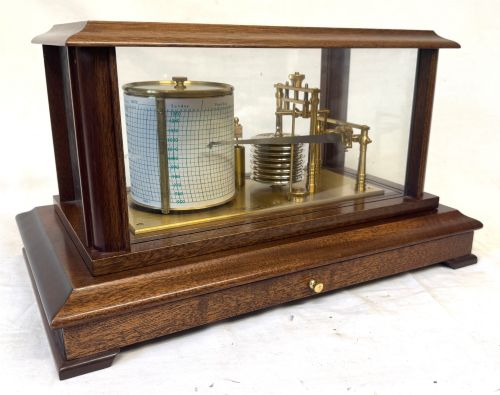
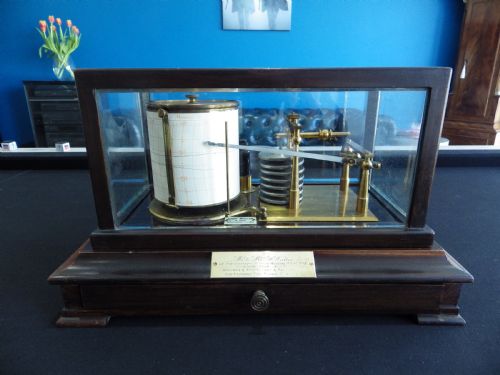
A glazed mahogany barograph is a mechanical weather-recording instrument housed in a wooden case with glass panels that allow a clear view of the operating mechanism inside. These instruments record barometric pressure continuously onto a paper chart over the course of a week.
The versions most commonly met on this page span the Victorian, Edwardian, and Interwar periods, often featuring fitted chart drawers beneath the main mechanism. Makers such as Negretti & Zambra and Short & Mason dominate the selection, alongside continental examples.
Most pieces combine polished mahogany cabinetry with brass hardware, steel components, and paper recording charts. Variations range from standard desk models to wall-mounted units and miniature formats.
How they were made
Makers constructed the outer enclosures using solid and veneered mahogany, fitted with bevelled or flat glass panels to protect the delicate movement while maintaining visibility. Brass is utilised extensively for the internal linkages, drums, and armatures.
The recording mechanism relies on a stack of corrugated metal aneroid chambers that expand or contract with atmospheric pressure changes. This movement transfers through brass levers to an arm holding an ink nib, which traces pressure variations onto paper charts secured to a rotating clockwork drum.
Listings feature mahogany, brass, glass, steel, and paper across Victorian, Edwardian, Interwar, and twentieth-century periods.
What varies in quality
The standard of cabinetry distinguishes the range, with superior examples exhibiting finely figured mahogany timber, tight mitre joints, and well-fitted chart drawers. Inferior models display plain secondary woods and simpler box construction.
The refinement of the mechanical movement also sets pieces apart, particularly the precision of the brass work and the complexity of the clockwork drum. Signed examples by established London makers generally reflect higher standards of fitting and finish.
Russell Norwich·Negretti & Zambra London·Short & Mason London·Casella London·R Fuess·Robson of Newcastle·Antoine Redier·Richard Freres
The Glazed Mahogany Barograph Glossary
- Barograph
- An instrument that continuously records atmospheric pressure onto a paper chart. It uses aneroid barometer cells connected to a mechanical arm.
- Aneroid
- Operating without liquid. Aneroid barometers use flexible metal bellows that respond to changes in air pressure.
- Chart drawer
- A small compartment built into the base of the wooden case. It stores spare weekly recording papers.
- Clockwork drum
- A cylindrical rotating drum powered by an internal spring mechanism. The paper chart wraps around this cylinder to record time against pressure.
Glazed Mahogany Barograph: Frequently Asked Questions
How does a barograph work?
A stack of metal chambers expands and contracts as air pressure rises and falls. This physical movement transfers through a series of brass levers to a pen arm.
The pen arm rests against a paper chart attached to a rotating clockwork drum, creating a continuous weekly graph of weather patterns.
Where should I place a barograph?
Choose a stable surface away from direct sunlight, radiators, and heavy vibrations to ensure accurate pressure readings. A study, hallway, or living room desk works well.
Ensure the room temperature remains relatively constant so the brass and wood components are not subjected to sudden thermal shocks.
How do I read the charts?
The vertical axis on the paper chart shows pressure measurements, while the horizontal axis represents days of the week and hours. Rising lines indicate improving weather.
Falling lines typically point towards incoming wind or rain, allowing you to anticipate atmospheric shifts over seven days.
How do I date an antique barograph?
Examine the style of the mahogany cabinetry, brass fittings, and any maker signatures or retailer stamps engraved on the metal bedplate. Edwardian and Victorian pieces often show distinct proportions and typography.
Paperwork or original charts left inside the drawer can also provide specific clues to the year of manufacture.