


Vintage Surveying Instrument
A vintage surveying instrument brings mechanical precision and nineteenth-century fieldcraft directly to your desk.
Vintage Surveying Instrument
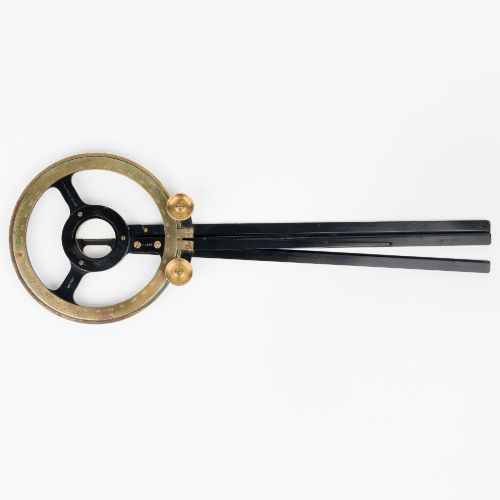
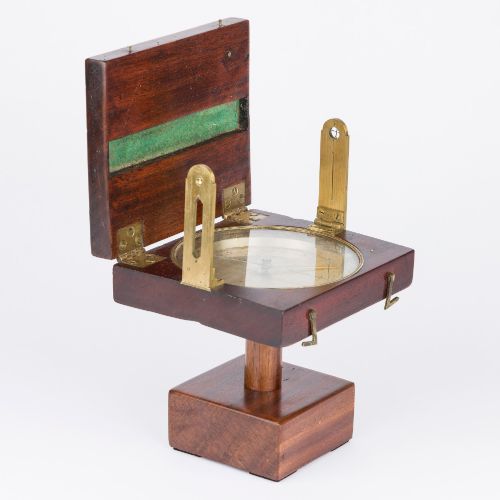
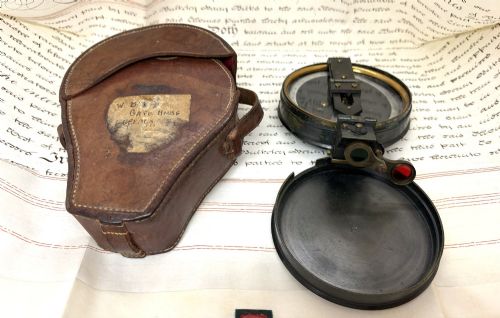
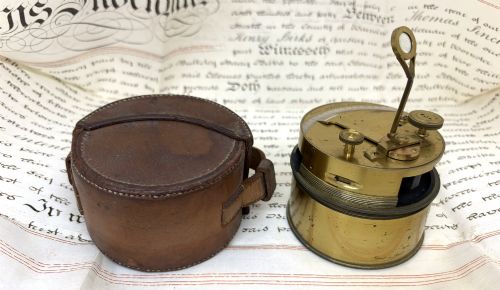
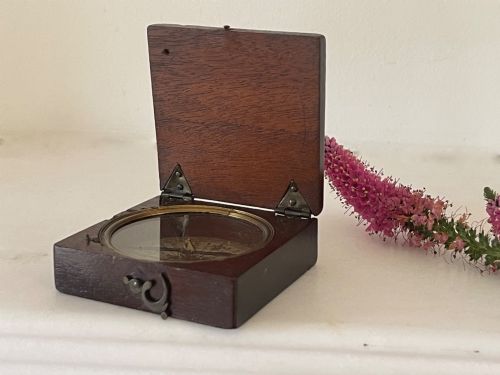
A vintage surveying instrument represents the tools used to map terrain, plot boundaries, and navigate land through the eighteenth, nineteenth, and early twentieth centuries. These objects range from heavy brass theodolites and precise levels to pocket barometers, altimeters, and magnetic compasses.
Most pieces encountered here hail from the Victorian and Edwardian eras, with occasional Georgian survivals. They span commercial, maritime, and military uses, reflecting the expansion of cartography and engineering during those periods.
Materials and Construction
Makers relied on polished brass for its weight and durability in the field, often combining it with silvered metal dials and protective glass covers. Housings and fitted transport boxes utilised dense hardwoods such as mahogany or boxwood, sometimes lined with velvet or leather.
Fine engraving marked the dials and vernier scales to allow minute readings. Lacquered metal finishes protected iron and steel components from corrosion during outdoor use.
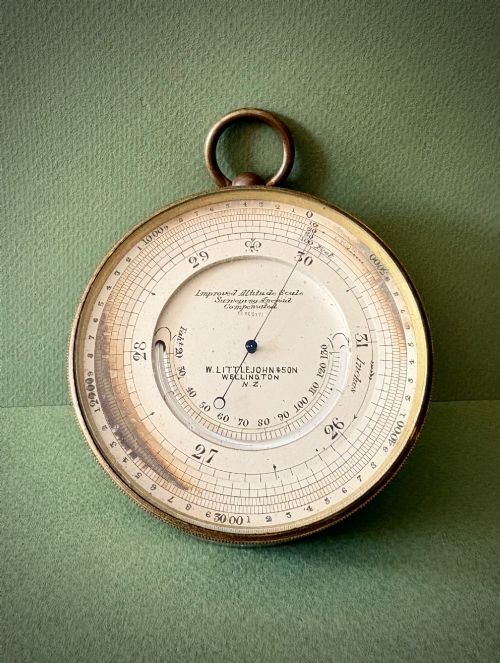
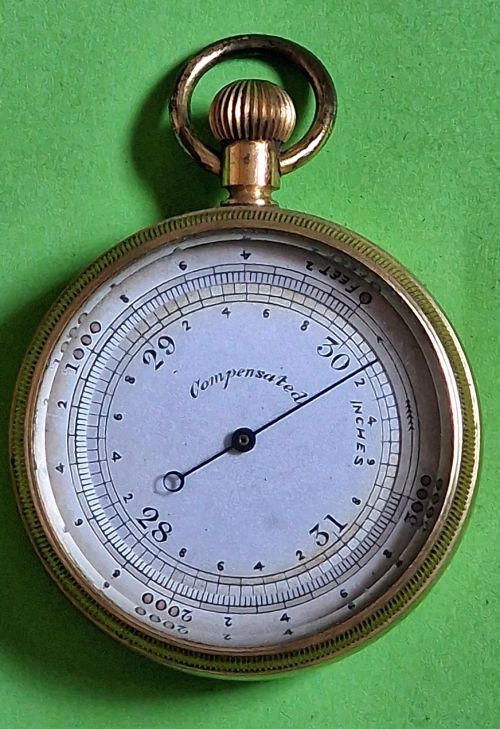
One pocket barometer arrived bearing the label of a colonial expedition, ready for someone to scale a mountain that had no name yet.
Assessing Quality and Execution
Quality rests in the crispness of the engraved graduations and the smoothness of the mechanical movements. Finer instruments feature signed brass plates from renowned opticians and makers, alongside matching serial numbers across the device and its fitted case.
The survival of auxiliary components, such as original lenses, spirit levels, and mahogany storage boxes, separates standard field tools from pieces intended for exhibition and scientific collections.
G. Davis of Leeds·P. Orr, Madras·W&S Jones·L Casella & Co·Cooke Troughton & Simms·Stanley, London·Negretti & Zambra·Elliott Bros. of London·Alexander Adie of Edinburgh·Thomas Dunn·W. H. Harling·James Murray·John Lilley & Son·De Grave & Co·Barker & Son·R. Field & Son·WF Stanley
The Vintage Surveying Instrument Glossary
- Theodolite
- A precision optical instrument mounted on a tripod for measuring horizontal and vertical angles. It forms the backbone of accurate triangulation in land surveying.
- Clinometer
- A tool used for measuring angles of slope, elevation, or depression of an object with respect to gravity. Surveyors and military observers utilised them alongside compasses.
- Altazimuth
- A directional mount that enables an instrument to move independently in both horizontal and vertical planes. These were essential for combined astronomical and terrestrial measurements.
- Vernier
- A secondary sliding scale that provides sub-divisions of a primary graduated scale for reading fractional parts. It allows precision far beyond the naked eye.
- Station pointer
- A navigational drafting instrument used to plot positions by measuring angles between three known points. Maritime surveyors relied on them for coastal charting.
Vintage Surveying Instrument: Frequently Asked Questions
How do I care for brass instruments?
Keep brass surfaces dry and avoid abrasive metal polishes that remove historic patination and engraving details. A soft cloth is sufficient for dust.
Store wooden cases away from direct sunlight and dramatic humidity shifts to prevent the timber from warping and damaging the fitted interior.
Were these used outdoors?
Yes, these tools were built for active fieldwork in harsh weather, from underground mine surveys to open-air cartography. Mahogany cases and brass housings protected delicate glass and silvered scales from the elements.
Most wear on these pieces reflects genuine utility in distant locations rather than factory defects.
Can I still use them for surveying?
While mechanical parts often remain operational, modern digital equipment has superseded them for practical land measurement. They serve best today as historical objects and study pieces.
Some collectors calibrate pocket barometers and compasses, but older optics lack modern coatings and alignments.
What does a pocket barometer do?
Pocket barometers measure atmospheric pressure to help forecast weather changes or determine altitude in mountainous terrain. Explorers and military observers carried them in small leather cases.
Compensated models adjusted automatically for temperature variations to ensure accurate readings.
How do I date a piece?
Look for engraved maker signatures, patent dates, and style cues associated with the Victorian, Edwardian, or Georgian periods. The materials, such as early nineteenth-century mahogany versus later lacquered metal, also offer strong clues.
Makers often recorded specific addresses on their brass plates, which helps narrow down the production decade.