
Brass Weather Barometer
A brass weather barometer measures atmospheric pressure to predict conditions, bringing functional nineteenth and early twentieth century science into domestic spaces.
Brass Weather Barometer
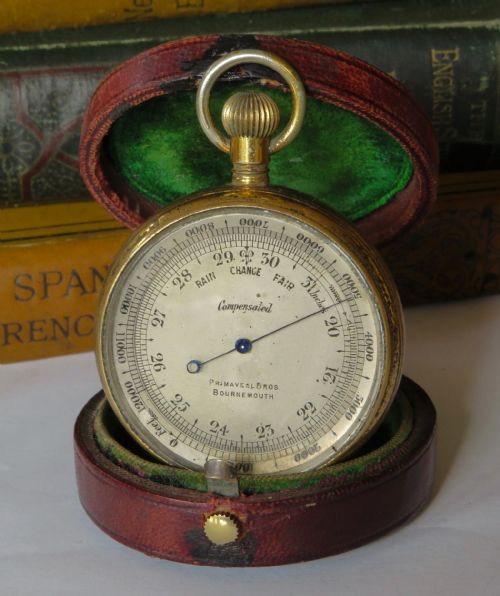
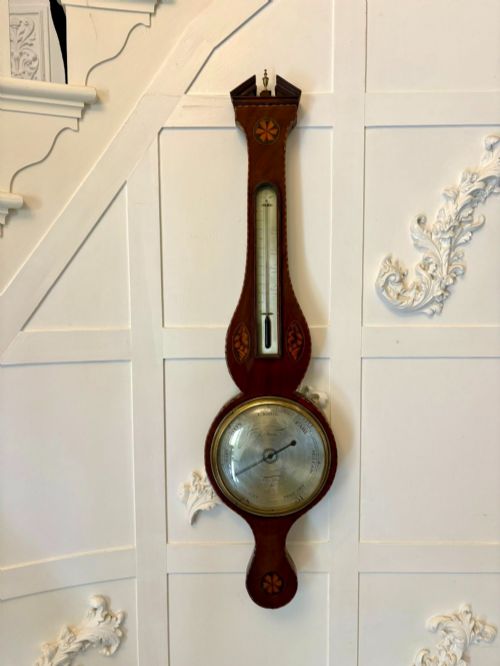
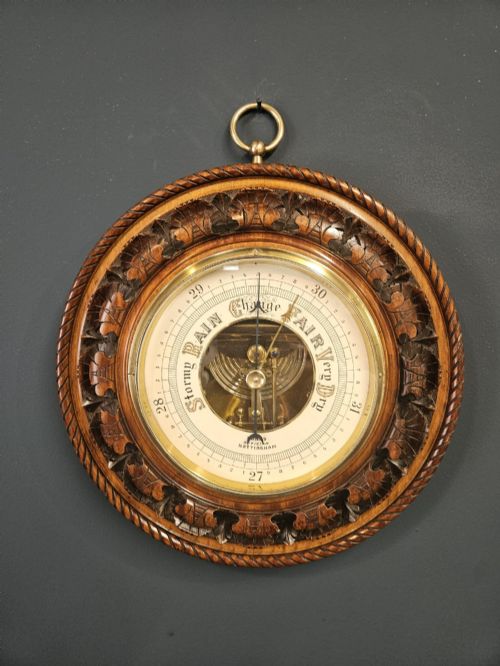
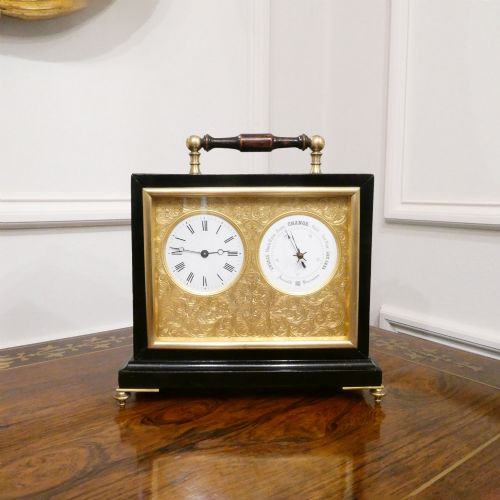
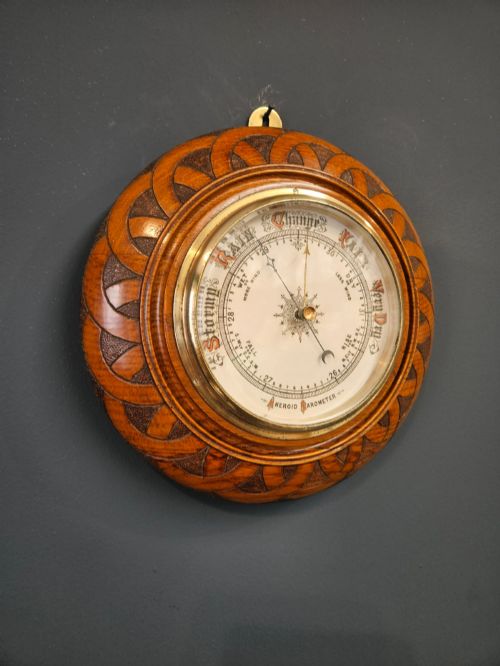
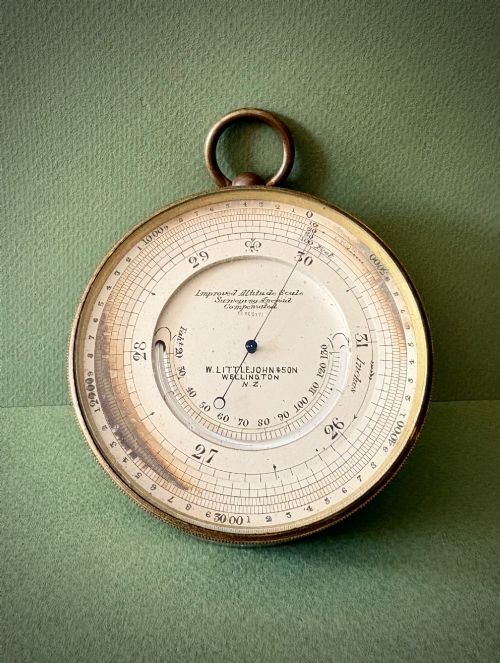
When you search for a brass weather barometer, you encounter scientific instruments housed in wood and metal casings designed for wall mounting, desk use or pocket portability. The examples on this page span the Georgian, Victorian, Edwardian and later periods, capturing changes in domestic technology.
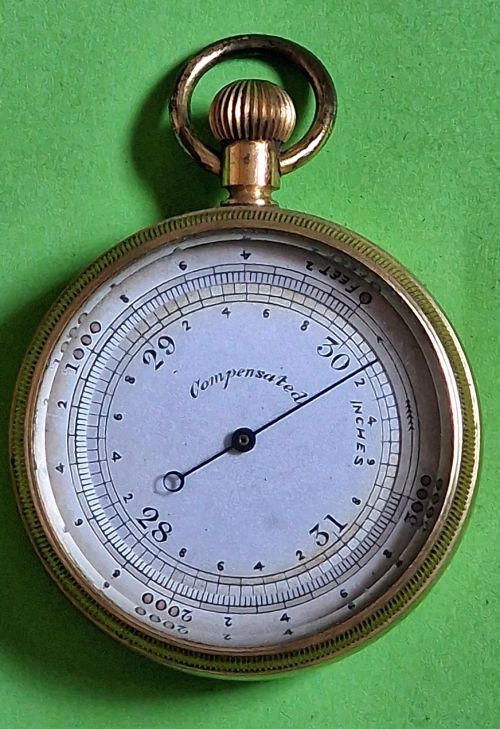
Pocket versions and marine stick barometers appear frequently alongside large oak and mahogany cased pieces. These instruments record atmospheric shifts using mercury columns or mechanical aneroid movements behind bevelled glass.
How they were made
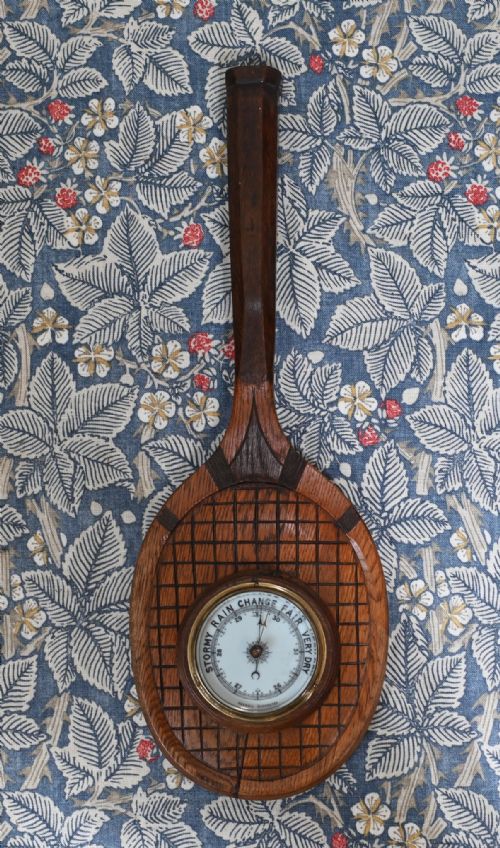
Cases combine heavy cast brass bezels with turned and carved timbers including oak, mahogany, walnut and rosewood. Dial faces utilise silvered metal or enamel with finely etched graduations.
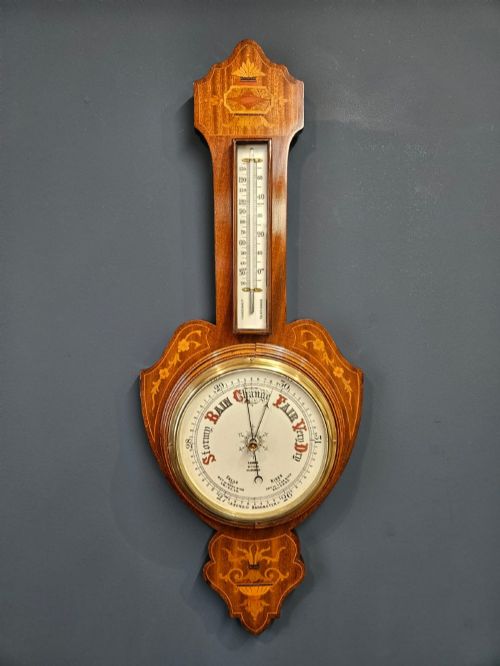
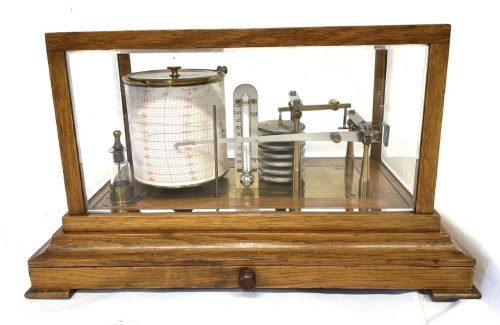
Mechanical aneroid movements rely on internal metallic vacuum chambers linked to exterior indicators, whilst traditional stick barometers employ fluid mercury columns within glass tubes. Woodwork involves shell inlay, geometric carving and marquetry, often complemented by bevelled glass panels protecting chart drawers.
Listings feature brass weather barometers housed in oak, mahogany, walnut and rosewood alongside silvered metal dials.
What varies in quality
Quality separates mass-produced utilitarian instruments from signed pieces made by specialist precision opticians and instrument makers. The crispness of the silvered dial engraving and the precision of the brass casting determine the tier of the piece.
Cabinetwork distinguishes standard domestic barometers from high-end examples, with finely figured mahogany veneers, detailed marquetry and bespoke architectural or carved wooden frames elevating the object.
Negretti & Zambra·Short & Mason·Elliott Brothers·B. Besozzi·Wilh. Lambrecht
The Brass Weather Barometer Glossary
- Aneroid barometer
- An instrument that measures atmospheric pressure using a flexible metal capsule rather than liquid mercury. These units expand and contract with pressure changes to move a dial indicator.
- Barograph
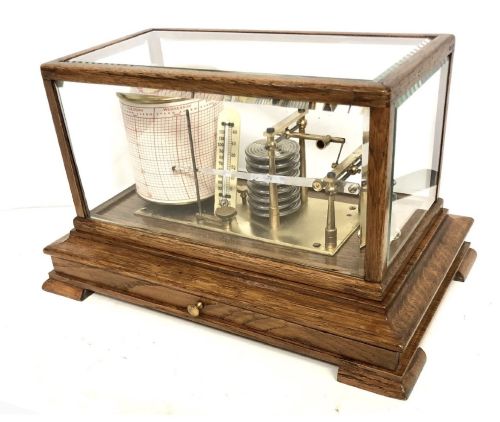
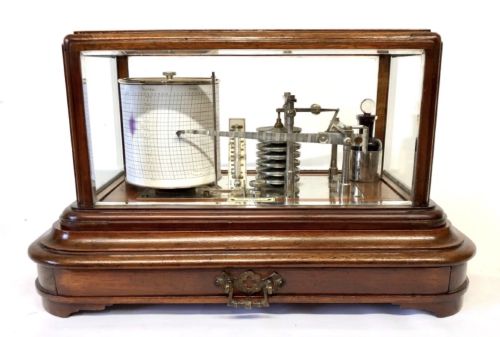
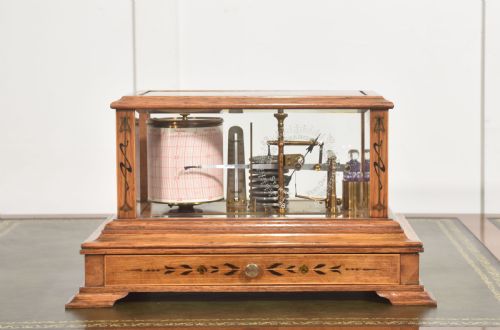
- A recording meteorological instrument that draws barometric pressure over a week on paper charts. They typically incorporate clockwork drums and multiple aneroid chambers.
- Stick barometer
- A tall, slender wall instrument that displays atmospheric pressure via a vertical mercury-filled glass tube. Georgian and Victorian versions frequently incorporate exposed vernier scales.
- Banjo barometer
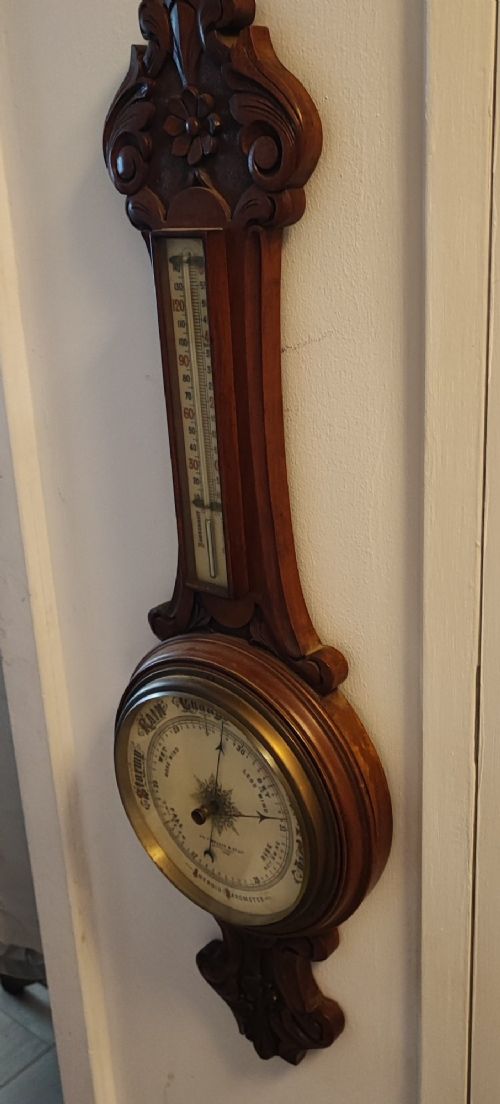
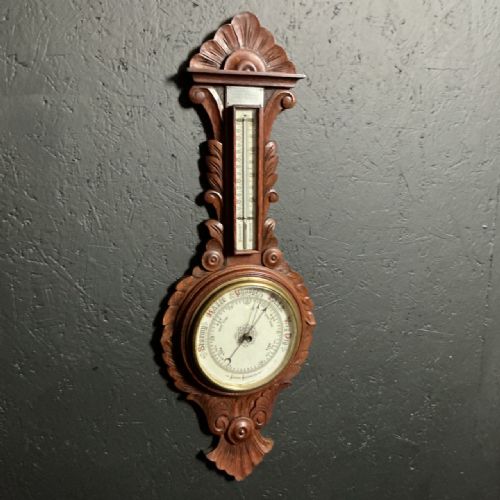
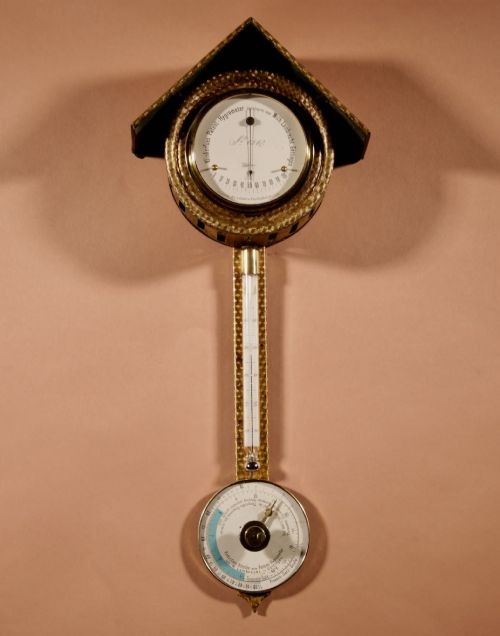
- A wall-mounted weather glass named for its distinctive stringed-instrument silhouette. These incorporate a round dial at the top above a longer trunk containing thermometers or hygrometers.
- Hygrometer
- A scientific instrument used for measuring the moisture content or humidity of the air. Weather stations often pair these with barometers and thermometers.
Brass Weather Barometer: Frequently Asked Questions
How do I read a brass weather barometer?
You observe the position of the pointer relative to the weather descriptions etched onto the silvered dial, noting whether pressure is rising or falling.
Many instruments feature a secondary manual needle that you align with the primary indicator to track daily barometric changes.
Where should I hang a wall barometer?
You place them on interior walls away from direct sunlight, central heating radiators and exterior doors to prevent extreme temperature fluctuations.
Stable indoor environments ensure the internal metal mechanism or mercury column responds accurately to ambient atmospheric pressure.
What is the difference between an aneroid and a mercury barometer?
Aneroid barometers utilise sealed metal vacuum boxes that flex under pressure changes, making them compact and suitable for portable desk or pocket formats.
Mercury barometers rely on liquid columns in glass tubes governed strictly by atmospheric weight, requiring vertical wall mounting.
How do I date an antique barometer?
You examine the style of the wood case, the typography on the silvered dial, and any maker signatures or patent inscriptions.
Georgian stick barometers display restrained architectural lines, whereas Victorian and Edwardian aneroids often feature heavier carved oak, walnut or inlaid mahogany frames.