



Pocket Weather Instrument
These pocket weather instrument examples are portable barometers and altimeters made to measure atmospheric pressure on the move, offering a tangible connection to nineteenth-century scientific observation.
Pocket Weather Instrument
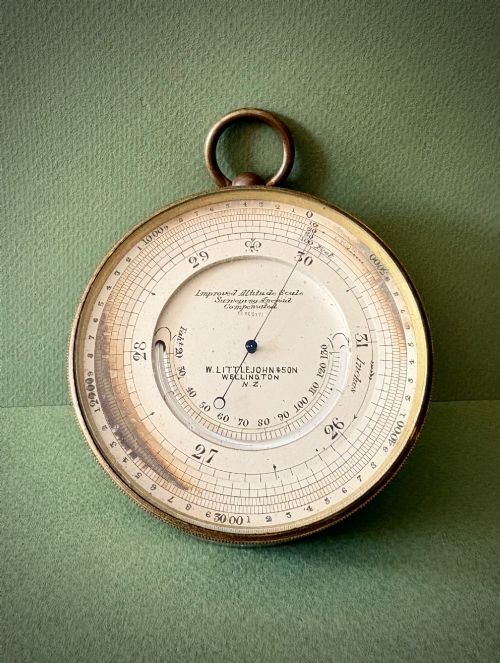
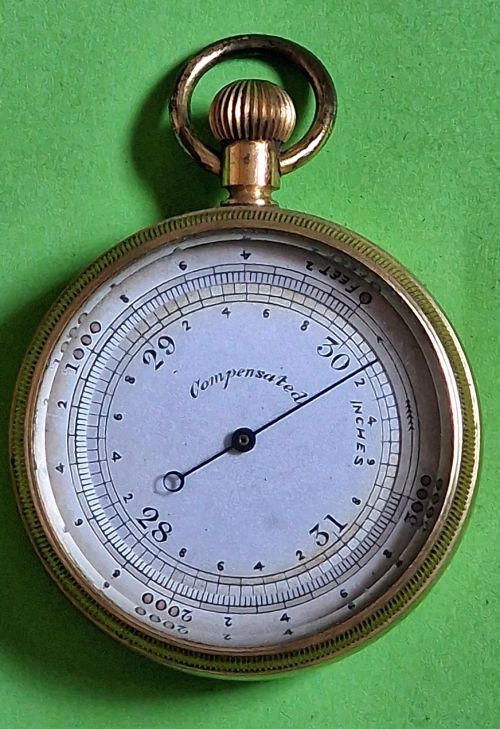
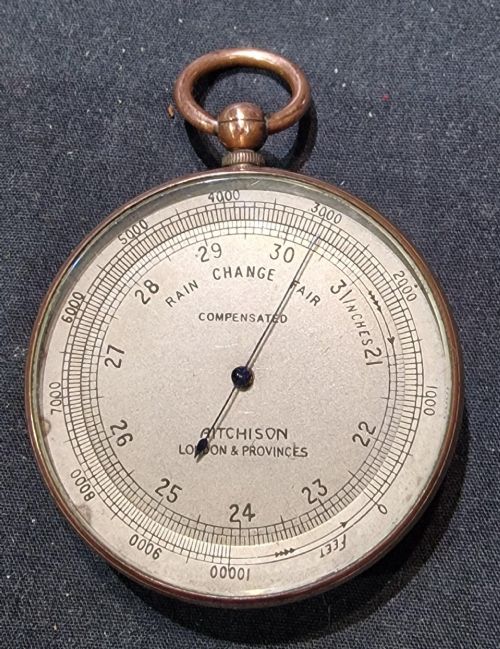
When you search for pocket weather instrument, you are looking at portable mechanical barometers and altimeters designed for travellers, surveyors, and field observers during the Victorian and Edwardian eras. These devices range from simple mechanical barometers housed in leather cases to precision surveying instruments built for specialised observation.
The versions you are most likely to meet on this page date from the mid nineteenth century through to about nineteen ten, spanning Victorian and Edwardian scientific instrument styles. They appear in forms such as pocket barometers, pocket altimeters, and boxed forecasters complete with instructions and leather or velvet linings.
How They Were Made
These instruments rely on durable brass and metal casings designed to protect the delicate internal aneroid mechanism from the rigours of travel. Silvered metal dials feature crisp, legible engravings for pressure and altitude readings, protected beneath bevelled glass lenses.
Many examples are housed in fitted leather or gilt cases, sometimes lined with velvet to cushion the instrument during transit. Specialised surveying and military pieces incorporate compensated movements and robust metal housings built for field use.
Some nineteenth-century gentlemen carried these delicate brass instruments into the clouds on military observation balloons.
What Varies in Quality
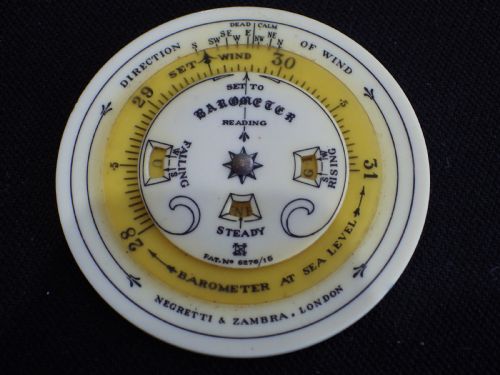
Quality in these instruments rests on the precision of the maker and the complexity of the internal aneroid movement. Signed pieces by established makers such as Negretti and Zambra or James Murray demonstrate superior mechanical refinement compared to unsigned alternatives.
The degree of preservation also distinguishes the range, particularly the survival of original fitted boxes, instruction papers, and intact leather cases. Instruments featuring compensated movements for temperature variation represent a higher tier of scientific manufacturing.
Primavesi·Aitchison·Negretti and Zambra·M Pillischer·James Murray
The Pocket Weather Instrument Glossary
- Aneroid barometer
- A device that measures atmospheric pressure without using liquid, relying on a flexible metal box that expands or contracts as pressure changes. This mechanism made truly portable weather instruments possible for the first time.
- Altimeter
- An instrument used to measure altitude above a fixed level by sensing atmospheric pressure changes. In nineteenth-century examples, this scale is often integrated directly onto the dial of a pocket barometer.
- Compensated barometer
- A pocket instrument fitted with a mechanism to counteract the effects of temperature changes on the reading. This technical refinement ensures greater accuracy during fieldwork at varying temperatures.
- Surveying barometer
- A high-precision instrument utilised by professionals for mapping and geographical observation. These pieces often feature extended scales and robust construction designed for rigorous outdoor deployment.
Pocket Weather Instrument: Frequently Asked Questions
What is a pocket weather instrument?
A pocket weather instrument is a portable mechanical device, typically a barometer or altimeter, designed to measure atmospheric pressure and altitude. Nineteenth-century travellers and surveyors carried them in fitted leather cases to monitor local weather changes.
These instruments use an internal aneroid capsule rather than mercury, making them safe and practical for field use. They represent a fascinating intersection of Victorian craftsmanship and applied science.
How do I date a pocket barometer?
Dating these instruments involves examining the maker's signature, the typography on the dial, and the style of the outer case. Victorian pieces often feature ornate engraved silvered dials, while Edwardian examples can display more utilitarian or specialised military markings.
Engraved signatures and addresses on the face or bezel provide a direct link to the maker's active working period. Surviving original boxes and paper instructions also offer valuable clues to the manufacturing decade.
Can these pocket barometers still measure weather?
Many surviving pocket barometers remain in working mechanical order and respond to changes in atmospheric pressure. However, antique scientific instruments should be treated with care and are generally appreciated as historical artefacts rather than daily meteorological tools.
If an instrument has not been recently serviced, internal mechanical linkages can be delicate. Collectors typically display them in their fitted cases alongside other scientific material.
What is the difference between a barometer and an altimeter?
A barometer measures atmospheric pressure to help forecast local weather conditions based on rising or falling pressure trends. An altimeter measures height above sea level by translating those same pressure changes into distance units.
Many pocket instruments combine both functions on a single dual-scale dial, allowing the user to read atmospheric pressure and estimated elevation simultaneously. This dual capability made them essential kit for mountain climbers and field surveyors.