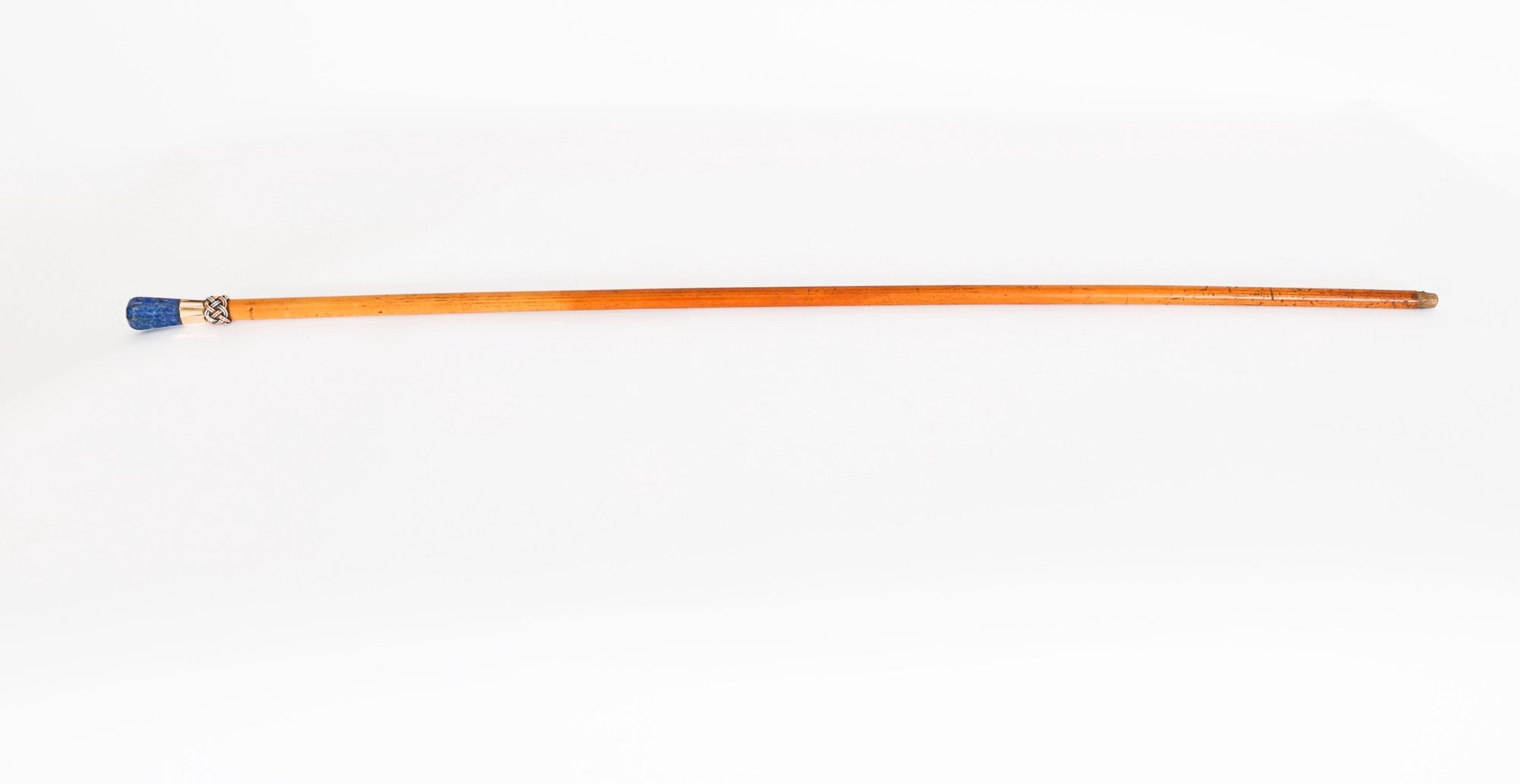
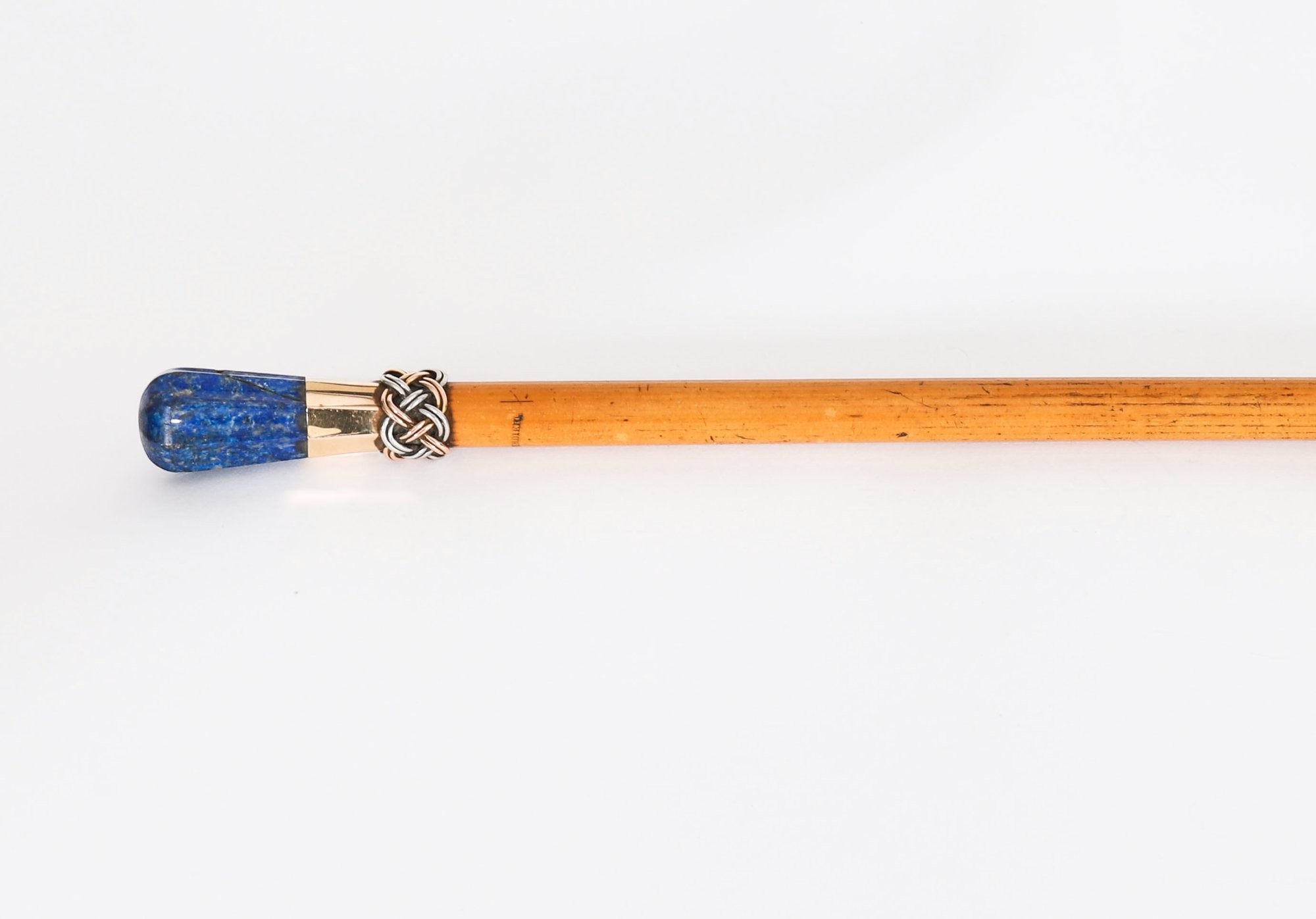
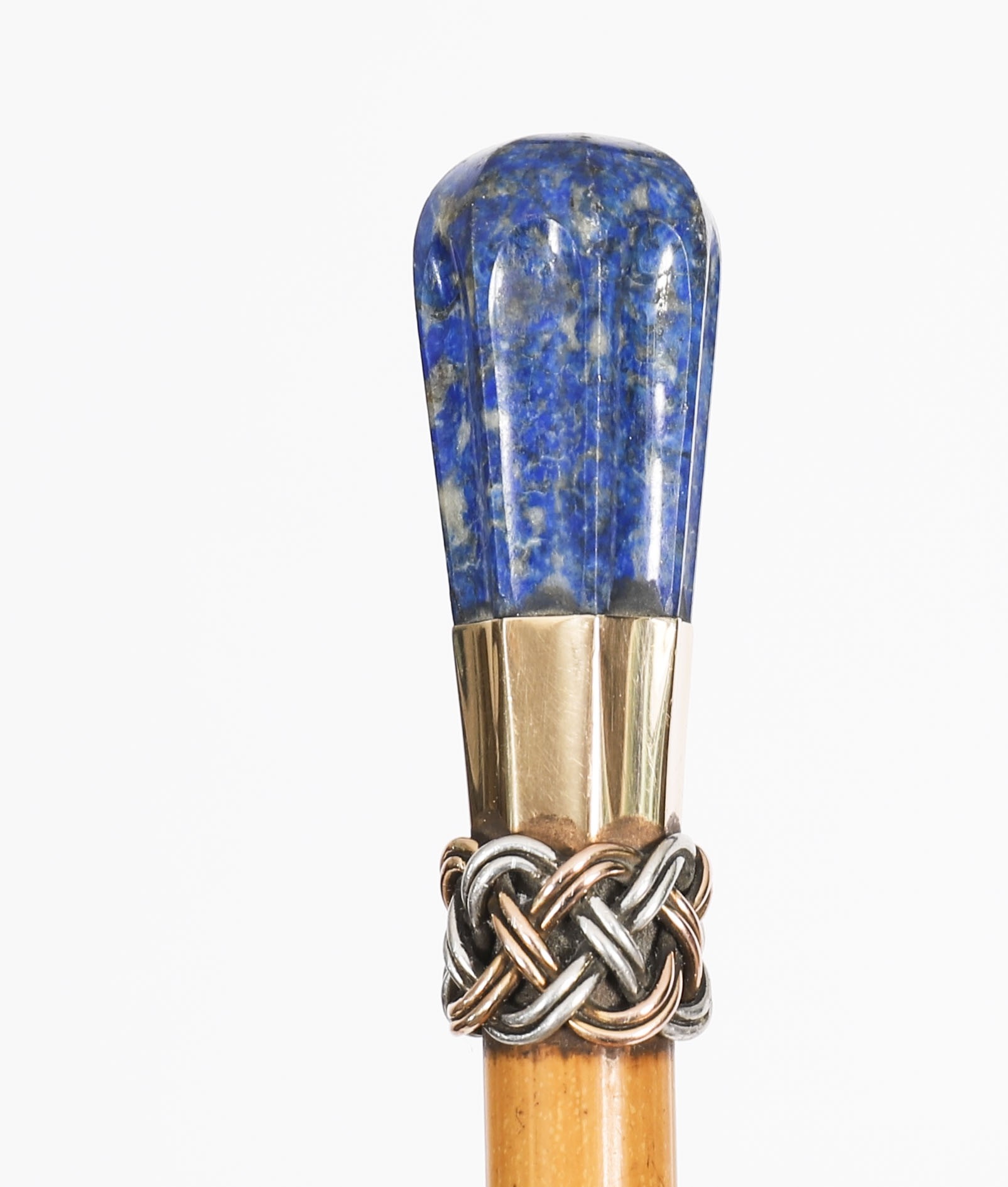
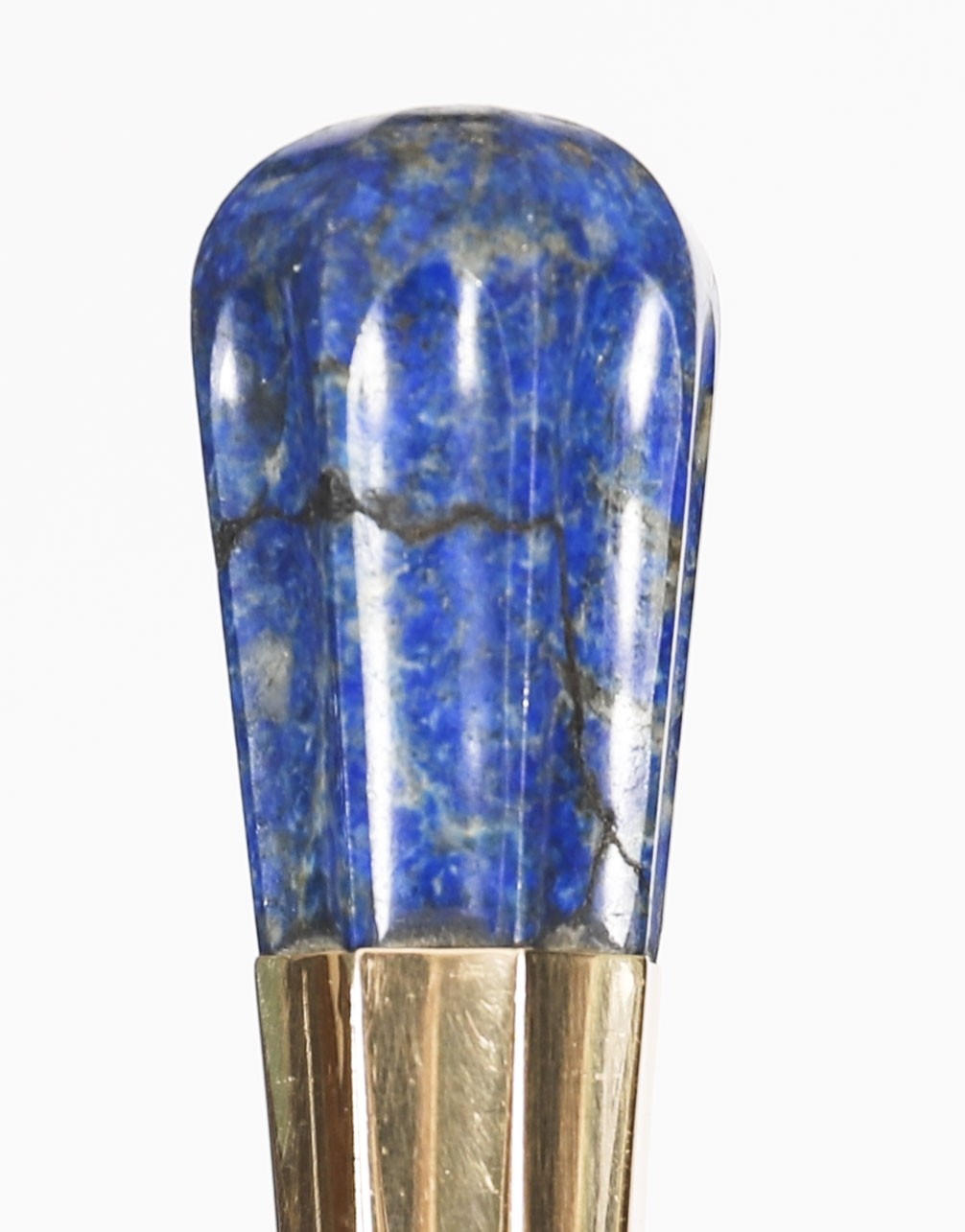
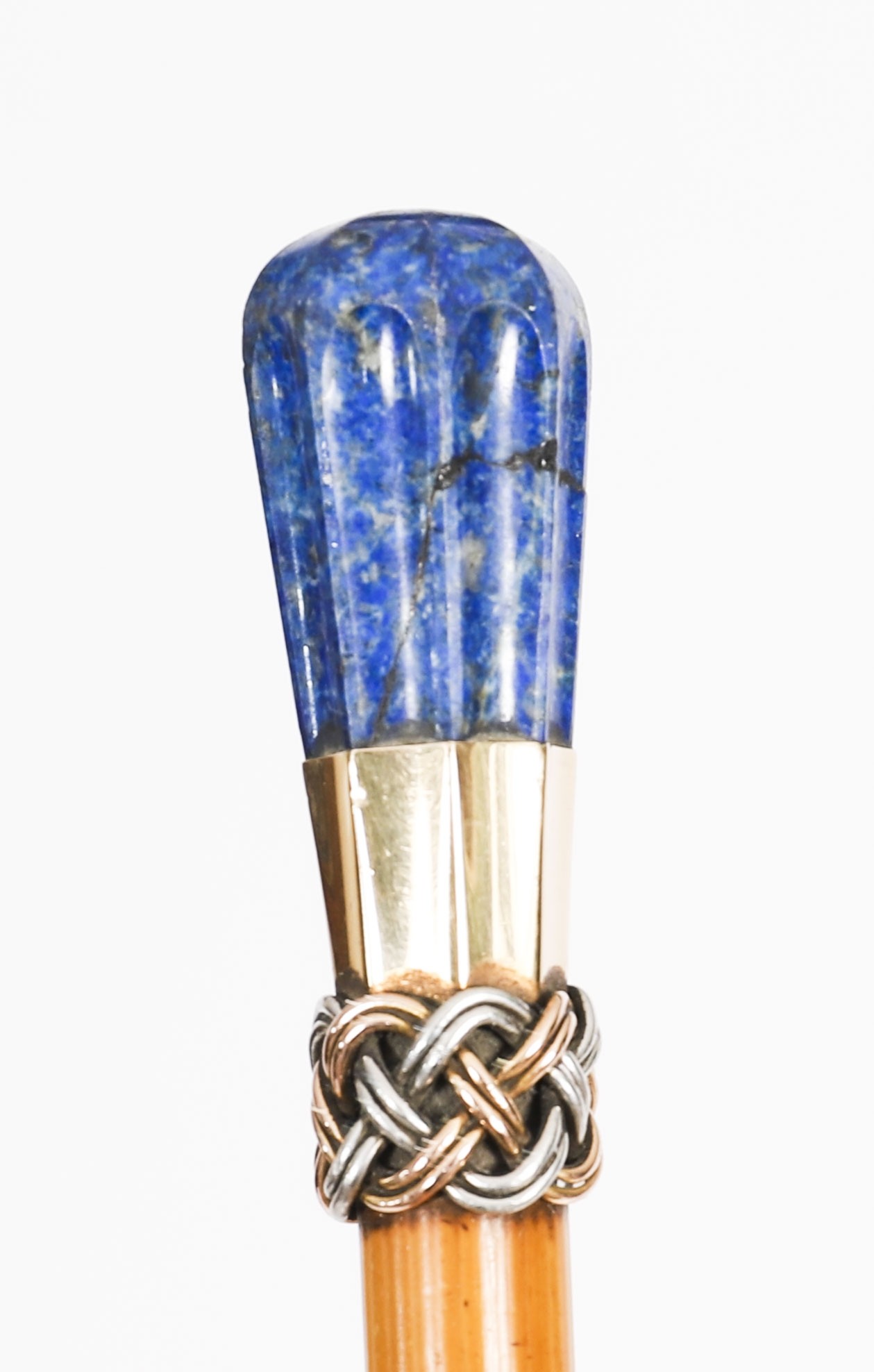
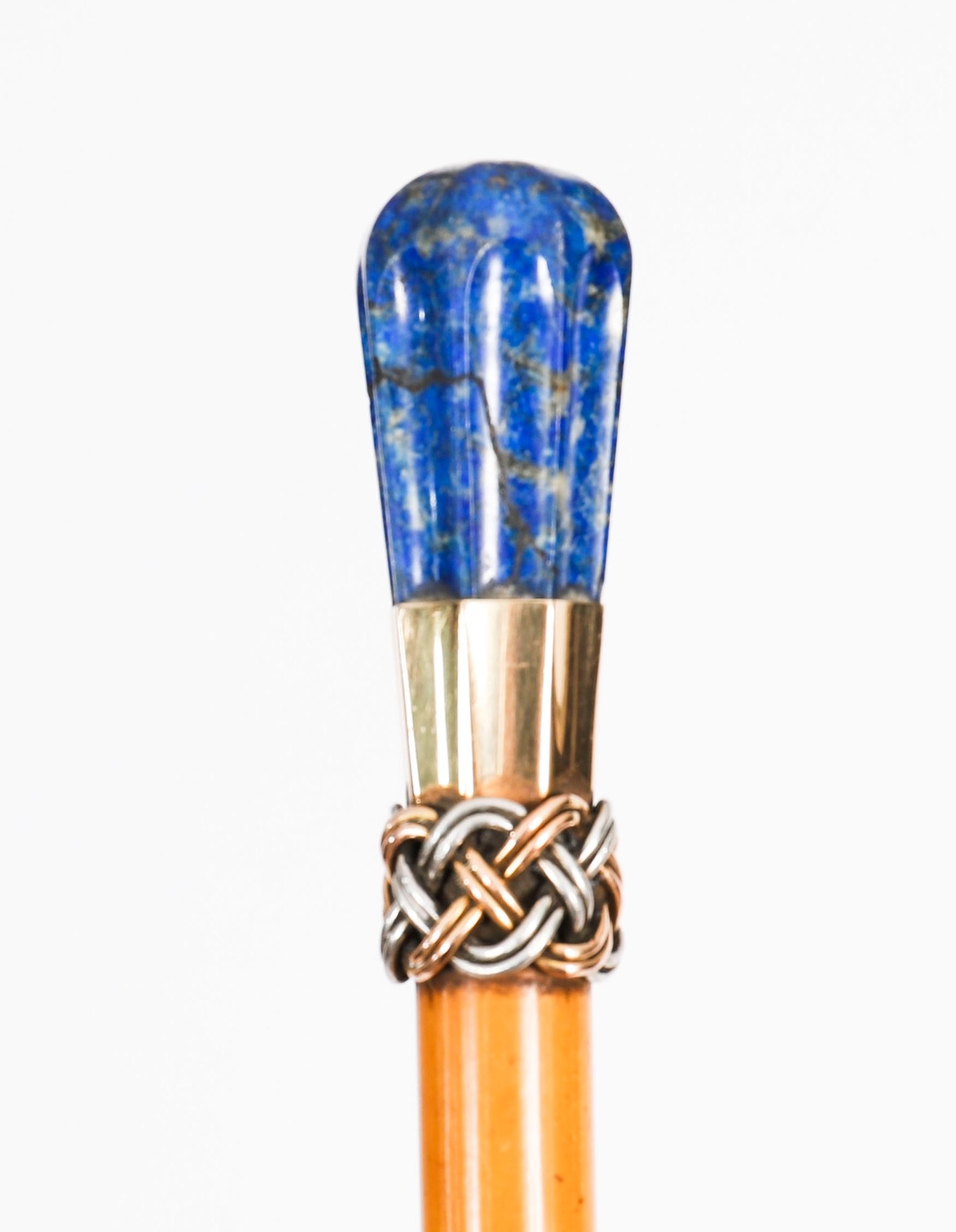
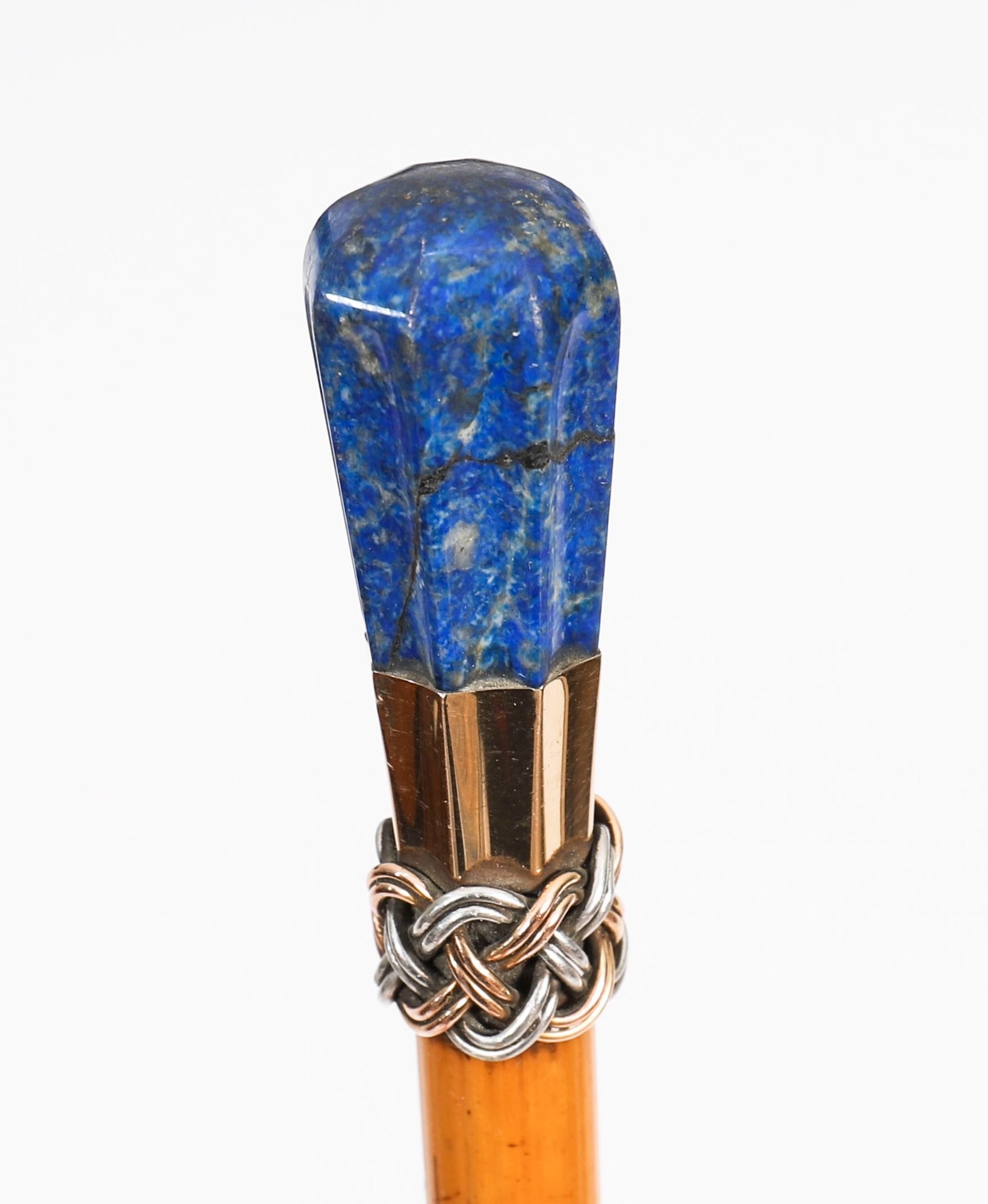
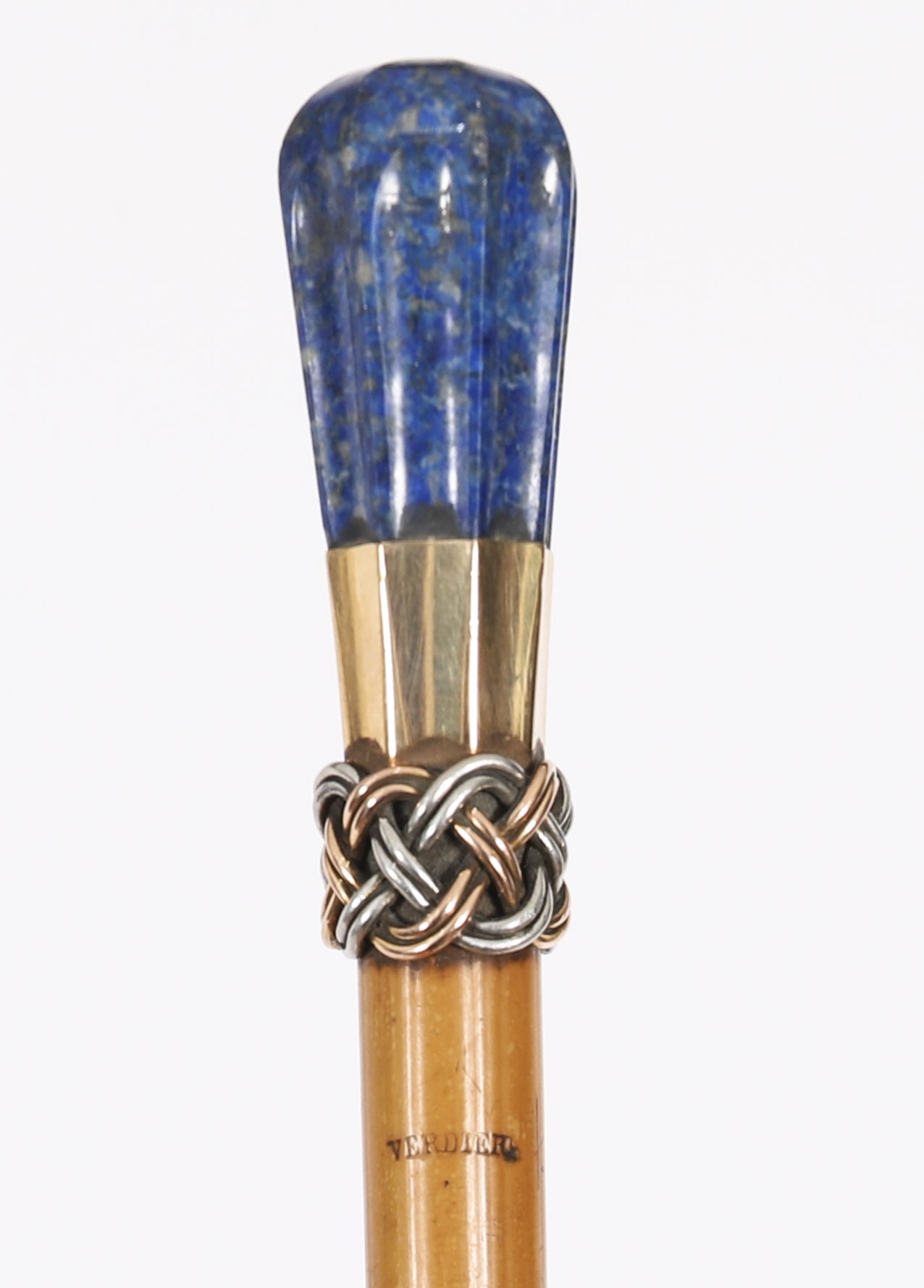
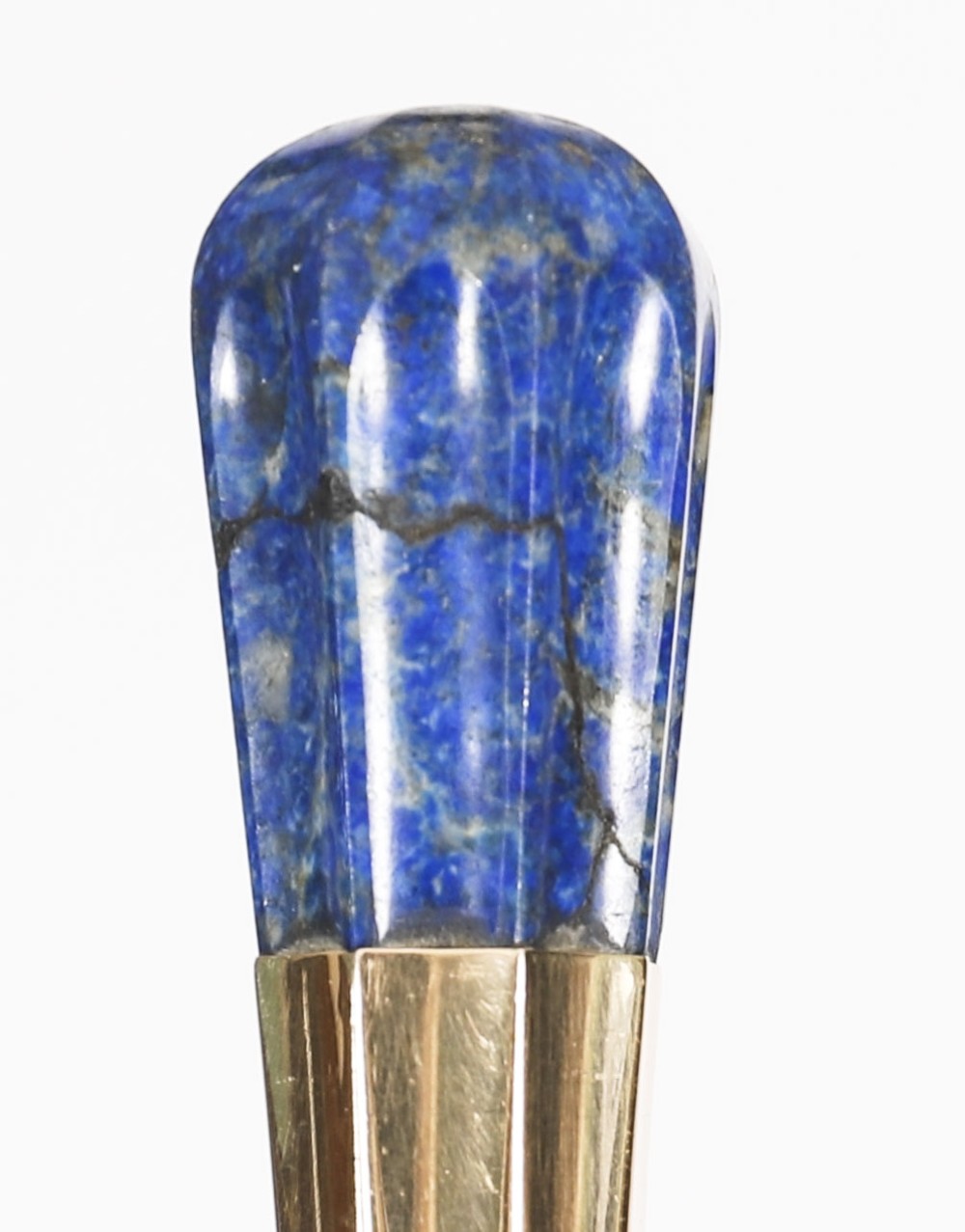
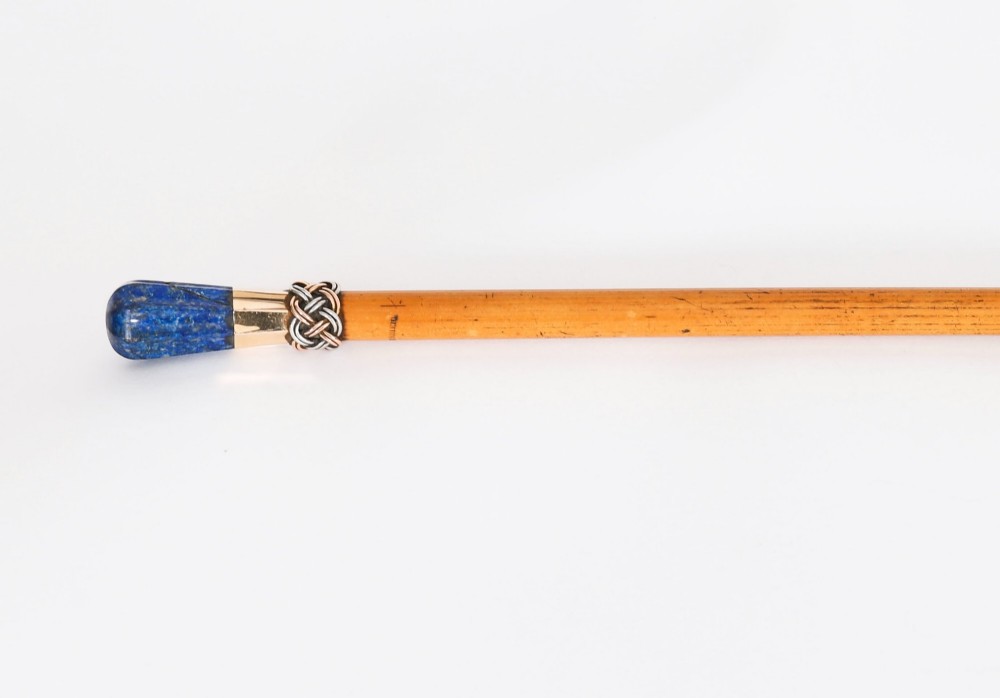
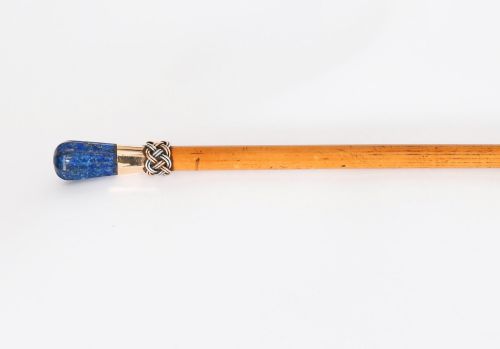
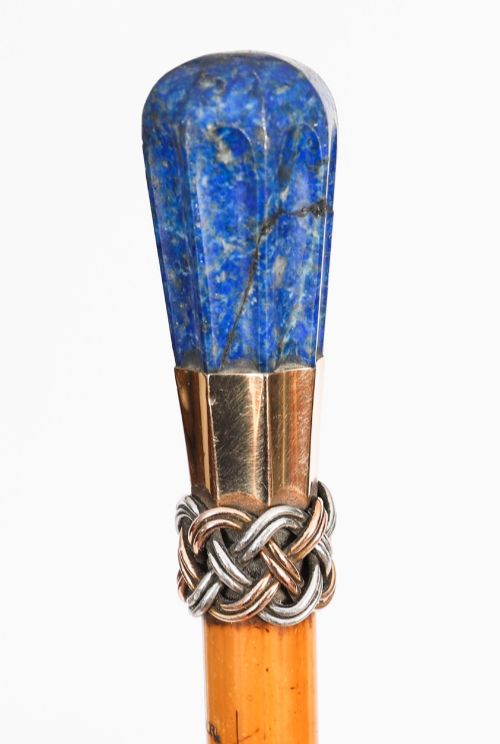
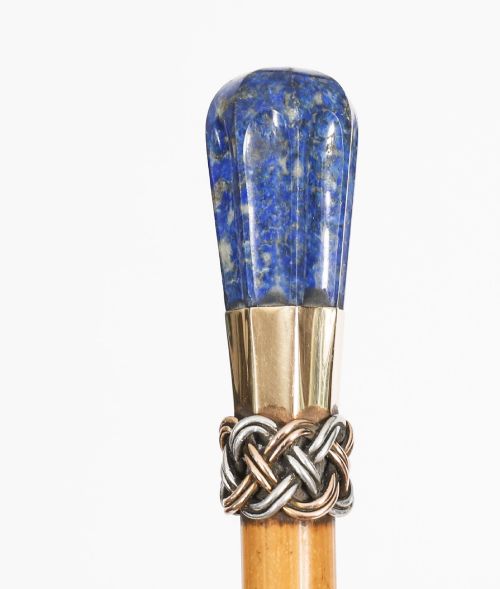
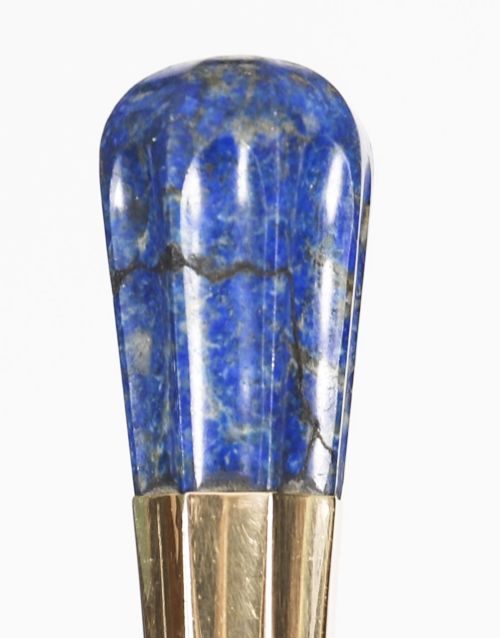
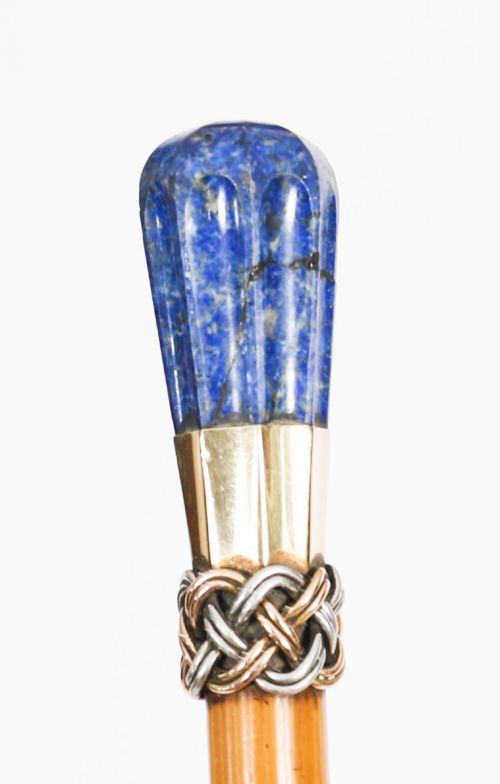
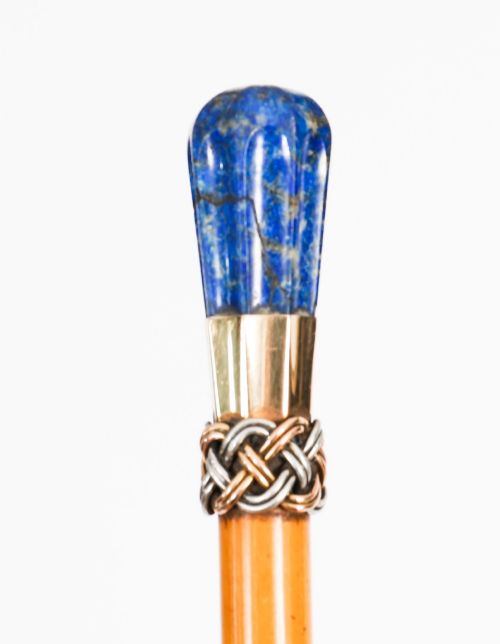
Regent Antiques has dated this French Lapis Lazuli Walking Cane to the 1880s.
This is an independent date report produced by Sellingantiques using its own proprietary system. The process uses the photographs shown on this page. The system is never told the date the dealer has declared. This report shows that the two dates corroborate.
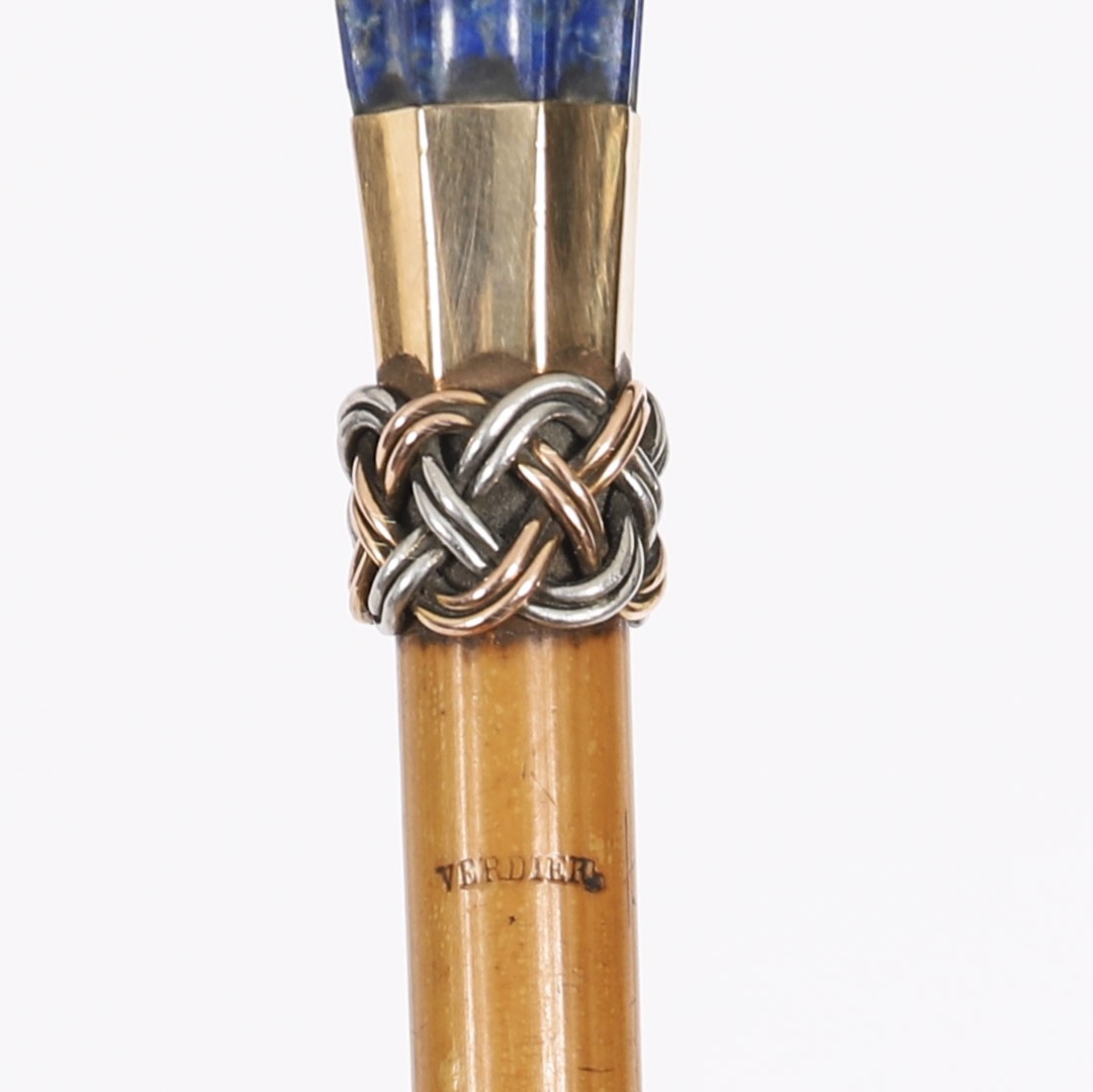
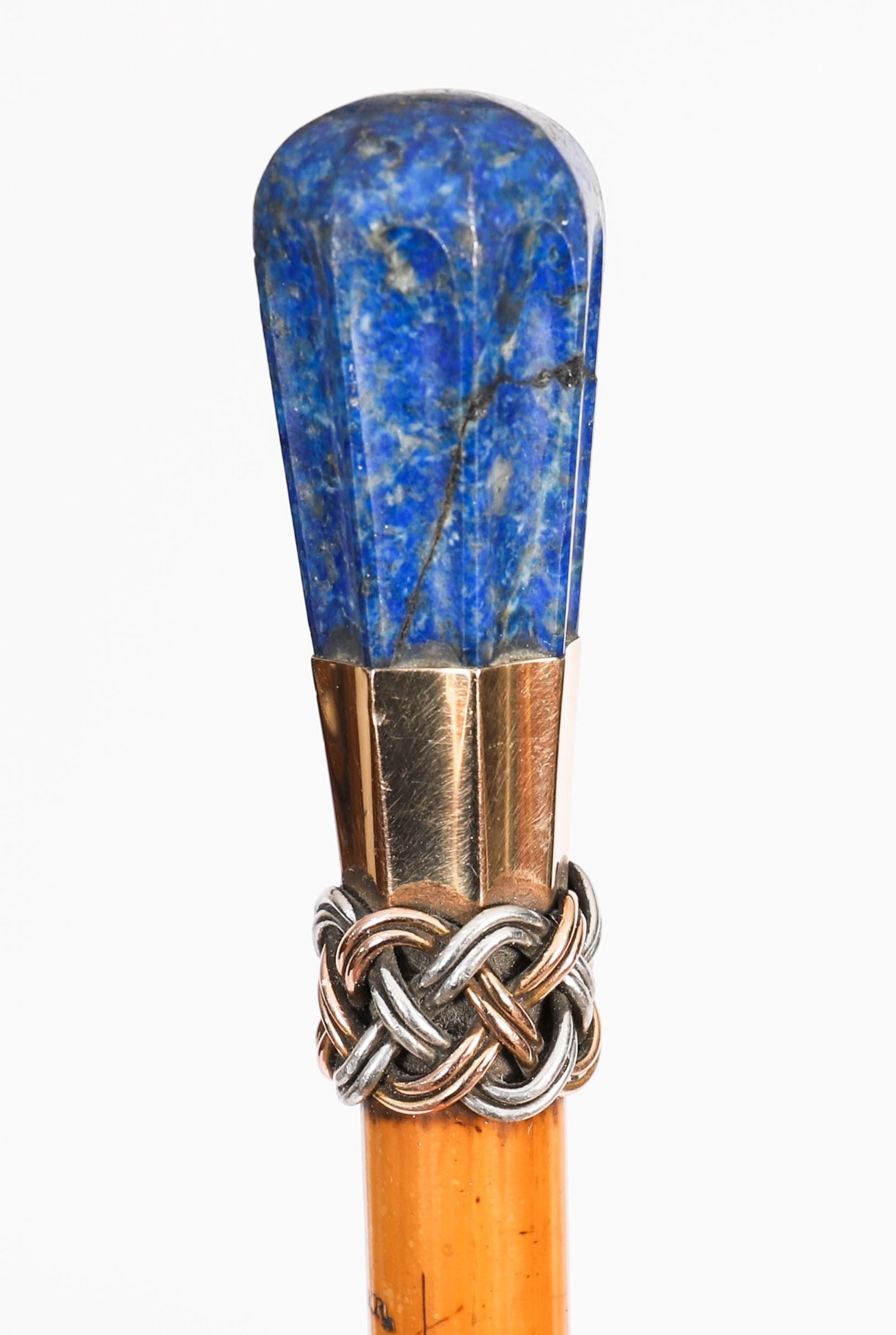
The gold has tested as 14k. A truly beautiful piece that would make a fine addition to any antique collection.
Condition:
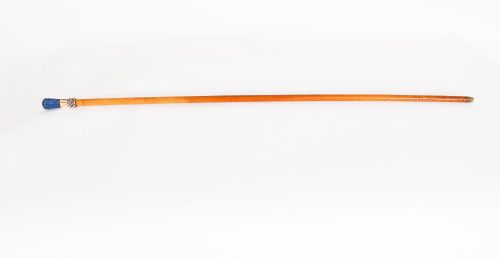
In excellent condition with only minor signs of use commensurate with age, as seen in the accompanying photographs, the stick displays beautifully.
Dimensions in cm:
Height 94 cm x Width 3 cm x Depth 3 cm
Dimensions in inches:
Height 37 inches x Width 1 inch x Depth 1 inch
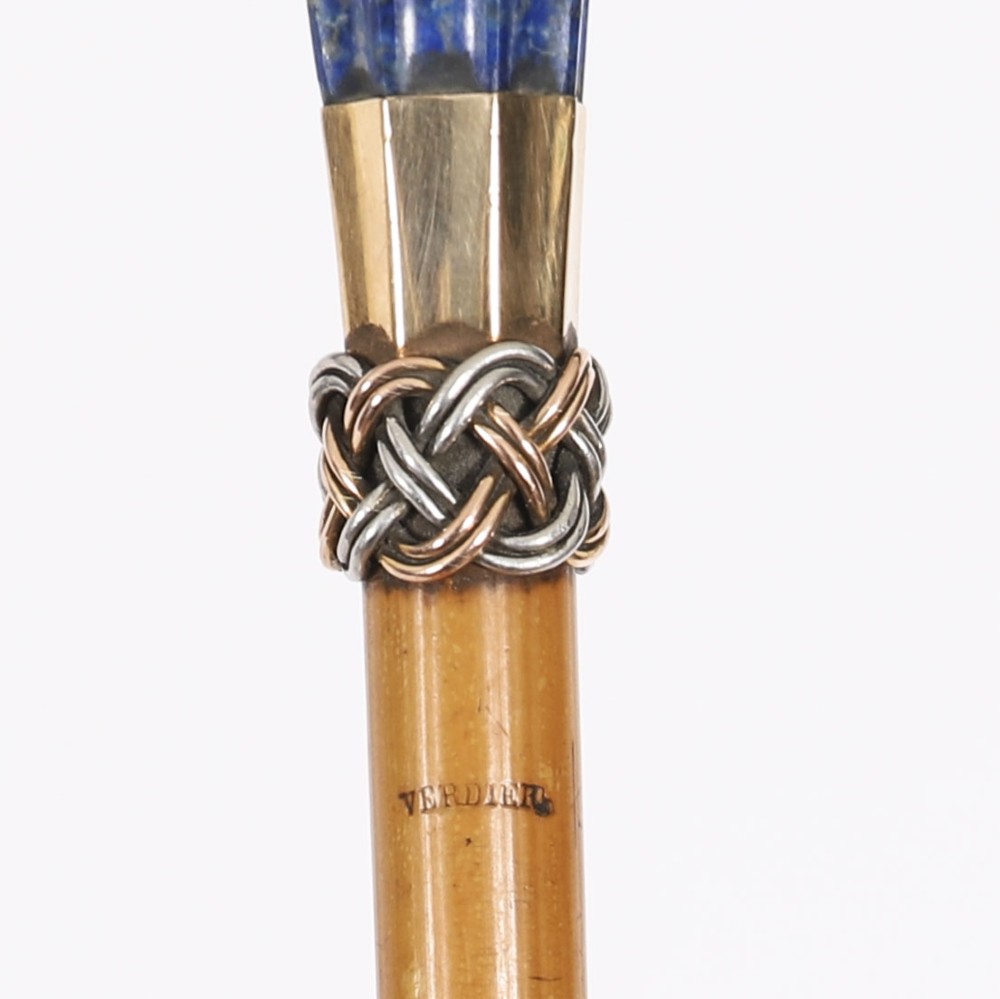
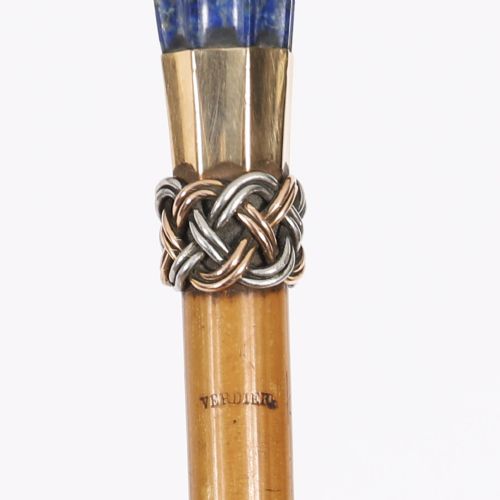
Verdier
Luxury French craftsmanship of walking Canes & canes badines: 19th-century French luxury walking sticks and canes (such as those mounted in lapis lazuli, rose and white gold, or featuring gold pommels) were frequently retailed or stamped by Verdier.
Lapis lazuli, or lapis for short, is a deep blue metamorphic rock used as a semi-precious stone that has been prized since antiquity for its intense color. As early as the 7th millennium BCE, lapis lazuli was mined in the Sar-i Sang mines, in Shortugai, and in other mines in Badakhshan province in northeast Afghanistan. Lapis was highly valued by the Indus Valley Civilisation (3300–1900 BC). Lapis beads have been found at Neolithic burials in Mehrgarh, the Caucasus, and even as far from Afghanistan as Mauritania. It was used in the funeral mask of Tutankhamun (1341–1323 BCE).
At the end of the Middle Ages, lapis lazuli began to be exported to Europe, where it was ground into powder and made into ultramarine, the finest and most expensive of all blue pigments. It was used by some of the most important artists of the Renaissance and Baroque, including Masaccio, Perugino, Titian, and Vermeer, and was often reserved for the clothing of the central figures of their paintings, especially the Virgin Mary.
Lapis takes an excellent polish and can be made into jewelry, carvings, boxes, mosaics, ornaments, small statues, and vases. During the Renaissance, Lapis was ground and processed to make the pigment ultramarine for use in frescoes and oil paintings. Its usage as a pigment in oil paint largely ended in the early 19th century when a chemically identical synthetic variety became available.
Malacca wood
Rare and exotic, also known as "King of canes," was the most commonly used material in making the cane shafts where the standard grip was rounded and metallic. Today, designer and collector canes have sterling silver handles, and are made with wooden shafts made from various woods, including Malacca and bamboo.
Ornate designs, such as animal heads, skulls, and various emblems, may also be carved into the wooden handles; these may make them harder to wield, but some find them more attractive.
Malacca is one species of rattan found on the coast of Sumatra. Rattan palms have long, slender stems, and are perfect for fashioning walking sticks. The stem is not round, but has a ridge or spine, often called a "teardrop," running along its length. It is very lightweight, yet strong, with no two specimens being alike. The stem is made up of links with joints or nodes at both ends, like bamboo. The bark is strong, with what appears to be a satiny, natural gloss or surface glaze. Color varies from brown to blond or reddish amber.
Size of cane that you need
Convert your height into inches. For example, if you are 5' 10" in your shoes, your height is 70 inches. Divide by two and then add ½ inch to determine your approximate cane size. In our example, if you are 70 inches tall (5' 10"), your approximate cane size would be 35" plus ½"= 35.5 inches.
Our reference: A5457
Regent Antiques has dated this French Lapis Lazuli Walking Cane to the 1880s.
This is an independent date report produced by Sellingantiques using its own proprietary system. The process uses the photographs shown on this page. The system is never told the date the dealer has declared. This report shows that the two dates corroborate.
We specialise in english and continental furniture, silver, porcelain and decorative items.
You can view the stock and full dealer information on the Regent Antiques Profile Page
Regent Antiques is a registered member of LAPADA CINOA
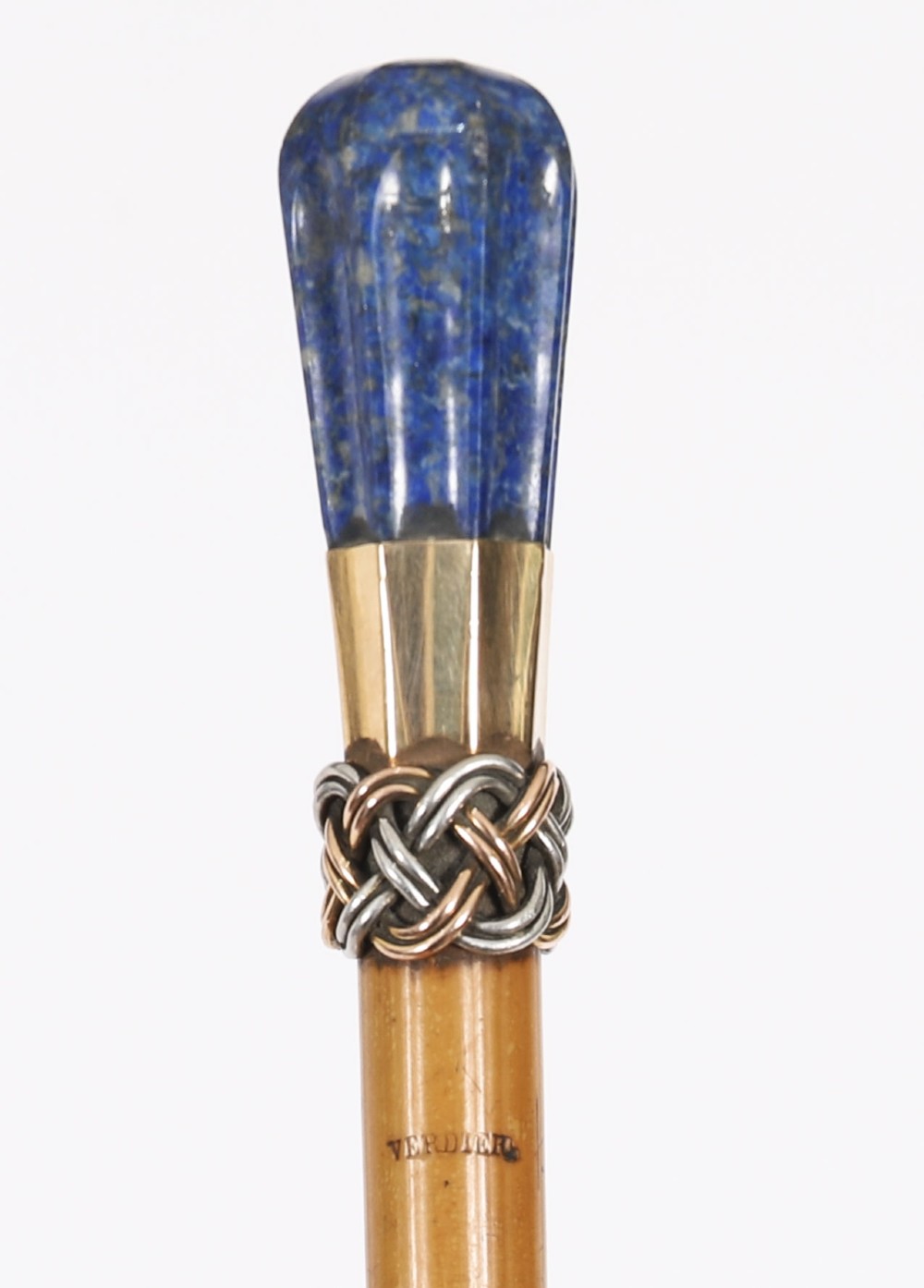
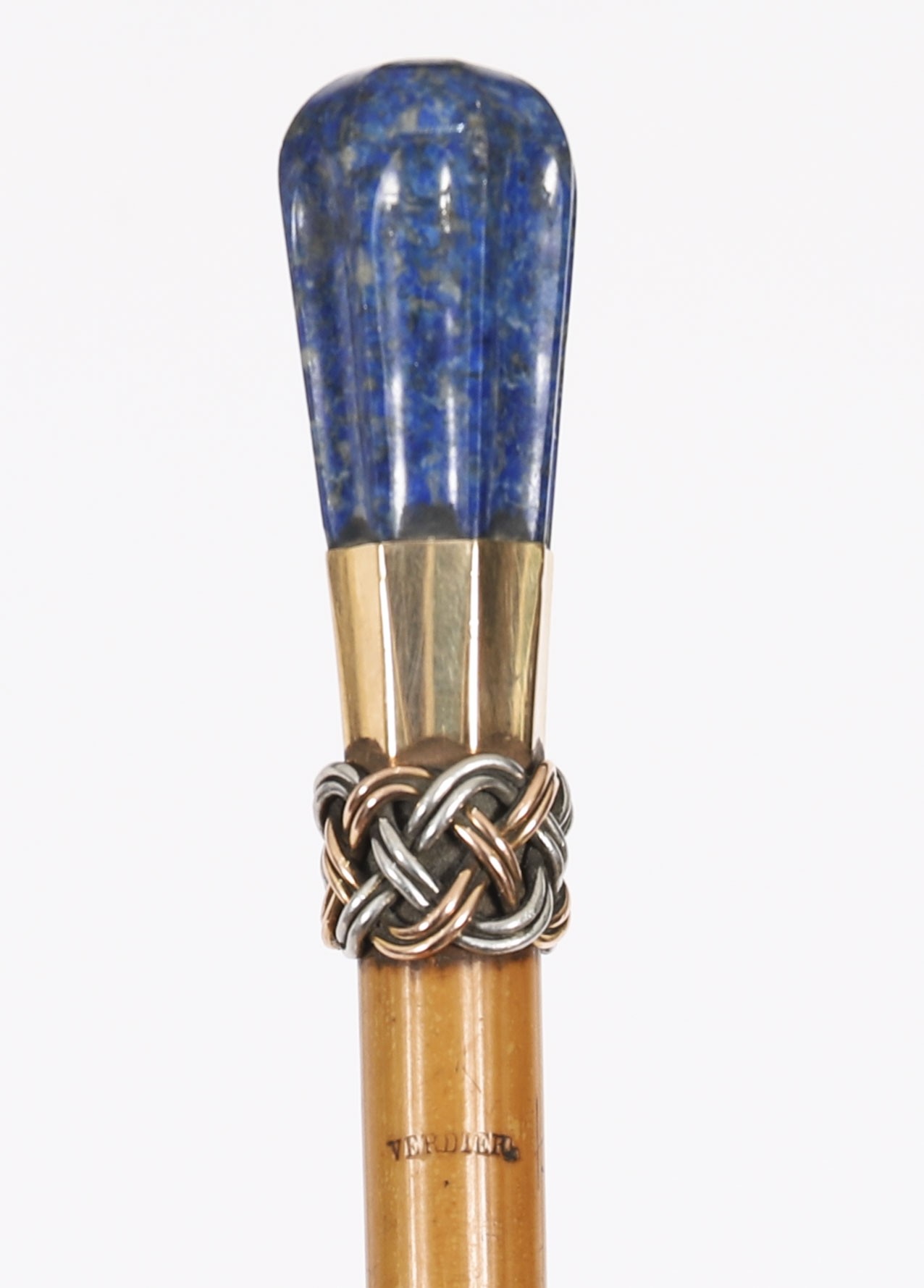
Antique French Lapis Lazuli & Gold Walking Stick by Verdier 94cm/ 37inch 19th C