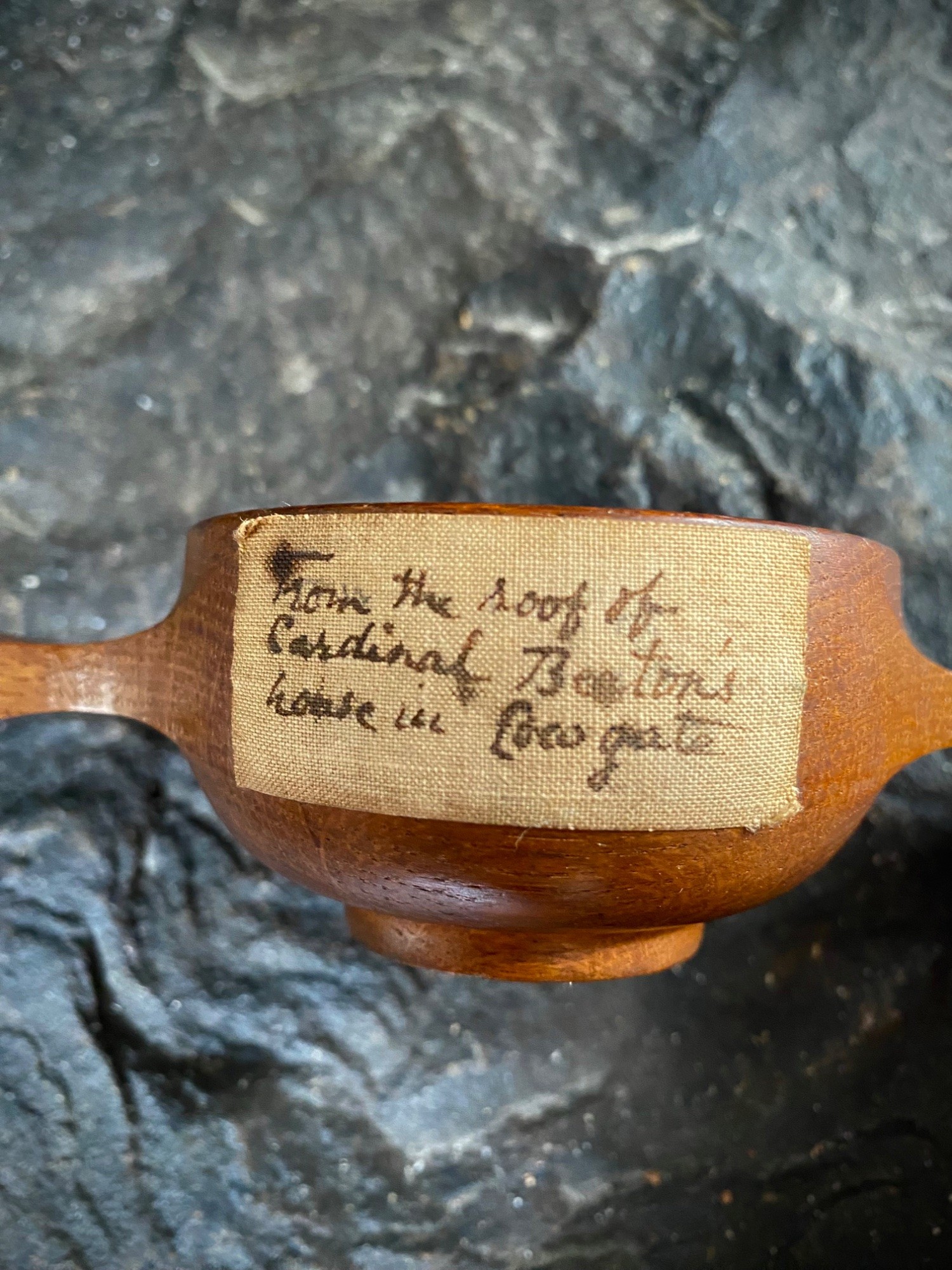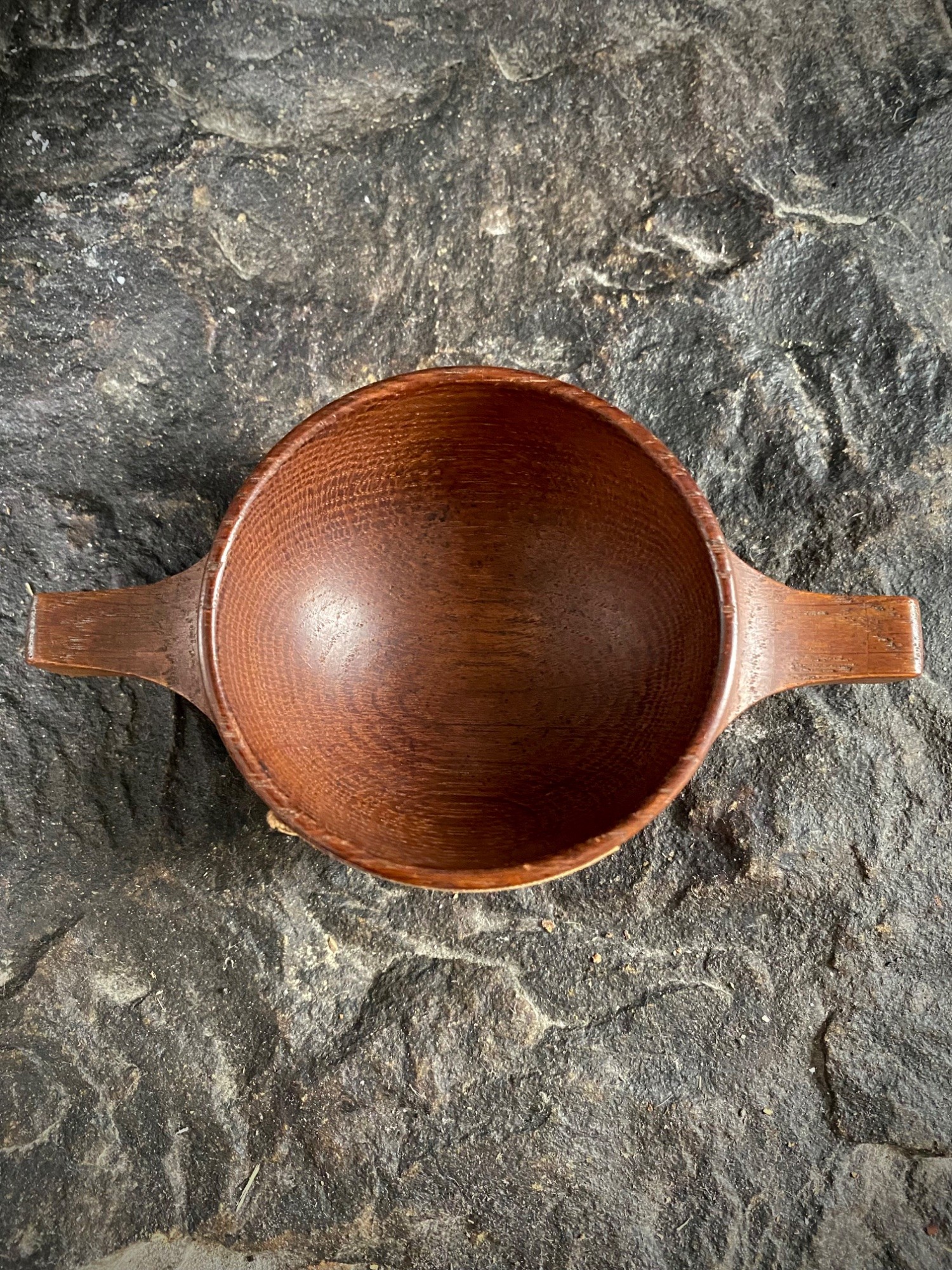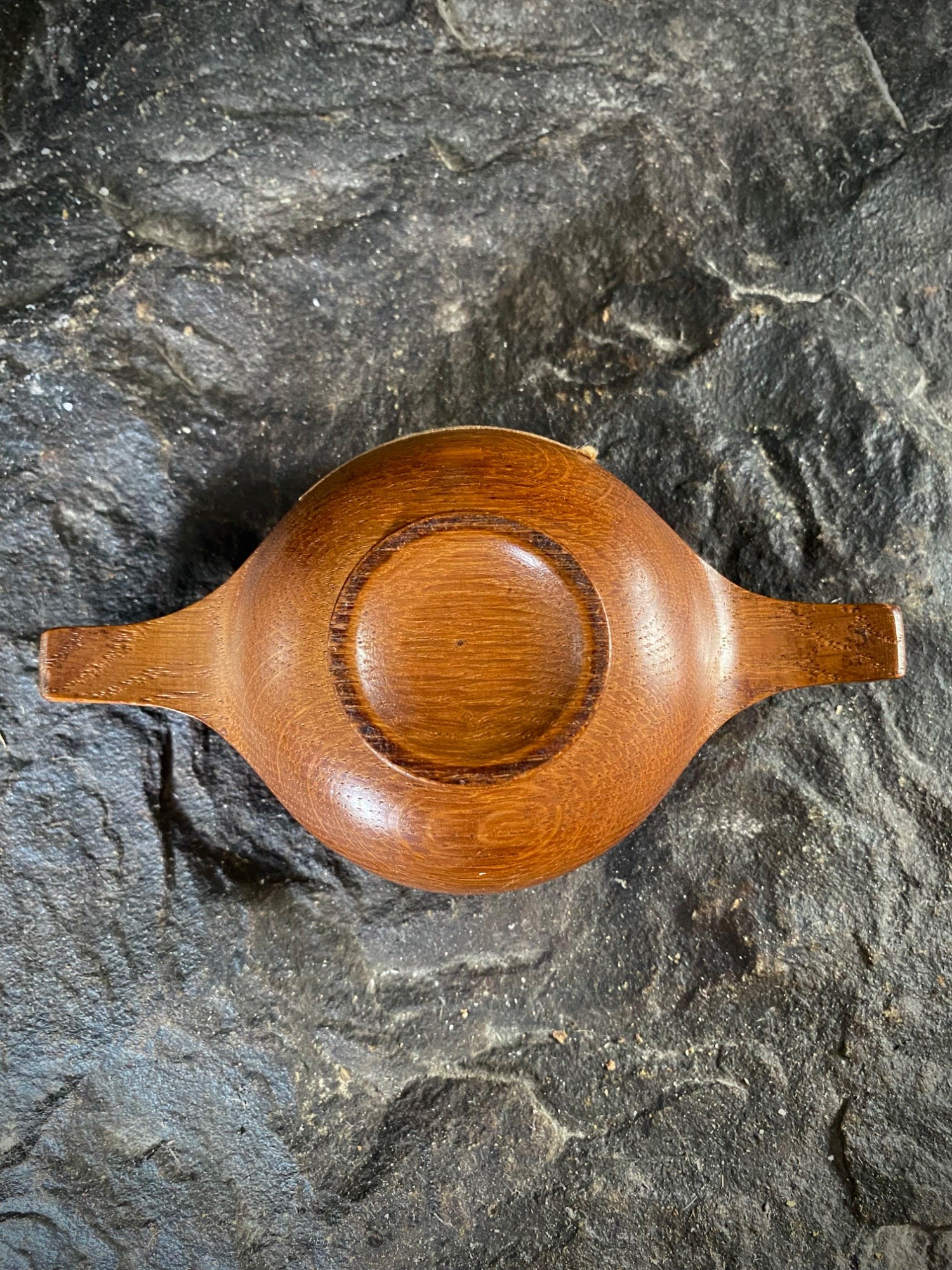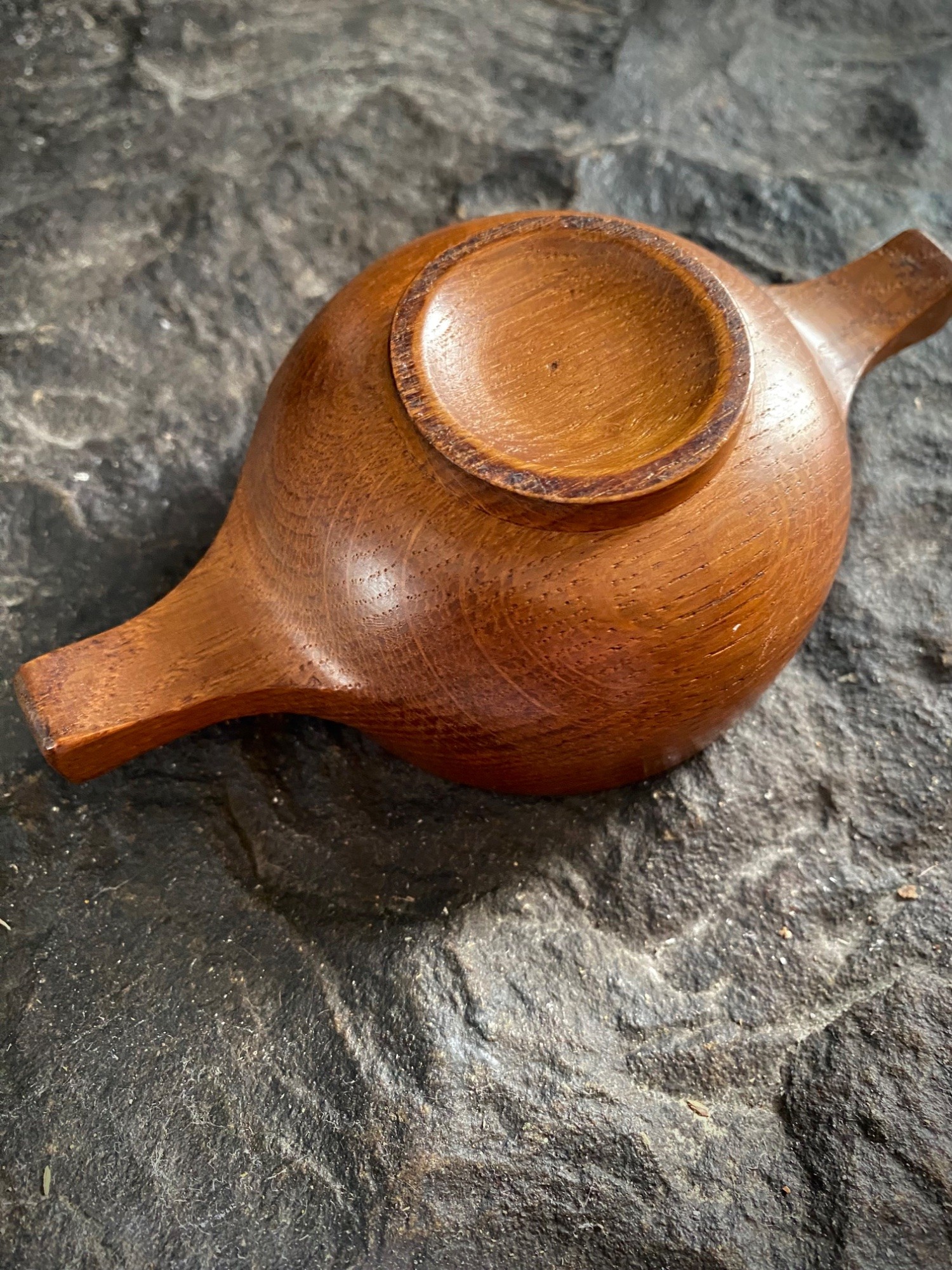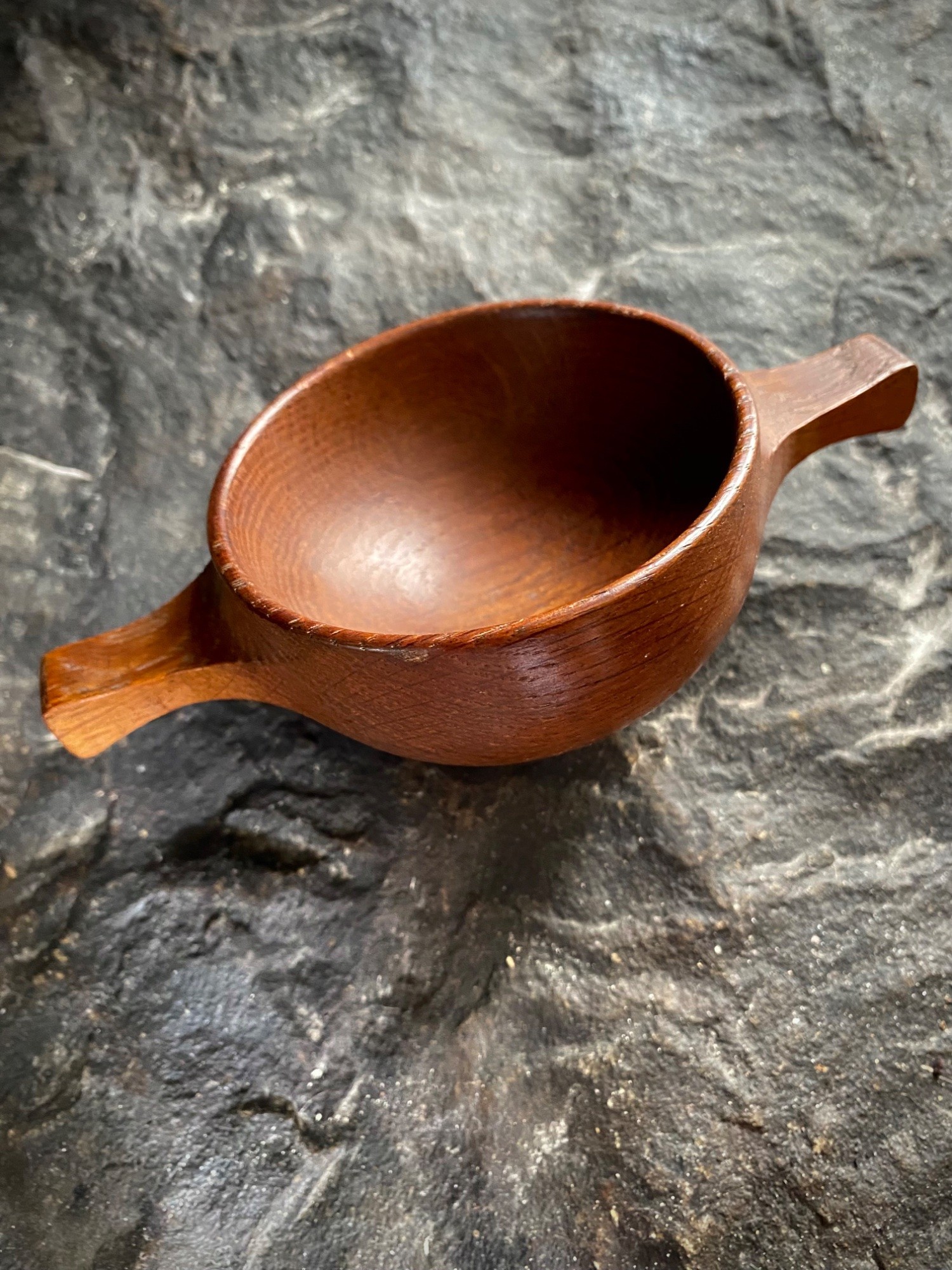
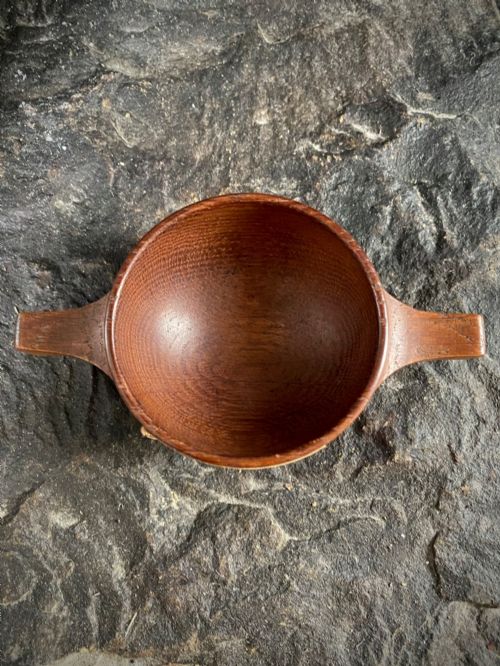
Folk and Fable Antiques has dated this Antique Scottish Treen Quaich to the 19th Century.
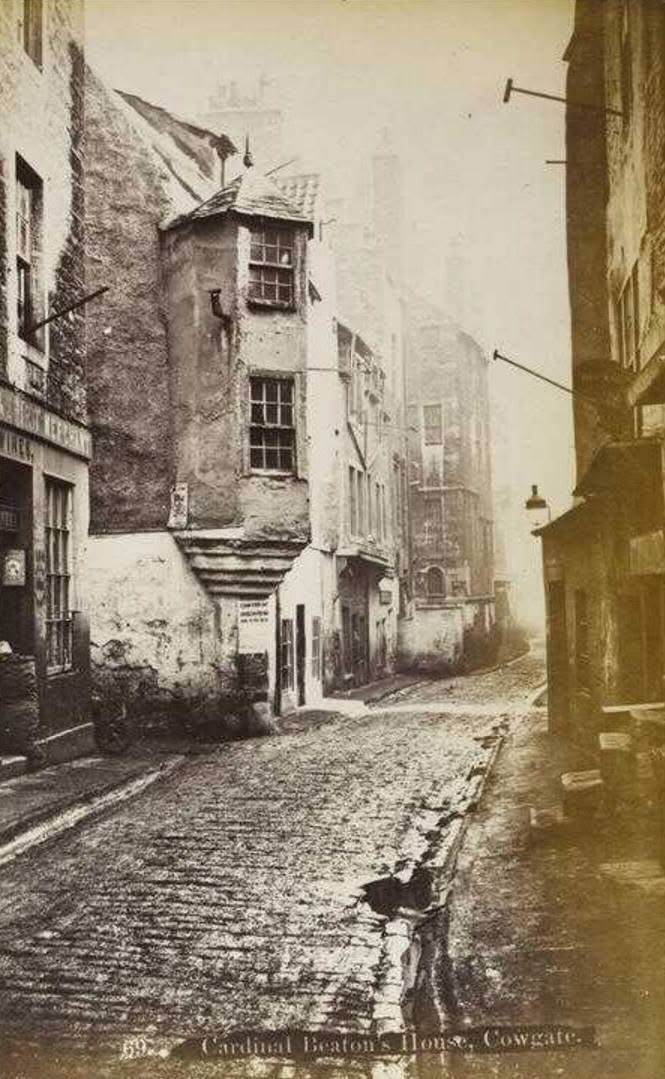
Built in the early 16th century for Archbishop James Beaton and later occupied by his powerful nephew, Cardinal David Beaton, the mansion symbolised the immense political and religious authority of Scotland’s pre-Reformation church elite.
Contemporary accounts describe a palace-like residence, complete with a courtyard, corner turret and heraldic decoration proclaiming its owner’s status. From this imposing town house, Cardinal Beaton, Archbishop of St Andrews and the last Scottish cardinal before the Reformation, projected his influence within the capital during one of the most turbulent chapters in Scottish history.
Over time, Edinburgh changed dramatically. By the 19th century the Cowgate had declined from an elite quarter into an overcrowded and impoverished district, and in the 1870s Victorian improvement schemes swept away Cardinal Beaton’s House along with many other historic buildings. Today, nothing of the structure survives, but its significance is not forgotten. A plaque on the Cowgate marks the approximate site where the house once stood, and historians and heritage enthusiasts regard it as one of Edinburgh’s most important lost buildings. An enduring reminder of a period when the Cowgate was a place of power and prestige, rather than poverty.
A rare survivor and a wonderful piece of Scottish social history.
Condition is good, commensurate with age. Structurally sound.
Measures 13cm x 7.3cm x 4cm
Weighs 57.07 grams
Folk and Fable Antiques has dated this Antique Scottish Treen Quaich to the 19th Century.
Unique pieces for collectors and curious minds
You can view the stock and full dealer information on the Folk and Fable Antiques Profile Page
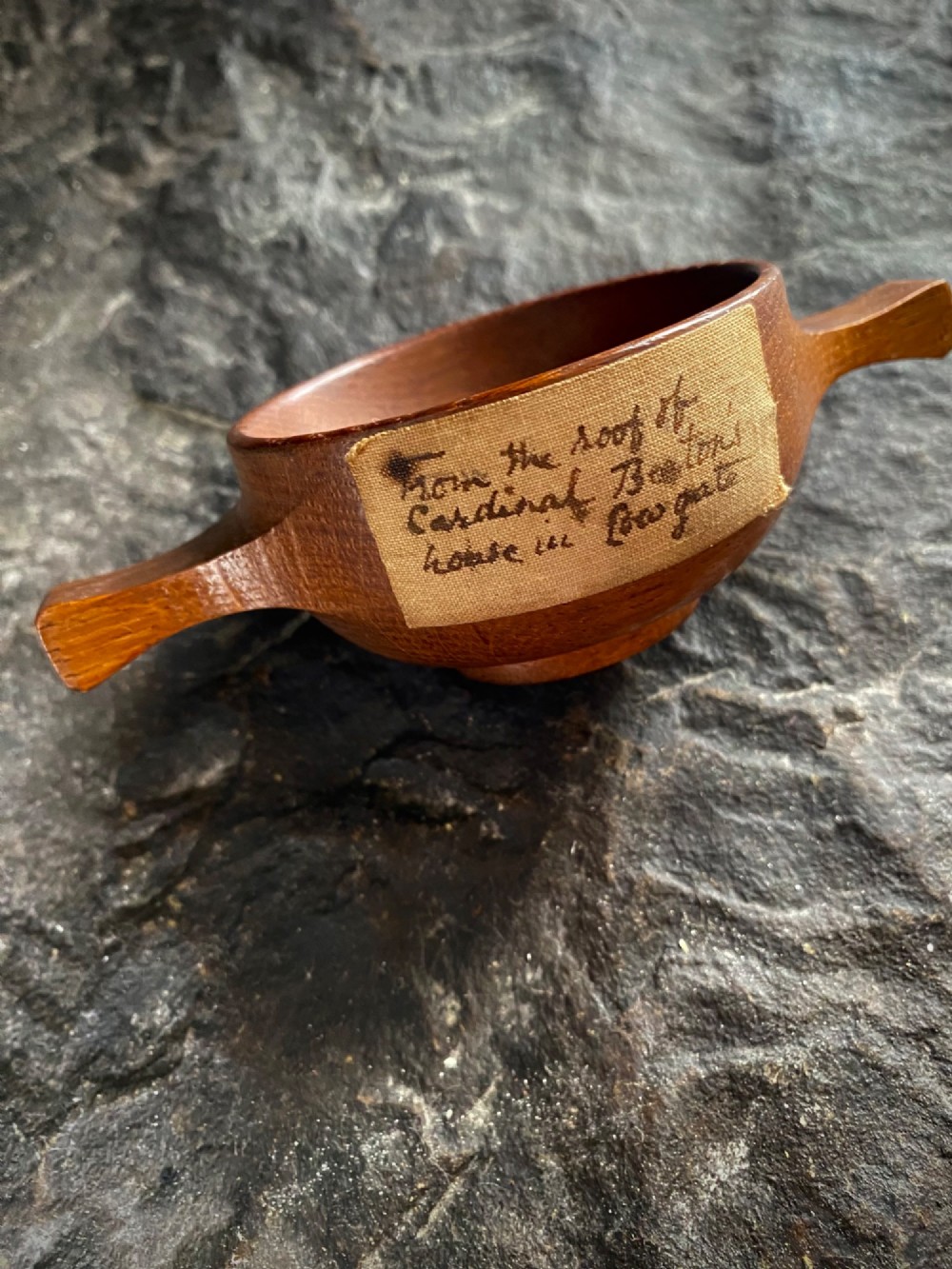
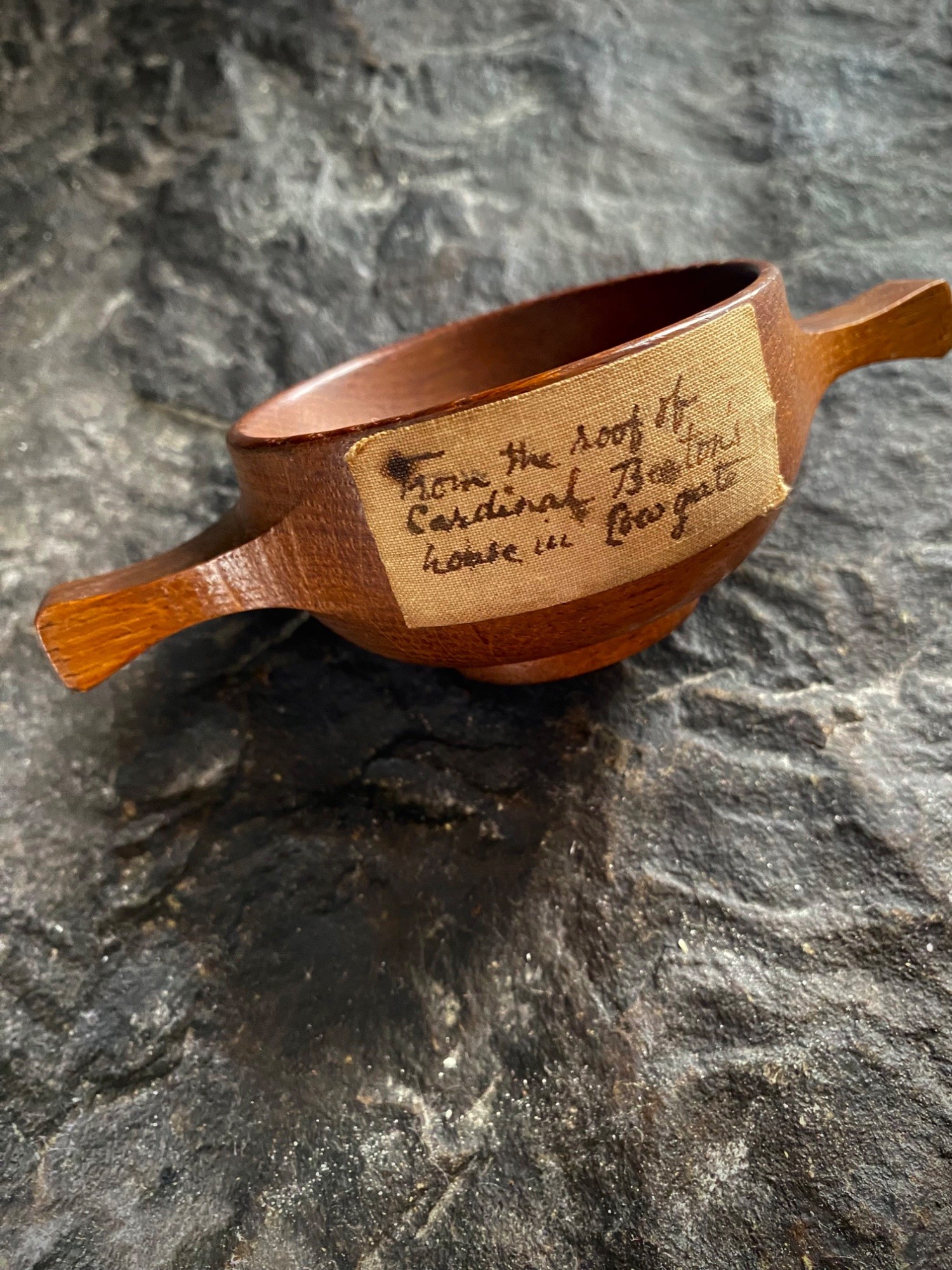
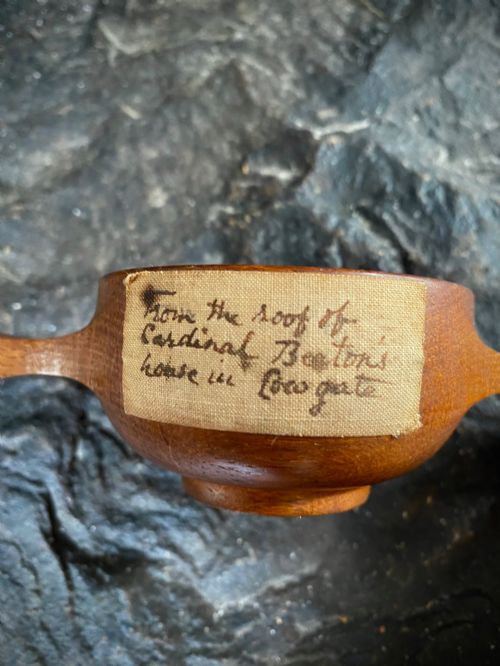
Curious 19th C. Treen Quaich & Period Label Stating from Roof of Cardinal Beaton’s House, Cowgate, Edinburgh