11,416  PAGES BROWSED TODAY PAGES TODAY 36  ANTIQUES UPLOADED TODAY NEW ARRIVALS
ID #SA1197895
FOR SALE
£2,000
Email
Save
Antique Meiji Japanese Kutani Peony Gold Platter, Shoza Style
Gillers Antiques Ltd
for sale €2,340     $2,540
£2,000
Gillers Antiques Ltd

Gillers Antiques Ltd

Sellingantiques Verified Since Mar 2023
View Dealers Stock Page
Id #SA1197895
PDF SHARE
SAVE

Antique Meiji Japanese Kutani Peony Gold Platter, Shoza Style

19th century
Description

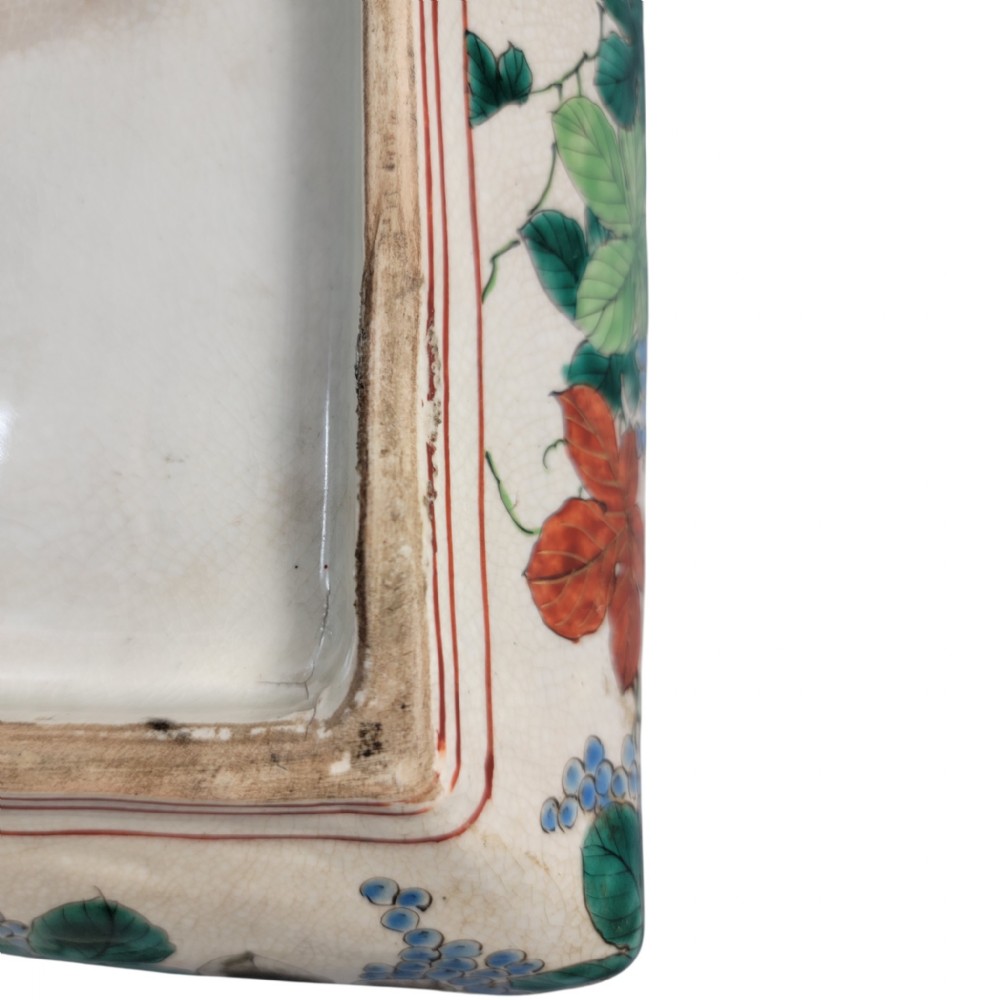
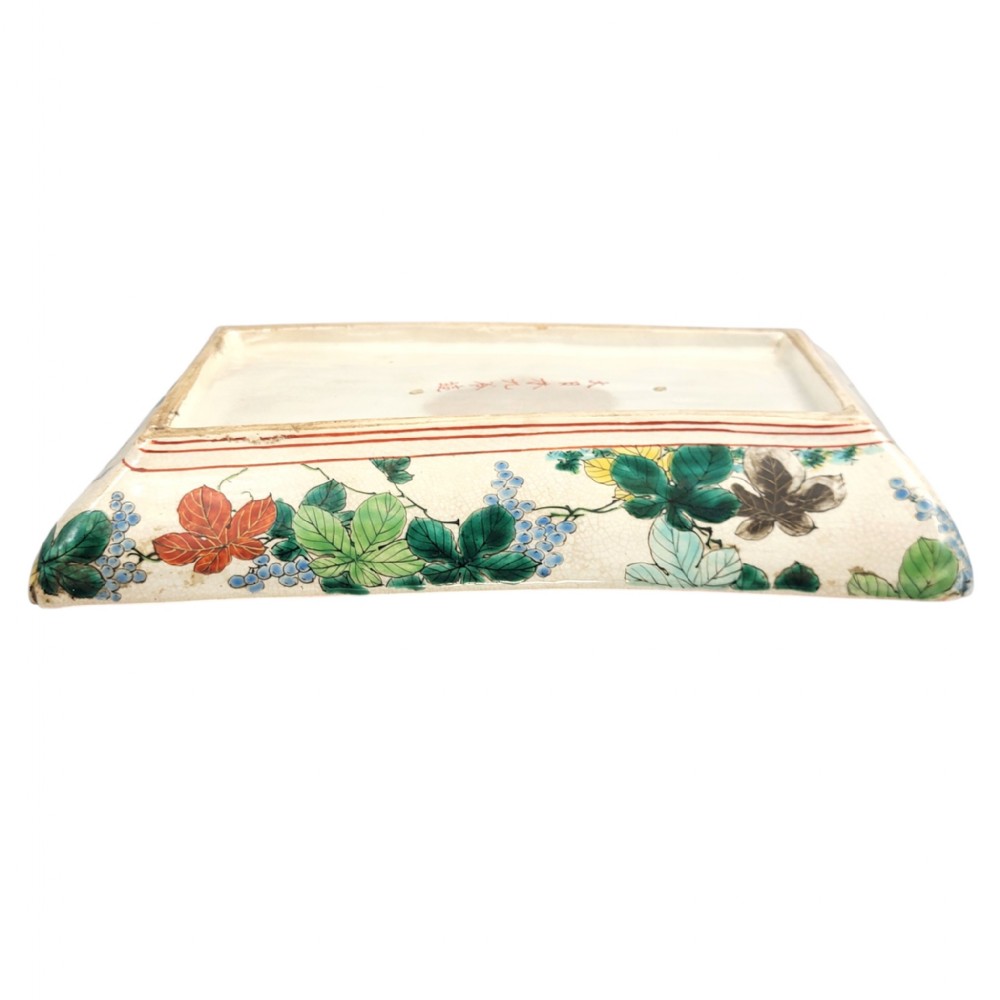
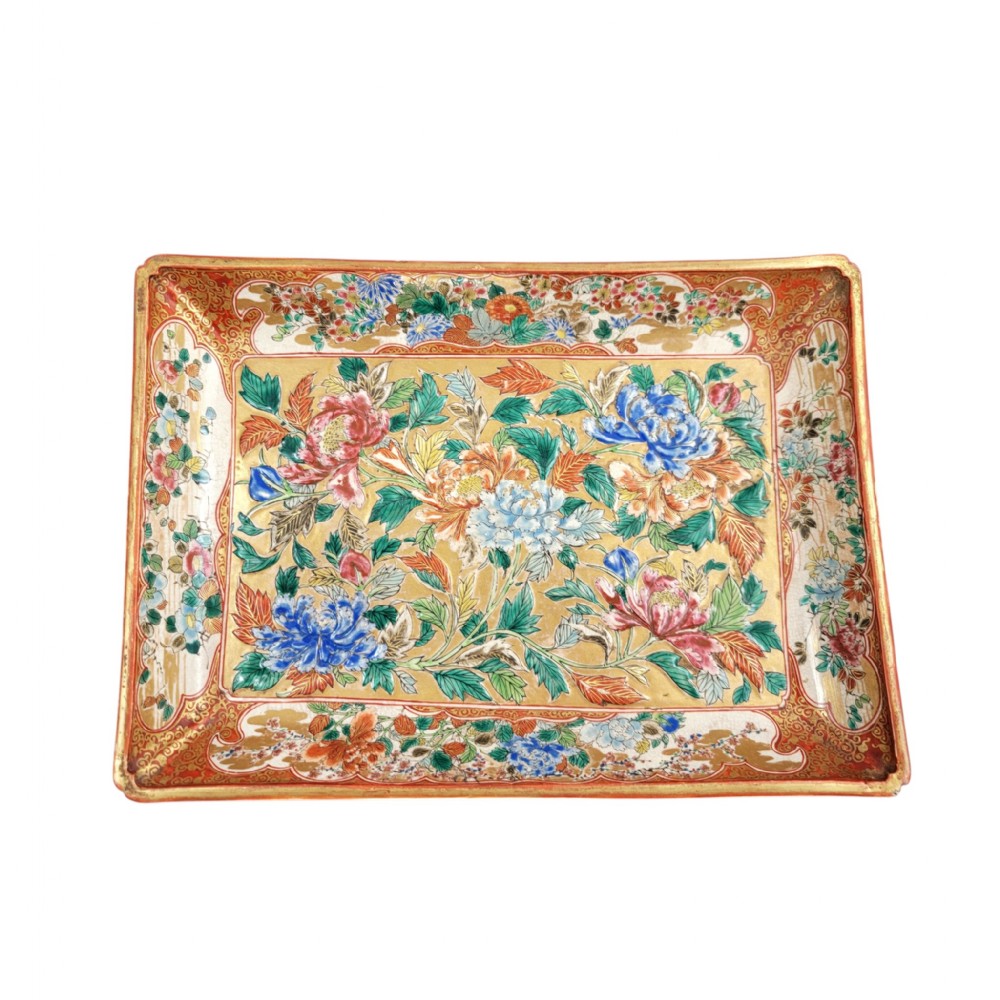
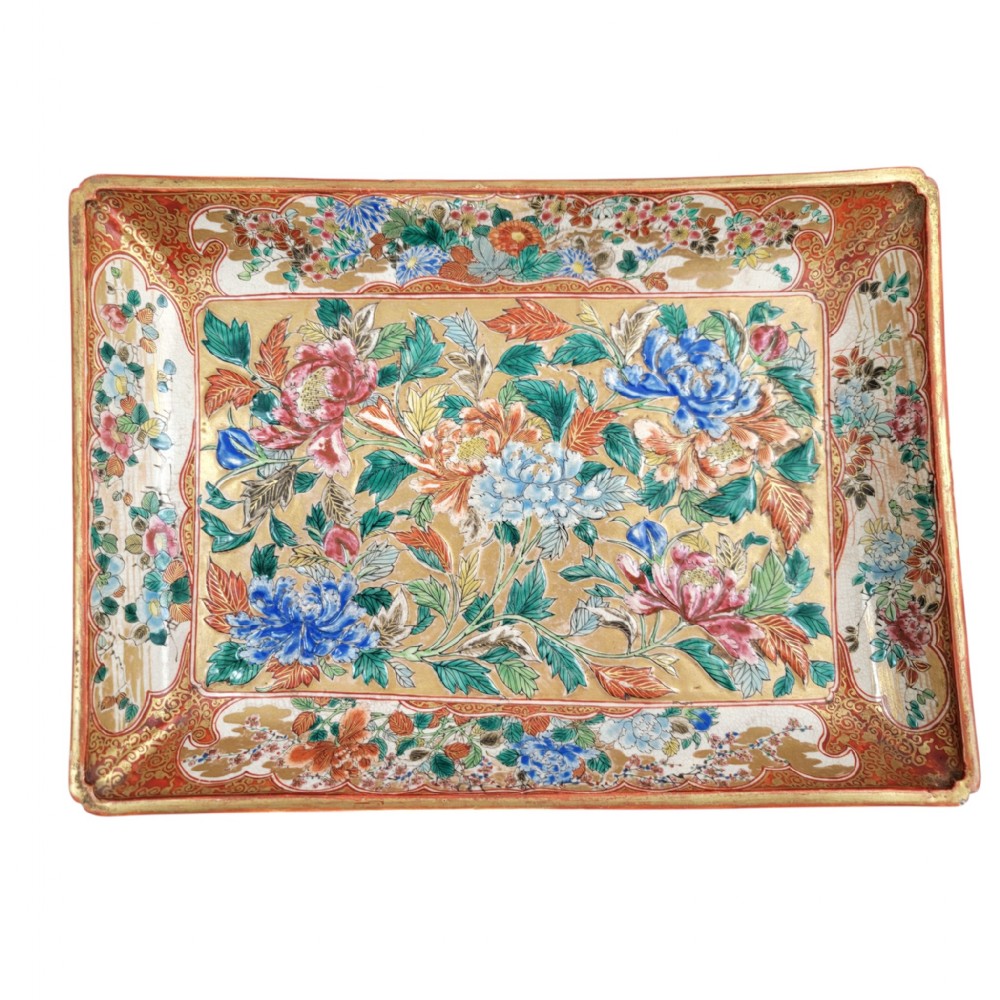
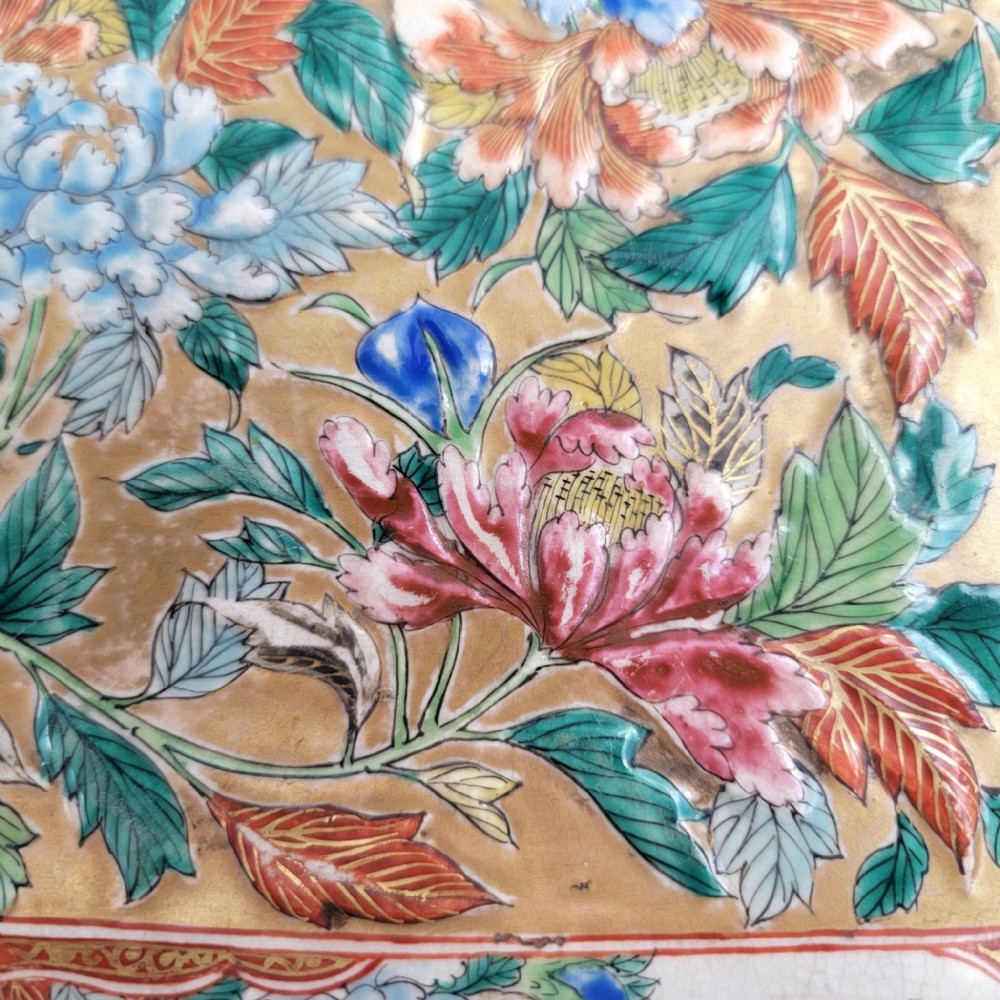
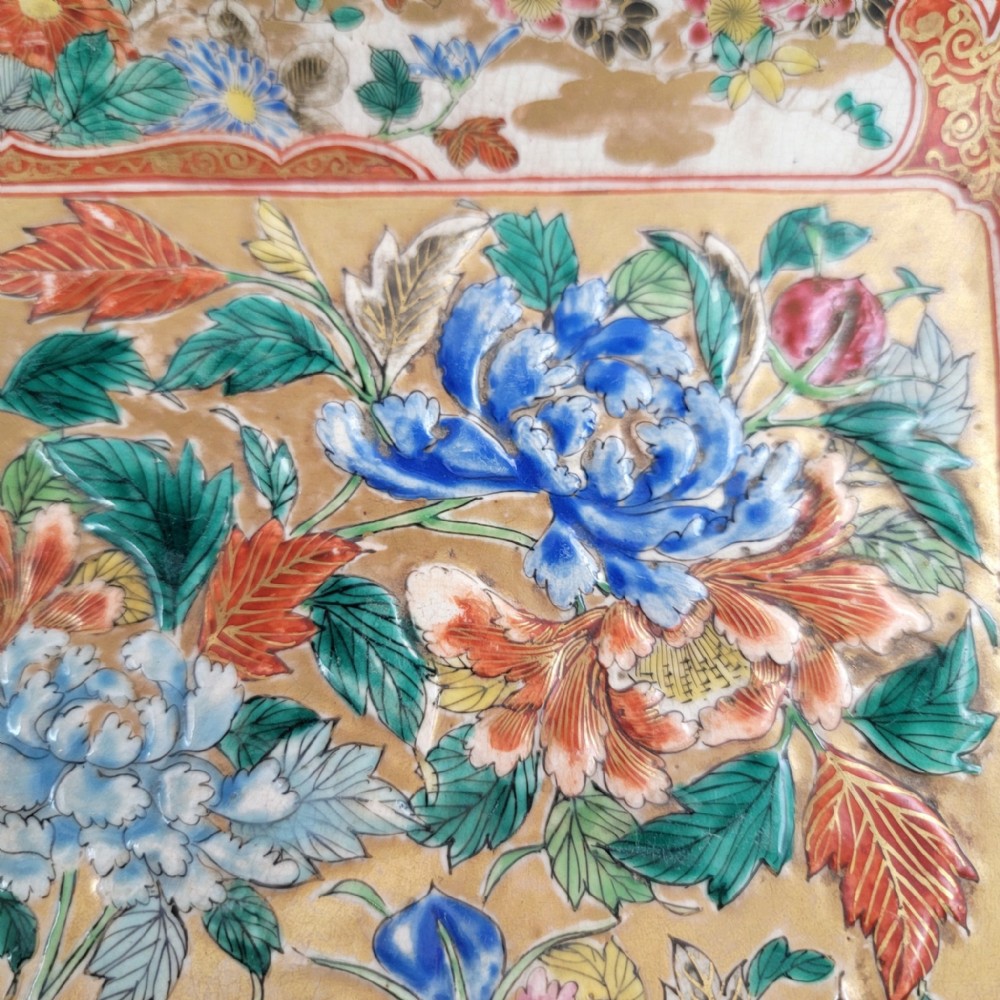
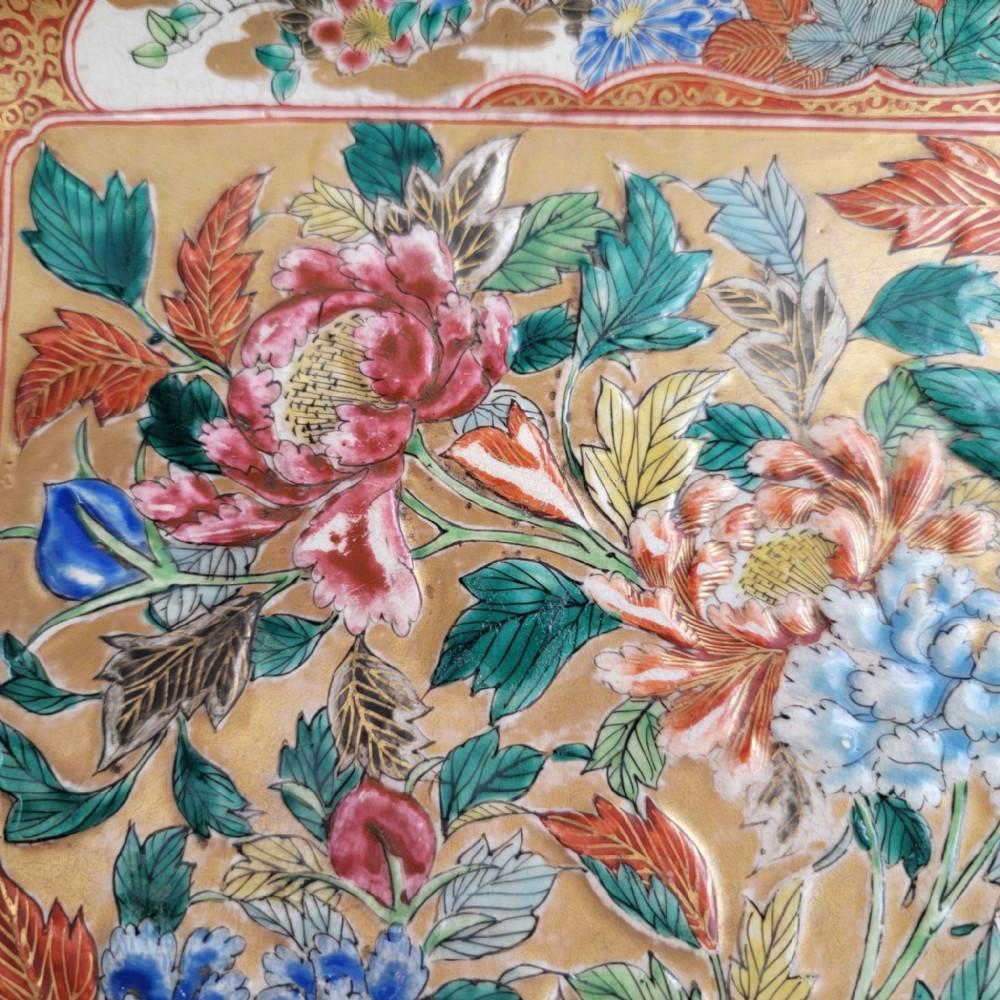
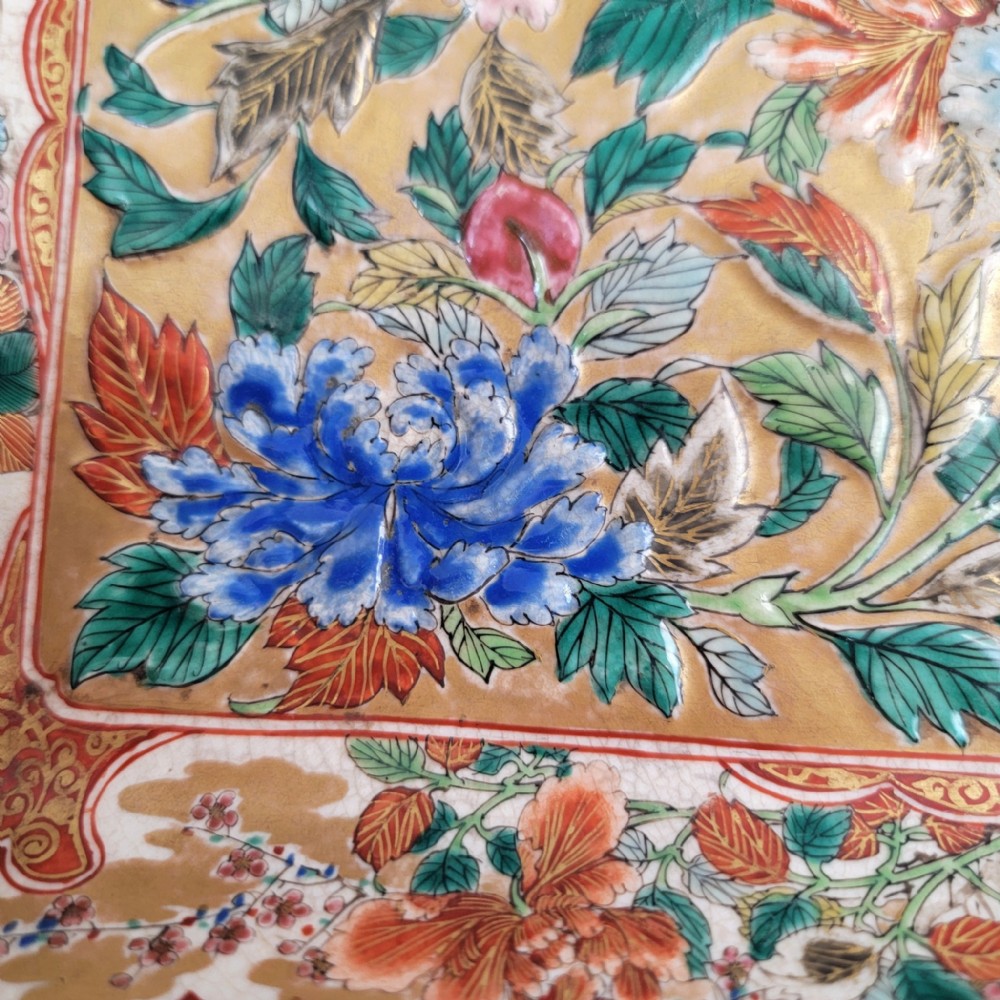
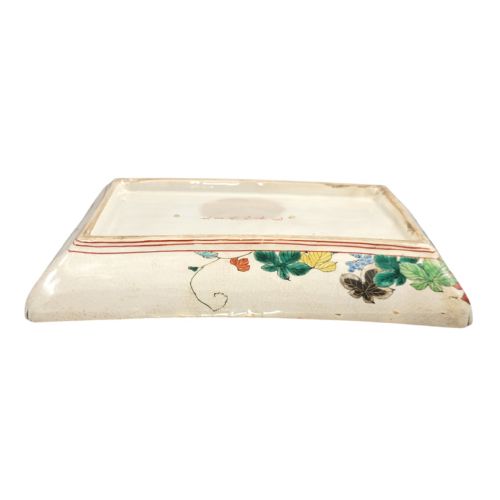
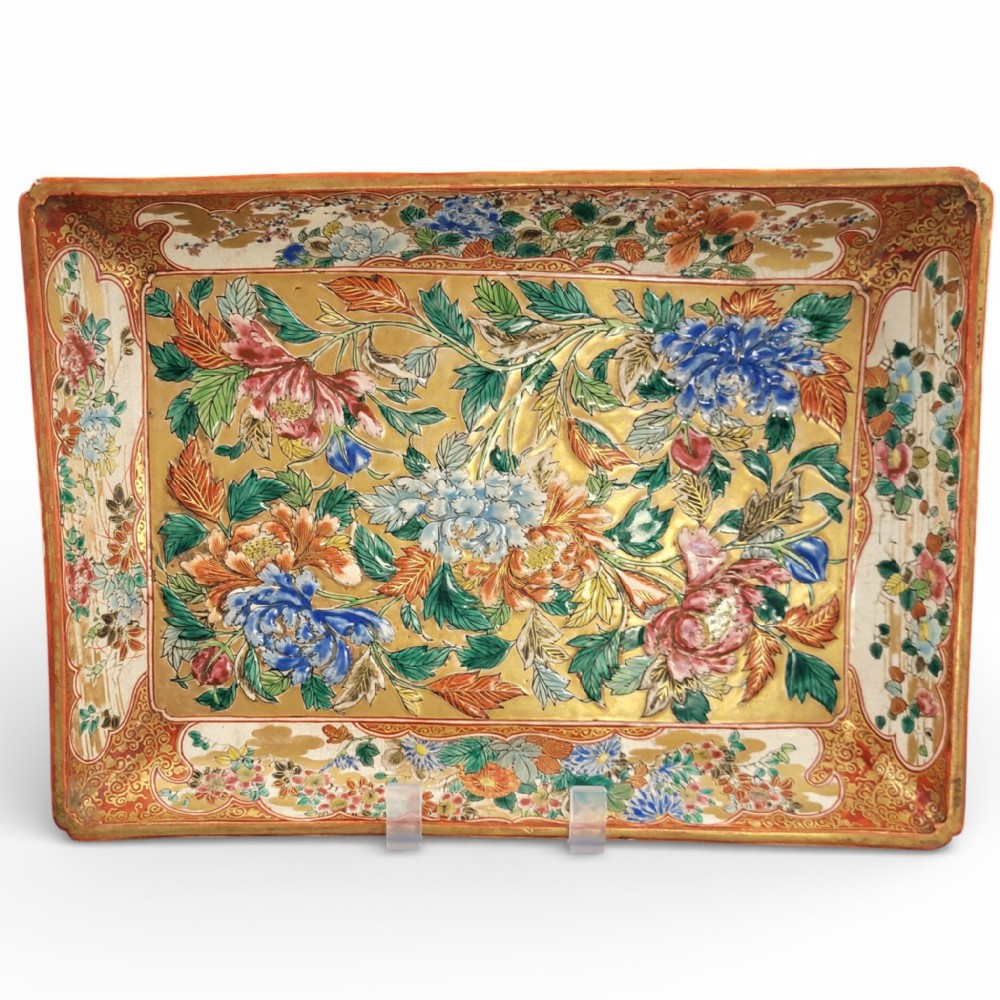
Imagine a piece that instantly catches the eye and becomes the centre of attention. Before you is a magnificent antique Japanese tray, where the main focus is a lush floral composition. The surface blooms with magnificent peony flowers, a traditional Japanese symbol of wealth, prosperity, and nobility. Large buds tightly intertwine with graceful foliage, creating an incredibly dynamic and lively design. The palette is striking in its depth, utilising contrasting shades of deep blue, iron-red, turquoise, and delicate pink. The rim of the tray is framed by a complex ornament that masterfully imitates the texture of expensive silk brocade, while the exterior is delicately decorated with a classic natural motif of trailing grapevines.
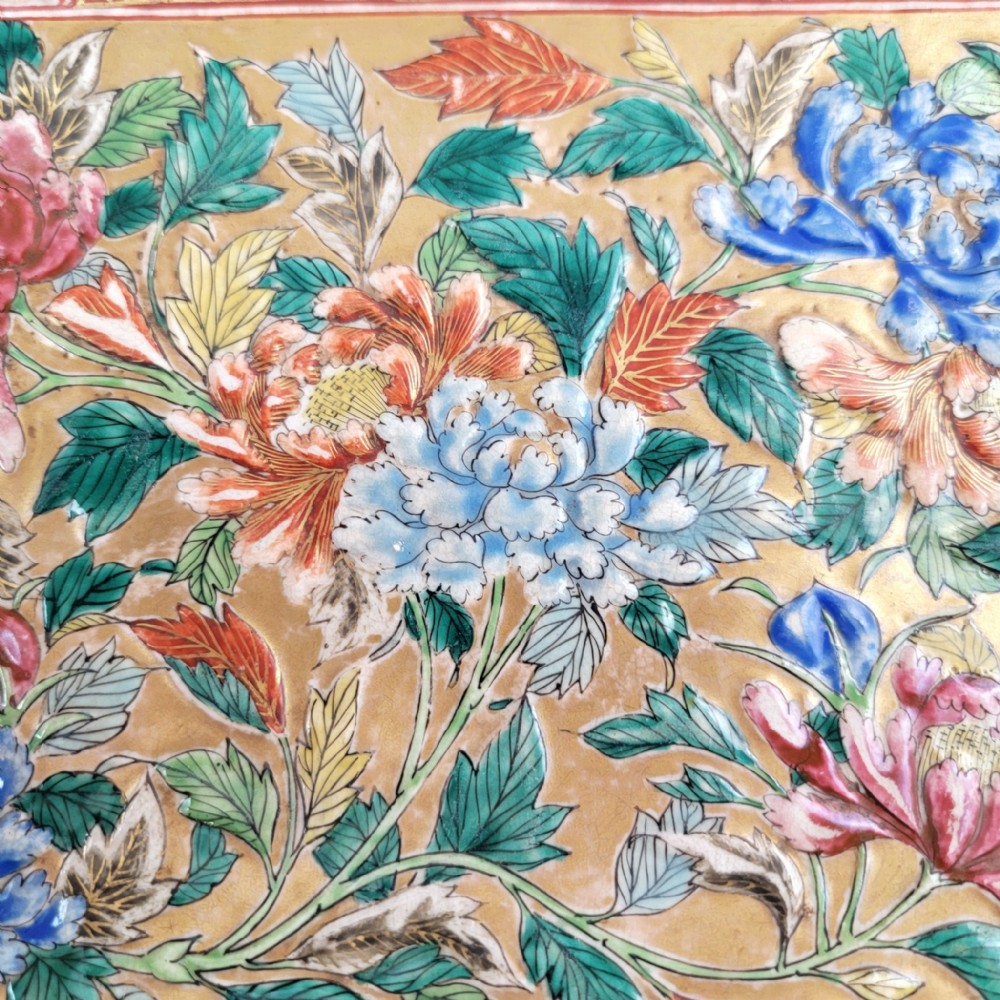
The secret to such expressiveness lies in the highly complex execution technique. The flowers are crafted in the relief moriage manner: the petals are literally sculpted from overglaze enamels, creating a three-dimensional effect and a pleasant tactile texture. The master flawlessly controlled each layer so that the enamel would not run during firing. All free space is filled with a solid wash of matte gold in the Kinrande style. This required a huge expenditure of precious materials and an additional low-temperature firing. The surface is covered with a clear glaze featuring a deep, naturally formed network of crazing. Over many decades, the dust of time has organically penetrated these micro-cracks, which is undeniable proof of its authentic age.
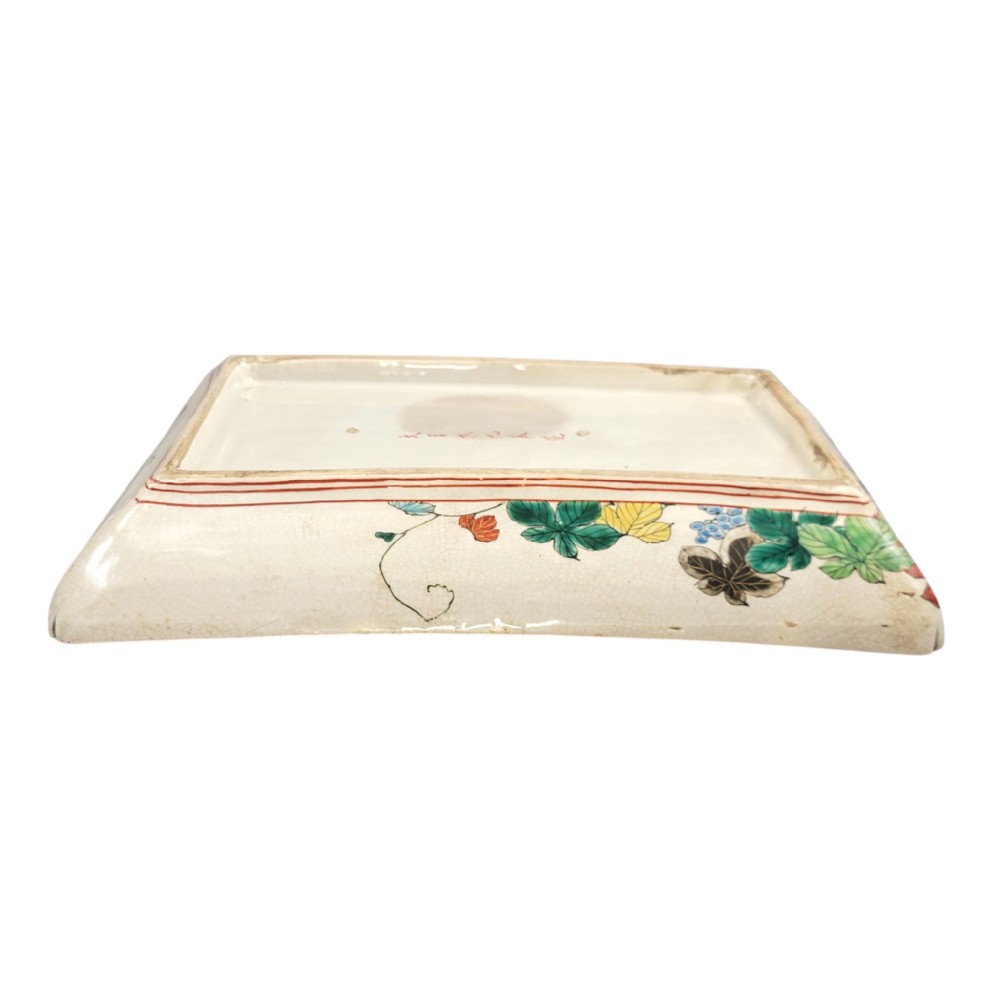
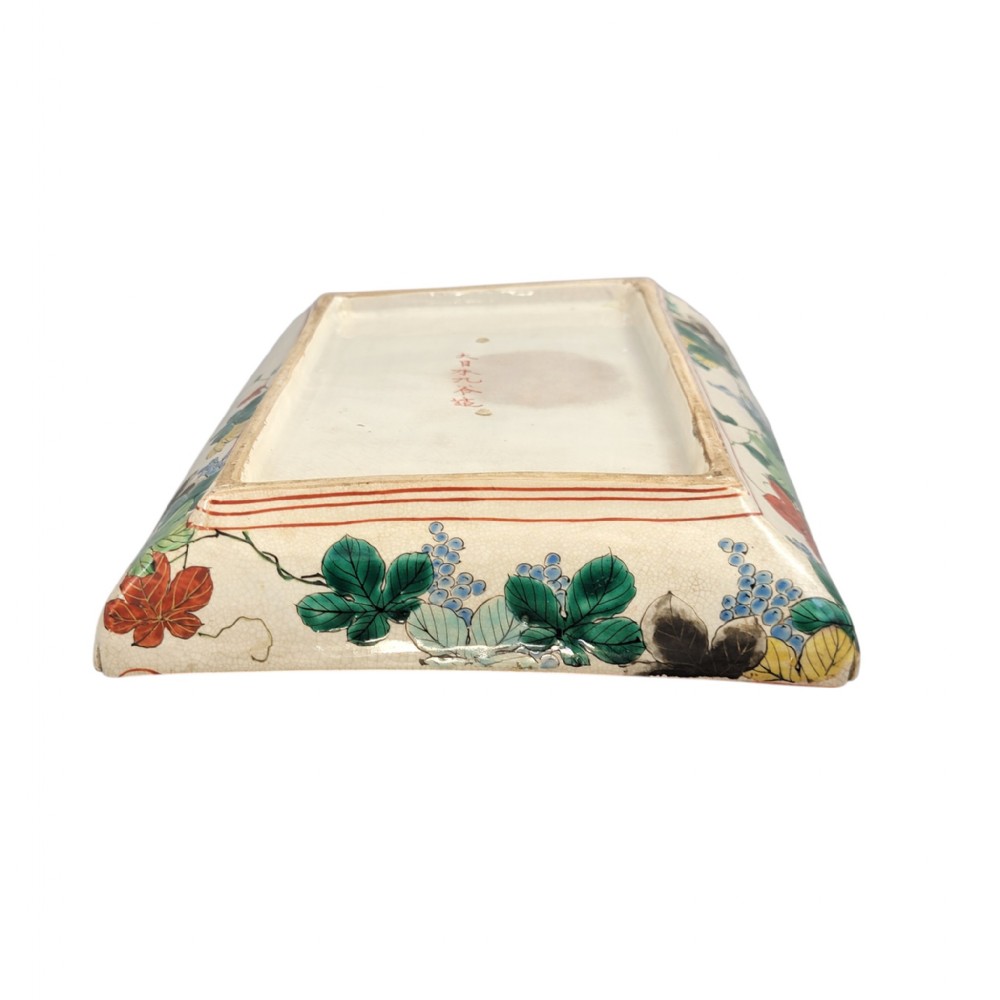
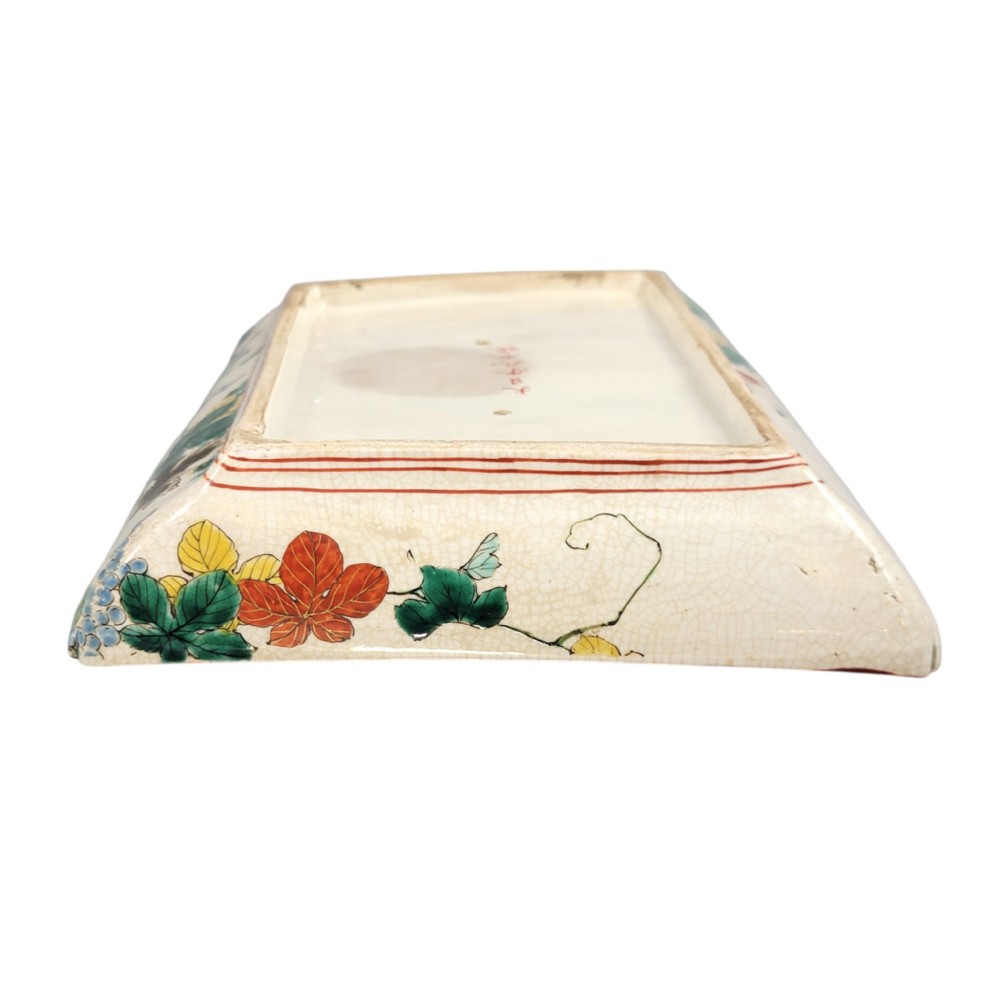
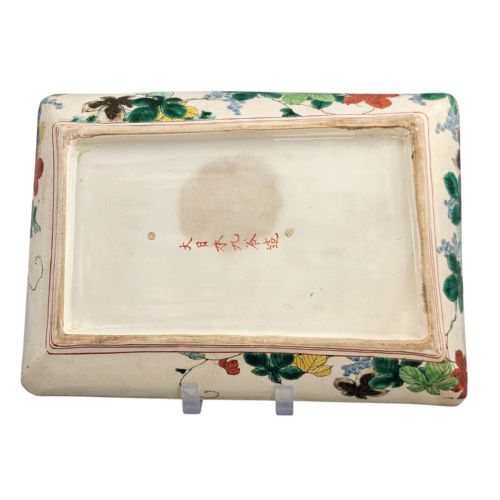
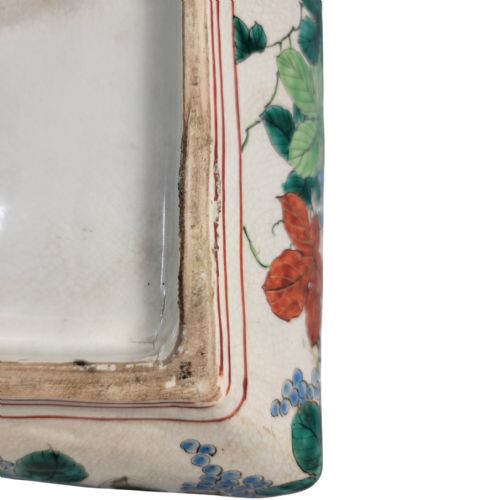
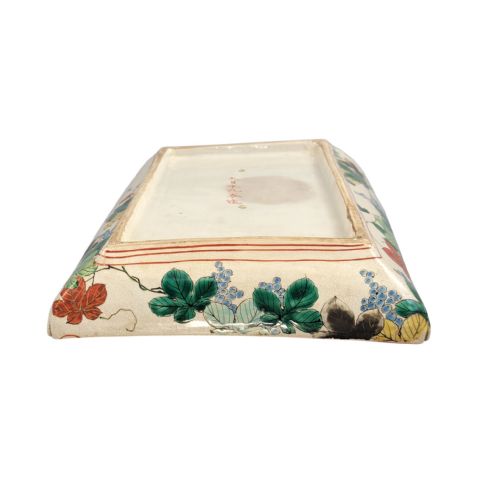
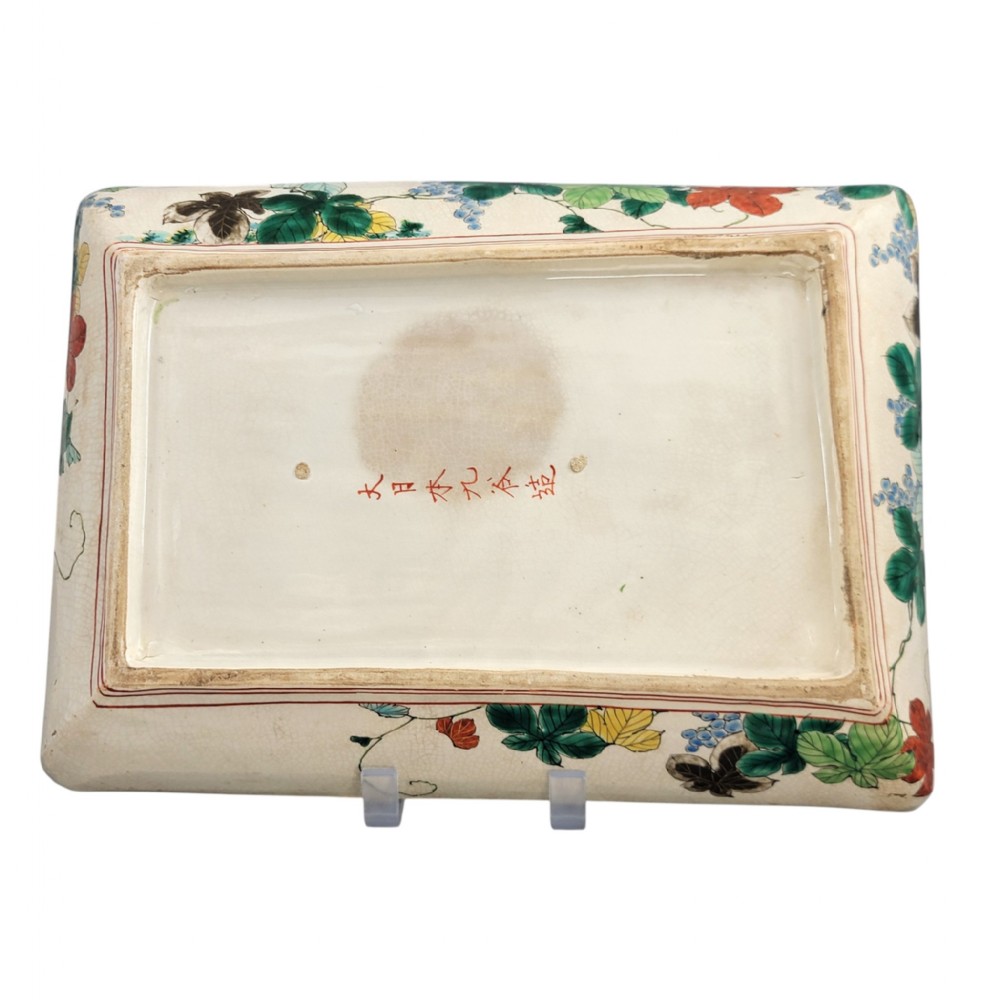
The object is a massive rectangular tray made of heavy, dense earthenware of a greyish-sand hue. The difference in the height of the rims (5.5 cm on one side and 5.2 cm on the other) is direct physical proof of the completely hand-potted nature of the item. This natural deformation occurred as a result of the shrinkage of the heavy clay mass during firing in a traditional kiln. On the bottom, two marks from the refractory firing supports (spurs) are clearly visible, as well as a microscopic production firing fissure. This tiny fissure formed during the cooling process and is a characteristic technological marker of antique ceramics, not an acquired defect or damage.
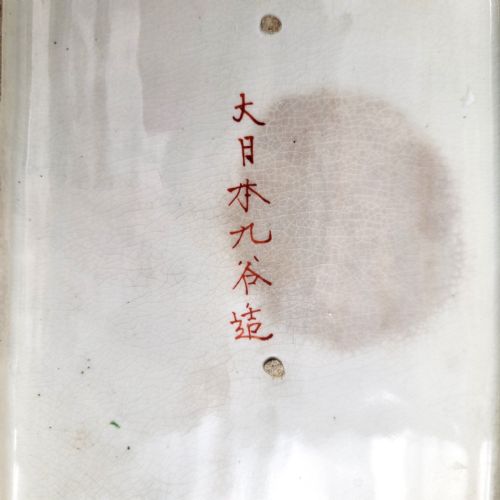
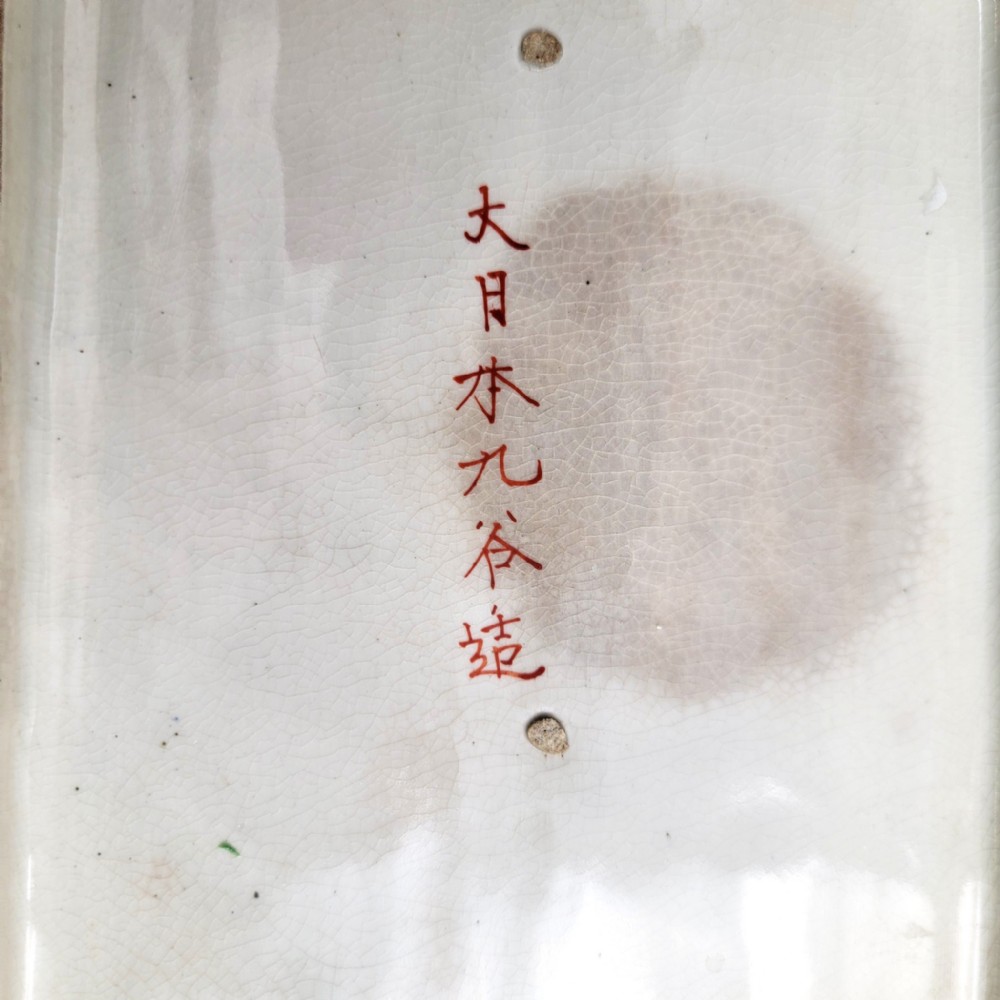
The base of the piece bears five characters applied in iron-red overglaze enamel: Dai Nihon Kutani Zo (Great Japan, made in Kutani). This export mark unmistakably dates the item to the Meiji era (late 19th century, approximately 1890–1910). Stylistically and technologically, the piece is a brilliant example of the development of the traditions of the outstanding master Kutani Shoza (1816–1883), who first integrated polychrome enamels with rich gilding. Although the tray lacks an individual seal or signature of a specific author, the highest class of work indicates that it was created by a circle of Master Shoza’s followers in one of the leading workshops in the Kanazawa or Terai area (Ishikawa Prefecture). These centres housed specialised artels of highly qualified enamel artists capable of realising such technically complex, multi-layered, and labour-intensive projects.
The tray stands out for its impressive dimensions, with a length of 30.8 cm and a width of 22.4 cm, and a significant weight of 1722 grams. Thanks to such dimensions and its luxurious golden glow, it will become not just a museum rarity, but a dominant, status-defining accent in the décor of any refined interior.
The investment appeal of such works of art is steadily growing today. Unique pieces created entirely by hand by true masters, rather than in faceless mass production, become rarer and more expensive every year. The Western antique market is currently experiencing an acute shortage of authentic masterpieces. This is directly related to the powerful Japanese Sato-gaeri movement, the process of returning national art to its homeland. Japanese collectors are purposefully buying up high-class items from the Mei

Physical Dimensions
Height
5.5cm (2.17")
Width
30.8cm (12.13")
Depth
22.4cm (8.82")
Declaration

Gillers Antiques Ltd has dated this Japanese Kutani Porcelain Platter to the 19th Century.

Reference Numbers
Sellingantiques Reference
SA1197895
Dealers Internal Reference
B1642
Description
Imagine a piece that instantly catches the eye and becomes the centre of attention.
Before you is a magnificent antique Japanese tray, where the main focus is a lush floral composition.
Gillers Antiques Ltd

The surface blooms with magnificent peony flowers, a traditional Japanese symbol of wealth, prosperity, and nobility. Large buds tightly intertwine with graceful foliage, creating an incredibly dynamic and lively design. The palette is striking in its depth, utilising contrasting shades of deep blue, iron-red, turquoise, and delicate pink. The rim of the tray is framed by a complex ornament that masterfully imitates the texture of expensive silk brocade, while the exterior is delicately decorated with a classic natural motif of trailing grapevines.

fig 1. A rectangular Japanese Kutani porcelain platter decorated with polychrome peony blossoms and green leaves over a textured gold background, framed by a floral border.
fig 1. Antique Meiji Japanese Kutani Peony Gold Platter, Shoza Style

The secret to such expressiveness lies in the highly complex execution technique. The flowers are crafted in the relief moriage manner: the petals are literally sculpted from overglaze enamels, creating a three-dimensional effect and a pleasant tactile texture. The master flawlessly controlled each layer so that the enamel would not run during firing. All free space is filled with a solid wash of matte gold in the Kinrande style. This required a huge expenditure of precious materials and an additional low-temperature firing. The surface is covered with a clear glaze featuring a deep, naturally formed network of crazing. Over many decades, the dust of time has organically penetrated these micro-cracks, which is undeniable proof of its authentic age.

fig 2. A rectangular Japanese Kutani porcelain platter decorated with polychrome peony blossoms and green leaves over a textured gold background, framed by a floral border.
fig 2. Antique Meiji Japanese Kutani Peony Gold Platter, Shoza Style

The object is a massive rectangular tray made of heavy, dense earthenware of a greyish-sand hue. The difference in the height of the rims (5.5 cm on one side and 5.2 cm on the other) is direct physical proof of the completely hand-potted nature of the item. This natural deformation occurred as a result of the shrinkage of the heavy clay mass during firing in a traditional kiln. On the bottom, two marks from the refractory firing supports (spurs) are clearly visible, as well as a microscopic production firing fissure. This tiny fissure formed during the cooling process and is a characteristic technological marker of antique ceramics, not an acquired defect or damage.

fig 3. A rectangular Japanese Kutani porcelain platter decorated with polychrome peony blossoms and green leaves over a textured gold background, framed by a floral border.
fig 3. Antique Meiji Japanese Kutani Peony Gold Platter, Shoza Style

The base of the piece bears five characters applied in iron-red overglaze enamel: Dai Nihon Kutani Zo (Great Japan, made in Kutani). This export mark unmistakably dates the item to the Meiji era (late 19th century, approximately 1890–1910). Stylistically and technologically, the piece is a brilliant example of the development of the traditions of the outstanding master Kutani Shoza (1816–1883), who first integrated polychrome enamels with rich gilding. Although the tray lacks an individual seal or signature of a specific author, the highest class of work indicates that it was created by a circle of Master Shoza’s followers in one of the leading workshops in the Kanazawa or Terai area (Ishikawa Prefecture). These centres housed specialised artels of highly qualified enamel artists capable of realising such technically complex, multi-layered, and labour-intensive projects.

fig 4. A rectangular Japanese Kutani porcelain platter decorated with polychrome peony blossoms and green leaves over a textured gold background, framed by a floral border.
fig 4. Antique Meiji Japanese Kutani Peony Gold Platter, Shoza Style

The tray stands out for its impressive dimensions, with a length of 30.8 cm and a width of 22.4 cm, and a significant weight of 1722 grams. Thanks to such dimensions and its luxurious golden glow, it will become not just a museum rarity, but a dominant, status-defining accent in the décor of any refined interior.

fig 5. A rectangular Japanese Kutani porcelain platter decorated with polychrome peony blossoms and green leaves over a textured gold background, framed by a floral border.
fig 5. Antique Meiji Japanese Kutani Peony Gold Platter, Shoza Style

The investment appeal of such works of art is steadily growing today. Unique pieces created entirely by hand by true masters, rather than in faceless mass production, become rarer and more expensive every year. The Western antique market is currently experiencing an acute shortage of authentic masterpieces. This is directly related to the powerful Japanese Sato-gaeri movement, the process of returning national art to its homeland. Japanese collectors are purposefully buying up high-class items from the Mei

Height
5.5cm (2.17")
Width
30.8cm (12.13")
Depth
22.4cm (8.82")
Date of Manufacture

Gillers Antiques Ltd has dated this Japanese Kutani Porcelain Platter to the 19th Century.

Reference Numbers
Sellingantiques Ref
SA1197895
Dealers Internal Ref
B1642
Gillers Antiques Ltd
Sellingantiques verified Since Mar 2023
Dealer Profile

You can view the stock and full dealer information on the Gillers Antiques Ltd Profile Page
PDF SHARE
SAVE
A rectangular Japanese Kutani porcelain platter decorated with polychrome peony blossoms and green leaves over a textured gold background, framed by a floral border.
1 / 15
Archive I A rectangular Japanese Kutani porcelain platter decorated with polychrome peony blossoms and green leaves over a textured gold background, framed by a floral border.

Antique Meiji Japanese Kutani Peony Gold Platter, Shoza Style
Archive II A rectangular Japanese Kutani porcelain platter decorated with polychrome peony blossoms and green leaves over a textured gold background, framed by a floral border. View II
Archive III A rectangular Japanese Kutani porcelain platter decorated with polychrome peony blossoms and green leaves over a textured gold background, framed by a floral border. View III
Archive IV A rectangular Japanese Kutani porcelain platter decorated with polychrome peony blossoms and green leaves over a textured gold background, framed by a floral border. View IV
Archive V A rectangular Japanese Kutani porcelain platter decorated with polychrome peony blossoms and green leaves over a textured gold background, framed by a floral border. View V
Archive VI A rectangular Japanese Kutani porcelain platter decorated with polychrome peony blossoms and green leaves over a textured gold background, framed by a floral border. View VI
Archive VII A rectangular Japanese Kutani porcelain platter decorated with polychrome peony blossoms and green leaves over a textured gold background, framed by a floral border. View VII
Archive VIII A rectangular Japanese Kutani porcelain platter decorated with polychrome peony blossoms and green leaves over a textured gold background, framed by a floral border. View VIII
Archive IX A rectangular Japanese Kutani porcelain platter decorated with polychrome peony blossoms and green leaves over a textured gold background, framed by a floral border. View IX
Archive X A rectangular Japanese Kutani porcelain platter decorated with polychrome peony blossoms and green leaves over a textured gold background, framed by a floral border. View X
Archive XI A rectangular Japanese Kutani porcelain platter decorated with polychrome peony blossoms and green leaves over a textured gold background, framed by a floral border. View XI
Archive XII A rectangular Japanese Kutani porcelain platter decorated with polychrome peony blossoms and green leaves over a textured gold background, framed by a floral border. View XII
Archive XIII A rectangular Japanese Kutani porcelain platter decorated with polychrome peony blossoms and green leaves over a textured gold background, framed by a floral border. View XIII
Archive XIV A rectangular Japanese Kutani porcelain platter decorated with polychrome peony blossoms and green leaves over a textured gold background, framed by a floral border. View XIV
Archive XV A rectangular Japanese Kutani porcelain platter decorated with polychrome peony blossoms and green leaves over a textured gold background, framed by a floral border. View XV
Enlarged Archival View
Telephone 07738 009924
Location
Buckland House
Buntingford
Hertfordshire
SG9 0PY
United Kingdom
Verified Since Mar 2023
Items For Sale 401
Items Sold 564
Gillers Antiques Ltd
Verified Since Mar 2023
View Dealer Info
Location: Buckland House, Buntingford, Hertfordshire, SG9 0PY, United Kingdom
Verified
Mar 2023
For Sale
401
Sold
564
A rectangular Japanese Kutani porcelain platter decorated with polychrome peony blossoms and green leaves over a textured gold background, framed by a floral border.
Antique Meiji Japanese Kutani Peony Gold Platter, Shoza Style
Ref: SA1197895
A rectangular Japanese Kutani porcelain platter decorated with polychrome peony blossoms and green leaves over a textured gold background, framed by a floral border.
Detail View 1
Detail View 2
Detail View 3
Detail View 4
Detail View 5
Detail View 6
Detail View 7
Detail View 8
Detail View 9
Detail View 10
Detail View 11
Detail View 12
Detail View 13
Detail View 14
Archival Detail
Every single antique dealer on our platform is individually approved by our internal team. We verify their professional trade history, ethical standards, and photographic quality to ensure a secure, high-standard buying environment. Upon joining, every dealer agrees to a strict 9-point code of conduct. While issues can occasionally arise, our dealers typically resolve them swiftly and directly with the buyer. In fact, since our founding in 2002, Sellingantiques has only had to step in to help resolve an issue on roughly five occasions—a true testament to the quality of our dealers and their dedication to your happiness.
Our dealers are highly experienced in packing and shipping fragile, high-value antiques. Because you are in direct contact with the dealer, you will be able to easily go through all available shipping and insurance options together to ensure your item arrives safely.
Antiques are the ultimate green purchase. By choosing historical pieces over newly manufactured goods, you completely eliminate the carbon footprint of modern mass production while preserving exceptional, timeless craftsmanship.

Shoza style Kutani porcelain originated in Japan during the late Edo to Meiji periods and is characterised by rich polychrome enamels combined with detailed gold gilding. Developed by craftsman Kutani Shoza, this decorative approach blends Western pigment influences with traditional Japanese floral and figurative motifs.

Meiji Kutani ceramics are made from hard-paste porcelain decorated with overglaze polychrome enamels and finished with liquid gold gilding or gold leaf. The manufacturing process requires multiple kiln firings to set the underlying glazes, surface pigments, and metallic highlights.

Authentic Meiji era Kutani porcelain typically features hand-painted overglaze enamel with visible tactile texture, precise gilding, and frequently bears a red painted mark on the base containing Japanese characters. Dense compositions depicting peonies, birds, or landscapes along with light surface wear to the metallic elements also indicate authenticity.

An antique Kutani platter can be styled on a plate display stand atop a sideboard or mounted inside a wall gallery grouping. Its gold background and saturated enamel colours create contrast against neutral walls, contemporary dark timber, or minimalist modern cabinetry.

Gilded porcelain requires gentle dusting with a dry microfibre cloth or natural feather duster. Chemical cleaners, abrasive polishes, and prolonged submersion in water must be avoided, as moisture and friction can strip away delicate overglaze enamels and surface gold leaf.
items
Add keywords to the filter
Price
£100
£250000
Era
Movements
Material
Origin
Stock Location
Freshness
Online Payments
Categories