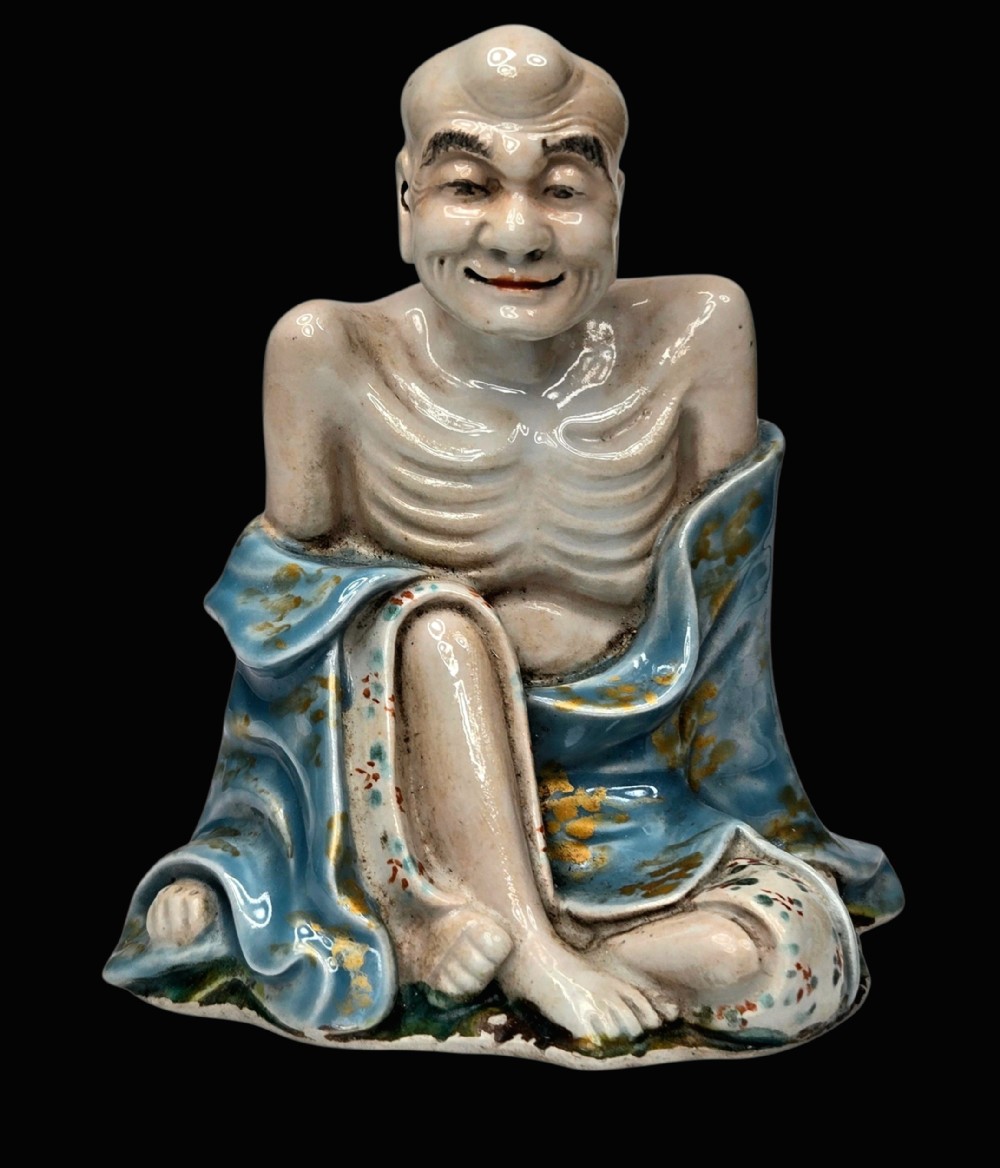
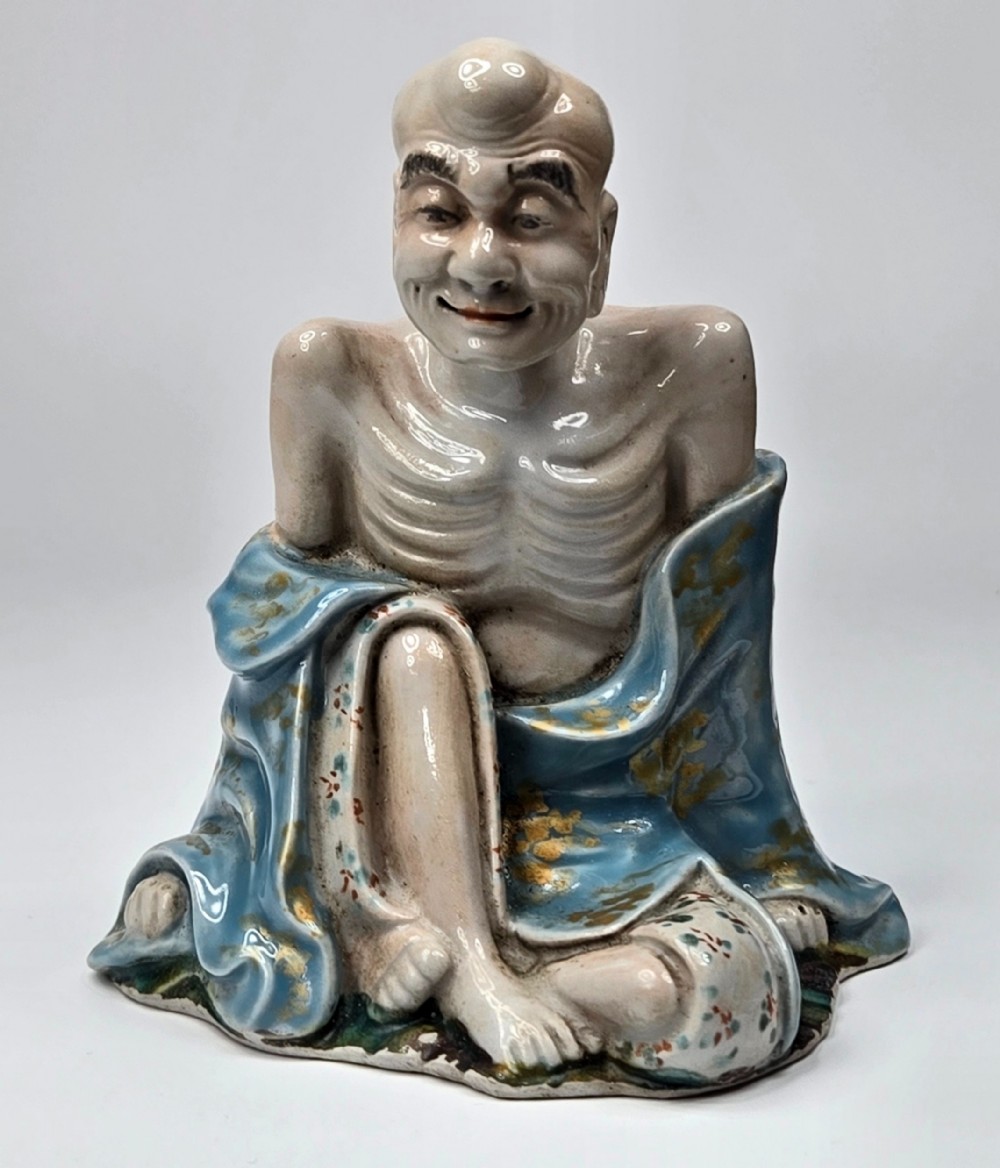
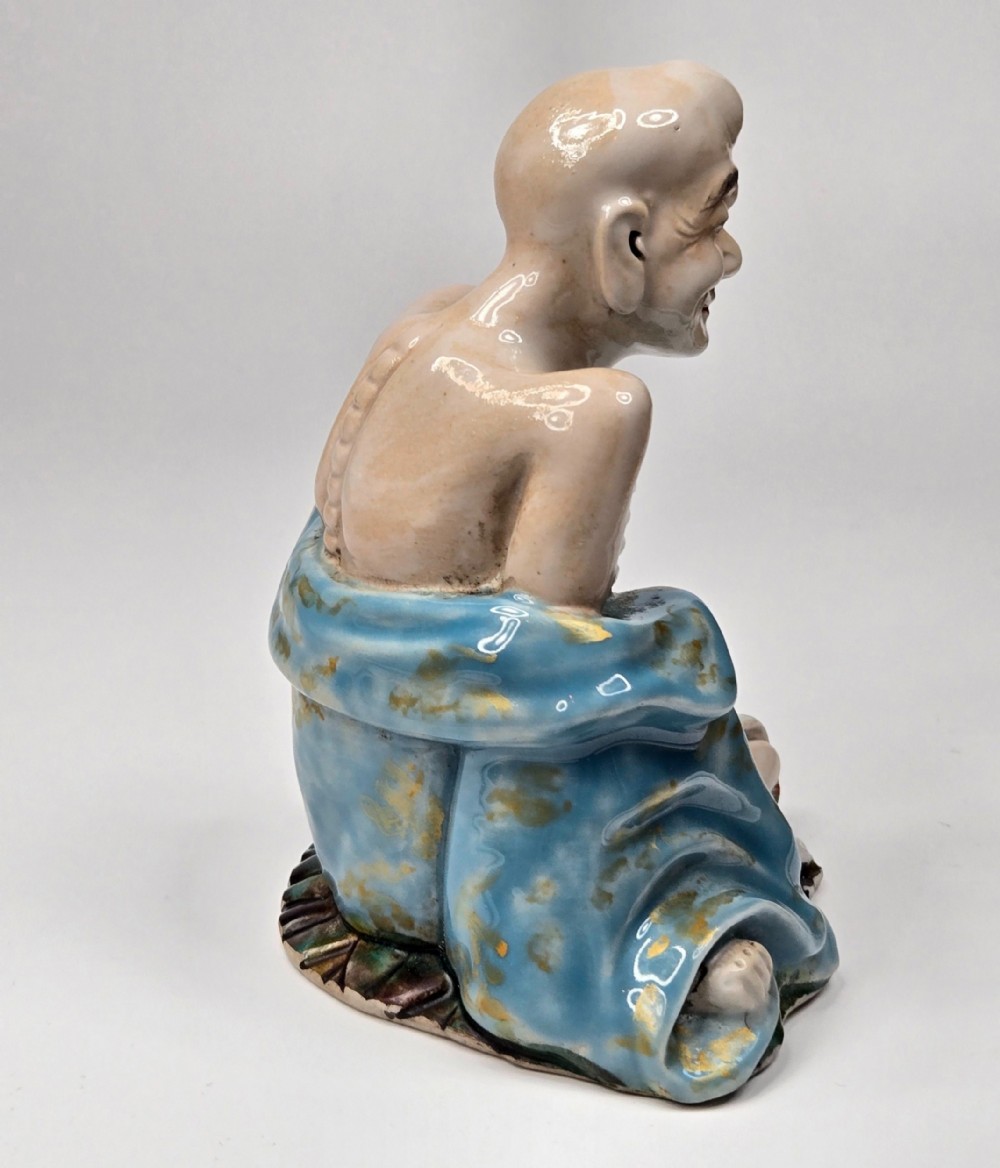
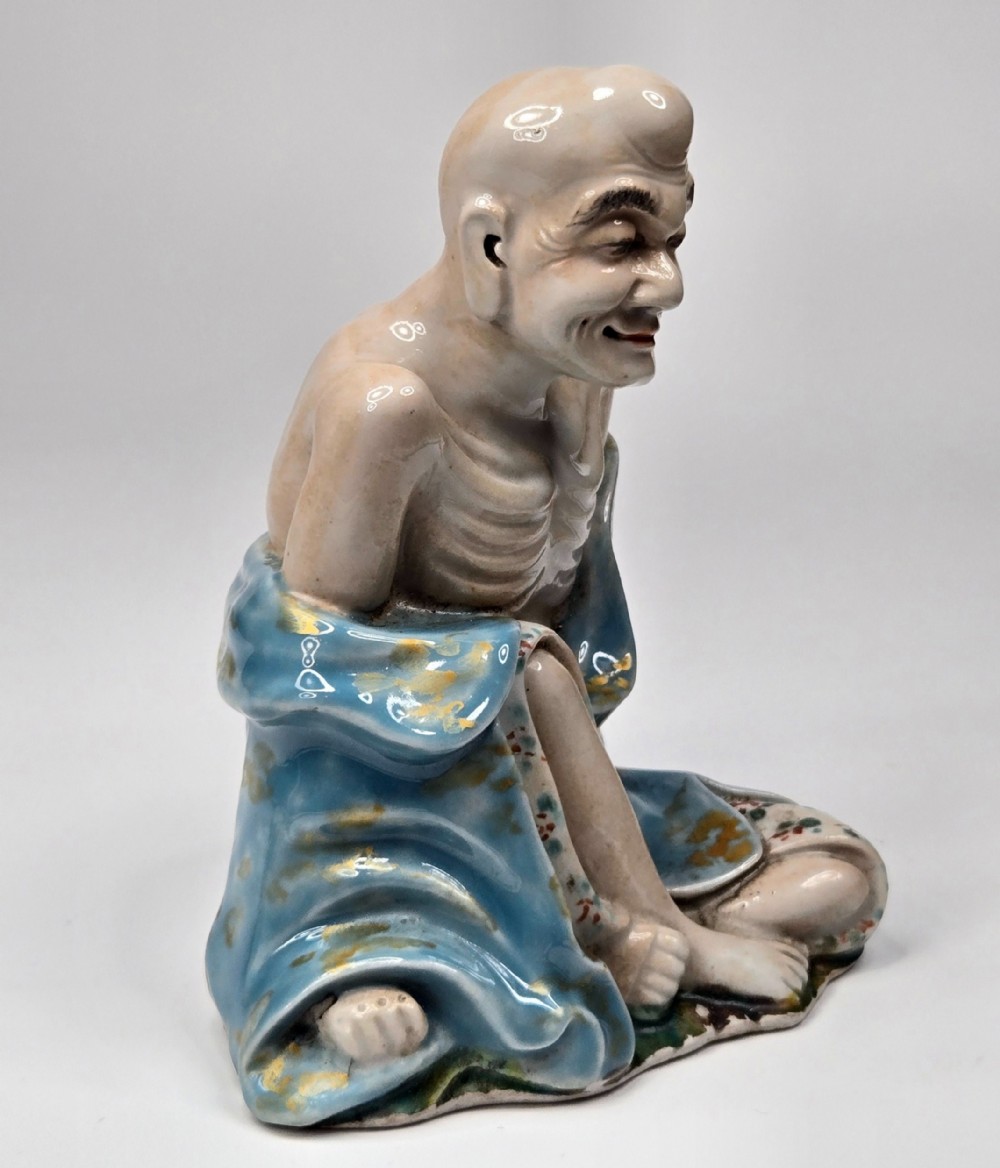
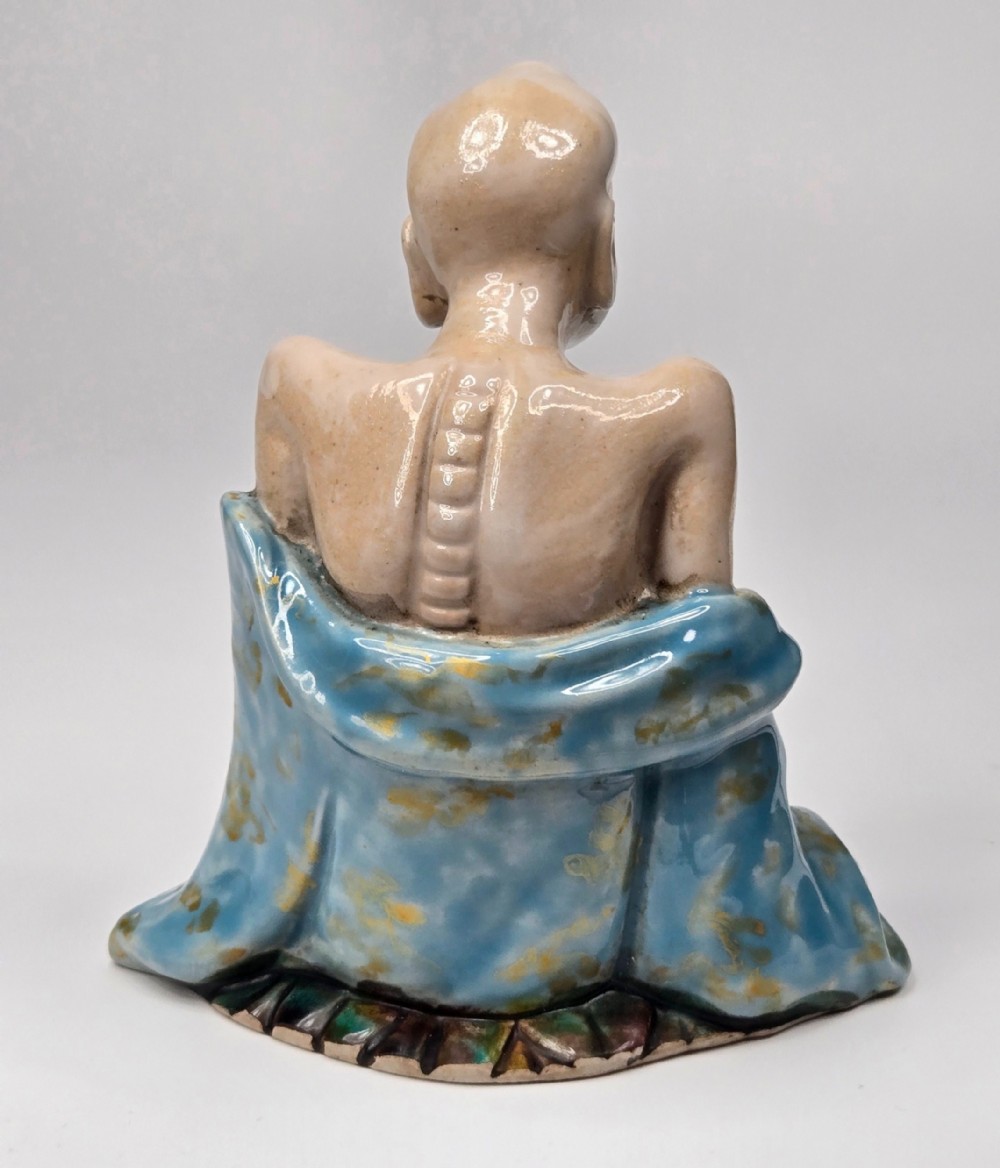
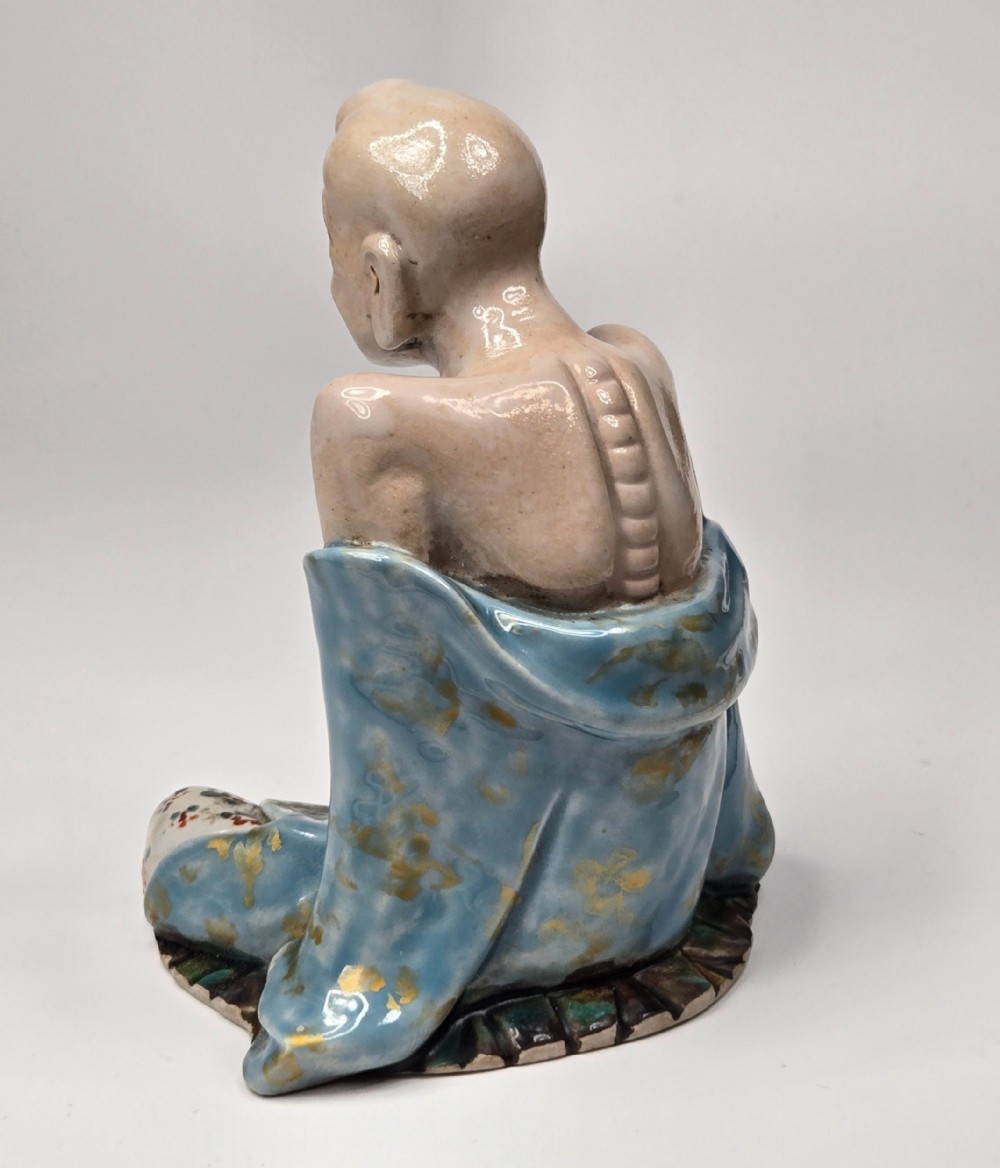
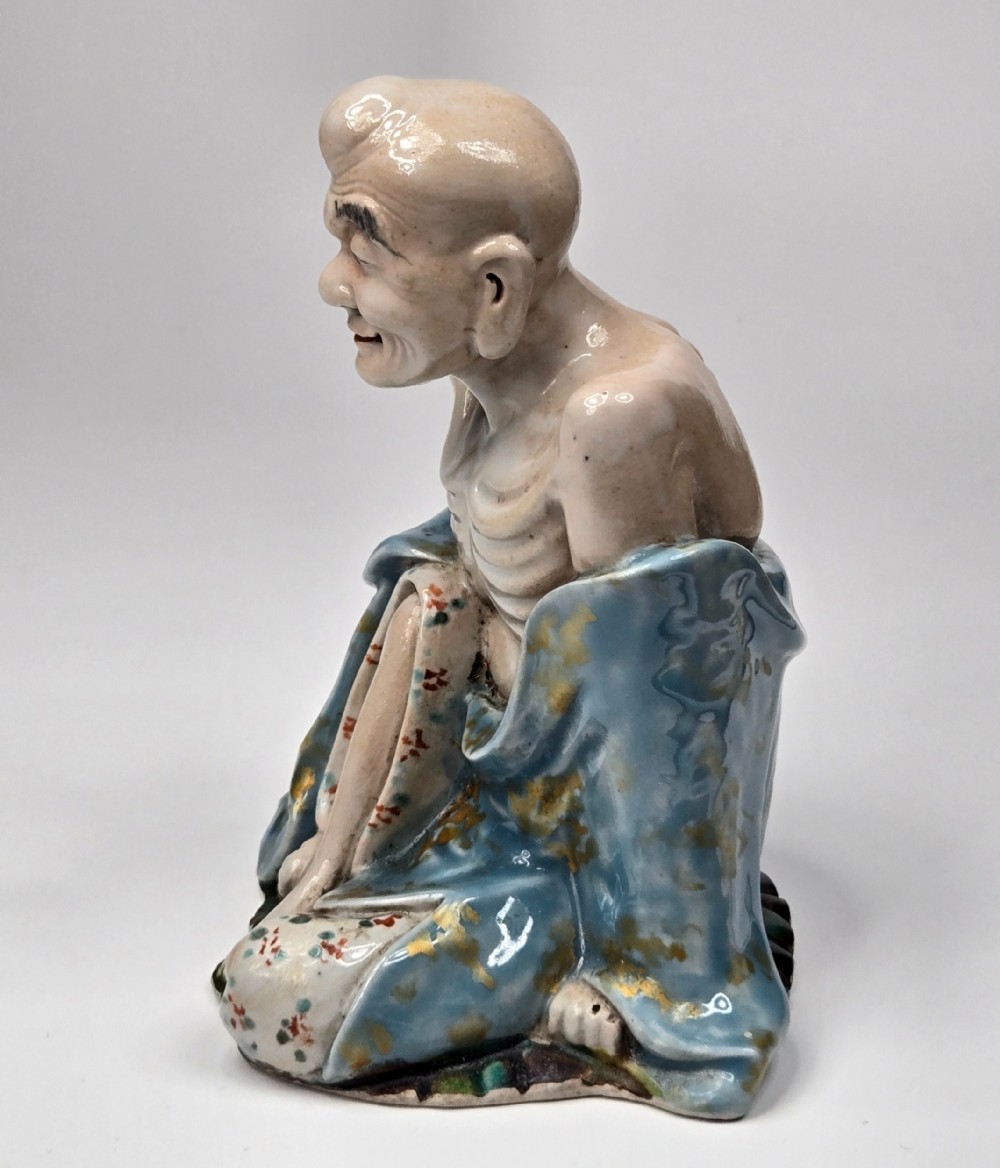
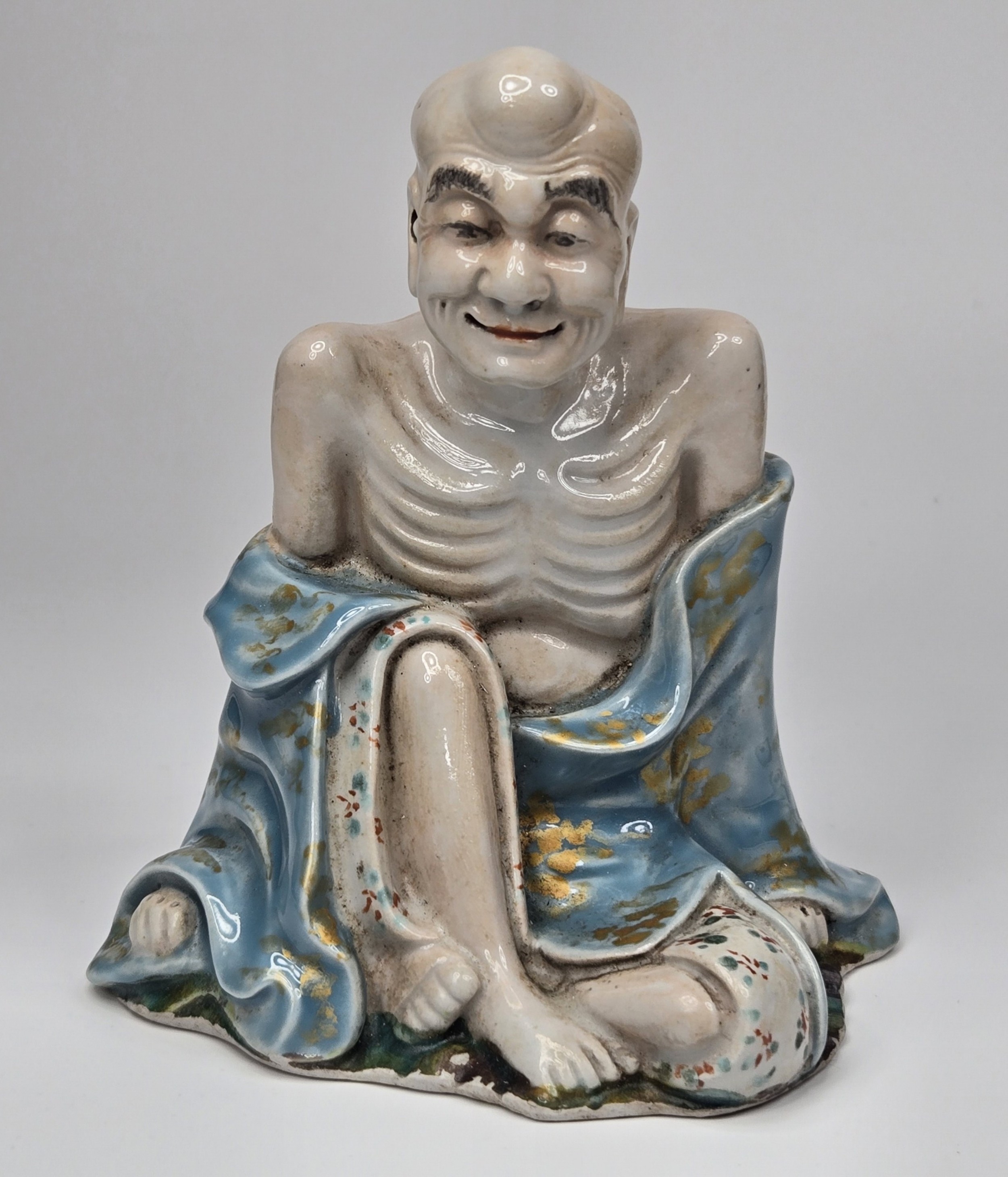
Sandbanks Antiques has dated this Chinese Porcelain Luohan Figure to the 18th Century.
This is a mid-Qianlong period (c. 1760) Jingdezhen porcelain Luohan in the 'Guan Xiu' style.
"

Period: Qing Dynasty, Qianlong Period (1736–1795)
Origin: Jingdezhen, Jiangxi Province, China
PHYSICAL SPECIFICATIONS
Height: 15 cm (approx. 5.9 inches)
Material: High-fired Kaolin-based "Hard-paste" Porcelain

Technique: Piece-mould construction with extensive manual hand-finishing
Palette: Fencai (Famille Rose) enamels on a turquoise-blue ground
DETAILED DESCRIPTION
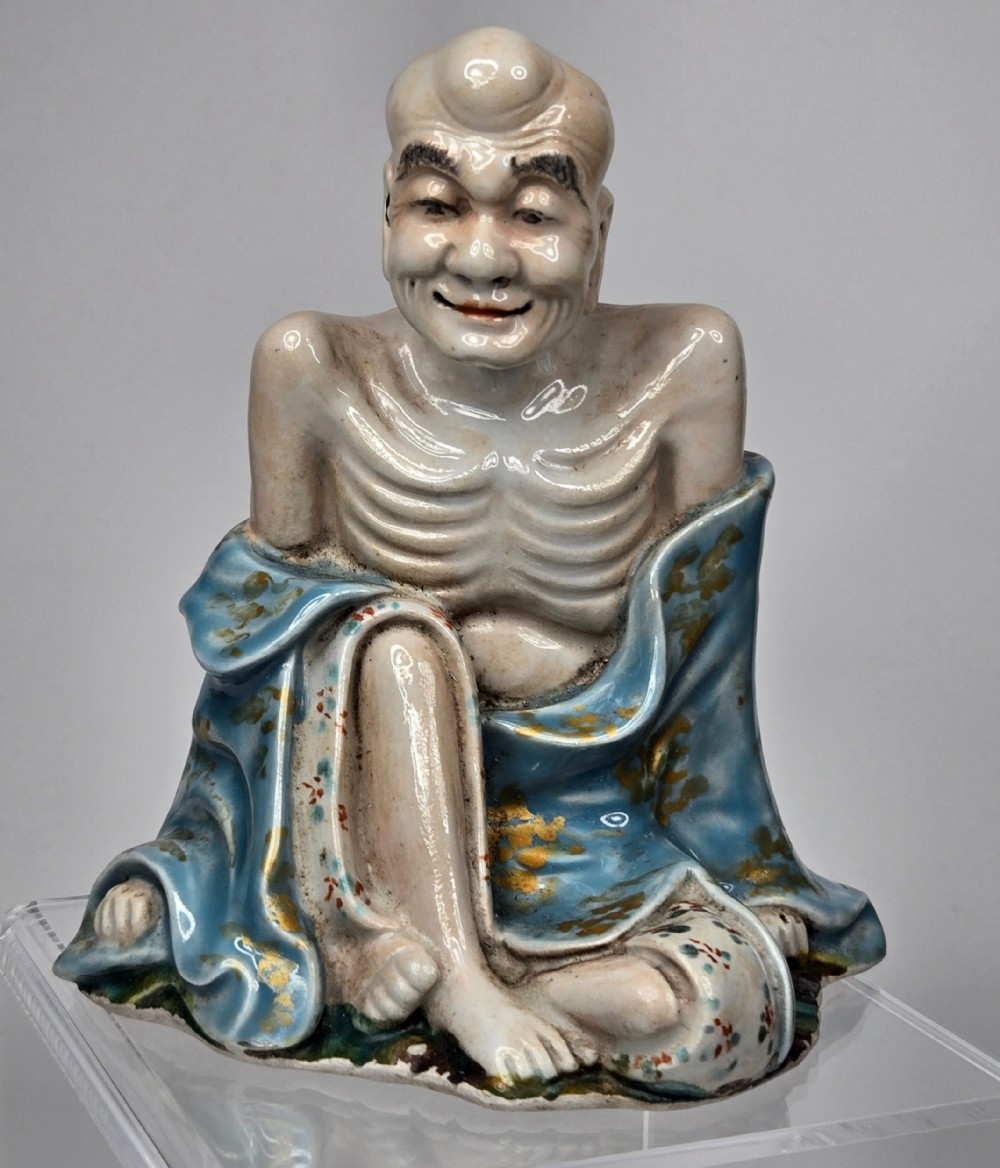
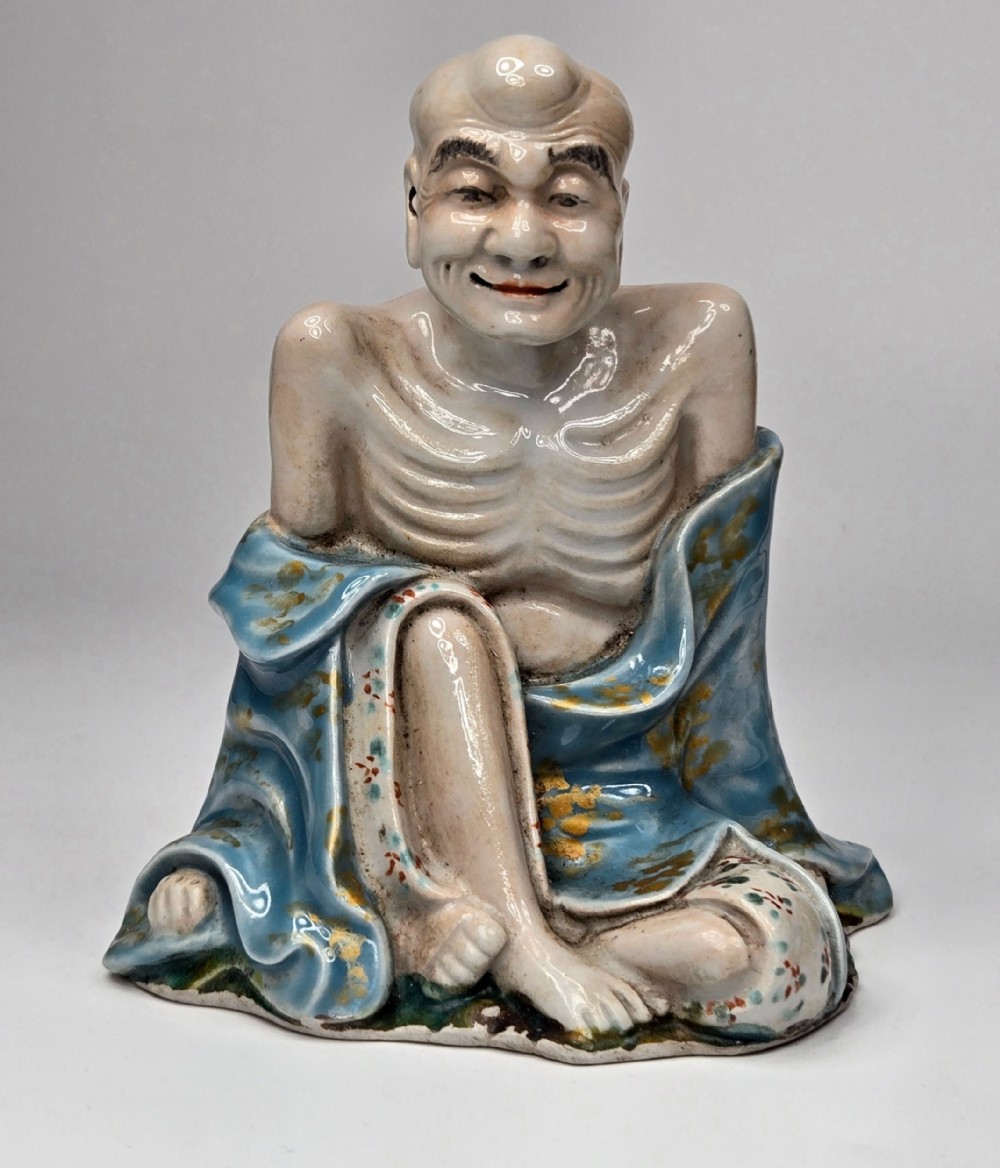
The Figure: A masterfully sculpted figure of a seated Luohan, depicted as an emaciated ascetic. The modelling is sharp and anatomically rigorous, showcasing the "Guan Xiu" style favoured by the 18th-century scholar-elite. The torso features deeply recessed intercostal spaces and a prominent, skeletal ribcage. The face is modelled with a lively, spiritual "knowing" smile, featuring high cheekbones, deeply set eyes, and elongated earlobes—symbolizing the Luohan’s rejection of worldly comforts in favour of enlightenment.

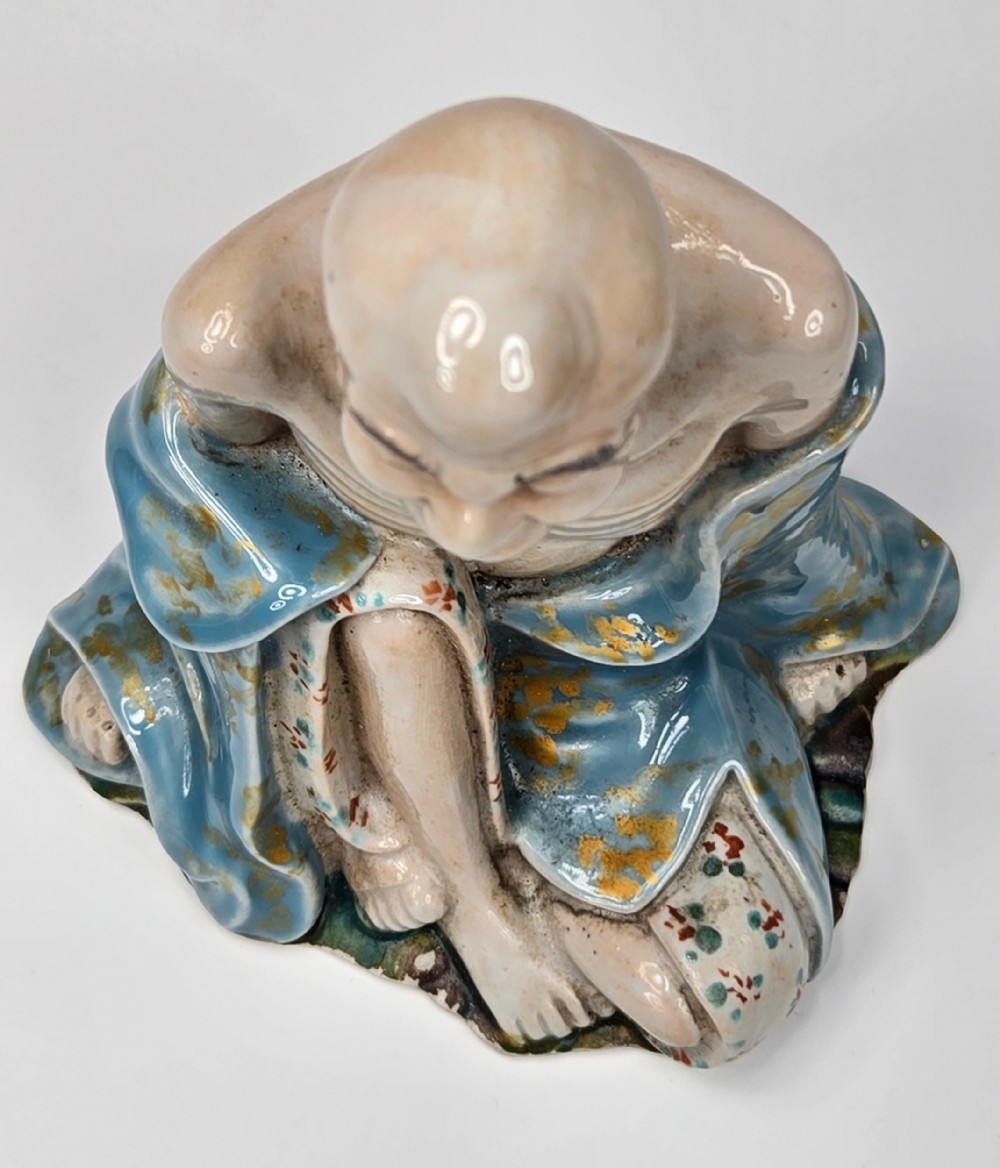
The Drapery: The figure is draped in a loosely hanging robe of vivid turquoise-blue (Robin's Egg) enamel. The robe is meticulously decorated with scattered floral sprays, painted in the fencai palette of opaque pinks, greens, and yellows. The enamels are applied thickly, giving the floral decoration a slight physical relief against the blue ground.

AUTHENTICATION & TECHNICAL MARKERS
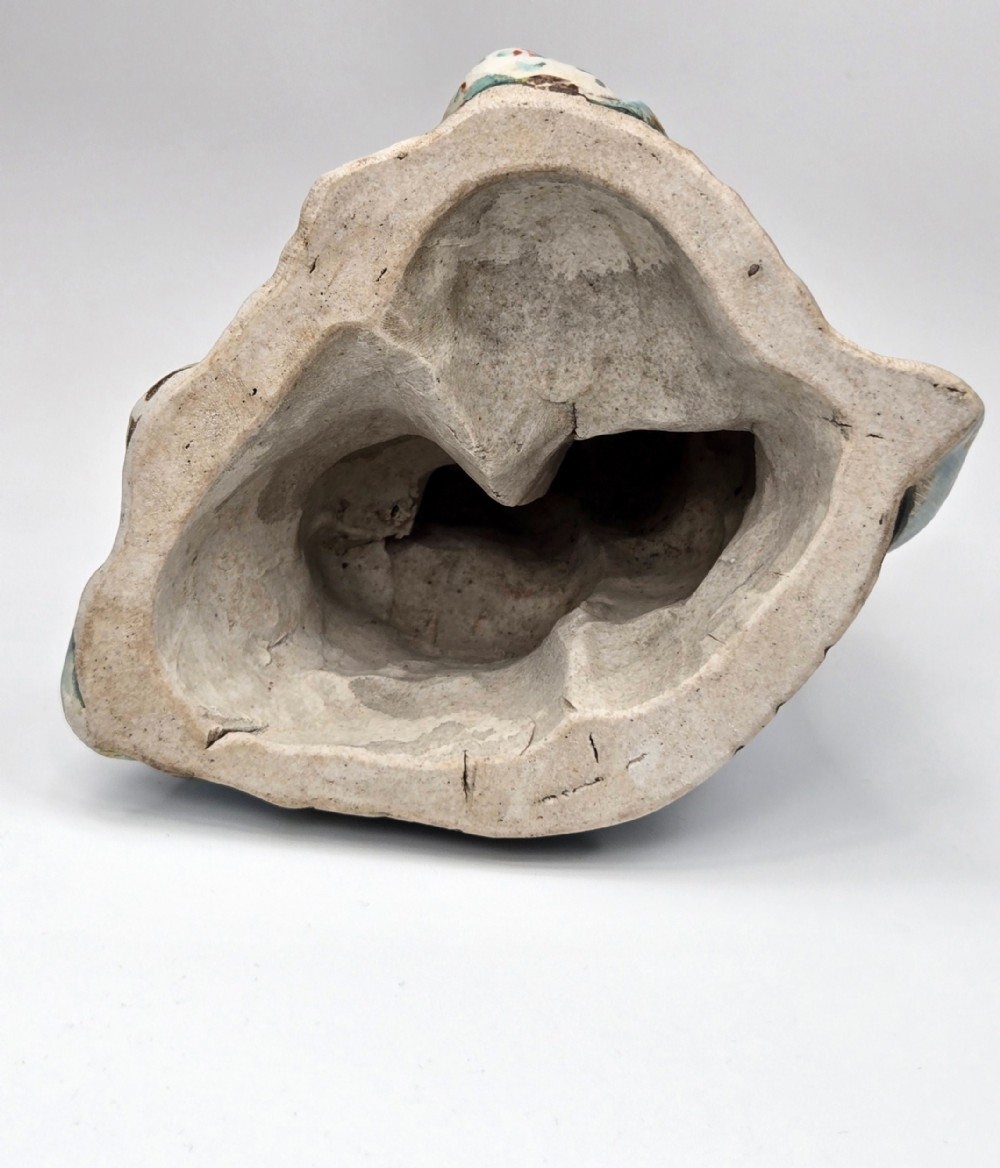
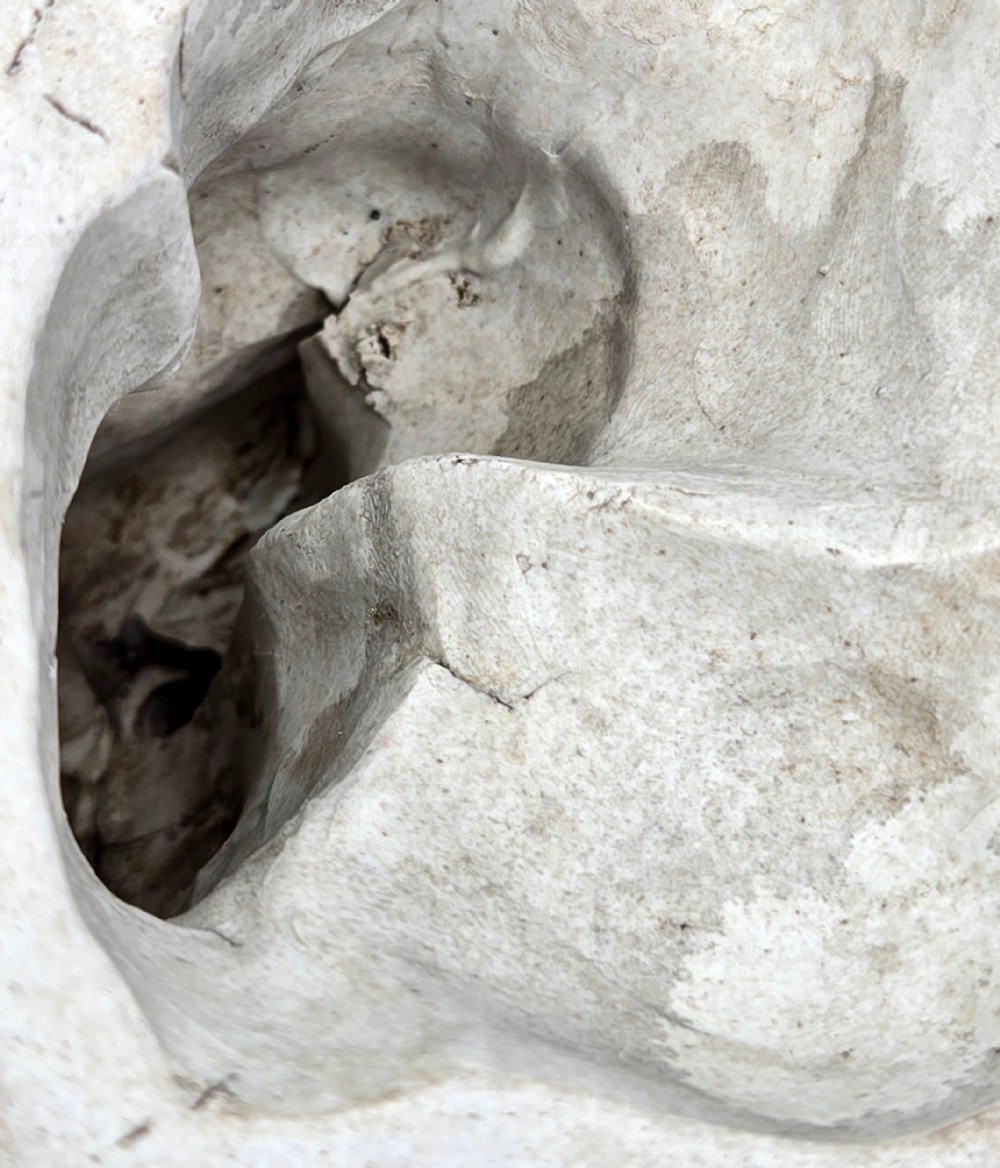
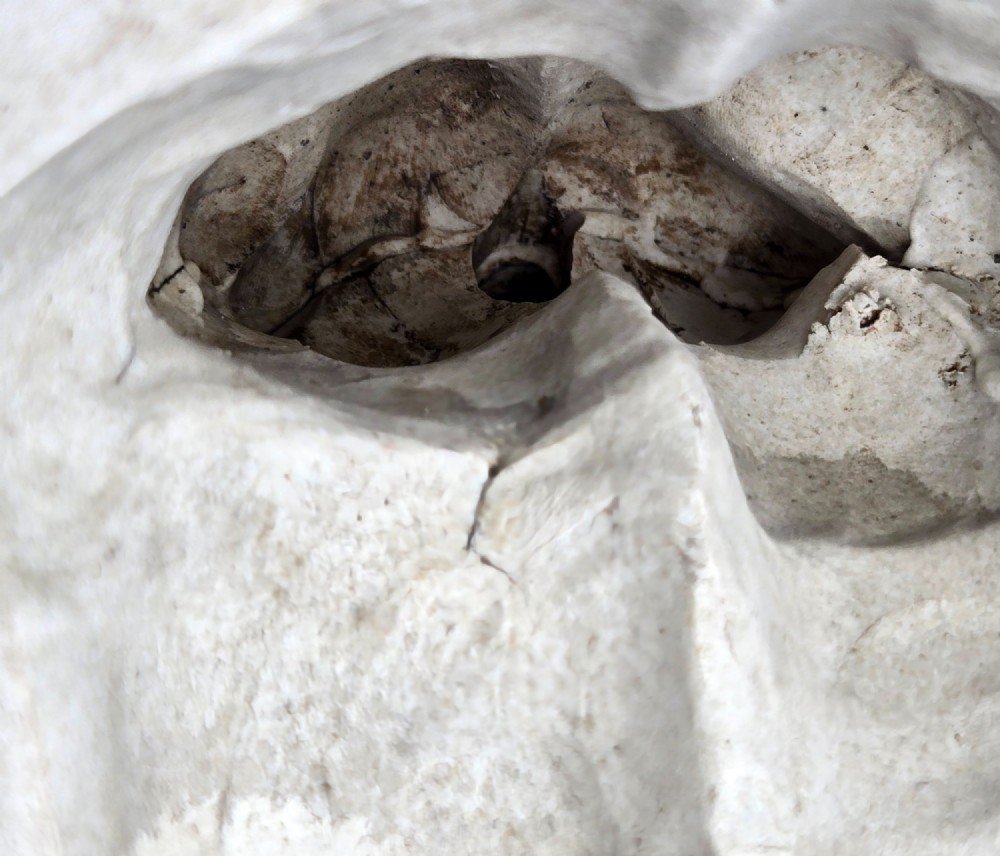
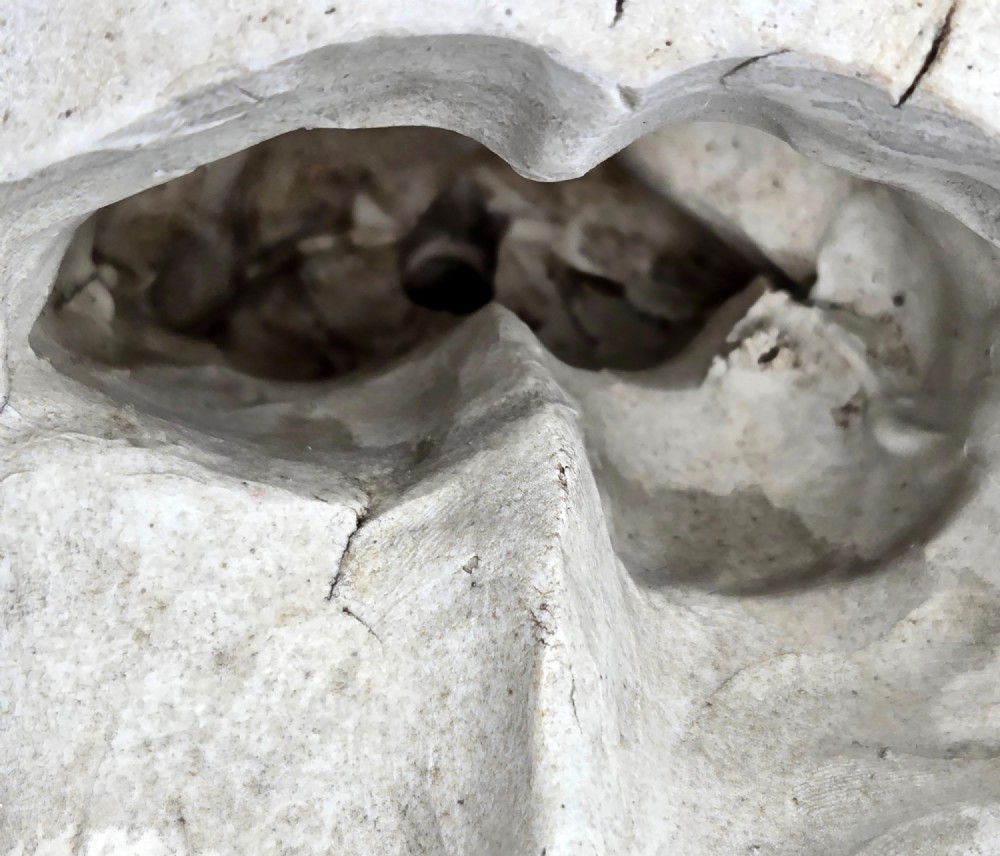
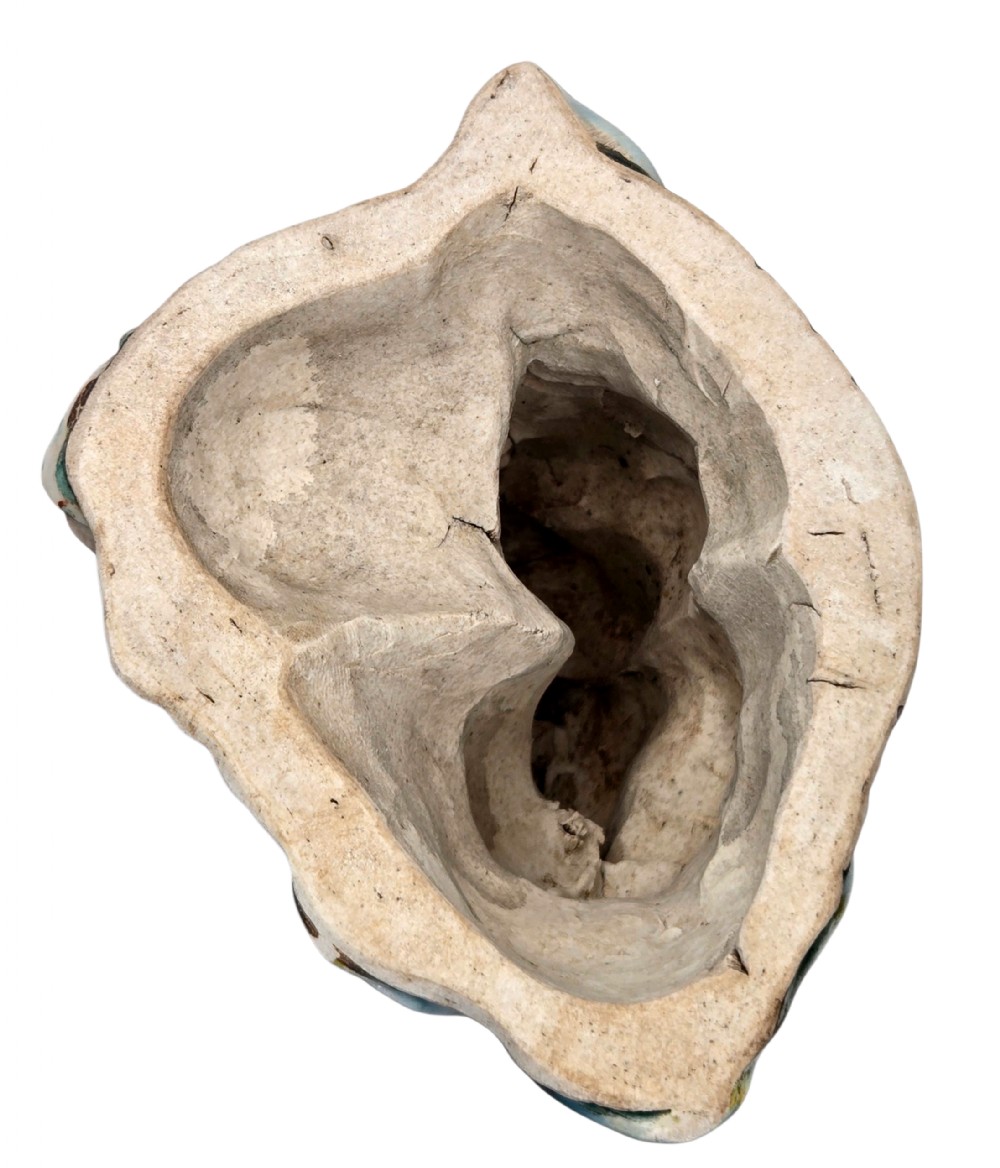
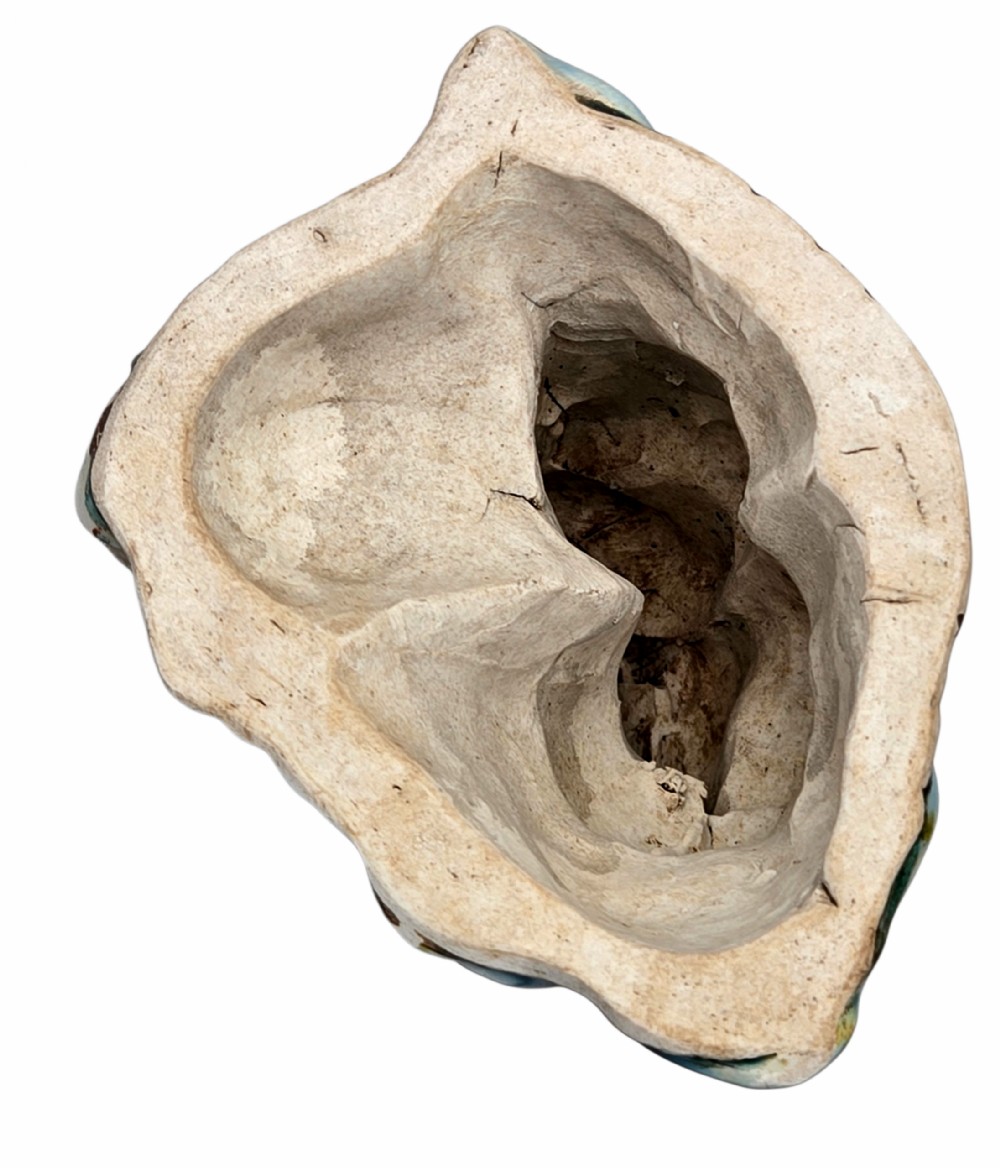
Internal Construction: The unglazed interior displays definitive manual finger-swiping marks and irregular clay joins. These markers prove the piece was hand-pressed into moulds rather than liquid-cast, a hallmark of 18th-century master craftsmanship.

The "Rib-Push": Internal indentations correspond exactly to the external ribs, confirming the potter manually thinned and shaped the walls from the inside to achieve the sharp skeletal detail.
The Biscuit (Base): The unglazed foot rim is exceptionally refined, showing a dense, "creamy" white porcelain body with a natural, aged patina. Faint iron-oxide "kiln spots" are visible, consistent with traditional wood-fired kilns.

Firing Cracks: Natural, jagged tension cracks are present in the deep recesses of the interior, caused by the cooling process of high-fired porcelain in the 1700s.
CONDITION REPORT: MUSEUM GRADE
Extremities: Excellent. The figure retains all fingers and toes in original, unchipped condition. No losses to the fragile tips of the earlobes or the thin edges of the robe.

Enamels: Vibrant and "glassy" with no significant surface abrasions or rubbing.
Restoration: None detected. The piece is in its original, "as-fired" state, which is extremely rare for a 250-year-old porcelain figurine.

MARKET CONTEXT & VALUATION
Aesthetic Style: Mid-Qing Dynasty "Scholarly Taste."
Rarity: High. While 19th-century copies are common, genuine 18th-century pieces with this level of anatomical sharpness and "intact" extremities are rarely seen outside of major collections (e.g., The British Museum, The V&A).
Provenance:- The G S. May Esquire Private Collection, London
Sandbanks Antiques has dated this Chinese Porcelain Luohan Figure to the 18th Century.
Specialising in antique silver, gold boxes, gold coins and objects de vertu. Rare fine-quality imperial chinese porcelain, jades, cloisonné
You can view the stock and full dealer information on the Sandbanks Antiques Profile Page

An Exceptional and Pristine ‘Famille Rose’ Porcelain Figure of an Ascetic Luohan Qianlong Period, Circa 1760