


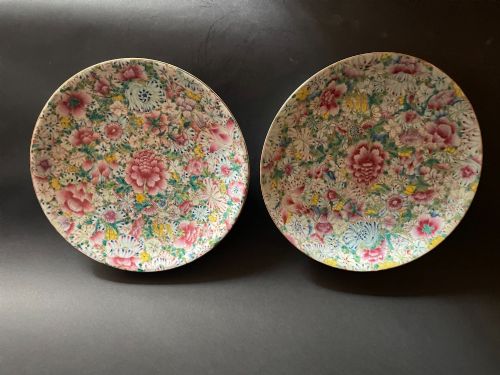
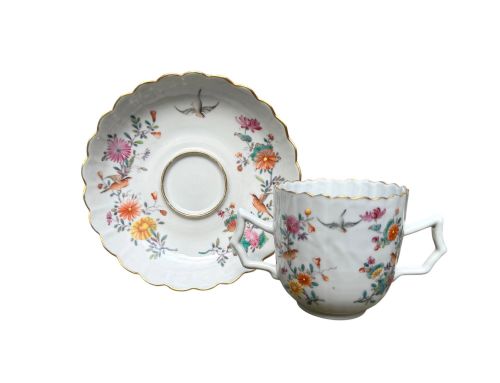
Famille Rose Ceramics
When you search for famille rose ceramics, you enter a vibrant world of enamel-decorated porcelain spanning centuries of Chinese and European production.
Famille Rose Ceramics
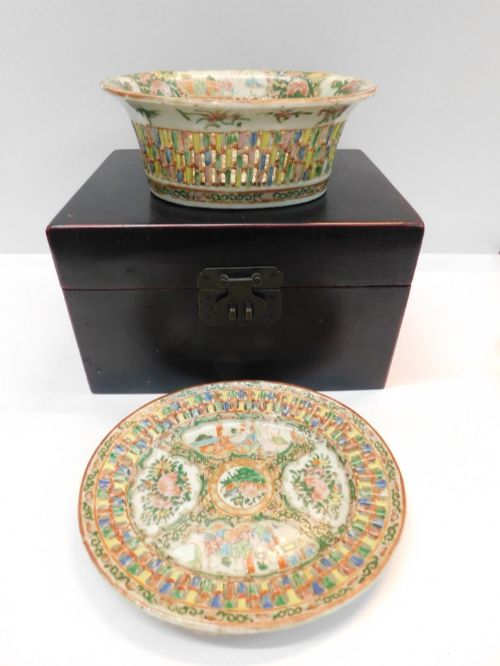
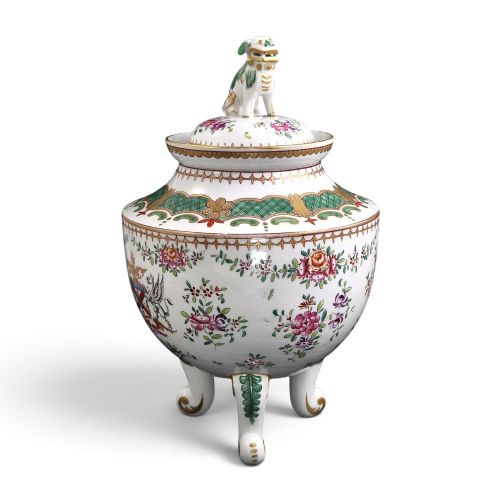
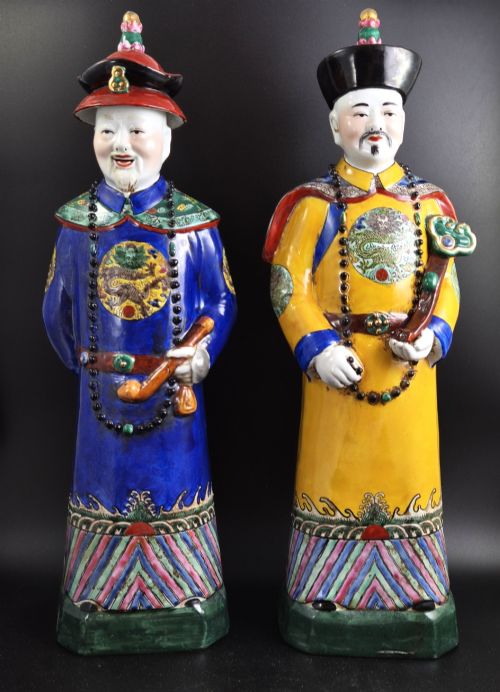
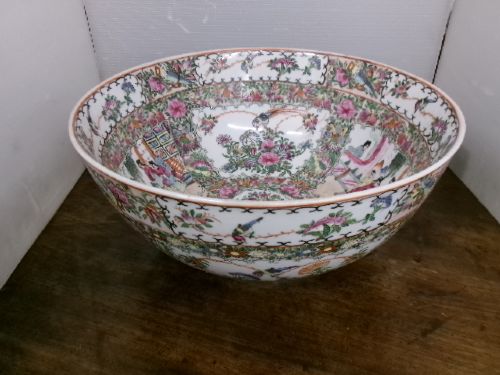
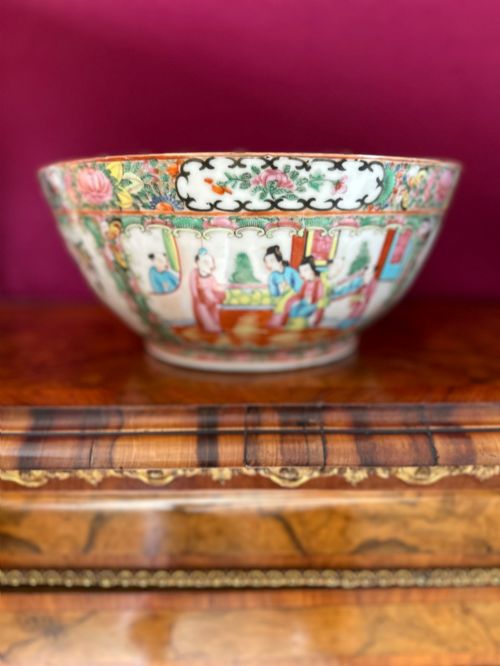
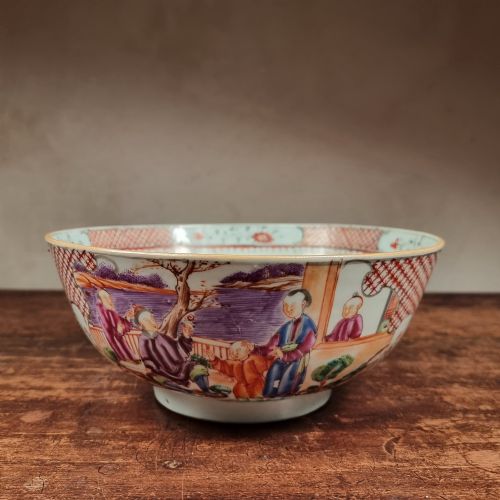
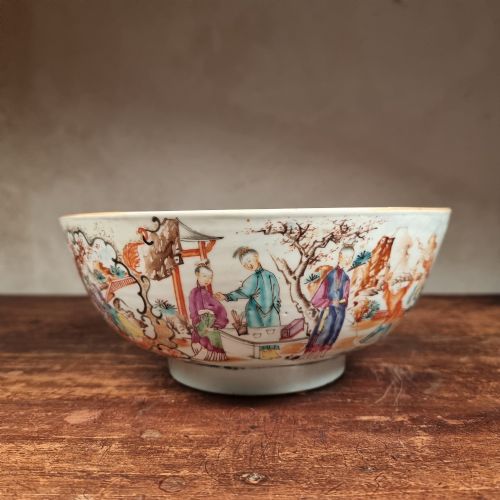
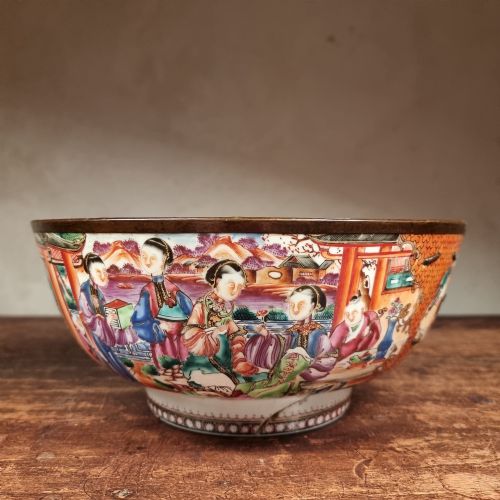
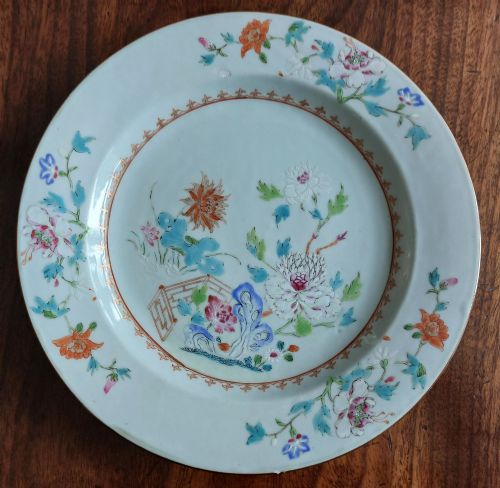
Famille rose ceramics encompass a diverse range of objects, from large punch bowls and garden seats to delicate teapots, cups, and figures created for both domestic use and export.
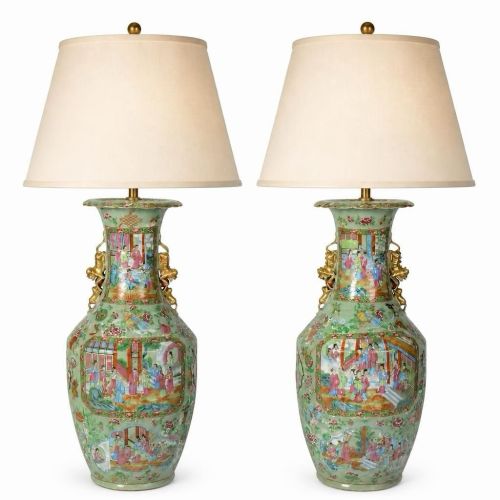
The pieces on this page lean heavily towards nineteenth-century production, particularly Chinese Canton wares and European interpretations, alongside eighteenth-century export examples.
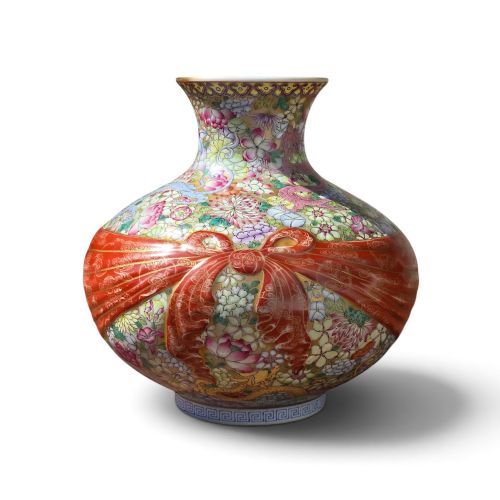
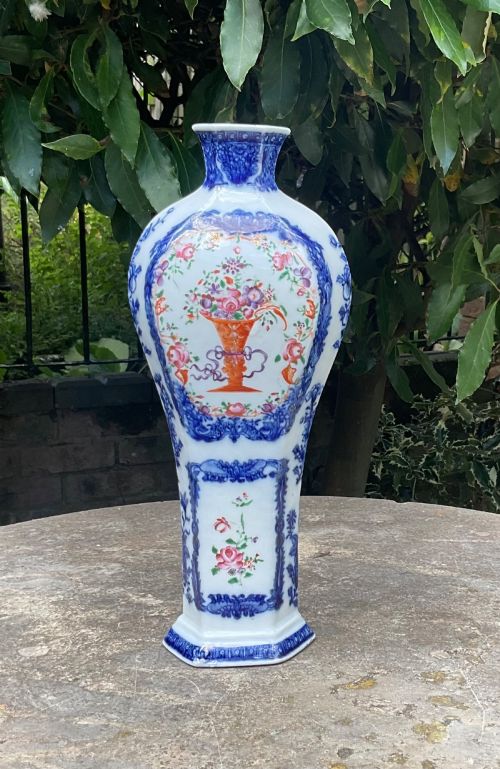
Forms vary widely, including moon flasks, reticulated chestnut baskets, hexagonal planters, and monumental vases decorated with narrative scenes, flowers, and birds.
How they were made
Potters shaped the porcelain bodies before applying an initial glaze, firing the pieces at high temperatures to vitrify the ceramic material.
The distinctive palette relies on overglaze enamels, introduced with an opaque pink derived from gold, which artisans painted by hand over the fired glaze.
Makers often added gold leaf and intricate gilding to accentuate borders and details, sometimes mounting finished porcelain in brass or ormolu frames.
Famille Rose Ceramics Retail Price Guide 2026
Typical asking prices for famille rose ceramics among the pieces listed under this phrase on Sellingantiques today, from the lower quarter to the upper quarter. They describe what is for sale here now, not the wider market.
Materials recorded across the selection include porcelain, overglaze enamel, gold leaf, brass, and wicker.
What varies in quality
Quality rests in the precision and delicacy of the hand-painted brushwork, distinguishing brisk commercial export output from masterwork pieces with finely delineated figures and botanicals.
The richness and stability of the overglaze enamels and the execution of the gilding dictate the visual depth of a piece.
The weight and translucency of the porcelain body itself, particularly in eggshell vessels, separates standard utility wares from exceptional studio and imperial items.
Samson of Paris·Zhu Mao Ji
The Famille Rose Ceramics Glossary
- Famille Rose
- A palette of opaque overglaze enamels featuring a prominent pink or rose colour, developed in China during the Qing dynasty.
- Canton
- A style of Chinese export porcelain heavily decorated with panels of figures, birds, and flowers, produced for Western markets.
- Overglaze Enamel
- Coloured glass decoration applied over a previously fired and glazed ceramic surface, requiring a secondary low-temperature kiln firing.
- Qing Dynasty
- The final imperial dynasty of China, spanning from sixteen forty-four to nineteen twelve, encompassing major periods of porcelain innovation.
- Armorial
- Ceramic decoration featuring painted coats of arms or family crests, typically commissioned by European families from Chinese export workshops.
Famille Rose Ceramics: Frequently Asked Questions
What is famille rose?
Famille rose refers to a grouping of Chinese porcelain defined by an opaque pink enamel colour introduced during the Qing dynasty.
Artisans used this palette alongside other overglaze colours to paint complex scenes of figures, flowers, and animals on white porcelain bodies.
How do I date these ceramics?
Dating relies on stylistic shifts, reign marks, and the specific composition of the porcelain body and overglaze enamels.
Nineteenth-century Canton wares often display dense panel decoration, while eighteenth-century Qianlong pieces typically feature finer, more restrained painting styles.
Were these pieces made for export?
Many surviving pieces were manufactured specifically for international trade, travelling from Chinese kilns to European and American markets.
Export items often adapted traditional Chinese decorative schemes to suit Western functional and aesthetic preferences, including armorial designs.
How should I display them?
These ceramics suit placement on sturdy surfaces where their detailed enamel work and form can be appreciated in natural light.
Larger bowls and vases function effectively as standalone centrepieces, while smaller items fit securely within cabinets or on dedicated stands.