





Canton Famille Rose Plates
These canton famille rose plates bring bright hand-painted enamels and intricate export porcelain straight to your table.
Canton Famille Rose Plates
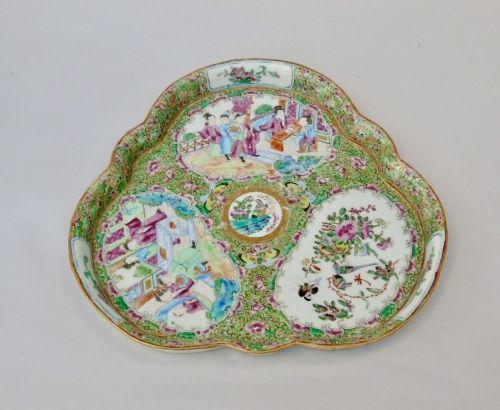
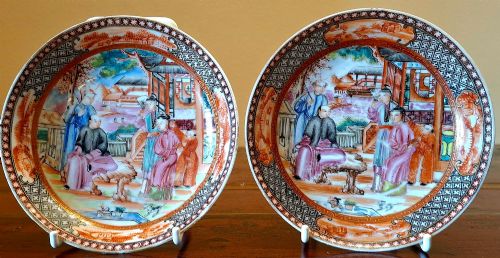
When you search for canton famille rose plates, you encounter Chinese export porcelain made predominantly during the nineteenth century alongside earlier eighteenth-century pieces. These items include decorative plates, dishes, saucers, and trays shaped in various forms such as trefoil or shamrock outlines. The palette relies on pink overglaze enamel accompanied by rich gilding and complex polychrome designs.
The nineteenth-century examples dominate the selection, showing the characteristic bustling scenes and floral borders associated with Canton production. Alongside standard round plates, you find specialised dishes and chargers that were manufactured specifically for Western markets during the Qing dynasty. Each piece demonstrates the hand-painted detailing that defines this traditional export ware.
Materials and construction
The foundation of these objects is hard-paste porcelain, formed and fired before receiving painted decoration. Artisans then applied overglaze enamel colours directly onto the glazed surface, utilising distinct pinks, greens, and reds to build up figurative and botanical motifs.
Gold leaf and gilding provide the metallic highlights framing the enamel panels and borders. Certain items incorporate copper elements or fine gold leaf accents applied during the final stages of ornamentation to catch the light.
Canton Famille Rose Plates Retail Price Guide 2026
Typical asking prices for canton famille rose plates among the pieces listed under this phrase on Sellingantiques today, from the lower quarter to the upper quarter. They describe what is for sale here now, not the wider market.
Judging quality in export porcelain
Quality rests in the precision and density of the hand-painted brushwork across the enamel surface. Finer examples display crisp delineation in the figures and foliage, while lesser pieces show hurried execution and simpler border patterns.
The application of gilding and the purity of the porcelain body also separate standard wares from superior pieces. Stronger potting combined with intact gold leaf indicates better craftsmanship during the manufacturing process.
The Canton Famille Rose Plates Glossary
- Famille Rose
- A prominent palette of Chinese porcelain defined by its opaque pink enamel derived from colloidal gold. This colourway superseded earlier green and yellow families during the eighteenth century.
- Canton Enamel
- Painted copper or porcelain decoration executed in the port city of Canton for export to Europe and America. It is recognised by crowded compositions of figures, birds, and flowers.
- Hard-paste Porcelain
- A true ceramic body composed of kaolin and petuntse fired at high temperatures. This material creates a dense, white, vitreous surface that resists scratching.
- Overglaze Enamel
- Pigments fused to the already-fired and glazed porcelain surface through a secondary, lower-temperature firing. This technique allows for a broad spectrum of bright colours.
- Qing Dynasty
- The final imperial dynasty of China, lasting from sixteen forty-four to nineteen twelve. Much of the export porcelain found today originates from this extended period of production.
Canton Famille Rose Plates: Frequently Asked Questions
What era do these plates come from?
The pieces span the eighteenth and nineteenth centuries, with a significant concentration originating from the Victorian era and the broader Qing dynasty.
Earlier examples date back to the mid-eighteenth century, while the majority of the decorative plates and dishes reflect nineteenth-century export standards.
How were these plates used historically?
These items functioned primarily as decorative porcelain for display within Western homes during the height of the export trade.
While some larger chargers and bowls served practical dining purposes, many specialised trays and shaped dishes were intended to showcase wealth and taste in reception rooms.
How do I care for antique porcelain?
Wash these pieces gently by hand using warm water and a mild detergent, avoiding harsh scrubbers that might damage the overglaze enamels.
Keep them away from modern dishwashers and strong direct sunlight to protect the delicate gold leaf and vibrant pink pigments over time.