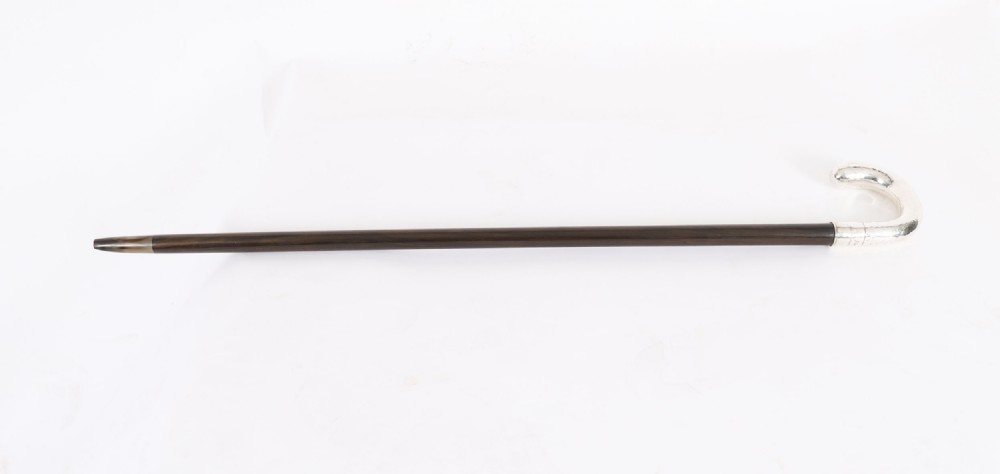
Regent Antiques has dated this piece to the 1860s.
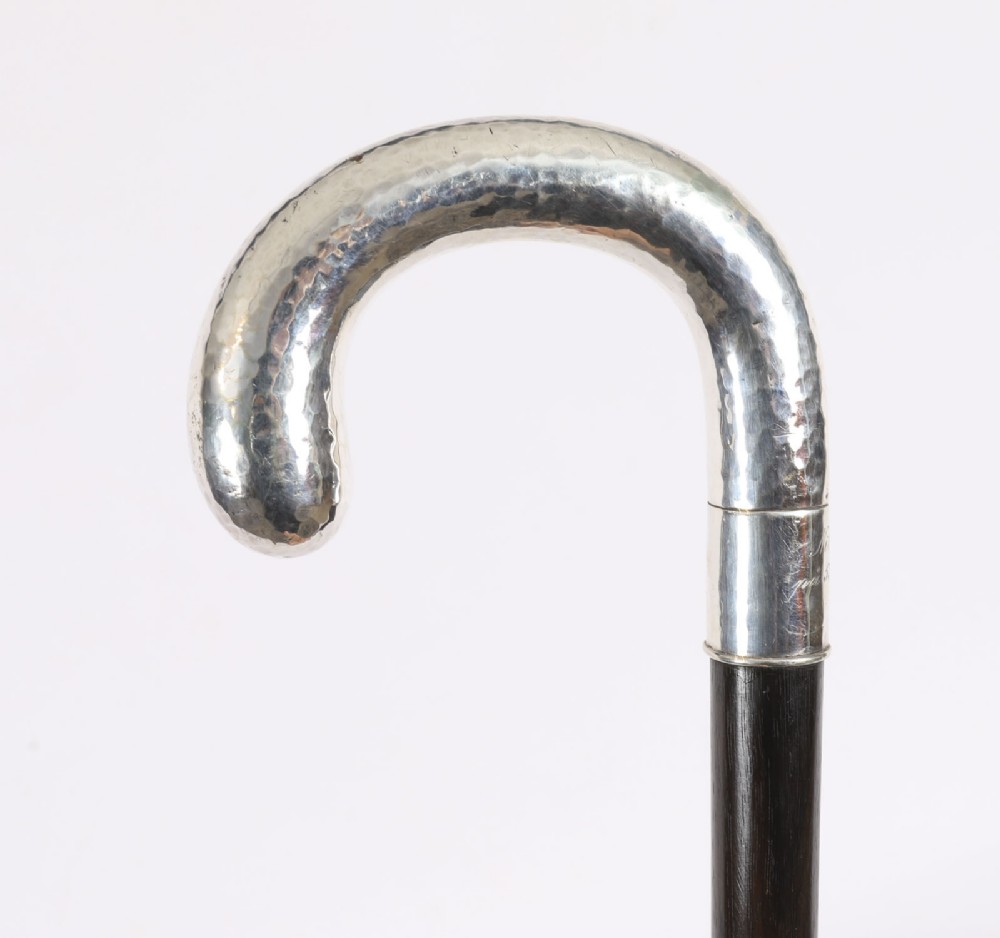
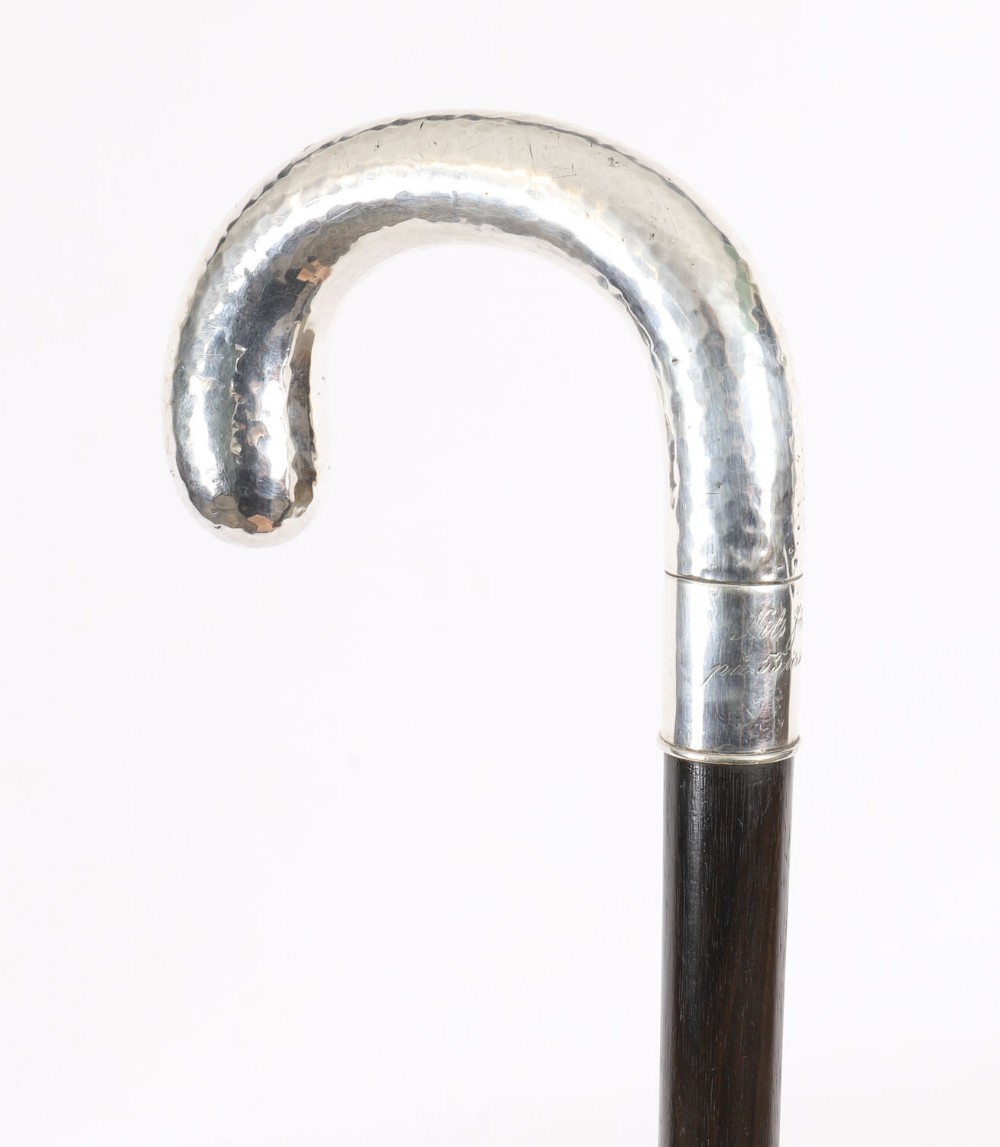
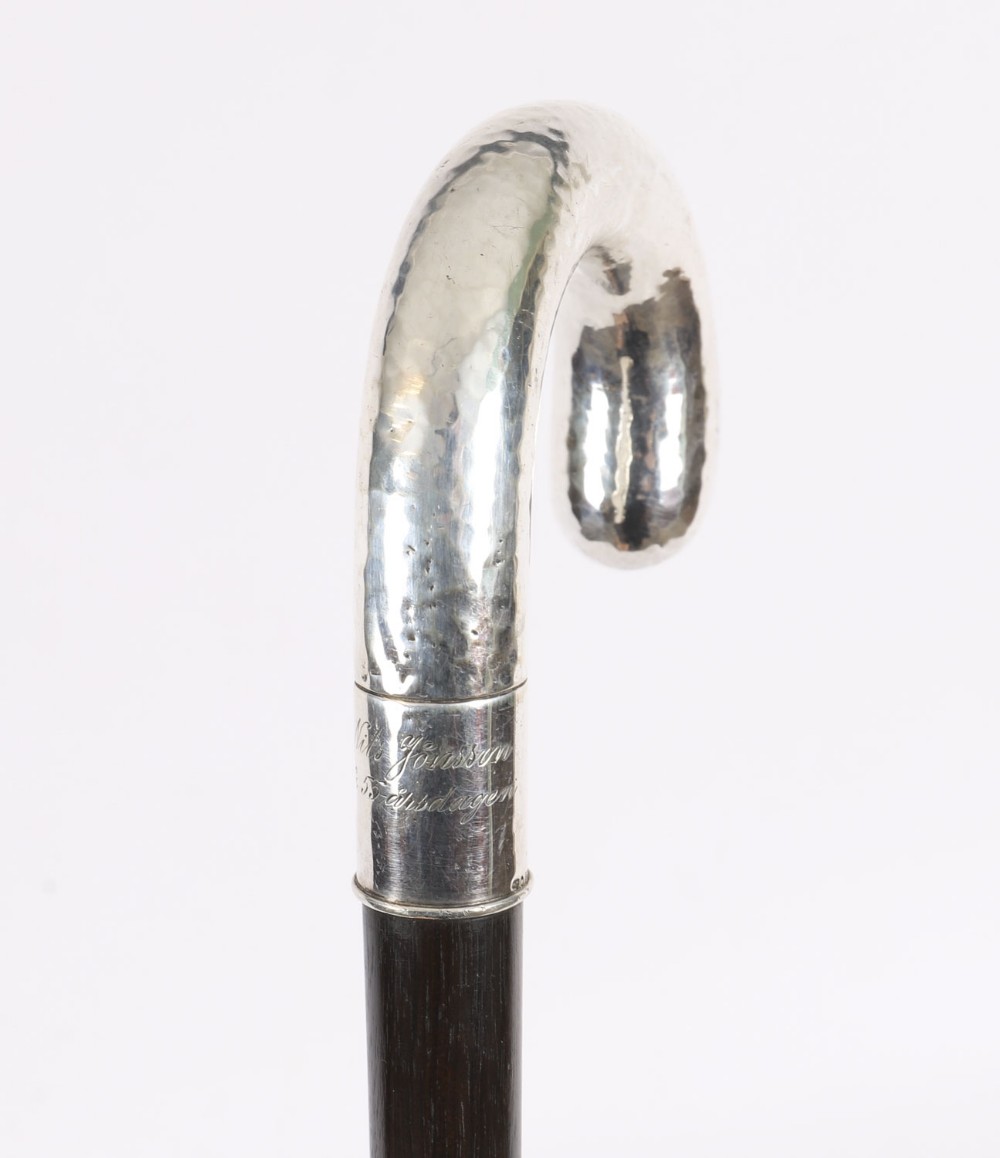
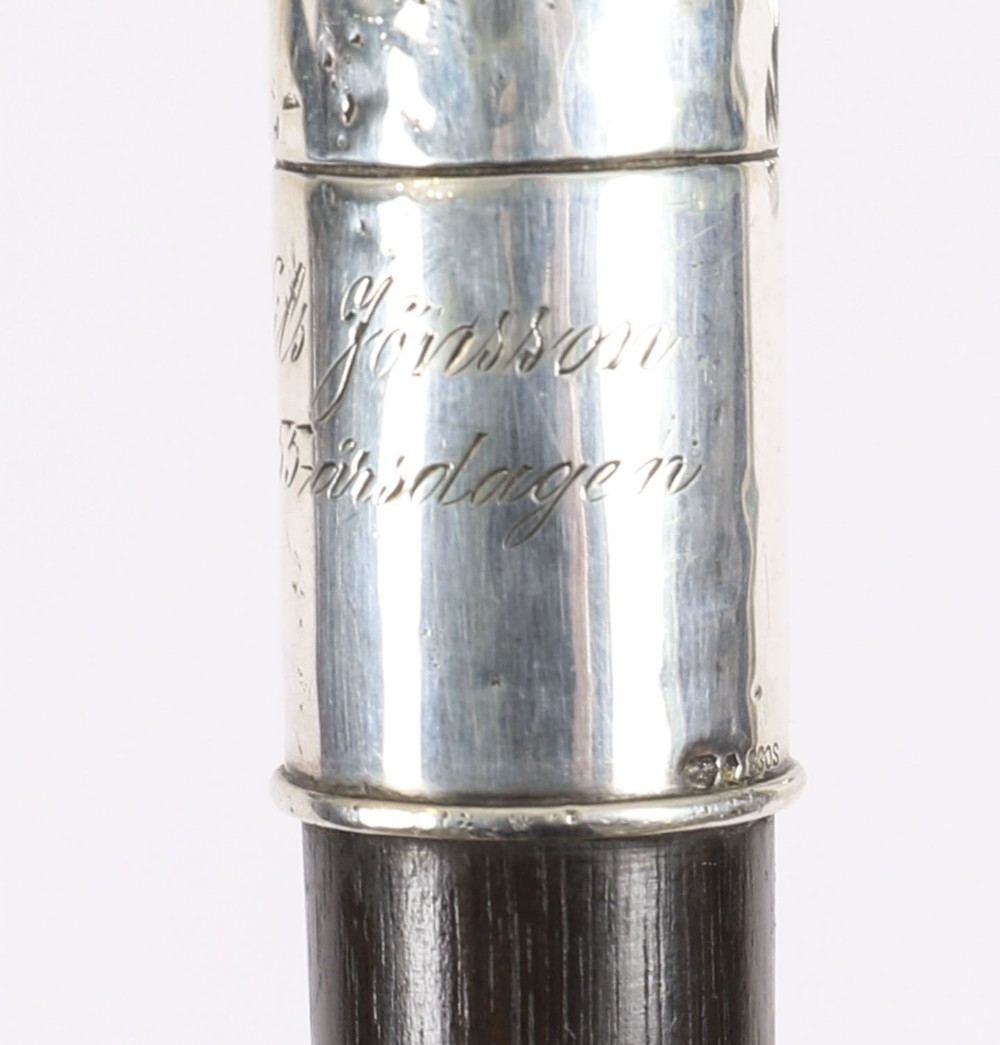
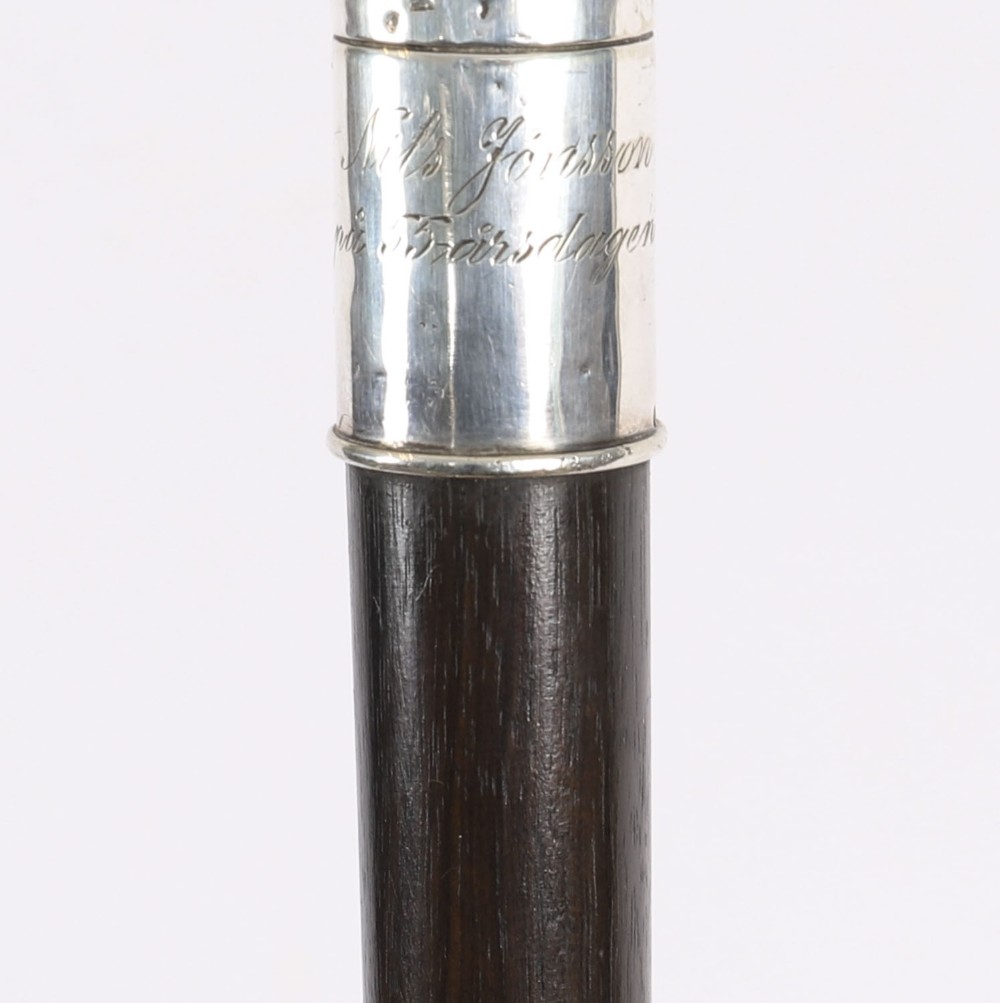
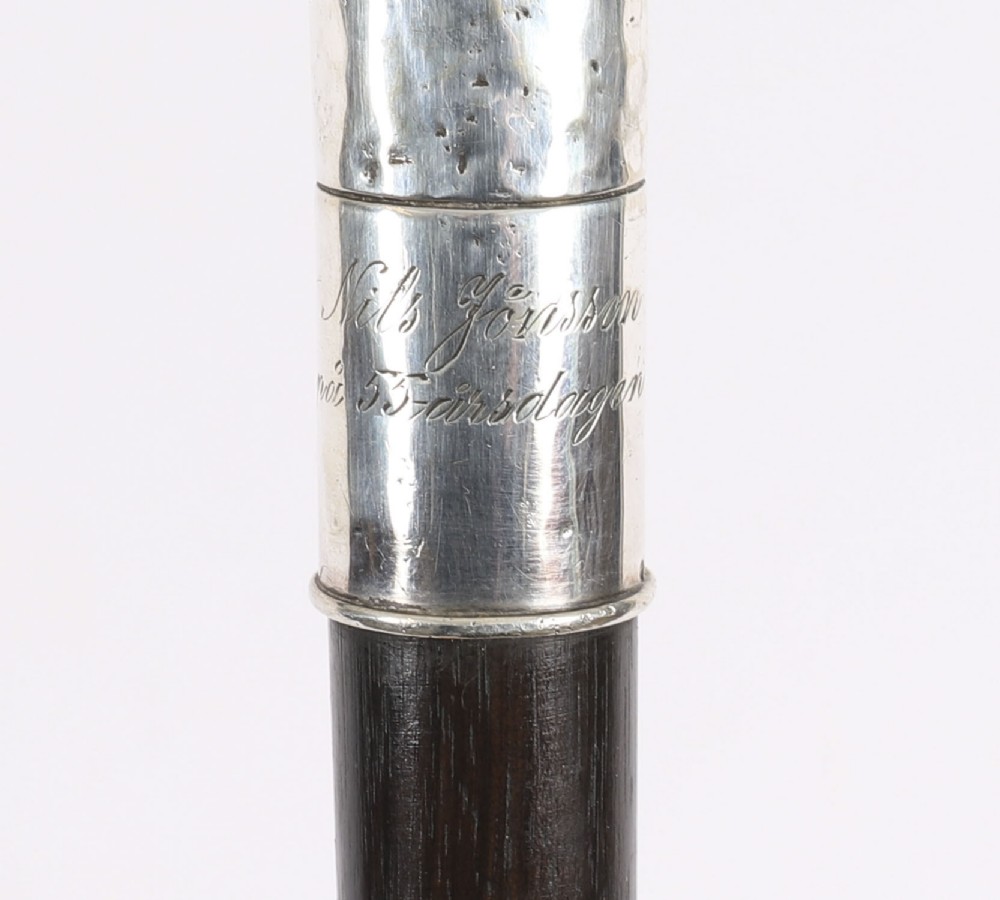
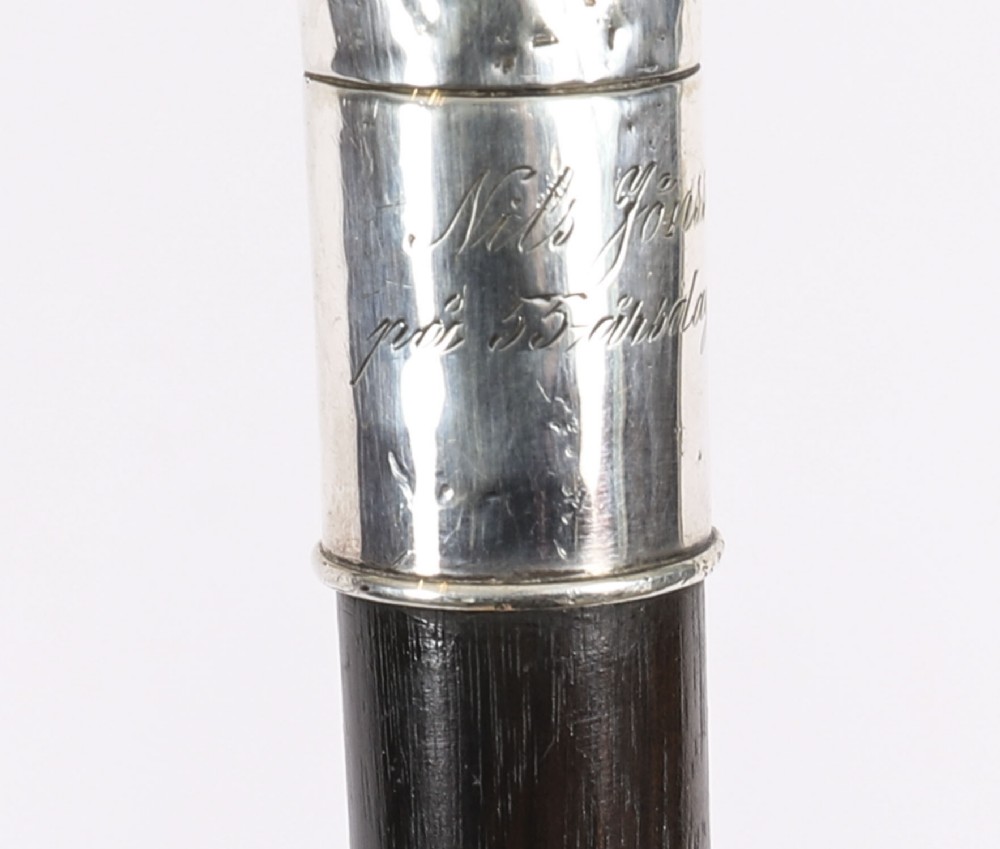
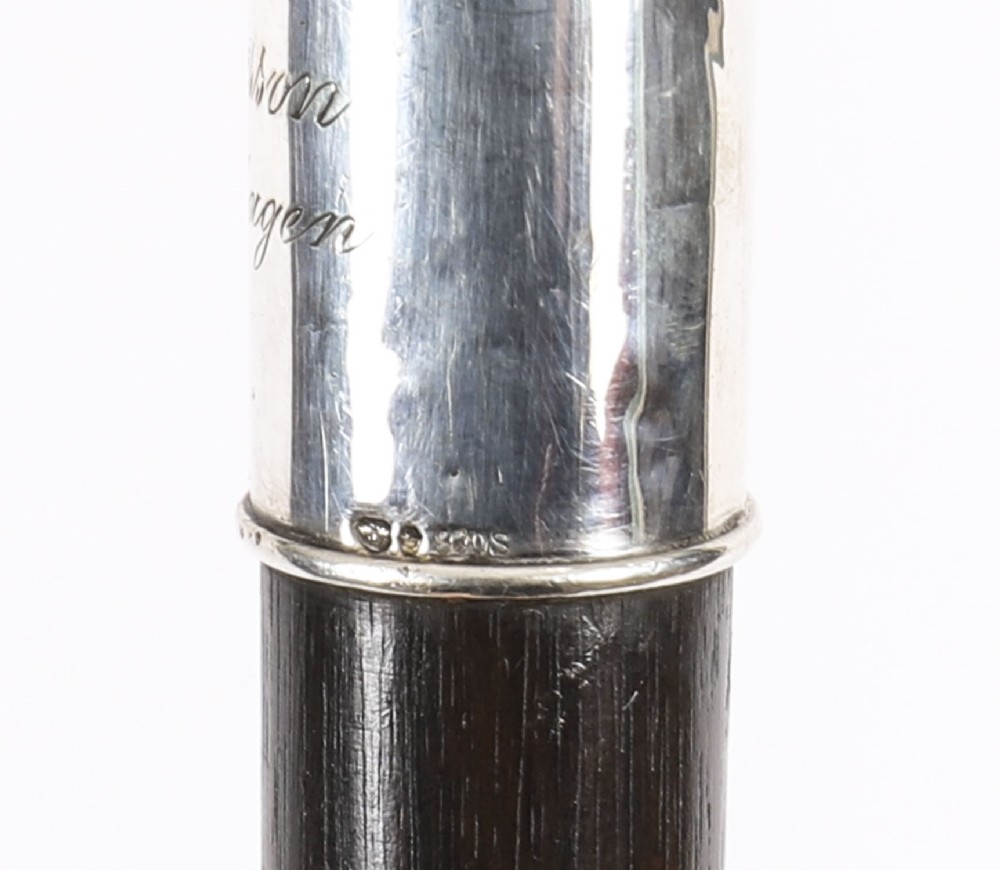
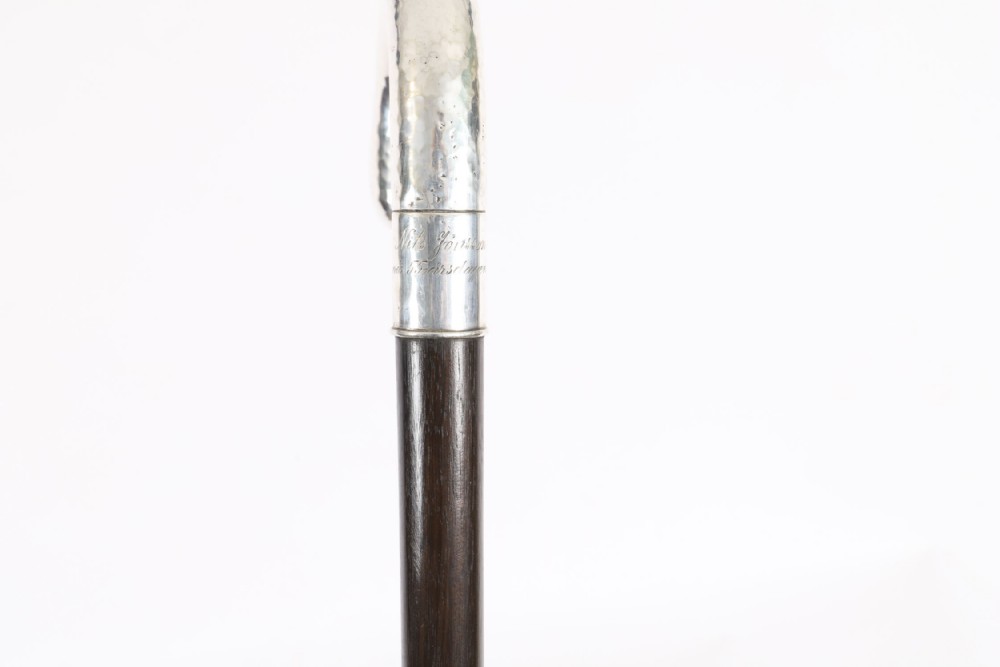
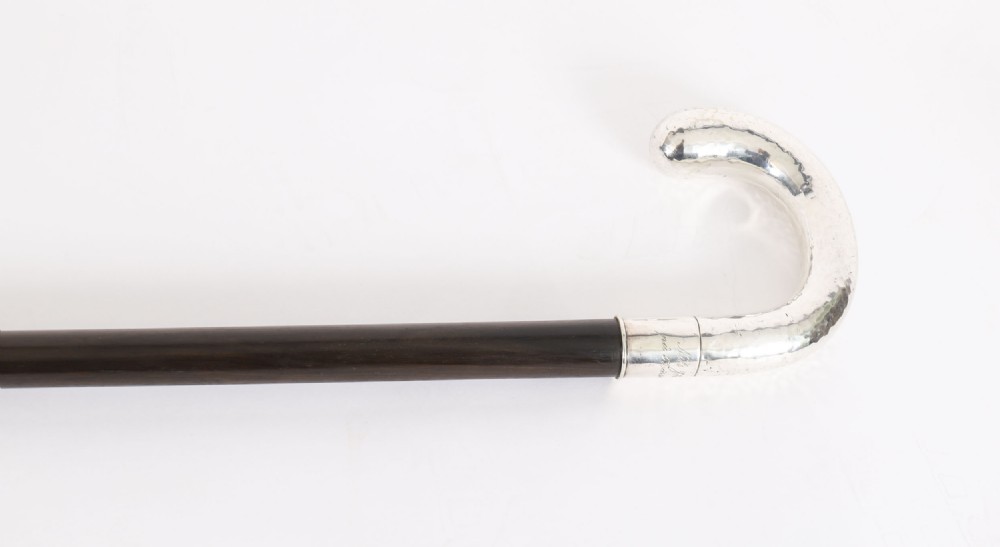
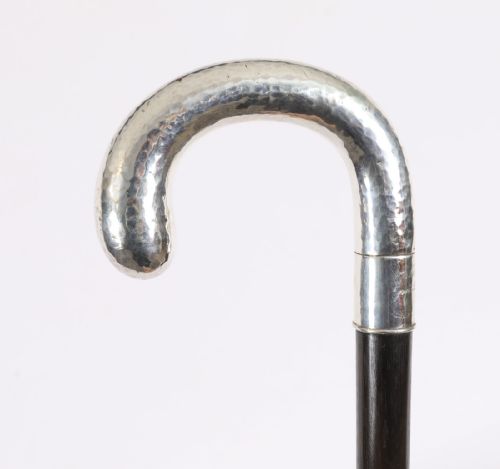
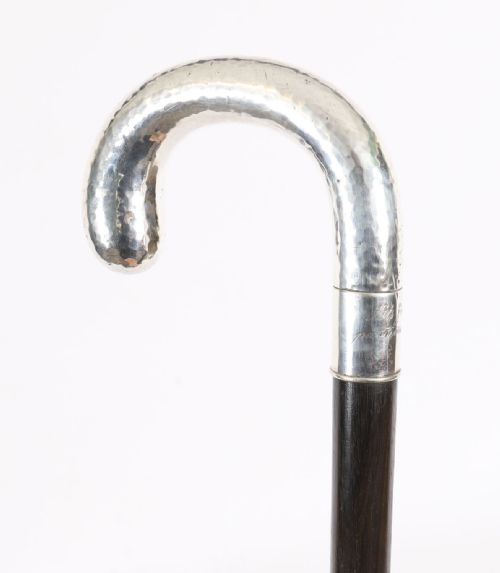
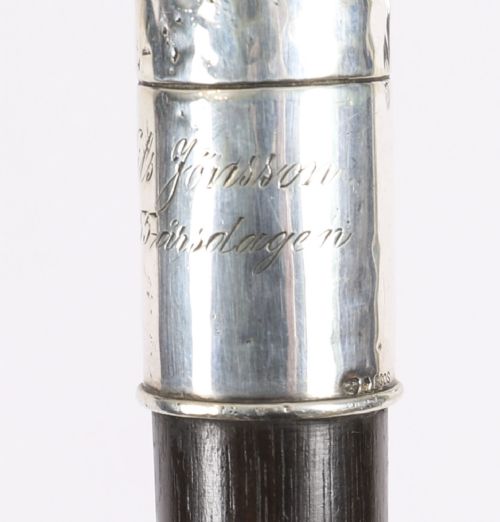
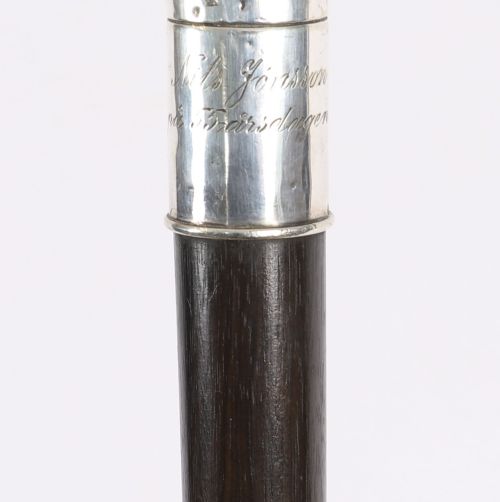
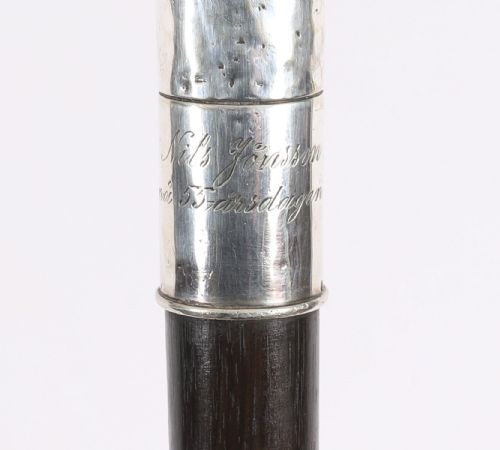
The hammered silver hook shaped handle bears the engraved inscription
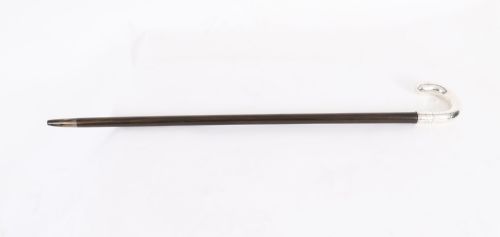
''Nils Jonsson, 55 Arsolagen',
It is a good sturdy usable walking cane and a lovely item, and as such would be appreciated by any collector of walking sticks or canes.
Condition:
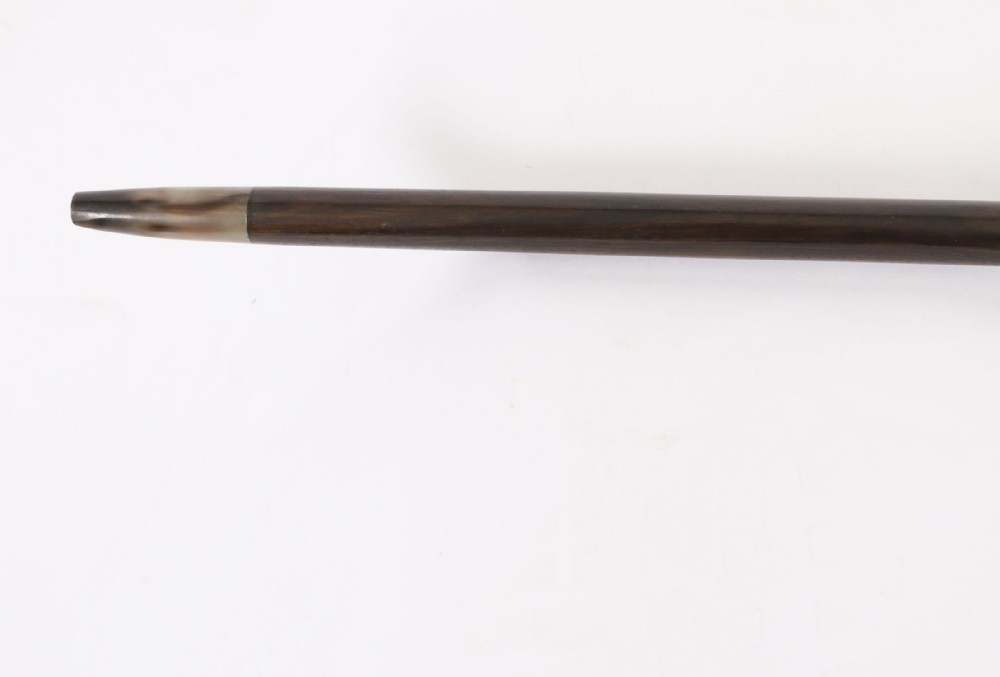
In excellent condition, please see photos for confirmation.
Dimensions in cm:
Height 90 cm x Width 14 cm x Depth 4 cm
Dimensions in inches:
Height 2 foot, 11 inches x Width 5 inches x Depth 2 inches
Size of cane that you need
Convert your height into inches. For example, if you are 5' 10” in your shoes, your height is 70 inches. Divide by two and then add ½ inch to determine your approximate cane size.In our example, if you are 70 inches tall (5' 10”), your approximate cane size would be 35” plus ½”= 35.5 inches.
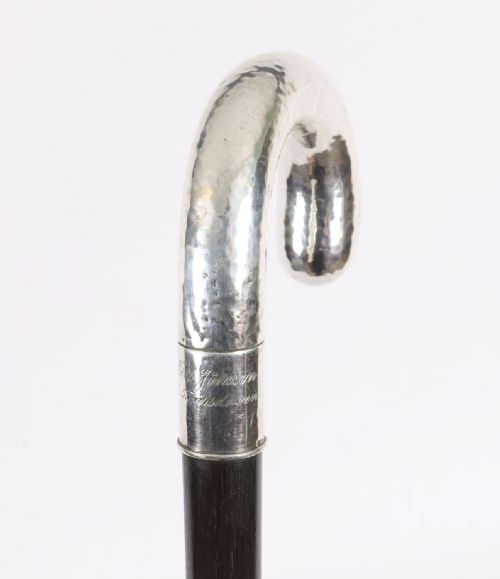
Gonçalo Alves is a hardwood (from the Portuguese name, Gonçalo Alves). It is sometimes referred to as tigerwood — a name that underscore the wood’s often dramatic, contrasting color scheme.
While the sapwood is very light in color, the heartwood is a sombre brown, with dark streaks that give it a unique look. The wood’s color deepens with exposure and age and even the plainer-looking wood has a natural luster.
Two species are usually listed as sources for gonçalo alves: Astronium fraxinifolium and Astronium graveolens, although other species in the genus may yield similar wood; the amount of striping that is present may vary.
In the high tropical forests of Central and South America, well-drained soils furnish nutrients for a variety of dense, durable hardwoods sought for maritime use, heavy construction, and furniture. The Spanish began harvesting in Latin American forests in the early 1500s to provide timber for boat building and repair. By the early 1900s, however, steel ships had replaced wooden ones, and the interest in tropical forests by both Europeans and Americans shifted to appearance-grade woods for furniture.
Although history fails to provide us with a shopping list of species from either harvest period, it's probable that the wood we know today as goncalo alves has always been sought. That's because goncalo alves, considered one of the most beautiful of tropical woods, has a tough reputation, too. Strong and durable, it's used for construction in its homeland and secondarily for fine furniture. Woodworkers elsewhere treasure the wood for decorative items and veneer accents.
Our reference: A4843
Regent Antiques has dated this piece to the 1860s.
We specialise in english and continental furniture, silver, porcelain and decorative items.
You can view the stock and full dealer information on the Regent Antiques Profile Page
Regent Antiques is a registered member of LAPADA CINOA
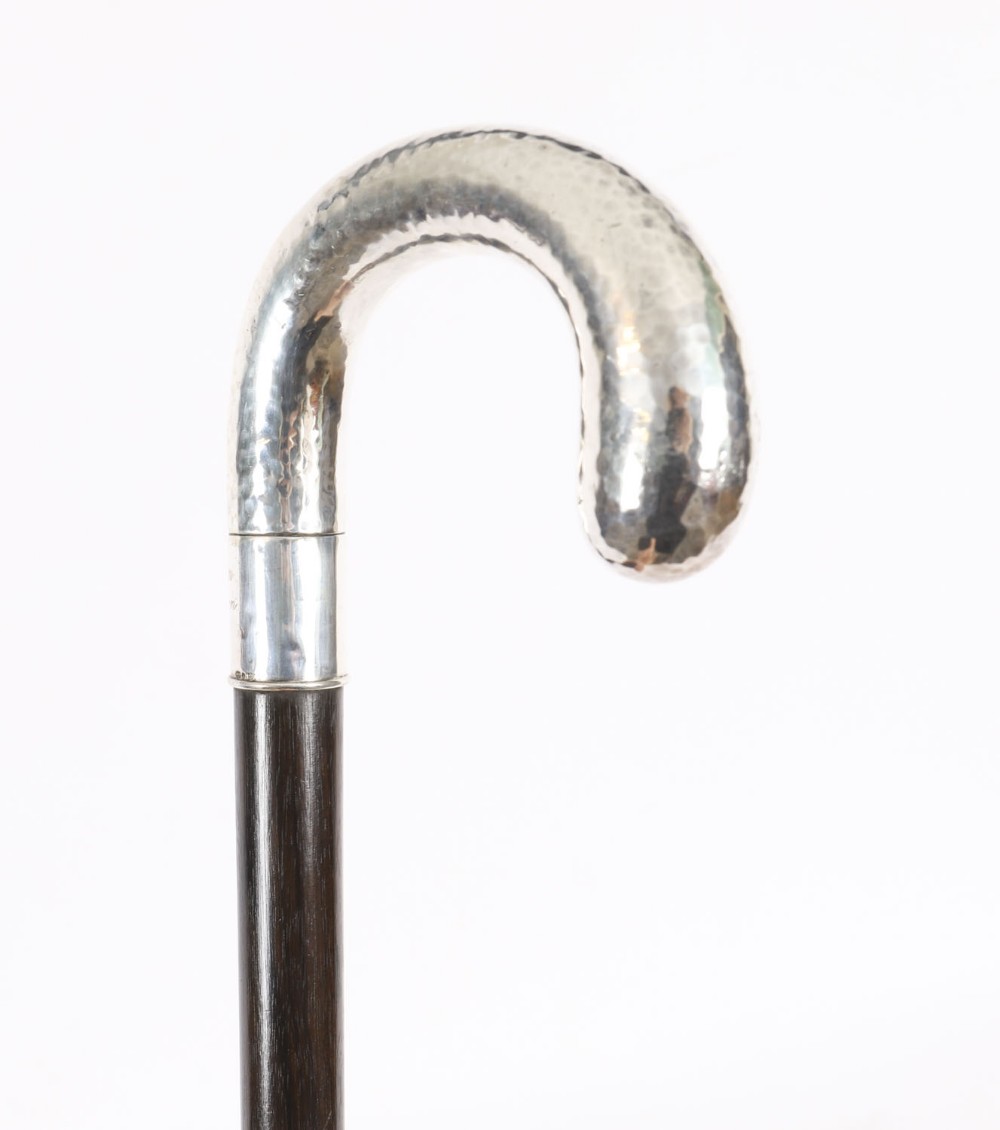
Antique Swedish Silver Walking Cane Stick 19th Century 90 Cm/ 35 Inch