
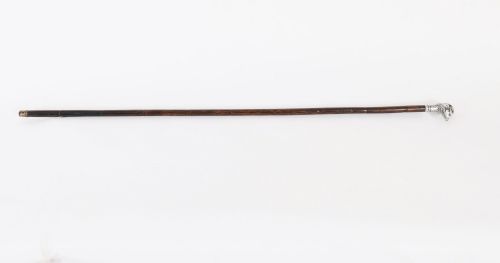
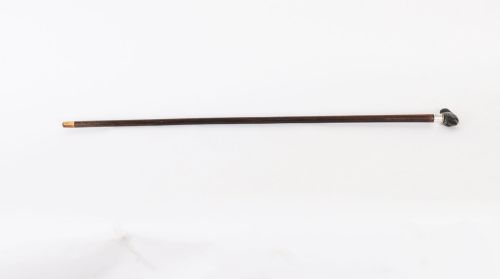
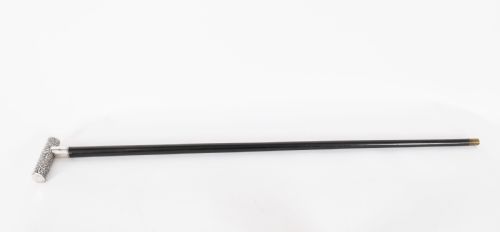
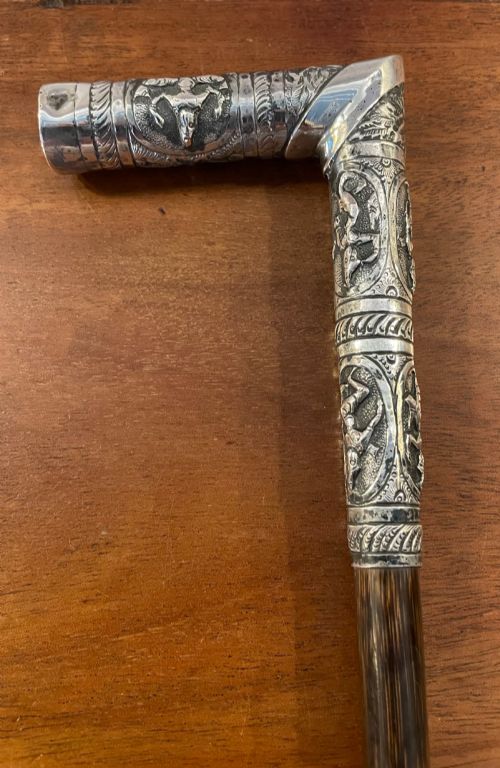
Silver Walking Cane
Discover a silver walking cane that bridges practical Victorian support with intricate metalwork and novelty handles.
Silver Walking Cane
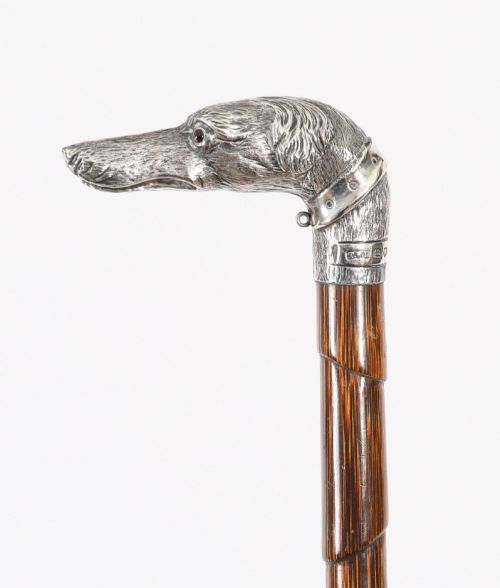
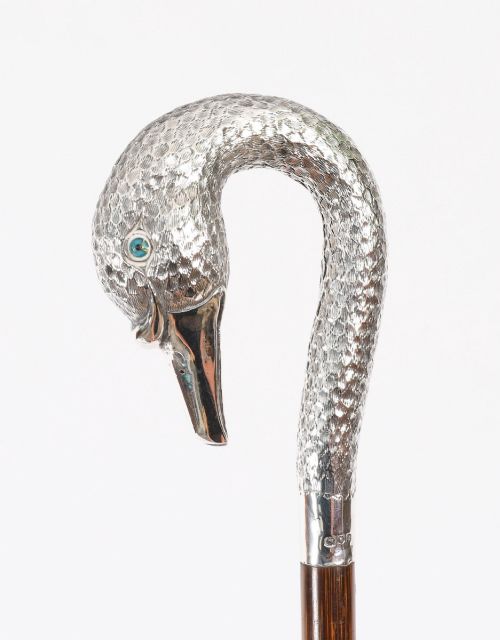
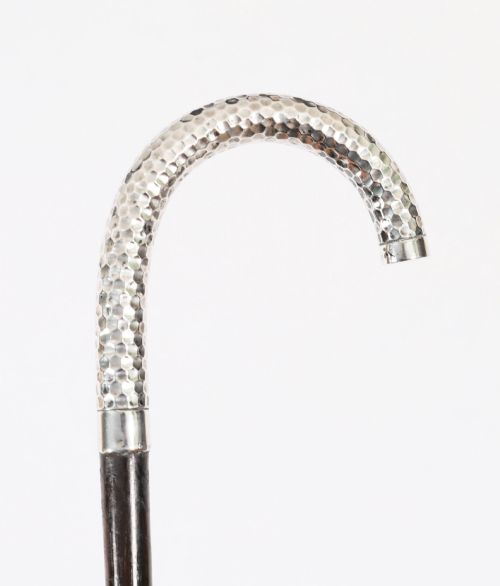
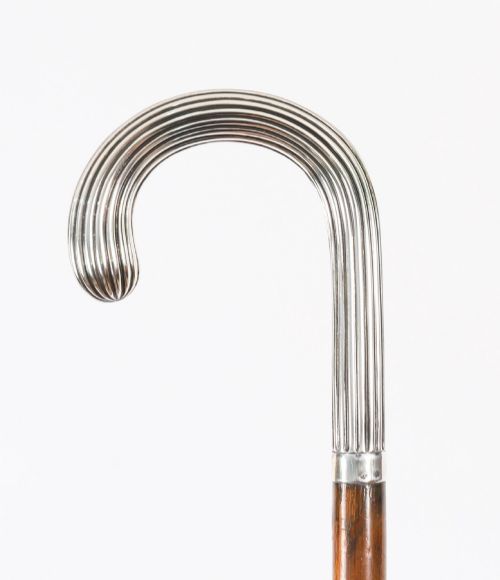
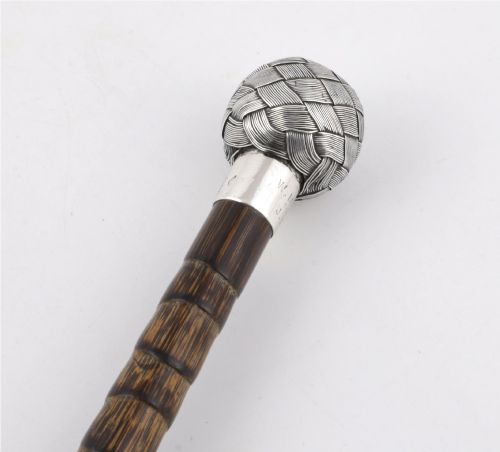
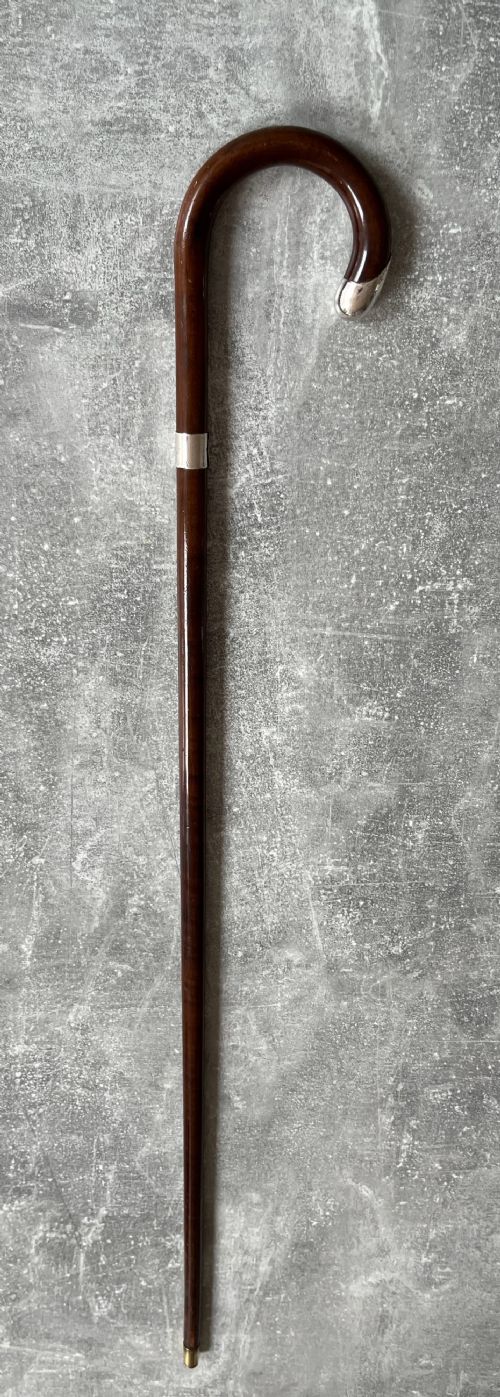
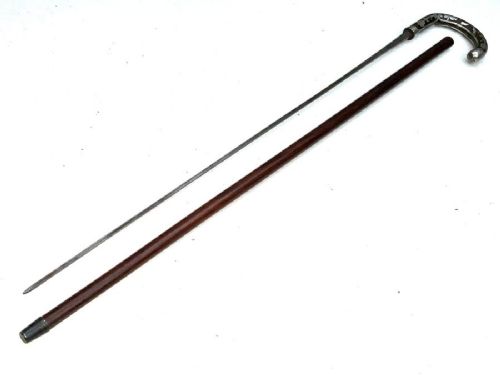
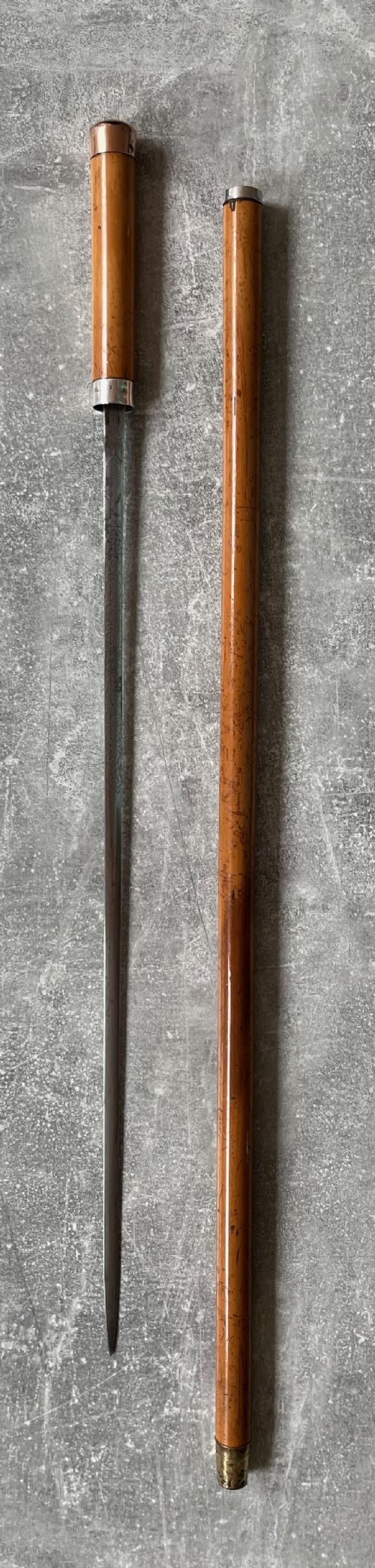
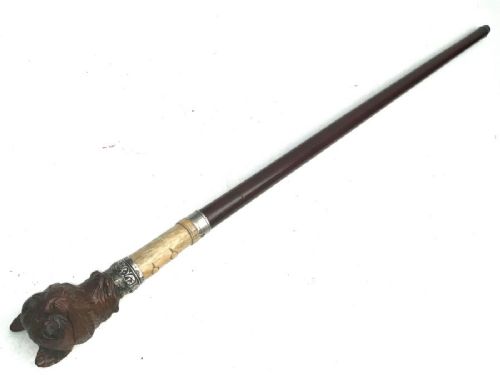
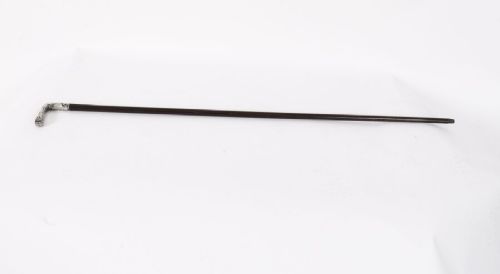
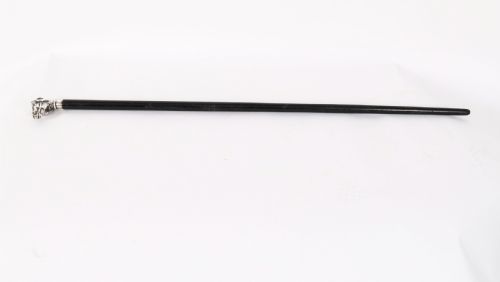
The pieces on this page include standard walking sticks, canes with curved crooks, and specialised sword sticks. Many examples feature detailed novelty handles shaped as animal heads, birds, or human figures alongside floral motifs.
Origins span British, French, Chinese Export, and continental workshops, ranging from simple silver-mounted shafts to fully articulated gadget canes with hidden compartments, snuff boxes, or blades.
How They Were Made
Handles and mounts were cast, chased, or embossed in silver, then securely fitted to shafts of hardwood, ebonised wood, bamboo, malacca, or snakewood. Silversmiths frequently incorporated hallmarks or maker's marks directly onto the metal collars and handles.
Shafts often utilised steel blades for sword sticks or incorporated internal mechanisms for watches, horse measures, and folding components. Traditional joinery and metal-fitting techniques ensured the wooden shafts supported daily weight while displaying decorative silver wire and mounts.
Silver Walking Cane Retail Price Guide 2026
Typical asking prices for silver walking cane among the pieces listed under this phrase on Sellingantiques today, from the lower quarter to the upper quarter. They describe what is for sale here now, not the wider market.
Listings feature woods such as snakewood, malacca, hazel, and ebonised wood paired with solid silver handles and mounts.
What Varies in Quality
Quality rests in the sculptural execution of the silver handle and the selection of the shaft material. Finely chased animal heads and crisp hallmarks denote higher workshop skill than plain stamped caps.
The integrity of internal mechanisms, such as concealed blades, watch compartments, or snuff boxes, distinguishes standard walking aids from complex gadget canes. Balanced weight and choice woods like snakewood or patterned malacca elevate individual examples.
Jonathan Howell·Kutz Gottlieb·Kendall And Sons·Wang Hing And Company
The Silver Walking Cane Glossary
- Hallmark
- An official stamp applied to silver items indicating purity, the maker, and the assay office. These marks help verify the exact year of production.
- Malacca
- A sturdy, polished rattan cane featuring distinctive brown markings and nodes, prized for its strength and flexibility. Makers frequently paired it with silver collars.
- Gadget Cane
- A walking stick housing a concealed tool, weapon, or instrument such as a sword, watch, or snuff box. These pieces were popular among gentlemen for utility and amusement.
- Swagger Stick
- A short, light cane carried by military officers rather than used for walking support. They often bear regimental silver mounts or badges.
- Crook
- A curved handle shape resembling a shepherd's staff, allowing the cane to be hooked over a forearm. This form appears across various woods and silver mounts.
Silver Walking Cane: Frequently Asked Questions
How do I date a silver walking cane?
Dating relies heavily on legible silver hallmarks stamped on the collar or handle, which indicate the assay office and year of production. Stylistic details like Art Nouveau curves or Victorian animal carvings also provide a clear chronological window.
When hallmarks are absent, examination of the wood type, construction methods, and historical context helps narrow down the period of manufacture.
Are these canes meant for daily walking support?
While historic walking sticks and canes were originally built for support or fashion, antique examples are now primarily collected as historical works of art. The delicate silver mounts, antique wood shafts, and internal mechanisms require careful handling.
Displaying them on a stand preserves their structural integrity and protects the original metalwork from modern wear and tear.
How do I care for antique silver and wood?
Preserving the cane involves keeping the wood nourished with appropriate wax and dusting the silver gently without harsh abrasive polishes. Avoiding excessive moisture and extreme temperature swings prevents the wood from warping and protects the metal mounts.
Regular, light maintenance keeps the historic finish stable and maintains the contrast between the polished silver and the natural grain of the shaft.