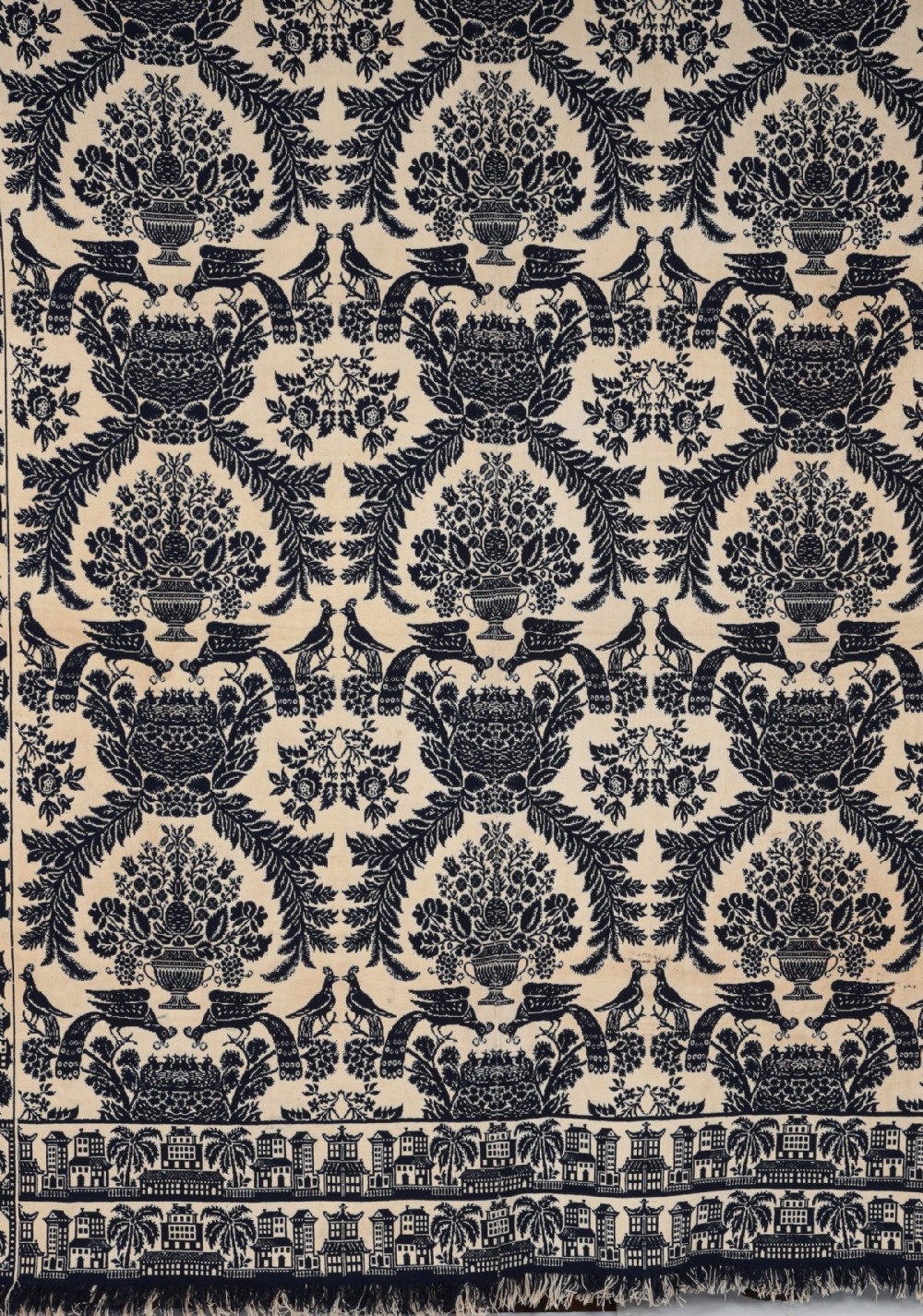
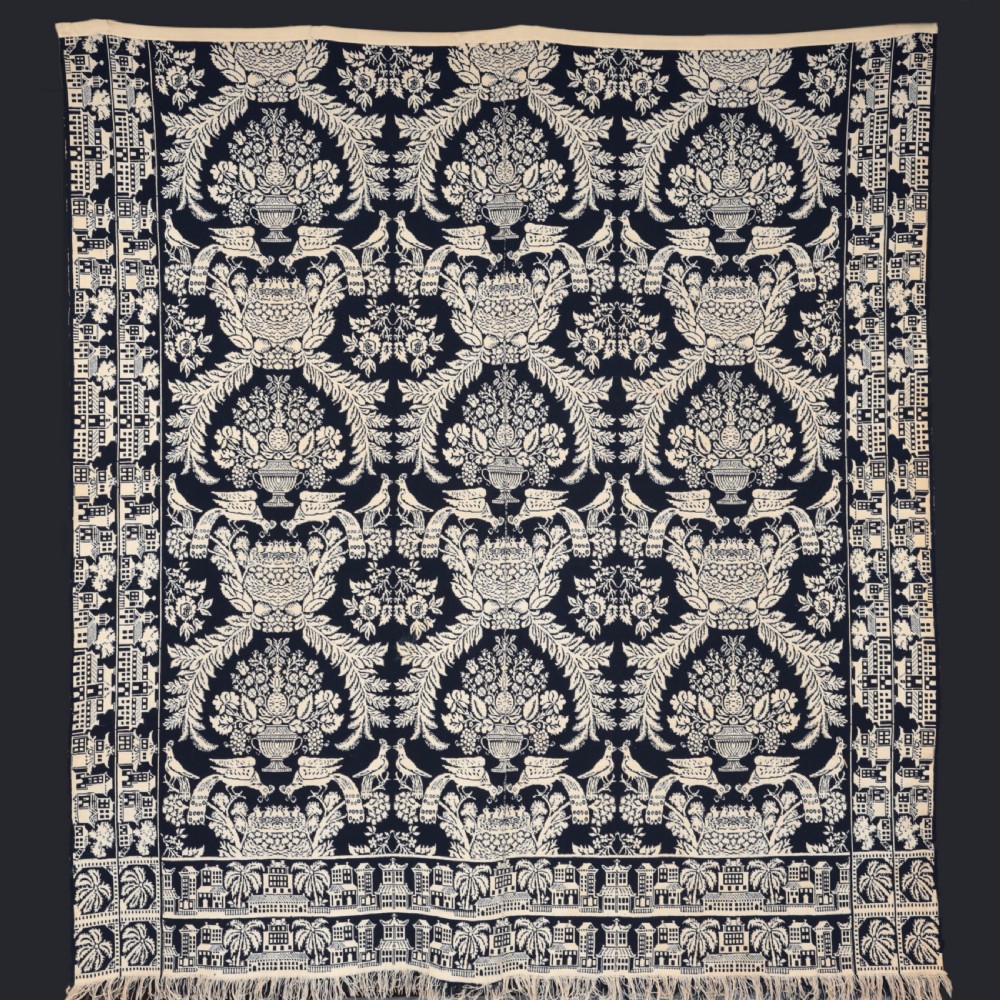
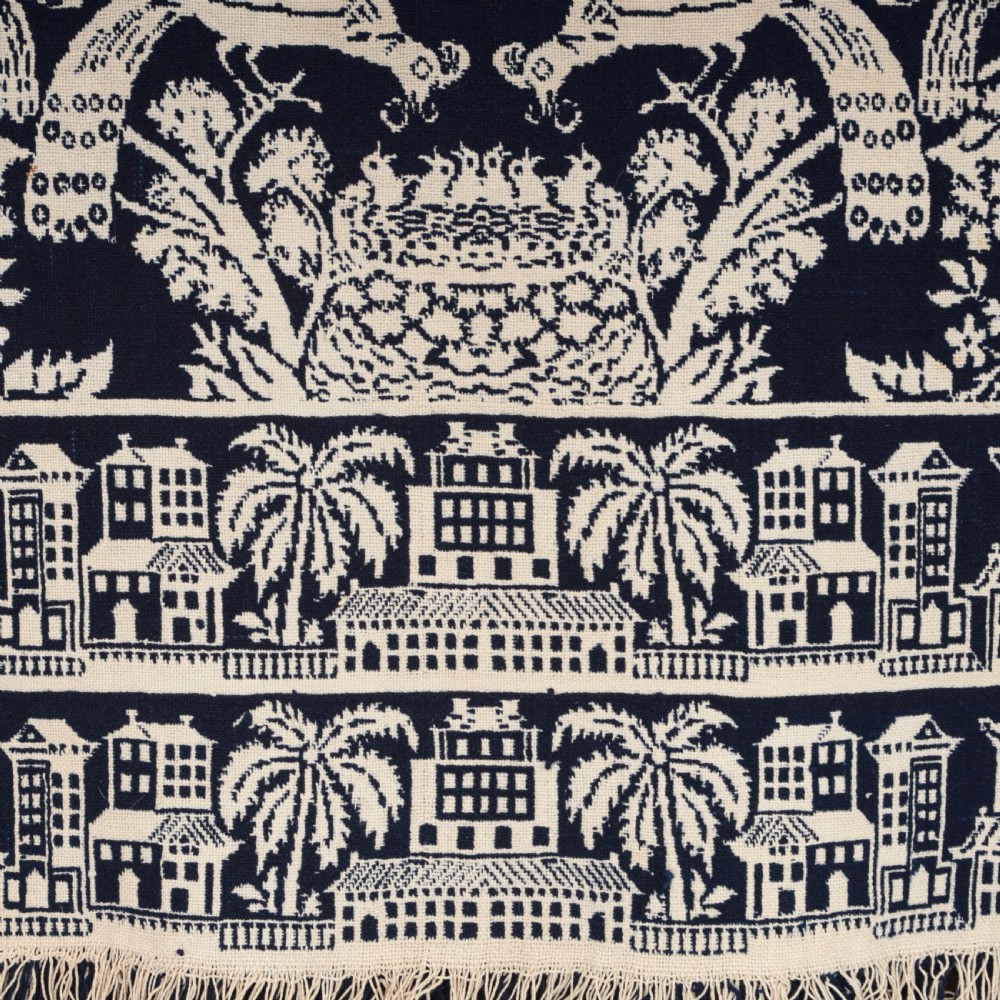
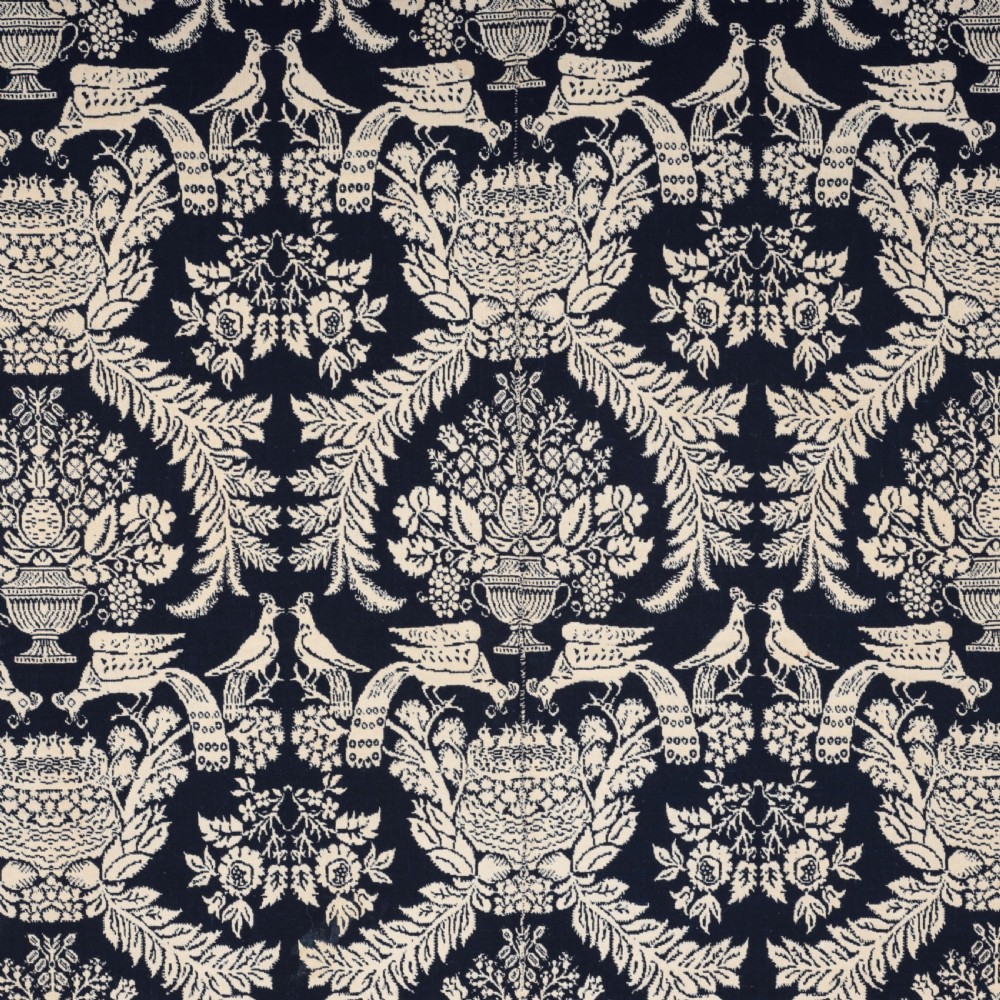
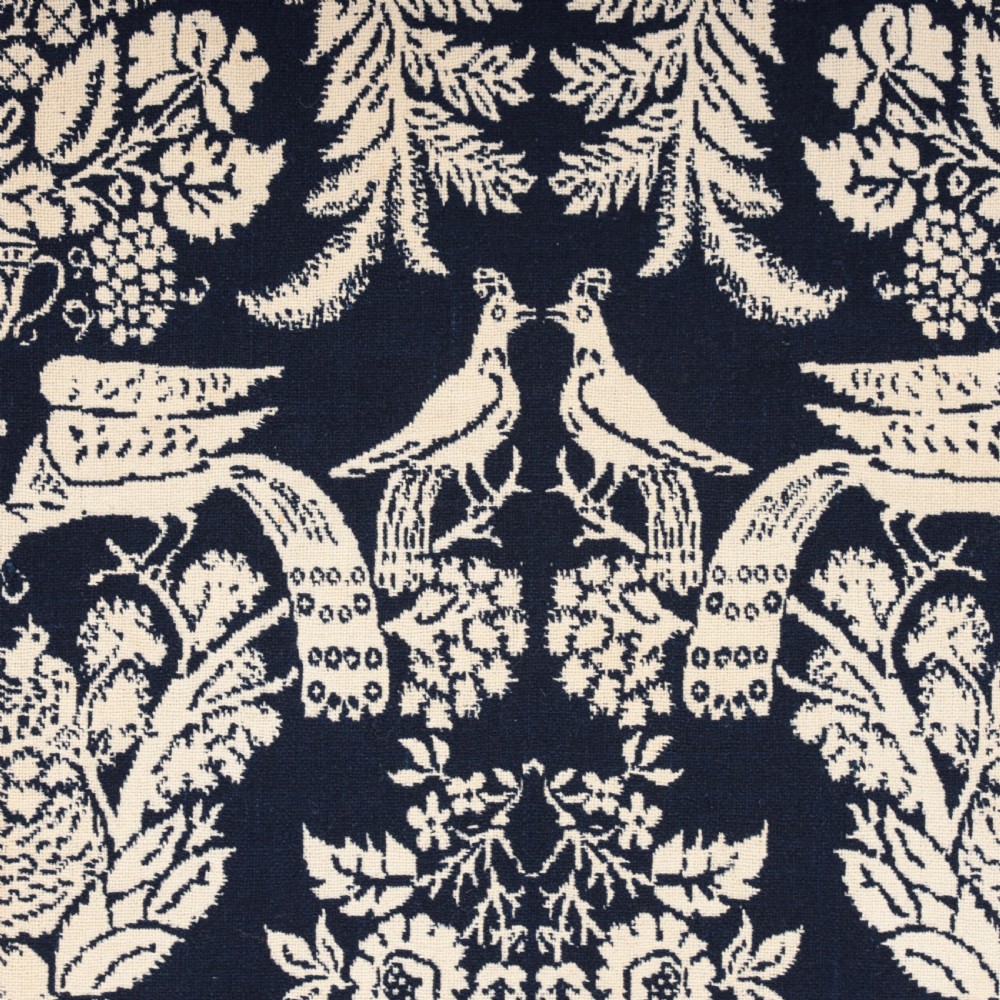
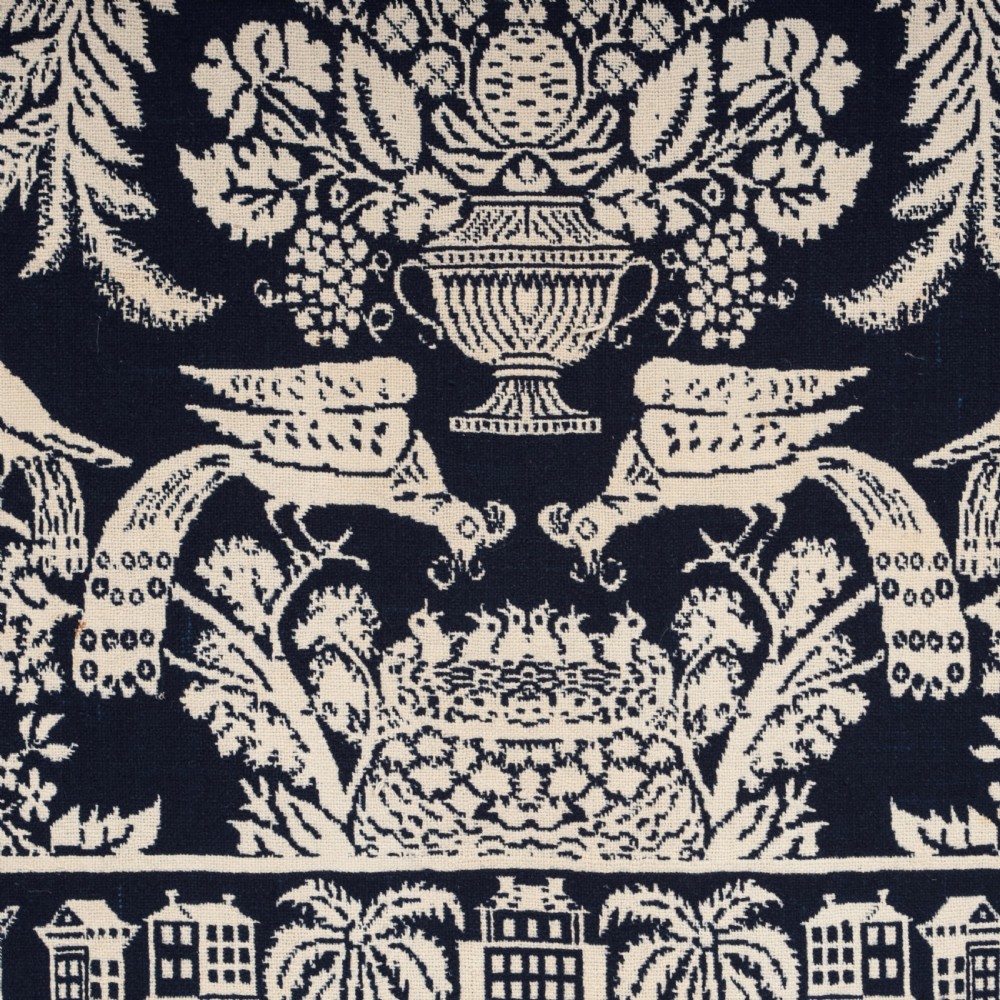
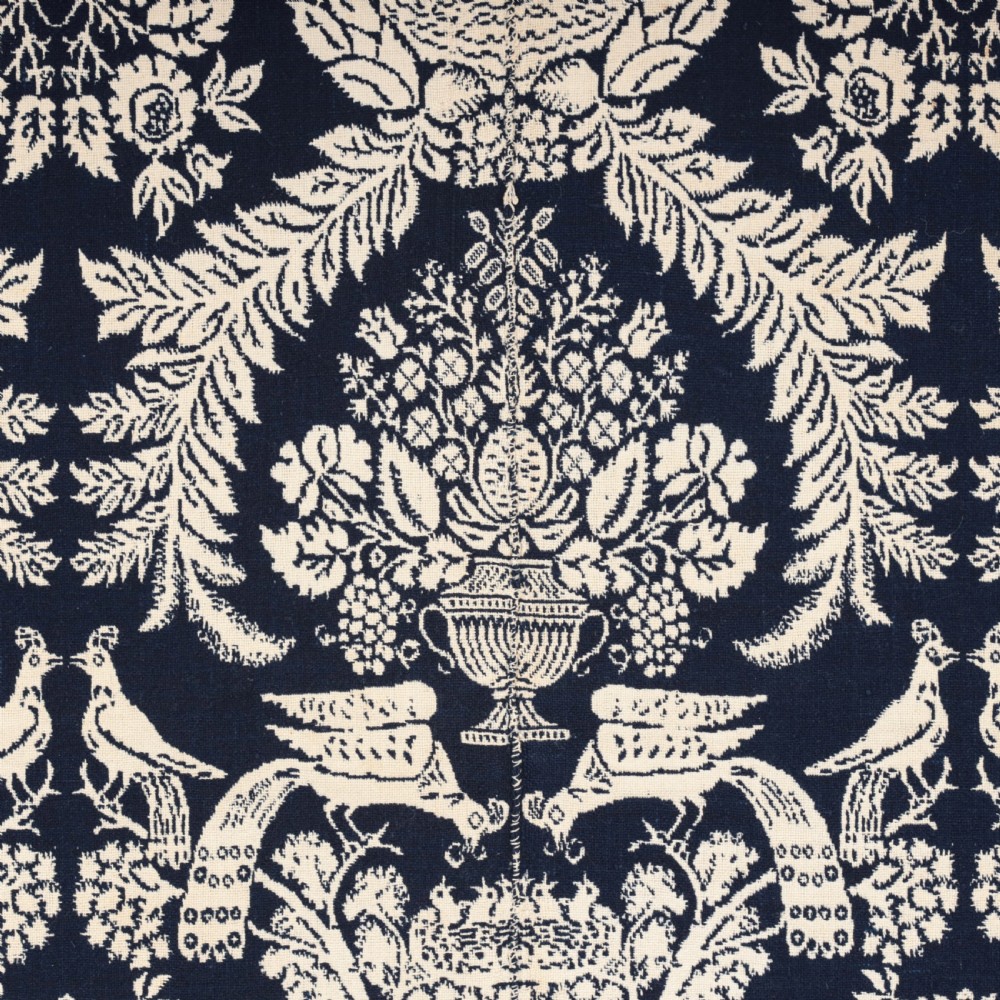
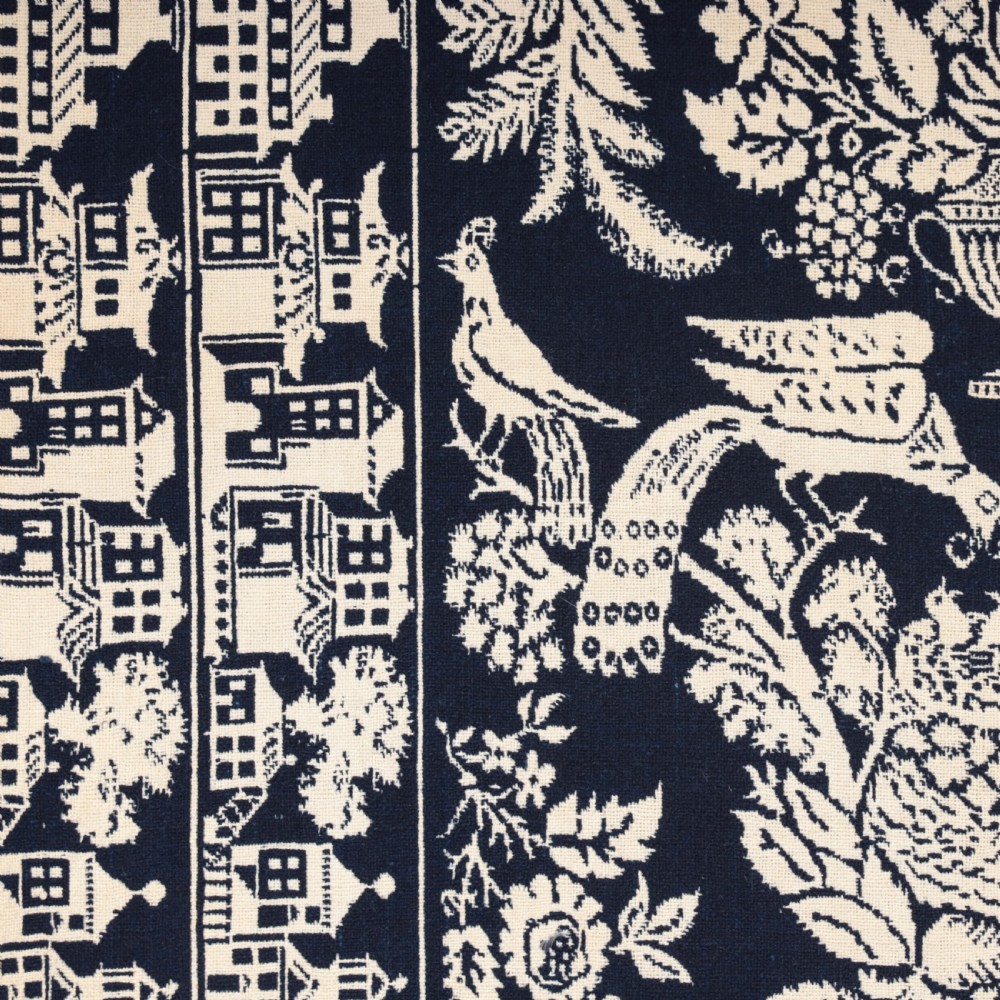
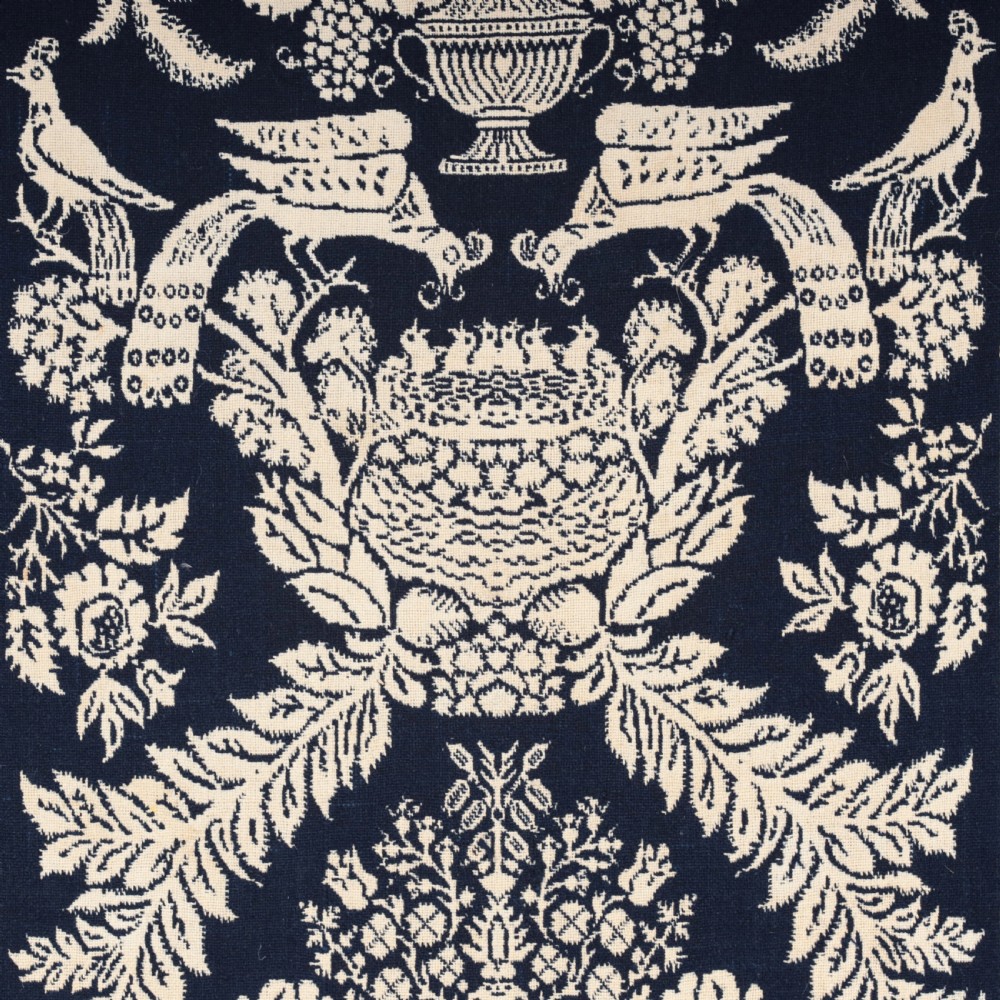
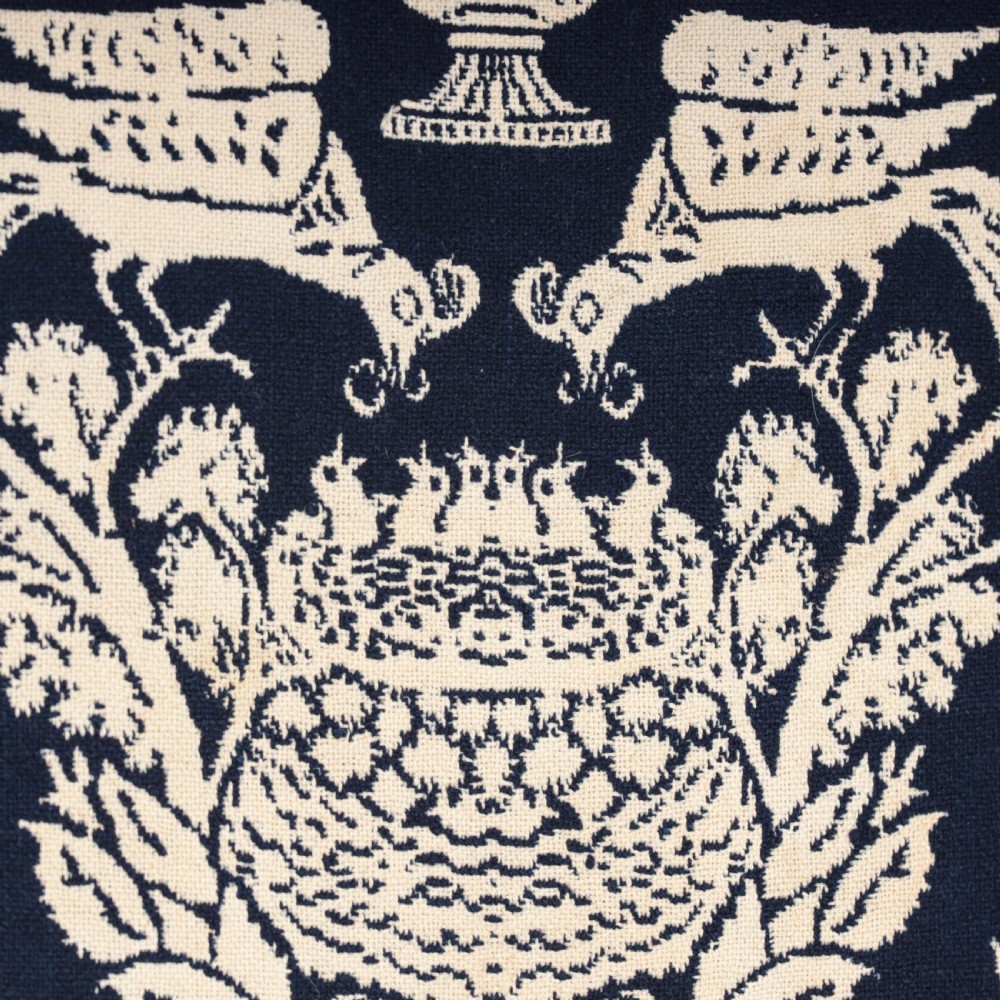
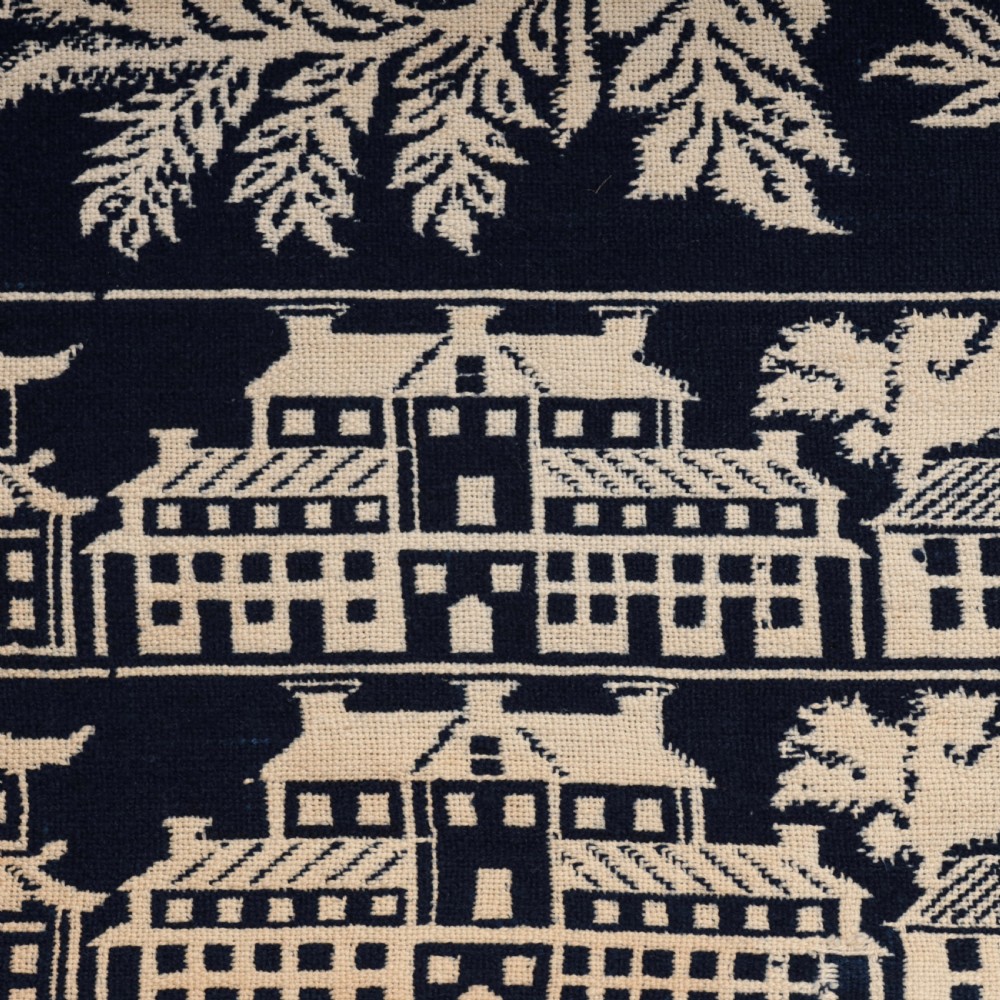
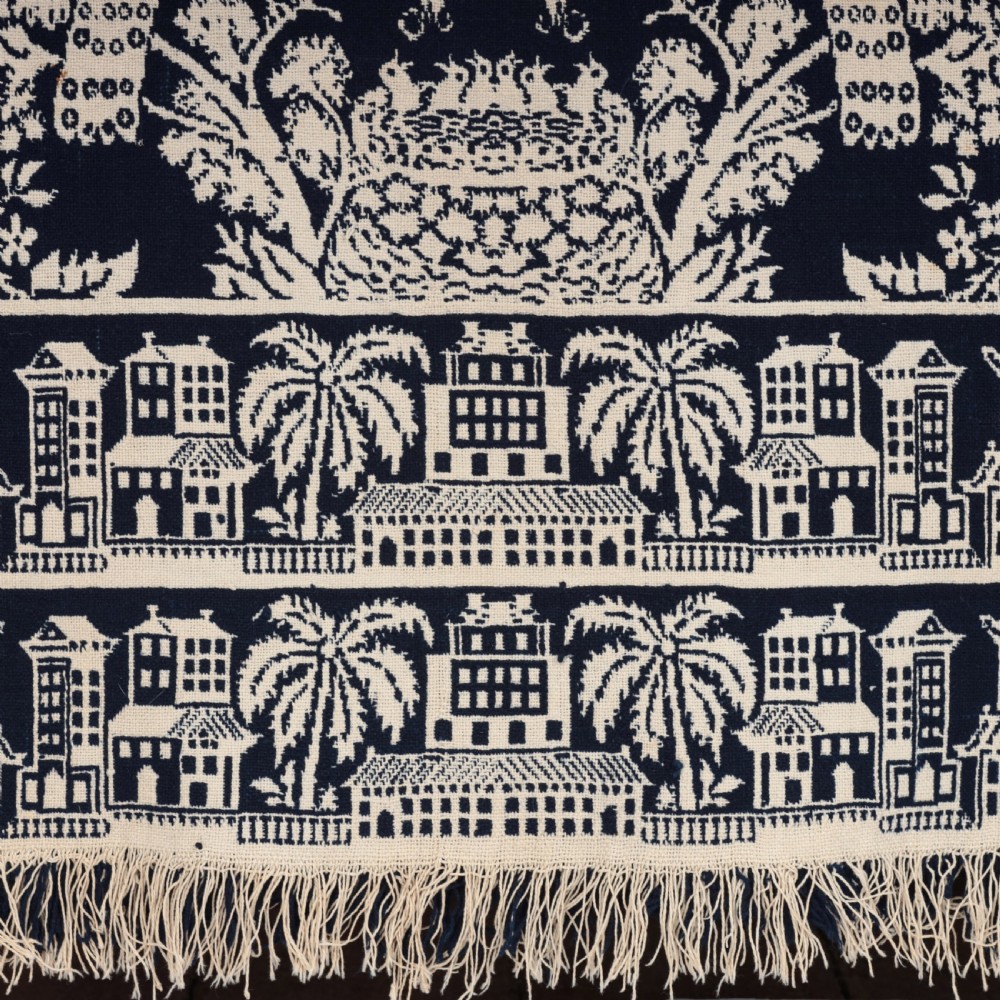
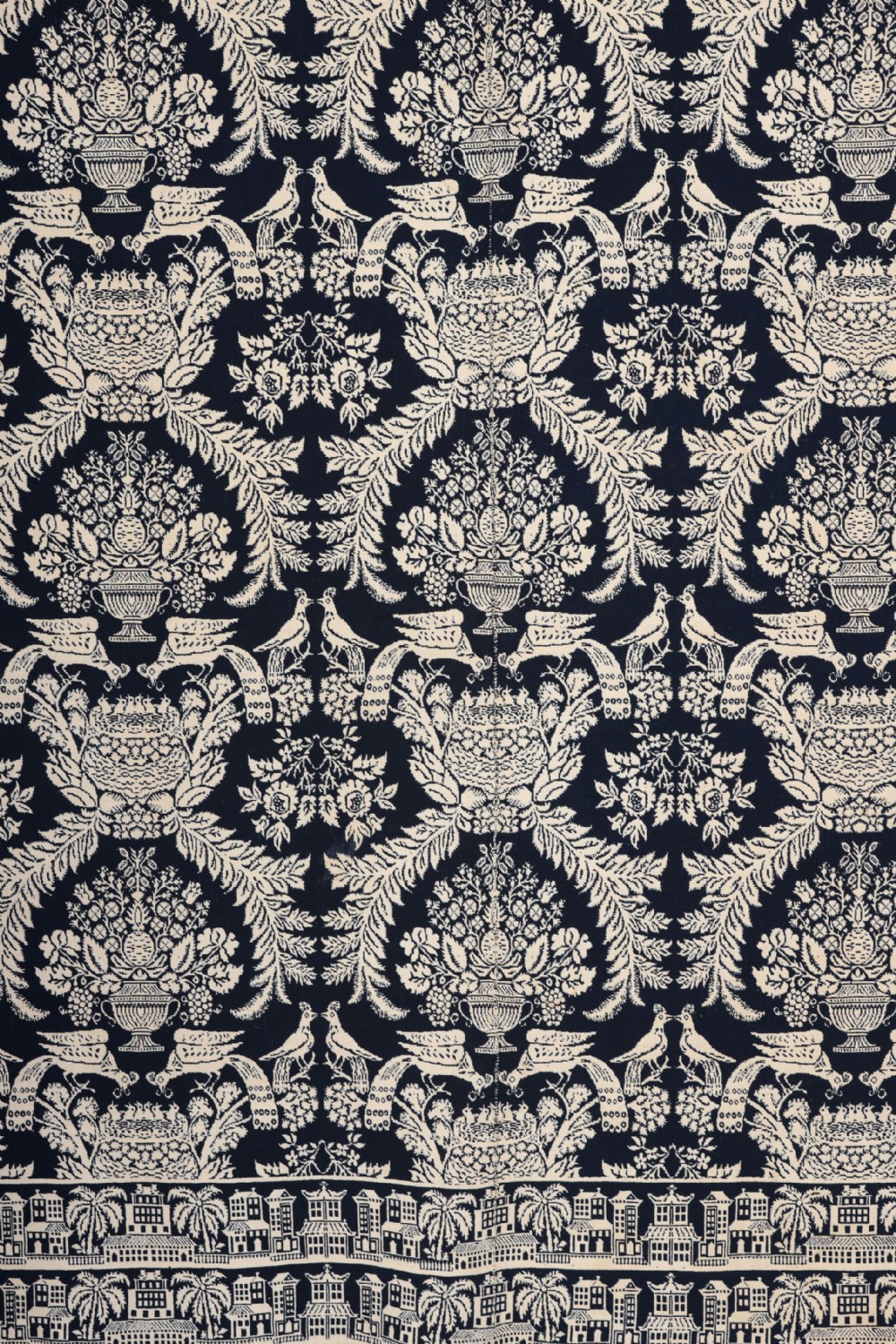
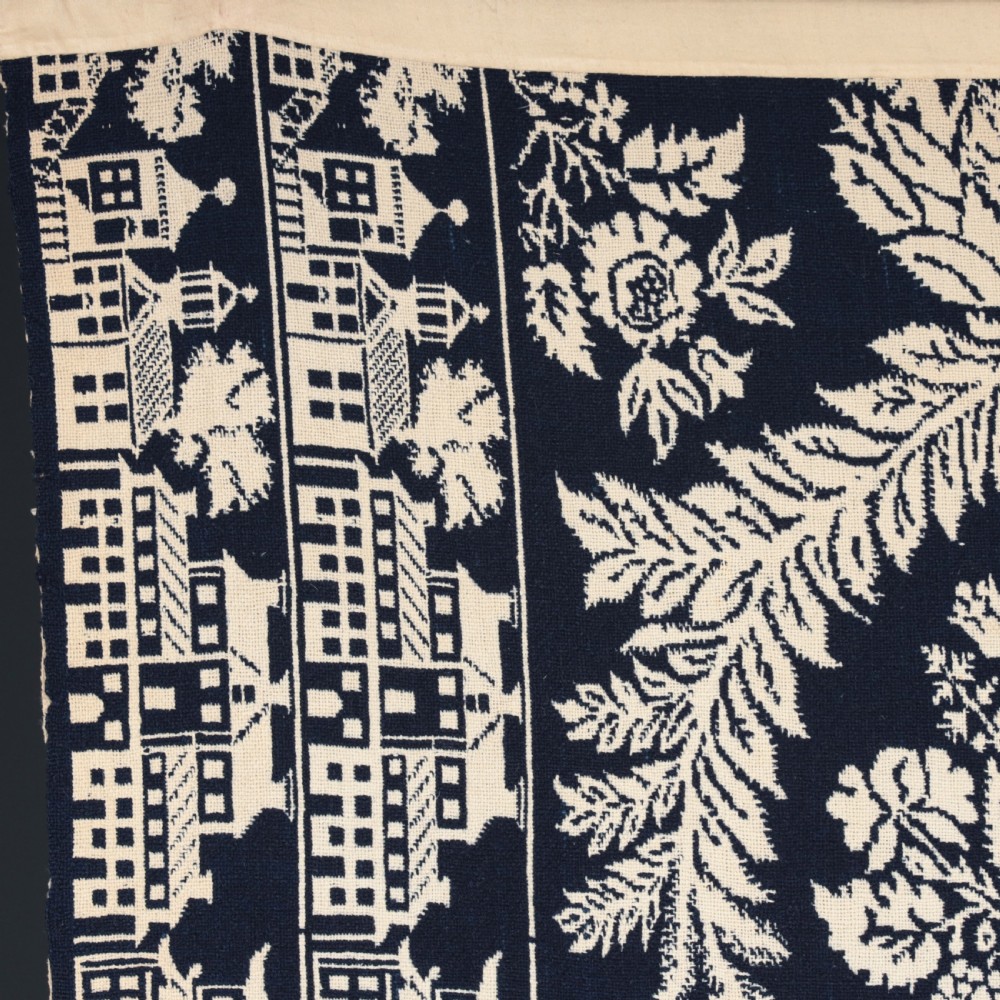
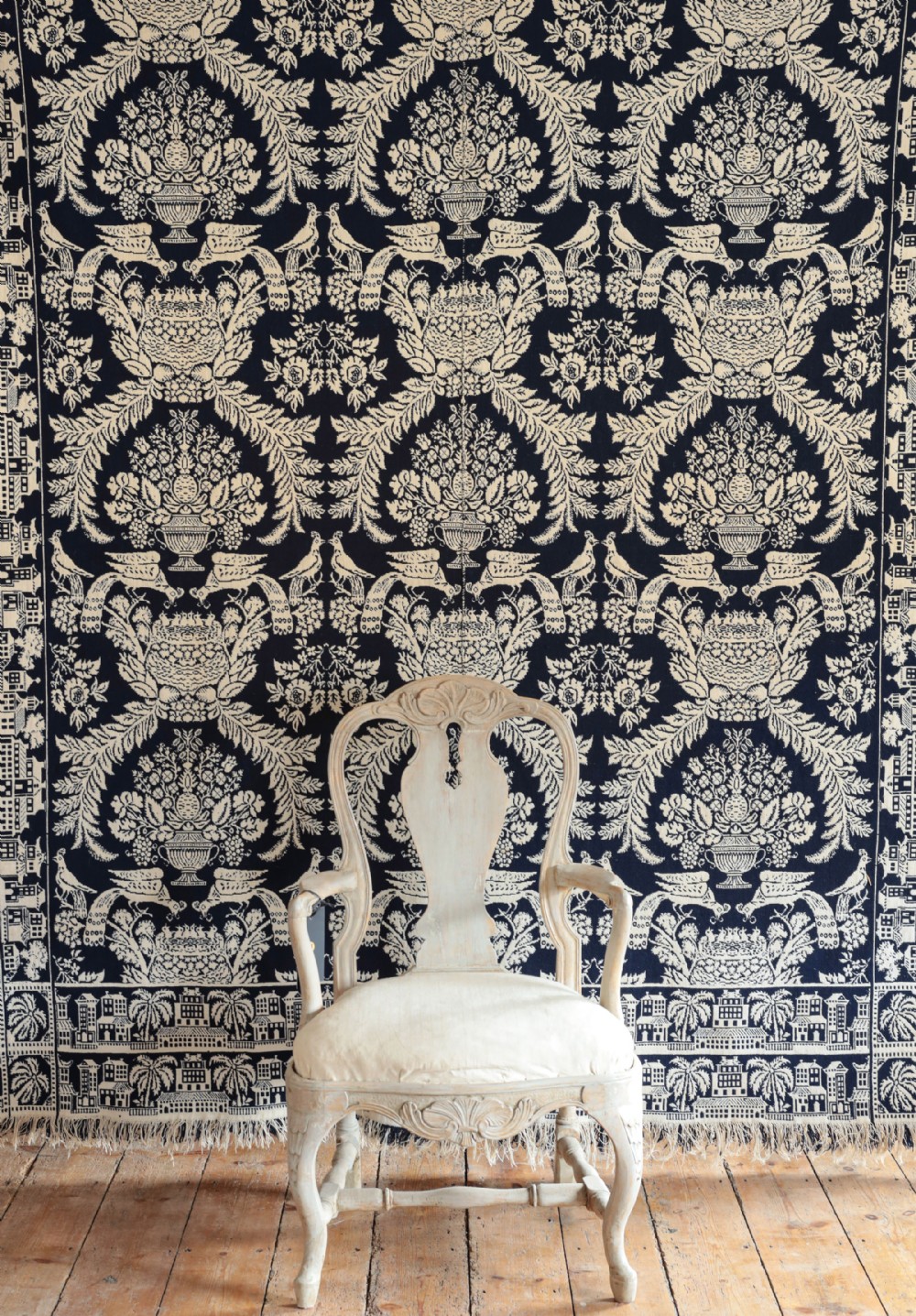
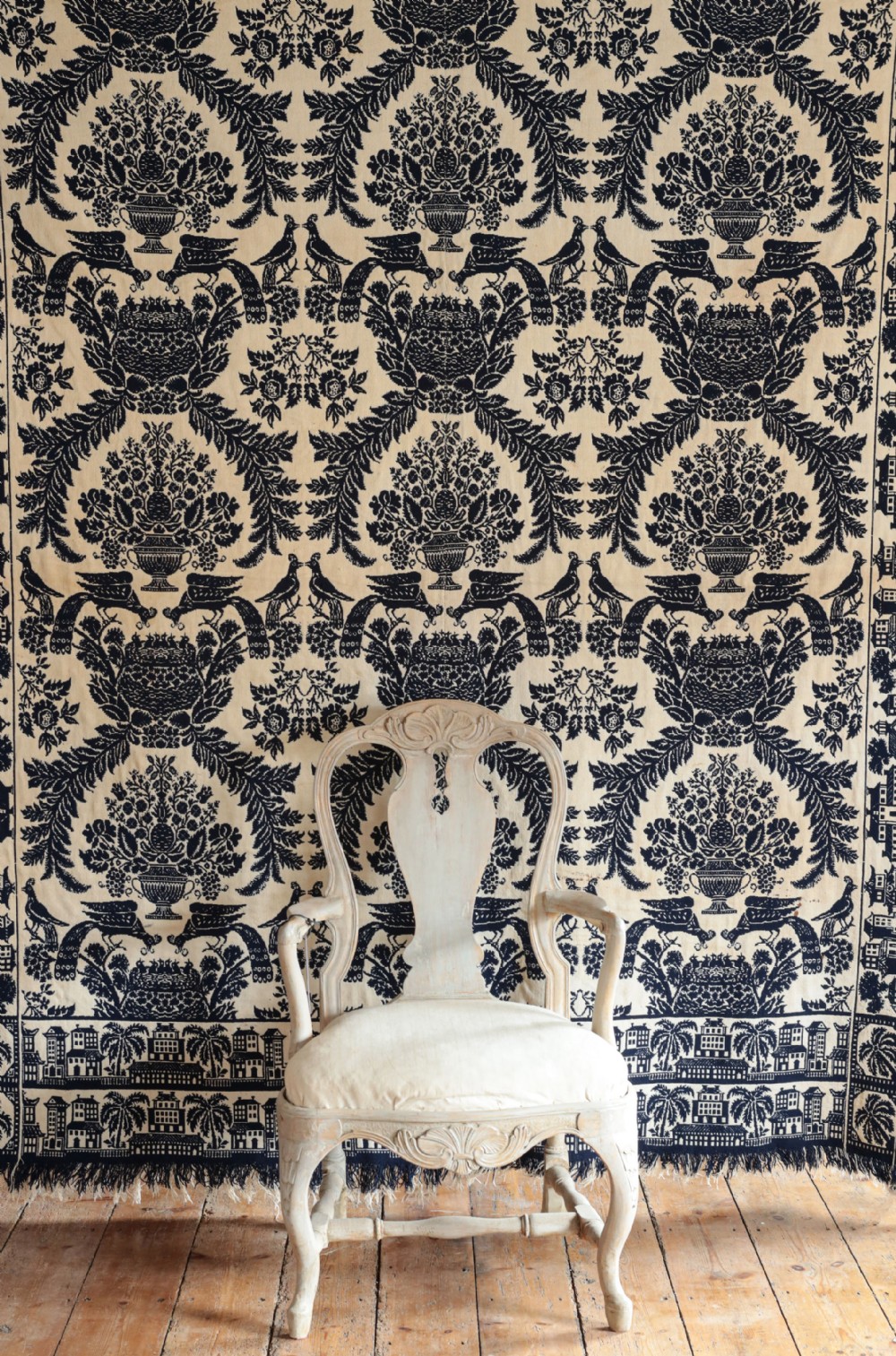
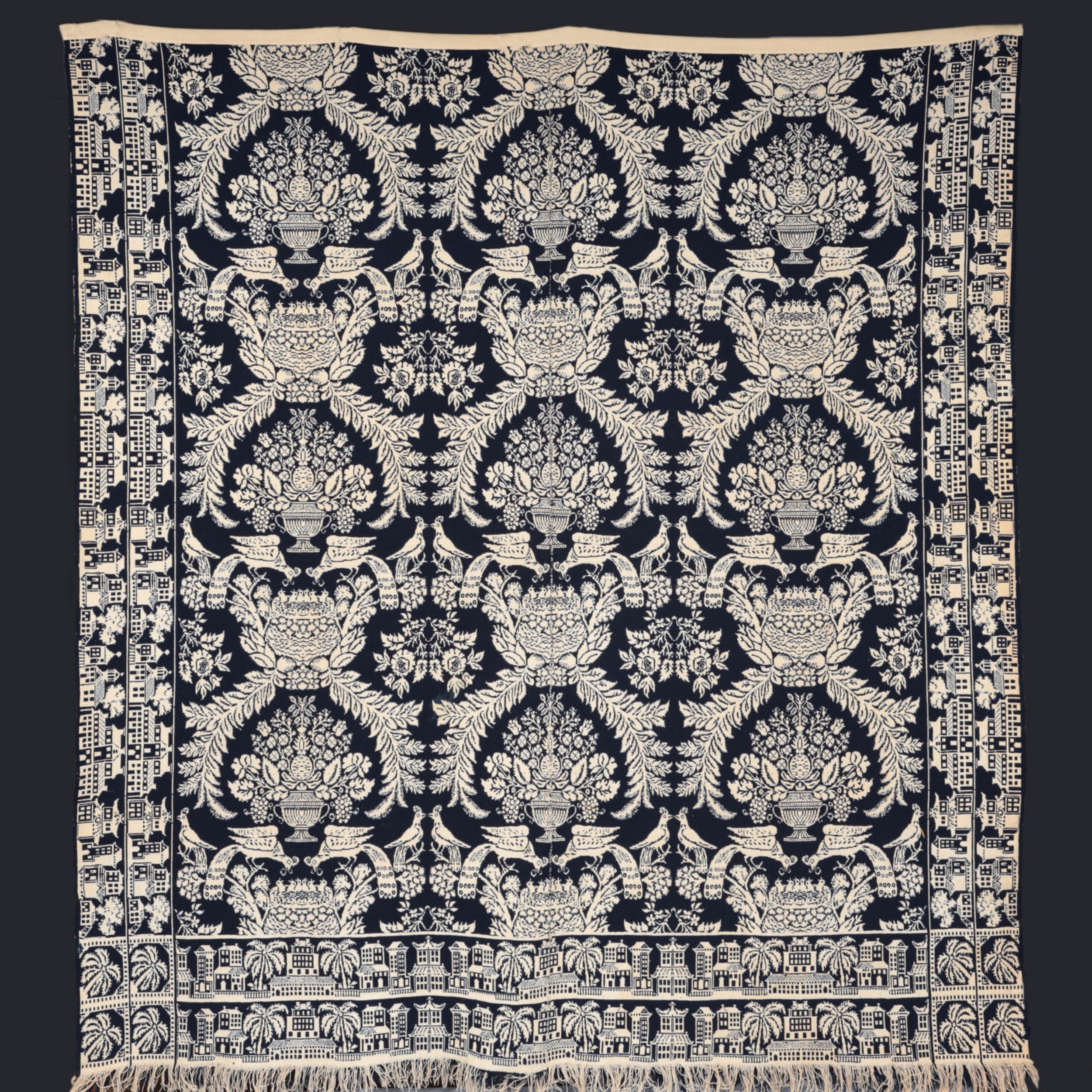
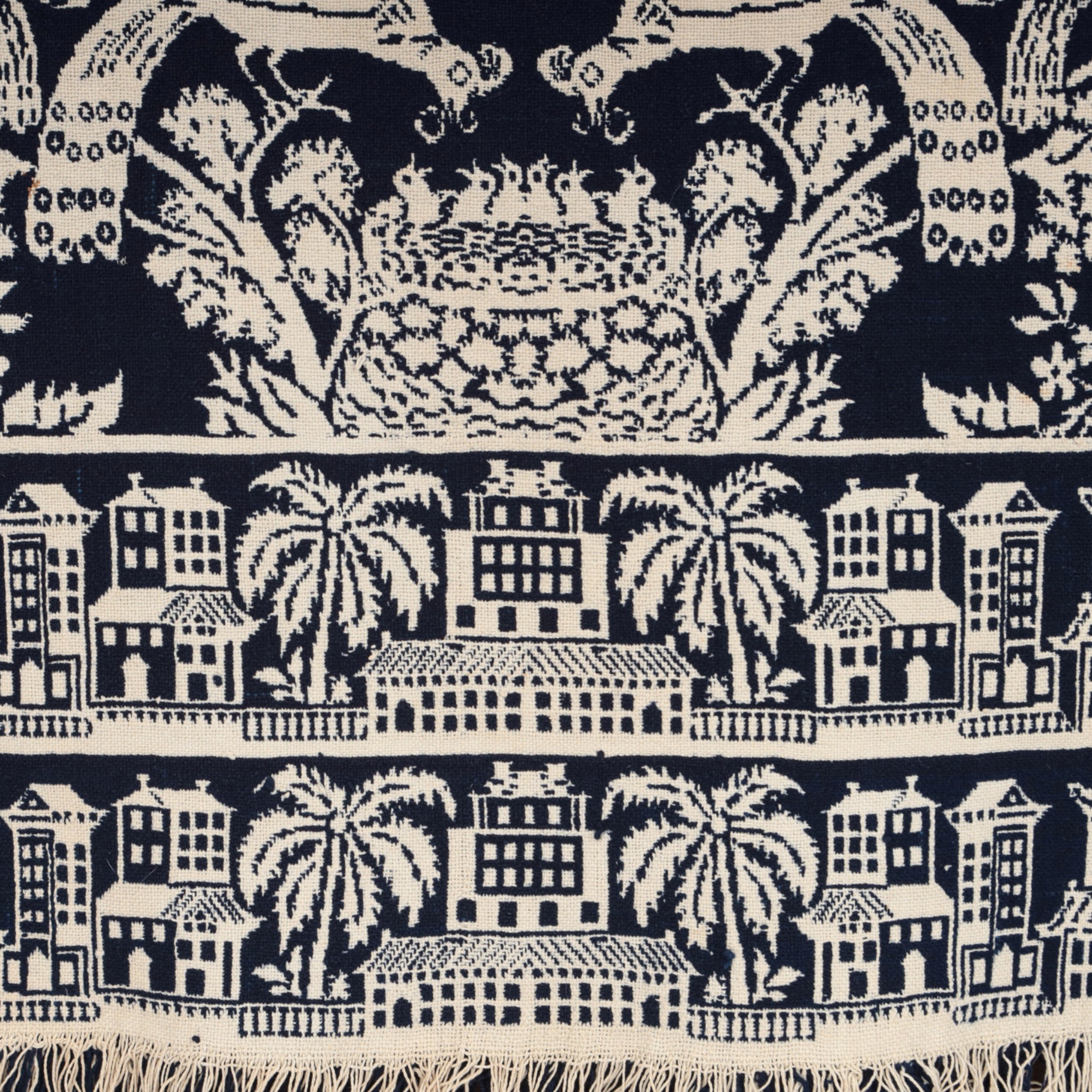
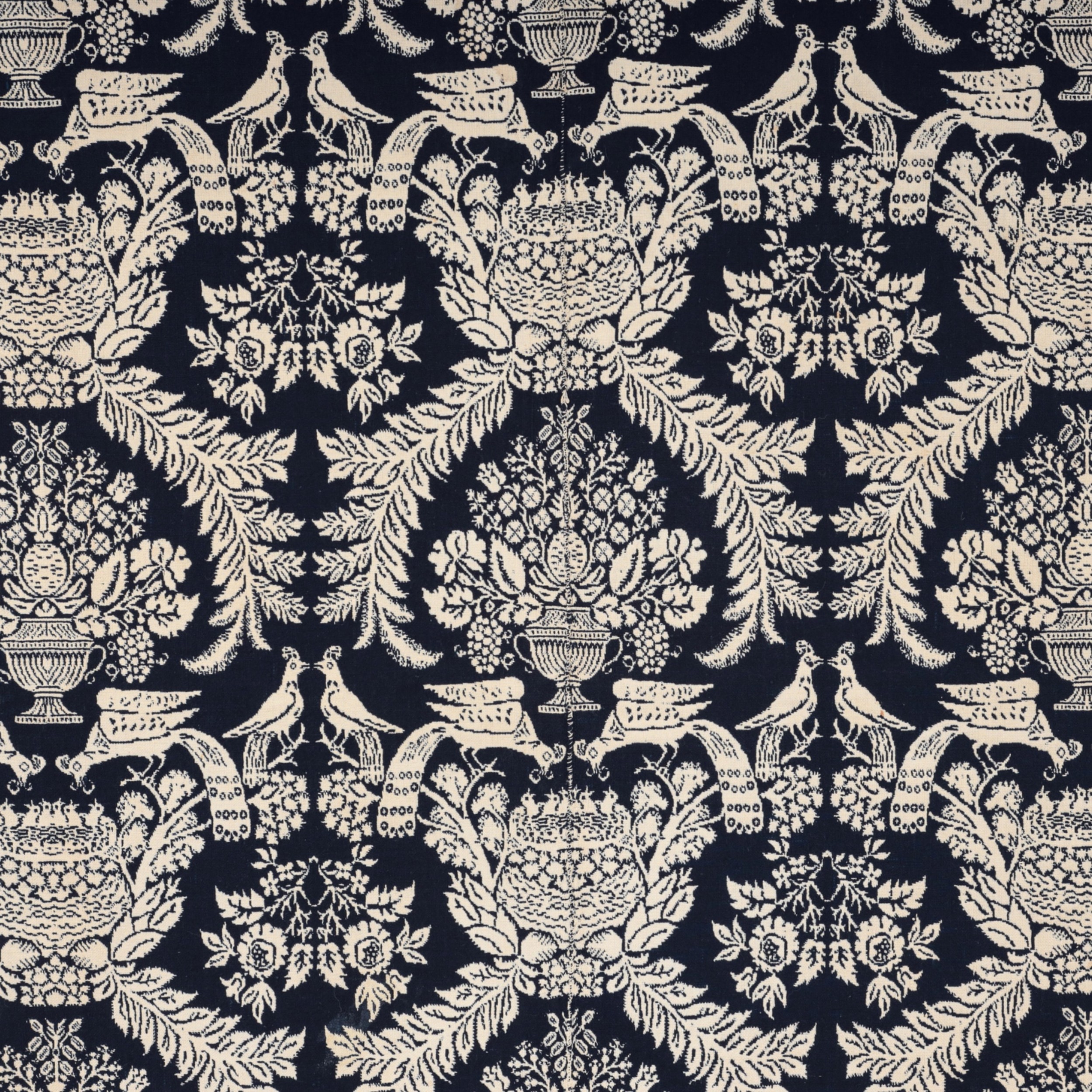
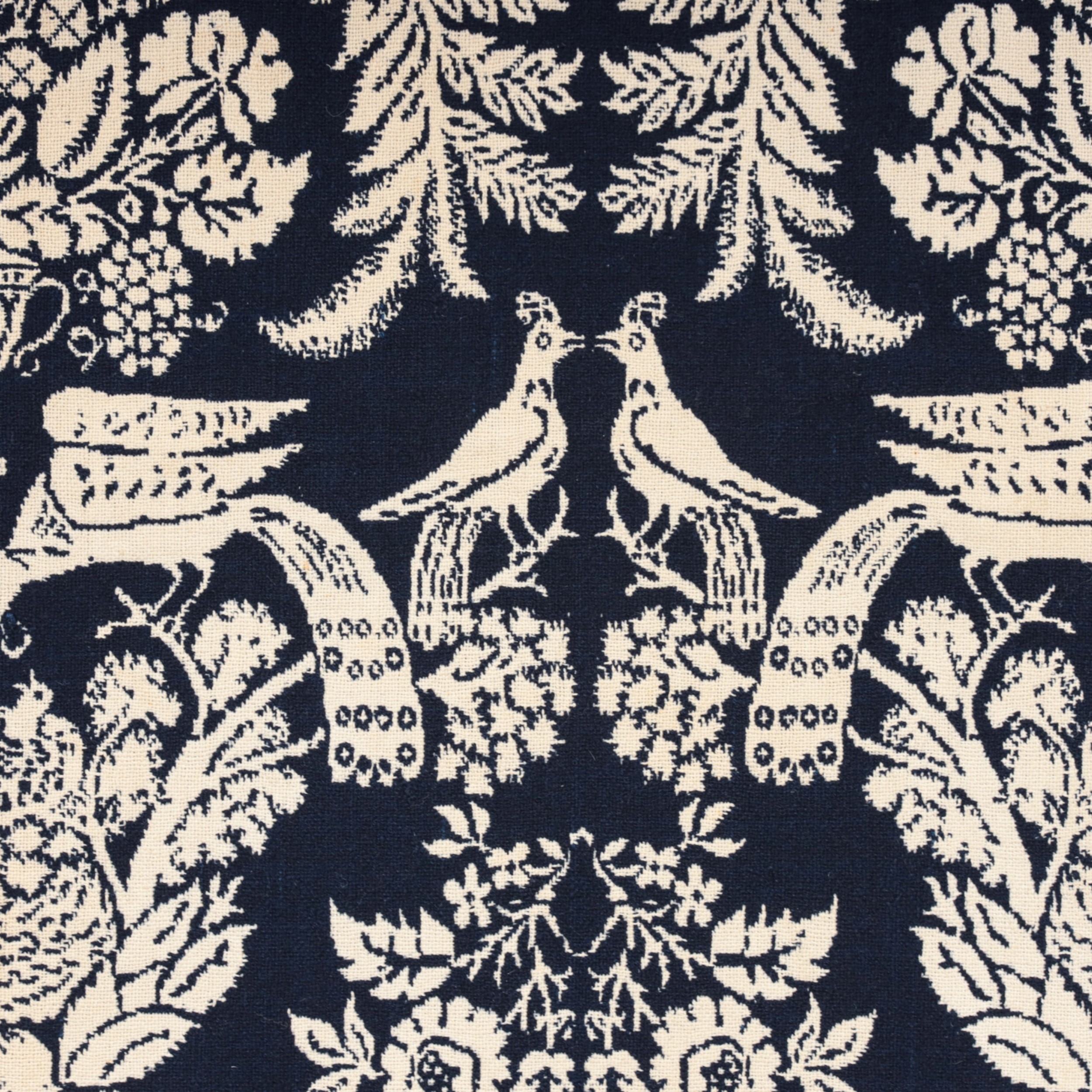
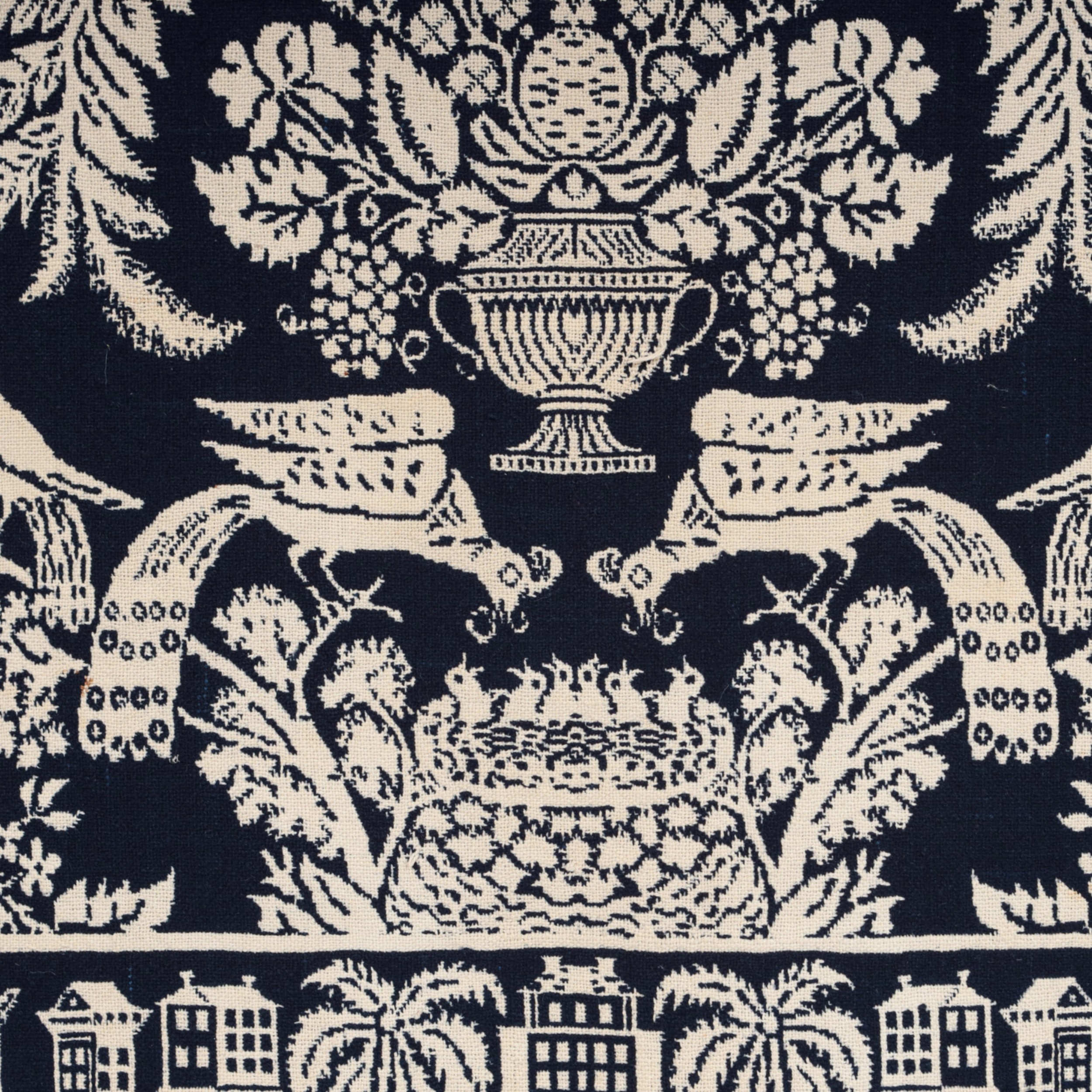
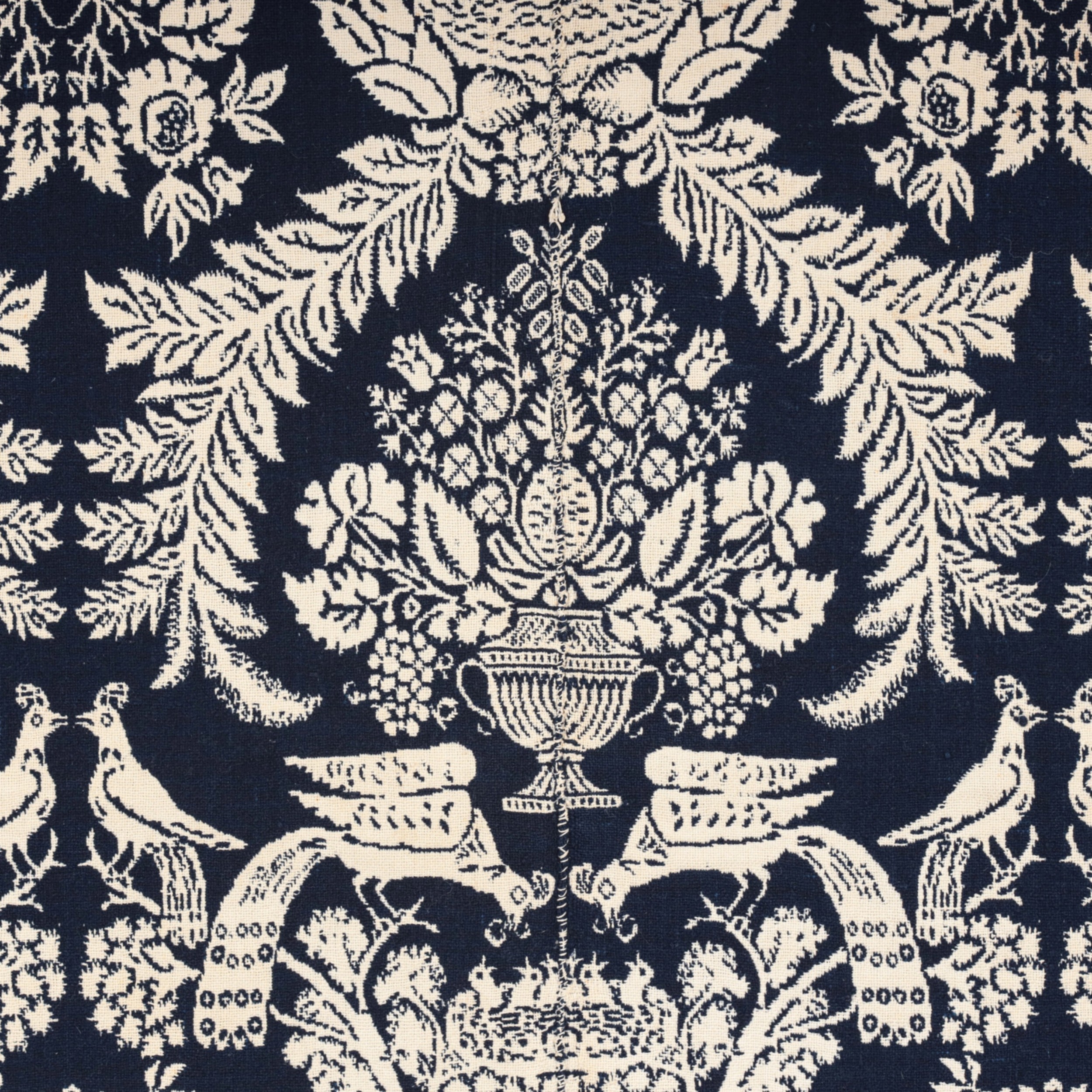
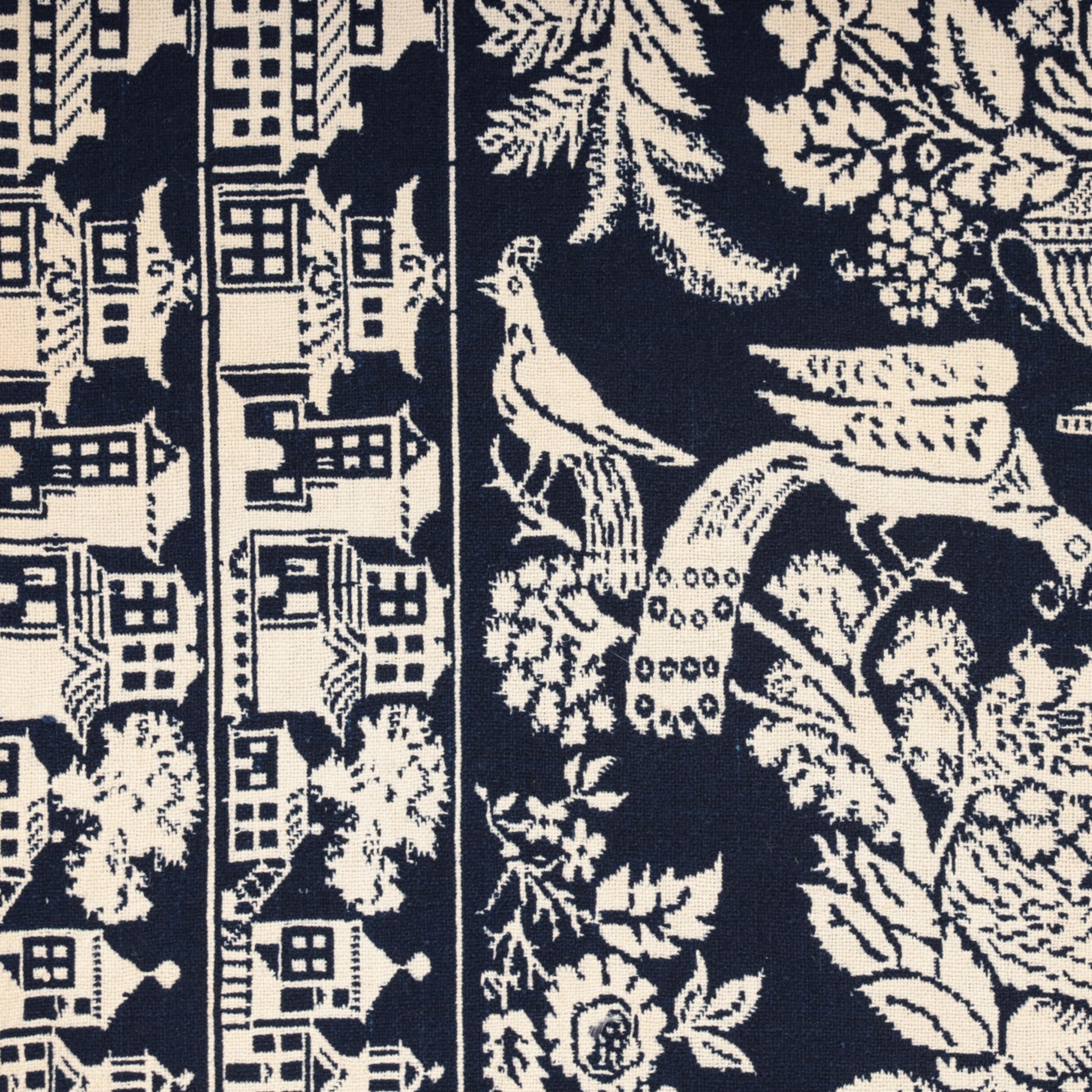
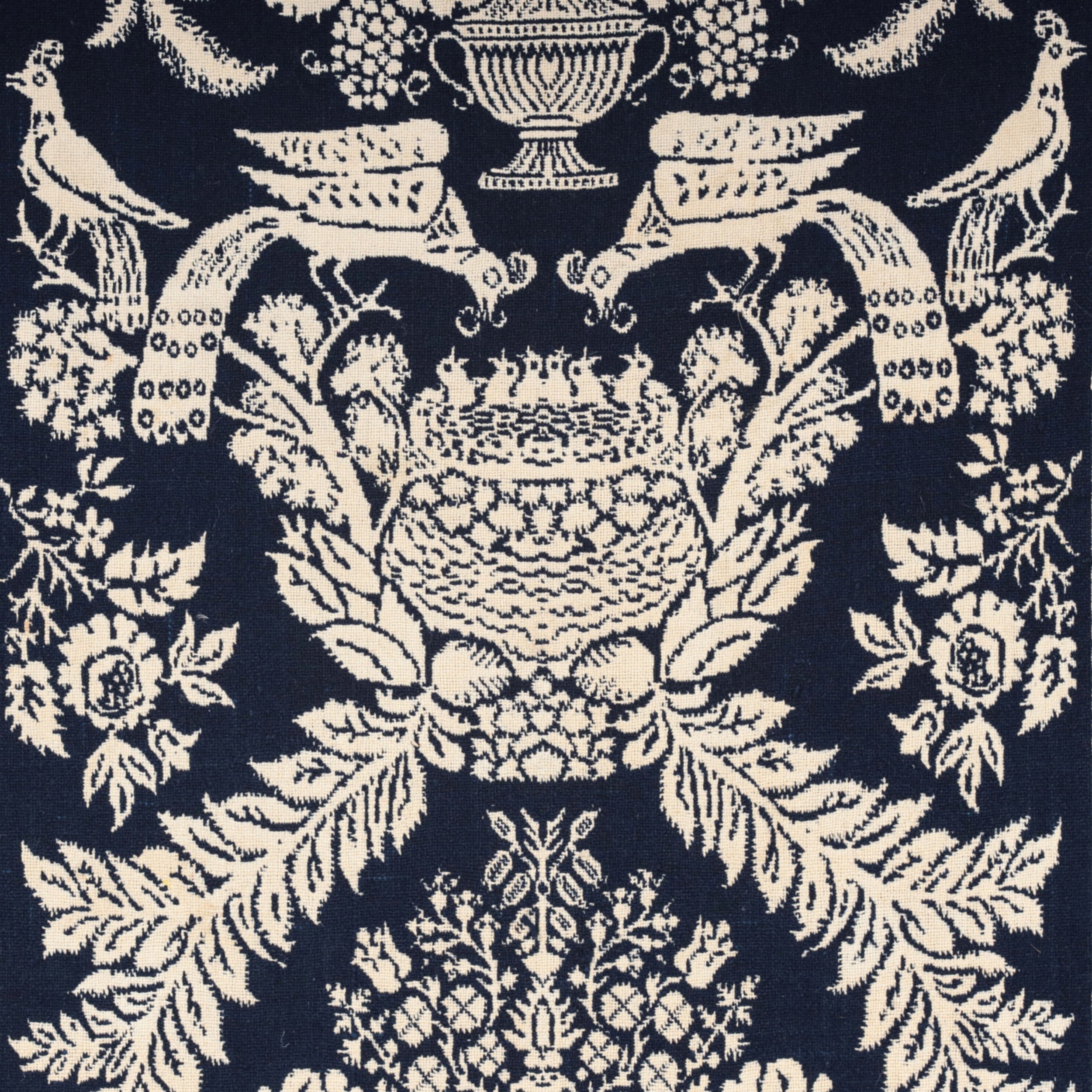
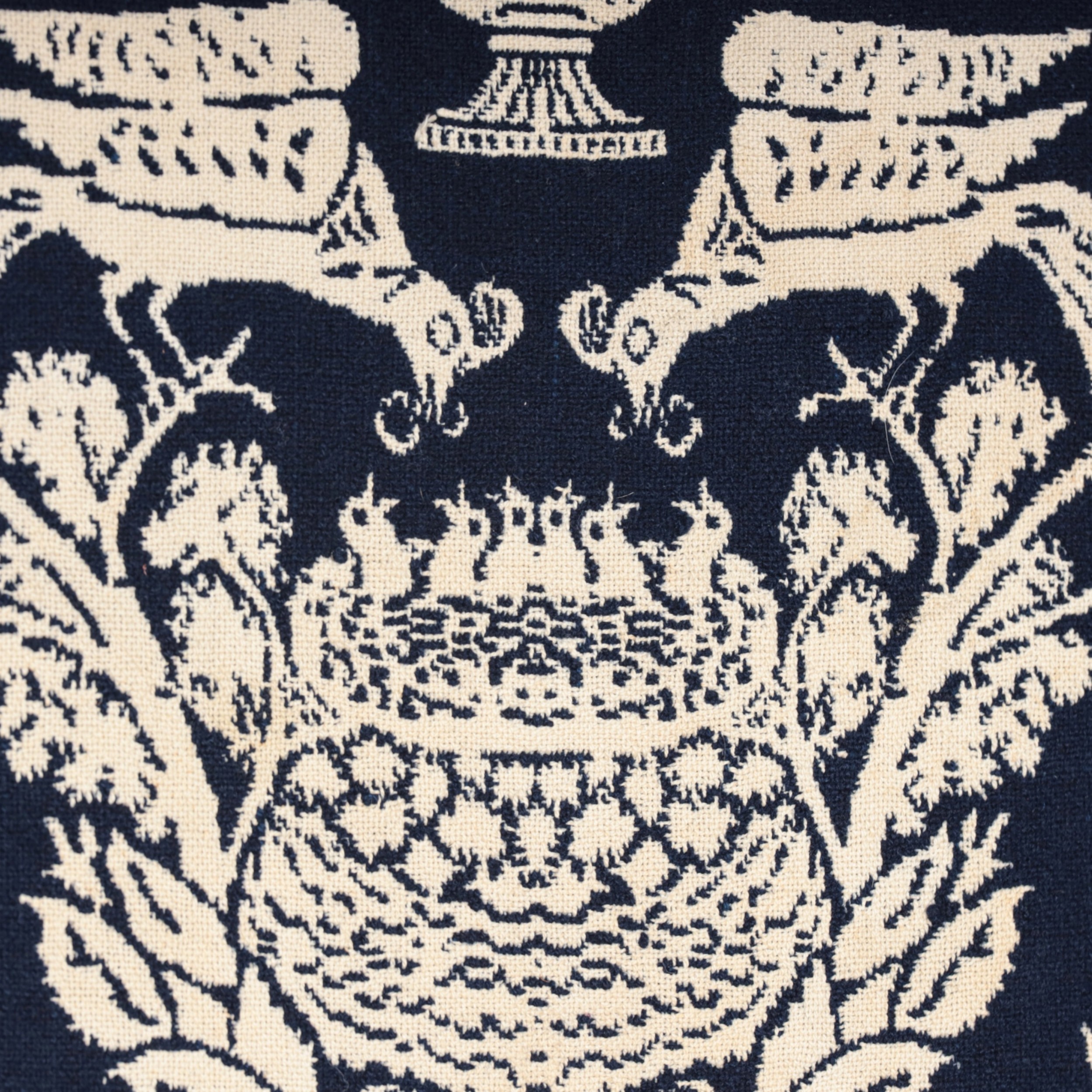
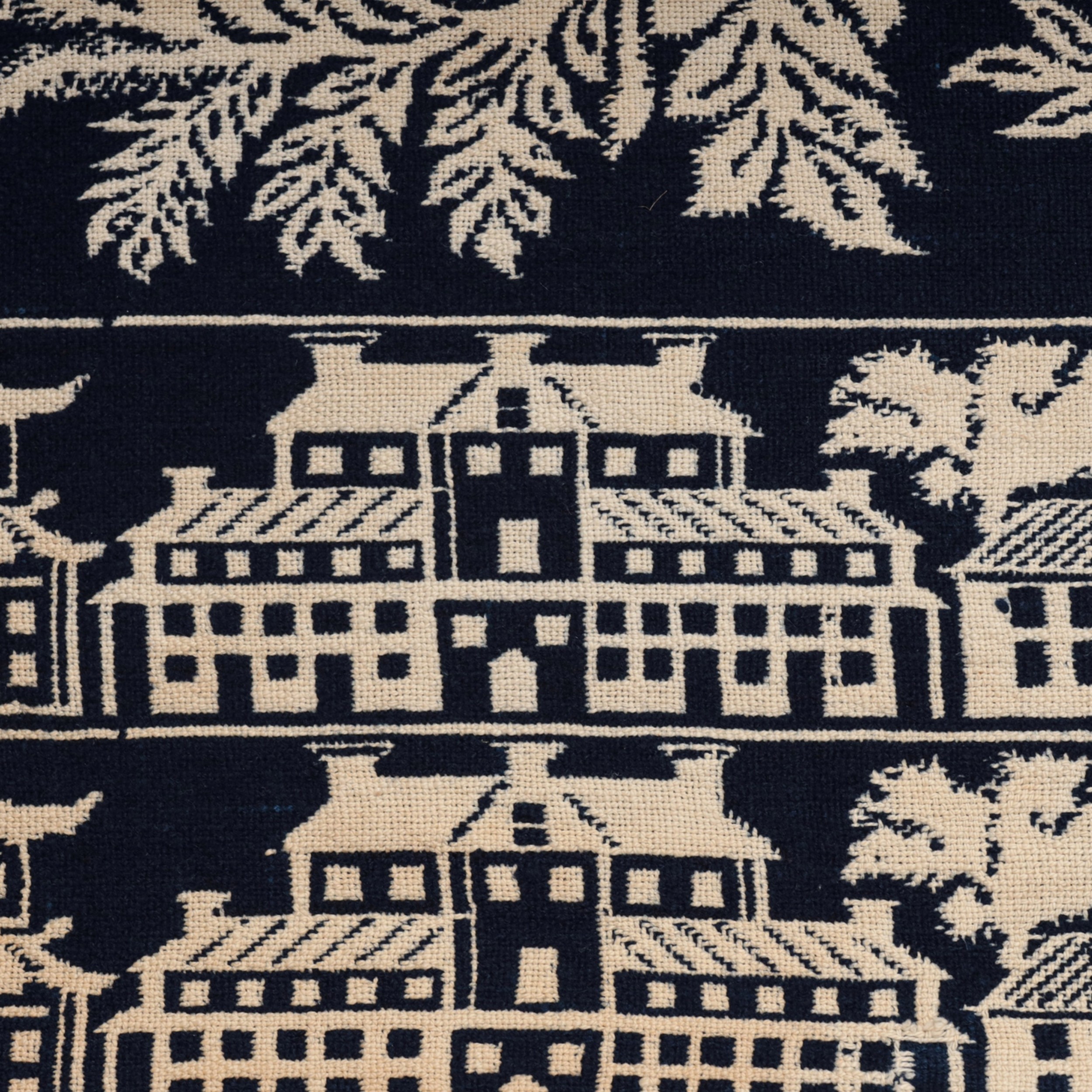
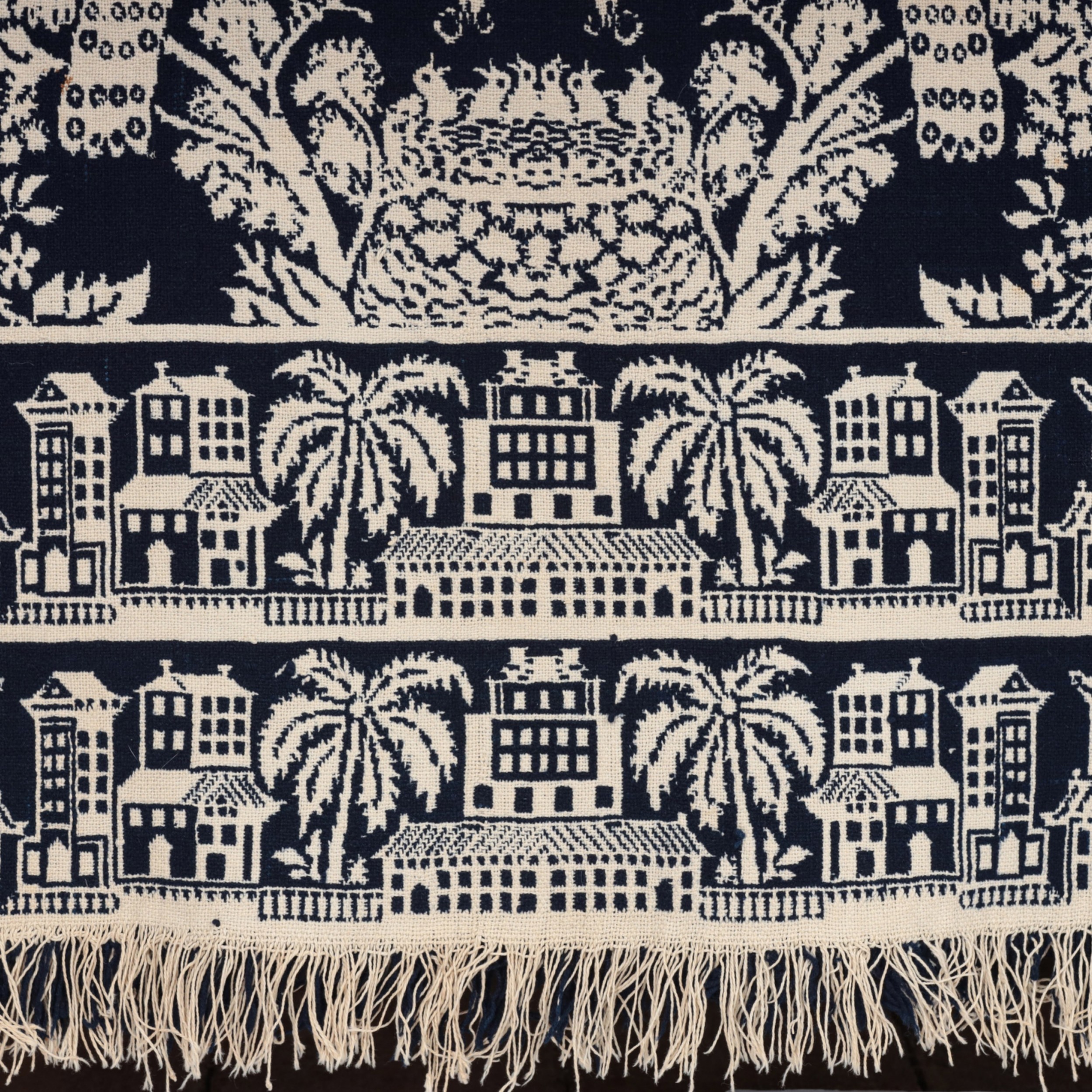
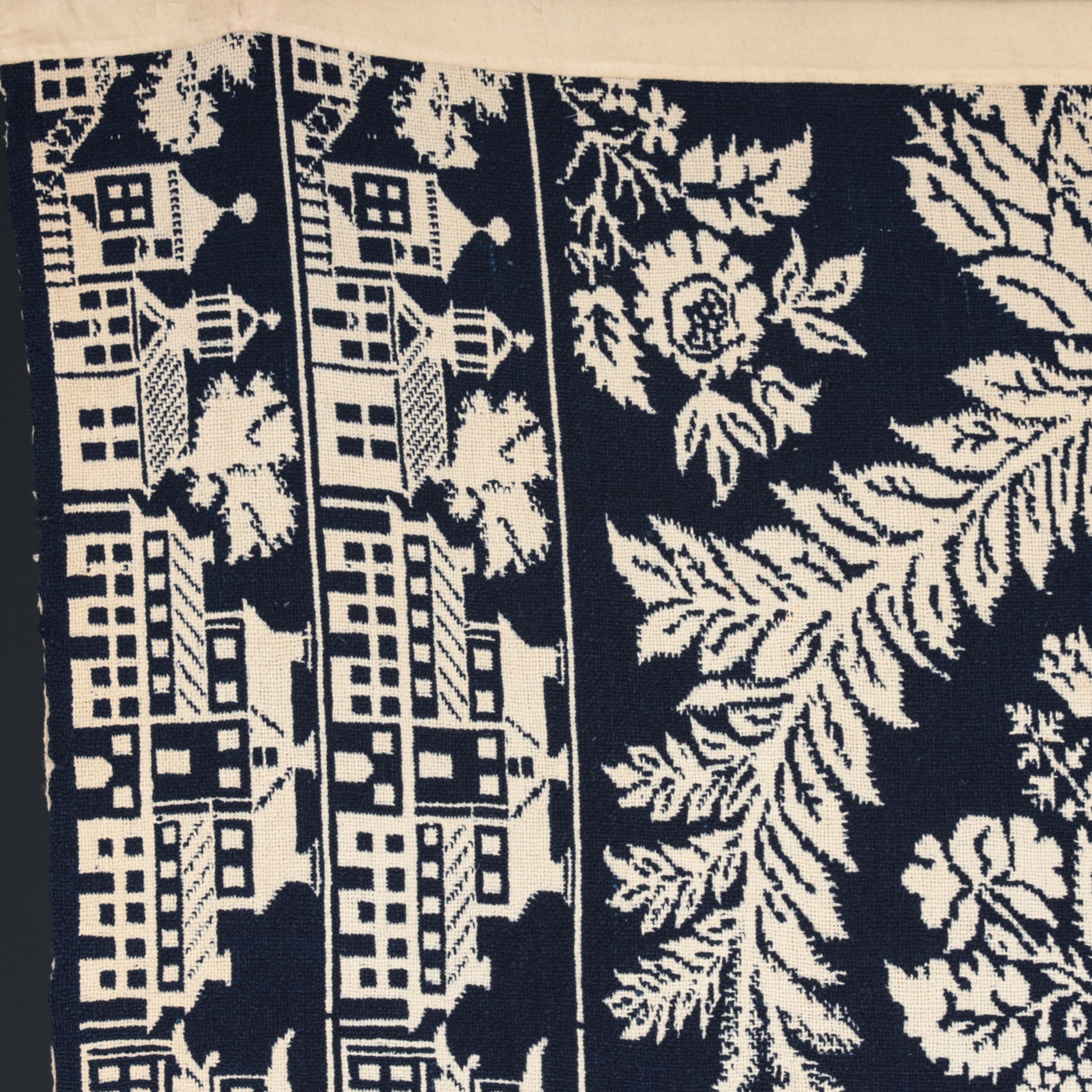
A striking early 19th century American Jacquard woven coverlet, likely Ohio, circa 1830. Traditionally associated with German immigrant weaving communities in America. Woven in indigo blue and natural white, the design features repeated Birds of Paradise and elaborate flower filled urn motifs and birds feeding their young, framed by the distinctive architectural Boston Town border. Originally made as a bedspread, the coverlet is fully reversible, the lighter side traditionally used for summer and the darker side for winter.
The combination of bold scale, intricate pattern and wonderfully graphic blue and white palette makes this an exceptional decorative textile, particularly effective displayed as a wall hanging.
Closely related examples are held in major American museum collections, including the Smithsonian National Museum of American History.