Brave Fine Art has dated this piece to the 1880s.
They often survived continual use and, as such, were passed down through generations of the same family.
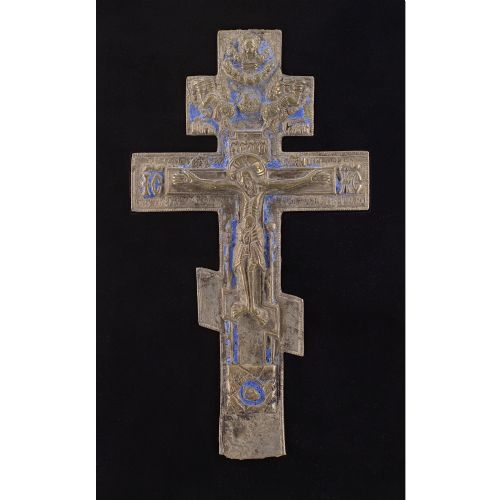
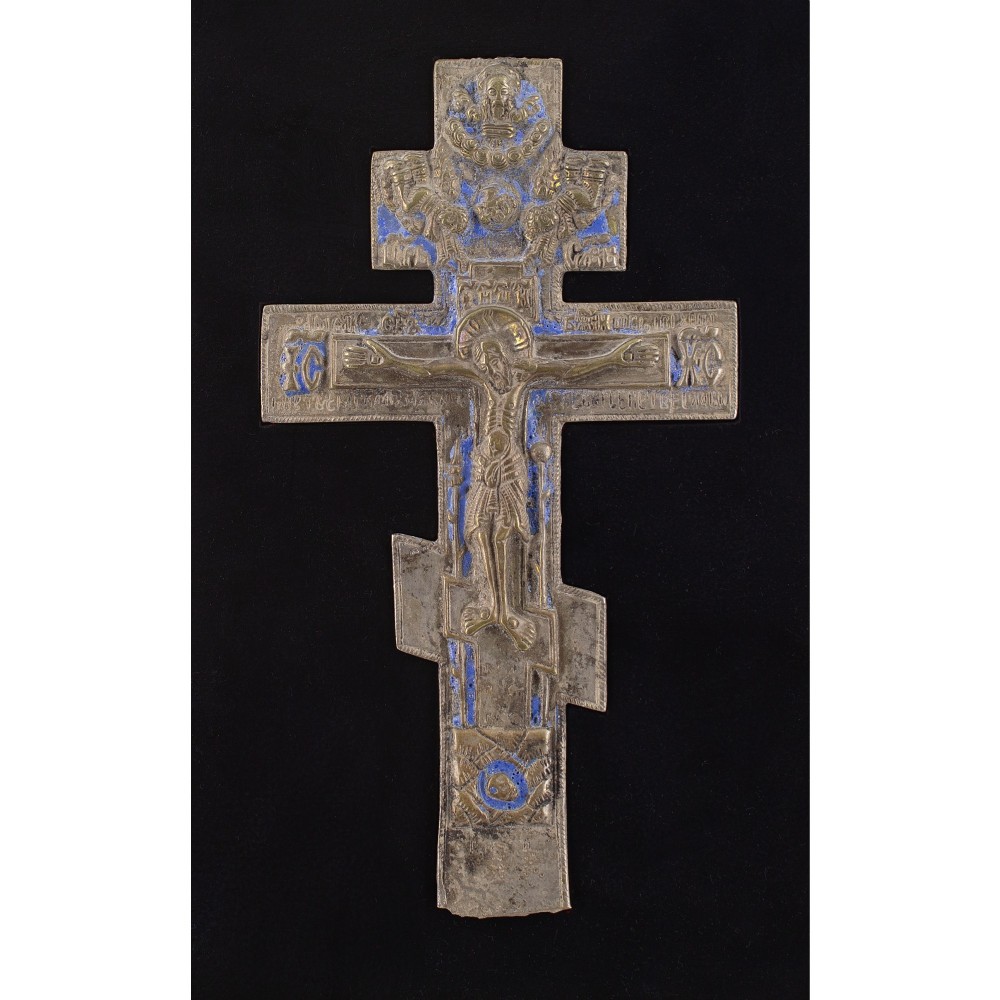
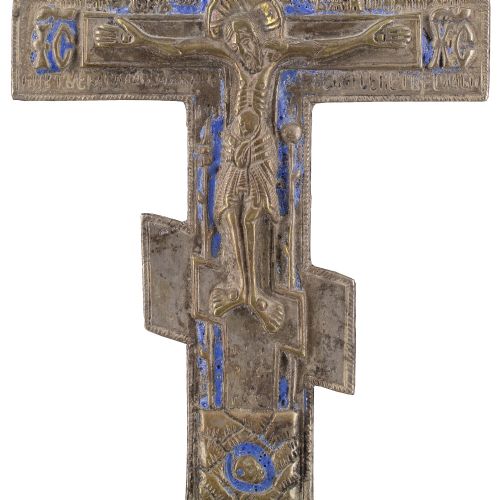
The Orthodox cross is similar to the Christian cross with the addition of a crossbeam as Christ’s feet. In Greek churches, the crossbeam is straight but in Russia, it’s slanted. As you can see, it’s slanted upwards towards Christ’s right hand to represent the belief that followers ascend to Heaven, while non-believers descend to Hell.
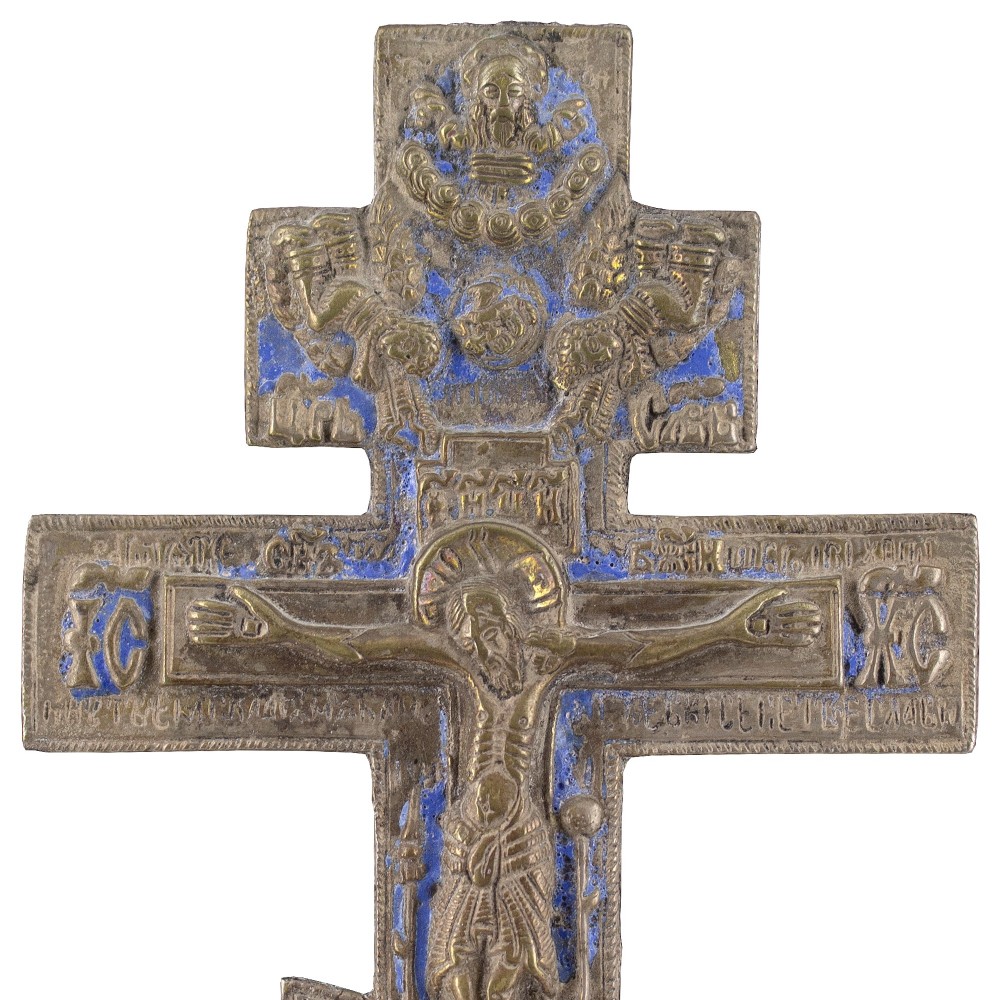
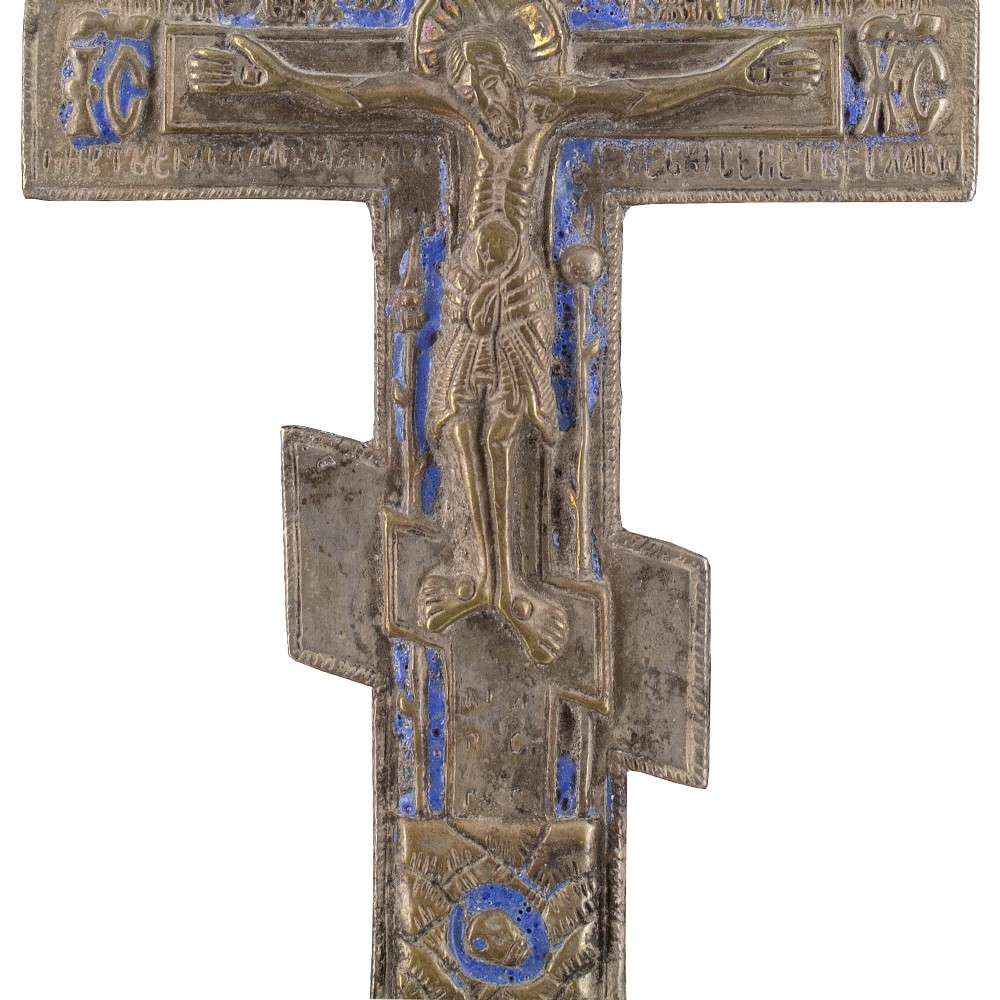
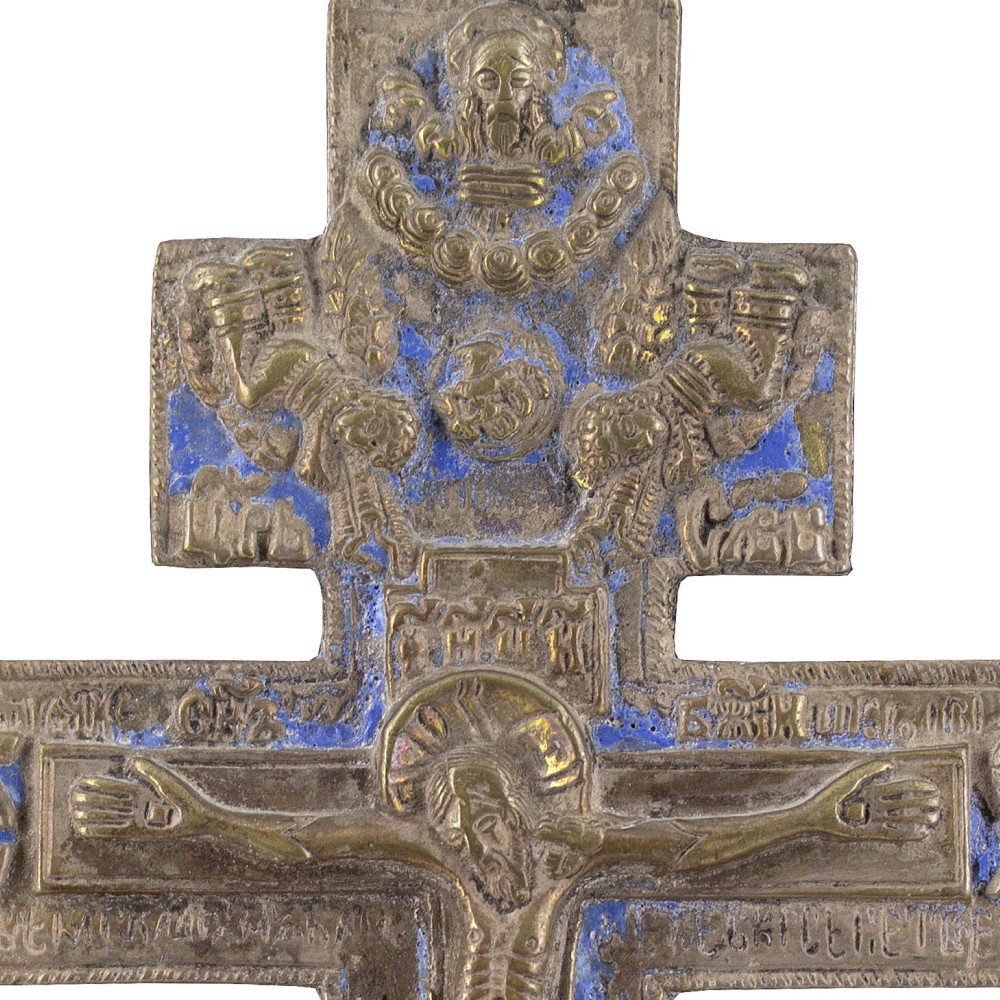
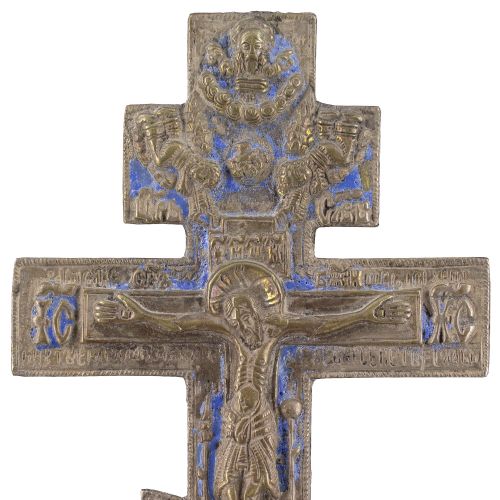
Also known as ‘blessing crosses’, iconography was often consistently reused. At the very top is an image of God depicted as an elderly bearded man, together with two angels. These are facing diagonally downwards towards Christ, who is flanked on either side by the initials IC and XC, which is an abbreviation of ‘Jesus Christ’.
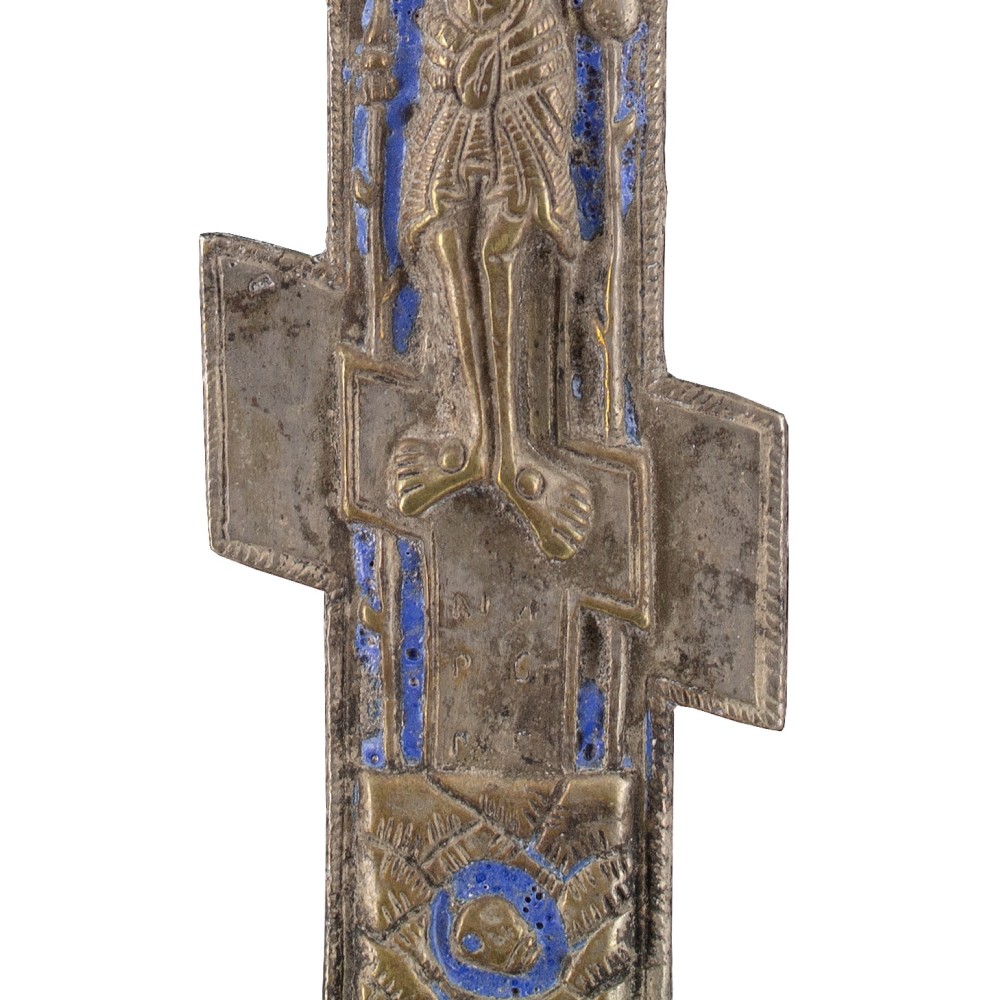
Alongside the cross, two lines ascend from the lower portion. The first, on the left, represents the spear used to pierce Christ’s body. The second, on the right, is a reed with a sponge used to provide Christ with vinegar to drink. Finally, at the foot of the cross lies the skull of Adam.
The reverse bears extensive inscriptions and it's held in a later ebonised mount. Previously in the collection of icon specialists, Richardson & Kailas.
Medium: Silver copper alloy with areas of blue enamelling and detailed relief work.
Overall size: 5½” x 8½” / 14cm x 22cm
Year of creation: c. 1880
Labels & Inscriptions: Extensively inscribed on the reverse.
Provenance: With Richardson & Kailas, Specialist in Icons (2001) / Private collection, UK.
Condition: Light age-related wear.
Our reference: BRV2091
Brave Fine Art has dated this piece to the 1880s.
Exquisite antique paintings that capture the imagination.
You can view the stock and full dealer information on the Brave Fine Art Profile Page
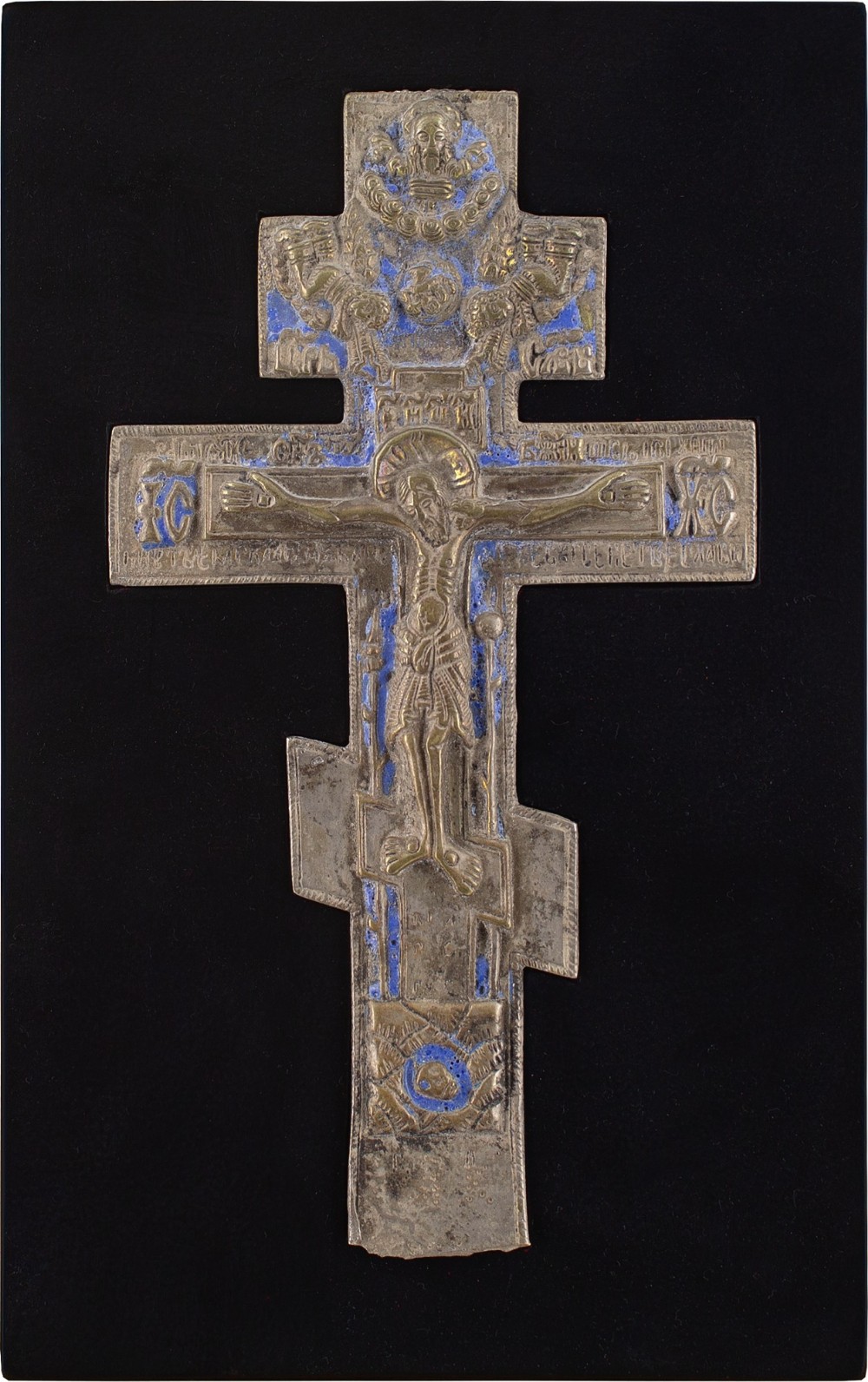
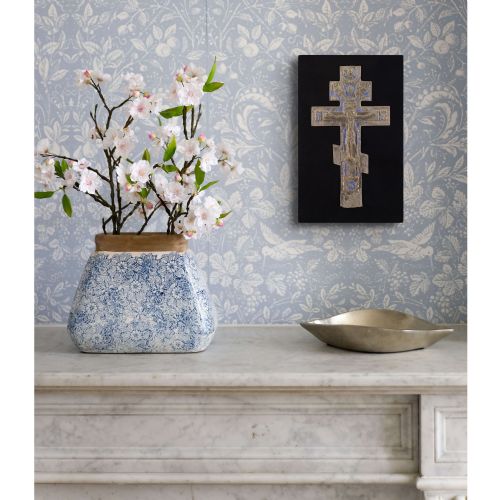
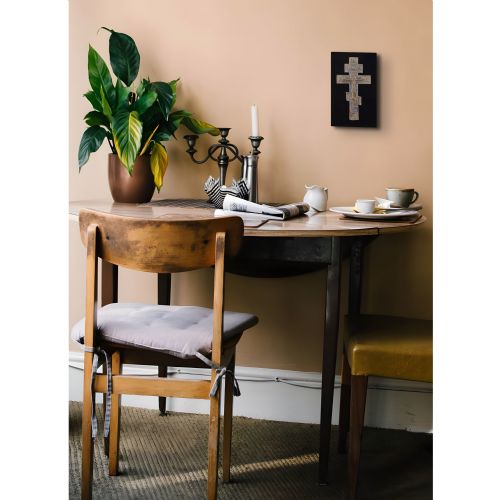
Late 19th-century Russian Orthodox, Crucifixion Icon with Blue Enamelling