

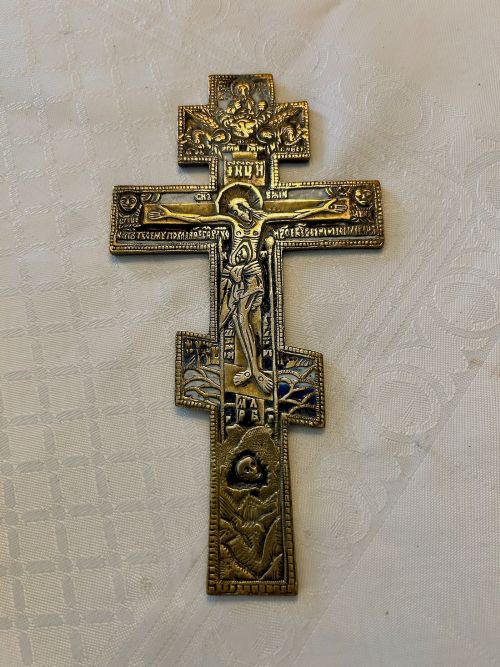
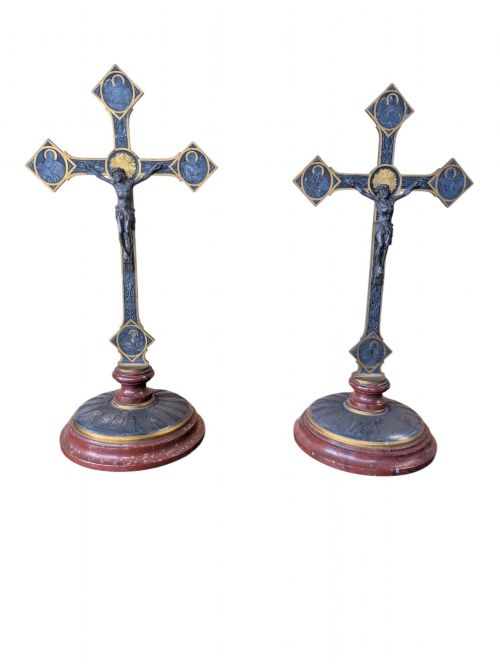


Antique Bronze Cross
An antique bronze cross holds centuries of devotion in heavy metal, offering tactile history for any room.
Antique Bronze Cross
An antique bronze cross brings centuries of devotional and decorative metalwork into focus, spanning domestic spaces and church interiors. These pieces take forms such as altar crucifixes, wall sculptures, and processional crosses, rooted in traditions from the medieval period through to the nineteenth century.
Buyers frequently encounter nineteenth-century interpretations alongside earlier iterations, including Russian Orthodox and French Empire styles. Materials often combine bronze with enamel, marble, or wood, reflecting diverse European craftsmanship.
The selection ranges from small signet rings bearing crosses to large altar pieces and mantel clocks incorporating crucifixion scenes. Each object records the aesthetic priorities of its period, whether Gothic Revival severity or Art Nouveau fluidity.
Methods and materials of construction
Casting forms the foundation of these objects, utilising bronze, brass, and gilt metal to shape structural crosses and detailed plaques. Patinated and gilt surfaces receive careful finishing to highlight sculptural depth.
Enamel and tempera add colour and narrative detail, applied directly to metal grounds or integrated into wooden panels alongside silver and gilt. Rosewood and marble frequently provide contrasting mounts for metal corpus figures and frames.
Antique Bronze Cross Retail Price Guide 2026
Typical asking prices for bronze cross among the pieces listed under this phrase on Sellingantiques today, from the lower quarter to the upper quarter. They describe what is for sale here now, not the wider market.
Materials documented across the inventory include bronze, brass, enamel, gilt metal, wood, marble, and patinated bronze.
Distinctions in quality and execution
The crispness of the casting and the finesse of the chasing dictate the refinement of a piece, separating mechanical production from sensitive hand-finishing. Details in the facial expressions of the corpus and the sharpness of cast ornamentation reveal the maker's skill.
The integrity of secondary materials, such as the depth of the enamel or the grain of the rosewood and marble mounts, influences the overall presence of the object. Patination that has evolved naturally over time adds depth that artificial treatments cannot replicate.
The Antique Bronze Cross Glossary
- Corpus
- The figure of Christ affixed to a cross. This sculptural element varies from simple cast silhouettes to highly detailed anatomical studies.
- Patinated bronze
- Bronze that has been treated or aged to produce a specific surface colour. This process enhances the contours of the metal work.
- Gilt metal
- Metal coated with a thin layer of gold leaf or gilt wash. It provides the appearance of solid gold while using a base metal substrate.
- Processional cross
- A crucifix mounted on a long staff for carrying in religious ceremonies. These objects are often finished on both sides for public viewing.
- Orthodox cross
- A Christian cross with multiple crossbeams associated with Eastern traditions. It frequently incorporates specific theological inscriptions and symbolism.
Antique Bronze Cross: Frequently Asked Questions
How do I date an antique bronze cross?
Dating relies on stylistic markers, casting techniques, and associated materials like enamel or rosewood mounts. Comparing the form against known period styles such as Gothic Revival or Art Nouveau provides a reliable guide.
Examination of wear patterns and tool marks on the reverse side also helps establish the era of manufacture.
Where were these crosses originally placed?
These crosses served in various settings, from private household altars and mantelpieces to grand European churches. Smaller items, such as signet rings, were worn for personal devotion and status.
Wall lights and clocks integrated religious iconography into domestic nineteenth-century interiors.
How should I clean bronze metalwork?
Dusting gently with a soft, dry brush is generally sufficient to maintain the surface without disturbing the historic patina. Avoid abrasive polishes or chemical cleaners that strip away the aged finish.
Professional conservation is recommended for pieces with delicate enamel or gilt elements.