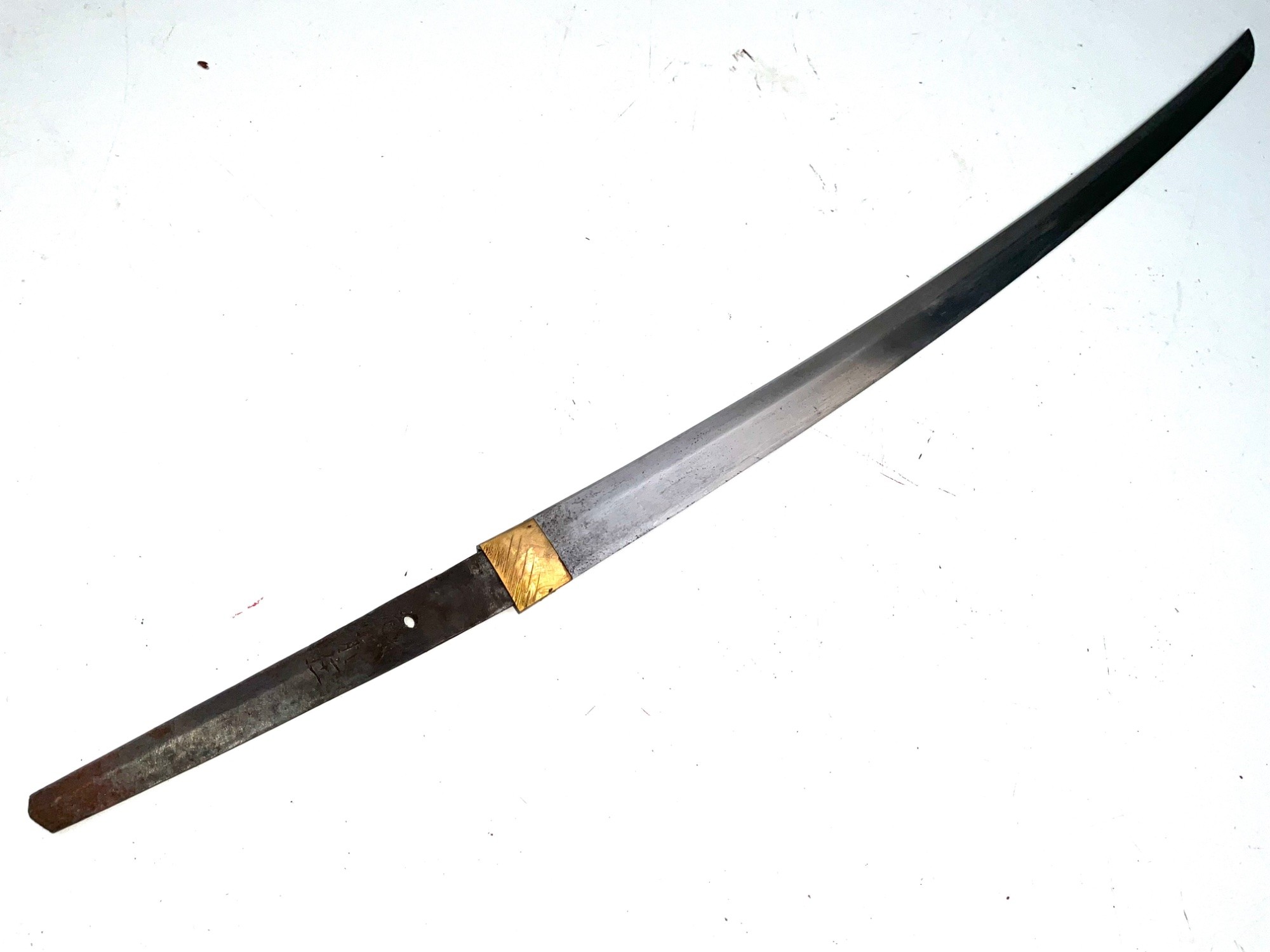
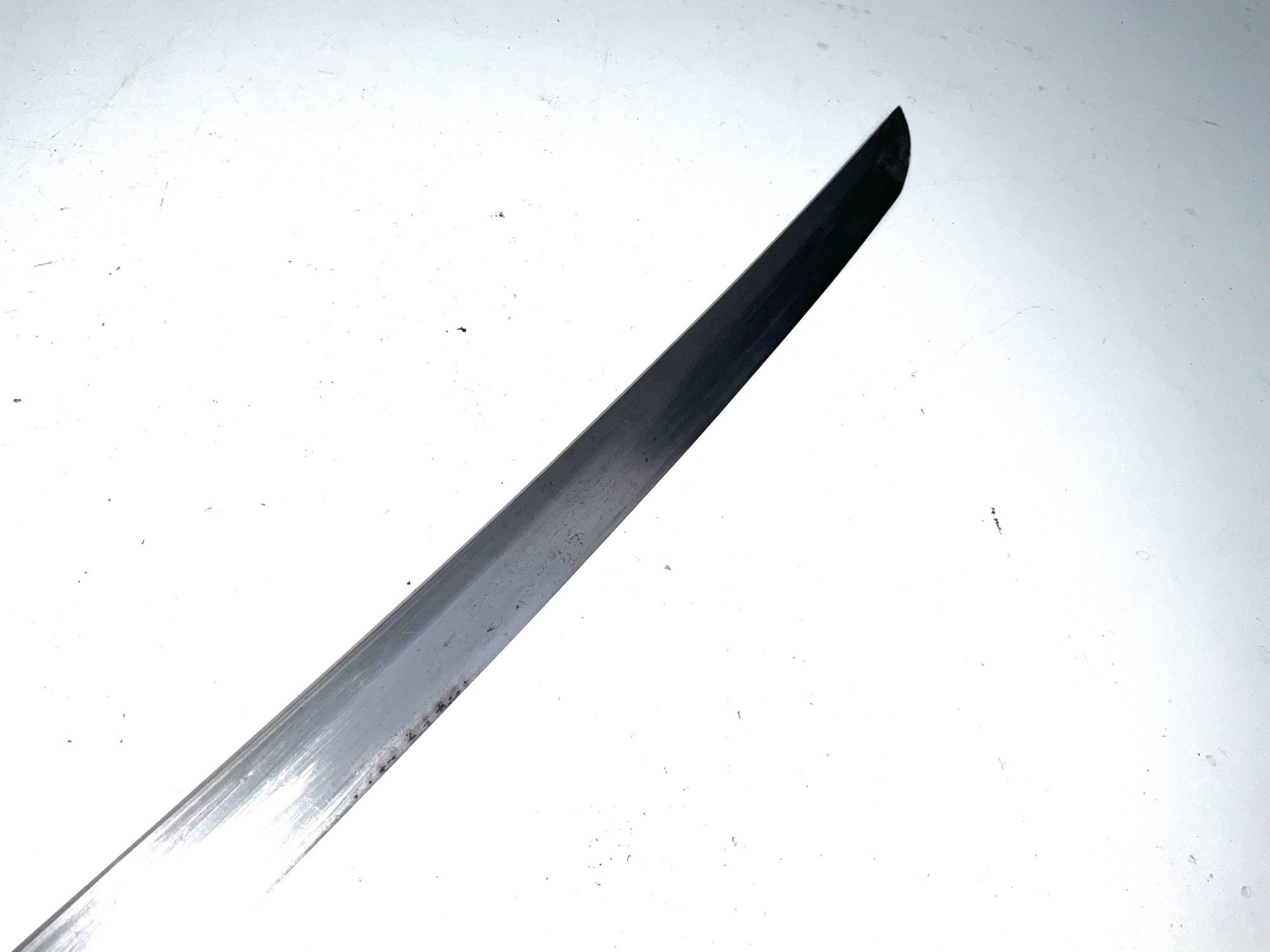
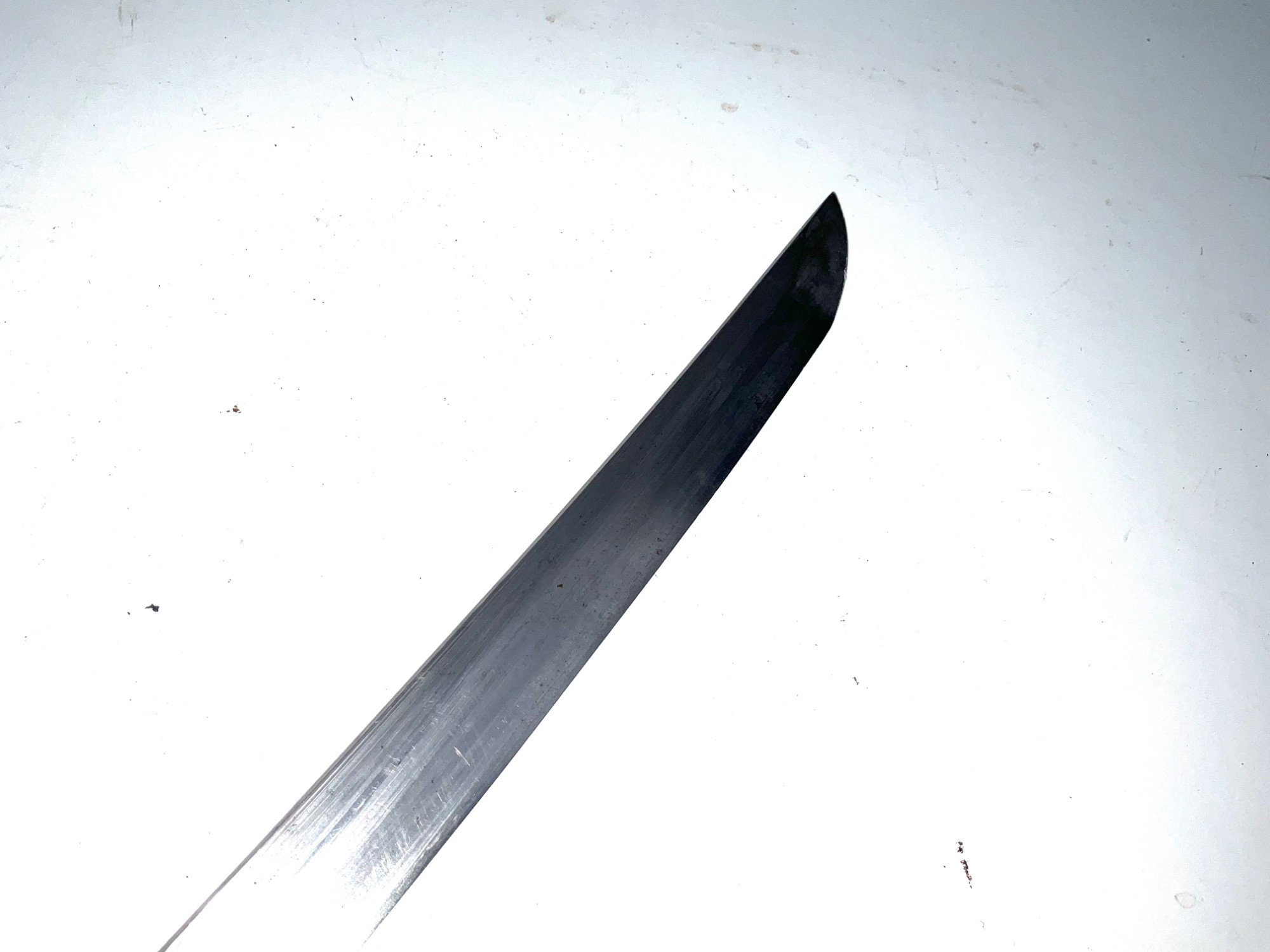
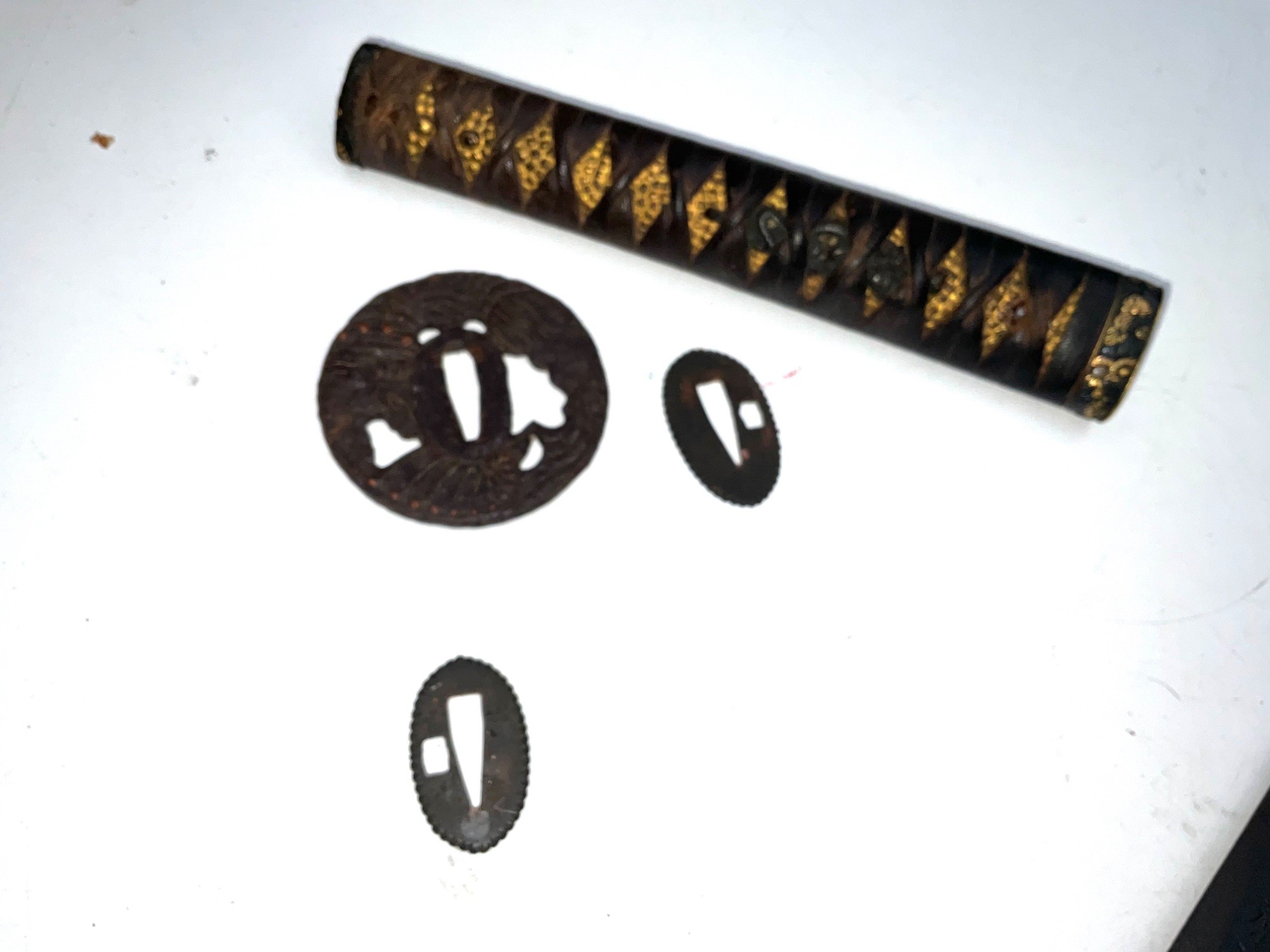
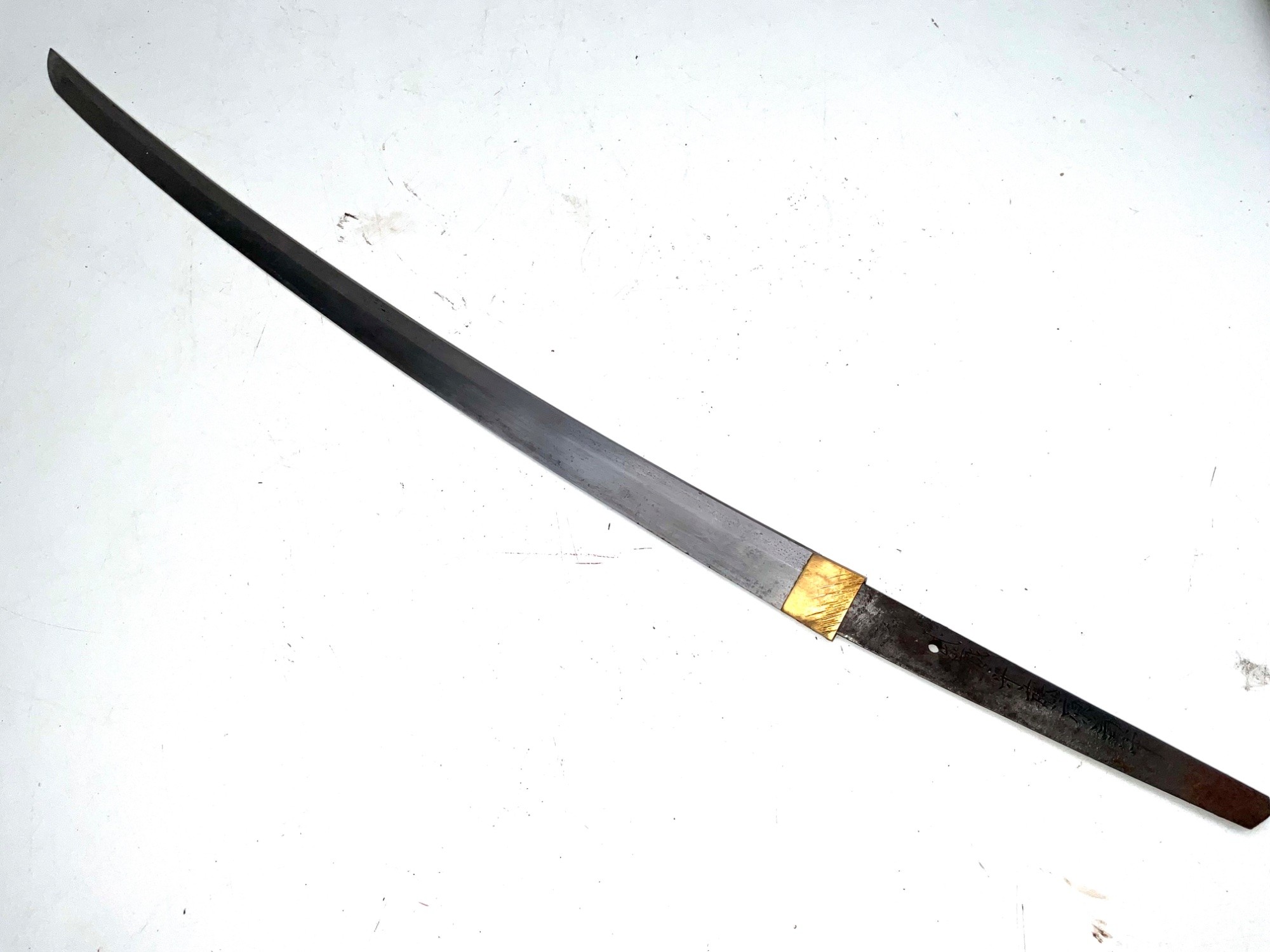
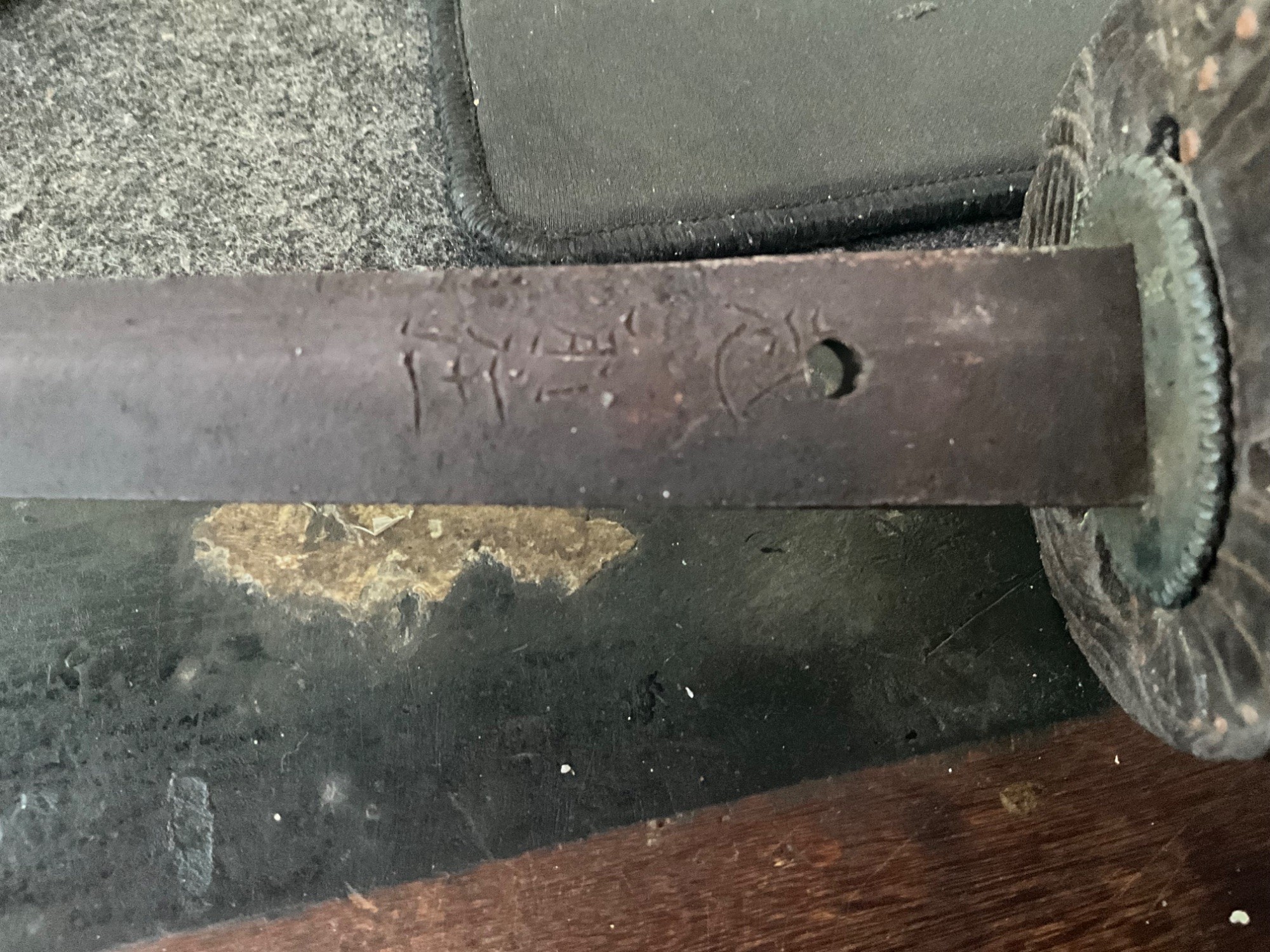
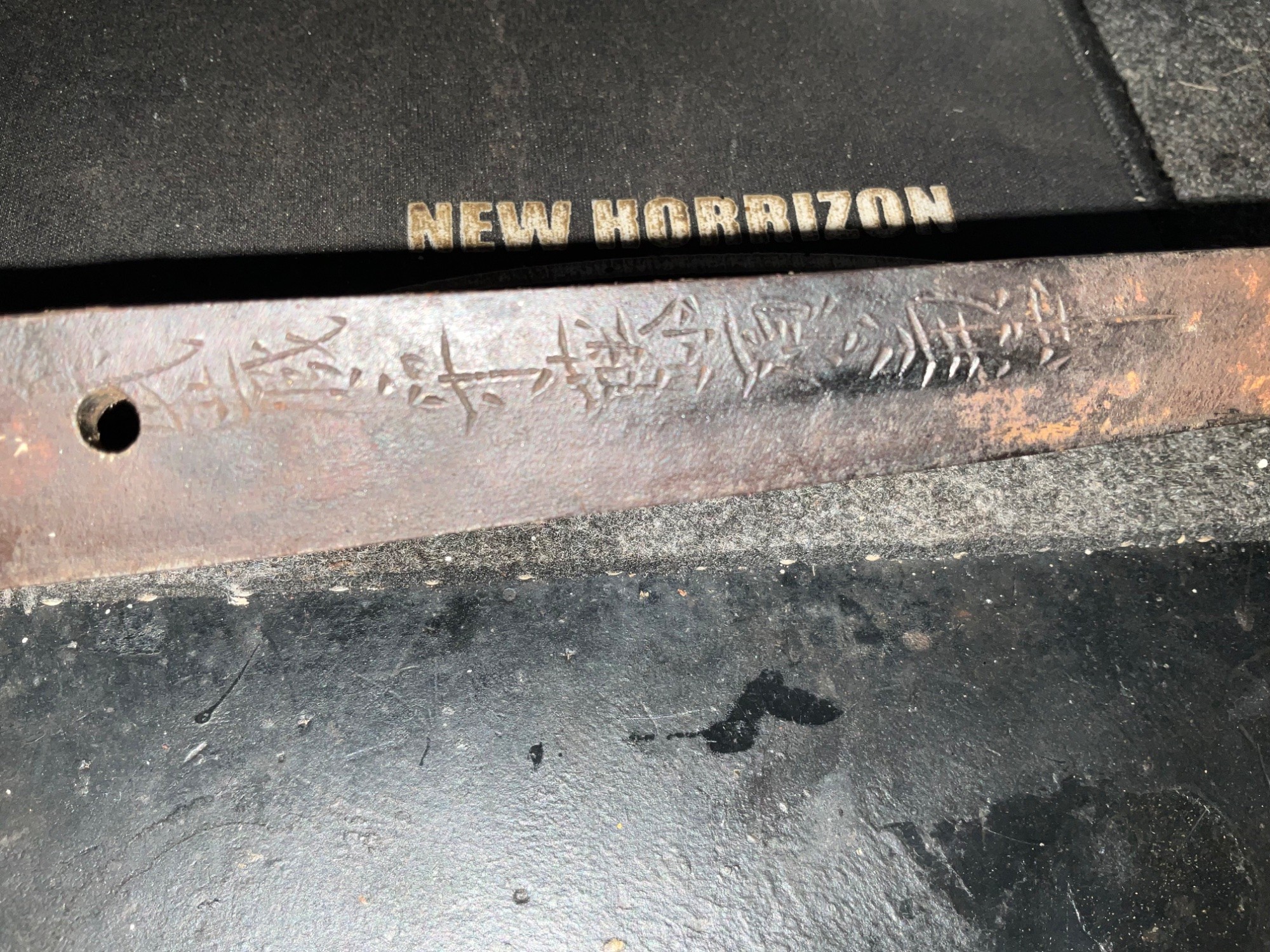
Sovereign Antiques Of Nuneaton has dated this Japanese Katana Samurai Sword to the 1940s.
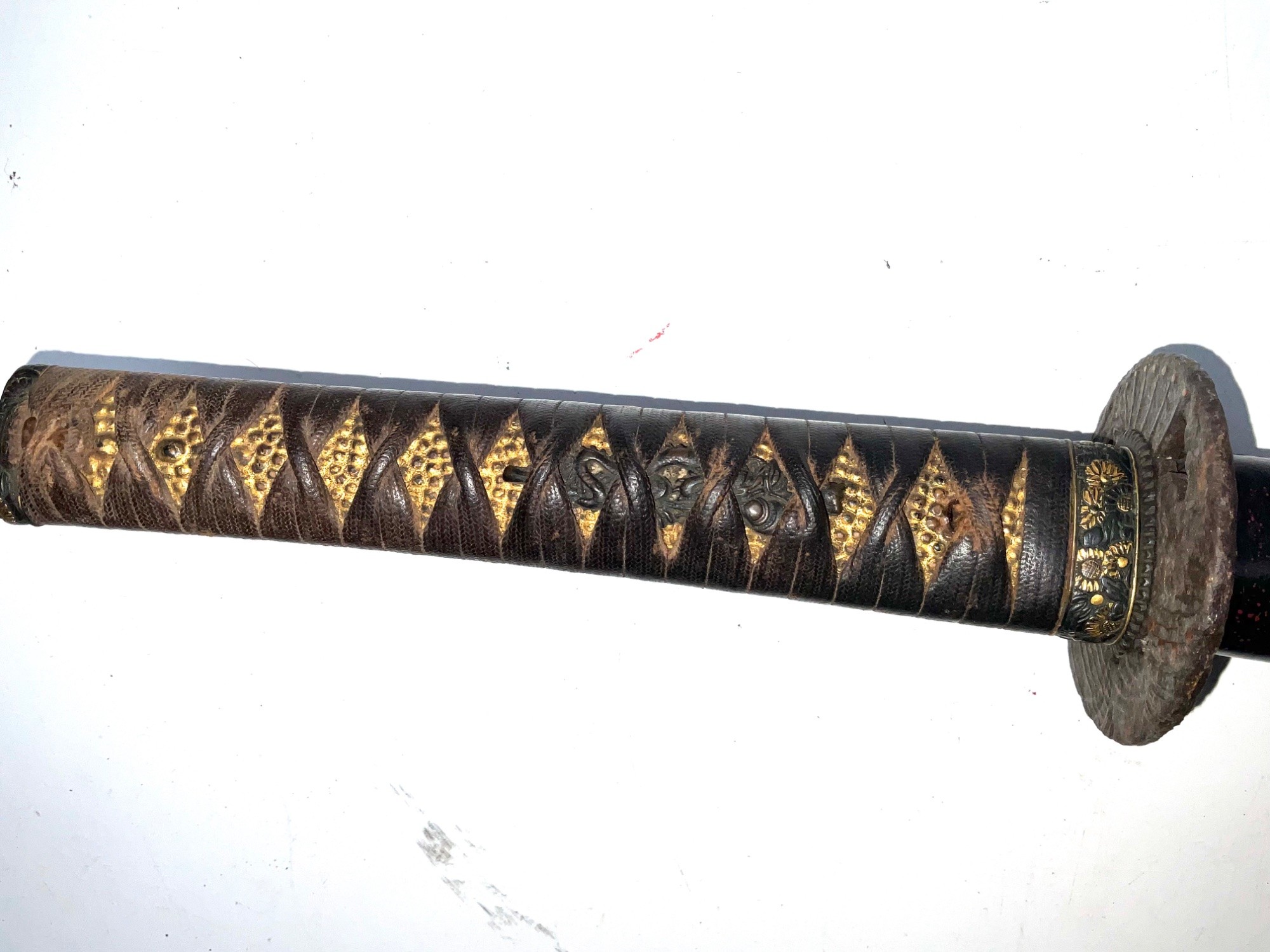
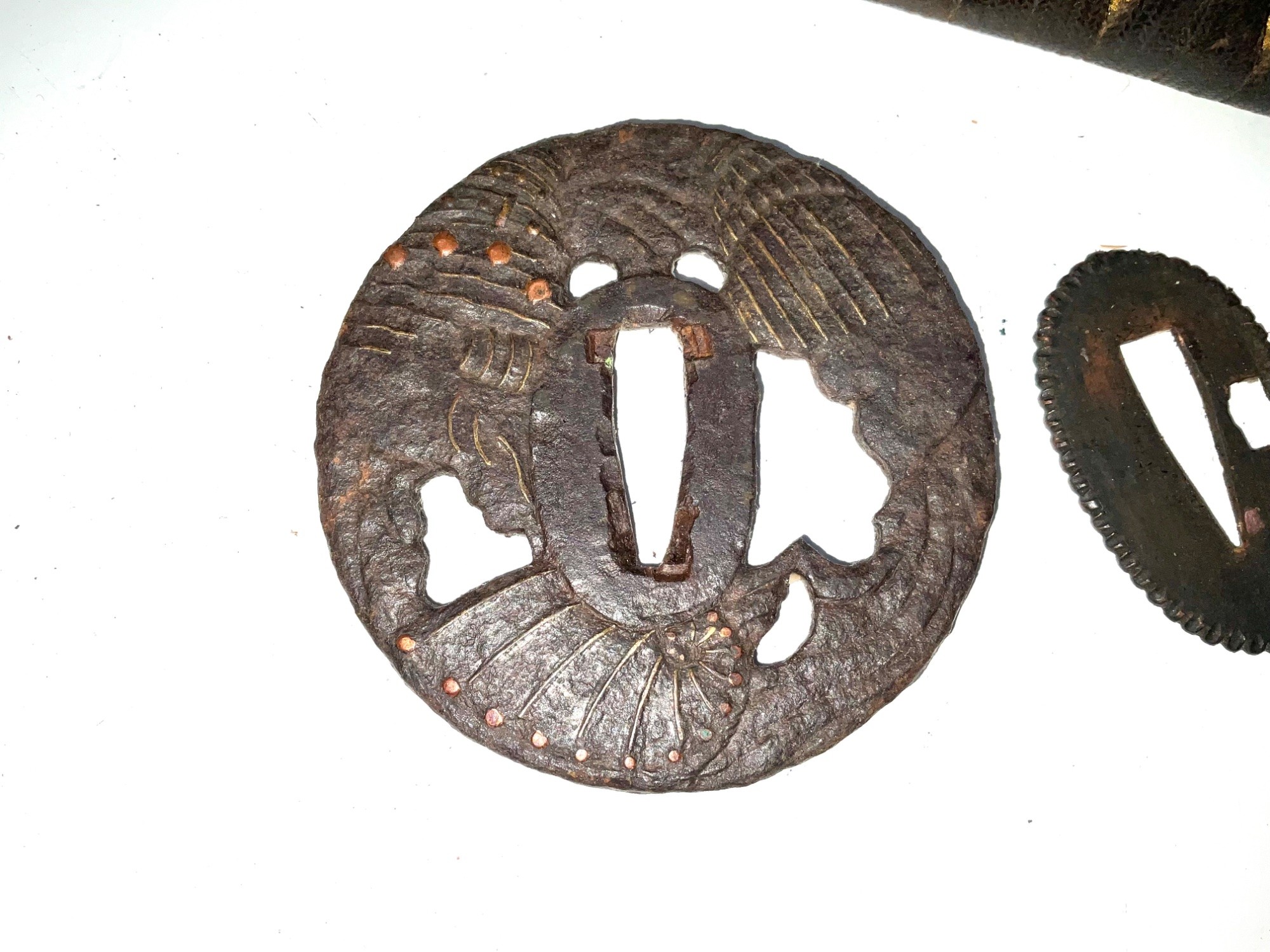
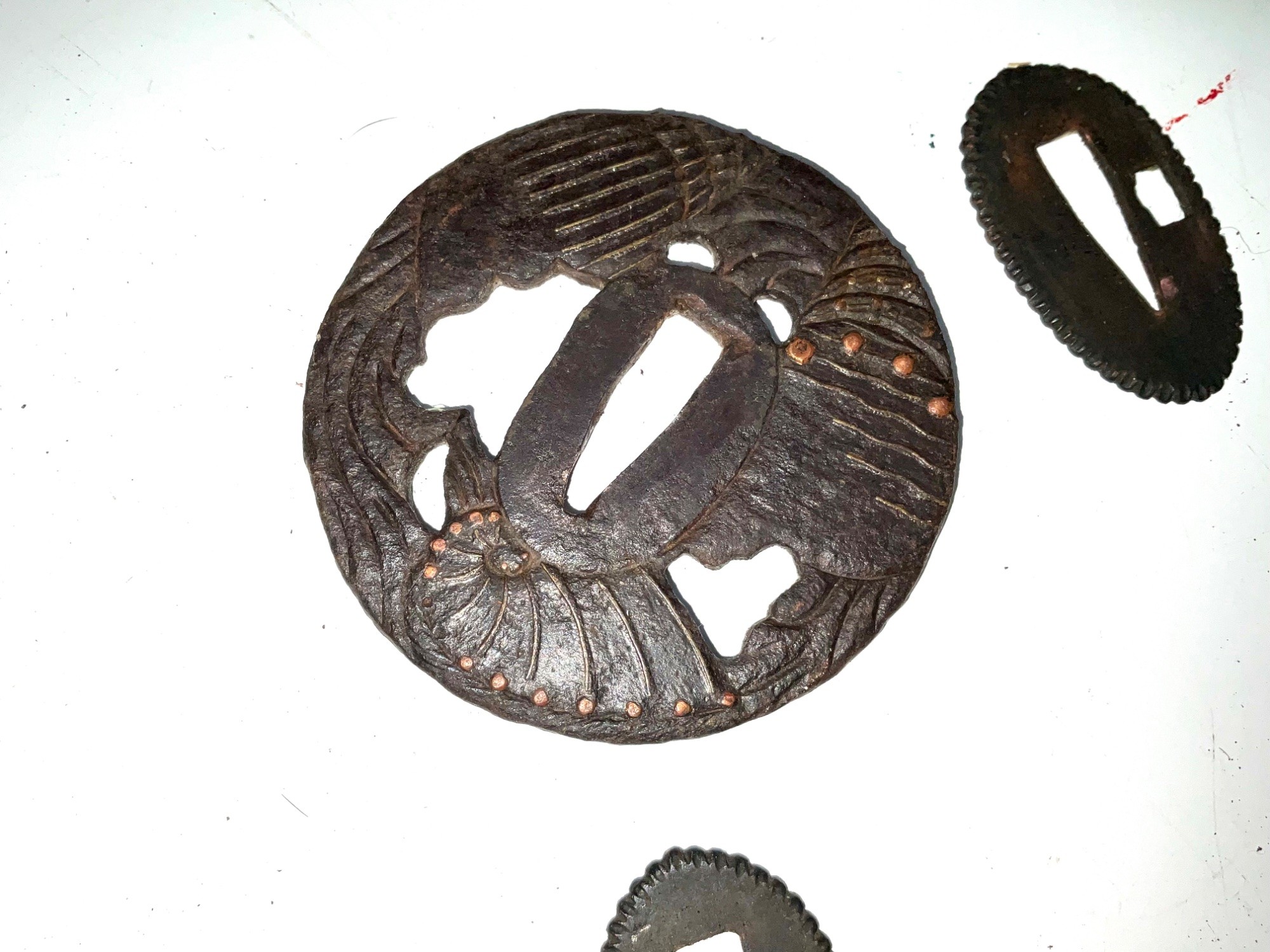
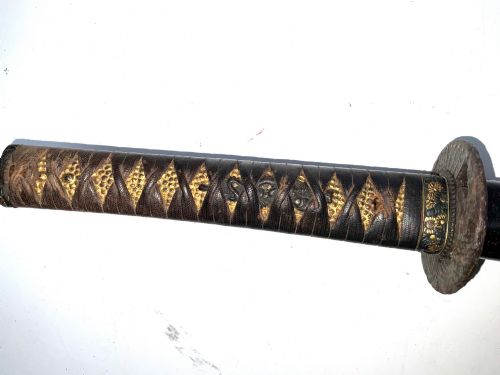
This handguard is a classic antique iron tsuba featuring an openwork openwork (sukashi) design of fans (ōgi), likely dating from the mid-to-late Edo Period (1603–1867).
Key Characteristics & Design
The Motif (Ōgi Sukashi): The guard depicts overlapping traditional folding fans. The pierced geometric gaps form the silhouettes of the open fan panels and ribs, with small copper plugs (ten-zōgan) dotted near the edges to represent rivet pins or decorative points.
Artistic Style: This highly stylized botanical and everyday-object silhouette work is characteristic of traditional craft centers like the Echizen Kinai school or related regional groups that excelled in carving elegant, flowing openwork out of iron plates.
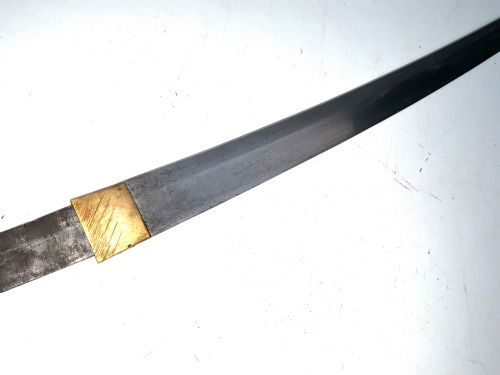
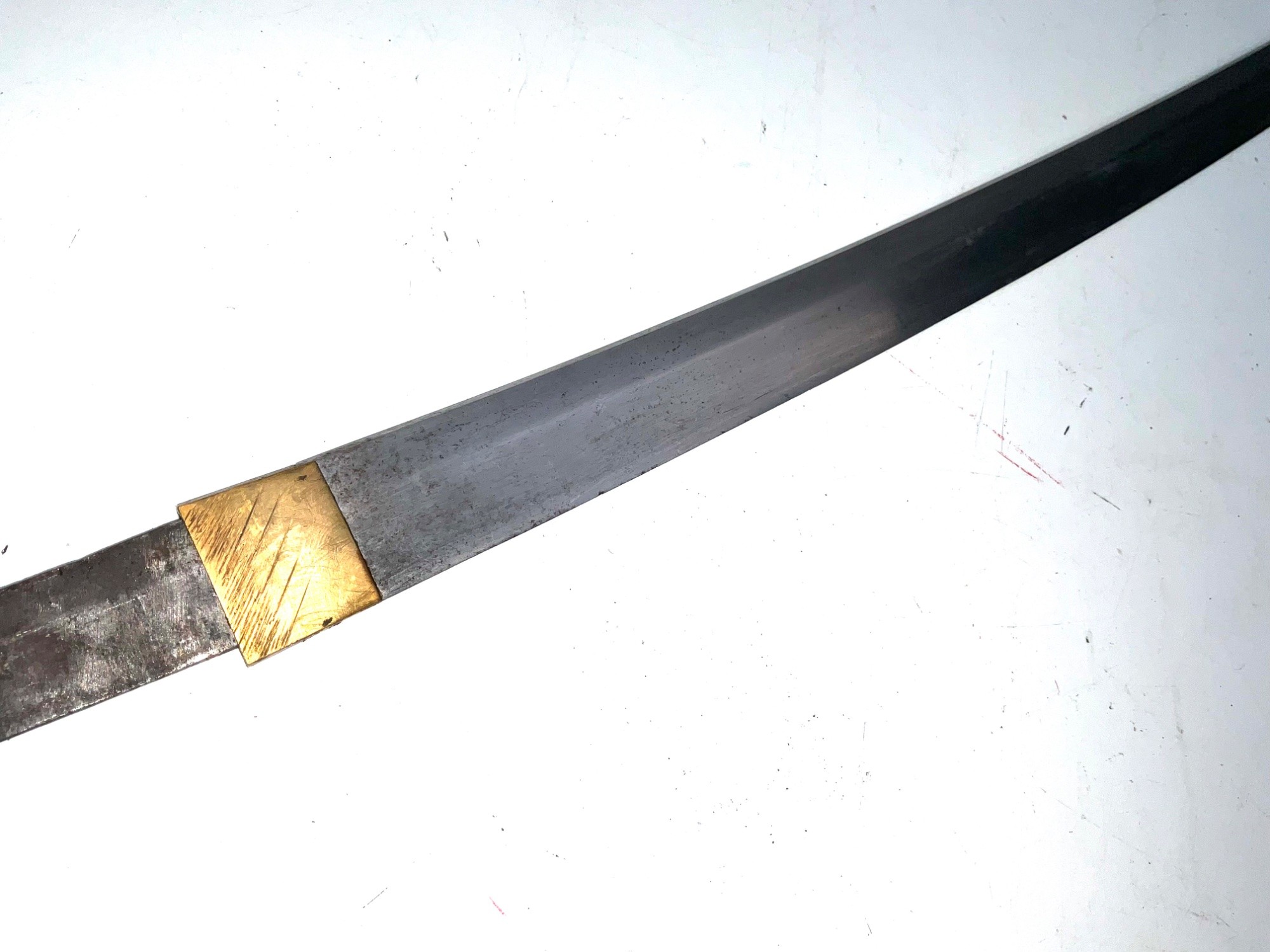
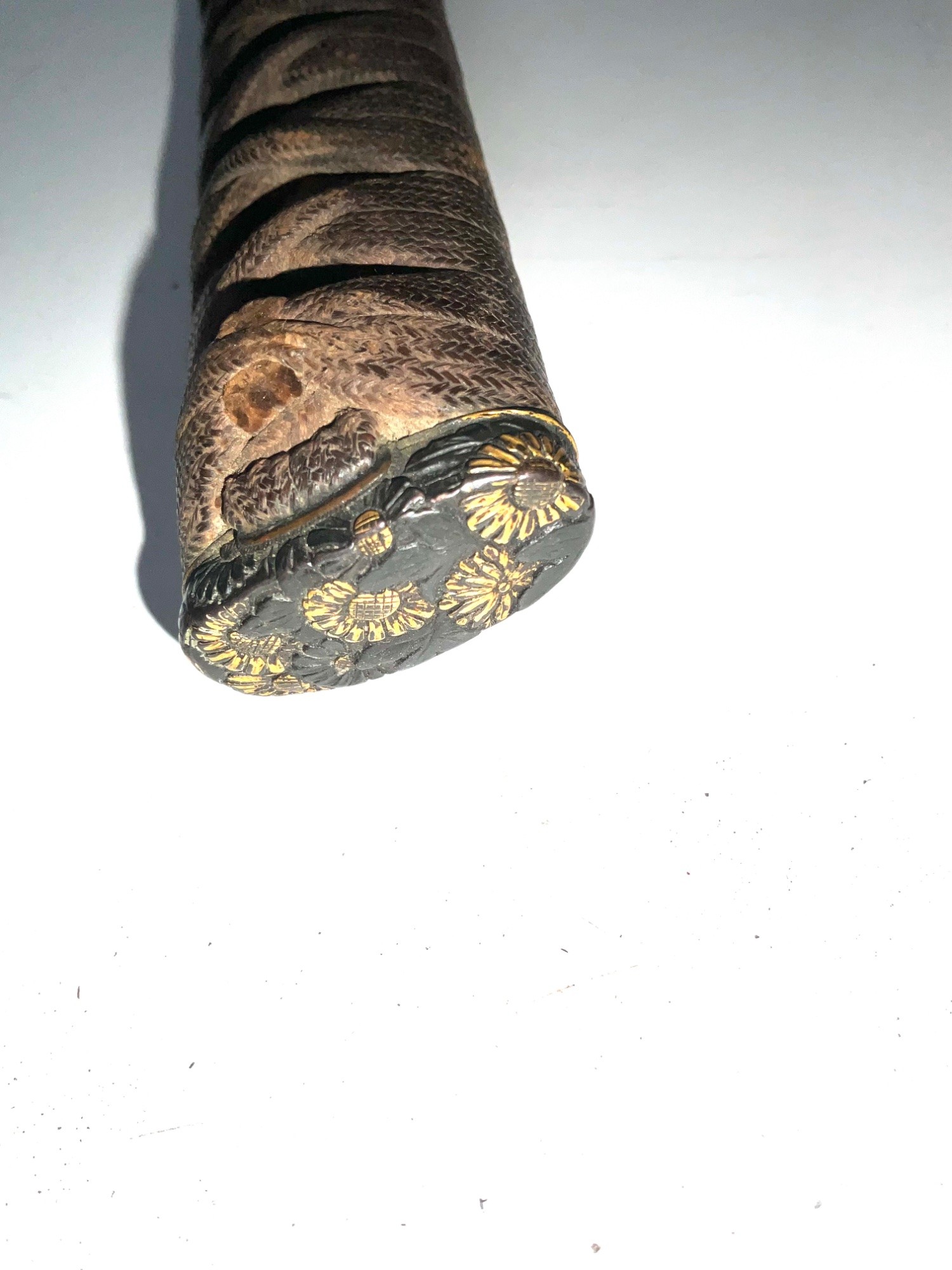
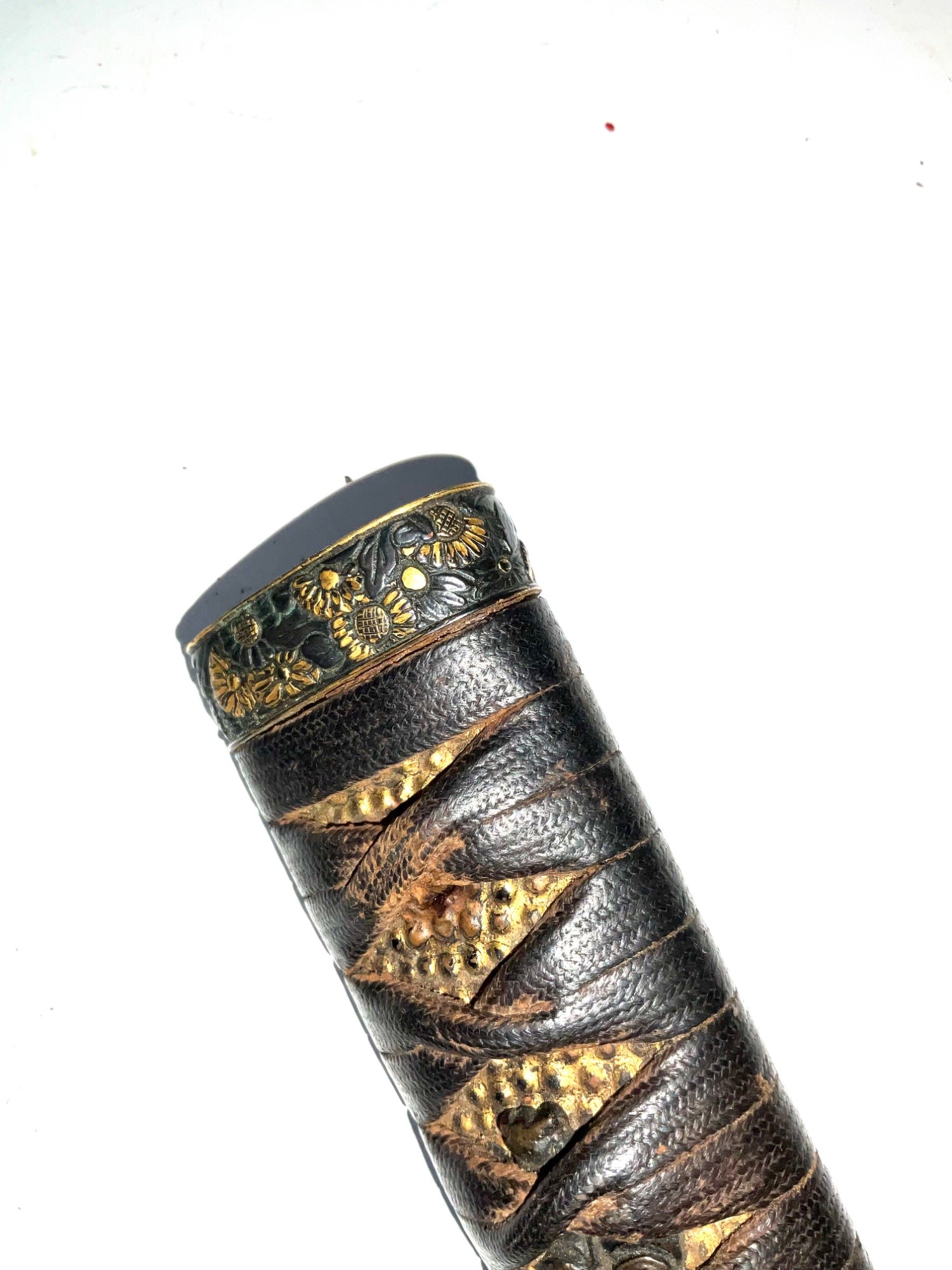
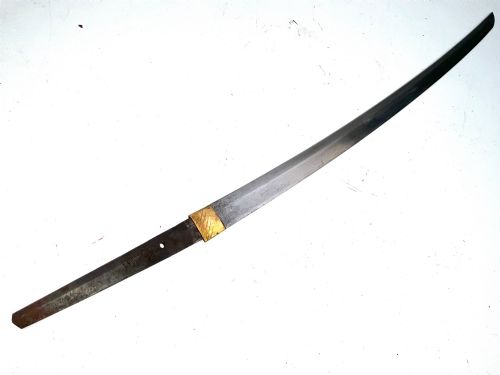
Age and Wear: The dark, deeply textured iron patina and light surface oxidation indicate genuine age. The central opening shows structural wear where it was repeatedly mounted onto a sword tang via copper spacers (seppa). Because the blade is signed by Kanetoki (a lineage highly prominent during and after WWII) while the handguard (tsuba) and hilt fittings are styled in classic Edo-period or Meiji-period aesthetic traditions, it is highly likely a family heirloom assembly. It was very common for late 19th or 20th-century blades to be custom-fitted into beloved ancestral mounts passed down through a family line.
Sovereign Antiques Of Nuneaton has dated this Japanese Katana Samurai Sword to the 1940s.
You can view the stock and full dealer information on the Sovereign Antiques Of Nuneaton Profile Page
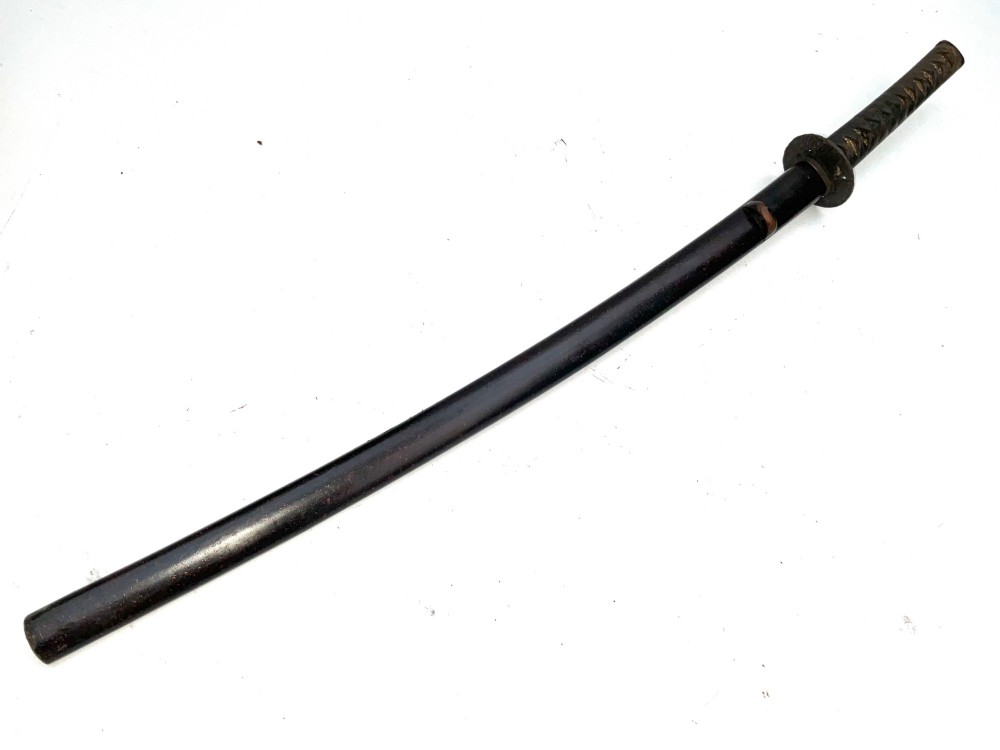
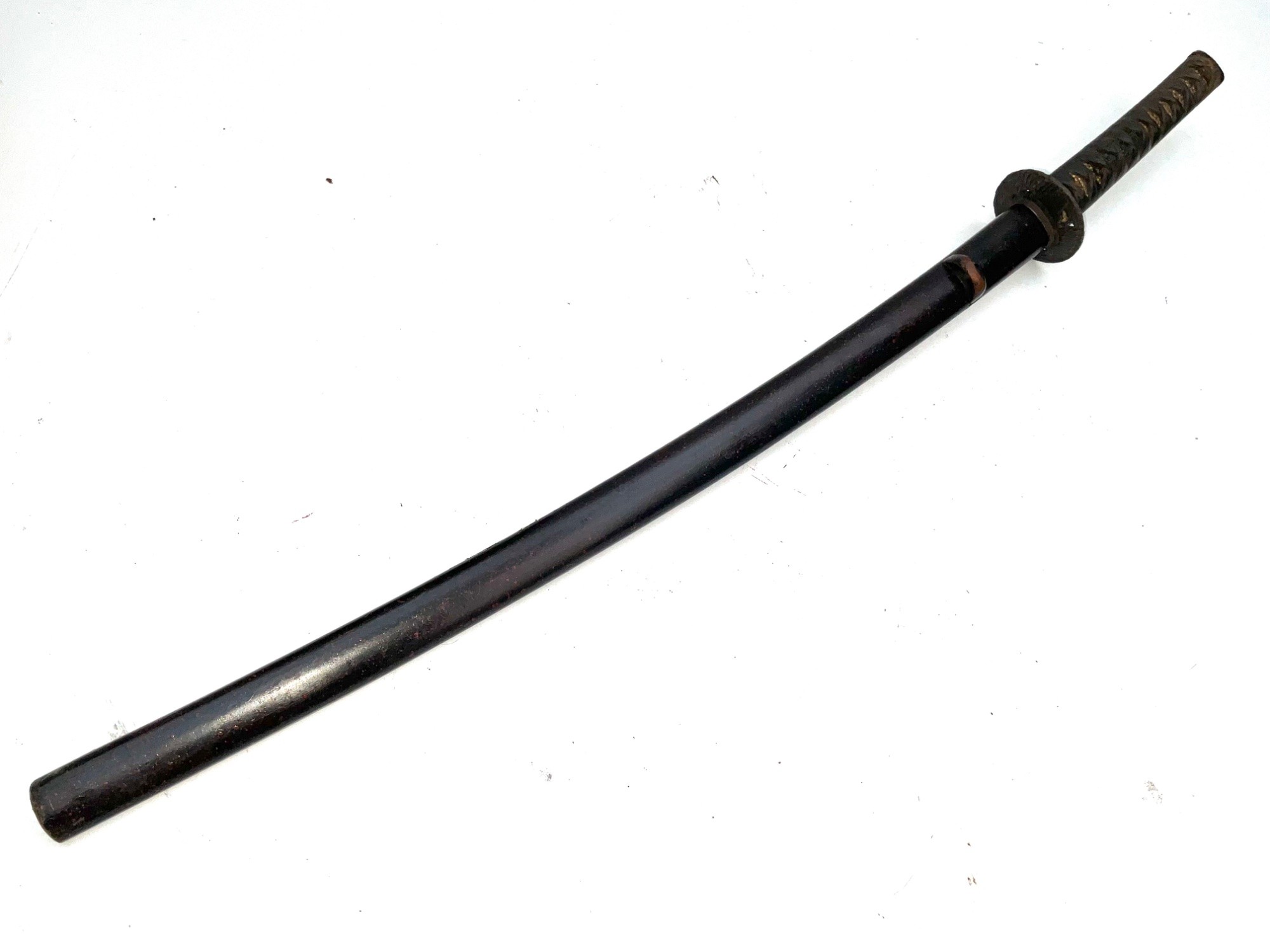
Japanese Sword Family Mounts Signed Blade