9,056  PAGES BROWSED TODAY PAGES TODAY • 53 ANTIQUES UPLOADED TODAYNEW ARRIVALS
GIFTS
53 ITEMS ADDED TODAY
Sort Order
Items Per Page
Browse Categories
Sort order
Relevant Links
Items per page
ID #SA1215592
SOLD
Email Phone
Save
Japanese Edo (Mid-19thc) Buddhist Root Wood Ruyi (Sceptre)
Sold by Antik Dragon Japanese & Other Fine Art
sold SA1215592
Sorry, but this item has been sold.
Antik Dragon Japanese & Other Fine Art

Antik Dragon Japanese & Other Fine Art

Sellingantiques Verified Since Oct 2021
Browse dealers 35 items
Id #SA1215592
PDF SHARE
SAVE

Japanese Edo (Mid-19thc) Buddhist Root Wood Ruyi (Sceptre)

19th century
Sold 19 June 2026 · Antik Dragon Japanese & Other Fine Art
This “Japanese Edo (Mid-19thc) Buddhist Root Wood Ruyi (Sceptre)” found a buyer.

It was listed by Antik Dragon Japanese & Other Fine Art. Sold pieces stay on Sellingantiques as a record of what has passed through, and the next one is rarely far away.

Description

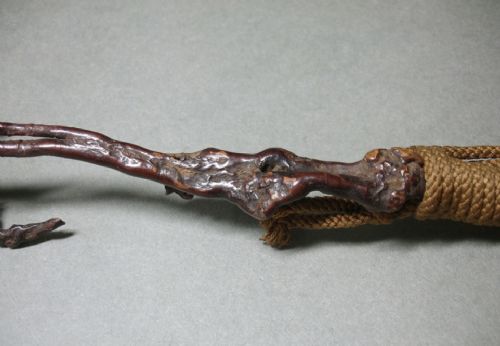
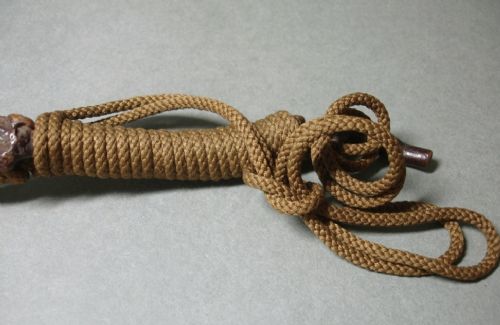
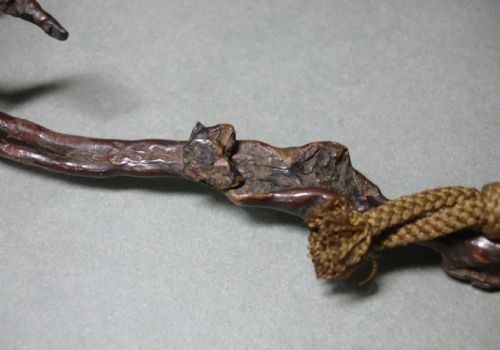
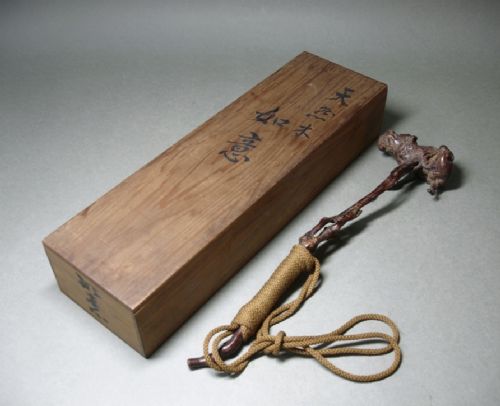
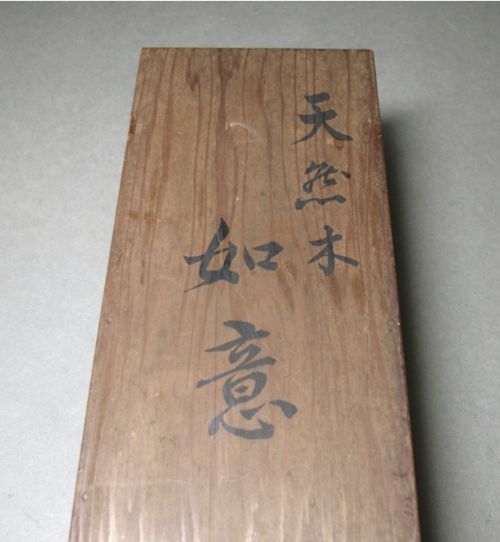
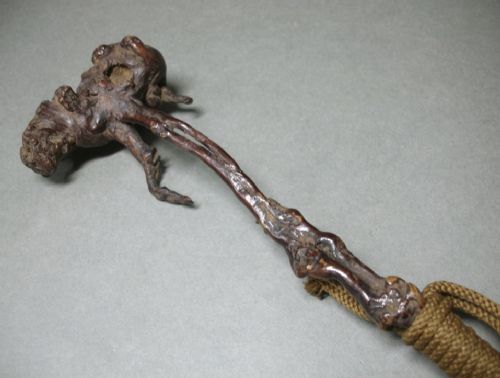
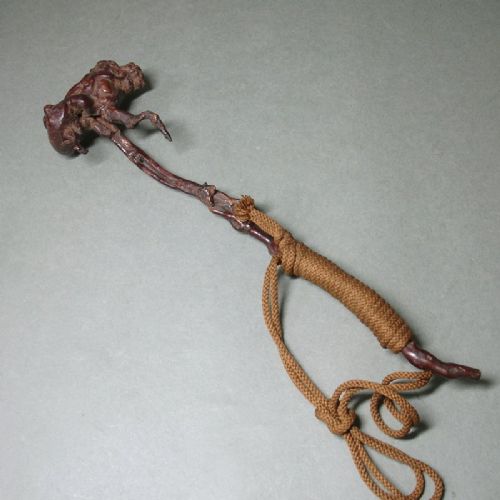
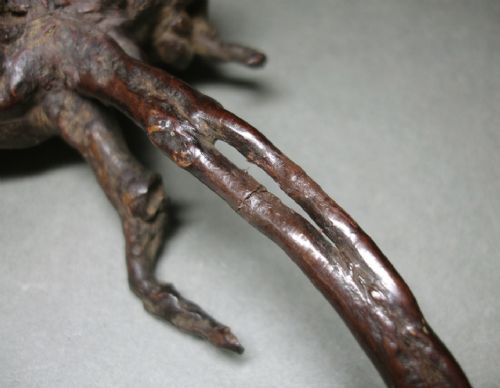
Japanese Edo (mid-19thC) Buddhist root wood ‘lingzhi’ ruyi (ceremonial sceptre) with a traditional long handle and a head fashioned like a fist, cloud, or lingzhi mushroom. It has been worked into a root, its shape reminiscent of the lingzhi (or reishi), a fungus or dark mushroom that grows on trees in East Asia. 30cm long x 8cm wide, weight 250g (with box). Old signed box.
The nyoi/ruyi is a sacred object used by monks when chanting sutras and preaching, and symbolizes the transmission of Buddhist teachings. They are constructed from diverse materials, for example the Palace Museum in Beijing houses some 3,000 ruyi variously made of gold, silver, iron, bamboo, wood, ivory, coral, rhinoceros horn, lacquer, crystal, jade and precious gems. The Lingzhi fungus has been used in traditional Japanese (and Chinese) medicine for centuries to promote health and longevity. It's also known as the ‘mushroom of immortality’ and is believed to treat the heart, reduce stress and inflammation, and also bring good luck. It’s extremely rare in its natural form, with only two or three out of 10,000 aged trees having lingzhi growth.

Date of Manufacture

Antik Dragon Japanese & Other Fine Art has dated this Japanese Root Wood Ruyi to the 1850s.

Physical Dimensions
Width
30cm (11.81")
Depth
8cm (3.15")
Reference Numbers
Sellingantiques Reference
SA1215592
Dealers Internal Reference
AD1344
Description
Japanese Edo (mid-19thC) Buddhist root wood ‘lingzhi’ ruyi (ceremonial sceptre) with a traditional long handle and a head fashioned like a fist, cloud, or lingzhi mushroom.
“
It has been worked into a root, its shape reminiscent of the lingzhi (or reishi), a fungus or dark mushroom that grows on trees in East Asia.
Antik Dragon Japanese & Other Fine Art

30cm long x 8cm wide, weight 250g (with box). Old signed box.

fig 1. An antique Japanese Edo period root wood ruyi sceptre featuring gnarled natural timber and a tightly bound cord handle.
fig 1. Japanese Edo (Mid-19thc) Buddhist Root Wood Ruyi (Sceptre)

The nyoi/ruyi is a sacred object used by monks when chanting sutras and preaching, and symbolizes the transmission of Buddhist teachings. They are constructed from diverse materials, for example the Palace Museum in Beijing houses some 3,000 ruyi variously made of gold, silver, iron, bamboo, wood, ivory, coral, rhinoceros horn, lacquer, crystal, jade and precious gems. The Lingzhi fungus has been used in traditional Japanese (and Chinese) medicine for centuries to promote health and longevity. It's also known as the ‘mushroom of immortality’ and is believed to treat the heart, reduce stress and inflammation, and also bring good luck. It’s extremely rare in its natural form, with only two or three out of 10,000 aged trees having lingzhi growth.

Date of Manufacture

Antik Dragon Japanese & Other Fine Art has dated this Japanese Root Wood Ruyi to the 1850s.

Width
30cm (11.81")
Depth
8cm (3.15")
Reference Numbers
Sellingantiques Ref
SA1215592
Dealers Internal Ref
AD1344
Antik Dragon Japanese & Other Fine Art
Sellingantiques verified Since Oct 2021
Dealer Profile

You can view the stock and full dealer information on the Antik Dragon Japanese & Other Fine Art Profile Page
PDF SHARE
SAVE
An antique Japanese Edo period root wood ruyi sceptre featuring gnarled natural timber and a tightly bound cord handle. SOLD19 JUN 26
1 / 9
Archive I An antique Japanese Edo period root wood ruyi sceptre featuring gnarled natural timber and a tightly bound cord handle. SOLD19 JUN 26

Japanese Edo (Mid-19thc) Buddhist Root Wood Ruyi (Sceptre)
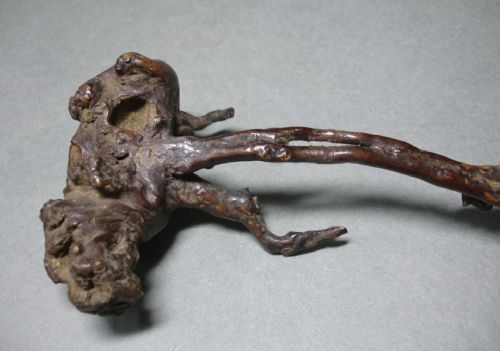
Archive II An antique Japanese Edo period root wood ruyi sceptre featuring gnarled natural timber and a tightly bound cord handle. View II
Archive III An antique Japanese Edo period root wood ruyi sceptre featuring gnarled natural timber and a tightly bound cord handle. View III
Archive IV An antique Japanese Edo period root wood ruyi sceptre featuring gnarled natural timber and a tightly bound cord handle. View IV
Archive V An antique Japanese Edo period root wood ruyi sceptre featuring gnarled natural timber and a tightly bound cord handle. View V
Archive VI An antique Japanese Edo period root wood ruyi sceptre featuring gnarled natural timber and a tightly bound cord handle. View VI
Archive VII An antique Japanese Edo period root wood ruyi sceptre featuring gnarled natural timber and a tightly bound cord handle. View VII
Archive VIII An antique Japanese Edo period root wood ruyi sceptre featuring gnarled natural timber and a tightly bound cord handle. View VIII
Archive IX An antique Japanese Edo period root wood ruyi sceptre featuring gnarled natural timber and a tightly bound cord handle. View IX
Enlarged Archival View
Telephone 07975 614592
Location
Bath
Somerset
United Kingdom
Verified Since Oct 2021
Items For Sale 35
Items Sold 783
Antik Dragon Japanese & Other Fine Art
Verified Since Oct 2021
View Dealer Info
Location: Bath, Somerset, United Kingdom
Verified
Oct 2021
For Sale
35
Sold
783
An antique Japanese Edo period root wood ruyi sceptre featuring gnarled natural timber and a tightly bound cord handle.
Japanese Edo (mid-19thC) Buddhist Root Wood Ruyi (Sceptre)
Ref: SA1215592
An antique Japanese Edo period root wood ruyi sceptre featuring gnarled natural timber and a tightly bound cord handle.
Detail View 1
Detail View 2
Detail View 3
Detail View 4
Detail View 5
Detail View 6
Detail View 7
Detail View 8
Archival Detail
Every single antique dealer on our platform is individually approved by our internal team. We verify their professional trade history, ethical standards, and photographic quality to ensure a secure, high-standard buying environment. Upon joining, every dealer agrees to a strict 9-point code of conduct. While issues can occasionally arise, our dealers typically resolve them swiftly and directly with the buyer. In fact, since our founding in 2002, Sellingantiques has only had to step in to help resolve an issue on roughly five occasions—a true testament to the quality of our dealers and their dedication to your happiness.
Our dealers are highly experienced in packing and shipping fragile, high-value antiques. Because you are in direct contact with the dealer, you will be able to easily go through all available shipping and insurance options together to ensure your item arrives safely.
Antiques are the ultimate green purchase. By choosing historical pieces over newly manufactured goods, you completely eliminate the carbon footprint of modern mass production while preserving exceptional, timeless craftsmanship.
Written by Sellingantiques from the dealer’s photographs and listing
  • ObjectCeremonial Objects
  • Period19th century
  • StyleJapanese Edo
  • Material[Root Wood, Natural Fibre Cord]
  • ColourDark Brown
  • MotifsGnarled natural timber, Woven cord wrapping, Cloud-shaped head
  • SizeW 30 cm (12 in) x D 8 cm (3 in)

Originating in China and adopted across East Asia, the ruyi is a ceremonial sceptre that symbolises power, authority, and good fortune, frequently used in Buddhist rituals and by high-ranking officials.

Craftsmen typically utilised natural burl or root wood, selecting gnarled and contorted branches that resembled auspicious shapes, often supplemented with woven cord bindings.

Authentication relies on examining the patina, tool marks, natural wear patterns, shrinkage cracks, and the specific characteristics of the wood species native to the historical period.

Displaying the piece on a bespoke stand or mounting it within a minimalist cabinet allows its organic form and historical texture to serve as a focal point in a curated study or living space.

To prevent drying and splitting, maintain stable indoor humidity levels, keep the object out of direct sunlight, and gently dust with a soft, dry brush without applying chemical polishes.
items
Add keywords to the filter
Price
£100
£250000
Era
Period
Style
Material
Origin
Stock Location
Recently Added
Online Payments
Categories