


A 2026 Guide by Sellingantiques

Gentleman’s Walking Stick Sword Stick 1918, 1920
Priced at £895 from Sovereign Antiques Of Nuneaton
Carrying an antique walking stick became standard dress code for gentlemen during the seventeenth century as swords were phased out.
Look at the transition from function to fashion. Late nineteenth-century examples often served as decorative accessories for city walking.
Different professions sometimes carried specific forms of these sticks, identifying their trade or status within a community.
System sticks concealed gadgets inside the shaft, ranging from telescopes to hidden flasks.
Brigg of London operated through the late nineteenth and twentieth centuries, stamping their name onto silver collars and wooden shafts.
Howell of London made thousands of antique walking sticks for the retail market, often leaving a small maker's mark.
Tiffany & Co supplied silver handles for presentation canes during the late nineteenth century.
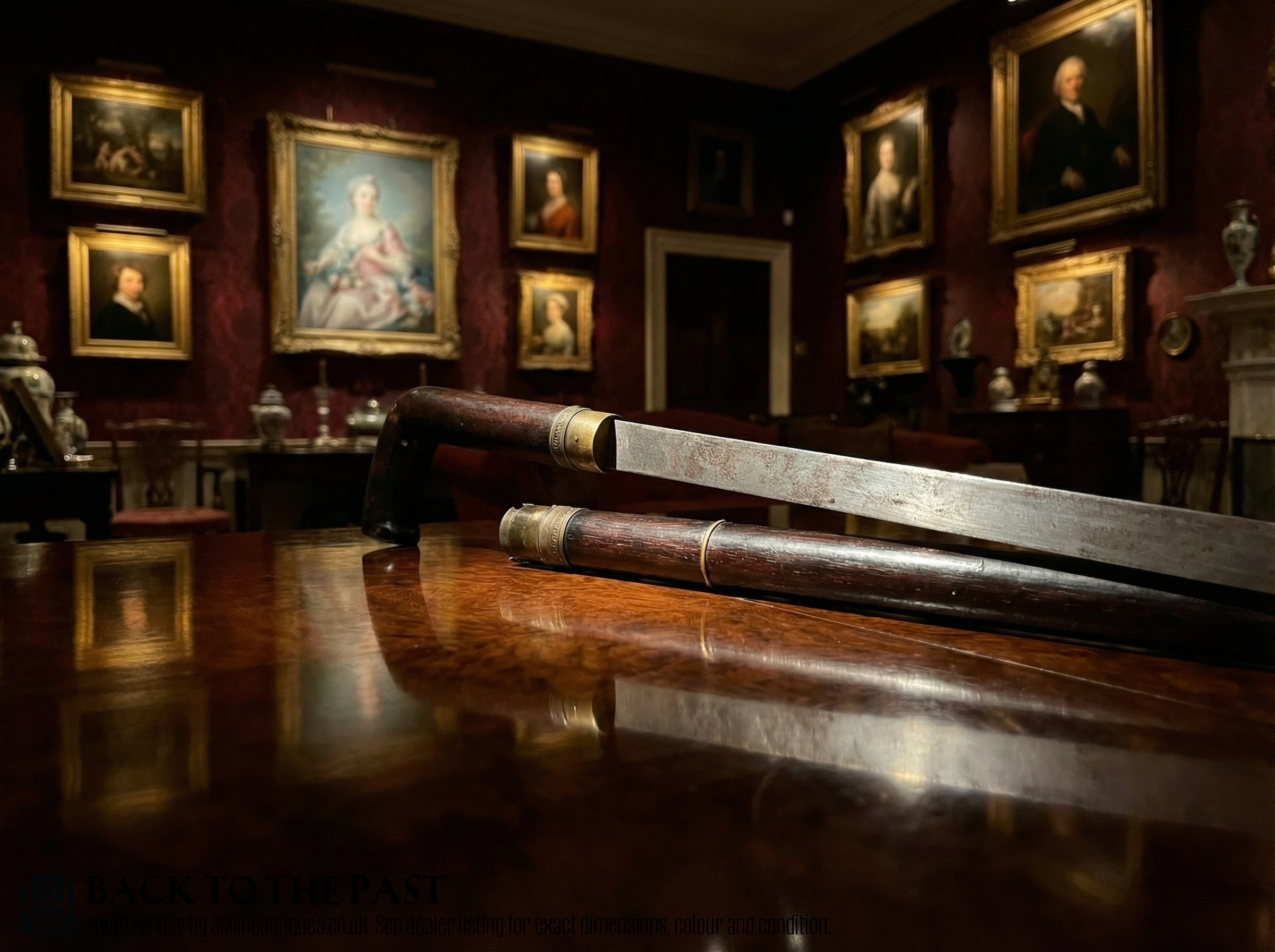
Gentleman’s Walking Stick Sword Stick Victorian, Victorian
Priced at £695 from Sovereign Antiques Of Nuneaton
The 2026 retail price guide for Antique Walking Sticks is drawn from a proprietary archive of over 1.1 million retail prices indexed by Sellingantiques since 2003. This guide relies exclusively on their own internal data; no external sources or auction records are used.
Analysing nearly 25 years of UK antique market history alongside current retail values, the data indicates that typical UK retail prices for Antique Walking Sticks range between £200 and £800. Entry-level prices generally fall under £200 and premium examples upwards of £800.
The ferrule protects the base of the cane from splitting on pavements, usually formed from brass or iron.
Notice the shaft taper. A proper antique walking stick narrows gradually towards the ground for balance.
Some grips feature an L-shape or crook, giving the user a broad surface to rest their weight.
Bending a wood crook required steam treating the timber before clamping it around a shaped former to cool.
Early shafts were shaped by hand with drawknives, leaving slight irregularities along the length of the antique walking stick.
Machine turning became common later on, producing uniform, round shafts without the subtle variations of hand work.
"Many concealed musical instruments like flutes or harmonicas, offering portable entertainment for travellers."
"A well-balanced cane was considered a gentleman's primary defence tool, prompting the development of specialised stick-fighting martial arts."
"Some hollow glass examples were made by glassblowers at the end of a shift to display their skill."
Based on almost 25 years of Sellingantiques UK antique market data, Antique Walking Sticks appeared 3350 times (out of 1,100,000 antiques) which gives it a rarity score of 51/100.
This score measures scarcity within the Sellingantiques archive only and is not a survey of the entire antiques market, so these statistics may not be indicative of the general availability of Antique Walking Sticks elsewhere.
Turn the stick upside down and measure from the base of the ferrule to the highest point of the handle. This gives the overall length used to gauge whether a cane suits a specific user.
Historically, makers measured in inches. Most standard examples fall between thirty-two and thirty-six inches.
Missing ferrules are a standard issue. You can have a new metal tip fitted by a specialist restorer to protect the shaft from further damage.
They will need to trim the split timber back to solid wood before attaching the new ferrule. This shortens the antique walking stick slightly.
A wrist cord stops the cane falling to the ground if the user loses their grip.
It also allows the owner to hang the stick from a peg when not in use.
Metal handles cast in bronze or brass add extra weight to the top of the stick. This shifts the centre of gravity away from the shaft, altering how the cane swings during a walk.
Novelty shapes like animal heads were cast solid rather than hollow. The heavy top requires a dense wood shaft to keep the cane balanced in the hand.
Please note: This Antique Walking Sticks guide and its associated pricing data are provided for general informational purposes only. It does not constitute formal financial, investment, or appraisal advice and should not be relied upon as the sole basis for any commercial activity, purchasing, or sales decisions. Sellingantiques.co.uk accepts no liability for any actions taken in reliance on this information. Always consult with a qualified professional or independent appraiser.
