
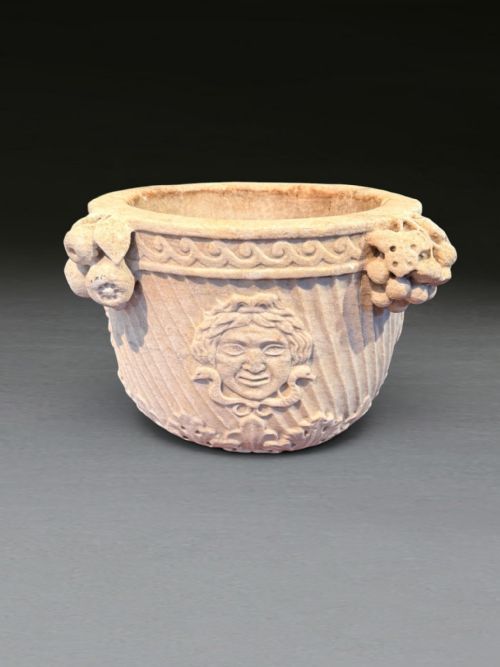
A 2026 Guide by Sellingantiques
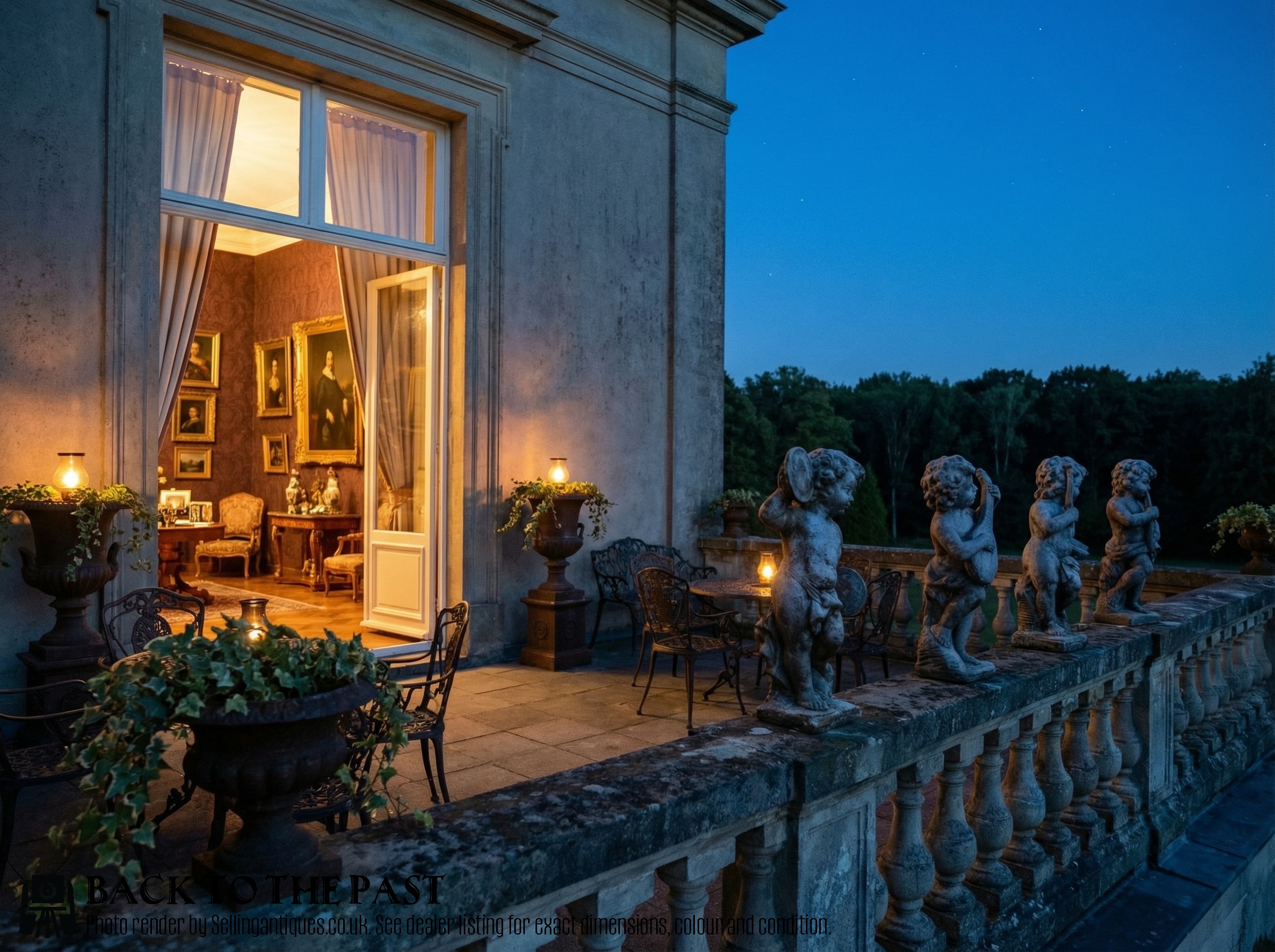
A Set of 4 Weather Worn Cherub Statues with Instruments, 1920
Priced at £2,500 from Elmgarden
Grand Tour travellers driving demand for specimen marbles during the eighteenth century.
Many antique stones were salvaged from Roman ruins before being repurposed into table tops and cabinets.
Look at the trade routes that brought lapis lazuli from Afghanistan into Europe.
Cameos and intaglios provided a way to carry classical art in a pocket.
Old mine cutting techniques developing before the advent of mechanised shaping.
The Opificio delle Pietre Dure in Florence produced some of the most complex inlaid stone panels.
Roman gem engravers like the Pichler family dominated the neoclassical market for carved stones.
Provincial lapidaries handled local materials like Derbyshire Blue John without leaving individual maker marks.
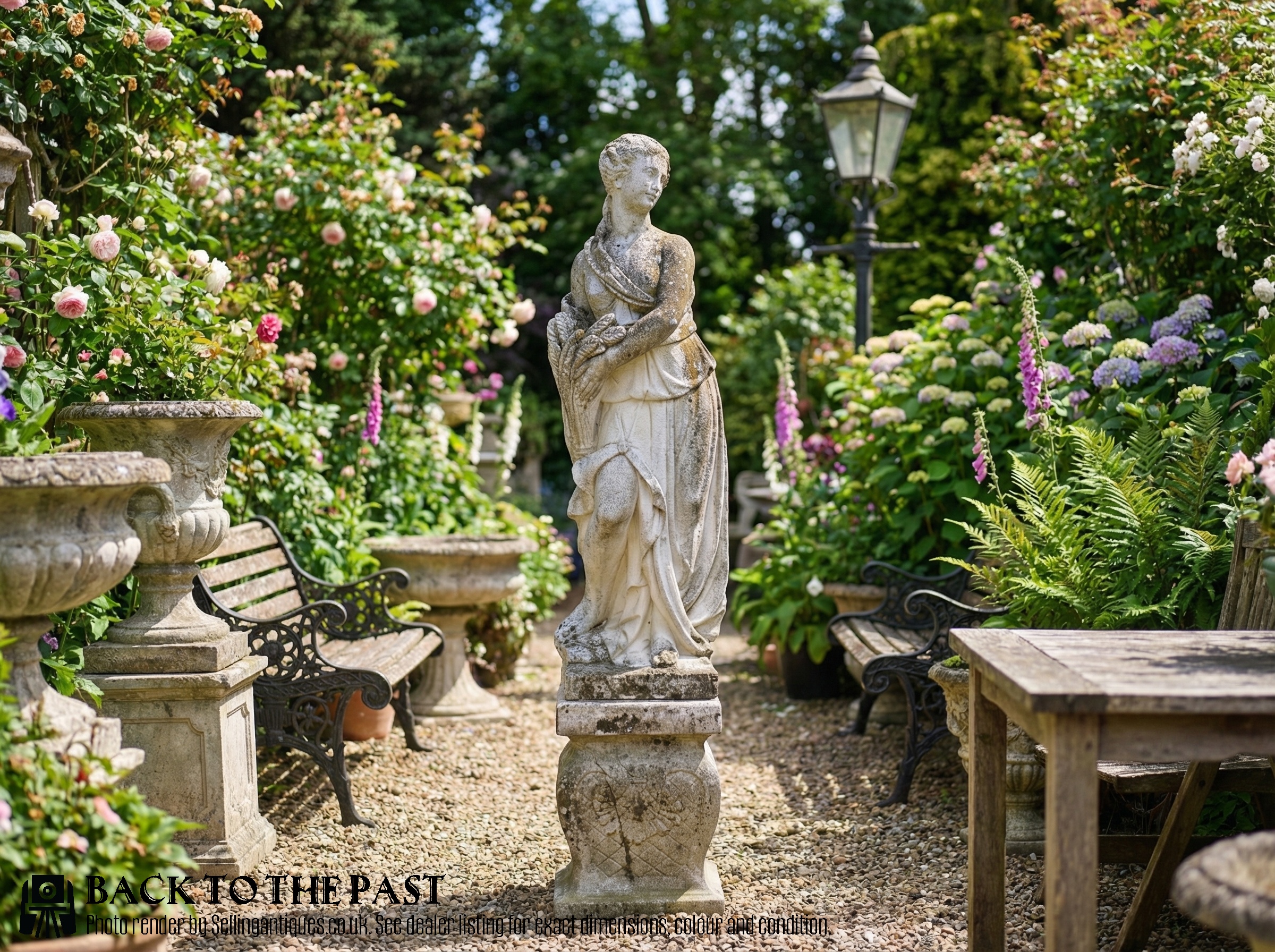
Large Stone Grecian Lady Garden Statue on Plinth, 1950
Priced at £1,295 from Vintage Garden UK
The 2026 retail price guide for Antique Stones is drawn from a proprietary archive of over 1.1 million retail prices indexed by Sellingantiques since 2003. This guide relies exclusively on their own internal data; no external sources or auction records are used.
Analysing nearly 25 years of UK antique market history alongside current retail values, the data indicates that typical UK retail prices for Antique Stones range between £400 and £3,500. Entry-level prices generally fall under £400 and premium examples upwards of £3,500.
Hand-faceted gems show irregular crowns and prominent culets compared to modern equivalents.
Check the polish on specimen marbles.
Intaglios usually feature a reverse-carved motif designed to leave a raised impression in wax.
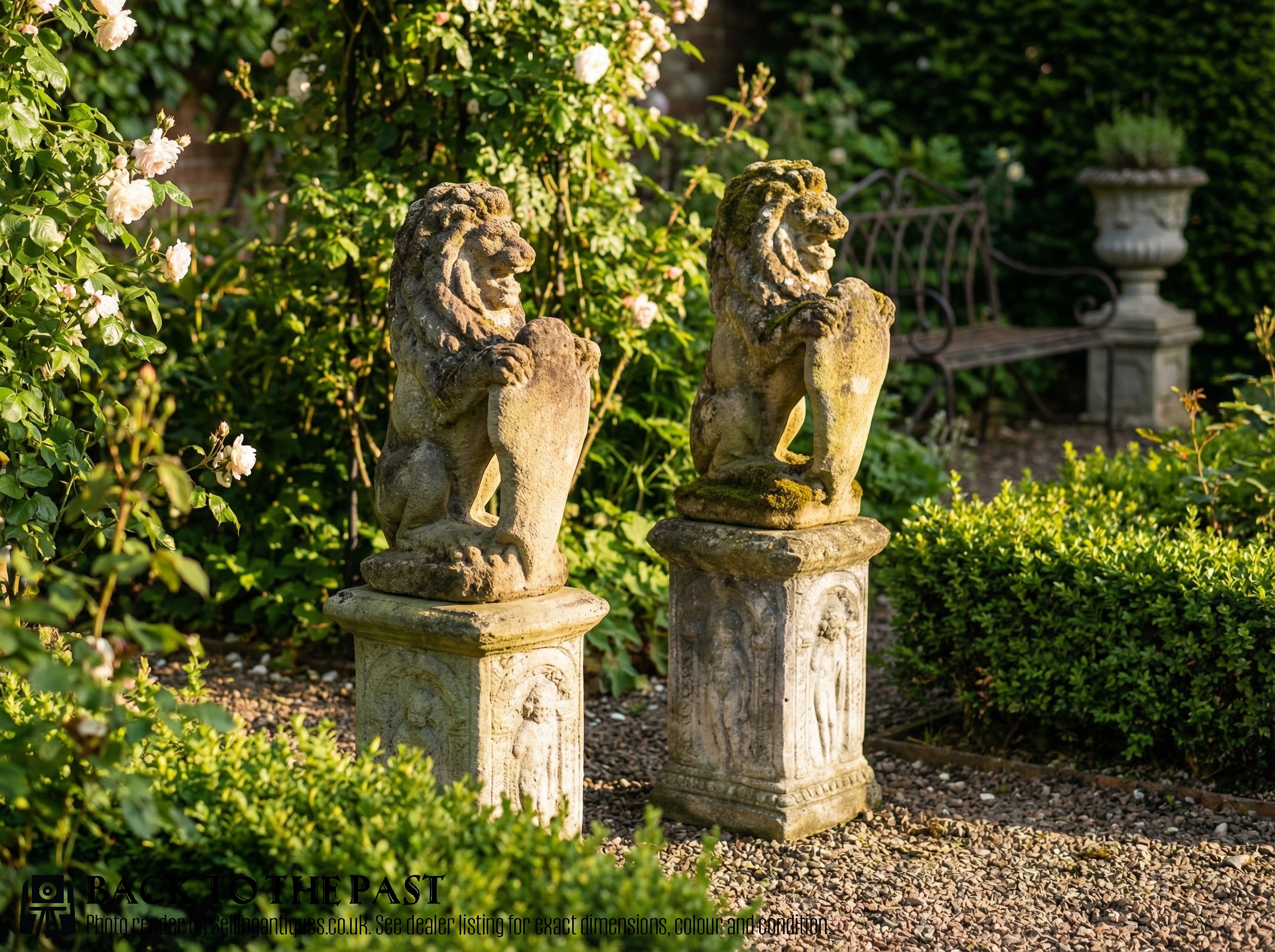
Pair Garden Stone Seated Lions on Plinths, 1950
Priced at £695 from Vintage Garden UK
Early cutting relied on muscle power and rudimentary abrasives like diamond dust to slowly grind away material.
Notice the subtle asymmetry in Georgian faceting.
Mechanisation eventually introduced strict geometry that replaced the slightly wonky character of older stones.
"Many classical intaglios were actually carved during the eighteenth century as high-quality homage pieces."
"Scratches on the base of a heavy specimen block tell a rich story of domestic movement."
"Some regional stones were exhausted centuries ago, making antique examples the only way to own them."
Based on almost 25 years of Sellingantiques UK antique market data, Antique Stones appeared 6982 times (out of 1,100,000 antiques) which gives it a rarity score of 25/100.
This score measures scarcity within the Sellingantiques archive only and is not a survey of the entire antiques market, so these statistics may not be indicative of the general availability of Antique Stones elsewhere.
It's an early style of faceting used before the twentieth century.
These stones feature a high crown and a visible flat facet at the bottom called a culet. They were cut by hand to sparkle under candlelight.
Start with a soft dry cloth to remove loose dust. You'll want to avoid any acidic cleaners because they will etch the marble and dull the finish.
If it needs more, use a slightly damp cloth with a diluted mild soap solution. Wipe it dry immediately. Do not let water sit on the joints, as it can loosen the historical cement holding the inlay together.
Keep them separated in a padded tray. Hardstones can easily scratch each other if they rattle around loose in a drawer.
Wrap individual pieces in acid-free tissue paper if you lack a compartmentalised box. This prevents surface abrasion and protects them from sudden temperature shifts.
Crests usually indicate a seal matrix. These were pressed into hot wax to seal letters and prove the sender's identity.
Carved faces are often cameos or intaglios collected during European travels. Many tourists bought them as loose stones and later had them mounted into rings or fobs back home.
Some plain polished stones might simply be regional souvenirs. People often collected local agates and had them polished as a record of a trip.
Please note: This Antique Stones guide and its associated pricing data are provided for general informational purposes only. It does not constitute formal financial, investment, or appraisal advice and should not be relied upon as the sole basis for any commercial activity, purchasing, or sales decisions. Sellingantiques.co.uk accepts no liability for any actions taken in reliance on this information. Always consult with a qualified professional or independent appraiser.
