


A 2026 Guide by Sellingantiques
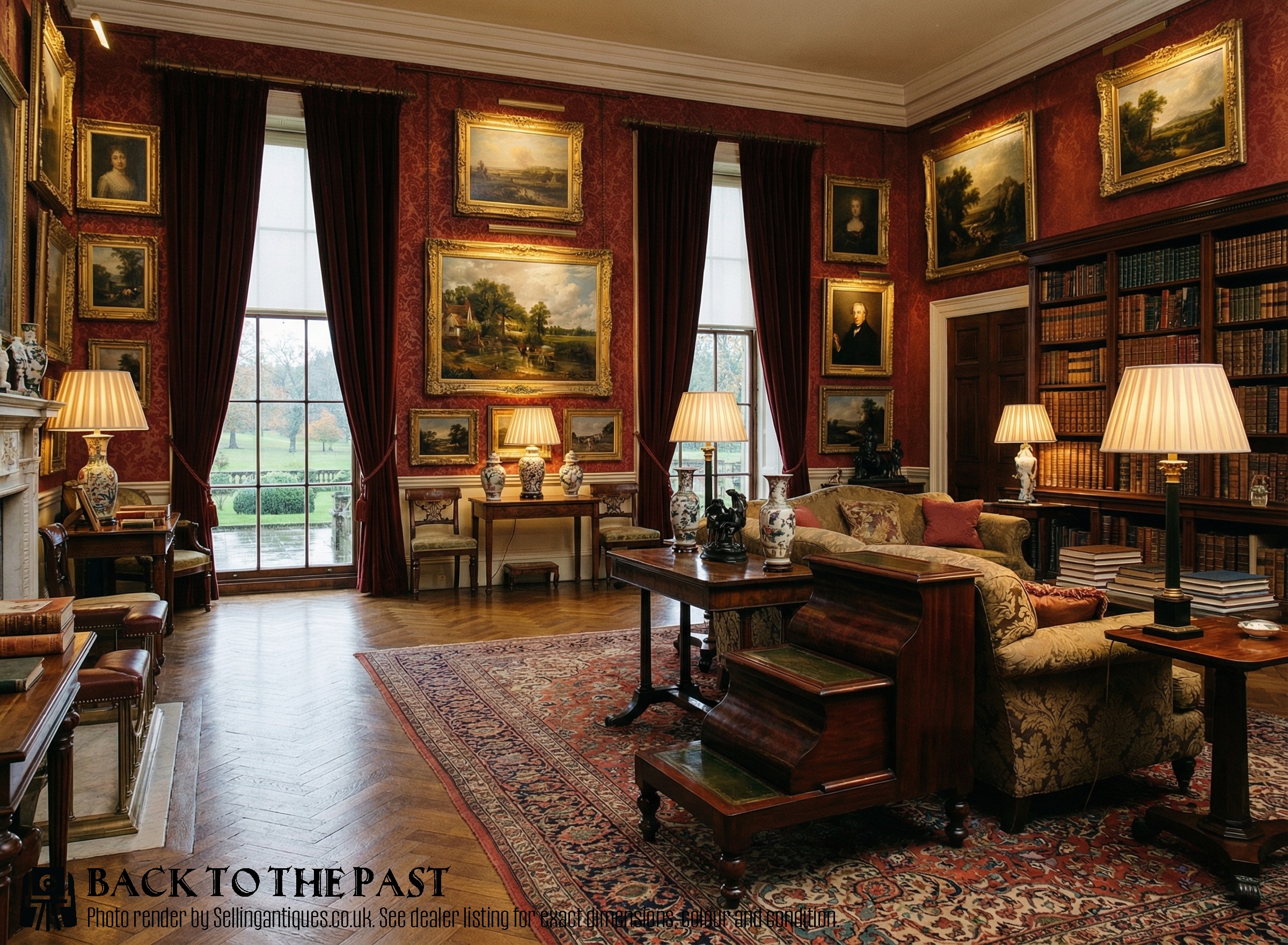
Victorian Mahogany Library Steps, 19th Century
Priced at £795 from LTANTIQUES.CO.UK
Wealthy Georgian homeowners filled their large country houses with extensive book collections. They commissioned bespoke wooden stairs to reach the highest shelves without relying on ladders.
Most early antique steps date to the Georgian period when private libraries grew taller.
Bed steps appeared as mattresses were stuffed higher with feathers.
Look for dual-purpose designs. Many antique steps doubled as seating or tables to save space in crowded rooms.
By the Victorian era, wealthy households required sets for different floors. Often ordered in pairs.
Gillows of Lancaster produced hundreds of bed steps during the late eighteenth and early nineteenth centuries.
Francois Hervé supplied specialised folding library steps to aristocratic estates during the late eighteenth century. His designs often featured intricate mechanisms hidden within standard seating.
Thomas Sheraton published designs for metamorphic library steps. Many provincial workshops copied these patterns directly.
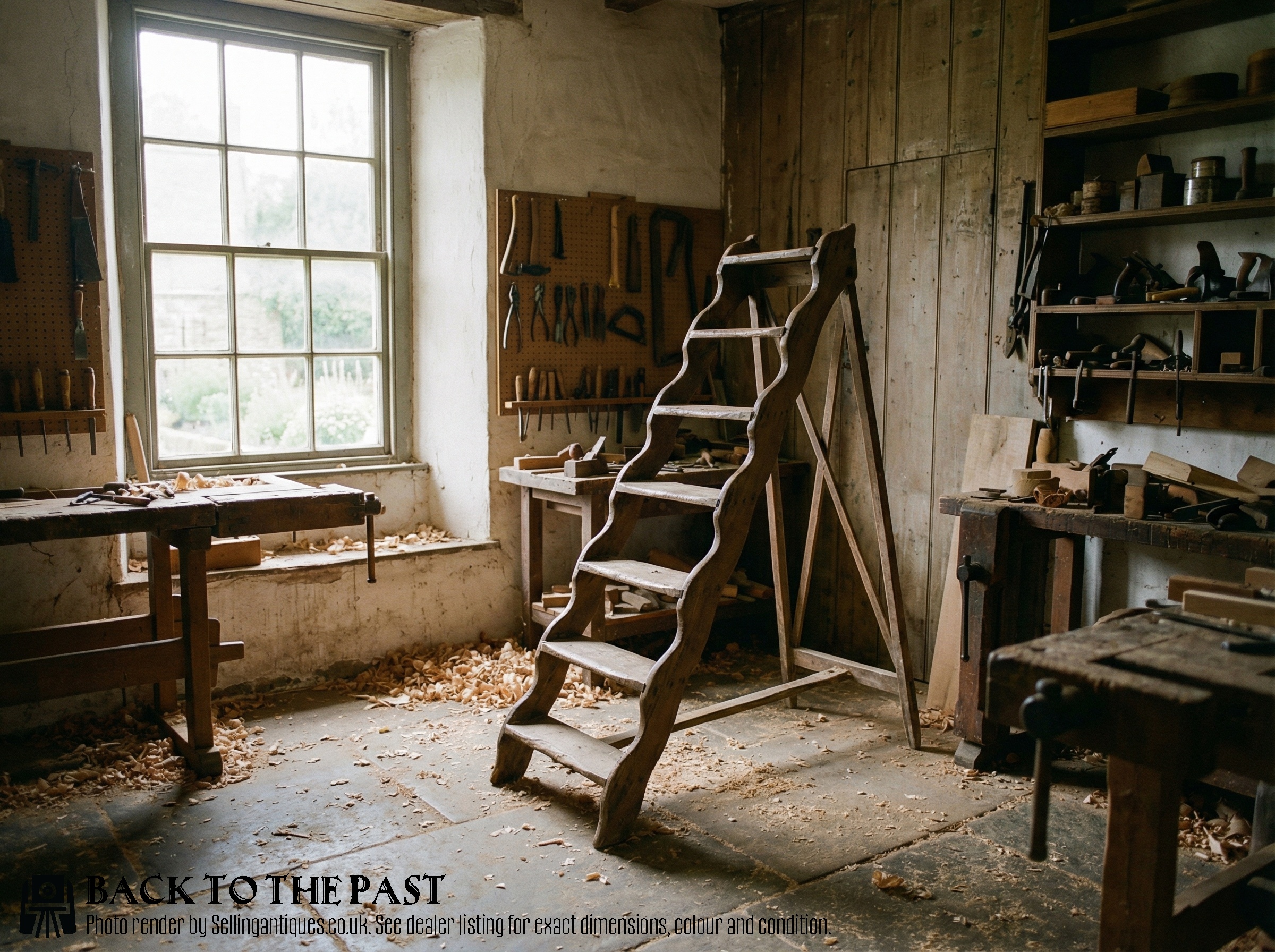
19th Century Pine Step Ladder, 19th Century
Priced at £700 from Elmgarden
The 2026 retail price guide for Antique Steps is drawn from a proprietary archive of over 1.1 million retail prices indexed by Sellingantiques since 2003. This guide relies exclusively on their own internal data; no external sources or auction records are used.
Analysing nearly 25 years of UK antique market history alongside current retail values, the data indicates that typical UK retail prices for Antique Steps range between £400 and £2,500. Entry-level prices generally fall under £400 and premium examples upwards of £2,500.
Lift the top tread on bed steps. You might find a deep hollow space meant for a chamber pot.
Turned wooden poles provided balance. Some spiral antique steps feature long handrails curving upwards.
Short turned legs usually finish in small brass castors. This simple addition made moving heavy frames across carpets much easier for domestic staff.
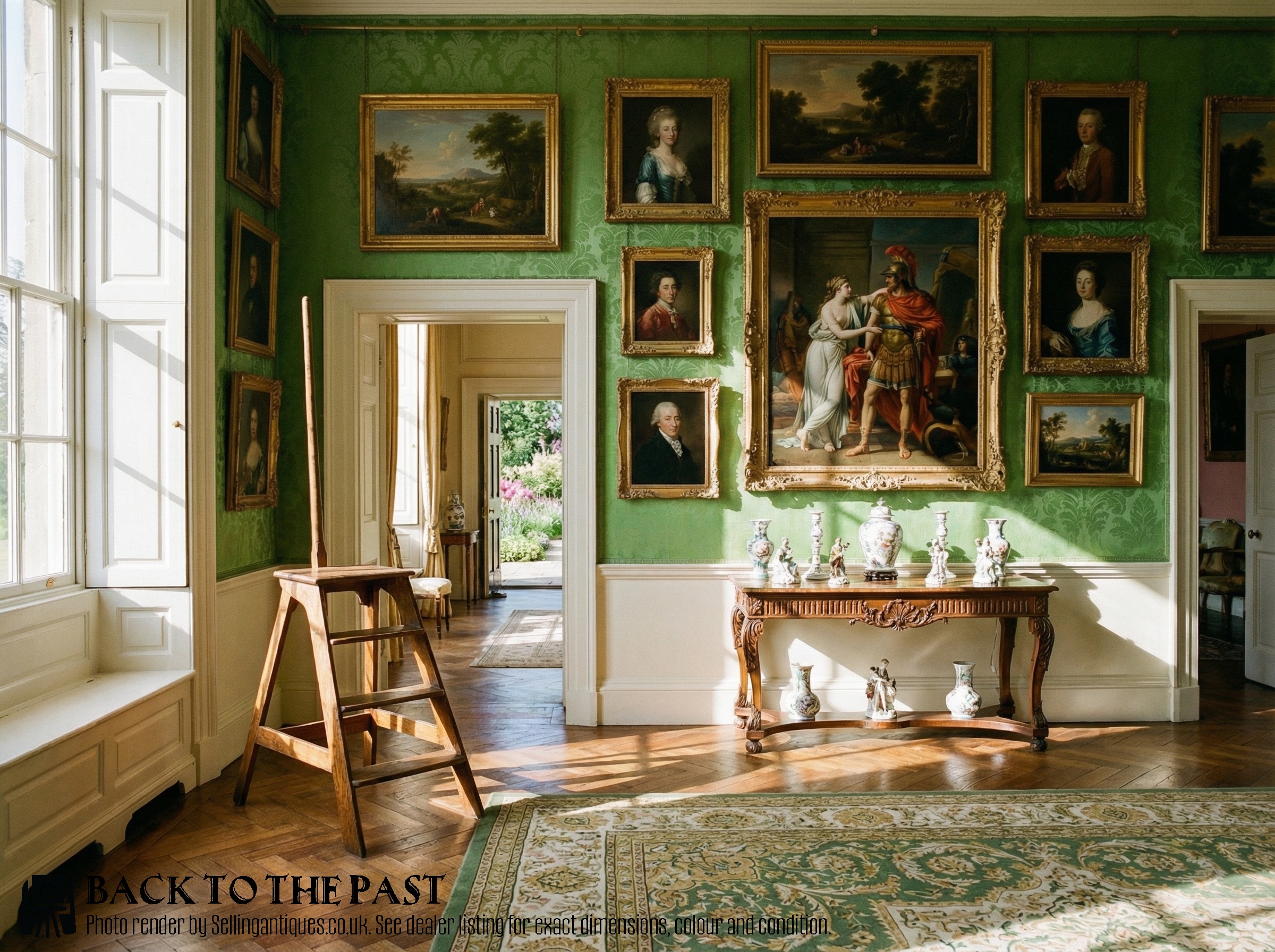
Oak Library Steps, 1920
Priced at £675 from Youlls Antiques
Early makers built simple fixed frames using stout mortise and tenon joints. These early designs focused purely on stability rather than hiding the function.
Later Georgian cabinetmakers introduced complex folding hinges. This allowed a discreet library chair to transform into four steps.
Victorian workshops focused on heavy baluster turnings. They favoured thick mahogany veneers laid over solid pine frames instead of using expensive hardwood throughout.
"Some library steps hide secret drawers in the risers. These stored small tools or reading glasses."
"Many bed steps slide away underneath the bed frame. They were built low enough to clear the valance."
"Library poles sometimes detach. The user could unscrew the tall wooden handle to store the steps inside a cupboard when not required."
Based on almost 25 years of Sellingantiques UK antique market data, Antique Steps appeared 1929 times (out of 1,100,000 antiques) which gives it a rarity score of 68/100.
This score measures scarcity within the Sellingantiques archive only and is not a survey of the entire antiques market, so these statistics may not be indicative of the general availability of Antique Steps elsewhere.
Most frames hold an adult. Check for wobbles.
Fold-out steps need closer inspection. Hinges bear the strain and sometimes warp.
Dense timbers like mahogany add weight to a small frame. They are heavy to lift.
Most makers fitted brass castors to the legs. This let housemaids wheel them instead.
Brass hinges need very little maintenance. A wipe with a dry cloth keeps dust out of the moving parts.
Avoid applying heavy oils or grease. These attract dirt and stain the timber if they seep into joints.
This describes bed steps with a built-in commode. People kept chamber pots in their bedrooms for night use before indoor plumbing.
Cabinetmakers disguised these sanitary fittings inside regular furniture. The pot hides beneath the hinged tread until needed.
Please note: This Antique Steps guide and its associated pricing data are provided for general informational purposes only. It does not constitute formal financial, investment, or appraisal advice and should not be relied upon as the sole basis for any commercial activity, purchasing, or sales decisions. Sellingantiques.co.uk accepts no liability for any actions taken in reliance on this information. Always consult with a qualified professional or independent appraiser.
