




A 2026 Guide by Sellingantiques
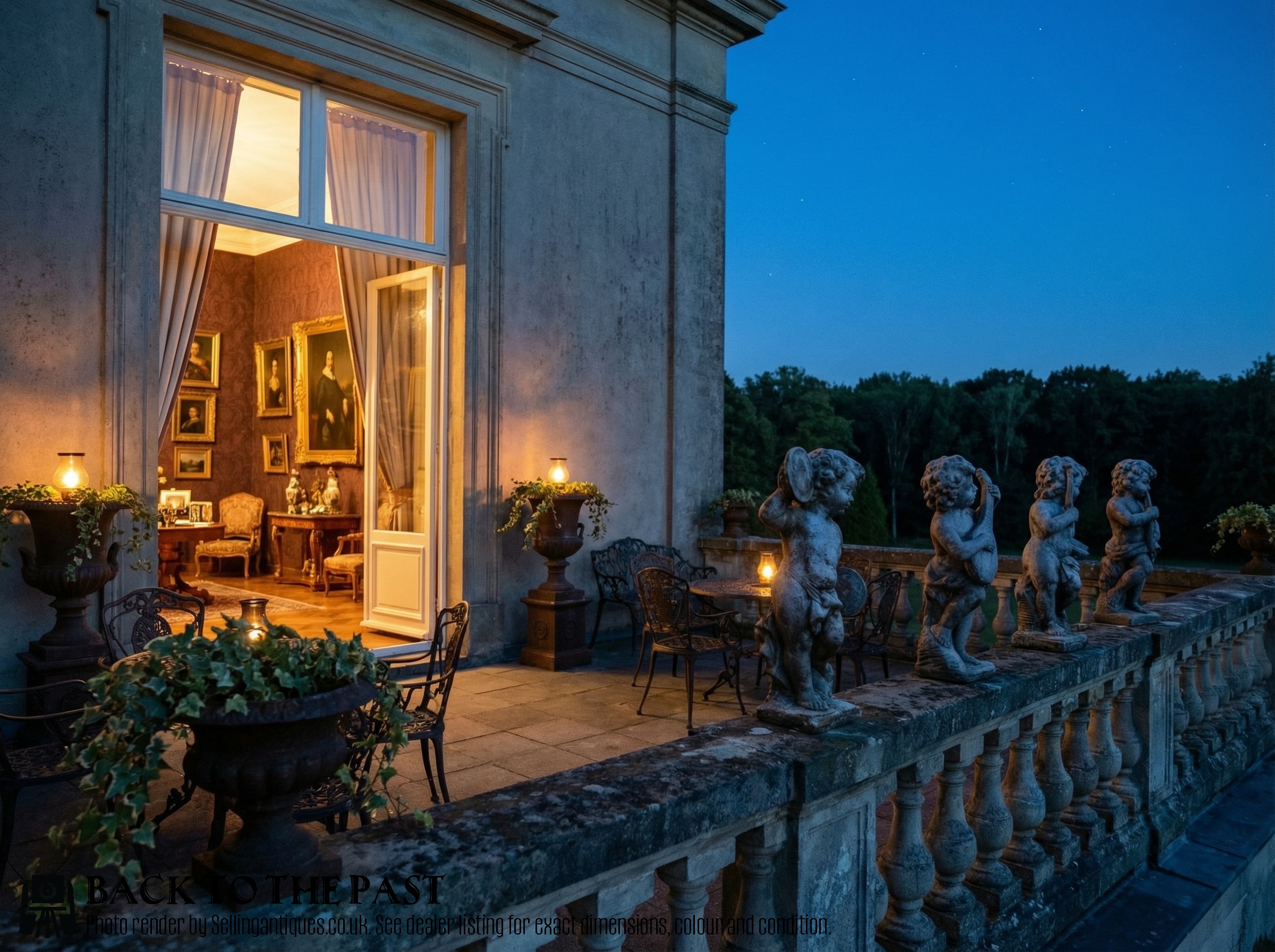
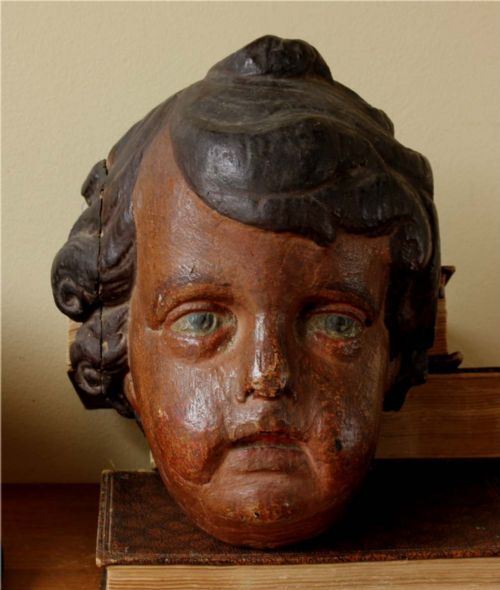
A Set of 4 Weather Worn Cherub Statues with Instruments, 1920
Priced at £2,500 from Elmgarden
Roman and Greek bronzes set a benchmark that later European founders tried to copy for centuries.
Classical figures dominated formal garden layouts.
Look at nineteenth-century French foundries for the start of mass commercial casting.
Wealthy travellers often bought small marble copies of classical antique statues on the Grand Tour.
Religious wooden figures formed the bulk of early carving.
Susse Frères operated in Paris and cast bronzes for prominent nineteenth-century animaliers.
Barbedienne produced crisp editions from the 1830s onwards.
Fonderia Chiurazzi in Naples reproduced classical Roman figures directly from museum moulds.
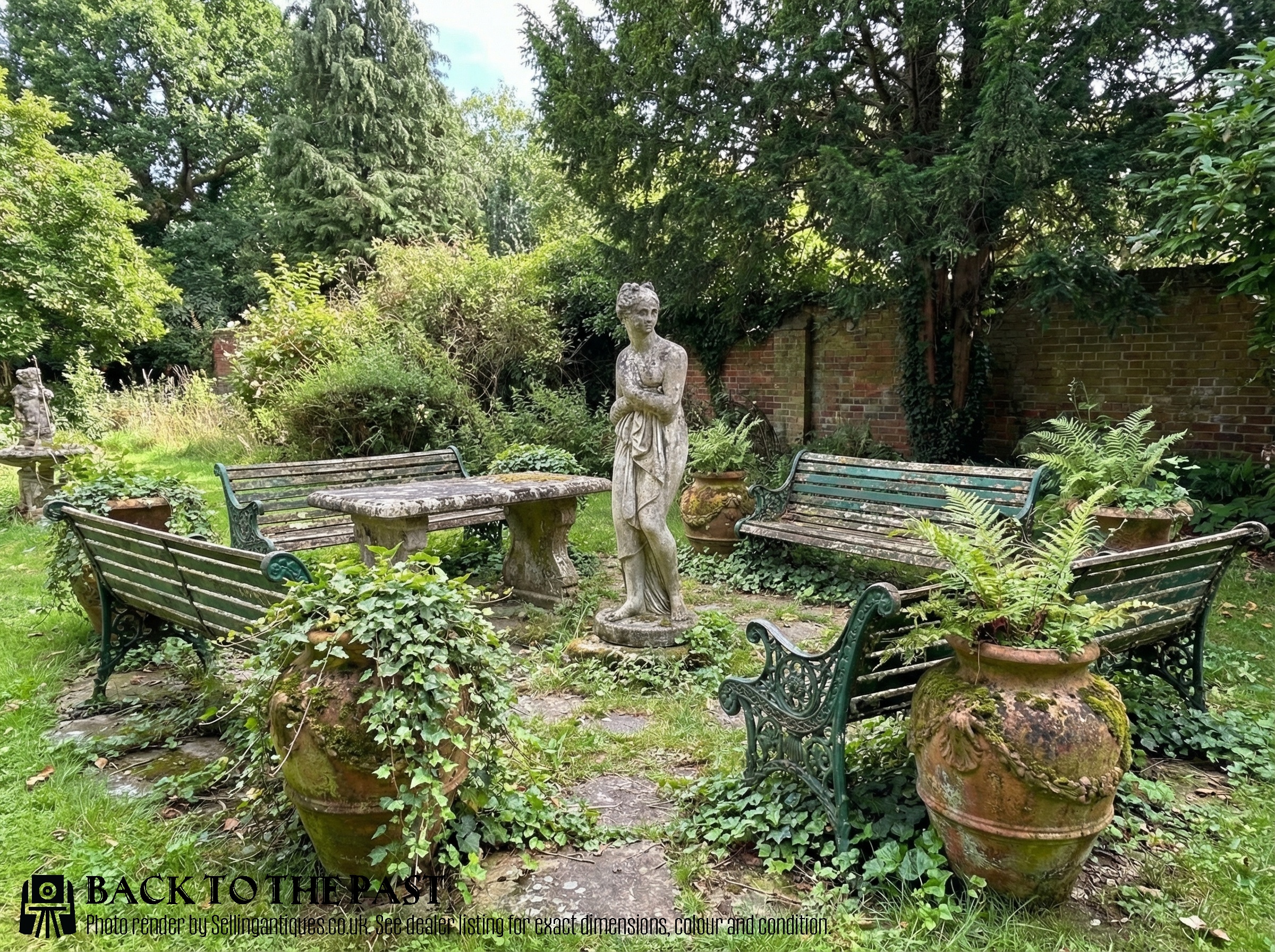
Stone Gretian Garden Statue, 1950
Priced at £795 from Vintage Garden UK
The 2026 retail price guide for Antique Statues is drawn from a proprietary archive of over 1.1 million retail prices indexed by Sellingantiques since 2003. This guide relies exclusively on their own internal data; no external sources or auction records are used.
Analysing nearly 25 years of UK antique market history alongside current retail values, the data indicates that typical UK retail prices for Antique Statues range between £500 and £4,500. Entry-level prices generally fall under £500 and premium examples upwards of £4,500.
Bases usually cast or carved integrally rather than added later.
Notice the patina. Bronze develops a surface colouring naturally over time through exposure to air.
Tooling marks left by chisels often remain visible on the unpolished rear faces.
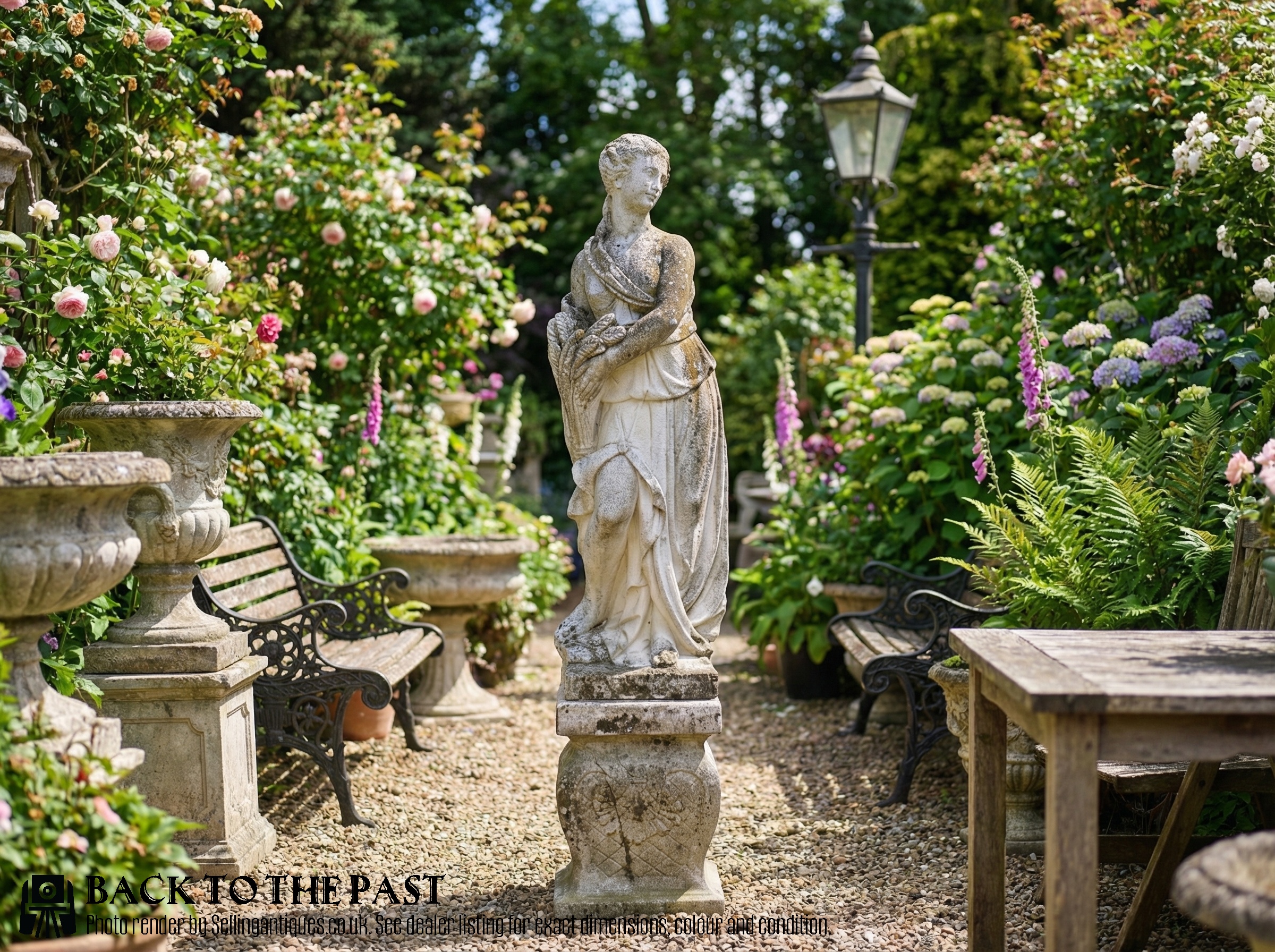
Large Stone Grecian Lady Garden Statue on Plinth, 1950
Priced at £1,295 from Vintage Garden UK
Lost-wax casting involves destroying the original mould. Each piece requires heavy manual finishing.
Sand casting became common for larger production runs of industrial bronze figures.
Stone carvers used pointing machines from the late eighteenth century to scale models up accurately.
"Many classical marble figures were originally painted in bright colours."
"Hidden foundry stamps often sit right underneath the base."
"Sand cast bronzes have small internal pins holding the core steady during pouring."
Based on almost 25 years of Sellingantiques UK antique market data, Antique Statues appeared 4490 times (out of 1,100,000 antiques) which gives it a rarity score of 41/100.
This score measures scarcity within the Sellingantiques archive only and is not a survey of the entire antiques market, so these statistics may not be indicative of the general availability of Antique Statues elsewhere.
Solid bronze is rare for larger figures. Most foundries used a hollow cast method to save metal and reduce the overall weight.
Even hollow pieces weigh enough to require reinforced pedestals. Moving a large statue usually takes lifting gear and a professional team.
Leave the surface alone. That weathering protects the stone underneath. Scrubbing removes the natural patination and can expose softer layers of marble to frost damage, which eventually causes cracking.
Soft bristle brushes and plain water help dislodge loose dirt. Harsh chemicals will stain the porous stone and ruin the established surface. Most collectors prefer outside pieces to show their age.
Dust it lightly with a dry cloth. Spelter has a fragile surface that flakes off easily.
Avoid liquid metal polishes. They strip the artificial coating and expose dull grey metal.
Damp travels up from the soil and causes frost damage during winter. Sitting them straight on grass is a risk.
A simple stone slab acts as a damp course. It also stops heavy bases from sinking unevenly into soft ground.
Please note: This Antique Statues guide and its associated pricing data are provided for general informational purposes only. It does not constitute formal financial, investment, or appraisal advice and should not be relied upon as the sole basis for any commercial activity, purchasing, or sales decisions. Sellingantiques.co.uk accepts no liability for any actions taken in reliance on this information. Always consult with a qualified professional or independent appraiser.
