

A 2026 Guide by Sellingantiques
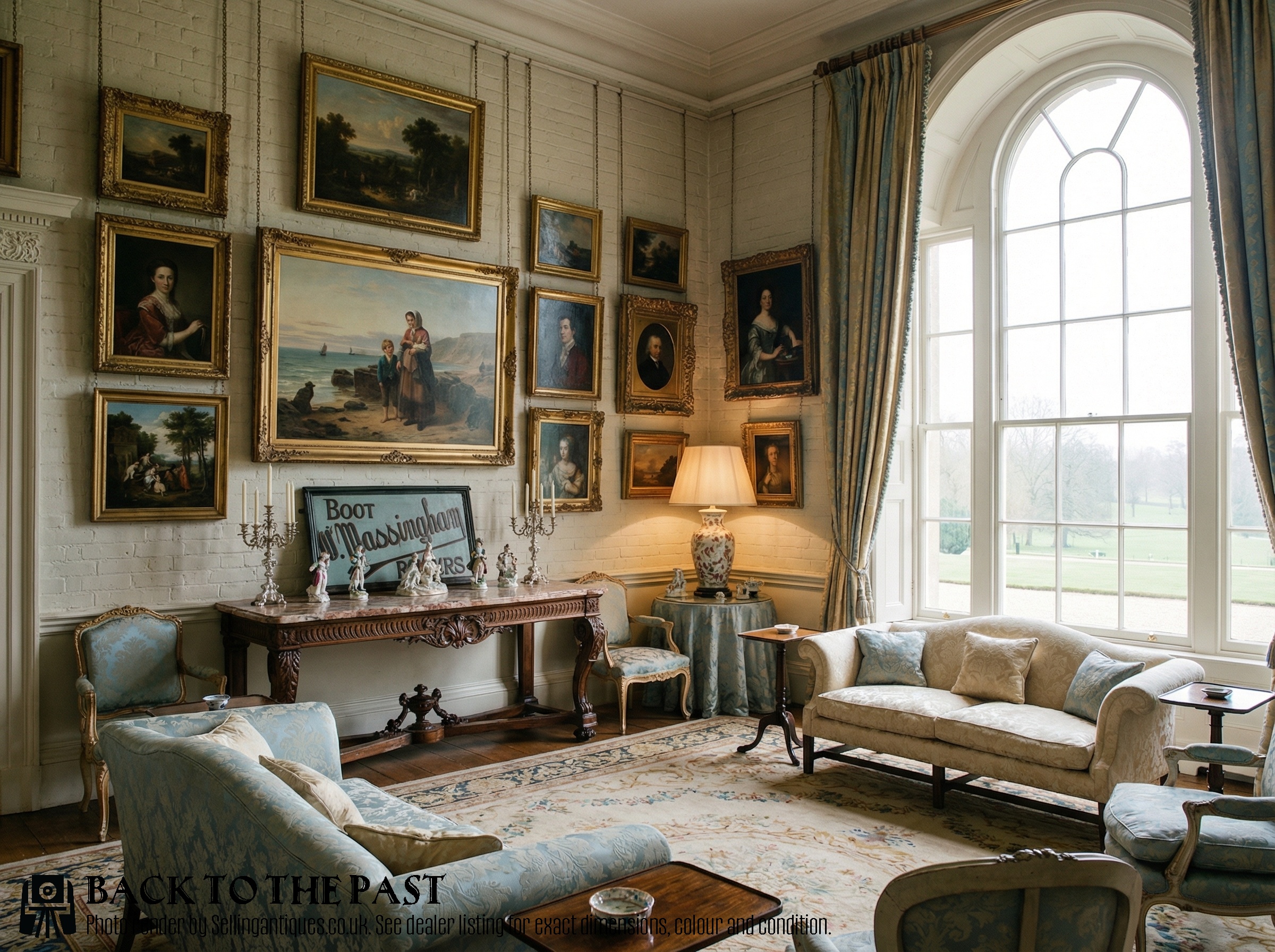
Sign Folk Art Shop Sign Metal Original Advertising C1900, 1900
Priced at £425 from Cloverleaf Home Interiors
Trade boards hung outside British shops long before mass literacy. Visual symbols like mortar and pestles communicated the business to everyone.
The industrial revolution altered how merchants operated. Antique signs became essential tools for national brands wanting visibility on railway platforms and shop fronts.
Look at the variety of late Victorian and Edwardian examples. Legislation eventually restricted overhead hanging boards, pushing businesses towards flat wall-mounted advertising.
The Patent Enamel Company of Birmingham produced thousands of panels from the 1880s onwards. They stamped their name in tiny letters at the bottom edge.
Chromo Enamel Ltd worked in Wolverhampton during the early twentieth century. Their output included complex pictorial designs for tobacco and soap brands.
Most wooden and glass examples lack identifying marks. Local signwriters painted these bespoke commissions, and they're rarely signed.
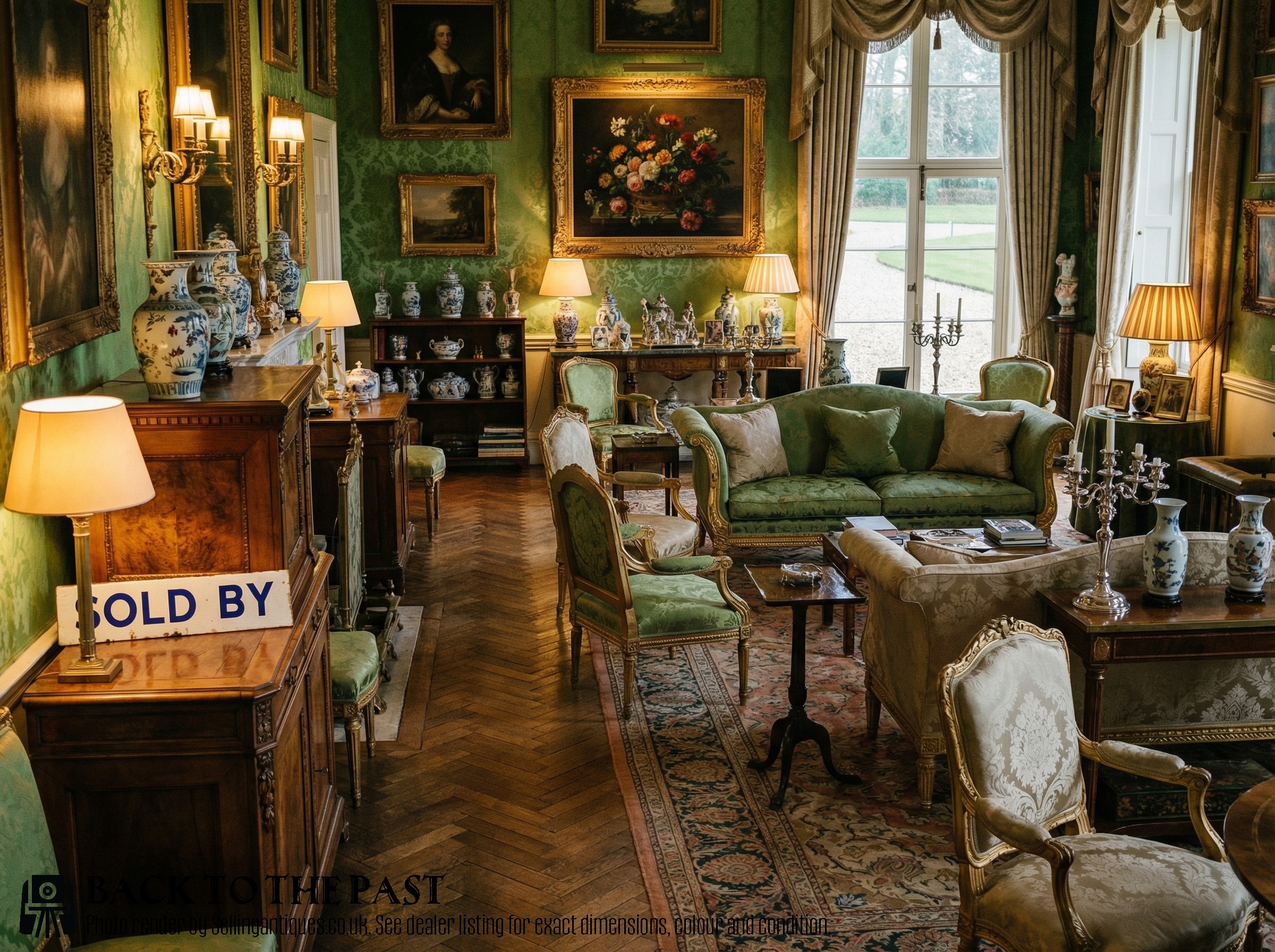
Sold By, Enamelled Double Sided Sign, C. 1910., Edwardian
Priced at £390 from Philip Carrol Antiques
The 2026 retail price guide for Antique Signs is drawn from a proprietary archive of over 1.1 million retail prices indexed by Sellingantiques since 2003. This guide relies exclusively on their own internal data; no external sources or auction records are used.
Analysing nearly 25 years of UK antique market history alongside current retail values, the data indicates that typical UK retail prices for Antique Signs range between £300 and £2,800. Entry-level prices generally fall under £300 and premium examples upwards of £2,800.
Bold typography dominates most layouts. Painters relied on heavy drop shadows to make the lettering stand out from a distance.
Flanged edges allow double-sided enamel pieces to project from a wall. These folded fixing strips usually have two or three mounting holes.
Check the mounting grommets on flat enamel advertising. Brass eyelets were often inserted into the fixing holes to protect the fragile glass surface from tightening screws.
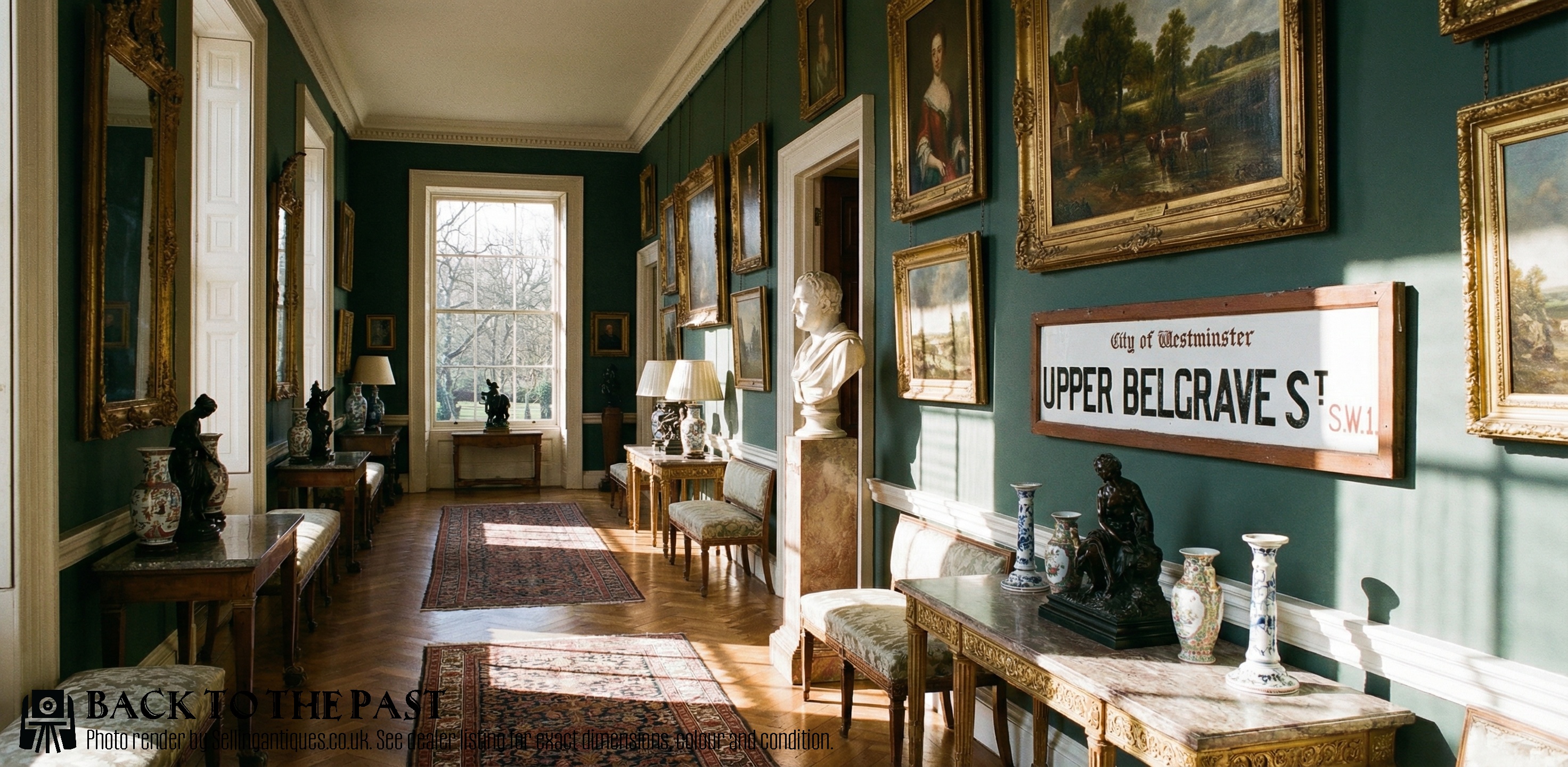
Upper Belgrave St. Vitriolite Glass Street Sign, C. 1910., 1910
Priced at £2,750 from Philip Carrol Antiques
Signwriters built up layers of oil-based paints on wooden panels. They had to wait days between coats for the slow-drying varnishes to cure.
Stencilling transformed metal advertising production. Workers brushed glass paste over intricate brass templates before firing each colour separately in massive kilns.
Reverse glass painting required working backwards. The artist applied the foreground details and gold leaf first, finishing with the solid background colour.
"Many heavy iron notices found secondary use during wartime scrap drives. Those that survived were often hidden in cellars or used to patch shed roofs."
"The brightest reds and yellows required multiple firings. Early makers achieved these vivid shades using cadmium and lead mixtures that have remained stable for a century."
"Lead-based paints bonded strongly with masonry. This durability means multiple layers of different designs often survive stacked on top of each other on brick walls."
Based on almost 25 years of Sellingantiques UK antique market data, Antique Signs appeared 10717 times (out of 1,100,000 antiques) which gives it a rarity score of 12/100.
This score measures scarcity within the Sellingantiques archive only and is not a survey of the entire antiques market, so these statistics may not be indicative of the general availability of Antique Signs elsewhere.
Use brass screws with rubber washers. Never tighten the screw directly against the face.
Over-tightening chips the glass layer. The rubber provides a cushion and stops rust forming around the mounting hole.
Varnish is the wrong approach. Modern clear coats seal in moisture and react badly with old oil paints, causing more lifting down the line.
A professional conservator uses specialised adhesives injected under the flakes to consolidate the surface. If you want to stabilise it yourself temporarily, keep it flat in a dry room with stable humidity.
Warm water and mild soap on a soft cloth clears most surface grime. Stubborn marks sometimes respond to a gentle non-abrasive polish.
Avoid harsh chemical cleaners or wire wool. These scratch the glass surface and dull the original gloss finish.
Bending the flange is risky. The steel base might flex, but the rigid glass coating will not.
Attempting to straighten a bent flange usually results in large pieces of the surface popping off.
It's better to use small wooden shims behind the fixing points. This corrects the angle against the wall without stressing the metal.
Please note: This Antique Signs guide and its associated pricing data are provided for general informational purposes only. It does not constitute formal financial, investment, or appraisal advice and should not be relied upon as the sole basis for any commercial activity, purchasing, or sales decisions. Sellingantiques.co.uk accepts no liability for any actions taken in reliance on this information. Always consult with a qualified professional or independent appraiser.
