
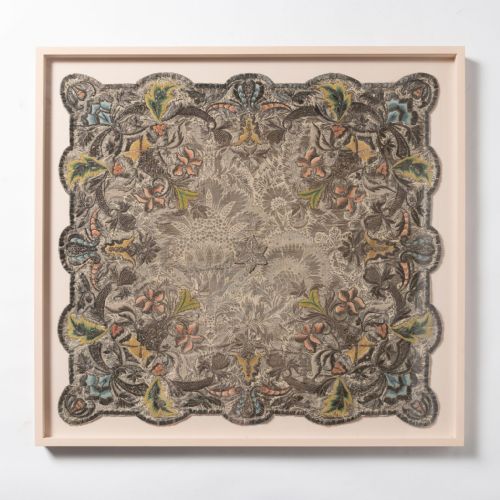


A 2026 Guide by Sellingantiques

Unusual Map Sampler., 18th Century
Priced at £580 from Stalham Antique Gallery
Early examples from the sixteenth century were narrow bands kept rolled up in workbaskets.
Look for the shift in the eighteenth century. They became wider and more pictorial, framed and hung on walls to show off a child's hard-won skills to visitors.
Orphanages often taught girls needlework to prepare them for domestic service.
Darning samplers gained popularity across mainland Europe. These focused purely on invisible mending techniques, ignoring alphabets and decorative motifs.
The golden age spanned the mid-eighteenth to mid-nineteenth centuries. After that, mass-produced printed patterns changed how needlework was taught in schools.
Most girls who stitched these remain unknown. A full name and age sometimes gives a clue to their parish.
Quaker schools in Ackworth and York developed distinct styles. Medallion motifs and monochrome silk threads are standard there.
Bristol orphanages produced specific red-and-green alphabet designs. The girls churned these out as strict curriculum exercises.
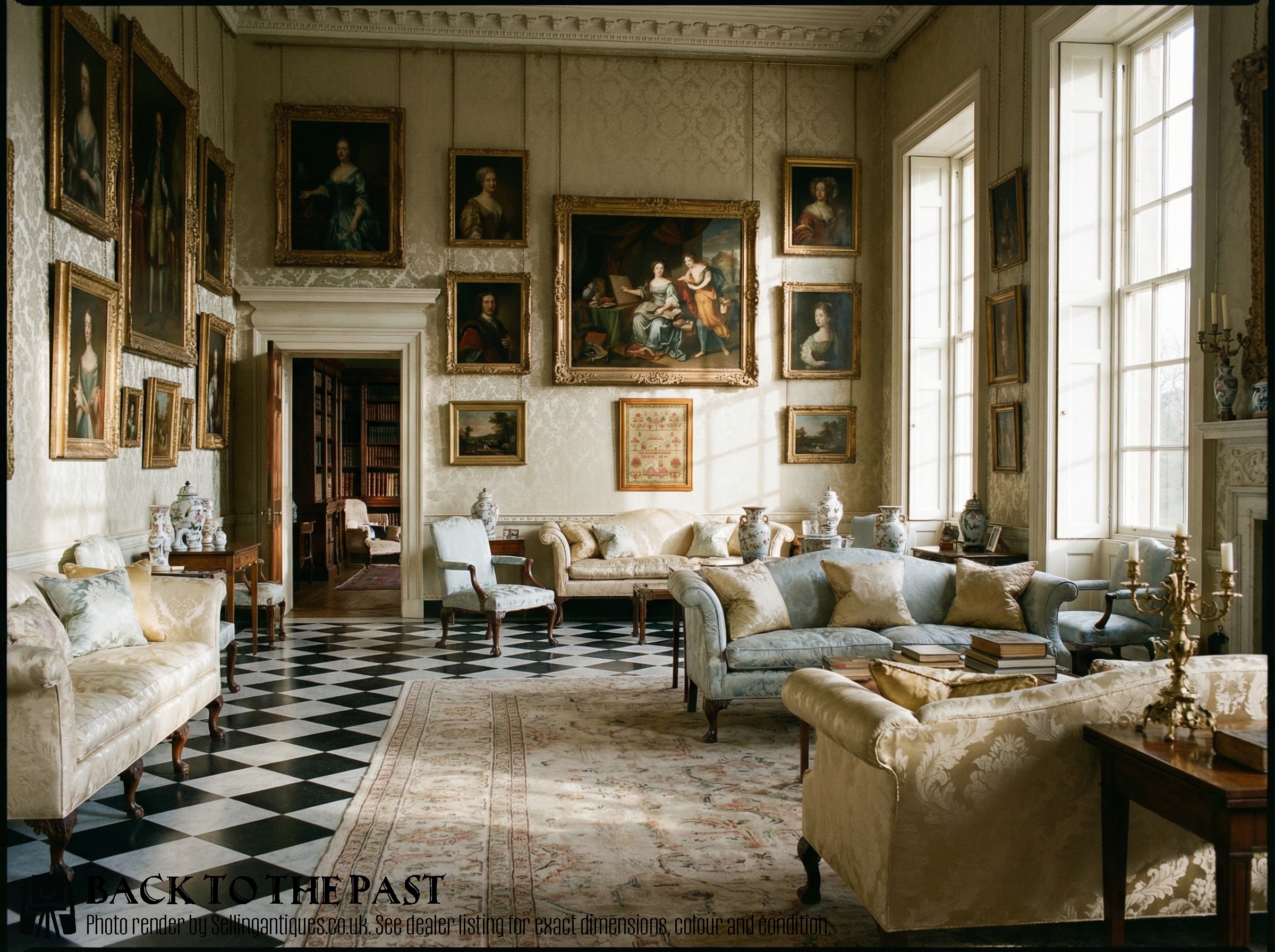
Sampler Sarah Anne Hudson 1855, Victorian
Priced at £395 from Millers Antiques
The 2026 retail price guide for Antique Samplers is drawn from a proprietary archive of over 1.1 million retail prices indexed by Sellingantiques since 2003. This guide relies exclusively on their own internal data; no external sources or auction records are used.
Analysing nearly 25 years of UK antique market history alongside current retail values, the data indicates that typical UK retail prices for Antique Samplers range between £200 and £800. Entry-level prices generally fall under £200 and premium examples upwards of £800.
Alphabets and numbers usually dominate the upper half. They allowed young girls to practise marking household linens.
Look out for verses or moral texts. Antique samplers often feature short religious rhymes chosen by a local schoolmistress.
Decorative borders frame the central work. Floral meanders or geometric strawberry vines are typical finishing touches on better examples.
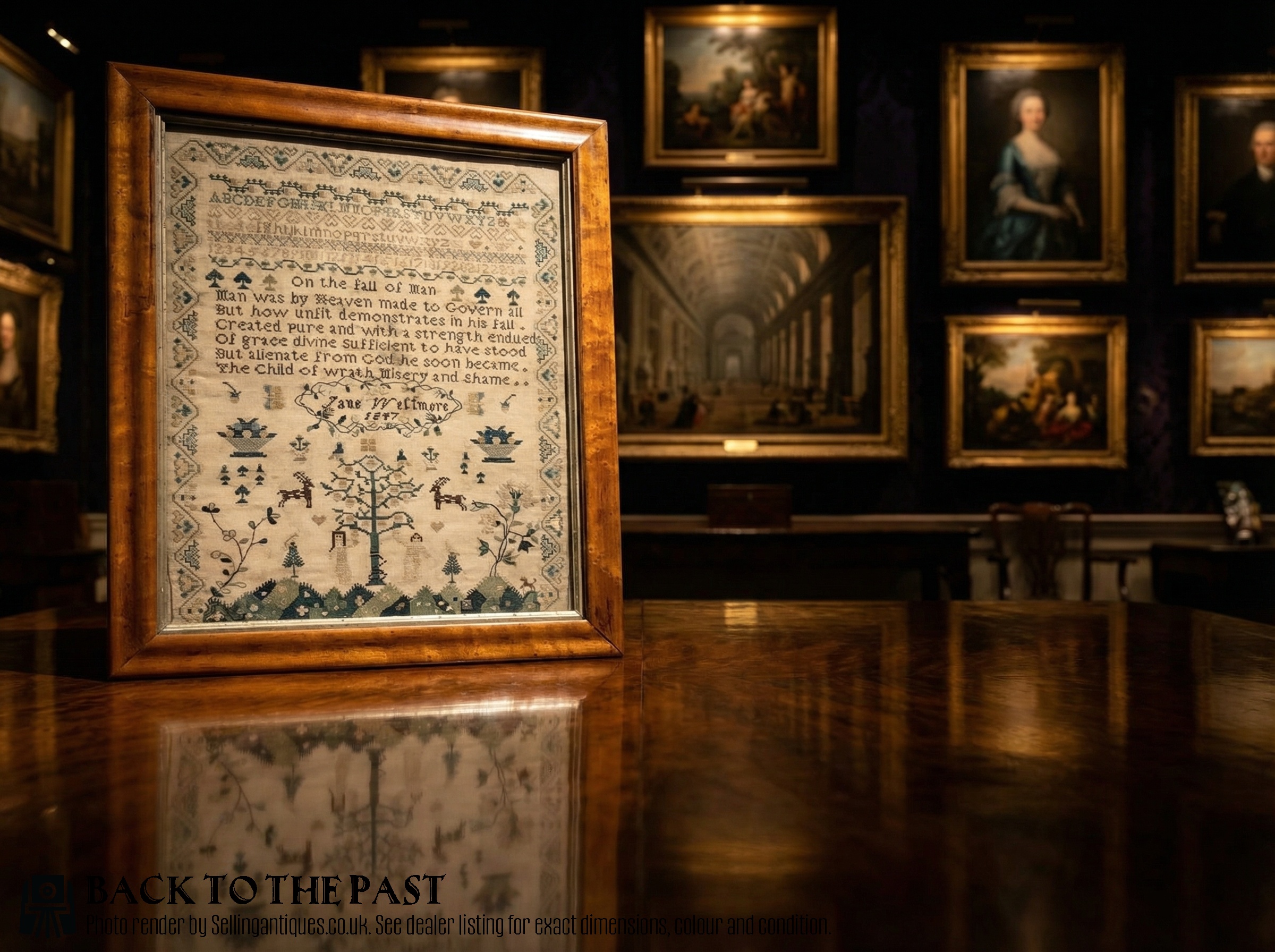
A Needlework Sampler by Jane Wettmore 1847, 19th Century
Priced at £295 from Wickersley Antiques
Band samplers required pulling threads from a tight linen weave. The stitcher counted every warp and weft to keep the pattern straight.
Berlin wool work introduced pre-painted grid patterns. This removed the need for counting, changing the skill level required.
Notice the tension. Unpicking a mistake took longer than making it, so uneven thread pulls were often left uncorrected.
"Map samplers taught geography alongside needlework. Girls stitched the outlines of counties to learn borders and towns."
"Look for microscopic spot motifs. These tiny isolated flowers or animals served as a personal doodle pad for future projects."
"Reversible stitches exist on certain fine examples. Both the front and back of the work look identical without stray threads."
Based on almost 25 years of Sellingantiques UK antique market data, Antique Samplers appeared 708 times (out of 1,100,000 antiques) which gives it a rarity score of 87/100.
This score measures scarcity within the Sellingantiques archive only and is not a survey of the entire antiques market, so these statistics may not be indicative of the general availability of Antique Samplers elsewhere.
It depends on what the current frame is doing to the textile. If the glass touches the fabric, moisture can transfer and cause rot.
Spacers keep the glass away from the stitches. If the piece is mounted on acidic cardboard, it needs taking out and stitching to an acid-free board.
Conservators can stabilise the background by stitching it to a supportive backing fabric. They use fine silk thread to couch down the fraying edges.
You cannot weave new linen into the old holes seamlessly. The goal is always to stop further loss rather than hide what has already happened.
Letters were practical. A household manager had to mark linens with initials and numbers to track them through the laundry.
Sometimes a letter is missing. The letter J was often dropped because I served for both in early alphabets.
Life expectancy was lower, and childhood mortality was a constant reality. Schoolmistresses assigned verses that focused on fleeting time and the need for moral readiness.
The texts were meant to build character. Stitching a long poem forced the girl to meditate on the words for hours on end.
It reflects a different view of childhood. Children were seen as miniature adults who needed steady spiritual instruction.
Please note: This Antique Samplers guide and its associated pricing data are provided for general informational purposes only. It does not constitute formal financial, investment, or appraisal advice and should not be relied upon as the sole basis for any commercial activity, purchasing, or sales decisions. Sellingantiques.co.uk accepts no liability for any actions taken in reliance on this information. Always consult with a qualified professional or independent appraiser.
