
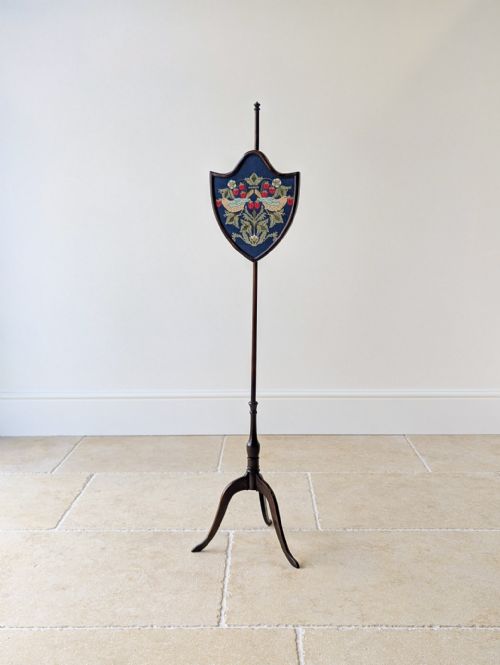


A 2026 Guide by Sellingantiques
George III Sheraton Pole or Fire Screen, Circa 1790, Georgian
Priced at £1,200 from Surrey Antiques by Gary J Hall
Eighteenth-century homes relied on massive fires for warmth. These screens allowed men and women to sit close to the hearth without melting their wax-based cosmetics.
Look for early Georgian examples featuring heavier bases. The stands grew lighter as the century progressed and drawing-room fashions shifted.
Victorian makers revived the form. They often incorporated elaborate needlework panels to showcase domestic skills alongside changing decorative tastes.
Gas heating eventually made the antique pole screen obsolete. Few were made after the Edwardian period as fireplaces shrank in size.
Thomas Chippendale supplied several pole screens to aristocratic clients. His firm accounts list variations in mahogany with carved tripod bases from the mid-eighteenth century.
Gillows of Lancaster produced these consistently. Their pattern books show simple elegant designs with turned poles and plain panels dating to the late eighteenth century.
Regional makers turned out thousands of unsigned pieces. Identifying a specific provincial workshop is rare without a surviving bill of sale.
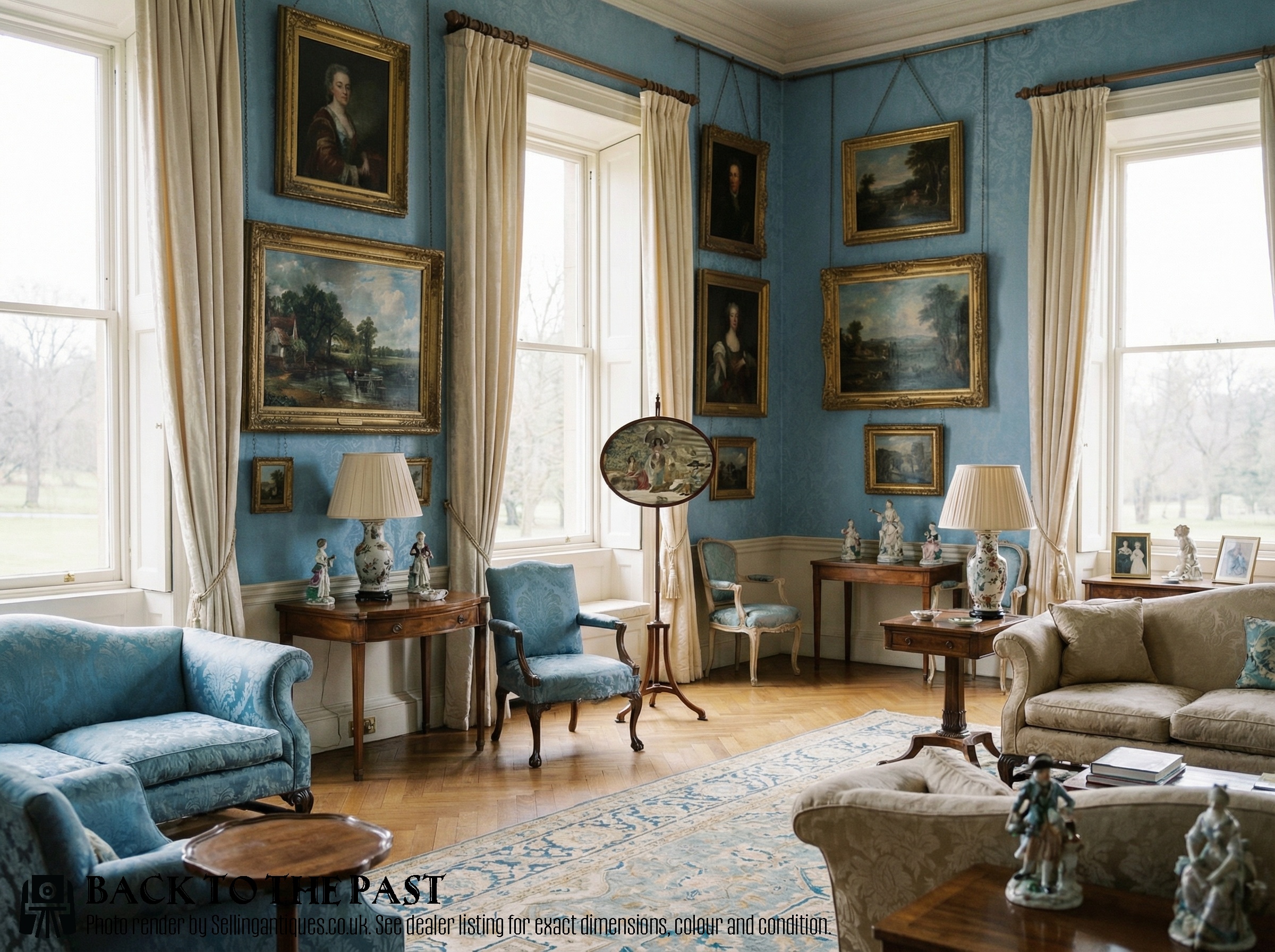
Quality Victorian Mahogany Pole Screen, 1850
Priced at £935 from London City Antiques
The 2026 retail price guide for Antique Pole Screens is drawn from a proprietary archive of over 1.1 million retail prices indexed by Sellingantiques since 2003. This guide relies exclusively on their own internal data; no external sources or auction records are used.
Analysing nearly 25 years of UK antique market history alongside current retail values, the data indicates that typical UK retail prices for Antique Pole Screens range between £300 and £1,200. Entry-level prices generally fall under £300 and premium examples upwards of £1,200.
Adjustable panels slide up and down the central column. A spring or screw fixing holds the screen at the required height for the sitter.
Tripod bases provide essential stability. Some later nineteenth-century models use a solid circular or shaped plinth instead of individual legs.
Notice the frames holding the textile. Shield, oval and rectangular shapes all appear frequently throughout the production history of antique pole screens.
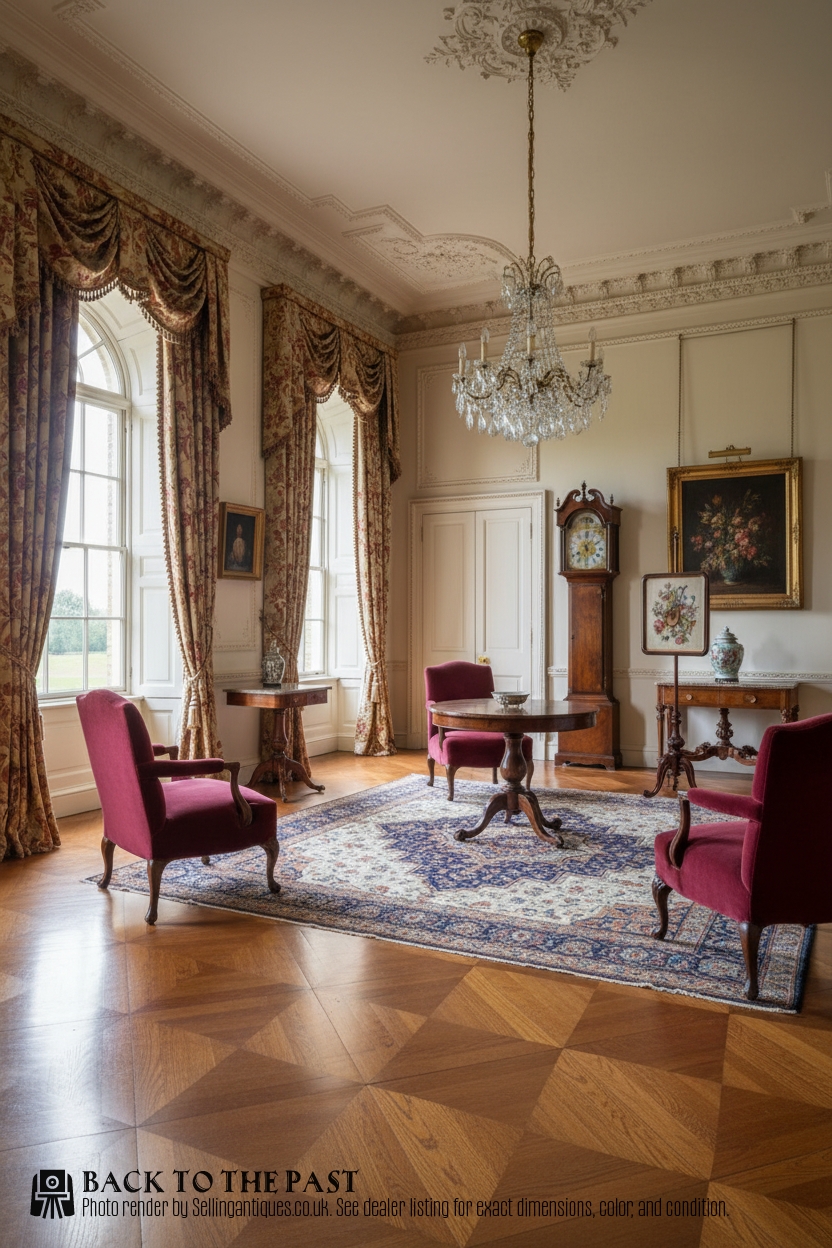
Regency Rosewood Pole Screen, Regency
Priced at £295 from In A Nutshell Antiques and Interiors
Leg joints rely on sliding dovetails. The maker cut tapered slots into the base of the pillar to house the matching end of each leg.
Examine the brass springs inside the block. Blacksmiths forged curved leaf springs to provide enough friction against the wood without scoring the polish.
Hand-carved details appear on elaborate tripod bases. Craftsmen worked the knees with acanthus leaf motifs using traditional gouges and chisels.
"The panels occasionally frame paper rather than cloth. Rolled quillwork, maps and amateur watercolours survive in some examples."
"Certain bases house hidden weights. Makers poured lead into hollowed sections under the plinth to keep the tall structure from tipping over easily."
"Some models double as small tables. The flat screen panel tilts back to rest horizontally on the top of the pole."
Based on almost 25 years of Sellingantiques UK antique market data, Antique Pole Screens appeared 395 times (out of 1,100,000 antiques) which gives it a rarity score of 92/100.
This score measures scarcity within the Sellingantiques archive only and is not a survey of the entire antiques market, so these statistics may not be indicative of the general availability of Antique Pole Screens elsewhere.
Vacuuming with a soft brush attachment is the safest approach. Keep the suction low and place a piece of mesh over the nozzle to protect loose threads.
Never use modern spot cleaners on early fabrics. If the wool or silk has heavy soiling, leave it to a specialist textile conservator.
Most of these rely on a simple brass leaf spring hidden inside the wooden block. Over time, the spring loses tension or the wooden pole wears slightly thinner from constant friction.
You can often access the spring by unscrewing the block from the back of the frame. A slight manual bend to the brass is sometimes enough to restore the grip.
If the mechanism uses a threaded wooden screw instead of a spring, the threads might be stripped. A cabinetmaker can easily re-tap the hole or replace the screw.
Yes, replacing the textile is a common repair. The frames usually have a removable backboard or a retaining wooden slip.
Many owners choose a period-appropriate silk or a piece of contemporary needlework to fill the space.
A slight lean is fairly standard on older tripod furniture. The central pole is quite tall and slender, making it susceptible to warping over centuries of seasonal temperature changes.
Sometimes the issue lies in the base joints rather than the pole itself. If one leg has come loose in its dovetail slot, it will throw the whole shaft off vertical.
Check the bottom of the feet as well. Uneven wear or a missing brass caster can cause the entire stand to tilt slightly to one side.
Please note: This Antique Pole Screens guide and its associated pricing data are provided for general informational purposes only. It does not constitute formal financial, investment, or appraisal advice and should not be relied upon as the sole basis for any commercial activity, purchasing, or sales decisions. Sellingantiques.co.uk accepts no liability for any actions taken in reliance on this information. Always consult with a qualified professional or independent appraiser.
