




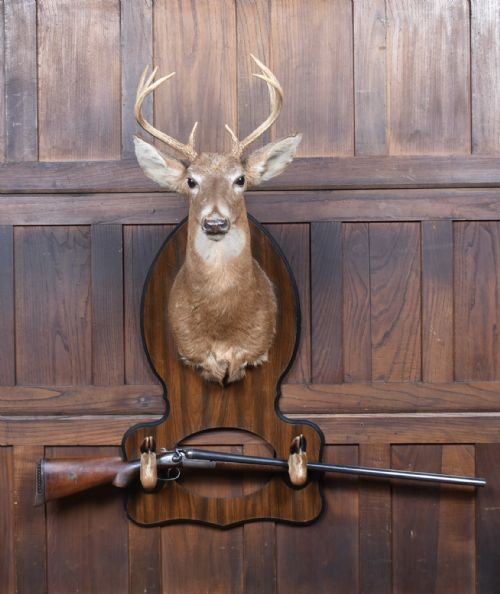
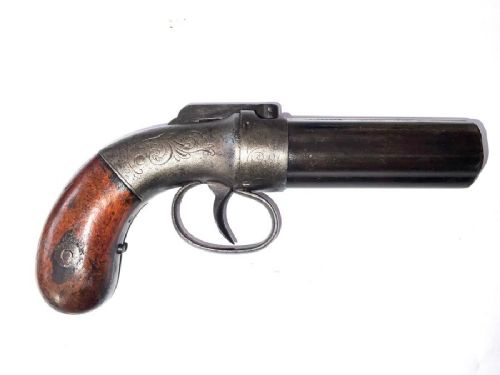
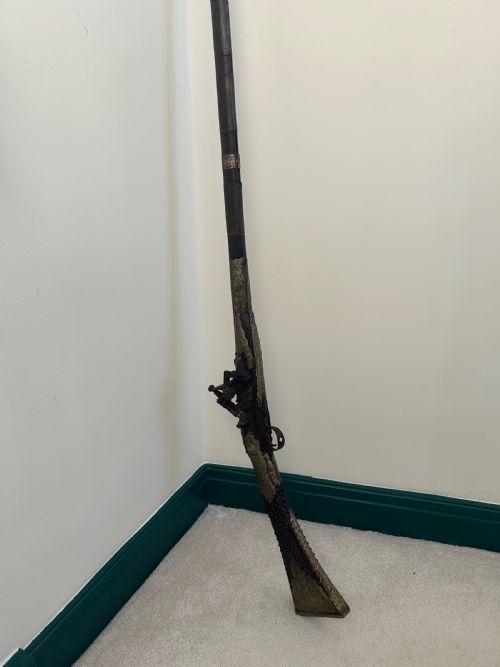


Antique Guns
Muzzle-loading pistols and long guns from the flintlock and percussion eras, listed alongside the cases, flasks and loading tools that went with them.
Antique Guns
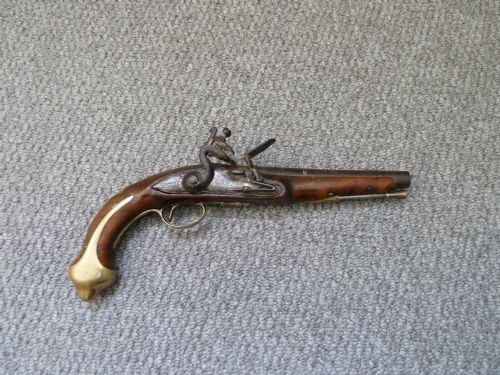
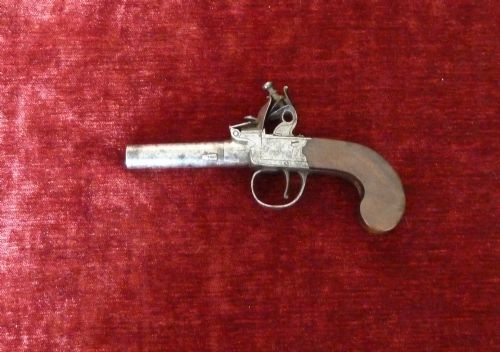
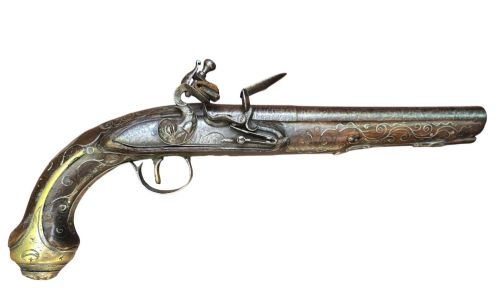
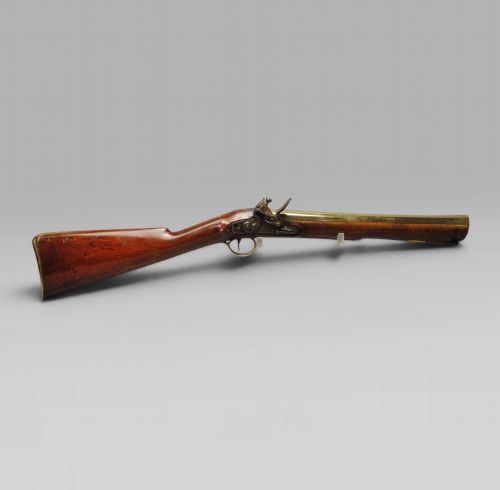
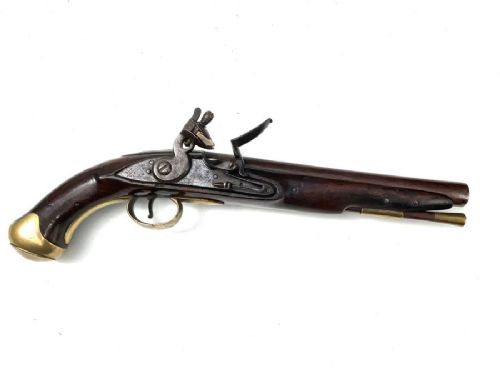
The core is real firearms, and the single most likely thing you'll meet is a flintlock pistol. Pistol turns up in over a quarter of titles, flintlock in a similar share. Around them sit muskets, blunderbusses, fowlers and percussion revolvers, along with a run of Indian, Afghan, Balkan and Ottoman long guns.
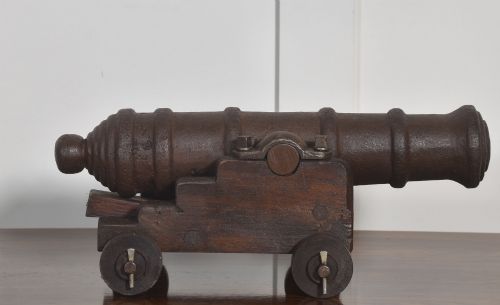
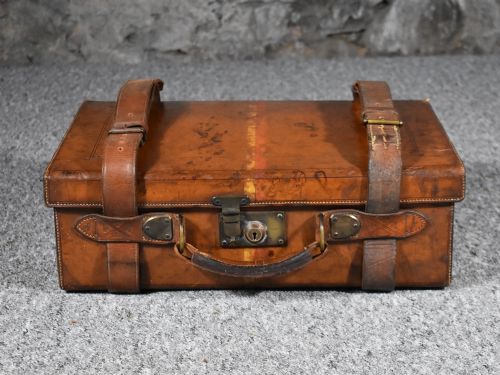
The heading covers more than guns, though. Roughly a quarter of listings are shooting accessories with no action at all: leg-of-mutton leather cases, oak-and-leather cartridge cases, brass and copper powder and shot flasks, turnscrews, powder measures and loading tools. A smaller fringe is gun-themed ornament, including cast-iron gun-dog stick stands, oak gun racks, gun-metal pounce pots and cannons.
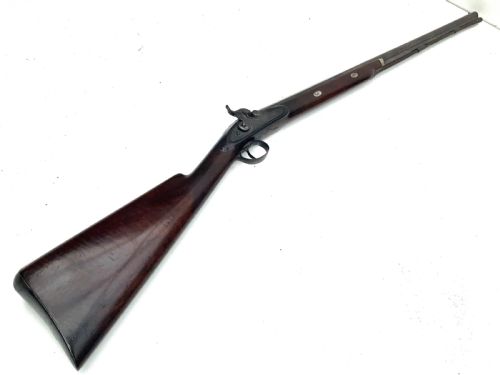
Nearly everything with an action is pre-cartridge. Ignition runs matchlock, then flintlock, then percussion cap from the early nineteenth century, and the pistols range from pocket, muff and travelling sizes through holster, belt and service patterns to duelling pairs. The accessories exist for the same reason: a muzzle-loader was charged by hand in the field.
Dating is broad. Dealer-entered dates run from 1750 to 1940, but two-thirds of the period labels give a century only, nineteenth or eighteenth, rather than a decade. Twentieth-century dates almost always attach to an accessory or a decorative piece rather than to a gun.
Where The Range Splits
The clearest divide is between a complete gun and something that went with one. Leather cases, flasks, racks, pounce pots and gun-dog ornaments sit at the bottom of the sampled range, while firearms occupy the upper part of it throughout.
Above that, decoration and metal do the work. Silver appears in a small but consistent group of titles, and silver wire inlay, silver mounts on an Indian matchlock, and Scottish silver pocket pistols all land high. Figured walnut stocks and engraved brass furniture are called out on the more expensive pieces; plainer timber and iron mounts are not.
Two things push hardest. A lock or a firm signed on the piece lifts it well clear of an unattributed equivalent of the same type. And completeness beats singularity: the top of the sampled range is a group of five Austrian sporting guns sold together, with pairs of duelling and pocket pistols and boxed revolvers with their accessories just behind.
Antique Guns Retail Price Guide 2026
Typical UK retail prices for guns, calculated from the Sellingantiques database of over a million retail prices indexed since 2003. This retail price guide relies exclusively on Sellingantiques data; no external sources or auction records are used, so the figures do not describe the wider market.
The longest barrel recorded on Sellingantiques is 122cm, on a North Indian toradar matchlock.
The Antique Guns Glossary
- Flintlock
- Ignition that strikes flint against a steel frizzen to spark the priming powder. It names roughly a quarter of the titles in this category.
- Percussion
- The later system, using a copper cap on a nipple. It appears in about one title in ten, covering revolvers, pistols and converted long guns.
- Bore
- Barrel size given as balls to the pound rather than in calibre. Numbers such as 12, 18, 20, 22 and 40-bore all turn up.
- Blunderbuss
- A short gun with a flared muzzle, made for coaching and close defence. A recurring form at the upper end of the listings.
- Leg of mutton
- A tapering leather case shaped to a dismantled gun. The commonest case term in this category.
- Toradar
- An Indian matchlock long gun, several in the samples, one of them with a barrel of 122cm. Also spelled torador.
Antique Guns: Frequently Asked Questions
What kind of gun turns up most often?
A single flintlock pistol. Pistol appears in more than a quarter of titles and flintlock in a similar share, with the exact phrase flintlock pistol in a smaller run of them.
Sizes vary widely, from pocket and muff pistols through holster and belt patterns to sea service and duelling types.
Are all the listings actually firearms?
No. Roughly a quarter of the sampled listings are shooting accessories: leg-of-mutton and oak-and-leather cases, powder and shot flasks, turnscrews and loading tools.
A further thread is gun-themed decoration, including cast-iron gun-dog stick stands, gun-dog tapestry, carved hunting panels, oak gun racks and cannons in cast iron and bronze.
How old are these pieces?
The dealer-entered dates run from 1750 to 1940. Around forty-six listings carry a clean year, the earliest a Revolutionary Wars musket of 1750.
Most are placed only to a century. Nineteenth Century and Eighteenth Century between them account for two-thirds of the period labels, and titles hedge with early and late.
Do Eastern guns appear in this category?
More than you might expect. Indian toradar matchlocks, Afghan jezails, Balkan and Ottoman snaphaunce pistols and an Algerian toe-lock musket all show up.
A South Indian Malabar matchlock is the rarest origin recorded, and Indo-Persian mother-of-pearl inlay is a recurring decorative note.
Which pieces sit at the top of the range?
Groups and pairs rather than single guns. Five Austrian flintlock sporting guns sold together head the sampled range, with a pair of officers' duelling pistols and a pair of Scottish silver pocket pistols close behind.
Silver mounting and a signed lock both lift a piece well above an unmarked equivalent.
How many come up for sale each year?
About sixteen pieces reach the market on Sellingantiques in a year.
They are spread across forty-five different dealers, so no one dealer's stock sets the tone for the category.