
Antique Coat Stands
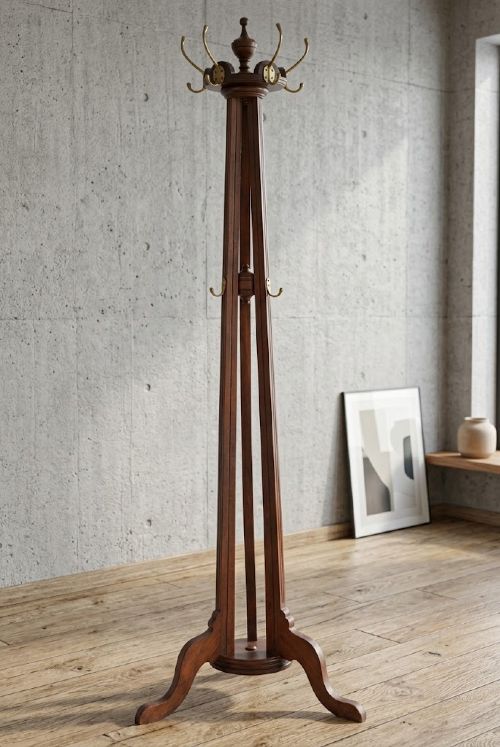
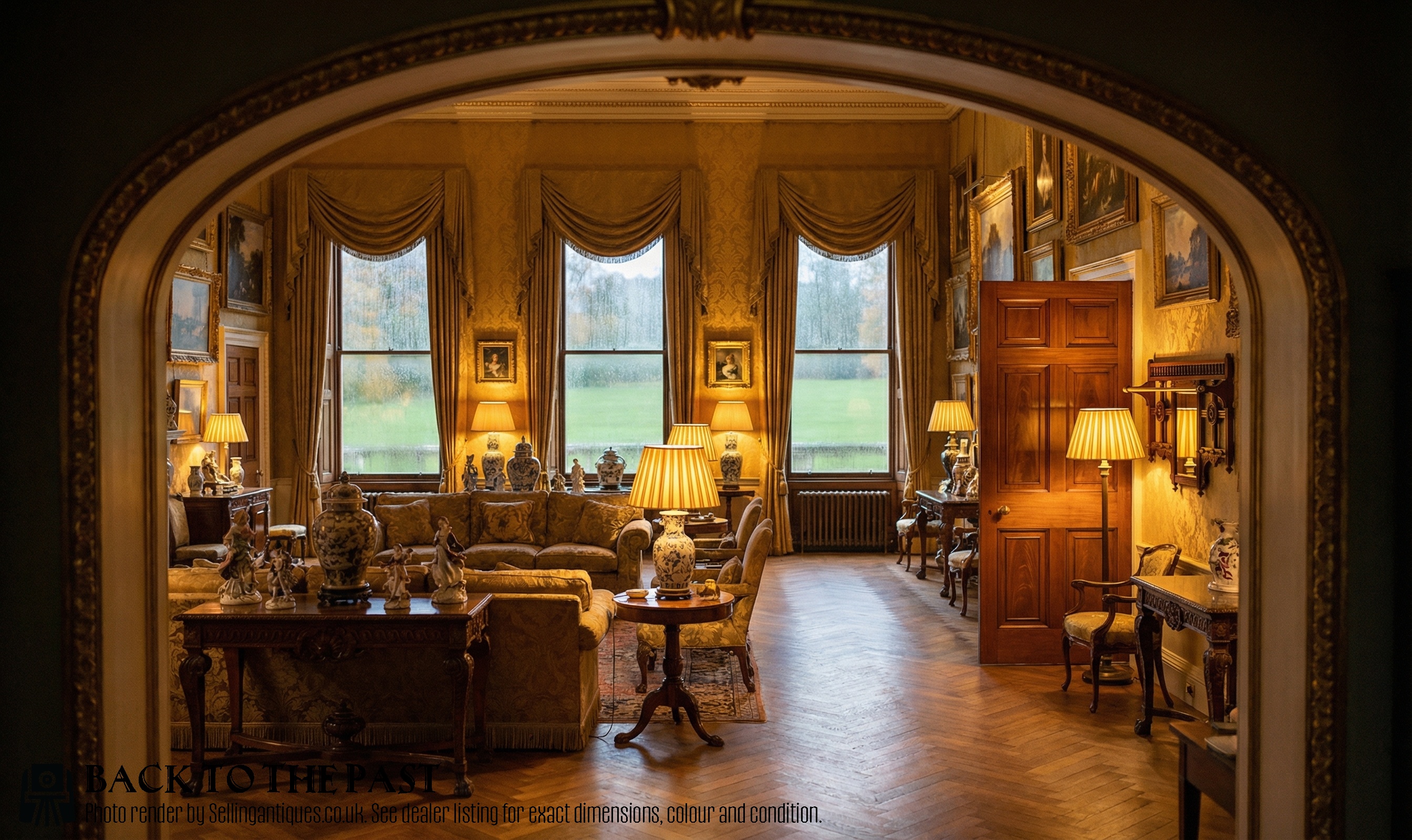
A free-standing hall stand for hats, coats, sticks and umbrellas, put by the door so outdoor clothing had somewhere to go on arrival.
Antique Coat Stands
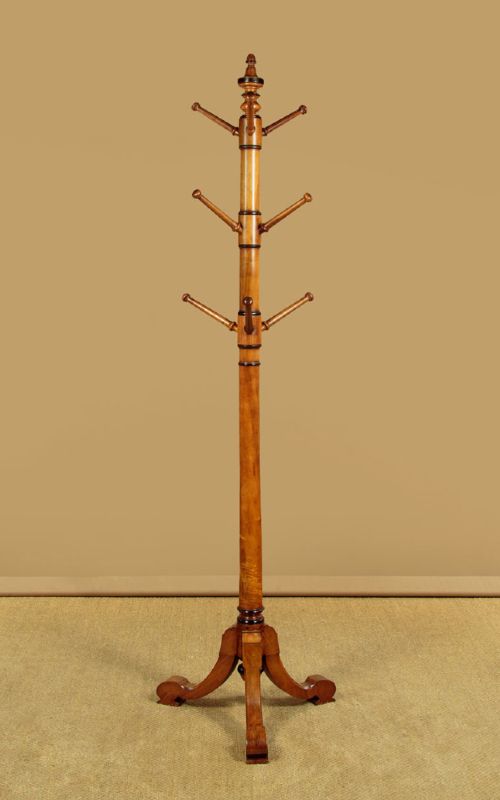
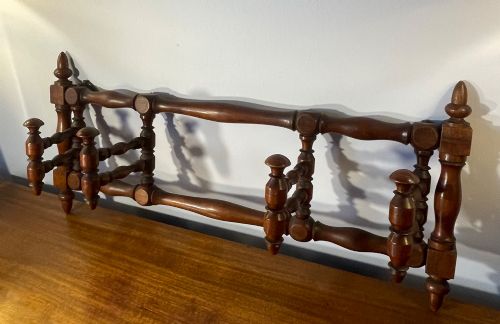
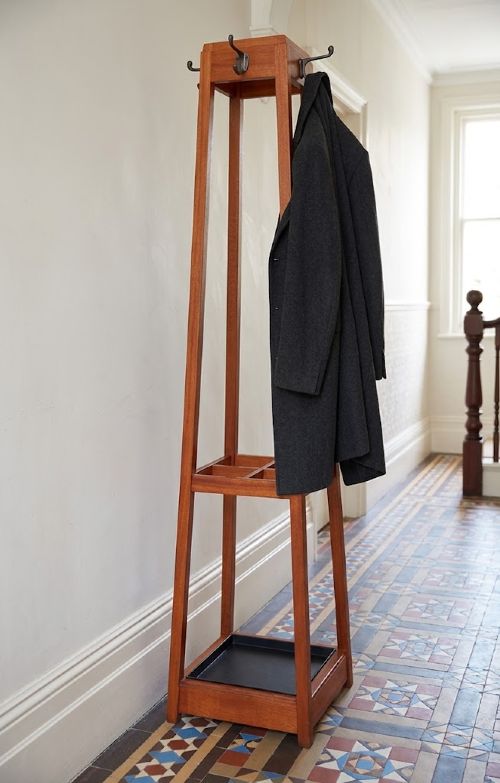
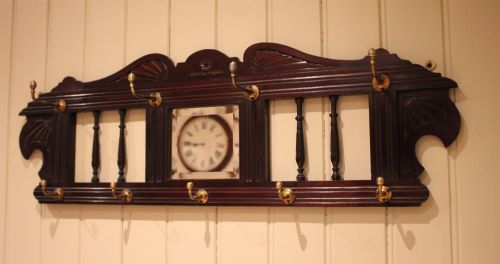
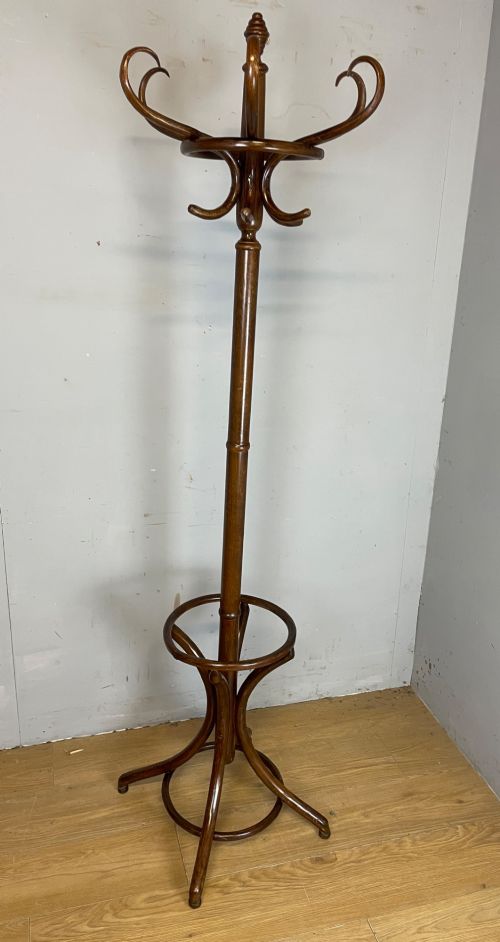
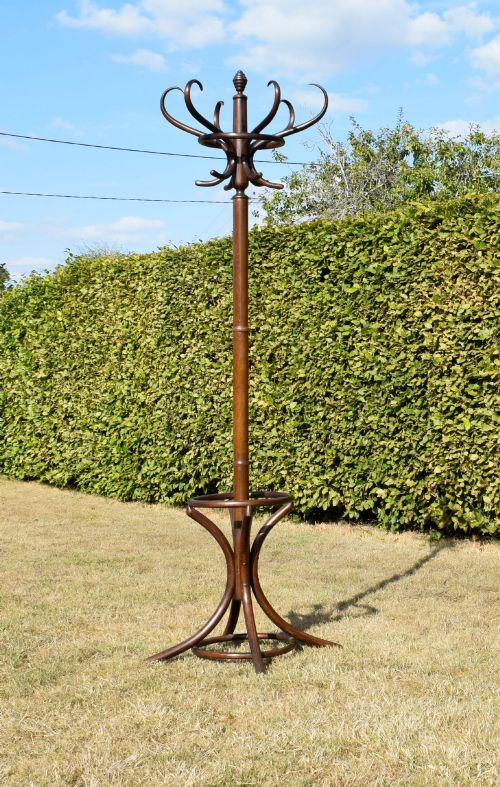
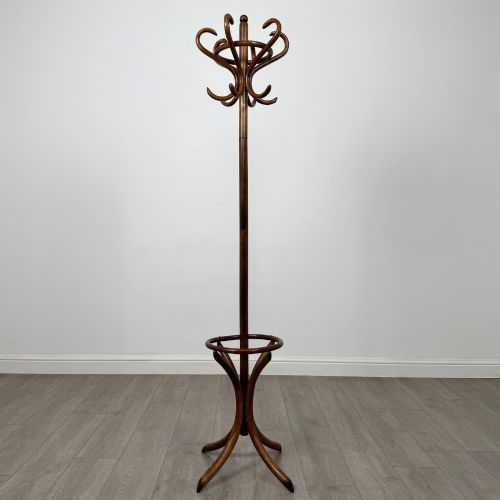
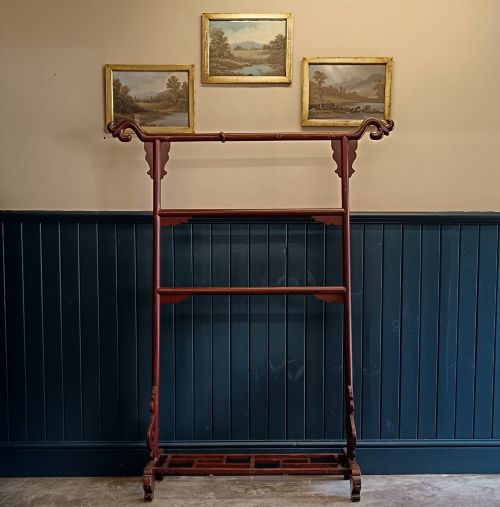
Free-standing columns with scrolled hooks, made to take hats, coats, walking sticks and umbrellas in a hall or entrance. A few are wall-mounted racks and rails instead. Titles slide between functions, so the same object may be sold as a hat stand, a coat stand, a hall stand, a stick stand or an umbrella stand.
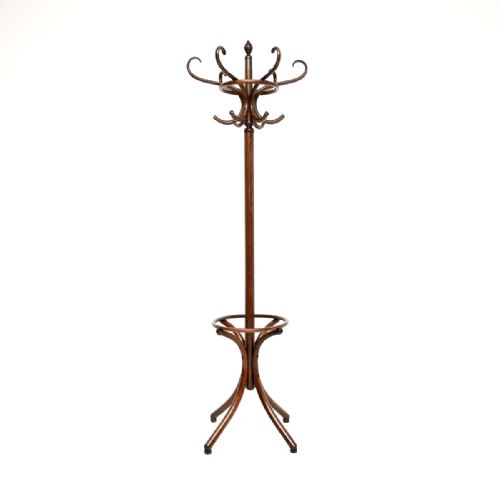
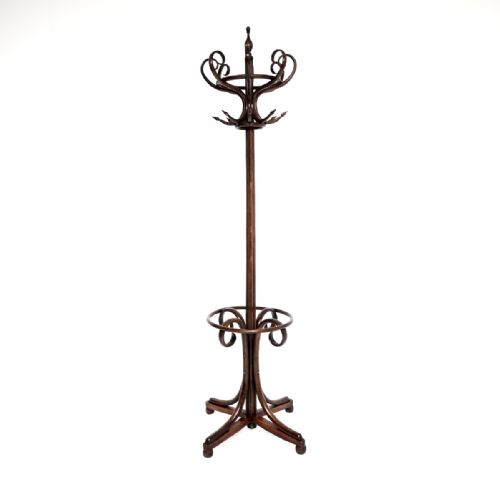
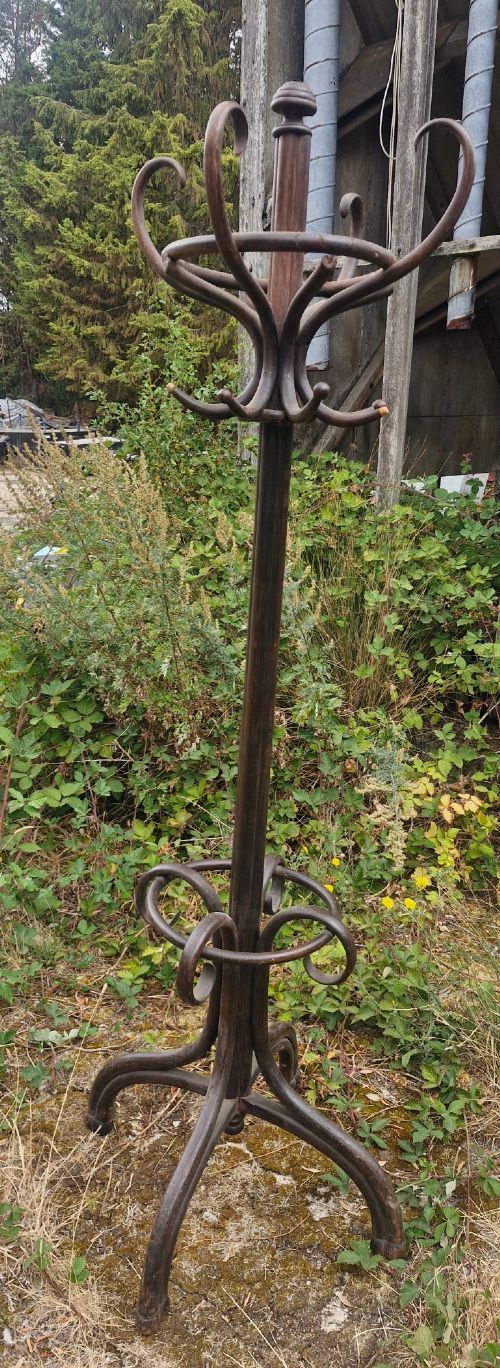
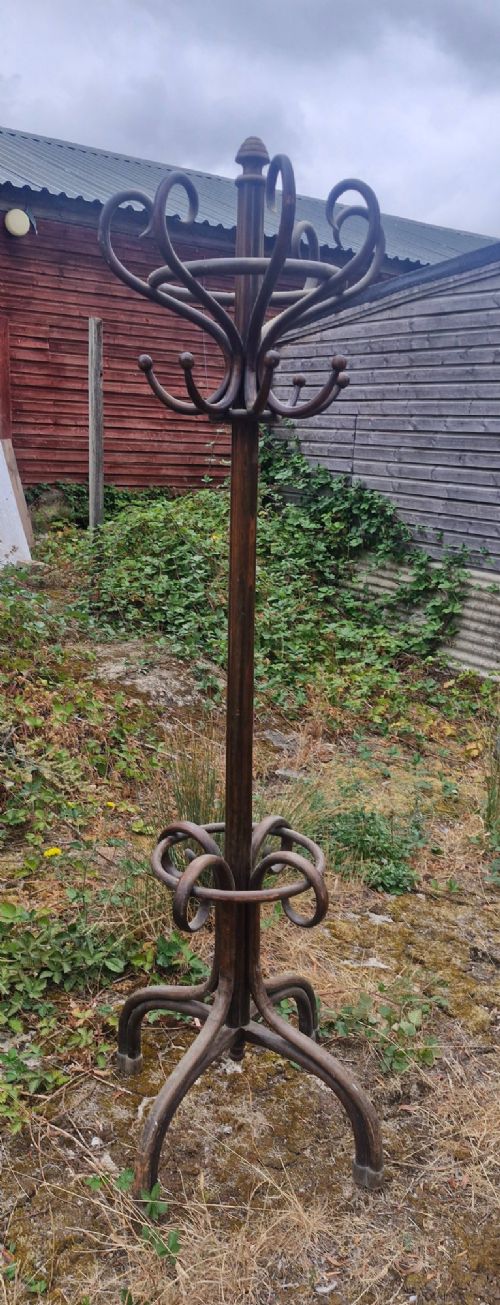
The form you are most likely to meet is bentwood: beech steamed and bent into curves, light and cheaply made, which spread through cafés, offices and hallways from the middle of the nineteenth century. Of 173 listings on Sellingantiques, 73 titles say bentwood, and most of those are plain turned columns on splayed feet. Half-round, flat-back and demi-lune versions made to sit against a wall are a sub-type in their own right, and revolving tops turn up on a handful.
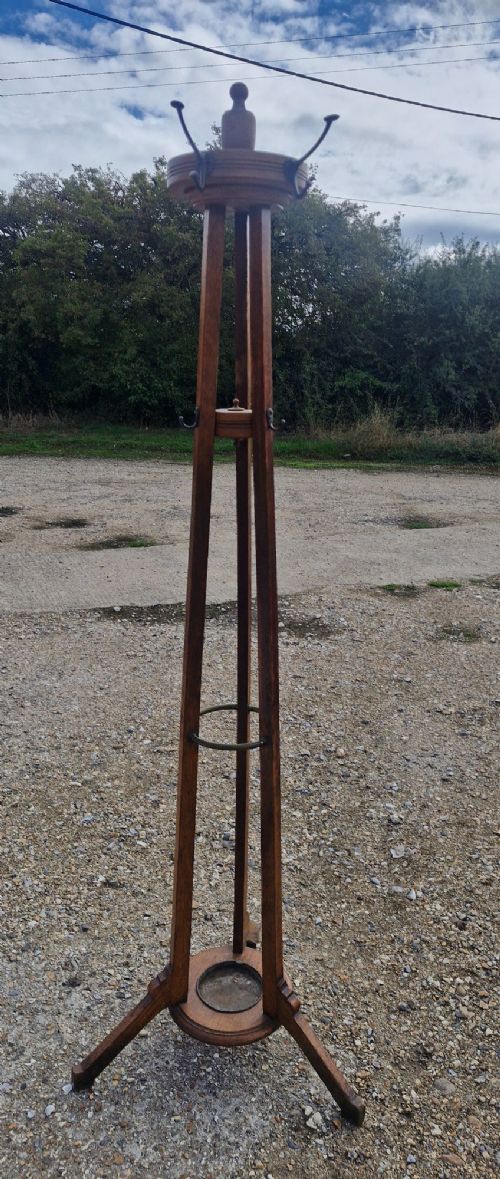
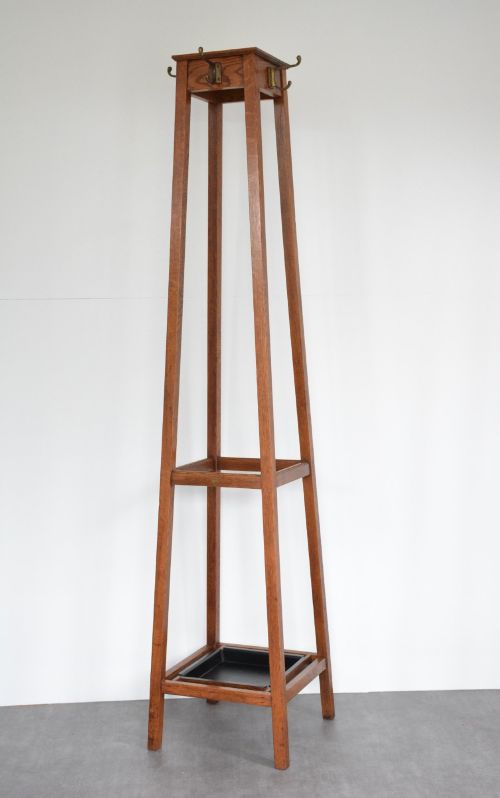
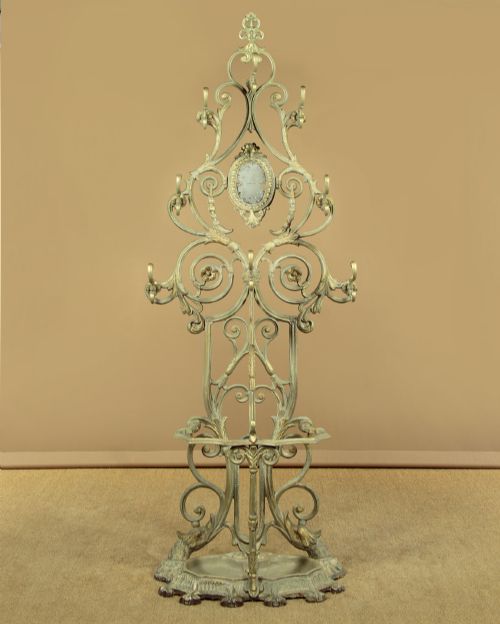
Behind the bentwood sits a smaller body of joined timber hall stands in oak, mahogany and walnut, some with mirrors. Metal stands are a thinner strand: cast and wrought iron, brass, gilt metal, chrome. Antler, horn and carved Black Forest pieces are a small but conspicuous minority, with horn used as structure rather than trim. French origin is claimed in sixteen titles, the clearest non-English note in the group.
Dating clusters between about 1880 and 1930. Where a year is given at all it runs from 1850 to 1930, though a good third of the dating is a period word rather than a date, and Victorian, Edwardian and plain 19th Century do a lot of the work. Georgian appears twice. Around nine of these come to market in a year on Sellingantiques, spread across 71 different dealers, so almost nobody carries them in depth.
Where The Range Sits
Material decides most of it. Plain bent beech sits in the lower and middle of the range, and it is the bulk of the category. Carved and cast work climbs above it: Black Forest bears and a chamois goat's head, cast iron stands, antler and stag's horn. The top of the archive is held by animal subjects rather than by furniture.
Then elaboration. A revolving top section, a mirror plate, a mirrored portmanteau, all sit above the static plain column. Scale pulls the same way, with Large, Substantial, Tall and stated heights of six feet appearing towards the upper part of the range. A named design idiom does too, whether Arts and Crafts, Regency or Art Deco.
Attribution lifts a piece, but it is thin on the ground. Only nine bentwood titles name a maker and one mentions a label, so the 73-strong bentwood body travels almost entirely unattributed. Below the stands proper, the bottom of the range is hooks, hangers and small brass fittings that dealers file in the same place.
Antique Coat Stands Retail Price Guide 2026
Typical UK retail prices for coat stands, calculated from the Sellingantiques database of over a million retail prices indexed since 2003. This retail price guide relies exclusively on Sellingantiques data; no external sources or auction records are used, so the figures do not describe the wider market.
French origin is claimed in sixteen coat stand titles on Sellingantiques: faux bamboo, mirrored portmanteaux, cast iron and Art Deco brass.
The Antique Coat Stands Glossary
- Bentwood
- Beech steamed and bent into curves rather than cut or carved. It is the commonest construction in the category, and the word turns up in more titles than any other material.
- Hall stand
- A stand for the hall side, taking hats, coats, sticks and umbrellas, sometimes with a mirror and a drip tray. The word appears in a fifth of titles.
- Demi lune
- Half-round in plan, made to stand flat against a wall. Also written half round, flat back or simply 1/2.
- Revolving
- A top section on a central pivot, so the hooks come round to whoever is standing at it.
- Drip tray
- Removable tray at the base, there to catch the water off wet umbrellas.
- Portmanteau
- In this category a long wall-mounted hanging rail with hooks, often French and mirrored.
Antique Coat Stands: Frequently Asked Questions
What is a bentwood coat stand?
A column of beech steamed and bent into shape, with scrolled hooks at the top and splayed feet at the base. Steam-bending made light, cheap stands possible in quantity from the middle of the nineteenth century.
On Sellingantiques it is the dominant form: 73 of 173 titles say bentwood, and most of those are described simply as a bentwood coat stand.
Are hat stands and coat stands the same thing?
Usually the same object, named by whichever part of it the dealer led with. The hooks at the top take hats, the shaft takes coats, the well at the bottom takes sticks and umbrellas.
Titles combine the words freely, and hat, hall, umbrella and stick often appear two or three at a time in the same line.
What does demi lune mean on a coat stand?
Half-round in plan, so the stand sits flat against a wall rather than out in the room. The same idea is written as half round, flat back, against the wall, or 1/2.
It is a recognised sub-type within the bentwood group, not a one-off variation.
How old are most antique coat stands?
The weight of the category sits between about 1880 and 1930. Where listings give a clean year the range runs from 1850 to 1930, with 93 of the 173 carrying one.
The rest are dated by period word. Plain 19th Century is the largest single label, with Victorian and Edwardian close behind, and titles sometimes disagree with the dated field.
Georgian appears twice.
Which coat stands sit at the top of the range?
Animal subjects, not furniture. An antler coat stand of about 1850 is the highest-priced thing in the archive, and a carved Black Forest bear hall stand comes next.
Black Forest work is a persistent minority, and every one of those pieces sits in the upper half of the range.
Do many coat stands carry a maker's name?
Few do. Nine titles in the whole group name a bentwood firm and one mentions a label, so the bentwood majority is sold unattributed.
Where a name or a firm does appear in a title, it sits above the unnamed equivalents.