



A 2026 Guide by Sellingantiques
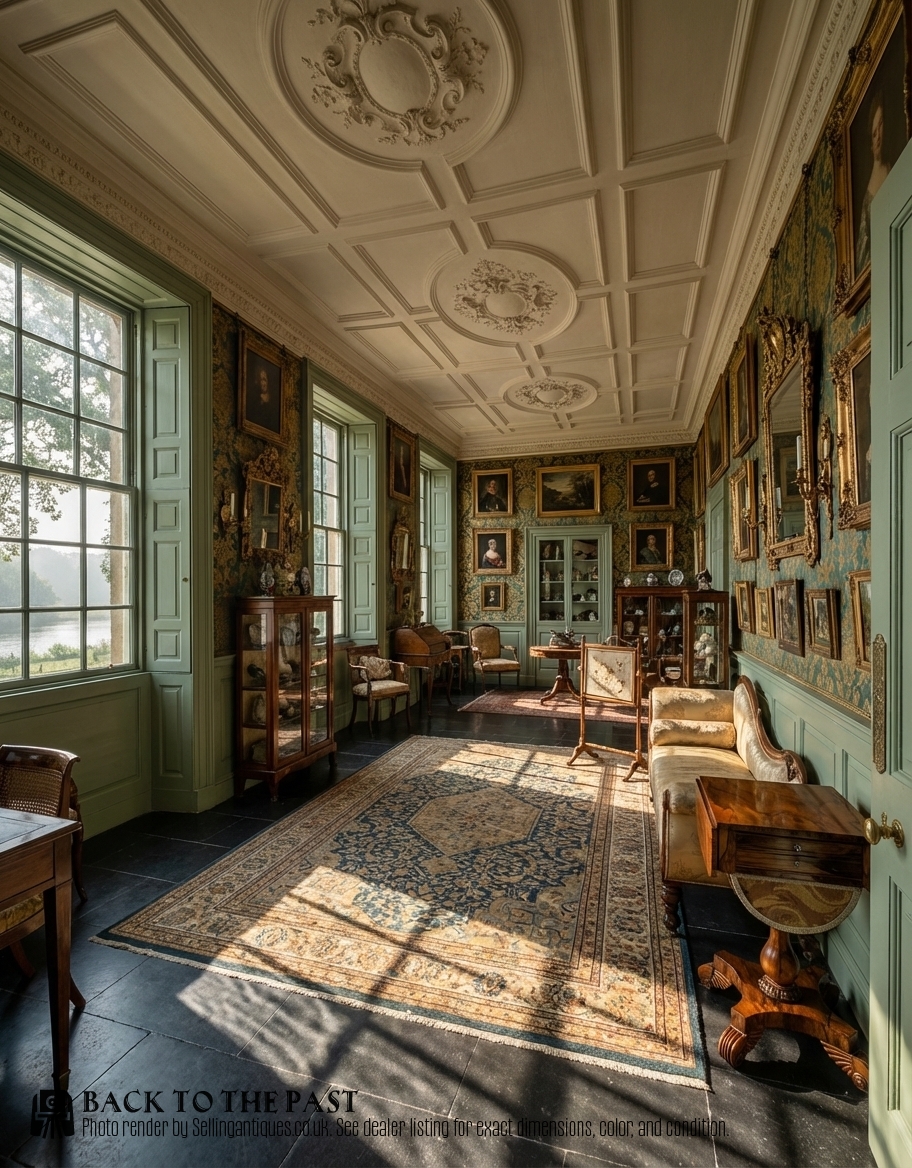
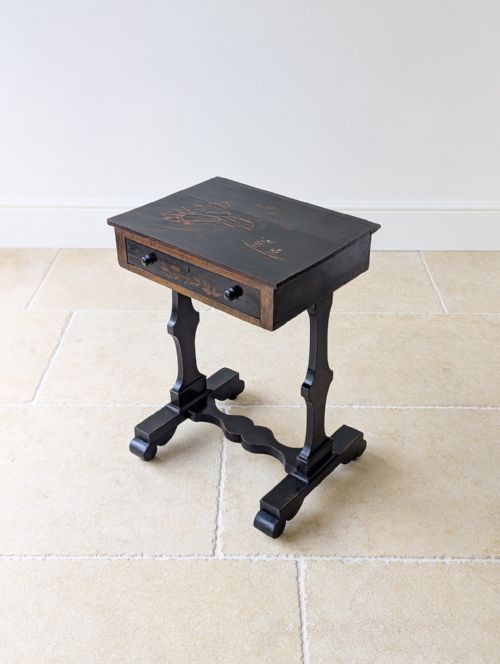
Victorian Drop-leaf Rosewood Work Table, Victorian
Priced at £495 from Sinclairs Antiques and Interiors
First seen in drawing rooms during the late eighteenth century.
Women needed dedicated space for sewing equipment. An antique work table provided storage right where they sat.
Before this form developed, needlework supplies lived in portable boxes.
Look at middle-class homes from the Regency and Victorian periods. You find them almost everywhere.
Produced by Gillows of Lancaster between 1790 and 1840. Their design books show reeded legs and brass castors.
Thomas Sheraton published designs for a pouch table in 1803. Cabinet makers copied his layouts directly.
Check stamped marks on drawer edges. Morgan and Sanders of London made distinctive mechanical versions during the Regency.

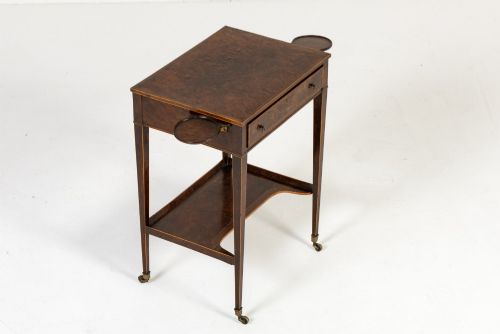
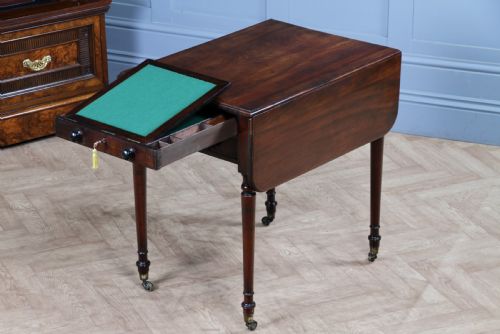
Early C19th George IV Period Figured Rosewood Sewing or Work-table in the Manner of Gillows of Lancaster ., 19th Century
Priced at £1,250 from M Lees and Sons
The 2026 retail price guide for Antique Work Tables is drawn from a proprietary archive of over 1.1 million retail prices indexed by Sellingantiques since 2003. This guide relies exclusively on their own internal data; no external sources or auction records are used.
Analysing nearly 25 years of UK antique market history alongside current retail values, the data indicates that typical UK retail prices for Antique Work Tables range between £500 and £2,300. Entry-level prices generally fall under £500 and premium examples upwards of £2,300.
Look for a slide-out frame suspended beneath the main body. This held the fabric workbag.
Small compartments often fill the top drawer. Shallow divisions to separate spools and silk threads.
Hinged drop leaves flank the central top on many models. They expand the working surface.
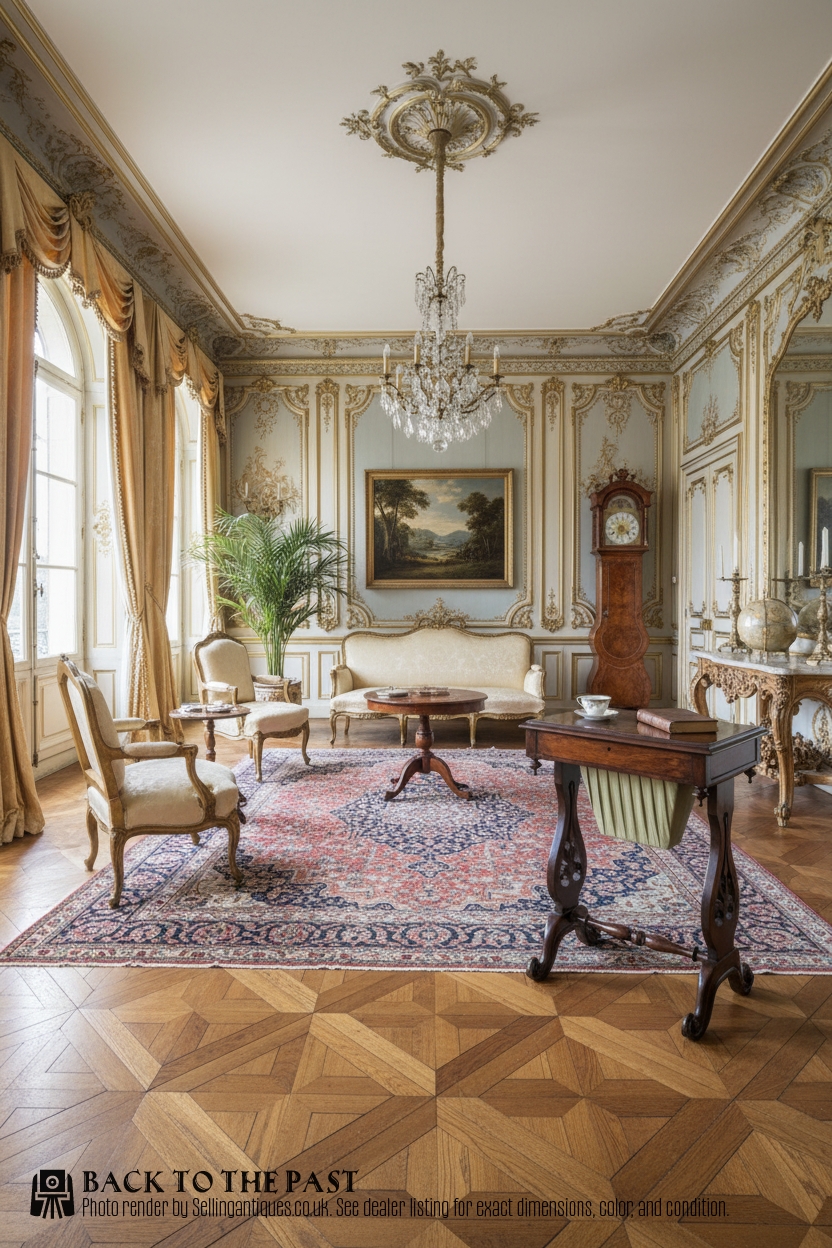
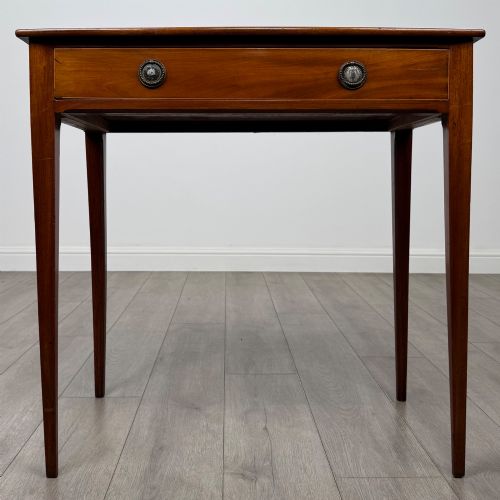
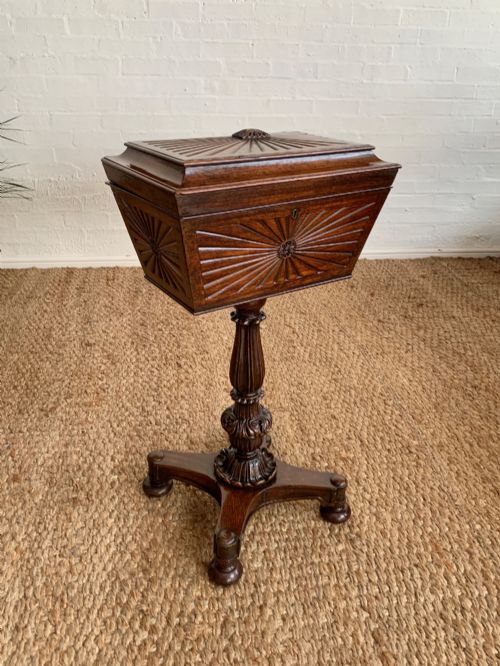
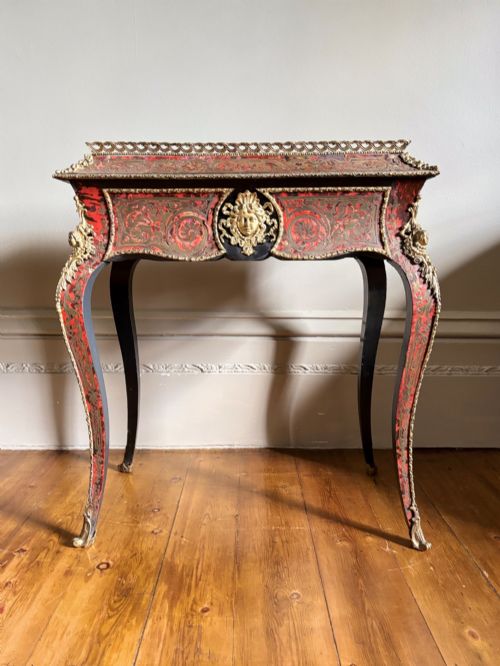
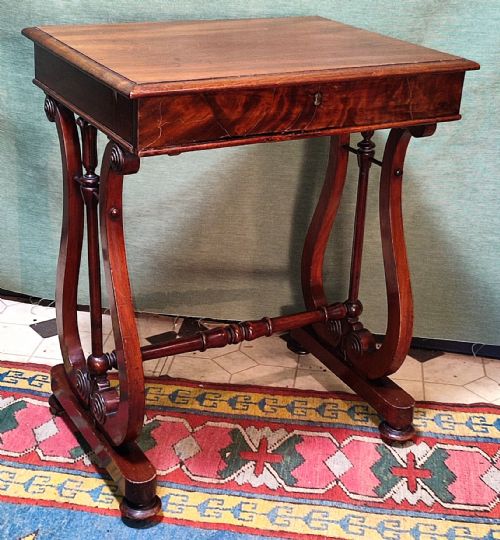
Victorian Rosewood Freestanding Work or Lamp Table, 1850
Priced at £1,295 from London City Antiques
Turn an antique work table upside down. You will see how delicate legs join the carcase using traditional mortise and tenon joints.
Tiny interlocking dovetails. Cabinet makers cut these joints by hand to handle constant drawer friction.
Craftsmen laid expensive figured woods over curved drawer fronts using heated animal glue.
"Built-in reading stands. A ratcheted support lifts the central section of the top to hold a book."
"Some designs incorporate a sliding chessboard below the main lid. They served as evening games tables."
"Tap the thickest parts of the carcase. You might find a secret drawer hidden behind the main divisions."
Based on almost 25 years of Sellingantiques UK antique market data, Antique Work Tables appeared 3675 times (out of 1,100,000 antiques) which gives it a rarity score of 48/100.
This score measures scarcity within the Sellingantiques archive only and is not a survey of the entire antiques market, so these statistics may not be indicative of the general availability of Antique Work Tables elsewhere.
The hanging bag held bulky textile projects like knitting or embroidery. When a woman finished working for the day, she dropped the fabric down into the pouch.
Most original bags were pleated silk attached to a wooden frame. They pulled out like a drawer to give easy access to the wools and cloth inside.
This lift-top design is standard for mid-Victorian antique work tables. Instead of drawers pulling out from the front, the lid raises on hinges to reveal a fitted interior.
The little boxes hold spools of thread and thimbles. Many retain their original lids with small turned bone handles. Sometimes the central compartment lifts out to reveal a deeper storage well.
Yes, they work well beside a sofa or armchair. The height suits a reading lamp.
Keep in mind that the tops are often veneered. Use coasters to protect the polish.
Brass castors are correct for late eighteenth and nineteenth-century antique work tables. Makers fitted them so the owner could pull the table close to the fire for light and warmth while sewing.
Check how the castors attach to the leg. Regency examples usually have a brass cup fitting over the turned timber, while later ones might screw directly into the base.
Please note: This Antique Work Tables guide and its associated pricing data are provided for general informational purposes only. It does not constitute formal financial, investment, or appraisal advice and should not be relied upon as the sole basis for any commercial activity, purchasing, or sales decisions. Sellingantiques.co.uk accepts no liability for any actions taken in reliance on this information. Always consult with a qualified professional or independent appraiser.
