



A 2026 Guide by Sellingantiques
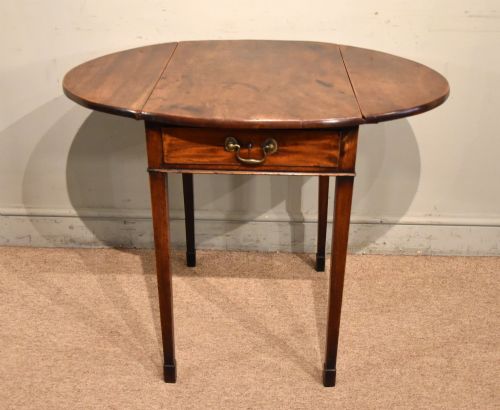
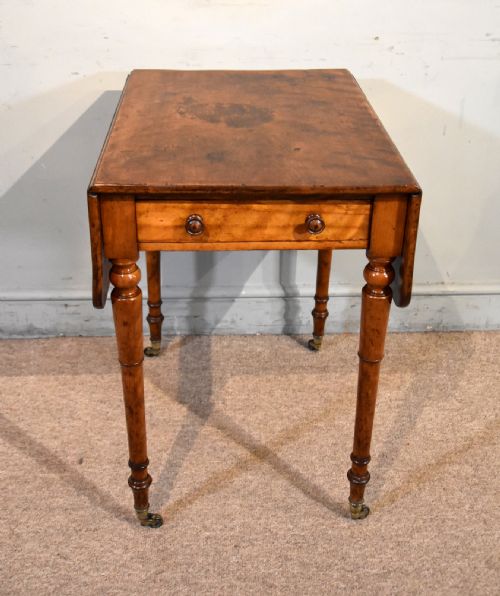
Late C18th Faded Mahogany Pembroke Table, Georgian
Priced at £395 from I M Chaney Antique Furniture
Introduced around the middle of the eighteenth century for taking tea or serving light suppers.
Named after the Earl of Pembroke, though historians debate whether he designed the first one or just ordered it.
They became a staple in Georgian drawing rooms because people needed small tables that could be moved easily.
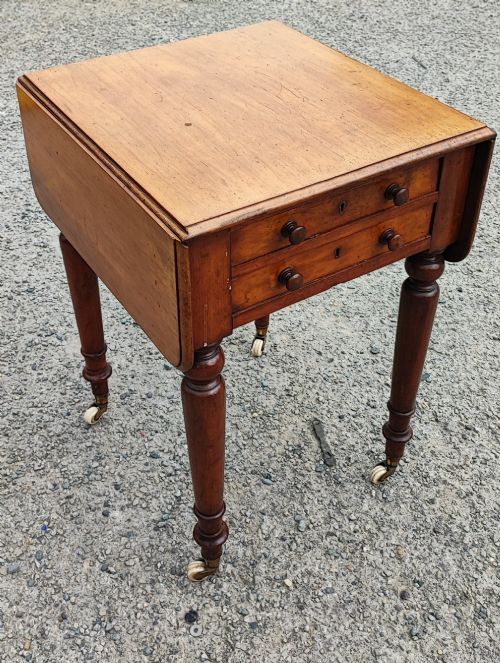
Check the casters, as they were meant to be wheeled close to the open fire.
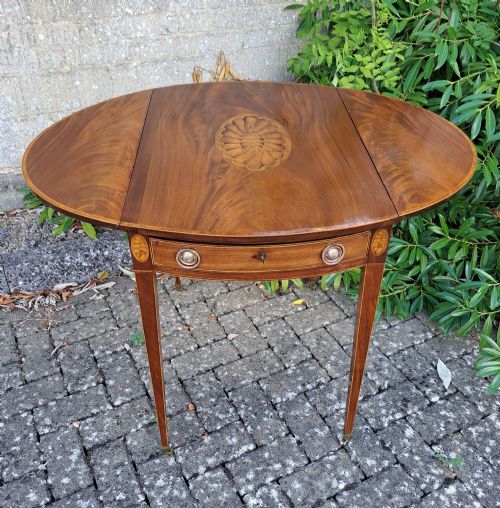
Thomas Sheraton published designs for these in his drawing book, popularising the elegant oval top shape.
George Hepplewhite also featured them in his patterns, often specifying tapering square legs ending in brass casters.
Gillows of Lancaster produced hundreds of them, sometimes stamping the top edge of the drawer front.
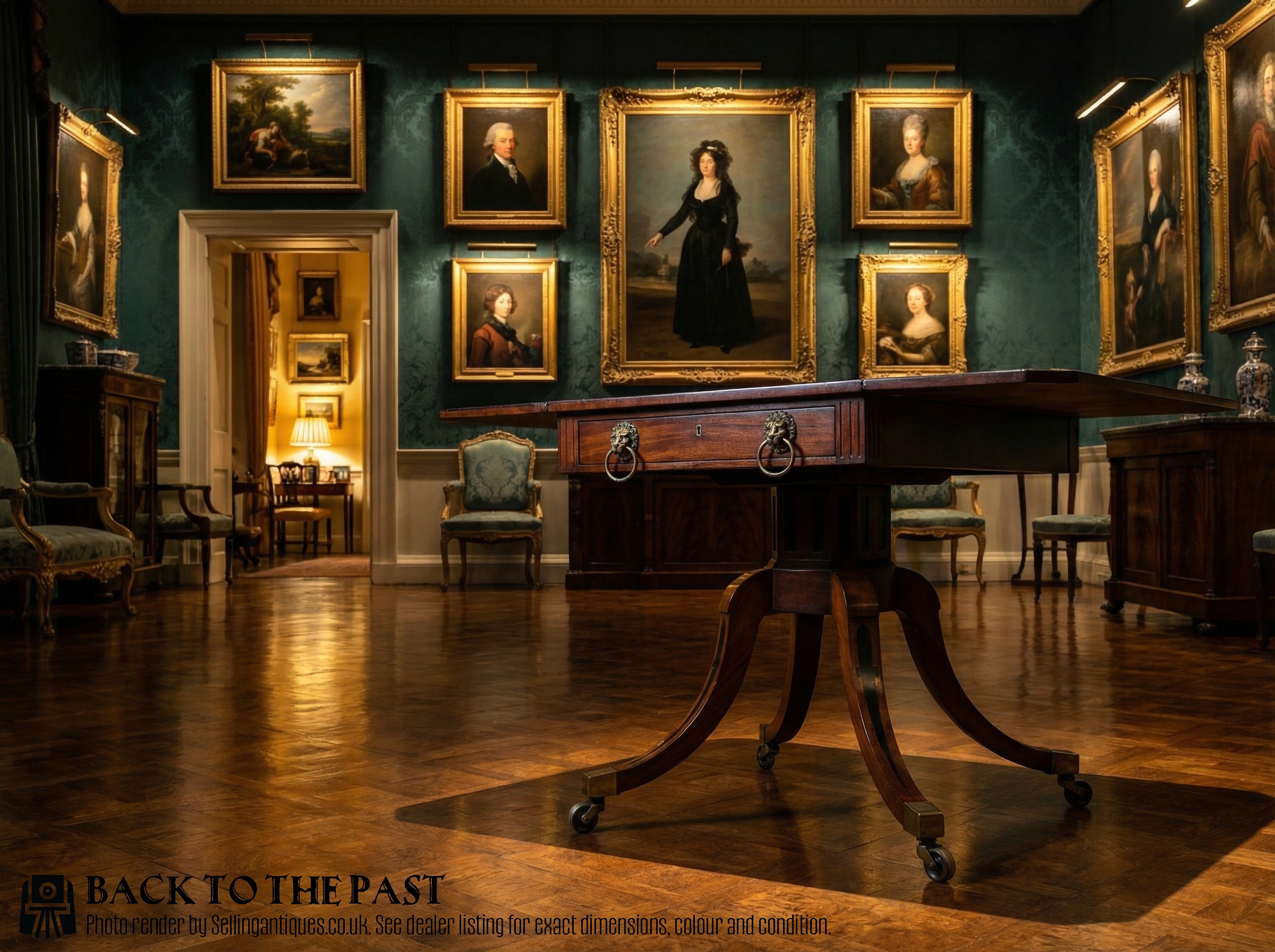
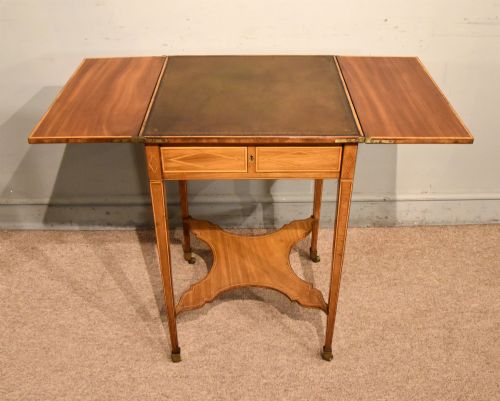
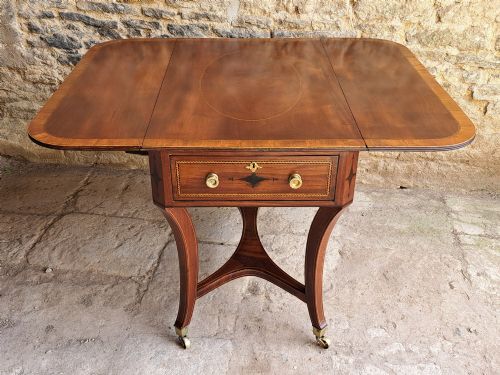
Regency Mahogany and Satinwood Pembroke Table, Regency
Priced at £1,550 from Walton House Antiques
The 2026 retail price guide for Antique Pembroke Tables is drawn from a proprietary archive of over 1.1 million retail prices indexed by Sellingantiques since 2003. This guide relies exclusively on their own internal data; no external sources or auction records are used.
Analysing nearly 25 years of UK antique market history alongside current retail values, the data indicates that typical UK retail prices for Antique Pembroke Tables range between £500 and £2,500. Entry-level prices generally fall under £500 and premium examples upwards of £2,500.
Two drop leaves hang vertically on either side of a fixed central rectangular or oval top.
Wooden hinged brackets pivot out from the frame to hold the flaps flat.
Usually built with a single working frieze drawer at one end and a false drawer at the other.
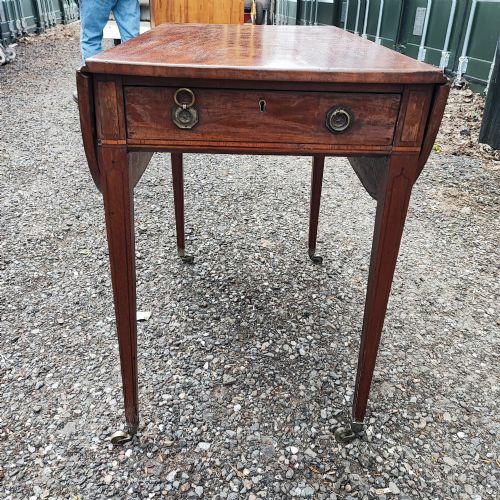
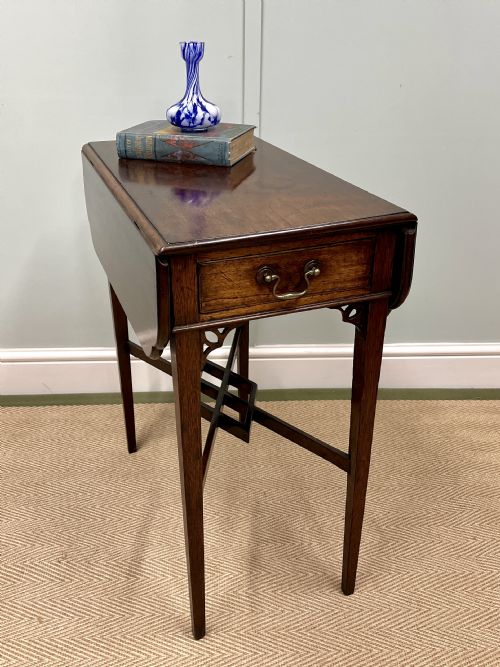
Georgian Pembroke Lamp Table, 18th Century
Priced at £750 from Millers Antiques
Early versions sit on plain chamfered square legs joined by an X-stretcher to prevent wobbling.
Cabinetmakers eventually dropped the stretcher and turned to elegant tapering legs by the late eighteenth century.
Top boards often attach with handmade screws driven up through the inner frame.
"Many late eighteenth-century versions have a hidden leather-lined writing slider that pushes out from the main drawer."
"Some rare surviving pieces retain their original removable fire screens slotted neatly into the back."
"These tables emerged as some of the first furniture designed specifically to sit in the centre of a room rather than against walls."
Based on almost 25 years of Sellingantiques UK antique market data, Antique Pembroke Tables appeared 2585 times (out of 1,100,000 antiques) which gives it a rarity score of 60/100.
This score measures scarcity within the Sellingantiques archive only and is not a survey of the entire antiques market, so these statistics may not be indicative of the general availability of Antique Pembroke Tables elsewhere.
Remove the drawer and check the runners inside the carcase for heavy dust or splinters. Often the oak sides have simply expanded with seasonal humidity.
Rub a plain wax candle along the bottom edges of the drawer sides and the internal runners. This provides dry lubrication without swelling the wood further.
Leave them alone if they show a dull, dark patina. Georgian brass was often lacquered, and aggressive metal polish strips away both the lacquer and two centuries of accumulated surface history.
If they are caked in floor wax or carpet fibres, pick the debris out carefully with a wooden toothpick. A soft cloth is all you need to dust them.
Yes, this is normal for a table of this age. Over two centuries, the solid timber flaps naturally warp as they react to changes in central heating and humidity.
The rule joints also wear down through constant friction. When the hinged brackets are tucked away, the leaves lack support and gravity pulls the warped wood inward.
Avoid household oil. It will soak into the timber and leave dark stains.
The squeak is just wood rubbing on wood. Brush some powdered graphite into the gap instead.
Please note: This Antique Pembroke Tables guide and its associated pricing data are provided for general informational purposes only. It does not constitute formal financial, investment, or appraisal advice and should not be relied upon as the sole basis for any commercial activity, purchasing, or sales decisions. Sellingantiques.co.uk accepts no liability for any actions taken in reliance on this information. Always consult with a qualified professional or independent appraiser.
