





A 2026 Guide by Sellingantiques
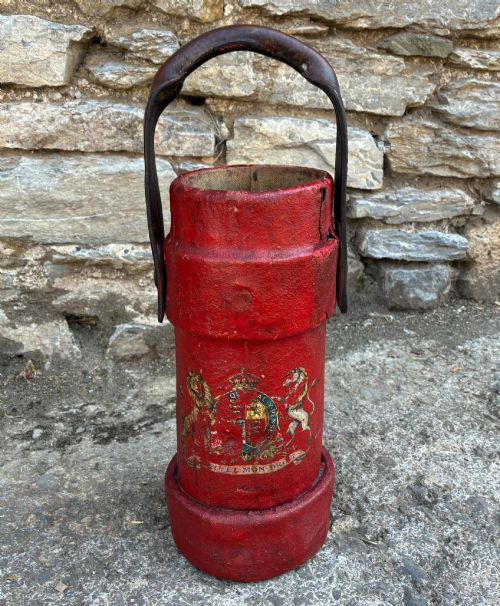
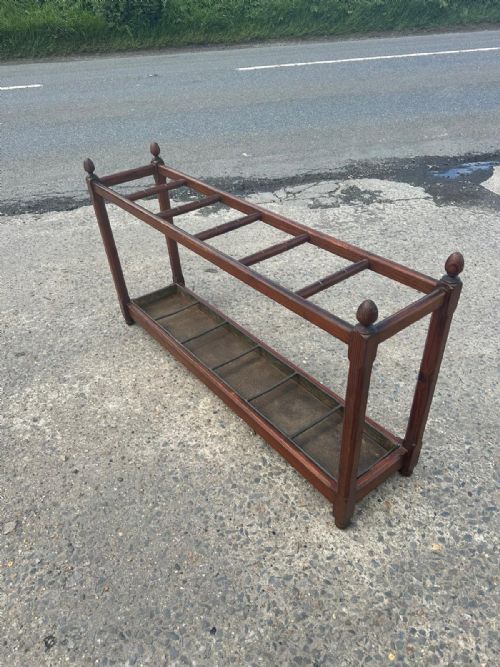
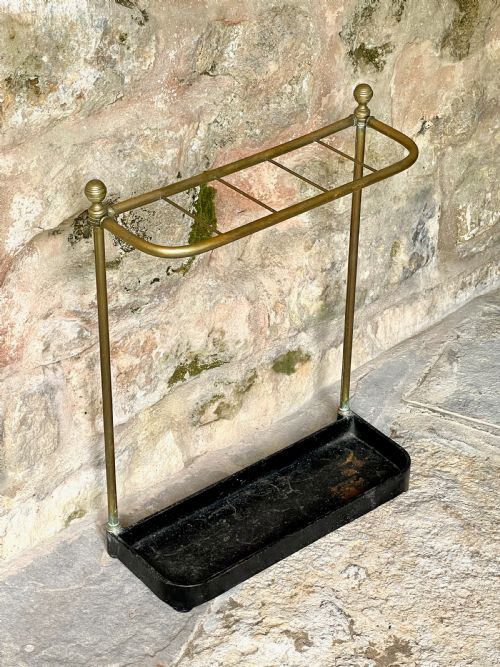
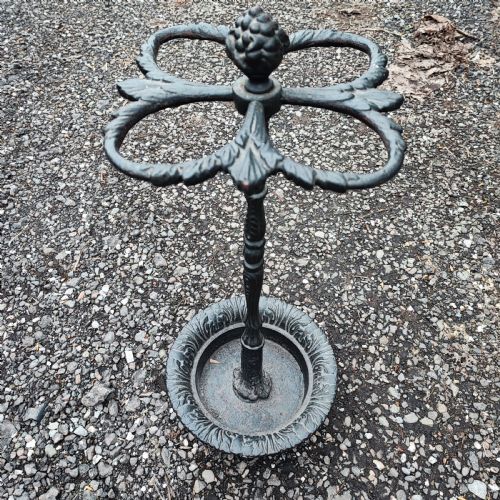
19th Century Cast Iron Stick / Umbrella Stand, 19th Century
Priced at £675 from Shackladys Antiques
They first appear as dedicated furniture forms around the mid-nineteenth century. Hallways were expanding in middle-class homes.
Before this, sticks just leaned in a corner. The boom in cheap factory-made umbrellas created a sudden domestic storage problem.
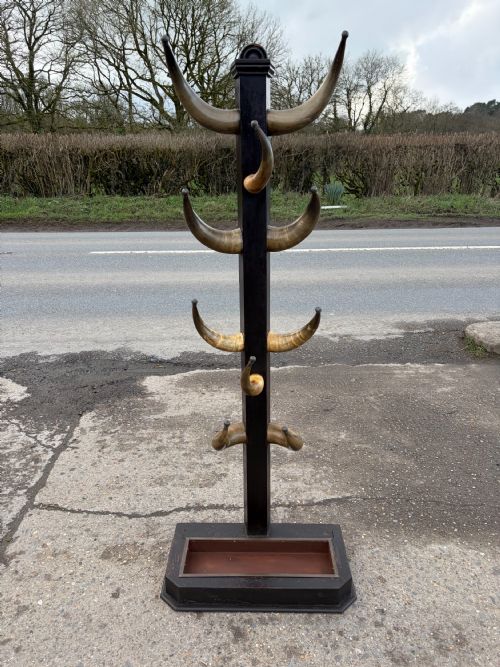
Look for combination pieces. The Victorians merged them with hall trees and coat racks to save space in narrow entryways.
Late Victorian catalogues show hundreds of variants in cast iron alone. Foundries saw a large market in outfitting suburban terraces.
Coalbrookdale produced some recognised cast iron examples. Their pattern books from the 1840s onwards show dozens of complex designs.
Falkirk Iron Company cast thousands of stands in Scotland. They stamped their registration diamonds clearly on the base.
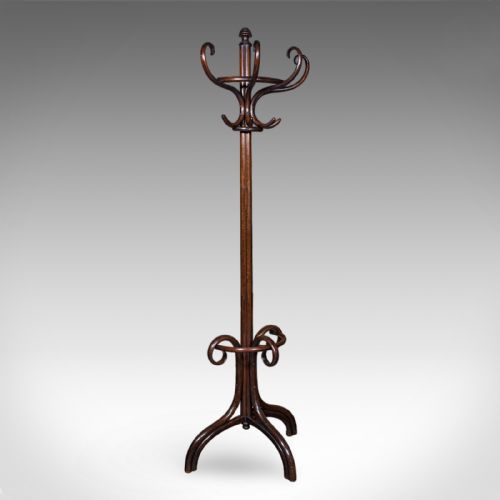
Thonet introduced bentwood umbrella stands later in the century. These lightweight wooden frames offered a clear contrast to heavy ironwork.
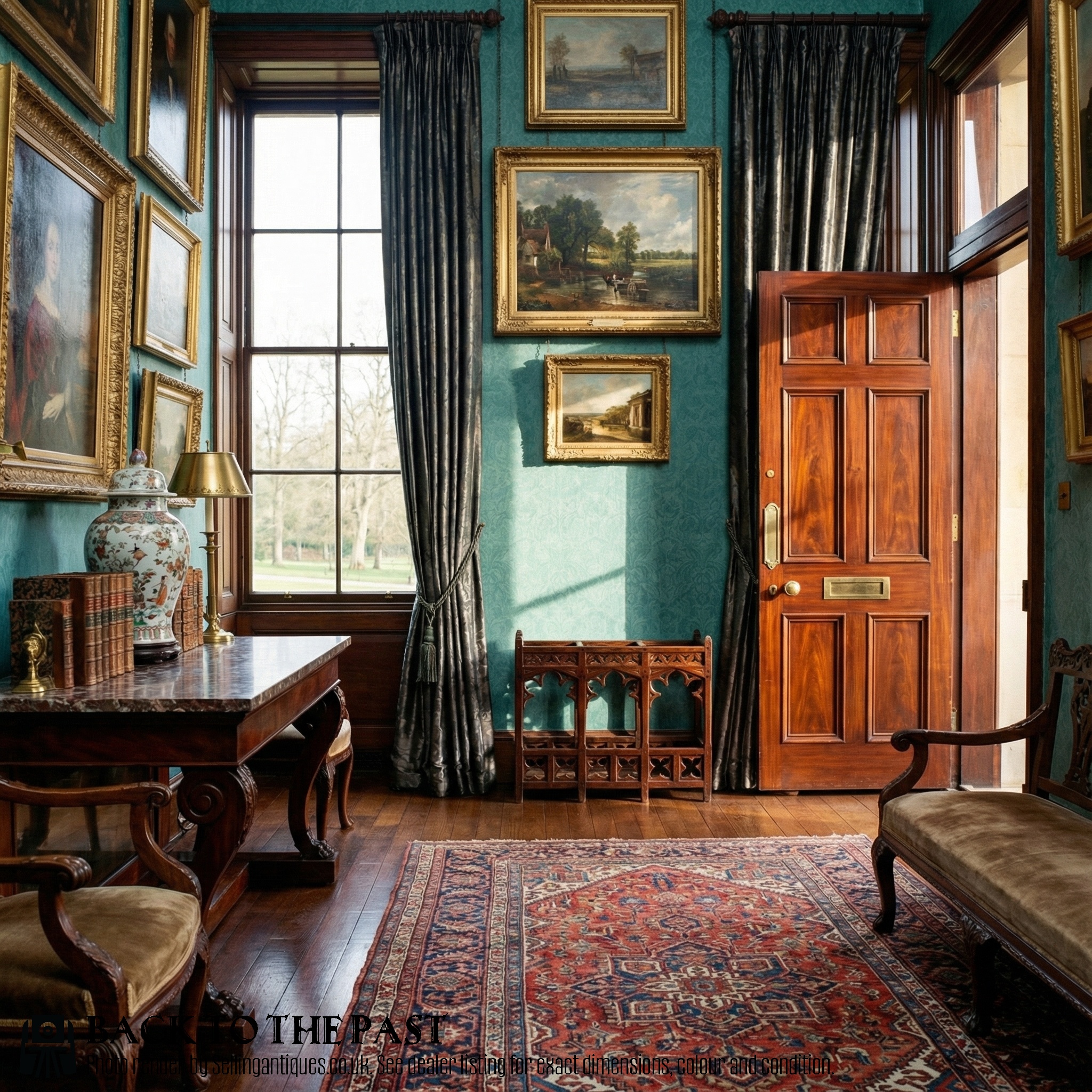
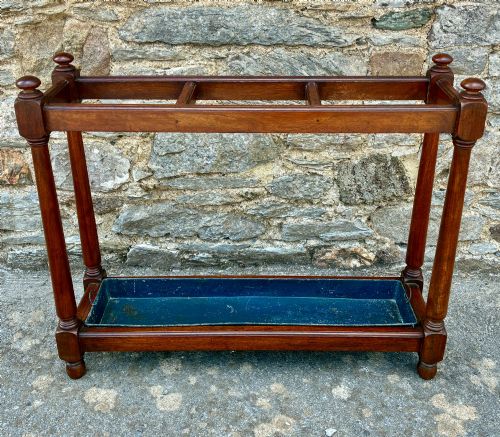
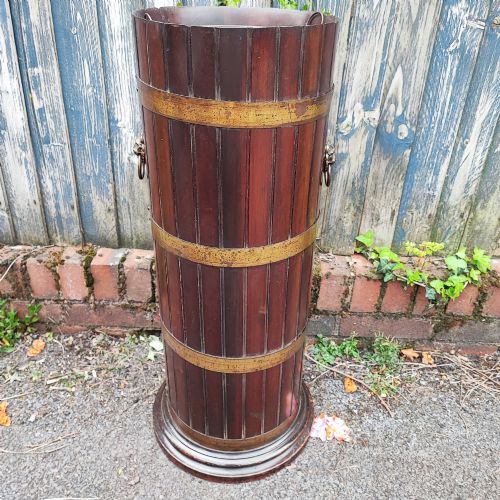
Superb Oak Gothic Umbrella Stand, 1880
Priced at £1,550 from David Griffith Antiques
The 2026 retail price guide for Antique Umbrella Stands is drawn from a proprietary archive of over 1.1 million retail prices indexed by Sellingantiques since 2003. This guide relies exclusively on their own internal data; no external sources or auction records are used.
Analysing nearly 25 years of UK antique market history alongside current retail values, the data indicates that typical UK retail prices for Antique Umbrella Stands range between £300 and £1,200. Entry-level prices generally fall under £300 and premium examples upwards of £1,200.
Drip trays sit at the base to catch the rainwater. Lift the pan out to check the metal underneath.
Upper rails keep the sticks upright. These dividers separate the storage area into individual sections.
Solid bases add necessary weight. A tall umbrella stand needs a low centre of gravity to stop it tipping over.
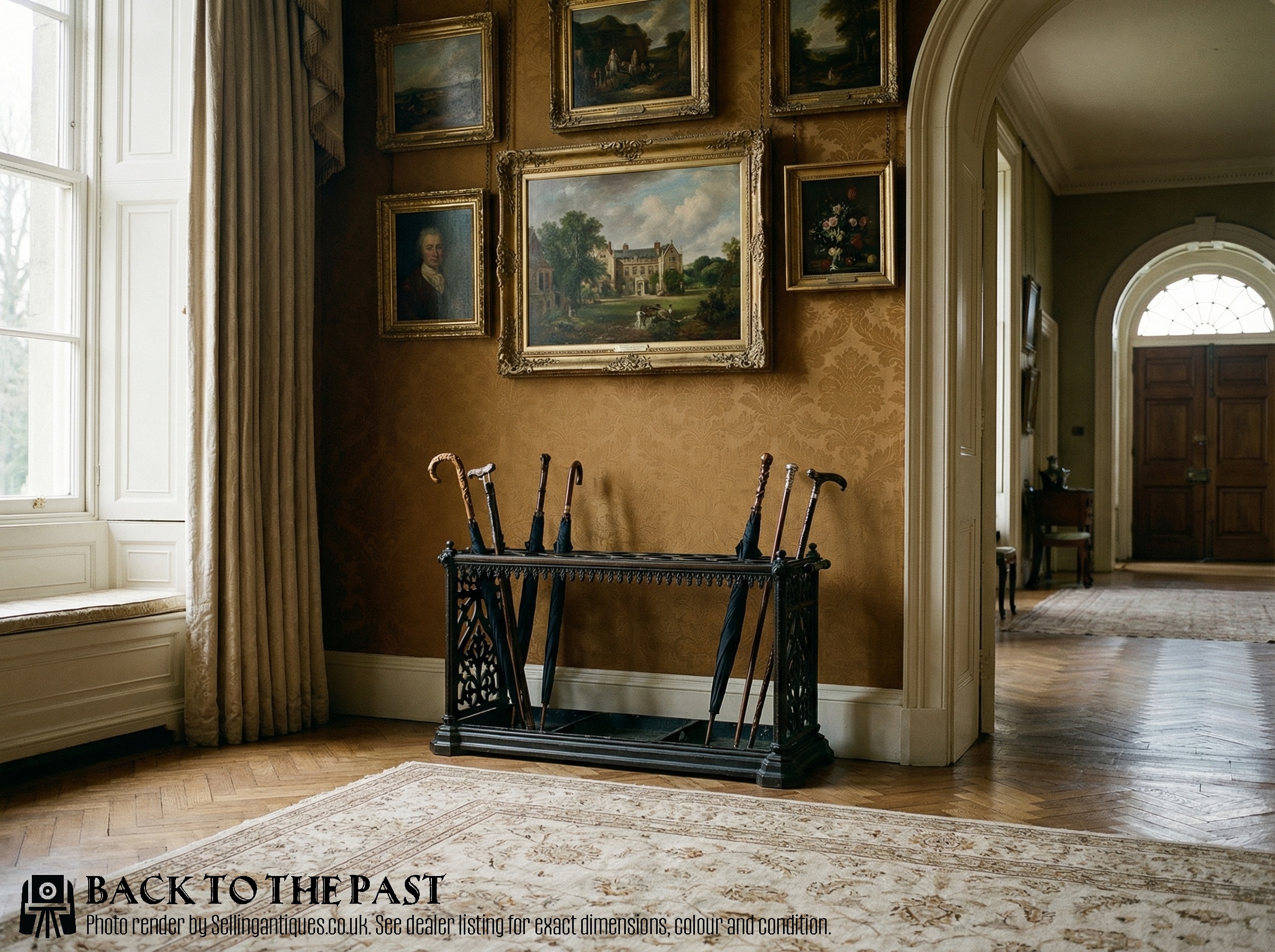
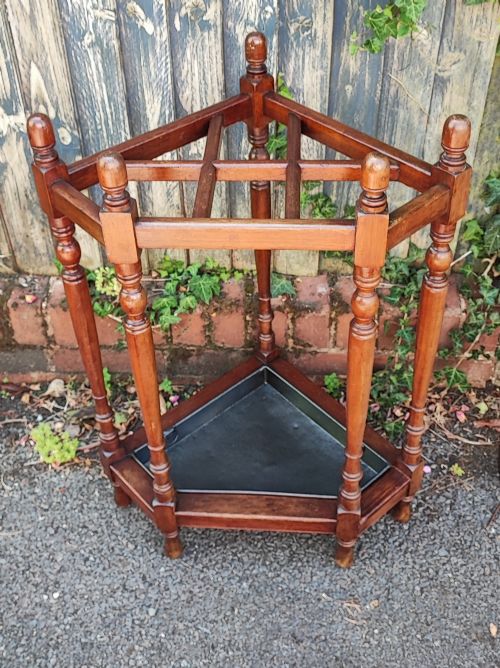
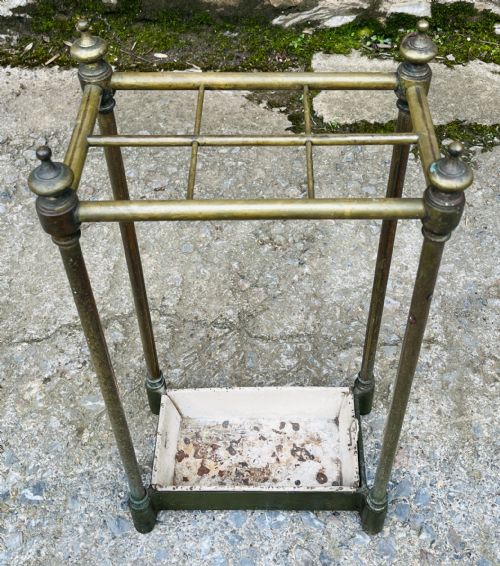
Coalbrookdale 36 Hole Umbrella Stand, 1870
Priced at £2,500 from Midwinter Antiques
Iron frames rely on bolted construction. Sections were cast separately in sand moulds and bolted together at the foundry.
Wooden stands use standard joinery. Tenons and mortises hold the timber uprights and rails together.
Bentwood makers steamed beech rods to curve them into loops. This required pressure vessels rather than traditional cabinetmaking tools.
"Hall stands sometimes hide a glove box in the centre. A lidded compartment sat right between the umbrella slots."
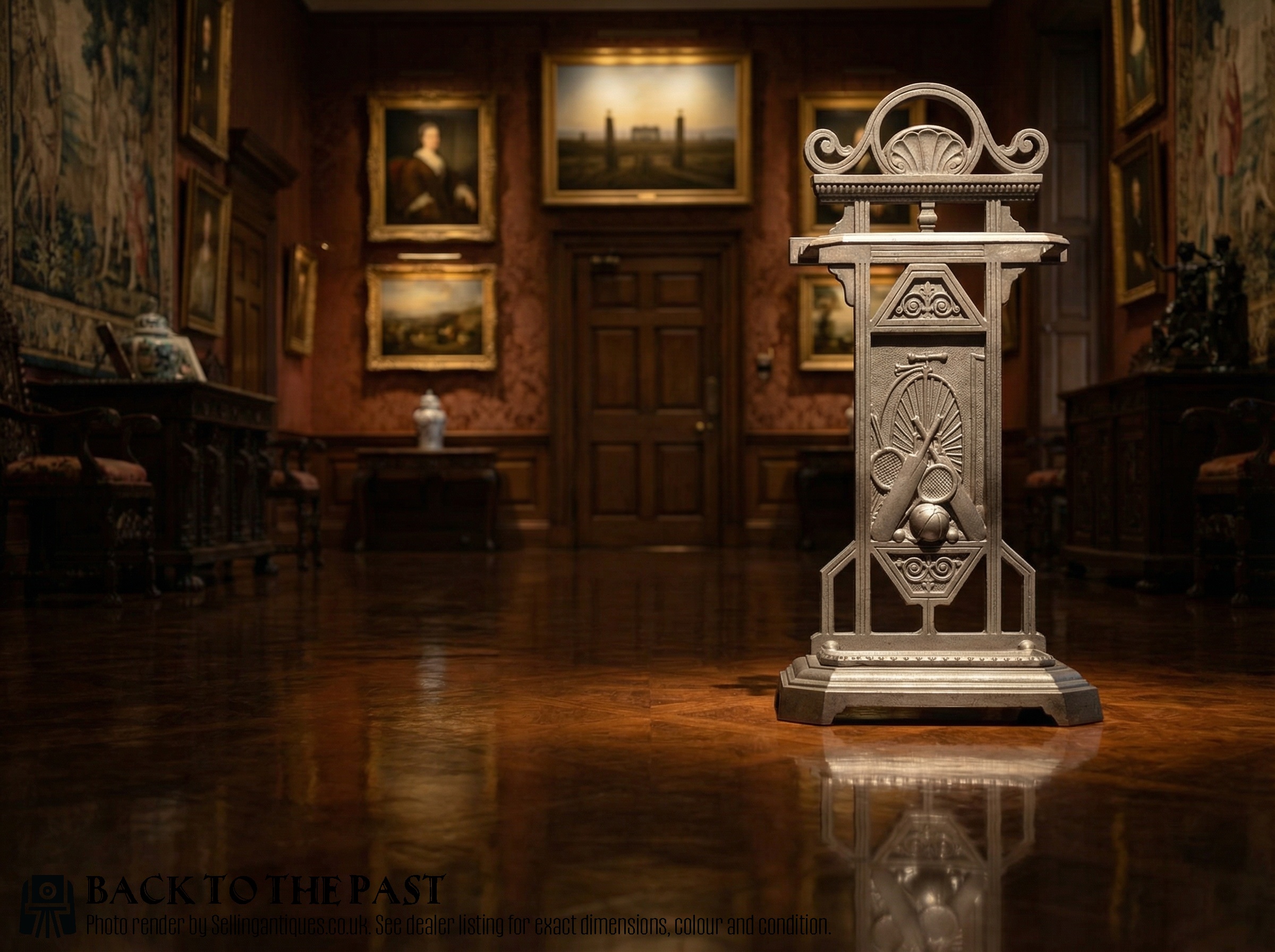
"Cast iron designs often incorporated classical figures. Dogs, sailors and mythical gods were cast directly into the backplates."
"Registration marks track the exact date a design was protected. You can read the lozenge to find the year."
Based on almost 25 years of Sellingantiques UK antique market data, Antique Umbrella Stands appeared 2120 times (out of 1,100,000 antiques) which gives it a rarity score of 65/100.
This score measures scarcity within the Sellingantiques archive only and is not a survey of the entire antiques market, so these statistics may not be indicative of the general availability of Antique Umbrella Stands elsewhere.
Use a wire brush to take off the loose flakes. Scrubbing too hard might scratch the surviving paintwork.
Once the loose rust is gone, wipe the surface down with a lightly oiled cloth. Some people apply a black grate polish to protect the raw metal.
Finding an original tray to match a specific stand is difficult. The dimensions varied between every maker and model.
Try a local sheet metal worker. They can cut and fold a simple zinc or copper pan to fit the space.
They were built for it. The original varnish offered a barrier against the wet.
Wipe wet spots off bentwood after use. This stops moisture lifting the old finish over time.
Glue rarely holds heavy cast iron together for long. The joint takes too much stress when someone drops a walking stick against it.
Check the back of the joint for a missing bolt. Most foundry pieces slot together with square nuts and bolts. You just need to source a matching replacement thread.
Please note: This Antique Umbrella Stands guide and its associated pricing data are provided for general informational purposes only. It does not constitute formal financial, investment, or appraisal advice and should not be relied upon as the sole basis for any commercial activity, purchasing, or sales decisions. Sellingantiques.co.uk accepts no liability for any actions taken in reliance on this information. Always consult with a qualified professional or independent appraiser.
