



Antique Famille Rose
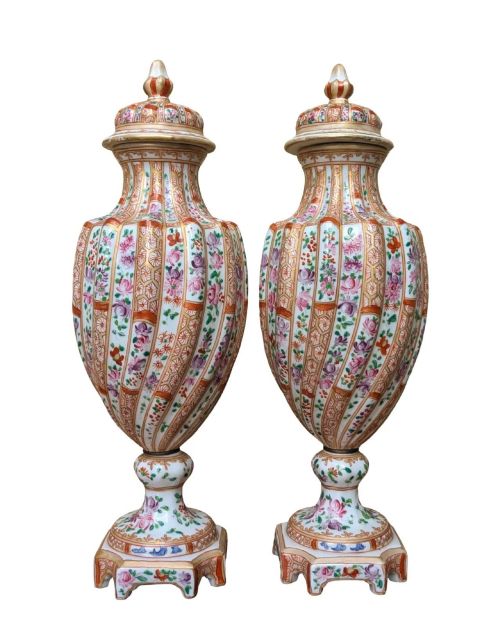
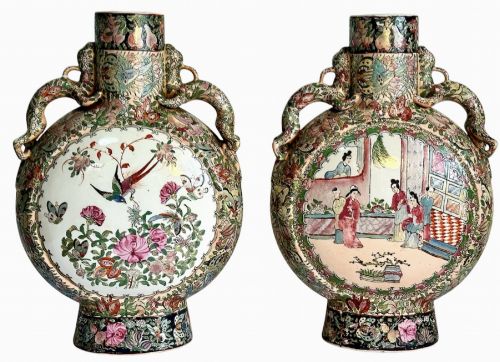
Famille rose is Chinese porcelain painted in opaque overglaze enamels built around a pink, made from the early 18th century for both the domestic and the export table.
Antique Famille Rose
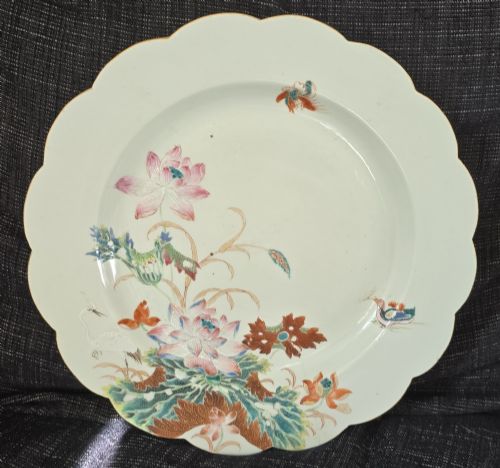
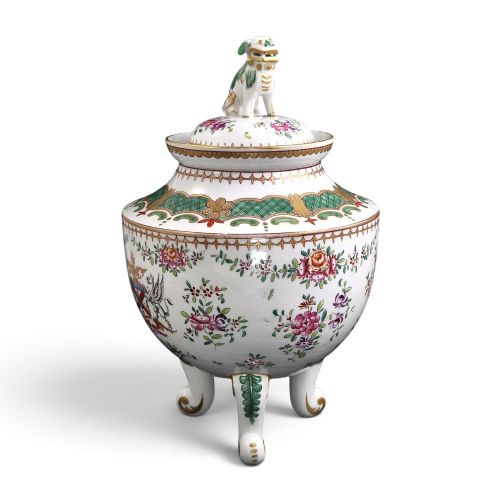
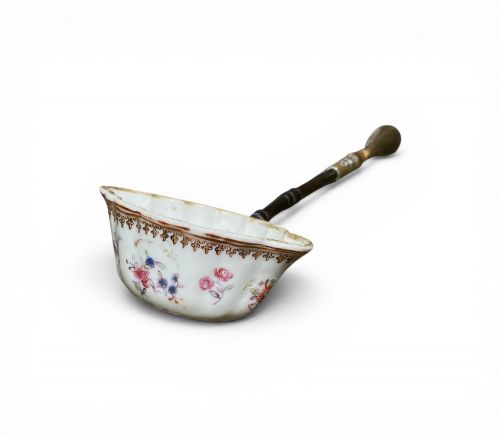
The name is European, the porcelain Chinese. Famille rose describes an overglaze enamel palette centred on an opaque pink derived from colloidal gold, introduced early in the 18th century. The density of the palette let painters shade figures, birds and flowers in a way the earlier enamel schemes could not.
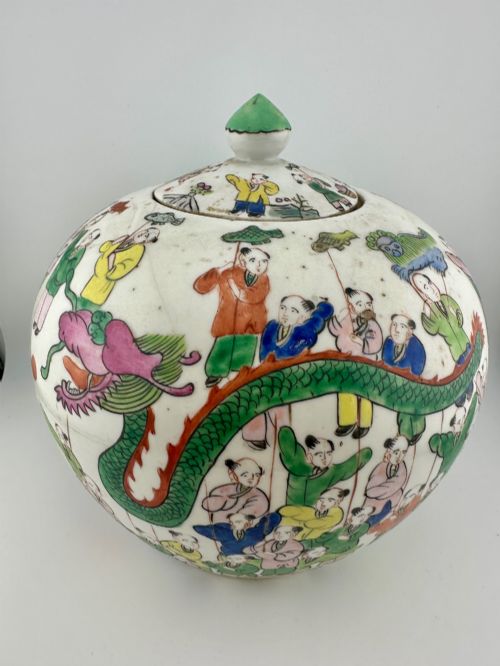
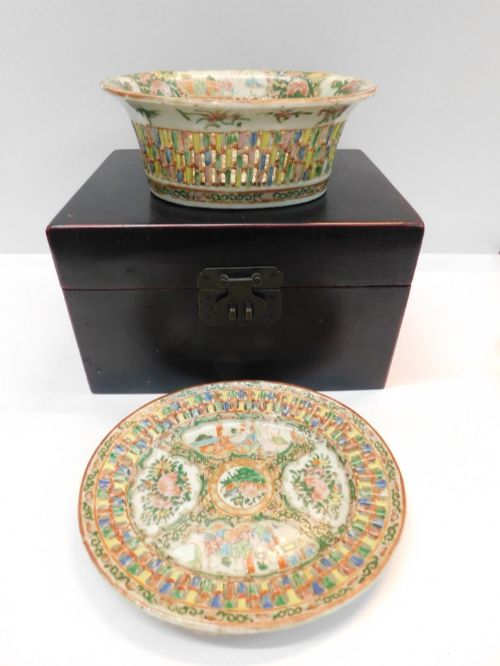
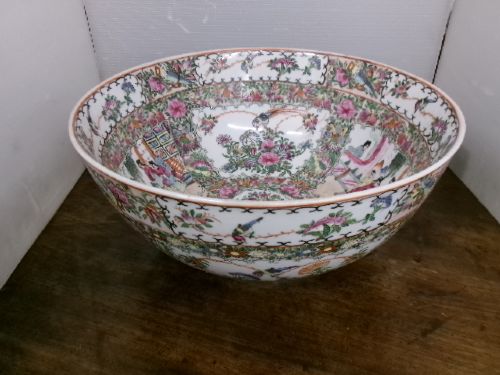
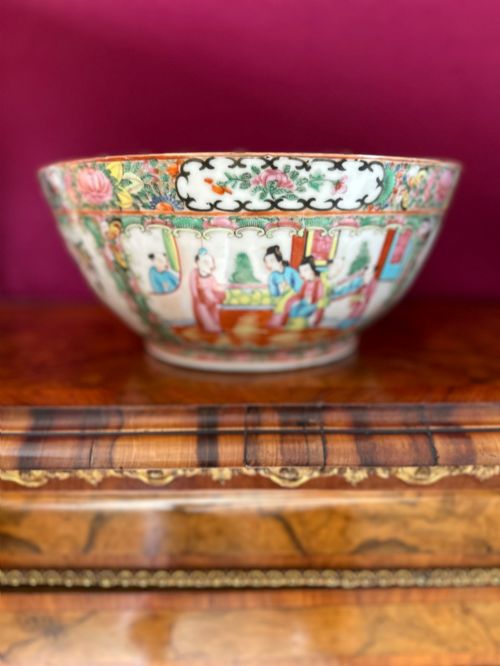
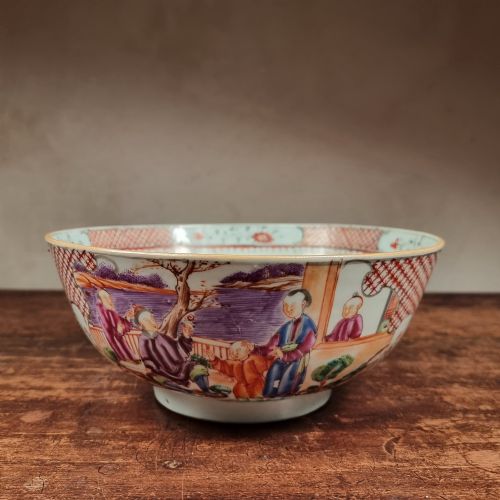
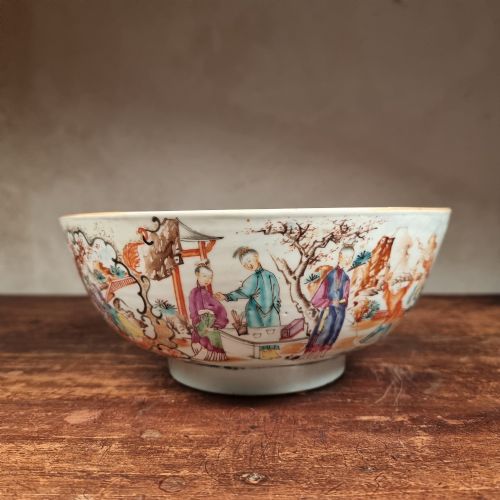
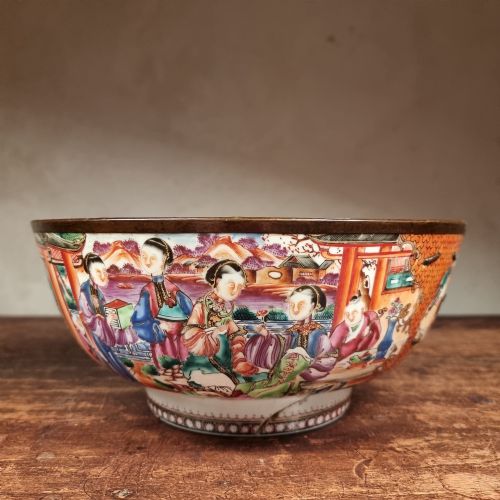
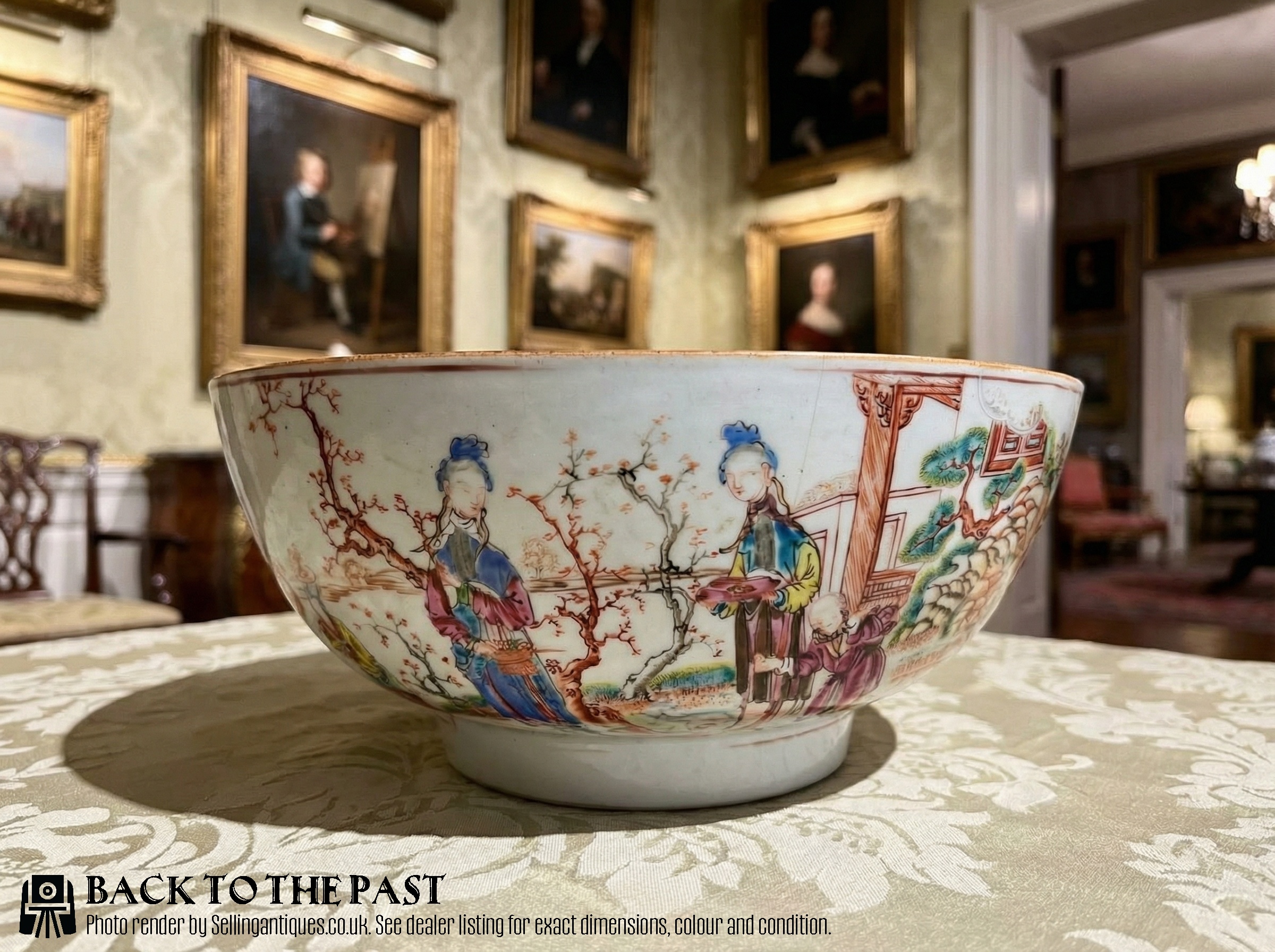
What you'll meet most is a bowl. Bowls account for 50 of 164 titles on Sellingantiques, and the shape that repeats hardest is a large Canton or rose medallion bowl of sixteen to twenty inches. Dishes, plates, mugs, brush pots, jardinieres, jars, teapots, snuff bottles and figures fill out the rest, with sizes running from a snuff bottle to a 51cm punch bowl.
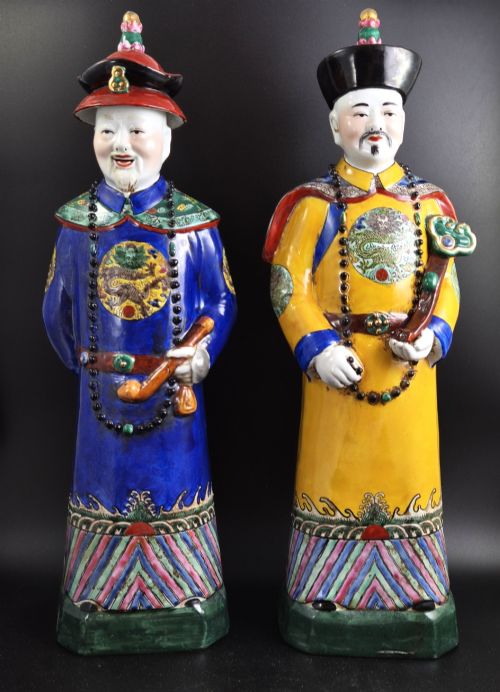
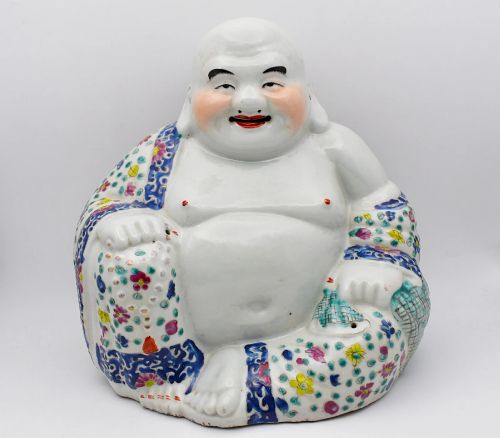
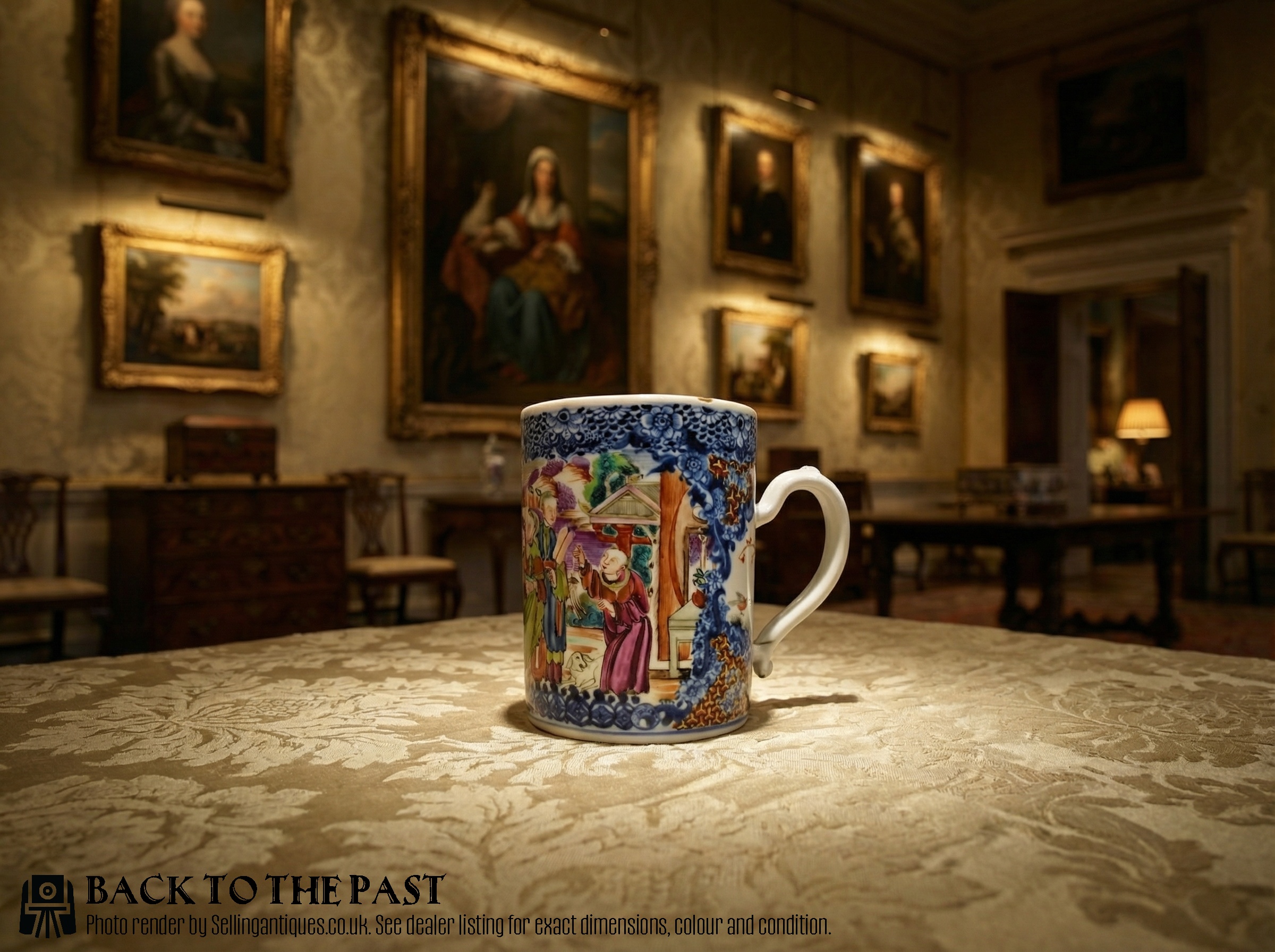
Two streams run through the category. One is Canton work, densely enamelled export porcelain from Guangzhou workshops, which covers roughly a quarter of the archive and takes in umbrella stands, garden seats, pen boxes and chargers as well as bowls. The other is 18th-century table porcelain, mugs, teapots, saucer dishes and armorial plates, with Qianlong named in 27 titles. Figures, snuff bottles and scholar's objects make a smaller recurring group, and famille rose taste turns up on European porcelain now and then.
Dating is usually coarse. The dated field spans 1750 to 1940, but 54 listings say only '19th Century' and 35 only '18th Century', so a majority of the archive sits behind a century-wide label. Reign names appear where a dealer felt able, from Yongzheng through to the Republican period. Title and date field sometimes disagree, so they're worth reading together.
What Sets The Range
Size does most of the work. 'Large' appears in 31 titles, and the top of the range is furniture rather than tableware: pairs of garden seats, a rose medallion umbrella stand, Qing painted barrel seats. Figures reach 56cm twice over. The bottom is mugs, saucer dishes, small plates and brush pots.
After scale comes the mark. A reign mark the dealer accepts as contemporary with the piece, described as mark and period, sits well above the same form with a later or apocryphal mark on it. Pairs push up too, and 19 titles carry one, whether garden seats, moon flasks, lidded jars or plaques.
Decoration separates pieces of similar size. Unusual grounds, purple or coral-orange, and named subjects such as Melon and Butterfly or Pheasant and Peony, carry more weight than generic flower panels. A recorded history helps as well: one teapot stand came from a known reference collection, and a Canton enamel dish with a Jesuit design scene stands apart from anything else in the archive.
Antique Famille Rose Retail Price Guide 2026
Typical UK retail prices for famille rose, calculated from the Sellingantiques database of over a million retail prices indexed since 2003. This retail price guide relies exclusively on Sellingantiques data; no external sources or auction records are used, so the figures do not describe the wider market.
19th Century is the period label used most on Sellingantiques for famille rose, with 18th Century next and the 1880s third.
The Antique Famille Rose Glossary
- Canton
- Densely enamelled export porcelain decorated in Guangzhou workshops; 27 titles use 'canton' and 10 'cantonese'.
- Rose medallion
- A Canton pattern of reserved panels of figures and flowers set around a central medallion. 'Medallion' appears in 9 titles.
- Chinese export
- Porcelain made for the Western market rather than domestic use, named in 9 titles.
- Mark and period
- A reign mark the dealer takes as contemporary with the piece, as against an apocryphal mark, meaning an earlier reign mark applied to a later piece.
- Bitong
- A cylindrical brush pot for a scholar's desk. The Chinese term turns up in several titles alongside the English one.
- Famille verte
- The earlier green-dominated enamel palette. Two titles here use it rather than rose.
Antique Famille Rose: Frequently Asked Questions
What does famille rose actually mean?
It's the European term for a Chinese overglaze enamel palette built around an opaque pink made from colloidal gold. It came in early in the 18th century.
The opacity is the point. It allowed painterly shading on figures, birds and flowers that earlier enamel schemes couldn't manage.
Which shapes come up most often?
Bowls, by a distance: 50 of 164 titles. The most repeated single shape in the samples is a large Canton or rose medallion bowl of sixteen to twenty inches.
After that come dishes, plates, mugs, brush pots, jardinieres, jars, teapots, snuff bottles and figures. The 18th-century Qianlong mug is the second most repeated form.
Is all famille rose Chinese?
Almost all of it. 'Chinese' appears in 133 of 164 titles.
European porcelain in the famille rose taste shows up now and then, around one piece in twelve, including Chelsea, Bow, Chantilly and a Regency Spode barrel scent jar carrying a pattern number.
How precisely are these pieces dated?
Loosely, for the most part. Only 58 of 164 listings carry a clean year, while 54 say just '19th Century' and 35 just '18th Century'.
Reign names appear where a dealer felt able to give one, covering Yongzheng, Qianlong, Jiaqing, Daoguang, Tongzhi, Guangxu and the Republican period. Qianlong leads at 27 titles.
What are the largest pieces in the category?
Furniture-scale porcelain sits at the top: pairs of garden seats, a rose medallion umbrella stand and Qing painted barrel seats.
Among vessels, the biggest measured bowls are stated at 51cm and 19 inches across. Two figures reach 56cm, a pheasant and a pair of Qing emperors.
Do snuff bottles appear in famille rose?
They do, five in the samples, and they're the smallest recurring form in the archive.
Their placing varies widely. Some sit near the bottom of the range, others well up it.