


A 2026 Guide by Sellingantiques
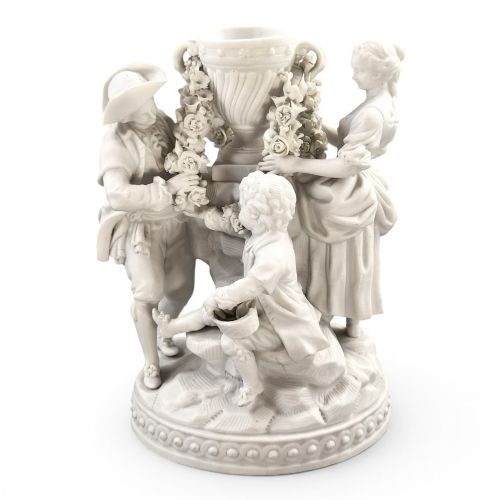
European factories developed this unglazed porcelain during the mid-nineteenth century. They sought a material that absorbed light like skin.
Shifted heavily to Germany and France by the 1870s. Regional potteries handled different qualities of output.
Notice how the earlier examples often look paler. The tinting process evolved over decades.
World War One disrupted the European export trade. Composition materials soon began replacing the heavy reliance on fired clay.
Jumeau operated in France during the late nineteenth century. They stamped or incised markings into the back of the neck.
A massive German producer of antique bisque heads. Armand Marseille supplied parts to numerous assembly factories across Europe.
Simon & Halbig specialised in the porcelain casting itself. They frequently made heads for other companies.
The 2026 retail price guide for Antique Bisque is drawn from a proprietary archive of over 1.1 million retail prices indexed by Sellingantiques since 2003. This guide relies exclusively on their own internal data; no external sources or auction records are used.
Analysing nearly 25 years of UK antique market history alongside current retail values, the data indicates that typical UK retail prices for Antique Bisque range between £200 and £1,000. Entry-level prices generally fall under £200 and premium examples upwards of £1,000.
That matte, skin-like texture defines genuine antique bisque. It lacks the shiny reflection of standard glazed ceramics.
Painted features usually include finely feathered eyebrows and detailed eyelashes. Look at the lip colouring under a loupe.
Inset glass eyes on many doll heads. Secured inside the carefully cut sockets with a simple plaster mixture.
Early production required pressing wet clay into two-part plaster moulds by hand. Workers then joined the halves.
Slip casting eventually became the standard method for antique bisque. Pouring liquid clay allowed for thinner, uniform walls.
Observe the painting techniques. They shifted from simple flat washes to complex shading with multiple layers of blush.
"Some factories designed intricate pierced ears into the clay before firing. They held miniature glass or metal earrings."
"Hollow spaces inside a cast head. Sometimes used to house tiny musical movements or simple voice boxes."
"Look for faint fingerprints on the inside rims. The original workers left these marks when pressing the wet clay."
Based on almost 25 years of Sellingantiques UK antique market data, Antique Bisque appeared 273 times (out of 1,100,000 antiques) which gives it a rarity score of 95/100.
This score measures scarcity within the Sellingantiques archive only and is not a survey of the entire antiques market, so these statistics may not be indicative of the general availability of Antique Bisque elsewhere.
Use a dry, soft brush first to remove loose dust. A gentle sweep across the features often does the job without risking the painted finish.
If the dirt is stubborn, a cotton swab barely dampened with distilled water can work. Never scrub the surface. The painted lashes and brows sit on top of the clay and wash away easily.
Wobbly heads usually mean the internal elastic stringing has stretched out. The rubber core degrades and loses tension over the decades.
Restringing involves feeding new elastic cord through the body and neck socket. It pulls the joints tight again. Many collectors learn to do this themselves, or you send it to a specialist.
Those numbers relate to the mould size and the factory reference. They helped workers match the correct head to the right body during assembly.
Different makers used their own sizing systems. There is no universal standard across the trade.
Hairlines in unglazed porcelain are often almost invisible to the naked eye. They look like faint pencil lines and usually start from the rim or eye cuts.
Even a microscopic line compromises the structural strength of the piece. Temperature changes or minor knocks can cause that tight crack to travel further across the face.
Please note: This Antique Bisque guide and its associated pricing data are provided for general informational purposes only. It does not constitute formal financial, investment, or appraisal advice and should not be relied upon as the sole basis for any commercial activity, purchasing, or sales decisions. Sellingantiques.co.uk accepts no liability for any actions taken in reliance on this information. Always consult with a qualified professional or independent appraiser.
