36,752  PAGES BROWSED TODAY PAGES TODAY • 118 ANTIQUES UPLOADED TODAYNEW ARRIVALS
GIFTS
118 ITEMS ADDED TODAY
Sort Order
Items Per Page
Browse Categories
Sort order
Relevant Links
Items per page
ID #SA921339
SOLD
Email Phone
Save
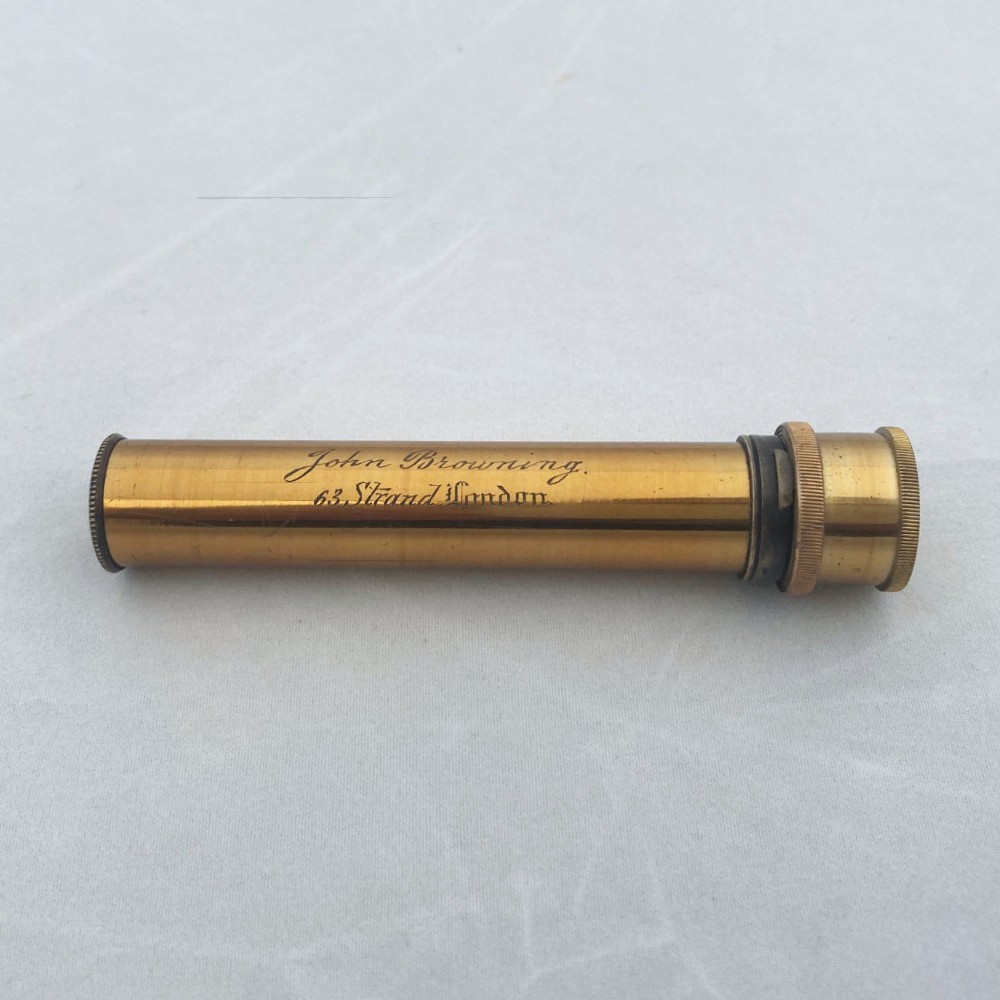
Mid Victorian Cased Miniature Spectroscope by John Browning of the Strand London
Sold by Jason Clarke Antiques
sold SA921339
Sorry, but this item has been sold.
Jason Clarke Antiques

Jason Clarke Antiques

Sellingantiques Verified Since Jul 2015
Browse dealers 78 items
Id #SA921339
PDF SHARE
SAVE

Mid Victorian Cased Miniature Spectroscope by John Browning of the Strand London

19th century
Sold 10 February 2025 · Jason Clarke Antiques
This “Mid Victorian Cased Miniature Spectroscope by John Browning of the Strand London” found a buyer.

It was listed by Jason Clarke Antiques. Sold pieces stay on Sellingantiques as a record of what has passed through, and the next one is rarely far away.

Description

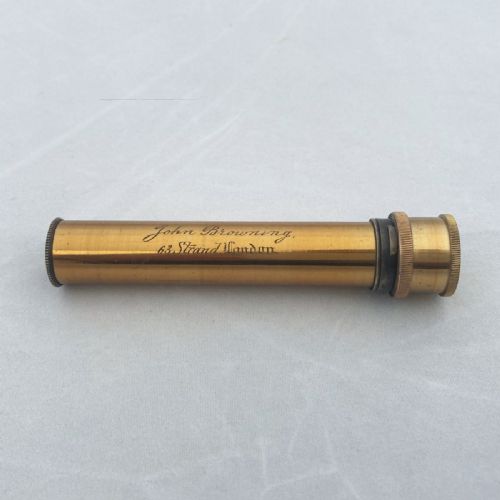
For sale, a rare mid Victorian cased miniature spectroscope by John Browning of 63 The Strand, London.

Clearly described and engraved in Browning’s 1878 publication, “How to Work with The Spectroscope”. This very original and complete, cased spectroscope was sold by Browning as, “The Miniature Spectroscope” and is describes as follows:

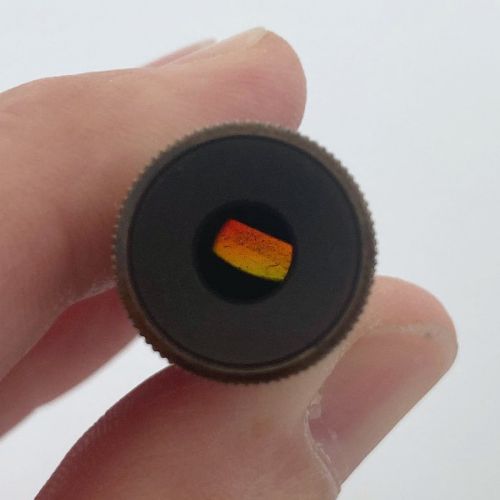
“This instrument will show many of Fraunhofer’s lines, the bright lines of the metals and gases, and the absorption bands in coloured gases, crystals, or liquids.

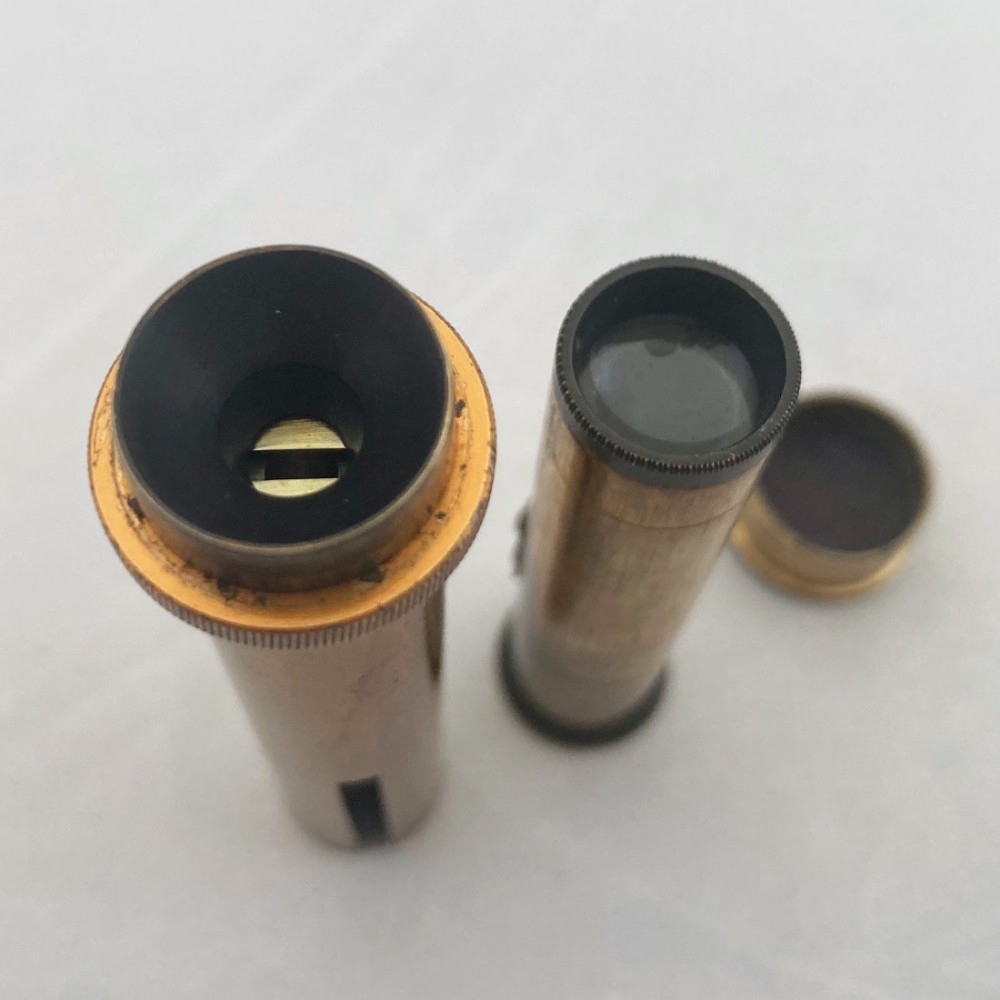
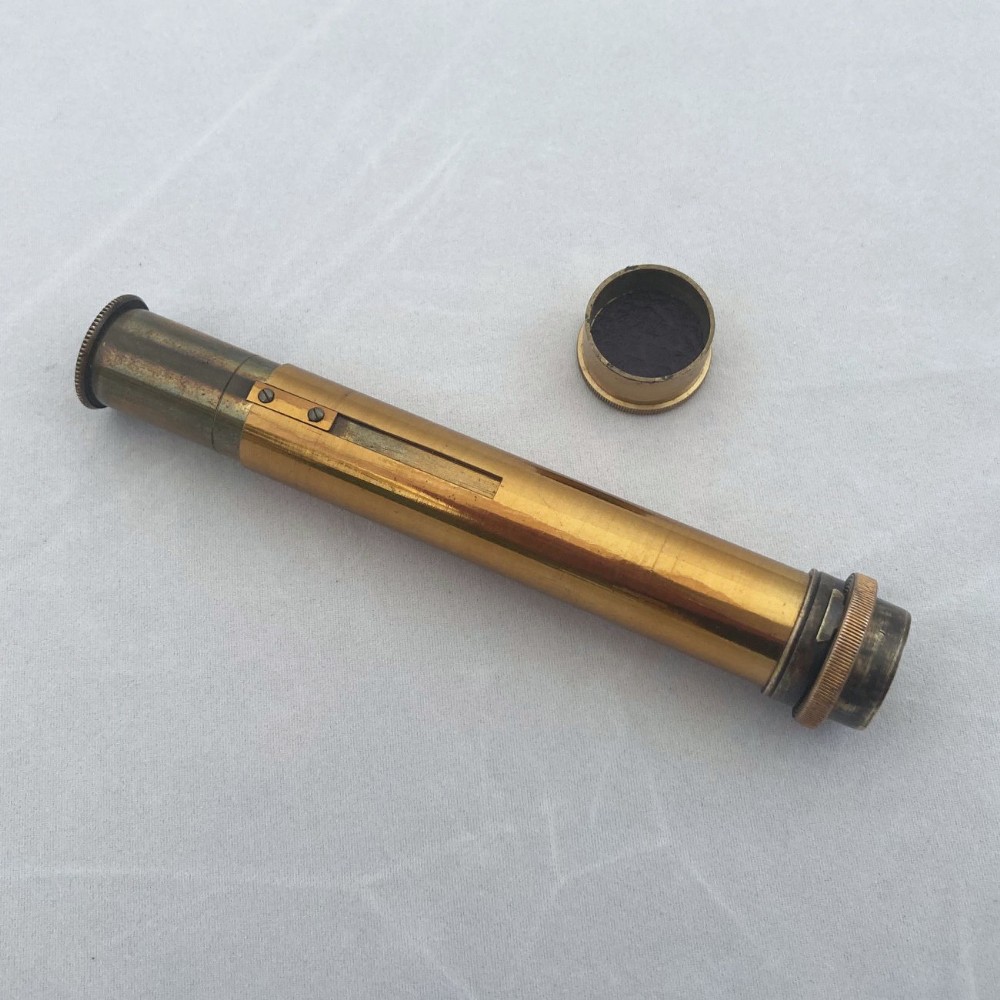
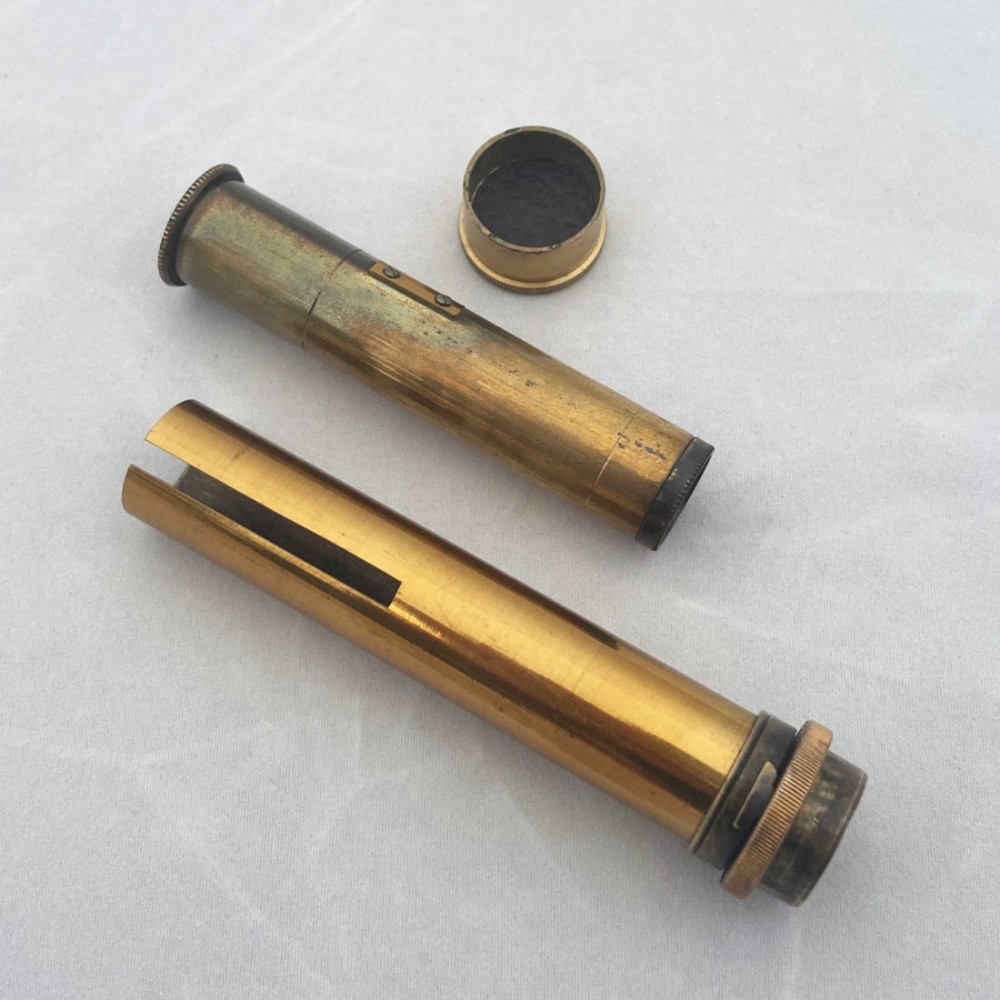
The Miniature Spectroscope consists of a compound direct-vision prism, which is placed in a sliding drawer. At the end of this drawer there is a lens; in the best instruments this is an achromatic combination. At the opposite end to the eye-piece there is a slit, which, in the instruments of a superior class, is adjustable by a screw motion. The two jaws move equably from the centre, on rotating the milled ring between the thumb and finger. The jaws of this slit will require to be almost closed to view the Fraunhofer lines but may with advantage be opened wider when viewing the lines of chemical spectra, or absorption bands in coloured liquids.”

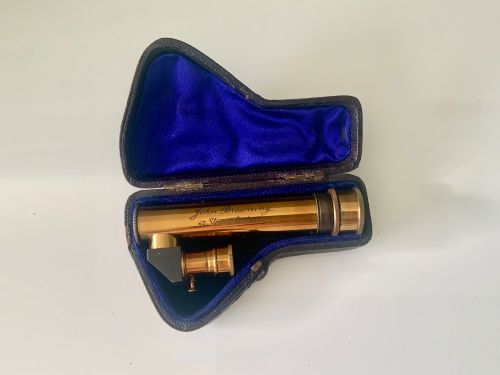
The instrument retains the majority of its exterior lacquer and has been kept pristine in its fitted case for most of its existence. The barrel is engraved to John Browning, 63 Strand, London and it retains its original dust cap and as described in the quote above, this example has the adjustable jaws which were applied to the superior class examples.

John Browning (1831 – 1925) came from a line of famous instrument makers dating back to the mid-Eighteenth Century. His ancestors William & Samuel Browning along with William Spencer and Ebeneezer Rust were all apprenticed to Richard Rust. The result was the formation of the famous Georgian company of Spencer, Browning & Rust, a partnership which remained in place until 1840 albeit with varying family members over time. John Browning’s Father William was a nautical instrument maker and although his son John was intended for a medical career, he was drawn back to instrument making during the late 1840’s at which time he also attended The Royal College of Chemistry. In 1856, Browning assumed control of his Father’s business (now named Spencer Browning & Co) at the Minories in London and just six years later was amongst the exhibitors of the 1862 London Exhibition where he was merited for aneroid barometer designs. His relation Samuel J Browning who had taken over the famous Portsmouth business of George Stebbing had also been merited at the earlier 1851 Great Exhibition before him.

After his 1862 success, Browning patented numerous instruments and is known to have supplied spectroscopes to the photographer William Henry Fox Talbot, his specialism in this field gave him opportunity to present his work at The Royal Society in 1872. In the same year the company also conducted a move of premises to 63 The Strand at which point it is likely that the name was changed solely to John Browning. He was commissioned a year later to install the first electric light in London, provided at The Guildhall on the occasion on a visit by the Shah of Persia.

Amongst other publications on astronomy and general optics, his “How to Work with the Spectroscope” was brought out in 1878 and went through numerous editions, a cursory glance of the initial publication and its accompanying price list provides a huge array of instruments and accessories related to the subject.

Browning was evidently a perfectionist and a workaholic, the sheer breadth of his involvement in varying scientific subjects is breathtaking, besides his work in Spectroscopy, he supplied instruments to The Government, to The Royal Observatory and numerous important scientists while also having time to be a founding member of the British Optical Association, a member of the Aeronautical

Physical Dimensions
Height
2.5cm (0.98")
Width
10cm (3.94")
Depth
2.5cm (0.98")
Declaration

Jason Clarke Antiques has dated this Antique Brass Spectroscope to the 1870s.

Reference Numbers
Sellingantiques Reference
SA921339
Description
For sale, a rare mid Victorian cased miniature spectroscope by John Browning of 63 The Strand, London.

Clearly described and engraved in Browning’s 1878 publication, “How to Work with The Spectroscope”.
“
This very original and complete, cased spectroscope was sold by Browning as, “The Miniature Spectroscope” and is describes as follows:.
Jason Clarke Antiques
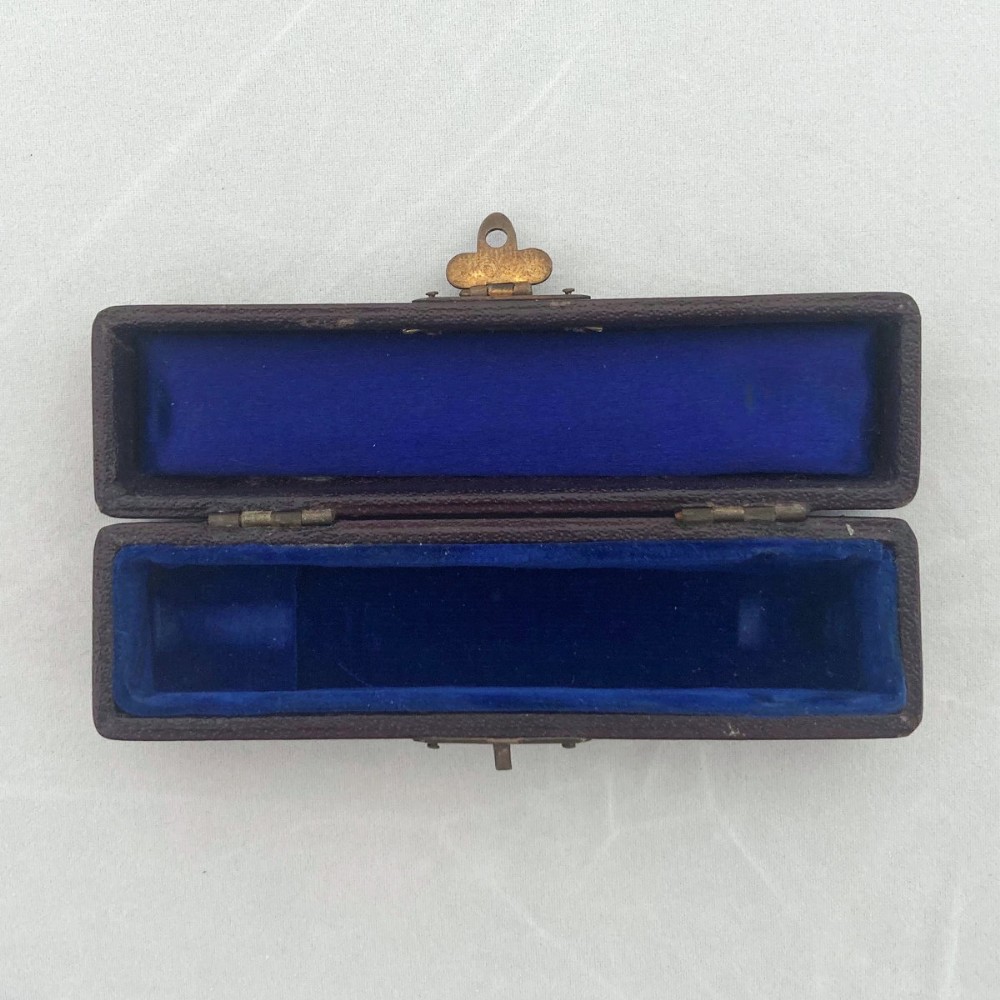
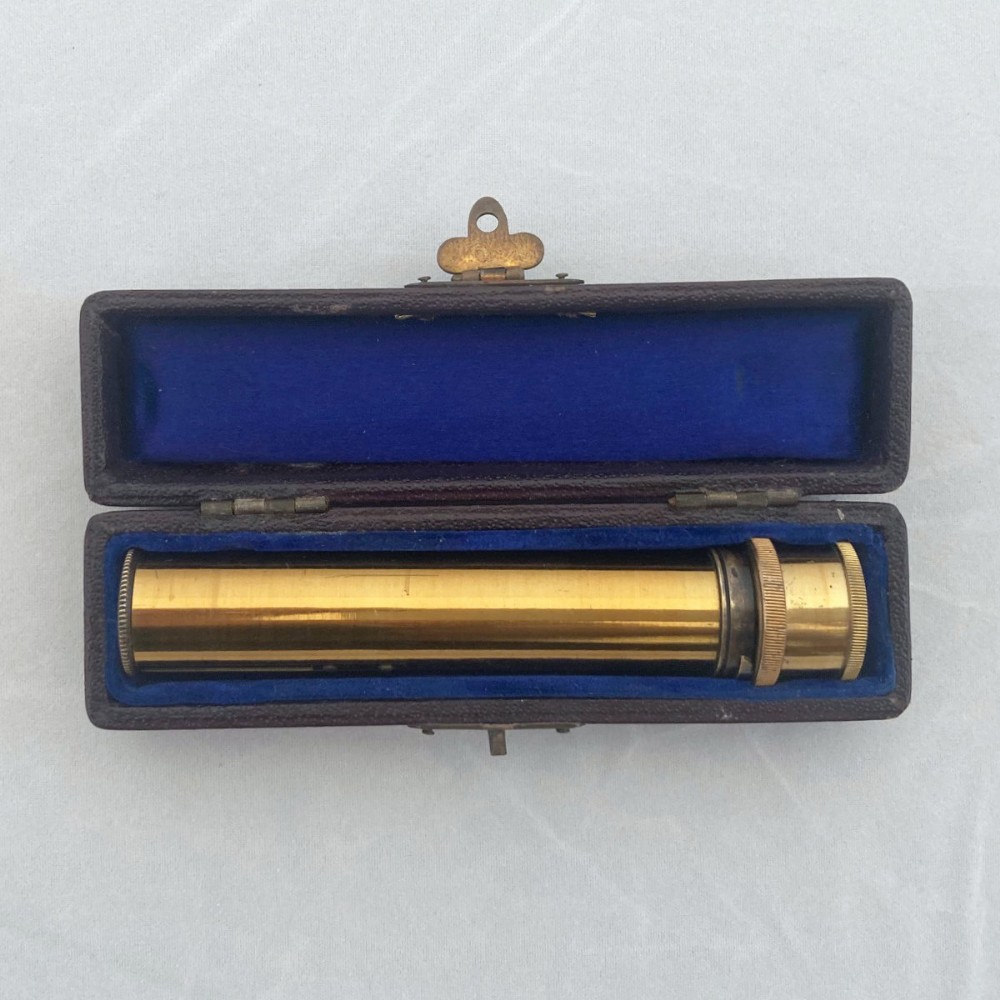
fig 1. A polished brass miniature spectroscope rests horizontally inside an open, dark leather-covered case lined with blue velvet.
fig 1. Mid Victorian Cased Miniature Spectroscope by John Browning of the Strand London

“This instrument will show many of Fraunhofer’s lines, the bright lines of the metals and gases, and the absorption bands in coloured gases, crystals, or liquids.

The Miniature Spectroscope consists of a compound direct-vision prism, which is placed in a sliding drawer. At the end of this drawer there is a lens; in the best instruments this is an achromatic combination. At the opposite end to the eye-piece there is a slit, which, in the instruments of a superior class, is adjustable by a screw motion. The two jaws move equably from the centre, on rotating the milled ring between the thumb and finger. The jaws of this slit will require to be almost closed to view the Fraunhofer lines but may with advantage be opened wider when viewing the lines of chemical spectra, or absorption bands in coloured liquids.”
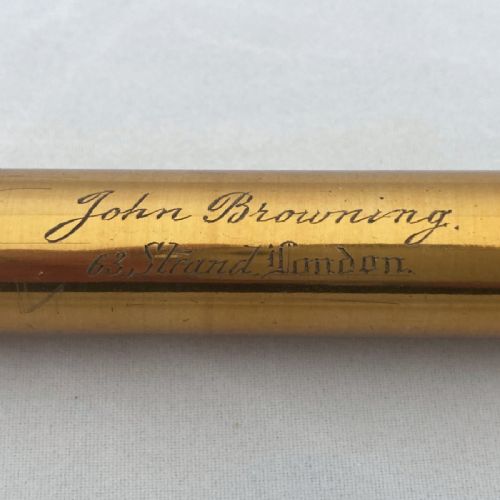
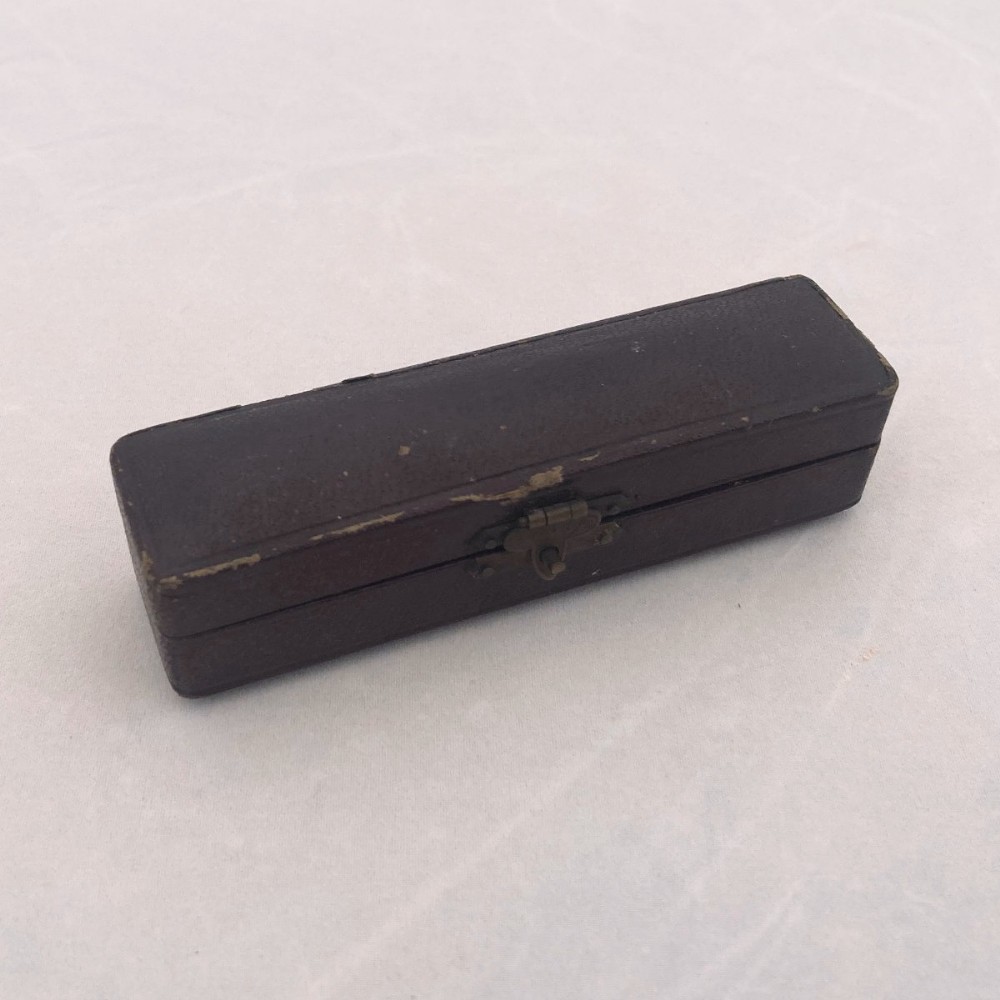
fig 2. A polished brass miniature spectroscope rests horizontally inside an open, dark leather-covered case lined with blue velvet.
fig 2. Mid Victorian Cased Miniature Spectroscope by John Browning of the Strand London

The instrument retains the majority of its exterior lacquer and has been kept pristine in its fitted case for most of its existence. The barrel is engraved to John Browning, 63 Strand, London and it retains its original dust cap and as described in the quote above, this example has the adjustable jaws which were applied to the superior class examples.
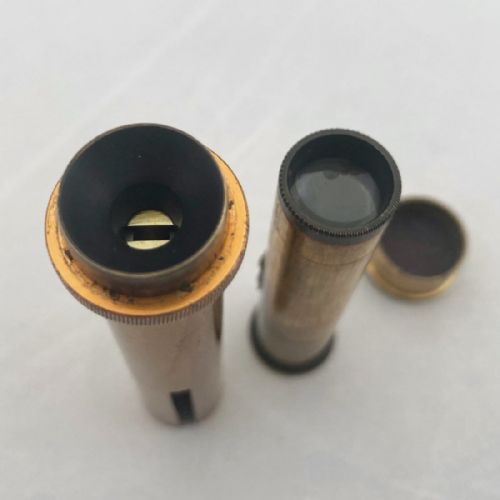
fig 3. A polished brass miniature spectroscope rests horizontally inside an open, dark leather-covered case lined with blue velvet.
fig 3. Mid Victorian Cased Miniature Spectroscope by John Browning of the Strand London

John Browning (1831 – 1925) came from a line of famous instrument makers dating back to the mid-Eighteenth Century. His ancestors William & Samuel Browning along with William Spencer and Ebeneezer Rust were all apprenticed to Richard Rust. The result was the formation of the famous Georgian company of Spencer, Browning & Rust, a partnership which remained in place until 1840 albeit with varying family members over time. John Browning’s Father William was a nautical instrument maker and although his son John was intended for a medical career, he was drawn back to instrument making during the late 1840’s at which time he also attended The Royal College of Chemistry. In 1856, Browning assumed control of his Father’s business (now named Spencer Browning & Co) at the Minories in London and just six years later was amongst the exhibitors of the 1862 London Exhibition where he was merited for aneroid barometer designs. His relation Samuel J Browning who had taken over the famous Portsmouth business of George Stebbing had also been merited at the earlier 1851 Great Exhibition before him.
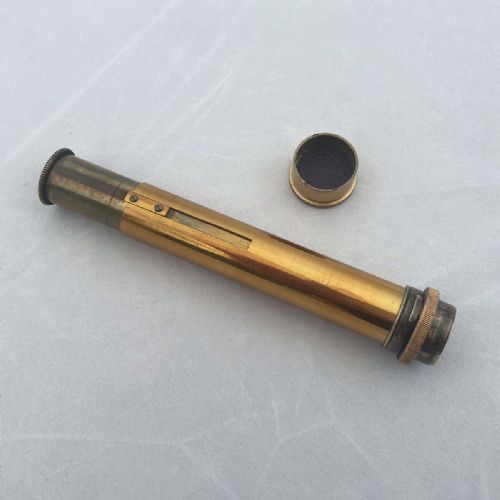
fig 4. A polished brass miniature spectroscope rests horizontally inside an open, dark leather-covered case lined with blue velvet.
fig 4. Mid Victorian Cased Miniature Spectroscope by John Browning of the Strand London

After his 1862 success, Browning patented numerous instruments and is known to have supplied spectroscopes to the photographer William Henry Fox Talbot, his specialism in this field gave him opportunity to present his work at The Royal Society in 1872. In the same year the company also conducted a move of premises to 63 The Strand at which point it is likely that the name was changed solely to John Browning. He was commissioned a year later to install the first electric light in London, provided at The Guildhall on the occasion on a visit by the Shah of Persia.
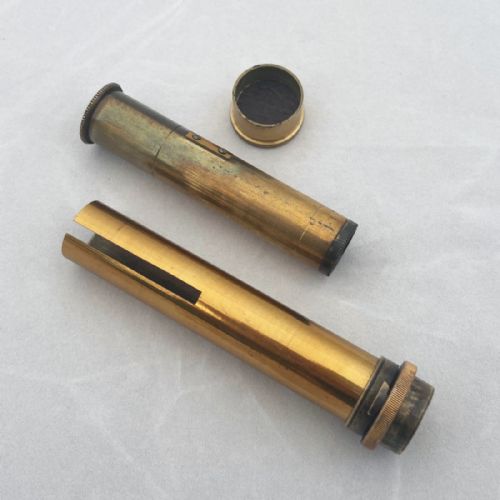
fig 5. A polished brass miniature spectroscope rests horizontally inside an open, dark leather-covered case lined with blue velvet.
fig 5. Mid Victorian Cased Miniature Spectroscope by John Browning of the Strand London

Amongst other publications on astronomy and general optics, his “How to Work with the Spectroscope” was brought out in 1878 and went through numerous editions, a cursory glance of the initial publication and its accompanying price list provides a huge array of instruments and accessories related to the subject.
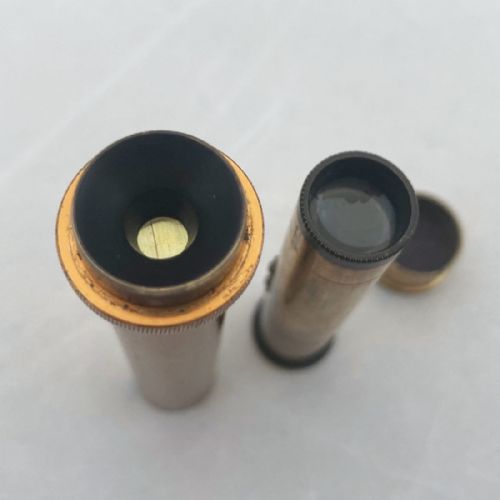
fig 6. A polished brass miniature spectroscope rests horizontally inside an open, dark leather-covered case lined with blue velvet.
fig 6. Mid Victorian Cased Miniature Spectroscope by John Browning of the Strand London

Browning was evidently a perfectionist and a workaholic, the sheer breadth of his involvement in varying scientific subjects is breathtaking, besides his work in Spectroscopy, he supplied instruments to The Government, to The Royal Observatory and numerous important scientists while also having time to be a founding member of the British Optical Association, a member of the Aeronautical

Height
2.5cm (0.98")
Width
10cm (3.94")
Depth
2.5cm (0.98")
Date of Manufacture

Jason Clarke Antiques has dated this Antique Brass Spectroscope to the 1870s.

Reference Numbers
Sellingantiques Ref
SA921339
Jason Clarke Antiques
Sellingantiques verified Since Jul 2015
Dealer Profile

You can view the stock and full dealer information on the Jason Clarke Antiques Profile Page
PDF SHARE
SAVE
A polished brass miniature spectroscope rests horizontally inside an open, dark leather-covered case lined with blue velvet. SOLD6+ MONTHS AGO
1 / 10
Archive I A polished brass miniature spectroscope rests horizontally inside an open, dark leather-covered case lined with blue velvet. SOLD6+ MONTHS AGO

Mid Victorian Cased Miniature Spectroscope by John Browning of the Strand London
Archive II A polished brass miniature spectroscope rests horizontally inside an open, dark leather-covered case lined with blue velvet. View II
Archive III A polished brass miniature spectroscope rests horizontally inside an open, dark leather-covered case lined with blue velvet. View III
Archive IV A polished brass miniature spectroscope rests horizontally inside an open, dark leather-covered case lined with blue velvet. View IV
Archive V A polished brass miniature spectroscope rests horizontally inside an open, dark leather-covered case lined with blue velvet. View V
Archive VI A polished brass miniature spectroscope rests horizontally inside an open, dark leather-covered case lined with blue velvet. View VI
Archive VII A polished brass miniature spectroscope rests horizontally inside an open, dark leather-covered case lined with blue velvet. View VII
Archive VIII A polished brass miniature spectroscope rests horizontally inside an open, dark leather-covered case lined with blue velvet. View VIII
Archive IX A polished brass miniature spectroscope rests horizontally inside an open, dark leather-covered case lined with blue velvet. View IX
Archive X A polished brass miniature spectroscope rests horizontally inside an open, dark leather-covered case lined with blue velvet. View X
FURTHER BROWSING

Visitors also looked at these ⇣

Enlarged Archival View
Telephone 07815 046645
Location
Newbury
Berkshire
United Kingdom
Verified Since Jul 2015
Items For Sale 78
Items Sold 609
Jason Clarke Antiques
Verified Since Jul 2015
View Dealer Info
Location: Newbury, Berkshire, United Kingdom
Verified
Jul 2015
For Sale
78
Sold
609
A polished brass miniature spectroscope rests horizontally inside an open, dark leather-covered case lined with blue velvet.
Mid Victorian Cased Miniature Spectroscope by John Browning of The Strand London
Ref: SA921339
A polished brass miniature spectroscope rests horizontally inside an open, dark leather-covered case lined with blue velvet.
Detail View 1
Detail View 2
Detail View 3
Detail View 4
Detail View 5
Detail View 6
Detail View 7
Detail View 8
Detail View 9
Archival Detail
Every single antique dealer on our platform is individually approved by our internal team. We verify their professional trade history, ethical standards, and photographic quality to ensure a secure, high-standard buying environment. Upon joining, every dealer agrees to a strict 9-point code of conduct. While issues can occasionally arise, our dealers typically resolve them swiftly and directly with the buyer. In fact, since our founding in 2002, Sellingantiques has only had to step in to help resolve an issue on roughly five occasions—a true testament to the quality of our dealers and their dedication to your happiness.
Our dealers are highly experienced in packing and shipping fragile, high-value antiques. Because you are in direct contact with the dealer, you will be able to easily go through all available shipping and insurance options together to ensure your item arrives safely.
Antiques are the ultimate green purchase. By choosing historical pieces over newly manufactured goods, you completely eliminate the carbon footprint of modern mass production while preserving exceptional, timeless craftsmanship.
Written by Sellingantiques from the dealer’s photographs and listing
  • ObjectScientific Instruments
  • Period19th century
  • StyleVictorian
  • MaterialBrass, Leather, Velvet, Wood
  • ColourGold
  • MotifsPolished brass finish, Fitted velvet-lined case, Threaded focus adjustments, Maker signature engraving
  • SizeH 2.5 cm (1 in) x W 10 cm (4 in) x D 2.5 cm (1 in)

A spectroscope is an optical instrument used to measure properties of light over a specific portion of the electromagnetic spectrum. During the Victorian era, these devices were utilised by scientists and natural philosophers for chemical analysis and astronomical observations.

High-grade instruments from this period were typically fabricated from polished brass for the body tubes and optical mounts, often housed in fitted wooden cases lined with velvet or silk, and featuring leather outer coverings with brass clasps.

Authentic pieces usually bear engraved maker signatures, address details such as The Strand London, high-precision threaded brass components, and period-correct materials and patination consistent with mid-19th-century manufacturing techniques.

These pieces fit naturally into a study or library setting, displayed inside glass cabinets, on bookshelves, or atop a desk to add a layer of intellectual history and refined metallic texture to the space.

Preservation involves dusting gently with a soft, dry cloth and avoiding chemical polishes that can strip the original historic patination. Lined storage cases should be kept in stable environments away from direct sunlight and excessive humidity.
items
Add keywords to the filter
Price
£100
£250000
Era
Period
Style
Material
Origin
Stock Location
Recently Added
Online Payments
Categories