4,236  PAGES BROWSED TODAY PAGES TODAY 0 ANTIQUES UPLOADED TODAYNEW ARRIVALS
LATEST STOCK
Sort Order
Items Per Page
Browse Categories
Sort order
Relevant Links
Items per page
ID #SA885207
FOR SALE
£495
Email Buy
Save
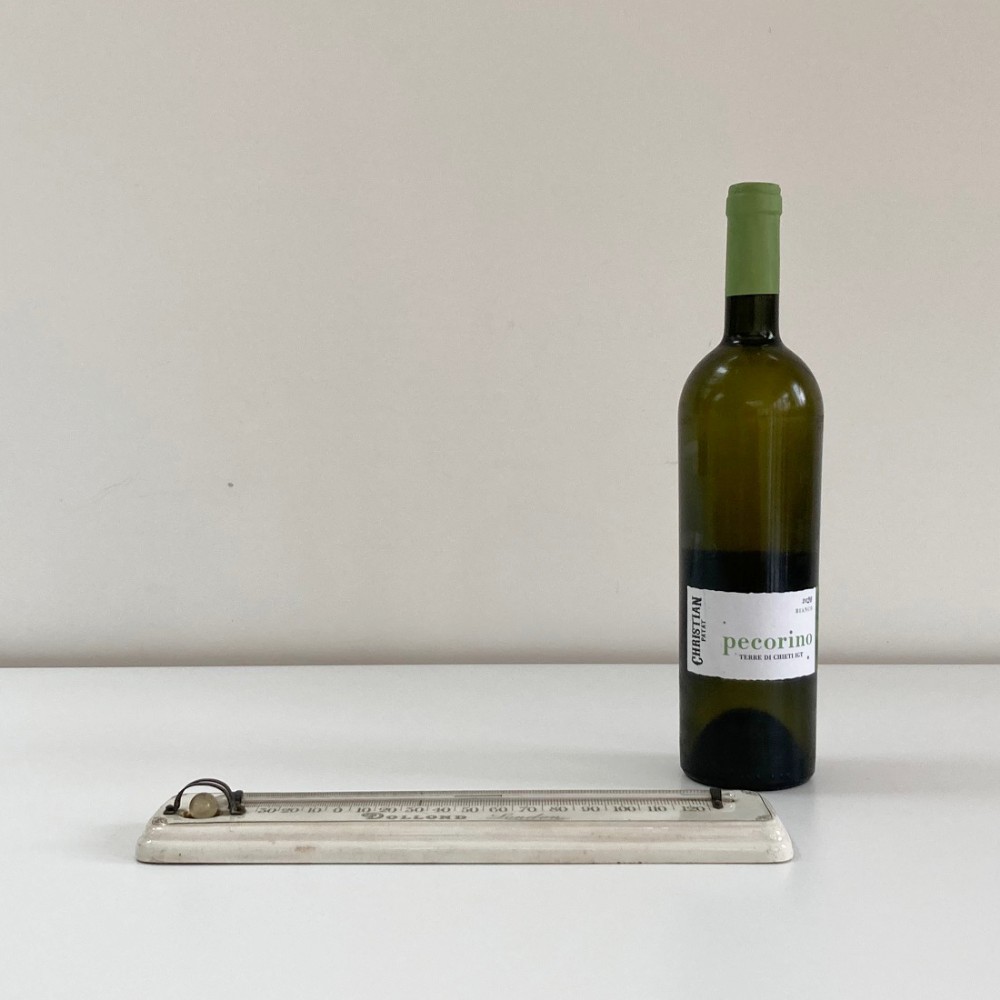
Late Victorian Porcelain Minimum Thermometer by Dollond London
Jason Clarke Antiques
for sale €579     $629
£495
Jason Clarke Antiques

Jason Clarke Antiques

Sellingantiques Verified Since Jul 2015
View Dealers Stock Page
Relevant Links
Id #SA885207
PDF SHARE
SAVE

Late Victorian Porcelain Minimum Thermometer by Dollond London

19th century
Description

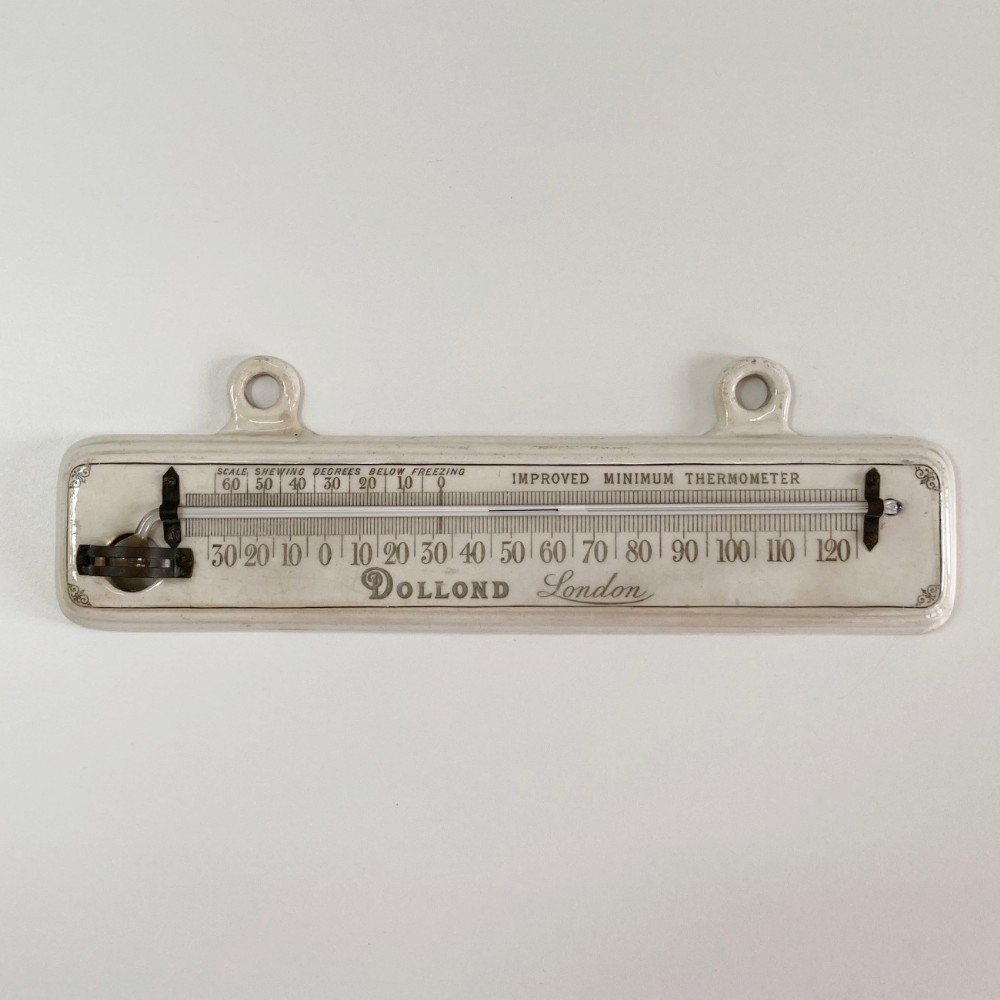
For sale, a large Victorian porcelain minimum thermometer by Dollond of London.

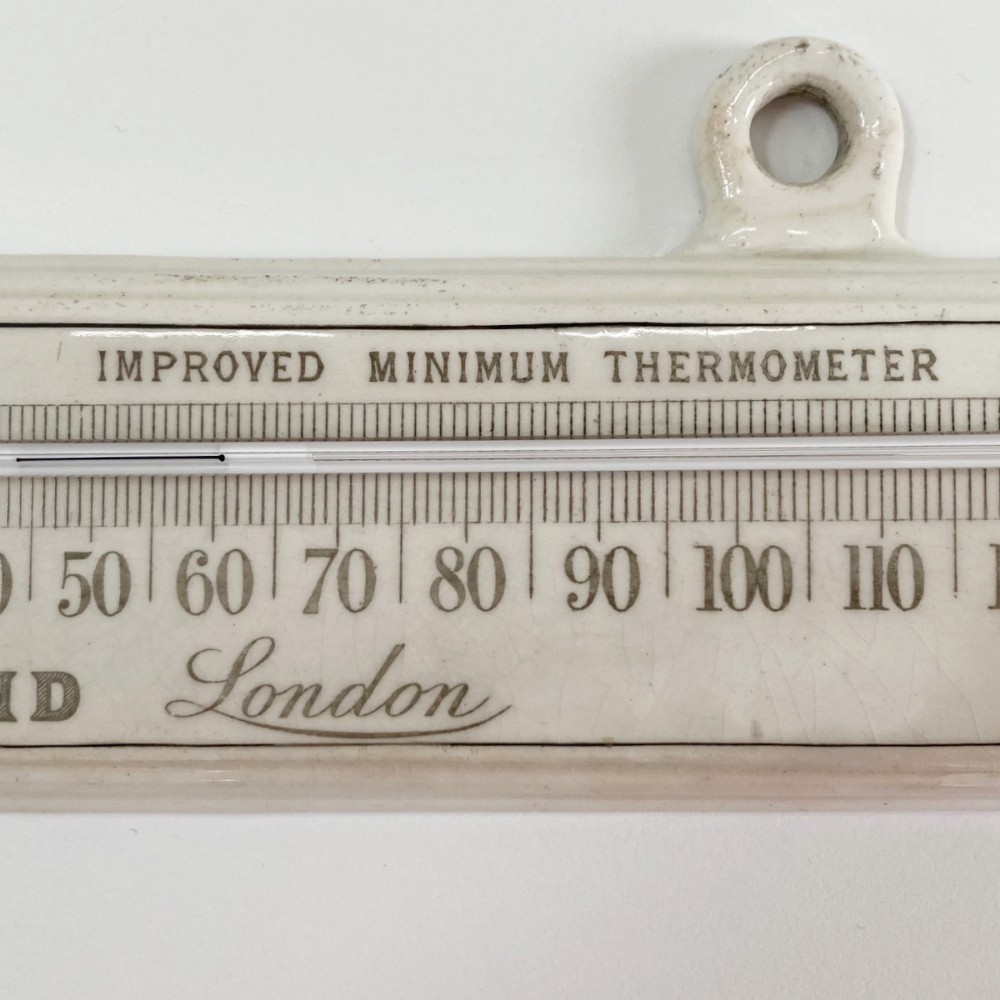
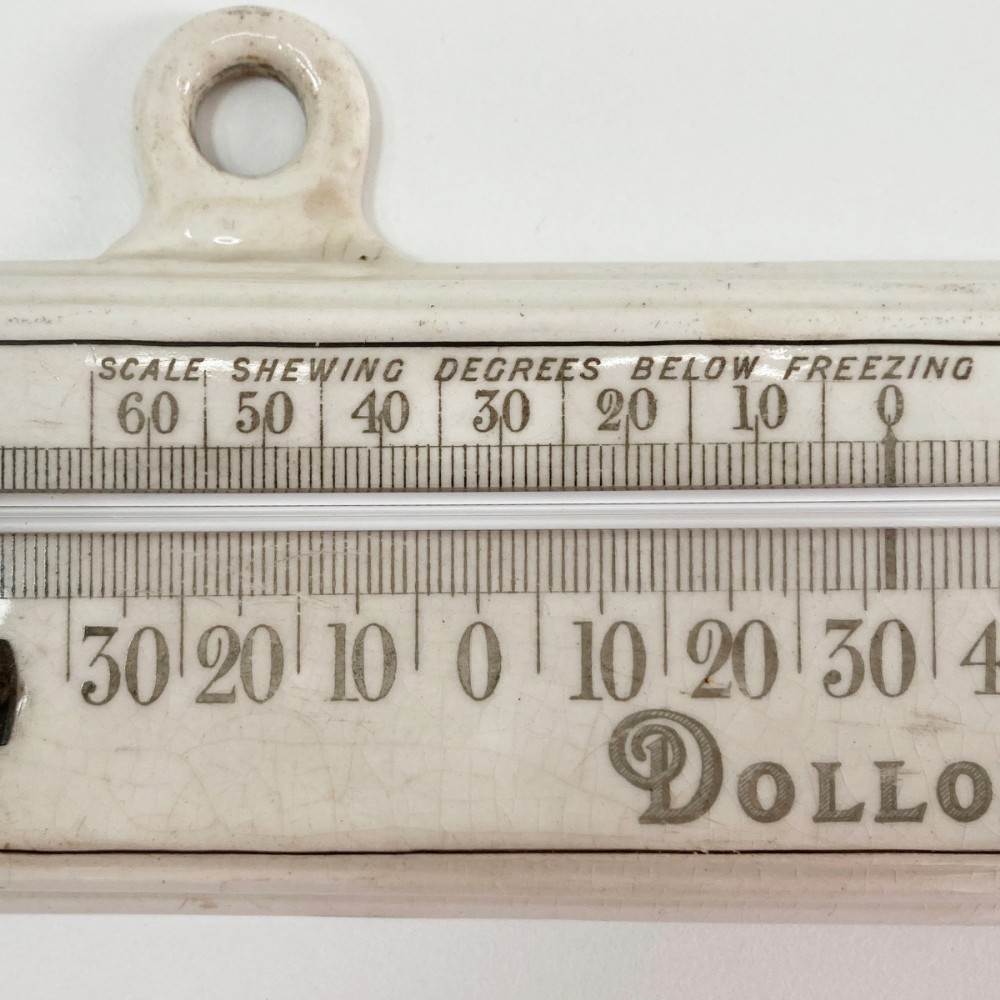
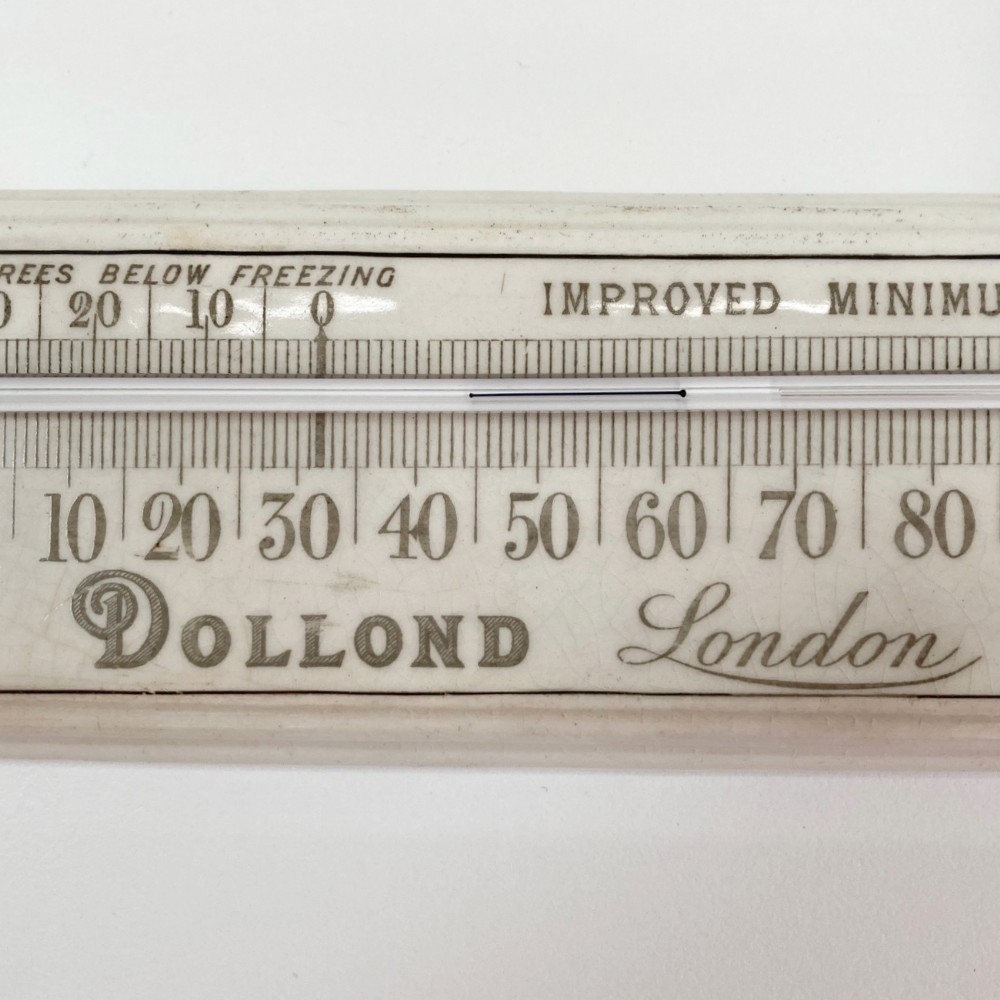
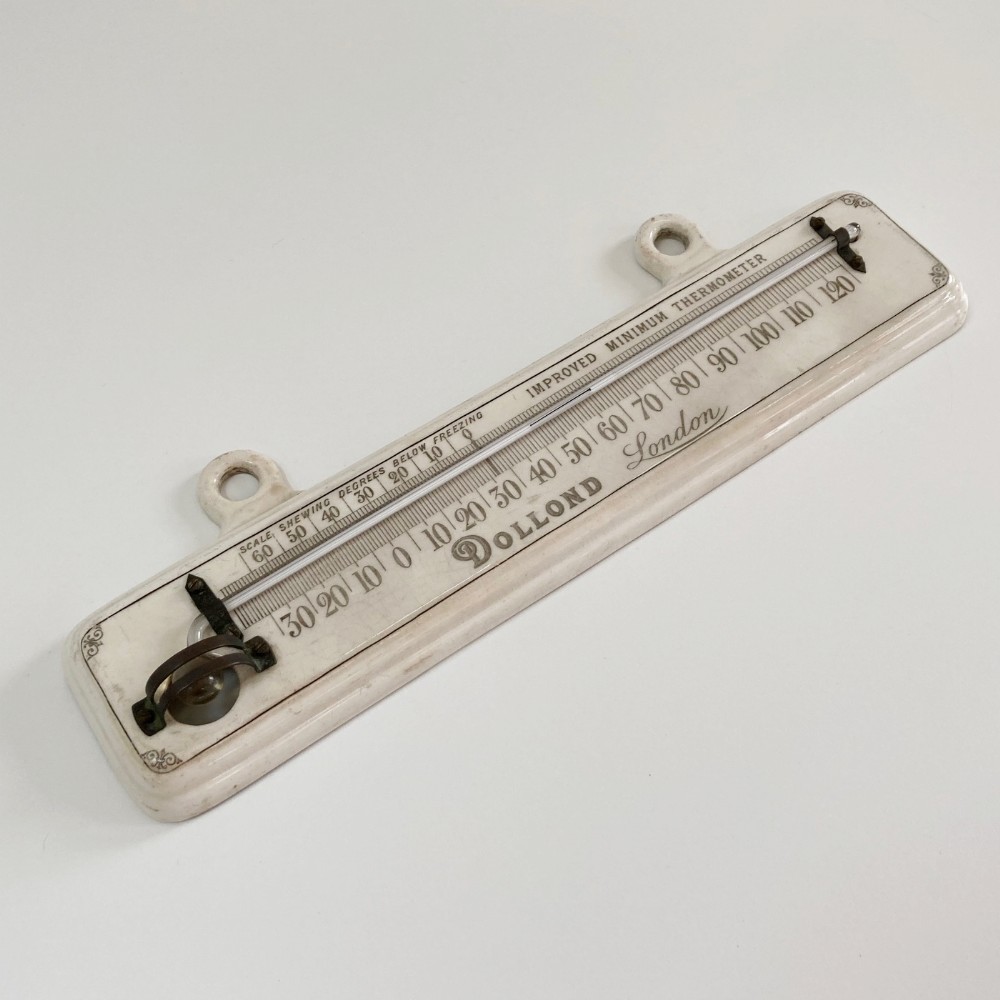
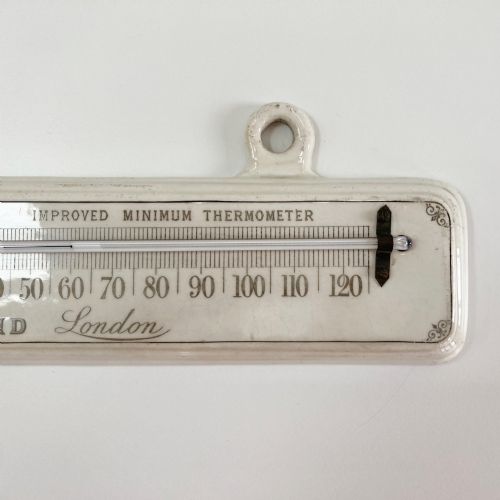
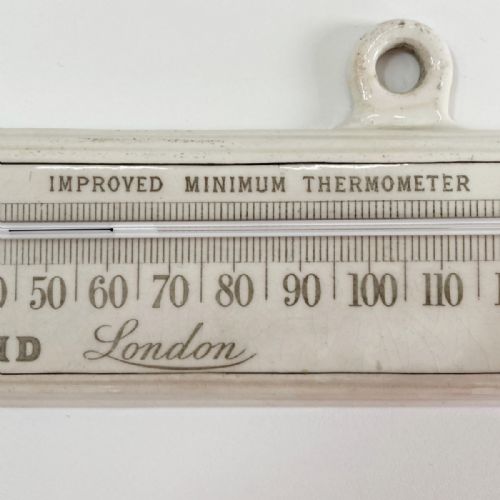
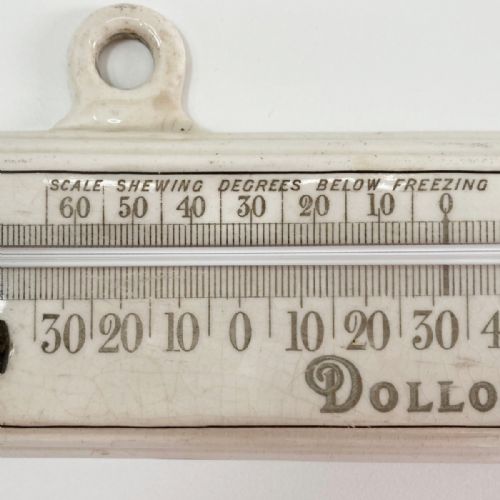
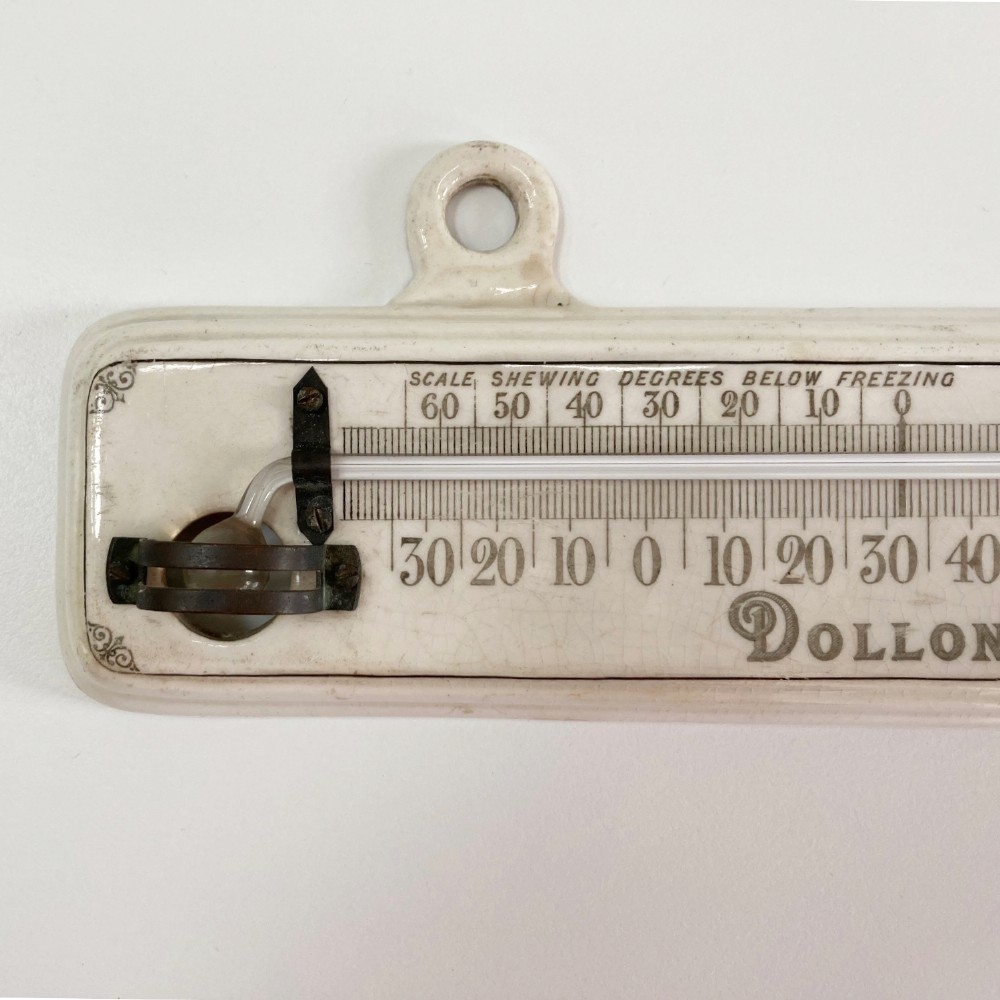
This unusual example measures 12” across and 4” in height on the wall with a graduated edge, porcelain scale plate incorporating two porcelain hanging loops at the top edge. The main painted scale measures -30 to 120 Fahrenheit but has an additional Centigrade scale at the top left above the thermometer to show freezing point and below. It is marked, “scale shewing degrees below freezing”. To the right is written, “Improved Minimum Thermometer” and Dollond, London at the base. The whole is nicely frames with black line edging and with fleur de lys type motifs at each corner.
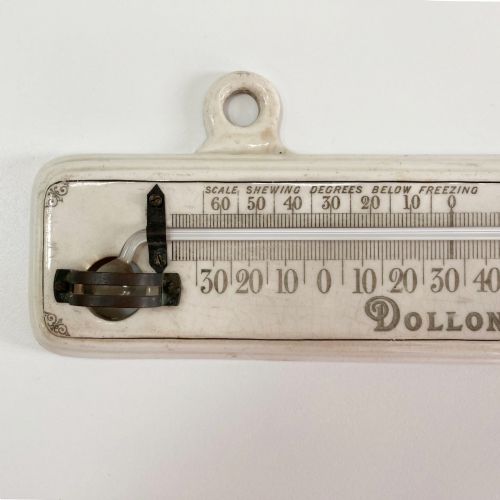
The spirit thermometer has a large angled bulb centred in a hole through the porcelain to ensure air flow and correct temperature readings unhindered by the temperature of the porcelain itself, and it is protected by a brass grill. Two further thermometer clips ensure that the thermometer is held against the scale at either end. Given the type of thermometer, this also has a metal pin incorporated into the thermometer bore which is pushed along the spirit line in accordance with the lowest temperature during the period of observation. It can be reset to rest against the end of the spirit by the use of a weak magnet or by gravity through gently angling the thermometer.
The separate maximum and minimum thermometer was introduced in this form by John Rutherford and was presented to the Royal Society of Edinburgh in 1790. An account of that description still exists and is provided below:
“The following improvement on the construction of the thermometer, by which is fitted to mark the lowest or the highest point to which the fluid has attained in the absence of the observer, is due to John Rutherford, M.D. of Middle Baililish. This gentleman communicated it to me some time ago, and accompanied the description with one of his thermometers. The contrivance is so very simple and ingenious, that it well deserves to be made public. I therefore, by permission of the author, beg leave to lay an account of it before the Royal Society.
If it be required, that the thermometer should mark the lowest point to which the liquid has descended within any given time, a common spirit of wine thermometer must be provided, of a convenient size, with its point turned towards the bulb of the thermometer. This piece (the conical pointer) is about half an inch long, and of such diameter at the base, that it may move freely within the tube, yet nearly fill the calibre. It is to be allowed to move downwards till it be fully immersed in the spirit. After this has once been effected, it will be found, that it is not disposed to part again from the spirit; but if the thermometer be held vertically, with the bulb uppermost, it will immediately descend to the extremity of the column, but no farther: There it rests; and if by a diminution of heat the spirit contracts, it is drawn upwards at the extremity of the column, as this recedes towards the bulb. Now, let the thermometer be disposed, that its stem instead of being vertical shall be horizontal, (and such is the ordinary position of this thermometer) it may be readily imagined, that in this case, the conical piece shall equally; as before, follow any retraction of the column; but this should lengthen again, in consequence of an increase in temperature, the conical piece does not advance with it, but remaining fixed at the lowest point to which the column has descended, it allows the liquor to pass freely beyond it, as that again expands. Hence the point of the scale at which the conical piece is found to rest, denotes the lowest degree to which the liquor has sunk in the interval of the observation. To rectify the instrument for a fresh observation, nothing farther is requisite than to elevate the bulb of the thermometer, in order that the conical

Physical Dimensions
Height
9cm (3.54")
Width
30cm (11.81")
Depth
3cm (1.18")
Declaration

Jason Clarke Antiques has dated this Victorian Porcelain Wall Thermometer to the 1890s.

Reference Numbers
Sellingantiques Reference
SA885207
Description
For sale, a large Victorian porcelain minimum thermometer by Dollond of London.
This unusual example measures 12” across and 4” in height on the wall with a graduated edge, porcelain scale plate incorporating two porcelain hanging loops at the top edge.
Jason Clarke Antiques

The main painted scale measures -30 to 120 Fahrenheit but has an additional Centigrade scale at the top left above the thermometer to show freezing point and below. It is marked, “scale shewing degrees below freezing”. To the right is written, “Improved Minimum Thermometer” and Dollond, London at the base. The whole is nicely frames with black line edging and with fleur de lys type motifs at each corner.

fig 1. A horizontal off-white porcelain wall thermometer with printed black graduations, brass brackets, glass tube, and top hanging loops.
fig 1. Late Victorian Porcelain Minimum Thermometer by Dollond London

The spirit thermometer has a large angled bulb centred in a hole through the porcelain to ensure air flow and correct temperature readings unhindered by the temperature of the porcelain itself, and it is protected by a brass grill. Two further thermometer clips ensure that the thermometer is held against the scale at either end. Given the type of thermometer, this also has a metal pin incorporated into the thermometer bore which is pushed along the spirit line in accordance with the lowest temperature during the period of observation. It can be reset to rest against the end of the spirit by the use of a weak magnet or by gravity through gently angling the thermometer.

fig 2. A horizontal off-white porcelain wall thermometer with printed black graduations, brass brackets, glass tube, and top hanging loops.
fig 2. Late Victorian Porcelain Minimum Thermometer by Dollond London

The separate maximum and minimum thermometer was introduced in this form by John Rutherford and was presented to the Royal Society of Edinburgh in 1790. An account of that description still exists and is provided below:

fig 3. A horizontal off-white porcelain wall thermometer with printed black graduations, brass brackets, glass tube, and top hanging loops.
fig 3. Late Victorian Porcelain Minimum Thermometer by Dollond London

“The following improvement on the construction of the thermometer, by which is fitted to mark the lowest or the highest point to which the fluid has attained in the absence of the observer, is due to John Rutherford, M.D. of Middle Baililish. This gentleman communicated it to me some time ago, and accompanied the description with one of his thermometers. The contrivance is so very simple and ingenious, that it well deserves to be made public. I therefore, by permission of the author, beg leave to lay an account of it before the Royal Society.

fig 4. A horizontal off-white porcelain wall thermometer with printed black graduations, brass brackets, glass tube, and top hanging loops.
fig 4. Late Victorian Porcelain Minimum Thermometer by Dollond London

If it be required, that the thermometer should mark the lowest point to which the liquid has descended within any given time, a common spirit of wine thermometer must be provided, of a convenient size, with its point turned towards the bulb of the thermometer. This piece (the conical pointer) is about half an inch long, and of such diameter at the base, that it may move freely within the tube, yet nearly fill the calibre. It is to be allowed to move downwards till it be fully immersed in the spirit. After this has once been effected, it will be found, that it is not disposed to part again from the spirit; but if the thermometer be held vertically, with the bulb uppermost, it will immediately descend to the extremity of the column, but no farther: There it rests; and if by a diminution of heat the spirit contracts, it is drawn upwards at the extremity of the column, as this recedes towards the bulb. Now, let the thermometer be disposed, that its stem instead of being vertical shall be horizontal, (and such is the ordinary position of this thermometer) it may be readily imagined, that in this case, the conical piece shall equally; as before, follow any retraction of the column; but this should lengthen again, in consequence of an increase in temperature, the conical piece does not advance with it, but remaining fixed at the lowest point to which the column has descended, it allows the liquor to pass freely beyond it, as that again expands. Hence the point of the scale at which the conical piece is found to rest, denotes the lowest degree to which the liquor has sunk in the interval of the observation. To rectify the instrument for a fresh observation, nothing farther is requisite than to elevate the bulb of the thermometer, in order that the conical

Height
9cm (3.54")
Width
30cm (11.81")
Depth
3cm (1.18")
Date of Manufacture

Jason Clarke Antiques has dated this Victorian Porcelain Wall Thermometer to the 1890s.

Reference Numbers
Sellingantiques Ref
SA885207
Jason Clarke Antiques
Sellingantiques verified Since Jul 2015
Dealer Profile

You can view the stock and full dealer information on the Jason Clarke Antiques Profile Page
PDF SHARE
SAVE
A horizontal off-white porcelain wall thermometer with printed black graduations, brass brackets, glass tube, and top hanging loops.
1 / 8
Archive I A horizontal off-white porcelain wall thermometer with printed black graduations, brass brackets, glass tube, and top hanging loops.

Late Victorian Porcelain Minimum Thermometer by Dollond London
Archive II A horizontal off-white porcelain wall thermometer with printed black graduations, brass brackets, glass tube, and top hanging loops. View II
Archive III A horizontal off-white porcelain wall thermometer with printed black graduations, brass brackets, glass tube, and top hanging loops. View III
Archive IV A horizontal off-white porcelain wall thermometer with printed black graduations, brass brackets, glass tube, and top hanging loops. View IV
Archive V A horizontal off-white porcelain wall thermometer with printed black graduations, brass brackets, glass tube, and top hanging loops. View V
Archive VI A horizontal off-white porcelain wall thermometer with printed black graduations, brass brackets, glass tube, and top hanging loops. View VI
Archive VII A horizontal off-white porcelain wall thermometer with printed black graduations, brass brackets, glass tube, and top hanging loops. View VII
Archive VIII A horizontal off-white porcelain wall thermometer with printed black graduations, brass brackets, glass tube, and top hanging loops. View VIII
Enlarged Archival View
Telephone 07815 046645
Location
Newbury
Berkshire
United Kingdom
Verified Since Jul 2015
Items For Sale 80
Items Sold 607
Jason Clarke Antiques
Verified Since Jul 2015
View Dealer Info
Location: Newbury, Berkshire, United Kingdom
Verified
Jul 2015
For Sale
80
Sold
607
A horizontal off-white porcelain wall thermometer with printed black graduations, brass brackets, glass tube, and top hanging loops.
Late Victorian Porcelain Minimum Thermometer by Dollond London
Ref: SA885207
A horizontal off-white porcelain wall thermometer with printed black graduations, brass brackets, glass tube, and top hanging loops.
Detail View 1
Detail View 2
Detail View 3
Detail View 4
Detail View 5
Detail View 6
Detail View 7
Archival Detail
Every single antique dealer on our platform is individually approved by our internal team. We verify their professional trade history, ethical standards, and photographic quality to ensure a secure, high-standard buying environment. Upon joining, every dealer agrees to a strict 9-point code of conduct. While issues can occasionally arise, our dealers typically resolve them swiftly and directly with the buyer. In fact, since our founding in 2002, Sellingantiques has only had to step in to help resolve an issue on roughly five occasions—a true testament to the quality of our dealers and their dedication to your happiness.
Our dealers are highly experienced in packing and shipping fragile, high-value antiques. Because you are in direct contact with the dealer, you will be able to easily go through all available shipping and insurance options together to ensure your item arrives safely.
Antiques are the ultimate green purchase. By choosing historical pieces over newly manufactured goods, you completely eliminate the carbon footprint of modern mass production while preserving exceptional, timeless craftsmanship.

A minimum thermometer is a specialized meteorological device developed to register the lowest temperature attained during a given period, commonly utilised during the nineteenth century for agricultural and scientific monitoring.

These instruments were traditionally crafted using glazed ceramic or porcelain backs, blown glass indicator tubes containing alcohol or mercury, and cast brass mounting brackets.

Authentic period examples often feature transfer-printed or hand-engraved maker names, such as Dollond London, along with crisp black numerical graduations set directly into the glazed porcelain surface.

Such scientific instruments can be mounted within a gallery wall, positioned in a garden room, or displayed in a study to add historical texture and technical interest to vertical surfaces.

Dust the porcelain surface gently using a soft dry cloth and avoid harsh chemical cleansers or immersion in water, which can damage original metal fittings and glass capillary mountings.
items
Add keywords to the filter
Price
£100
£250000
Era
Movements
Material
Origin
Stock Location
Freshness
Online Payments
Categories