



Victorian Mercury Thermometer
A victorian mercury thermometer is a precise scientific instrument housed in timber or stone, prized for accurate domestic temperature tracking and period interior styling.
Victorian Mercury Thermometer
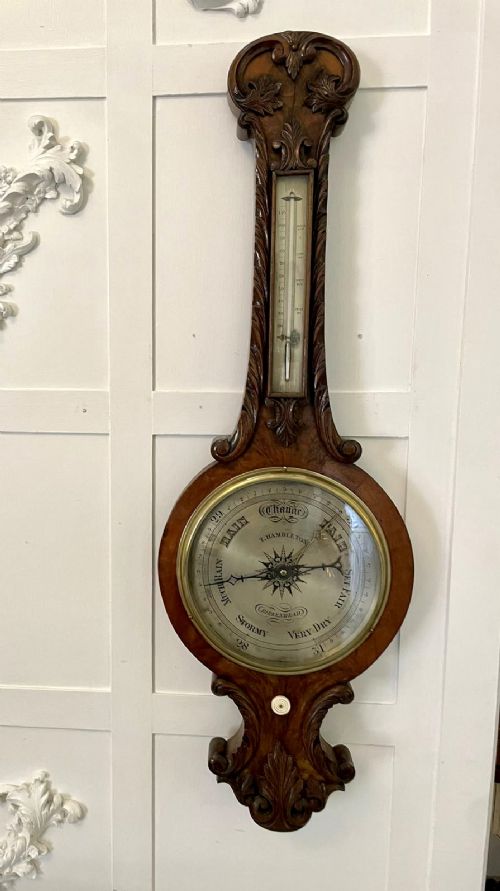
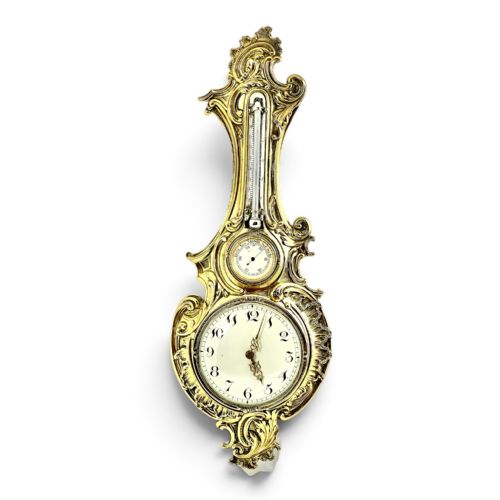
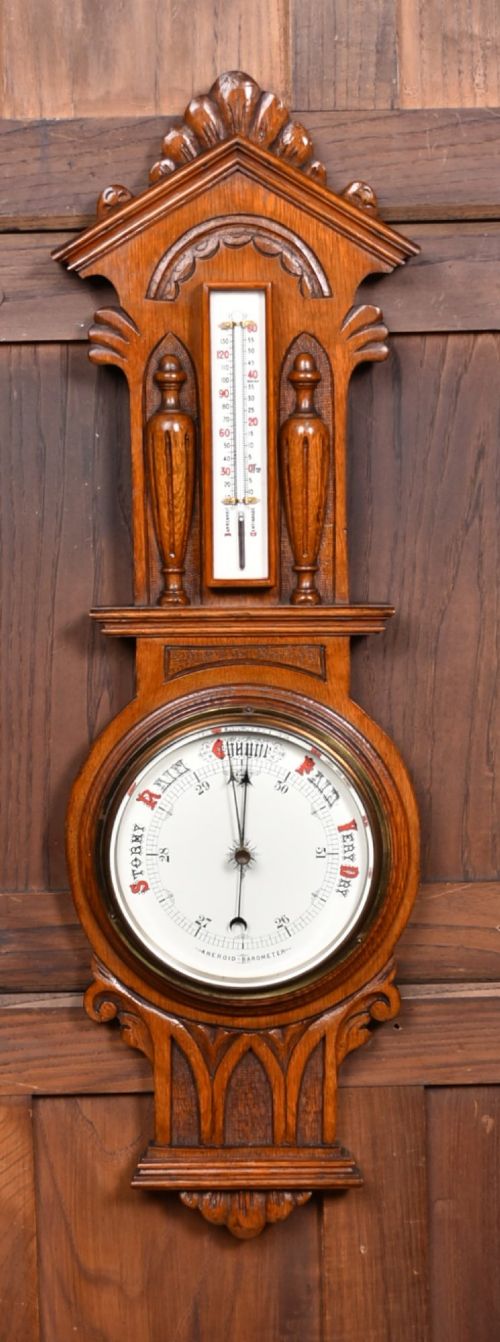
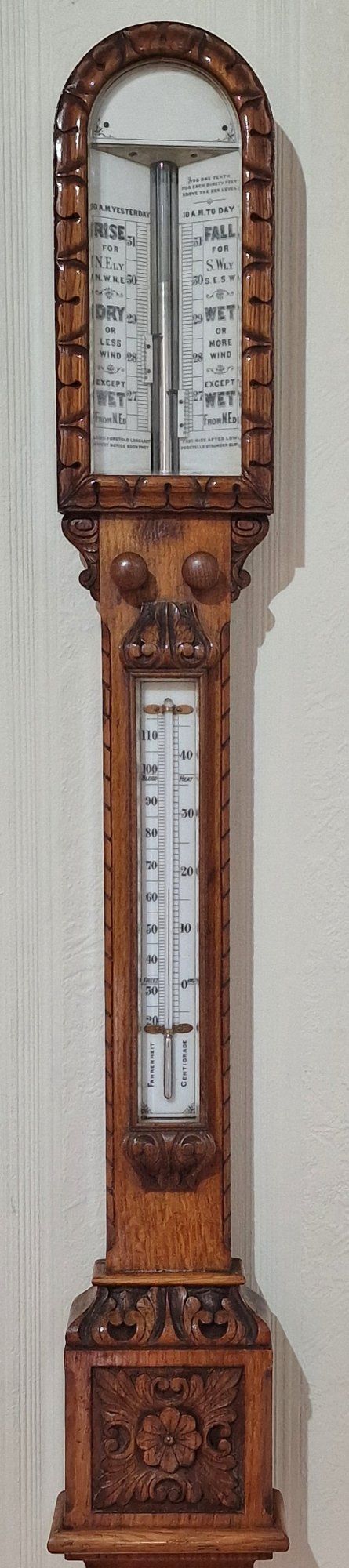
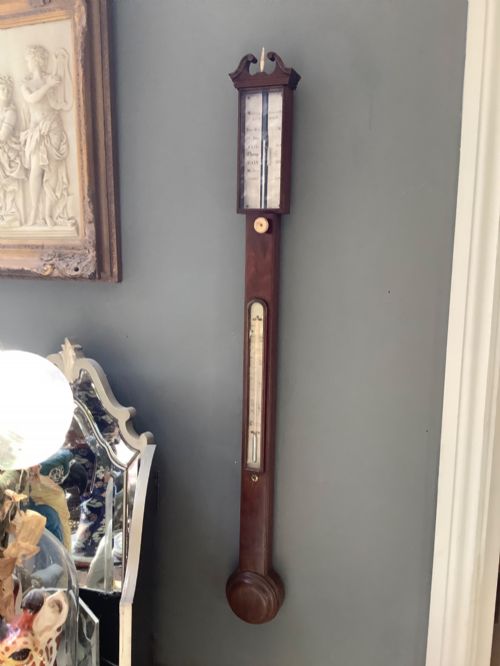
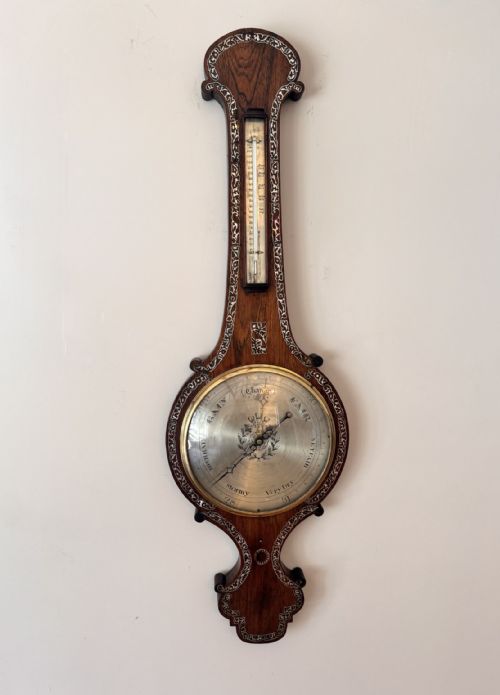
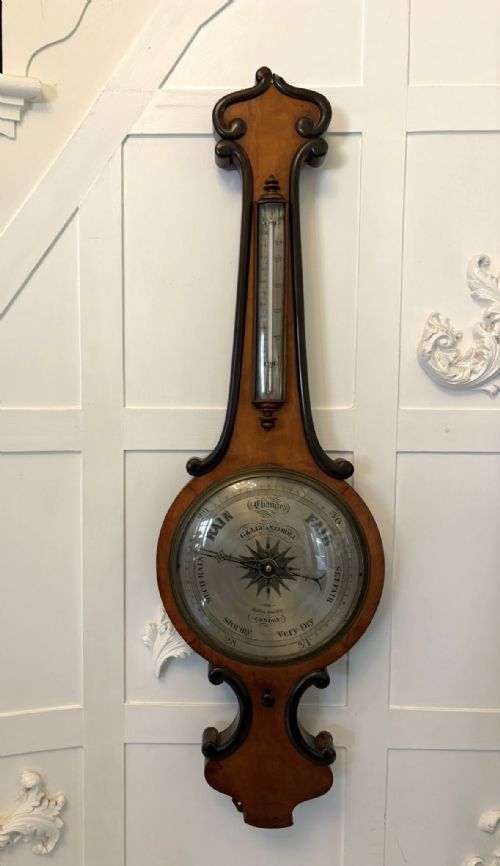
When searching for a victorian mercury thermometer, buyers encounter scientific instruments ranging from substantial freestanding desk models to instruments integrated into larger banjo and wheel barometers. The version most commonly met on this page is the desk thermometer, often mounted on slate, marble or serpentine bases, alongside mercury thermometers housed within rosewood or mahogany banjo barometer cases.
These pieces originate principally from the Victorian period, though the record extends from Georgian examples through to Edwardian items. Makers placed them in domestic halls, libraries and studies to measure ambient temperature before central heating existed.
The objects combine practical function with decorative cabinetry, utilising timber veneers or carved stone to suit nineteenth-century domestic interiors.
How they were made
Maker workshops constructed the exterior cases using dense hardwoods such as mahogany, walnut, burr walnut, rosewood and oak, frequently enhanced with mother-of-pearl inlay or carved architectural details. For desk variants, materials such as Ashford black marble and serpentine provided heavy, stable mineral bases.
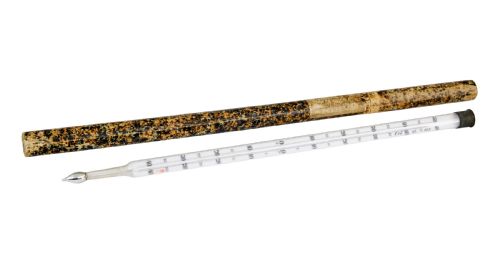
The internal thermal columns combined blown glass tubes filled with mercury, mounted against engraved enamel, porcelain or metal scales to display temperature readings clearly.
One wheel barometer on record commemorates the life of the Duke of Wellington.
What varies in quality
The distinction between standard utility items and top-tier pieces rests on the ambition of the cabinetry and the reputation of the maker. Master instrument makers signed their enamel or porcelain scales, elevating the scientific status of the work.
Superior examples feature carefully selected burr walnut veneers, detailed mother-of-pearl inlay, or specialised stone mounts like serpentine and Ashford black marble, showing a higher level of decorative execution.
G and L Guanziroli·Jenkins Of Old Swindon·J Hughes London·James H Kelly of Glasgow·WE Pain of Cambridge·Dollond London·Negretti and Zambra London·W Watson and Sons London·J Groce York
The Victorian Mercury Thermometer Glossary
- Banjo barometer
- A wall-mounted weather glass shaped with a circular dial at the base and a long trunk above, frequently incorporating a thermometer.
- Stick barometer
- A vertical wall instrument enclosing the mercury tube within a narrow wooden trunk, often capped by an architectural pediment.
- Wheel barometer
- A dial instrument using a float and pulley system to translate mercury movement into pointer rotation on a circular scale.
- Serpentine
- A mottled green mineral rock utilised for heavy desk thermometer bases during the nineteenth century.
- Ashford black marble
- A dark limestone inlaid with coloured mineral specimens, characteristic of Derbyshire decorative stonework.
Victorian Mercury Thermometer: Frequently Asked Questions
How do I read a mercury thermometer?
Read the numerical scale aligned with the top of the silvered mercury column. The markings indicate ambient temperature levels.
Ensure the instrument hangs or rests level to prevent reading discrepancies caused by tilt.
Where should I place a desk thermometer?
Position the heavy stone or timber desk model away from direct sunlight and heat sources. Stable indoor spots provide consistent room temperature readings.
Keep them on secure flat surfaces where accidental knocks are minimised.
How do I identify a Victorian piece?
Look for characteristic nineteenth-century timber choices like rosewood, burr walnut and mahogany, often paired with engraved enamel or porcelain scales. Signature styles include wheel barometers and obelisk desk shapes.
Maker signatures inscribed on the dial plates offer definitive chronological markers.
Can these thermometers still be used?
Many retain functional mercury columns and accurately reflect room temperature when handled with care. They serve as working antiques in domestic settings.
Avoid vigorous movement or tipping that might separate the mercury column inside the glass tube.